The Adventurous Eater: Cultivating Curiosity About Food
Before We Begin: Where Are You Right Now?
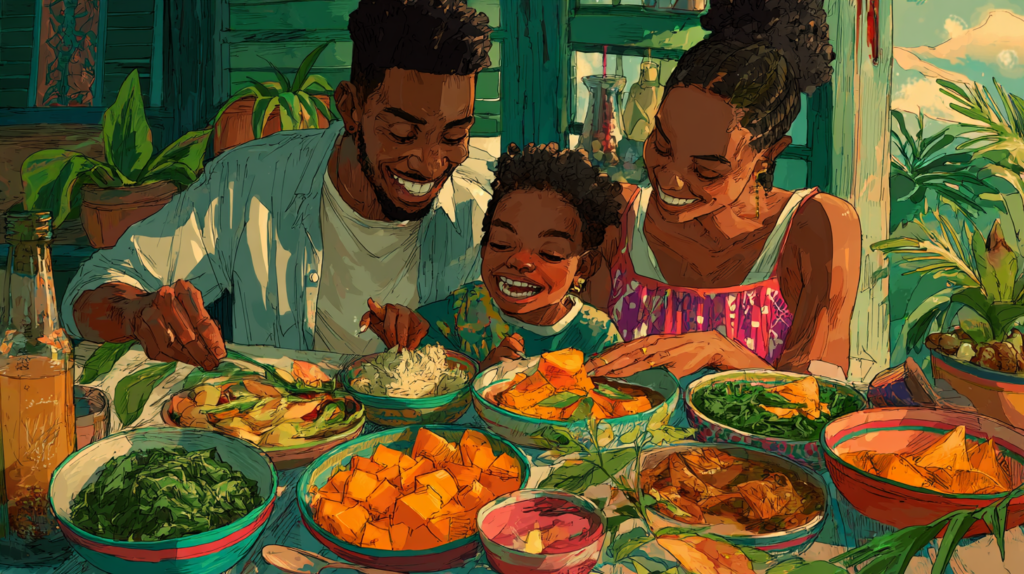
Three years ago, I sat across from my daughter at our kitchen table, watching her push away a plate of callaloo for the seventh time that month. She called it “swamp monster food.” And in that moment, I had a choice: force the issue, or try something radically different. Which parent are you today?
Here’s what nobody tells you about raising an adventurous eater: it’s not about the food.
It’s about the relationship your child develops with exploration itself. It’s about whether they see new experiences as threats or invitations. And it starts—always—with how we show up at the table.
When my daughter finally tried that callaloo three months later, it wasn’t because I convinced her it was good for her. It was because I stopped trying to control her eating and started inviting her curiosity. I let her touch the leaves. We talked about how they felt “slippery like fish” in her words. She helped me wash them, tear them, and eventually, she wanted to taste what she’d created.
That’s the shift this article is about. Not from selective eating to perfect eating, but from food as a battleground to food as an adventure.
Understanding the Science: Why Cautious Eaters Exist (And What Research Tells Us)
Let me take you back to a moment that revolutionized how I understood my daughter’s eating. I was reading a study on food neophobia—the scientific term for fear of new foods—and I came across this sentence: “Neophobia peaks when children start to explore their surroundings outside parental guidance, thereby functioning as a protective mechanism when risk of consumption of toxic or poisonous food is high.”
Suddenly, everything made sense. My daughter wasn’t rejecting food to be stubborn. Her brain was doing exactly what evolution designed it to do: protect her from potential danger. Between ages 2 and 6, children’s food neophobia intensifies as they become mobile and independent. In ancestral environments, this kept toddlers from eating poisonous berries. In our modern kitchens, it keeps them from trying okra.
Research from multiple longitudinal studies confirms that food neophobia is a natural developmental stage, not a disorder. A 2022 review published in Nutrients found that neophobia is strongly associated with dietary diversity and previous exposure to different foods—meaning the more varied experiences children have early on, the more adventurous they become later. But here’s the critical finding: pressure doesn’t work. In fact, studies consistently show that parental pressure to eat is associated with increased food rejection and decreased willingness to try new foods.
A cross-sectional study of 24-month-old children found that food neophobia correlates with lower diet quality, but—and this is crucial—acceptance can be promoted through repeated exposure and modeling, not coercion. The same research revealed that neophobia isn’t permanent; it’s malleable. Children who reject a food 10, 12, even 15 times can eventually accept it when the environment feels safe and exploratory.
This brings us to the most important insight from feeding research: Ellyn Satter’s Division of Responsibility (DOR). This evidence-based approach, developed over decades of clinical practice and research, fundamentally reframes feeding relationships. Parents are responsible for what food is offered, when it’s offered, and where it’s eaten. Children are responsible for whether they eat and how much.
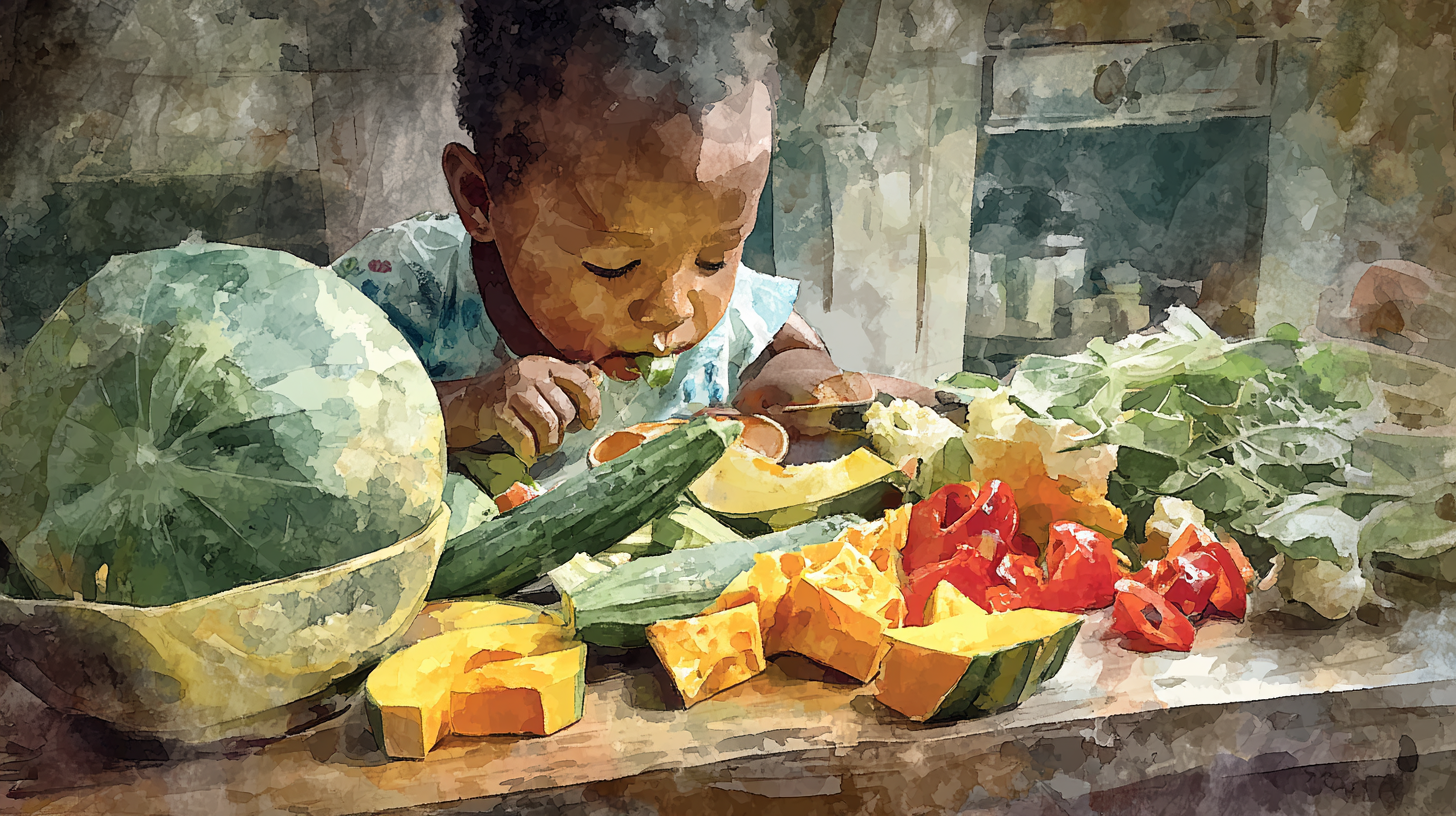
When parents follow DOR, children learn to trust their hunger cues, develop autonomy, and—over time—become more willing to explore new foods. The model removes the power struggle. There’s no “just one bite” rule, no clean plate club, no dessert bribery. Instead, there’s structure, variety, and trust.
But DOR alone isn’t enough to cultivate curiosity. We need to actively invite exploration.
Myth Buster: What Do You Really Know About Picky Eating?
Click each myth to reveal the research-backed truth:
The Curiosity Framework: How to Transform Your Approach
Three months after my “callaloo revelation,” I developed what I now call the Curiosity Framework—a practical approach built on research and Caribbean wisdom. It has five core principles, each backed by evidence and lived experience.
Principle 1: Sensory Exploration Comes Before Tasting
A groundbreaking longitudinal study published in Appetite examined children’s sensory exploratory behaviors over time. Researchers found that children who engaged in touching, smelling, and visual examination of foods were significantly more likely to eventually taste and accept those foods. The study concluded: “Sensory exploratory behaviors promote familiarity and may help children learn that new foods are acceptable and safe to consume.”
This changed how I approached mealtimes entirely. Instead of serving food and expecting consumption, I started creating sensory experiences. With Caribbean foods, this is particularly powerful:
- Texture exploration: Let children touch the fuzzy skin of tamarind pods, squeeze the flesh of ripe mangoes, feel the difference between smooth yam and bumpy cassava.
- Smell investigations: Coconut milk has a distinct, sweet aroma. Scotch bonnet peppers (handled carefully!) have an unmistakable scent. Allspice berries smell like a combination of cinnamon, nutmeg, and cloves.
- Visual examination: Cut open a papaya and let children explore the black seeds. Show them how plantain changes color as it ripens. Let them watch callaloo leaves wilt in hot water.
- Sound play: Dried beans make music in a container. Rice sizzles in hot oil. Coconut shells crack with a satisfying sound.
One family I know started a “Friday Food Lab” where they explore one new Caribbean ingredient each week. No pressure to eat—just touch, smell, and investigate. Within two months, their previously selective 4-year-old was voluntarily tasting foods that had been categorically rejected before.
Principle 2: Model Curiosity, Not Perfection
Here’s where most well-intentioned parents (myself included) go wrong: we model eating but not exploring. We say things like “Mmm, this is delicious!” which sounds positive but actually creates pressure. The child thinks, “Everyone else likes this, so something’s wrong with me if I don’t.”
Instead, research on social learning suggests we should model curiosity and investigation. Try this language shift:
- Instead of: “This tastes so good!”
Try: “Wow, this breadfruit is softer than I expected. What do you notice?” - Instead of: “You’ll love this!”
Try: “I’ve never tried ackee before. Should we be brave together?” - Instead of: “Just try one bite.”
Try: “I wonder if this smells the same to both of us. What does it remind you of?”
This approach does two powerful things: First, it removes the pressure of liking the food. Second, it positions you as a fellow explorer rather than an authority figure pushing consumption. A 2018 study on parenting styles and dietary choices found that authoritative (warm but structured) feeding styles were associated with better dietary variety, while controlling styles were associated with increased food rejection.
Interactive: Transform Your Mealtime Language
Select a common mealtime scenario, and we’ll show you how to shift from pressure to curiosity:
Scenario A: Your child refuses to try a new vegetable
What you might usually say: “Just try one small bite. You might like it!”
Scenario B: Your child complains about texture
What you might usually say: “Don’t be silly, it’s just like the other foods you eat.”
Scenario C: Your child compares unfavorably to siblings
What you might usually say: “Look, your sister loves this. Why won’t you try it?”
Principle 3: Create a Kitchen Laboratory
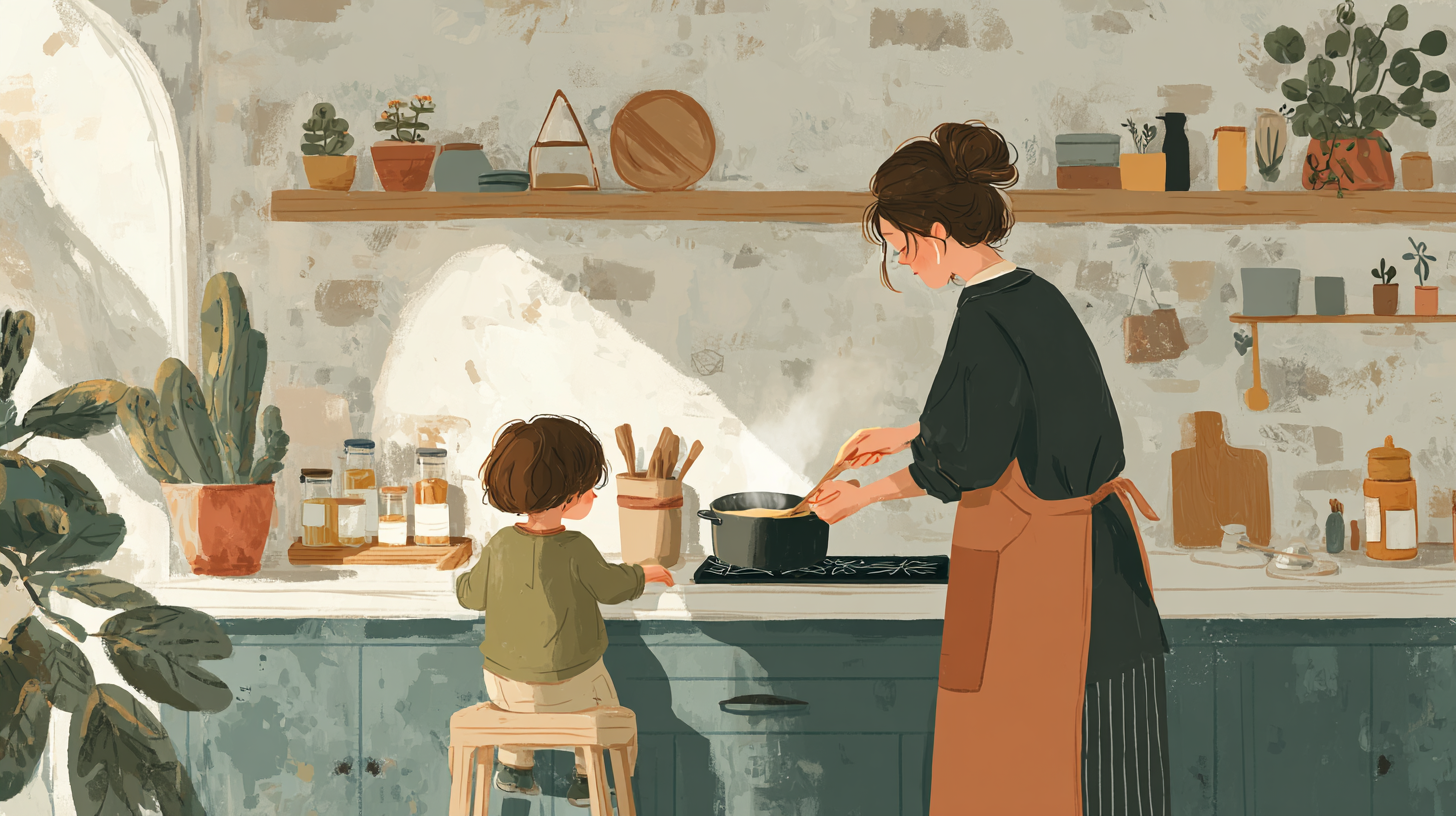
When children participate in food preparation, something magical happens: the food becomes theirs. They develop ownership and pride. More importantly, they get repeated sensory exposures in a low-pressure context.
Research published in Appetite found that preschool children who engaged in sensory play tasks with fruits and vegetables tasted significantly more of those foods compared to children who only had visual exposure. The hands-on interaction reduced the perceived threat of the new food.
Caribbean cooking is perfectly suited for child involvement. Here are age-appropriate tasks that maximize sensory exploration:
- Ages 2-3: Washing vegetables (callaloo leaves, string beans), tearing leafy greens, stirring coconut milk into porridge, smelling spices
- Ages 4-5: Mashing sweet potatoes or yams, squeezing lime juice, spooning ingredients, arranging food on plates
- Ages 6+: Measuring rice, mixing seasonings, shaping plantain patties, learning to peel (with child-safe tools)
One of the most powerful strategies I discovered was using recipes from the Caribbean Baby Food Recipe Book: Easy & Healthy Homemade Meals for Infants & Toddlers. The recipes are specifically designed with gentle Caribbean flavors that bridge familiar and new. When my daughter helped me make “Yellow Yam Carrot Sunshine” (page 64), she was invested in the outcome because she’d mashed the yams herself.
Principle 4: Honor the “Learning Plate”
This concept revolutionized our mealtimes. Instead of expecting children to eat from their plate, we created a “learning plate”—a smaller dish where new or challenging foods live separately from their main meal. The rule? They can interact with the learning plate however they want: smell it, touch it, lick it, or ignore it. No pressure. No praise for eating. No consequences for not eating.
This strategy aligns perfectly with research on repeated exposure. By consistently offering foods without pressure, we provide the 10-15 neutral experiences children need. Over time, curiosity naturally emerges. I watched this happen with dasheen. For six weeks, a small piece appeared on my daughter’s learning plate. She touched it exactly once in week three. In week seven, she licked it. In week nine, she ate it—and asked for more.
The learning plate also protects family meals. If a child knows they don’t have to eat the exploratory food, they’re more relaxed during the meal. Parents can serve varied, flavorful dishes (like the recipes in the Caribbean Baby Food Recipe Book) without worrying about total rejection or negotiating substitutions.
Principle 5: Tell Food Stories
Caribbean food is rich with history, culture, and story. When we share these narratives, we transform meals from transactions into experiences. Research on narrative psychology suggests that stories create emotional connections and meaning—both of which increase engagement and openness.
I started telling my daughter stories about foods:
- “Callaloo is what my grandmother cooked when she wanted to feel connected to Jamaica. She said stirring the pot felt like a hug from the island.”
- “Coconut milk comes from this hard brown shell. People in the Caribbean figured out how to turn something hard into something creamy and sweet. Isn’t that clever?”
- “Plantains are like bananas’ cousin who went on a different adventure. Some people eat them when they’re green and starchy, some when they’re yellow and sweet, some when they’re black and caramelized. Same fruit, completely different experiences.”
These stories do more than educate—they invite curiosity. When food has a narrative, it becomes interesting rather than threatening.
Your Personalized Curiosity Action Plan
Check the strategies you’re ready to implement this week. Watch your confidence build!
The Caribbean Advantage: Why Our Foods Are Natural Curiosity Catalysts
Here’s something I wish I’d understood earlier: Caribbean cuisine is inherently exploratory. Our foods engage all the senses in ways that standard “kid-friendly” foods often don’t. While chicken nuggets and plain pasta have their place, they don’t invite investigation. Caribbean foods do.
Consider the sensory profile of common Caribbean ingredients:
- Visual variety: The vibrant orange of calabaza (Caribbean pumpkin), the deep purple of blue yam, the shocking red-orange of annatto, the jewel-toned flesh of papaya
- Textural diversity: The creaminess of ripe avocado, the chewiness of cassava bread, the smooth slide of okra, the satisfying bite of roasted breadfruit
- Aromatic complexity: The warm sweetness of coconut milk, the pungent earthiness of callaloo, the citrus brightness of lime, the mysterious depth of allspice
- Temperature contrasts: Cold coconut water on a hot day, steaming cornmeal porridge on a cool morning, room-temperature fruit salad
These sensory-rich experiences are exactly what research shows helps children overcome food neophobia. A 2024 study on sensory experience and food choices concluded: “Early sensory experiences and negative cognitive schemata, in the context of primary caregiver–child interactions, importantly contribute to the priming of children’s food rejection.” In other words, the more varied sensory experiences children have early, the more open they become.
The Caribbean Baby Food Recipe Book leverages this advantage beautifully. Recipes like “Papaya Banana Sunshine” (page 54), “Calabaza con Coco” (page 112), and “Sweet Potato Callaloo Rundown” (page 66) introduce gentle Caribbean flavors while maintaining approachability for cautious eaters. The progression is intentional: sweet, creamy bases with gradually introduced complexity.
Caribbean Food Explorer: Discover Your Family’s Next Adventure
Select the sensory characteristic your child is most curious about, and we’ll suggest a perfect Caribbean food to explore:
Bright colors and interesting shapes
Interesting to touch and mash
Fascinating smells to investigate
Gentle, approachable flavors
Real Challenges: What Gets in the Way (And How to Navigate)
Let me be honest about the obstacles. Because if I only shared the successes, I’d be doing you a disservice. Cultivating curiosity sounds beautiful in theory. In practice, it requires navigating real challenges.
Challenge 1: Family Pressure and Cultural Expectations
In many Caribbean families, food is love. When a child rejects food—especially food a grandmother made—it can feel like personal rejection. I’ve heard grandparents say, “In my day, children ate what they were given or went hungry.” That wasn’t curiosity-building; it was survival. We can honor the past while choosing a different path.
Navigate this by: Educating extended family about the research. Share that food neophobia is developmental, not defiance. Explain that pressure increases rejection. Ask them to model eating and enjoyment rather than commenting on what the child eats. One mother I know printed out a simple “Family Feeding Guidelines” card that read: “We’re working on food curiosity. Please don’t ask [child] about eating. Instead, tell stories about the food or share what you enjoy about it.”
Challenge 2: Perfectionism and Social Media Comparison
Scroll through Instagram and you’ll see perfectly plated meals, children enthusiastically eating kale, and captions suggesting everyone else has figured this out. The hidden truth? Those are curated moments. Behind every “my toddler loves sushi!” post are dozens of rejected meals that didn’t make the feed.
A 2025 study on parenting styles and social media found that exposure to idealized feeding content increases parental anxiety and controlling feeding practices—both of which undermine children’s natural food acceptance. The antidote? Context. Remember that you’re seeing highlights, not reality. Your messy, imperfect journey is normal. In fact, it’s necessary.
Challenge 3: Time Constraints and Decision Fatigue
The curiosity framework requires presence. It’s harder to invite sensory exploration when you’re exhausted from work and rushing to get dinner on the table. This is real, and I don’t want to minimize it.
Navigate this by: Simplifying rather than elaborating. You don’t need elaborate food play activities. Simple works: Let your child tear callaloo leaves while you prep other ingredients. Hand them a spoon to stir while you cook. Use recipes from resources like the Caribbean Baby Food Recipe Book that are designed for efficiency—many can be batch-cooked and frozen.
Also, accept that not every meal will be exploratory. Some nights, you’ll serve simple, familiar foods. That’s fine. Curiosity-building happens over time, not in every single meal.
Challenge 4: Persistence When Progress Is Slow
Here’s what nobody warns you about: progress is nonlinear. Your child might enthusiastically explore plantain for two weeks, then refuse it for a month. They might lick okra on Tuesday and gag at the sight of it on Thursday. This isn’t failure—it’s normal developmental variability.
Research confirms that food acceptance is rarely linear. Preferences fluctuate based on context, mood, hunger, and dozens of other factors. What matters is the long-term trajectory, not daily fluctuations.
Navigate this by: Tracking progress over months, not days. Keep a simple journal noting what foods were offered, how your child interacted (touched, smelled, tasted, ate), and how you felt. Over time, you’ll see patterns and progress that daily observation misses.
Final Reflection: Your Why
Before we close, take a moment to connect with your deeper motivation. Why does cultivating food curiosity matter to you?
Click to reveal a reflection prompt:
Moving Forward: Your Curiosity Journey Starts Now
Three years ago, I sat across from my daughter, watching her reject callaloo for the seventh time. I felt like I was failing. Today, that same child helps me cook, asks questions about ingredients, and voluntarily tries foods that once seemed impossible. The journey wasn’t linear. There were setbacks, frustrations, and moments when I doubted whether any of this would work.
But here’s what I know now: curiosity compounds. Every sensory experience, every pressure-free offering, every modeled moment of wonder—they accumulate. Not visibly at first, but beneath the surface, something is shifting. Your child is learning that food is safe to explore. That their observations matter. That meals can be adventures rather than battles.
The research confirms this, but more importantly, lived experience confirms it. Families who shift from control to curiosity report not just increased food acceptance, but transformed relationships with food. Meals become less stressful. Children become more confident. Parents rediscover joy in cooking and sharing food.
And here’s a truth I didn’t expect: this journey changed me, too. When I stopped trying to control my daughter’s eating and started inviting her curiosity, I rediscovered my own. I tried foods I’d avoided. I explored my Caribbean heritage through ingredients. I asked questions instead of assuming answers. In teaching her to be adventurous, I became more adventurous myself.
So where do you start? Not with perfection. Not with total transformation. Start with one shift.
Maybe it’s creating a learning plate at tonight’s dinner. Maybe it’s letting your child smell ingredients before you cook. Maybe it’s trying one recipe from the Caribbean Baby Food Recipe Book: Easy & Healthy Homemade Meals for Infants & Toddlers—something approachable but exploratory, like “Calabaza con Coco” or “Yellow Yam Carrot Sunshine.”
Maybe it’s simply changing your language. The next time your child refuses food, instead of “just try it,” say “I wonder what this smells like to you?” That’s it. That one shift opens a door.
Because here’s the secret that changed everything for me: you don’t need to know the whole path. You just need to take the next step. The path reveals itself as you walk. Clarity comes from doing, not waiting. And every day you choose curiosity over control is a day you’re building something profound.
Your child’s relationship with food is forming right now, in these ordinary moments at your table. The question isn’t whether they’ll eat okra today. The question is: What are they learning about exploration? About trust? About their own body’s wisdom? About whether new experiences are threatening or inviting?
These aren’t just feeding decisions. They’re lessons in how to move through the world.
So yes, start with the practical strategies in this article. Implement the sensory exploration, the language shifts, the learning plate, the kitchen involvement. But also—and maybe especially—give yourself permission to be imperfect. To have meals where nothing goes as planned. To serve chicken nuggets on exhausted Tuesdays. To feel frustrated when progress stalls.
This isn’t about getting it right every time. It’s about choosing, again and again, to invite curiosity instead of demanding compliance. To trust the research and the process and your child. To believe that small, consistent steps create meaningful change.
And when you’re six months from now, looking back at where you started, you’ll realize something remarkable: you didn’t just raise a more adventurous eater. You raised a more curious human. Someone who approaches the unfamiliar with openness rather than fear. Someone who trusts their own experience. Someone who finds joy in discovery.
That’s the real prize. Not the vegetables eaten or the foods accepted, but the fundamental relationship with exploration that you helped cultivate.
So here’s to messy mealtimes and rejected meals and sensory play that ends up everywhere except the mouth. Here’s to the long game, the compound effect of curiosity, and the profound trust that builds when we stop controlling and start inviting.
Your table is waiting. Your child’s curiosity is waiting. The adventure is ready to begin.
The only question is: What one shift will you make today?

Kelley's culinary creations are a fusion of her Caribbean roots and modern nutritional science, resulting in baby-friendly dishes that are both developmentally appropriate and bursting with flavor. Her expertise in oral motor development and texture progression ensures that every recipe supports your little one's feeding milestones while honoring cultural traditions.
Join Kelley on her flavorful journey as she shares treasured family recipes adapted for tiny taste buds, evidence-based feeding guidance, insightful parenting anecdotes, and the joy of celebrating food, culture, and motherhood. Get ready to immerse yourself in the captivating world of Kelley Black and unlock the vibrant flavors of the Caribbean for your growing baby, one nutritious bite at a time.
- The Feeding Revolution: Why Your Everyday Meals Are Changing the World - October 13, 2026
- Your Feeding Story Matters More Than The “Perfect” One Online - October 12, 2026
- Looking Forward: Stepping Into Your Confident Feeding Future - October 11, 2026