The $800-a-Year Lie: What Food Companies Don’t Want You to Know About “Superfoods”
You’re Standing in the Grocery Store Right Now…
Which scenario describes you best? (Click to reveal what you’re actually buying into)
Three weeks ago, I stood in my kitchen staring at a bag of chia seeds I’d paid $12 for—unopened, expiring next month. Next to it sat a fancy açaí powder ($28), goji berries ($16), and spirulina tablets ($34) that my daughter refused to eat. Ninety dollars worth of “superfoods” collecting dust while I stressed about my grocery budget.
That’s when it hit me: I’d been played.
Not by some evil villain in a cartoon, but by something far more sophisticated—a $184 billion global industry that’s mastered the art of making parents feel inadequate unless we’re buying their expensive products. And here’s the truth they don’t want you to discover: the whole “superfood” concept isn’t backed by science. It’s pure marketing genius designed to separate you from your money while making you feel like a good parent in the process.
Today, I’m going to show you exactly how this works, expose the actual research behind these claims, and give you a simple system to feed your children just as well (or better) for a fraction of the cost. By the end of this article, you’ll know how to spot food marketing manipulation from across the grocery store—and you’ll have practical swaps that’ll save you hundreds of dollars this year alone.
But first, let me tell you about the moment everything changed for me…
The Term “Superfood” Has No Scientific Definition
Here’s something that should make you angry: unlike terms like “organic” which have strict legal requirements and government oversight, the word “superfood” means absolutely nothing. Any company can slap it on any package without a single scientific study backing it up. Zero regulation. Zero standards. Zero accountability.
Researchers analyzing 597 grocery products found that front-of-package health claims—including superfood language—showed no reliable relationship to actual nutritional quality. In fact, in some categories like fruits, products with MORE health claims actually had WORSE nutrition scores. Let that sink in for a moment.
The European Union has been so concerned about misleading consumers that they’ve rejected health claims for several so-called superfoods. Meanwhile, the $184 billion global superfood market continues to explode, projected to reach $271.60 billion by 2033. That’s not because these foods have unique healing properties. It’s because the marketing works.

Dr. Alex Nella, a pediatric registered dietitian, puts it bluntly: “No single food can prevent disease or boost immunity alone.” Yet walk into any grocery store and you’ll see açaí marketed as an antioxidant miracle, kale positioned as nutritionally superior to all other greens, and chia seeds advertised as essential for children’s development.
The truth? A 2024 study using DNA barcoding tested popular supplements marketed as superfoods and found that 60% failed to contain the expected ingredients. Nineteen products contained undeclared plant species—including common fillers like rice. If your child has allergies, these “superfoods” could actually be dangerous.
Superfood Myth Buster (Click Each to Reveal the Truth)
How Marketing Creates Health Halos
Let me introduce you to the most effective psychological manipulation technique in the food industry: the health halo effect. It’s the reason you feel virtuous buying organic gummy bears, why you assume anything with a leaf logo is healthy, and why you’ll pay triple for products with buzzwords like “superfood,” “ancient grain,” or “antioxidant-rich.”
A 2025 investigation by the Food Foundation analyzed baby and toddler snacks and found products averaging 20 health claims per package. Twenty claims! One product displayed “organic” seven times, claimed to be “one of a child’s five a day,” and boasted about containing “nothing artificial”—while packing the equivalent of three sugar cubes per serving.
This isn’t accidental. Food companies spend millions researching exactly which words trigger parental guilt and how to position products to maximize purchases. They’ve discovered that certain combinations are particularly effective:
Health claim + cartoon character = Parents perceive the product as both nutritious AND child-friendly, even when it’s essentially candy.
“Organic” + “superfood” + exotic ingredient = Justifies premium pricing while creating the impression you’re giving your child something superior.
Micronutrient fortification + colorful packaging = Masks high sugar content. Studies show child-directed beverages are twice as likely to feature micronutrient claims specifically to create this health halo around sugary drinks.
The data is damning: products with child-targeted marketing and nutrition claims are actually LESS nutritious than products without such marketing. But parents consistently rate them as healthier choices. We’re being systematically manipulated—and it’s costing us financially while potentially compromising our children’s nutrition.
Cultural Connection: This is exactly why I developed recipes in the Caribbean Baby Food Recipe Book using familiar, affordable ingredients like sweet potatoes, plantains, and coconut milk—foods that have nourished generations without needing superfood status. Real nutrition doesn’t require marketing hype.
The Real Cost of Superfood Marketing
Let’s talk about money—because this matters more than food companies want you to realize. The average family influenced by superfood marketing spends an extra $800 per year on premium products that offer no nutritional advantage over affordable alternatives.
Eight hundred dollars. That’s a family vacation. That’s your emergency fund. That’s three months of regular groceries if you shop smart.
The Superfood vs. Smart Alternative Calculator
Select products you currently buy to see your annual overspend
Your Annual Superfood Tax:
This is money you could redirect toward actual variety in your children’s diet—or toward literally anything else that matters to your family.
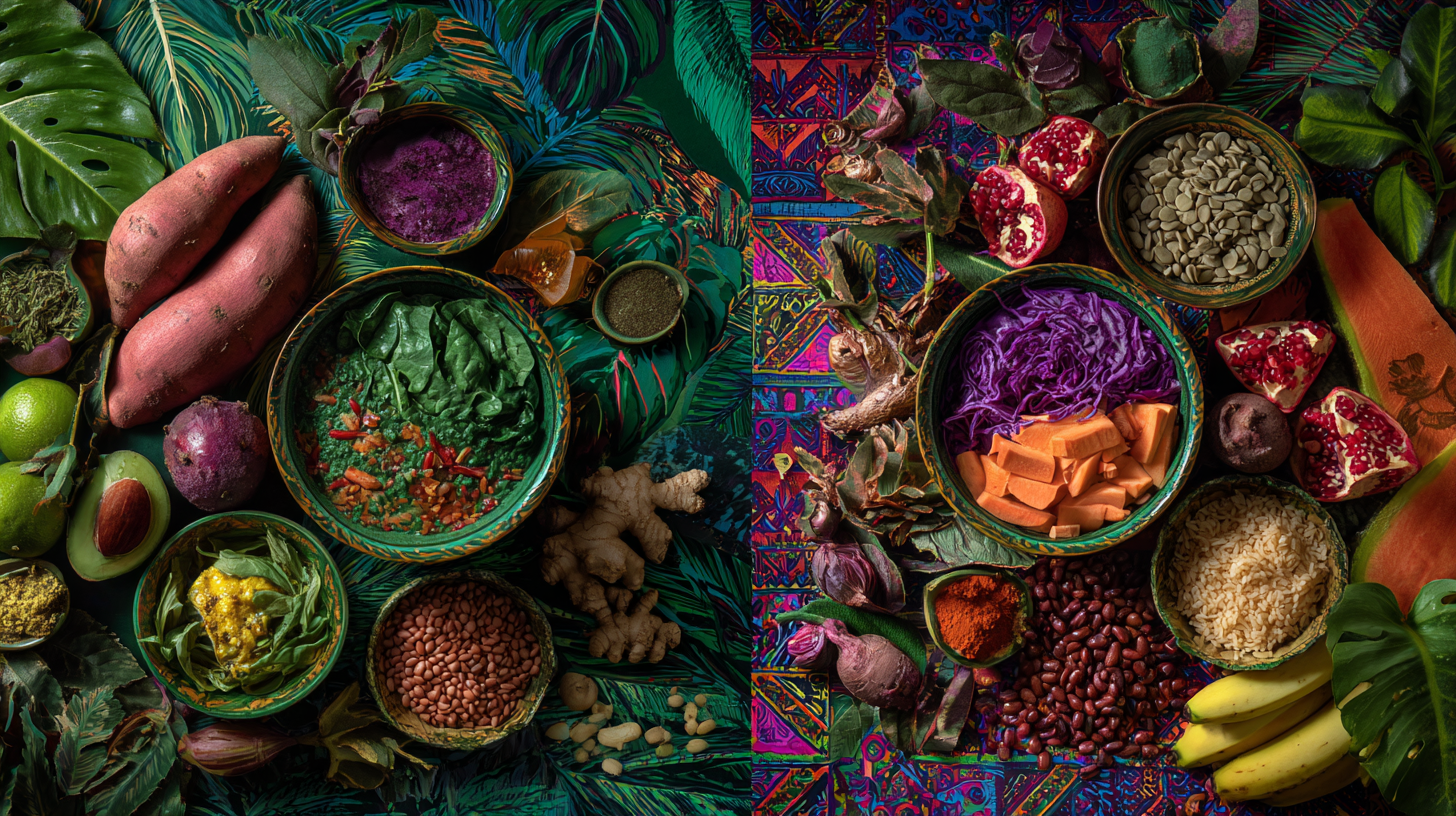
But it gets worse. Families spending limited budgets on expensive superfoods often have LESS money for dietary variety. You’re so focused on buying that $12 bag of chia seeds that you skip the $2 bag of beans that would actually provide more complete nutrition for your child.
This creates what researchers call the “displacement effect”—when marketing drives purchases away from affordable staples toward expensive specialty items, overall diet quality may actually decrease. You think you’re upgrading your child’s nutrition when you’re actually compromising it.
A 2024 study examining children aged 24-47.9 months found that over 60% already exceed saturated fat guidelines. Superfood marketing doesn’t address these actual nutritional concerns—it just gives parents false confidence that they’re making healthy choices while problems persist.
What Your Children Actually Need
Here’s what pediatric nutrition research actually shows: children thrive on variety, consistency, and adequate intake of basic nutrient groups—not exotic ingredients with marketing pedigrees.
The American Heart Association’s dietary recommendations for healthy children emphasize fruits, vegetables, whole grains, proteins, and dairy—with zero mention of superfoods. The CDC’s nutrition guidance focuses on introducing diverse foods and establishing healthy eating patterns—again, no superfoods required.
Harvard’s Nutrition Source, one of the most respected authorities in the field, titles their superfood analysis “Superfoods or Superhype?” Their conclusion? While nutrient-dense foods are valuable, many are costly and unnecessary when affordable alternatives exist.
Let me break down what children actually need, based on evidence rather than marketing:
Nutrient density over novelty: Sweet potatoes deliver more robust beta-carotene, fiber, and potassium than açaí berries—supporting eye health, immune function, heart health, and digestion. They cost 90% less and children actually eat them.
Variety over repetition: Eating the same “superfood” daily isn’t healthy despite what Instagram influencers suggest. The NHS specifically warns against this practice. Children benefit from rotating through different fruits, vegetables, proteins, and grains—providing varied nutrient profiles and preventing food boredom.
Familiarity over exotic status: Research consistently shows children are more likely to accept and consume familiar foods. Introducing sweet potato is vastly easier than introducing açaí. Acceptance matters more than theoretical nutritional superiority—your child can’t benefit from foods they refuse to eat.
The Smart Swap Game (Click arrows to reveal nutritional comparisons)
Island Wisdom: Many recipes in the Caribbean Baby Food Recipe Book use ingredients like callaloo (similar to spinach), eddoes (similar to potatoes), and cornmeal—affordable staples that have nourished island children for generations. My Sweet Potato & Callaloo Rundown costs under $3 to make and delivers more nutrition than any $12 superfood smoothie.
The Social Media Amplification Effect
If you’re wondering why superfood pressure feels inescapable lately, social media deserves significant blame. A 2024 study found that influencers popular with children on TikTok, YouTube, and Instagram frequently promote food and beverage products—most of which are unhealthy despite superfood language.
This influencer marketing shapes children’s preferences and increases demand for highly processed snacks. Research published in Pediatrics demonstrates that influencers promoting unhealthy snacks significantly increase children’s intake of those foods. Your child isn’t just seeing ads—they’re watching people they admire and trust endorsing products.
But here’s what makes this particularly insidious: these “snackfluencers” often position themselves as health advocates while promoting expensive products. They’ll show gorgeous açaí bowls topped with goji berries and bee pollen, talking about “nourishing their bodies” and “giving their children the best”—creating intense pressure on parents who can’t afford $15 smoothies.
The good news? A countermovement is emerging. The 2025 spotlight on healthy snackfluencers promoting fruits, vegetables, and balanced snacks shows potential for positive change. Research in child psychology confirms kids are highly susceptible to modeled behavior from people they admire—meaning these positive influencers could reshape eating habits.
In the meantime, recognize that those perfect superfood posts you’re seeing are often sponsored content designed to manipulate your purchasing. That influencer’s “morning routine” featuring $50 worth of supplements isn’t authentic—it’s advertising disguised as lifestyle content.
Building Actually Balanced Plates
Forget superfoods. Let’s talk about building nutritionally complete, affordable, child-friendly meals using a simple framework that works.
The CDC and American Heart Association both recommend a plate structure that’s beautifully simple: half fruits and vegetables, one-quarter whole grains, one-quarter protein, with dairy on the side. No exotic ingredients. No premium pricing. No marketing manipulation.
️ Build Your Budget-Friendly Power Plate
Select foods from each category to create a complete meal (click items to add)
Vegetables (50% of plate)
Protein (25% of plate)
Whole Grains (25% of plate)
Your Balanced Meal:
This framework works because it emphasizes variety over individual ingredient status. Your child gets diverse nutrients from multiple sources rather than depending on any single “super” food. It’s exactly how humans have eaten successfully for thousands of years—before food marketing existed.
Let me give you a practical example of this in action. When my daughter was going through her pickiest phase, I stopped trying to force trendy superfoods and instead focused on familiar combinations:
Breakfast: Oatmeal ($0.15) + banana ($0.25) + ground flaxseed ($0.10) + cinnamon = $0.50 per serving providing fiber, sustained energy, omega-3s, and antioxidants.
Lunch: Whole wheat crackers ($0.35) + tuna ($1.00) + carrot sticks ($0.30) = $1.65 per serving providing protein, vitamin D, beta-carotene, and healthy fats.
Dinner: Brown rice ($0.20) + black beans ($0.50) + sautéed spinach ($0.40) + small amount of cheese ($0.30) = $1.40 per serving providing complete protein, iron, calcium, fiber, and vitamins.
Total cost: $3.55 for a full day of nutritionally complete meals. Compare that to a single açaí bowl from a trendy café.

Shopping Strategies That Protect Your Budget
Walking into a grocery store armed with knowledge changes everything. Here’s exactly how to shop to maximize nutrition while minimizing manipulation:
Shop the perimeter first. Fresh produce, dairy, eggs, and meats live on the outer edges. Processed foods with inflated health claims dominate center aisles. Prioritizing perimeter shopping naturally reduces exposure to marketing manipulation.
Ignore front-panel marketing entirely. Research proves front-of-package claims don’t correlate with nutritional quality—and sometimes indicate worse nutrition. Train yourself to flip packages immediately to Nutrition Facts labels. Compare actual numbers, not marketing language.
Buy seasonal and local when possible. Seasonal produce costs 40-60% less than out-of-season imports while being fresher and more nutritious. Shipping kale across continents adds costs and carbon emissions without nutritional advantages over local greens.
Embrace frozen produce. Frozen vegetables and fruits are picked at peak ripeness and flash-frozen, often preserving more nutrients than “fresh” produce that’s traveled for days. They cost less, last longer, and eliminate waste from spoilage. A pound of frozen blueberries ($3.50) provides identical antioxidants to fresh ($7) or superfood powders ($28+).
Master bulk cooking and freezing. Make large batches of nutrient-dense staples like beans, rice, oatmeal, and soups. Freeze in portions. This approach costs pennies per serving while ensuring you always have healthy options available—reducing temptation to buy expensive convenience products with superfood claims.
Question exotic ingredients. When you see an unfamiliar food marketed as essential for children’s health, ask: What familiar food provides similar nutrition? The answer almost always exists—and costs dramatically less.
Your Annual Impact Calculator
Move the slider to show how much you typically spend on “superfood” products weekly:
If You Switched to Smart Alternatives:
This represents money you could invest in your children’s education fund, family experiences, emergency savings, or simply reducing financial stress. That’s the real superfood—financial stability that allows you to make choices based on your family’s actual needs rather than marketing pressure.
When Your Family Judges Your Choices
Let’s address the elephant in the room: social pressure from other parents, family members, or social media making you feel inadequate for not buying superfood products.
This is real, and it’s deliberately manufactured. When an industry spends billions creating the perception that certain foods are superior, they’re not just selling products—they’re selling status and identity. Parents who buy superfoods signal they’re educated, health-conscious, and financially capable of “giving their children the best.”
When you opt out of this system, you’re challenging that narrative. Some people will interpret your budget-friendly choices as not caring enough about your children’s health. Let me give you the response that changed my entire perspective:
“I care deeply about my children’s nutrition—that’s exactly why I follow pediatric nutrition science instead of marketing campaigns. Research shows variety and balance matter more than individual ingredient status. I’d rather spend money ensuring dietary diversity than buying premium-priced items that offer no proven advantages.”
You don’t owe anyone explanations beyond that. Your children’s health outcomes will speak for themselves—and your financial stability is an essential component of their wellbeing that expensive superfoods actively undermine.
Remember: the parents dropping $50 on superfood smoothies may be struggling with debt while projecting affluence on Instagram. You’re making evidence-based decisions that prioritize long-term family security over short-term social performance. That’s actual good parenting.
️ Cultural Pride: This is why I’m passionate about the Caribbean Baby Food Recipe Book—it celebrates foods that have sustained healthy children for generations without needing superfood validation. When someone questions your sweet potato choice, you can confidently explain it delivers superior nutrition to açaí at a fraction of the cost. Cultural food wisdom often exceeds trendy marketing.
Your Action Plan Starting Today
Knowledge without action changes nothing. Here’s exactly what to do this week to start protecting your family from superfood marketing while improving nutrition and saving money:
Action 1: Audit your current superfood spending. Go through your pantry, fridge, and recent grocery receipts. Identify all items you purchased specifically because of superfood marketing. Calculate what you spent. This number—however uncomfortable—is your baseline for measuring improvement.
Action 2: Identify three simple swaps. Based on what you actually found in your kitchen, choose three superfood products to replace with affordable alternatives. Start with the most expensive items offering the smallest nutritional advantage—typically powders, supplements, and exotic fruits.
Action 3: Plan one week of meals using the plate method. Half vegetables/fruits, quarter whole grains, quarter protein, dairy on the side. Use only ingredients you can find at regular grocery stores for reasonable prices. Write out the full week to prove to yourself this works sustainably.
Action 4: Unfollow social media accounts promoting superfood lifestyles. If someone’s content consistently makes you feel inadequate about your food choices or creates pressure to buy expensive products, they’re not serving your family’s interests. Replace them with accounts focused on budget nutrition and realistic parenting.
Action 5: Educate one person in your life about superfood marketing. Share what you’ve learned. When we collectively understand how manipulation works, the tactics become less effective. You might be helping another struggling parent break free from expensive guilt purchases.
The beautiful truth is this: once you see how superfood marketing works, you can’t unsee it. You’ll walk through grocery stores noticing the manipulation attempts—and feeling grateful you’re no longer falling for them. That $12 bag of goji berries will look ridiculous next to $2 raisins providing equivalent nutrition.
The Real Superfood Is Freedom
Six months ago, I stood in that kitchen surrounded by expensive superfoods my daughter wouldn’t eat, feeling like a failure as a parent. Today, my grocery bill is $120 lower each month, my daughter eats more variety than ever, and I’ve stopped feeling guilty about food choices.
The shift wasn’t about finding better superfoods or mastering complicated nutrition science. It was about recognizing that the entire premise was designed to exploit parental love and guilt for profit.
Your children don’t need açaí, spirulina, or chia seeds. They need parents who aren’t stressed about money. They need variety in their diets rather than repetition of expensive ingredients. They need to see healthy relationships with food modeled—where nutrition comes from balance and consistency, not from chasing trends or status.
The real superfood—the one that will actually transform your family’s wellbeing—is freedom. Freedom from marketing manipulation telling you you’re not enough unless you buy premium products. Freedom from financial stress caused by unnecessary expenses. Freedom to make food choices based on evidence, affordability, and what your children will actually eat.
That freedom is available to you right now. Not next week after you finish the expensive products cluttering your pantry. Not next month when you have more money. Today. This moment.
Because here’s the truth they don’t want you to discover: you already have everything you need to nourish your children beautifully. You always did. The only thing standing between you and that realization was a $184 billion industry working very hard to convince you otherwise.
Now you know better. And knowledge—true, evidence-based knowledge—is the only superfood worth consuming.
Your children are watching how you handle this. They’re learning whether you make decisions based on science and values, or whether you cave to social pressure and marketing manipulation. They’re discovering whether you prioritize what actually matters or what looks impressive to others.
That’s the real lesson here—the one that will serve them long after they’ve forgotten what they ate for dinner. Show them it’s possible to think critically, act confidently, and resist manipulation. Show them that real strength comes from making evidence-based choices even when they’re unpopular.
That’s a lesson no superfood can teach. And it costs absolutely nothing.
Your Caribbean-Inspired Fresh Start
If you’re ready to embrace nutrient-dense, affordable nutrition using ingredients that have nourished healthy children for generations, the Caribbean Baby Food Recipe Book is your guide. Over 75 recipes featuring sweet potatoes, plantains, beans, coconut milk, and other powerhouse ingredients—no superfood marketing required. Real food. Real nutrition. Real savings. That’s island wisdom parents have trusted for generations.

Kelley's culinary creations are a fusion of her Caribbean roots and modern nutritional science, resulting in baby-friendly dishes that are both developmentally appropriate and bursting with flavor. Her expertise in oral motor development and texture progression ensures that every recipe supports your little one's feeding milestones while honoring cultural traditions.
Join Kelley on her flavorful journey as she shares treasured family recipes adapted for tiny taste buds, evidence-based feeding guidance, insightful parenting anecdotes, and the joy of celebrating food, culture, and motherhood. Get ready to immerse yourself in the captivating world of Kelley Black and unlock the vibrant flavors of the Caribbean for your growing baby, one nutritious bite at a time.
- The Feeding Revolution: Why Your Everyday Meals Are Changing the World - October 13, 2026
- Your Feeding Story Matters More Than The “Perfect” One Online - October 12, 2026
- Looking Forward: Stepping Into Your Confident Feeding Future - October 11, 2026