How Your Dinner Table Can Raise Globally Minded Children: A Parent’s Guide to Cultural Food Celebrations
Which World Cuisine Will Your Family Explore First?
Before we dive in, let’s discover your family’s perfect cultural food starting point. Your choice reveals something powerful about your parenting approach.
Here’s something most parenting experts won’t tell you: the most powerful diversity lessons your children will ever learn won’t come from books, documentaries, or even traveling the world. They’ll come from something you do three times a day—eating.
While other parents stress about finding the perfect multicultural curriculum or signing up for expensive cultural camps, you have an opportunity sitting right at your kitchen table. Every meal is a chance to transform your child’s worldview, one bite at a time. And the research backs this up in ways that might surprise you.
The latest findings show that up to 80 percent of parents in 2024 intentionally expose their children to international dishes at home, yet most still miss the deeper opportunity. They serve the food, but they don’t tell the stories. They cook the recipes, but they don’t build the connections. They taste the flavors, but they don’t explore the cultures.
That’s about to change for you. Because what if I told you that the path to raising empathetic, culturally aware, globally minded children doesn’t require a passport? What if the secret ingredient was already in your pantry, waiting for you to use it differently?
Why Food Is the Secret Weapon for Teaching Diversity
When my daughter was three, she refused to try anything that looked “different.” Green vegetables were suspicious. Anything with spices was automatically rejected. Then one evening, I told her a story about a little girl in Trinidad who loved callaloo, a leafy green vegetable cooked with coconut milk and herbs. I showed her where Trinidad was on our world map. We watched a short video of a Trinidadian grandmother cooking the dish, singing as she stirred the pot.
Something shifted. My daughter didn’t just try the callaloo—she wanted to know more about Trinidad. She asked about the houses, the beaches, the children who lived there. Food became the doorway to curiosity, and curiosity became the foundation for understanding.
Food anthropologists have documented this phenomenon for years. Lucy Long, a leading voice in culinary cultural studies, describes eating as a “universal learning opportunity” for exploring difference and resolving conflict. Unlike abstract concepts of diversity, food is tangible, sensory, and immediate. When children taste spices from Ethiopia or learn to fold dumplings from China, they’re not just eating—they’re connecting to real people, real traditions, and real histories.

Research from 2024 shows that children who participate in cultural food activities report higher levels of empathy and respect for others. The data is clear: when families explore world cuisines together, children develop more positive attitudes toward people from different backgrounds. They learn that “different” doesn’t mean “bad”—it means interesting, valuable, and worth understanding.
But here’s what makes food especially powerful: it bypasses intellectual resistance. Children who might tune out a history lesson about India will eagerly help you make samosas. Teenagers who roll their eyes at cultural documentaries will happily debate whether Korean or Thai food is spicier. Food meets children where they are—hungry, curious, and ready to engage their senses.
3 Myths Holding You Back From Cultural Food Education
Click each myth to reveal the surprising truth:
The Hidden Benefits No One Talks About
Beyond empathy and cultural awareness, something else happens when families embrace cultural food celebrations. Children develop what researchers call “food literacy”—the ability to understand where food comes from, how it’s prepared, and why it matters to communities. This literacy extends far beyond the kitchen.
When your child learns that coconut milk is a staple in Caribbean cooking because coconut palms thrive in tropical climates, they’re learning geography. When they discover that many cultures use similar ingredients in completely different ways—like how plantains are fried in West Africa, mashed in the Dominican Republic, and baked into chips in Jamaica—they’re learning about innovation and adaptation. When they understand that food scarcity shapes certain traditional dishes while abundance shapes others, they’re learning about economics and history.
Studies from 2025 reveal another unexpected benefit: children who regularly engage with cultural foods become more adventurous eaters overall. The exposure to diverse flavors, textures, and combinations expands their palate and reduces food neophobia—the fear of new foods. Parents report that after six months of cultural food exploration, their children are willing to try vegetables they previously rejected, simply because they’ve learned that “new” can be delicious.
And here’s something that might surprise you: cultural food education improves family bonds. Cooking together, learning together, and tasting together creates shared experiences that children remember long into adulthood. These aren’t just meals—they’re memories. They’re conversations. They’re the stories your children will tell their own kids someday.
What’s Your Family’s Cultural Food Personality?
Discover your unique approach and get personalized tips:
The Real Challenges (And How to Navigate Them)
Let’s be honest—cultural food education isn’t always smooth sailing. You’ll face obstacles, and pretending they don’t exist won’t help you overcome them.
The authenticity dilemma is real. School districts that attempted to diversify lunch menus in 2024 faced criticism for serving “representative” foods that were oversimplified or poorly prepared. Students from the featured cultures felt their food was being tokenized rather than honored. This teaches us an important lesson: authenticity matters, but so does context. When cooking cultural foods at home, research matters. Story matters. Intention matters.
Instead of serving “Chinese night” with generic takeout, try this: choose one specific region of China. Learn about its history. Find a recipe that represents that area authentically. Tell your children about the people who eat this dish, when they eat it, and why it’s significant. If possible, invite someone from that culture to share their family’s version. Or watch videos of home cooks from that region preparing the meal. The difference between cultural appreciation and cultural tokenism lies in the depth of your engagement.

Logistics present another challenge. Finding authentic ingredients can be difficult depending on where you live. Budget constraints are real. Time limitations exist. But here’s what successful cultural food educators have discovered: you don’t need to cook elaborate meals every week. Start small. Choose one cultural dish per month. Build gradually. Many traditional recipes can be simplified without losing their essence, especially when adapting them for children.
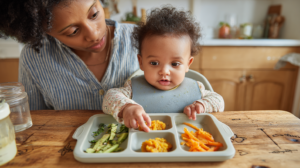
For instance, if you’re exploring Caribbean flavors with your little ones, you don’t need to source hard-to-find ingredients immediately. Start with accessible options like coconut milk, sweet potatoes, and plantains—staples that are available in most grocery stores. You can even introduce your baby to these vibrant Caribbean flavors through simple purées that honor traditional ingredients while meeting nutritional needs. The Caribbean Baby Food Recipe Book offers over 75 recipes designed specifically for infants and toddlers, featuring ingredients like mangoes, coconut milk, and beans—perfect starting points for families wanting to explore island cuisine authentically while building healthy eating habits from the beginning.
The resistance challenge is perhaps the most common. Children resist. Partners resist. Extended family members make comments. “Why can’t we just eat normal food?” becomes a frequent refrain. This is where your “why” becomes critical. When you clearly communicate that cultural food exploration is about raising globally minded, empathetic children who understand and respect differences, the resistance often softens. Frame it not as a chore or obligation, but as an adventure—a family project that makes you all smarter, more connected, and more interesting people.
Building Your Cultural Food Celebration Framework
Ready to start? Here’s a practical framework that working families use successfully, without overwhelming their schedules or budgets.
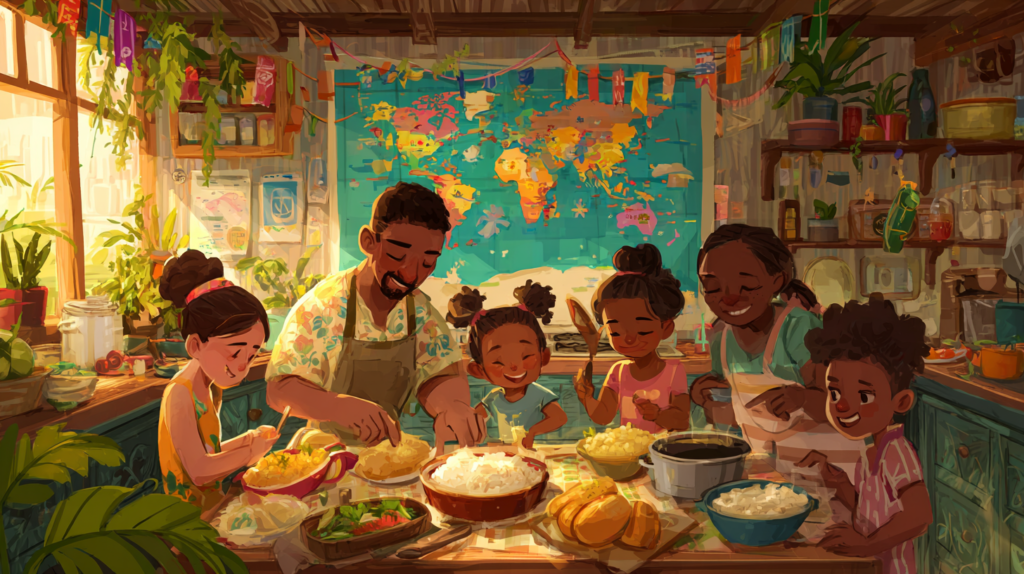
The Monthly Passport System: Each month, choose one country or culture to explore through food. This gives you enough time to dive deep without feeling rushed. Pin the country on a world map in your kitchen. During the month, you’ll cook 2-3 dishes from that culture, learn about its geography and traditions, and find ways to connect the food to broader cultural lessons.
Start your month with research. Involve your children in choosing recipes. Watch cooking videos from that culture together. Read children’s books set in that country. Listen to music from that region while you cook. This multisensory approach creates richer learning than food alone.
The Story-First Approach: Before cooking any cultural dish, tell the story. Who typically eats this food? When do they eat it? Is it for everyday meals or special celebrations? What ingredients are used, and why? Are there any traditions or customs associated with the dish? These stories transform recipes from instructions into cultural narratives.
For example, before making Ethiopian injera bread, explain that in Ethiopian culture, sharing food from a communal platter is a sign of love and community. The bread isn’t just food—it’s a symbol of togetherness. When your family eats together from the same platter, you’re participating in a meaningful cultural practice, not just trying a novel dining style.
️ Your First 6 Months: A Cultural Food Journey Roadmap
Click each cuisine to reveal starter dishes and cultural connections:
Cultural Connection: Explore Day of the Dead traditions, learn about corn’s sacred role in Mexican culture, discuss how three indigenous ingredients (corn, beans, squash) sustained civilizations for millennia
Geography Link: Compare climates between Mexico and your home—why certain ingredients thrive in different regions
Cultural Connection: Learn about spice trade history, discover why many Indians are vegetarian (religious and philosophical reasons), explore the concept of Ayurvedic food principles
Geography Link: Discuss how India’s size means dozens of regional cuisines exist within one country
Cultural Connection: Explore Japanese concepts of presentation and mindfulness in eating, learn about bento box culture, discuss seasonal eating traditions
Geography Link: Being an island nation shapes Japanese food culture—seafood prominence, limited space for farming
Cultural Connection: Practice eating with hands using injera as utensil (communal eating tradition), learn about Ethiopian coffee ceremony, discuss Orthodox Christian fasting traditions that shaped cuisine
Geography Link: Highland geography influences crops—teff grain grows at high altitudes
Cultural Connection: Explore how Caribbean cuisine blends African, Indigenous, European, and Asian influences due to complex history, learn about island-specific variations, discuss tropical ingredients and preservation methods
Geography Link: Island living creates unique food cultures—what grows locally, what must be imported, how trade winds and hurricanes affect food systems
Cultural Connection: Learn about street food culture, discuss the balance of sweet, sour, salty, and spicy in Thai cooking, explore Buddhist influences on Thai food traditions
Geography Link: Tropical climate allows year-round growing seasons, proximity to sea influences protein sources
The Adaptation Strategy: Not every cultural dish needs to be served exactly as it would be in its country of origin, especially when cooking for young children. The key is adaptation with respect. If you’re making a spicy curry, create a mild version for your children while explaining that the traditional dish is spicier. If a recipe calls for an ingredient you can’t find, research appropriate substitutes rather than just guessing. Teach your children that you’re adapting the recipe and why—this itself is a valuable lesson about accessibility and accommodation.
Making It More Than Just Food
The families who get the most from cultural food celebrations don’t stop at cooking and eating. They extend the experience into other areas of learning and play.
Create a family food journal where children can draw pictures of the dishes you’ve tried, write down (or dictate) what they learned, and rate each recipe. This documentation becomes a treasured keepsake and reinforces the learning. Years later, your children will flip through these pages and remember not just the food, but the conversations, the laughter, and the discoveries.
Connect food to other subjects naturally. When you cook Mexican food, pull out the atlas and trace the journey of cacao from Mesoamerica to the rest of the world. When you explore Japanese cuisine, learn basic Japanese phrases for “thank you for the meal” (itadakimasu and gochisousama deshita). When you make Caribbean dishes, listen to reggae or calypso music. These connections don’t require elaborate lesson plans—they happen organically when you approach cultural food with curiosity rather than just hunger.
Invite guest teachers when possible. If you know someone from the culture you’re exploring, ask if they’d be willing to cook with your family or share stories about their food traditions. These personal connections transform abstract cultural concepts into real human relationships. Your children learn that diversity isn’t just about “those people over there”—it’s about their neighbors, their classmates, their community.
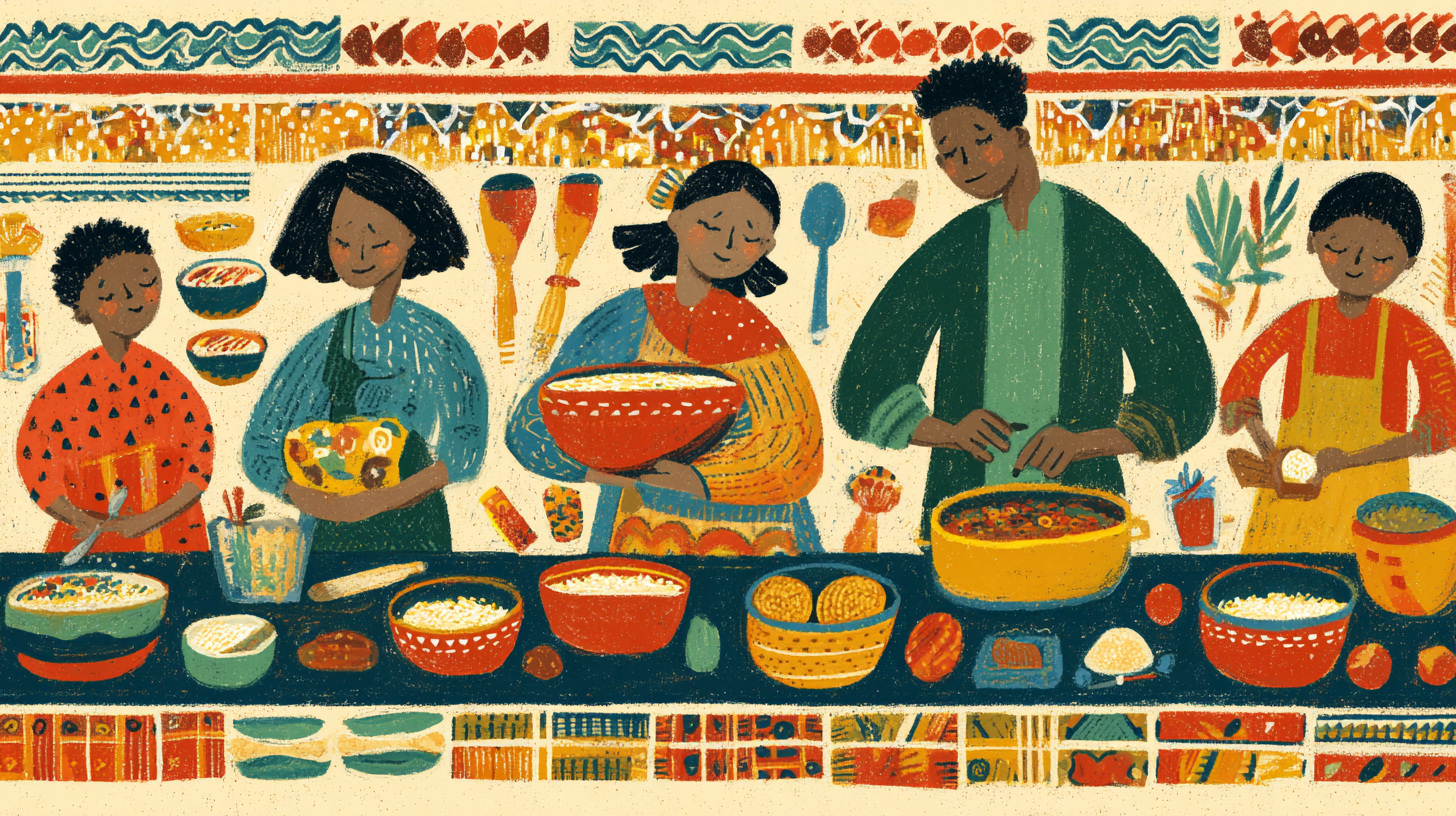
Support cultural authenticity when dining out. Once you’ve explored a cuisine at home, visit a restaurant that serves that food authentically. Talk to the restaurant staff about the dishes. Ask questions. Show your children that behind every cuisine is a community of people keeping traditions alive, often in new countries far from their homelands. This builds respect for immigrant communities and the cultural gifts they bring.
✅ Your 30-Day Cultural Food Kickstart Checklist
Track your progress—check off each action as you complete it:
The Future on Your Plate
Something profound is happening in family kitchens across the country. Parents are waking up to the reality that cultural education can’t wait for formal schooling or special occasions. In an increasingly diverse and interconnected world, children need cultural competency as much as they need literacy and numeracy.
Experts predict that over the next three to five years, cultural food exploration will become even more integrated into mainstream family routines. Digital resources are expanding—virtual cooking classes with chefs from around the world, augmented reality apps that show you how dishes are prepared in their countries of origin, online communities where families share their cultural food adventures and learn from each other.
But technology will never replace the magic of sitting around your own table, tasting something new, and having conversations that matter. The future of cultural food education isn’t about fancy tools or elaborate programs. It’s about consistent, intentional choices by families like yours who understand that raising globally minded children starts with what you serve for dinner.
The opportunities are everywhere if you look for them. Community gardens where you can grow ingredients from various cultures. Library story times featuring food-centered books from around the world. Cultural festivals in your city where you can taste authentic dishes and meet the people who prepare them. Each of these moments is a chance to deepen your children’s understanding and expand their worldview.
When you think about Caribbean flavors specifically, there’s something especially powerful about starting this journey early. The Caribbean islands offer a unique lens for cultural education because Caribbean cuisine itself is already a fusion—a delicious testament to how different cultures can blend and create something entirely new. Teaching your children about Caribbean food means teaching them about African, Indigenous, European, Indian, and Chinese influences all in one meal. For families with babies and toddlers, introducing these rich, layered flavors from the beginning sets the foundation for adventurous eating and cultural curiosity. Simple dishes like coconut rice purée, sweet potato and callaloo blends, or mango sunshine bowls can become your baby’s first taste of cultural diversity—literally.
The Gift That Keeps Growing
Here’s what researchers have discovered:
Children who grow up with cultural food exploration don’t just become adventurous eaters. By age 10, they demonstrate significantly higher levels of:
- Cultural empathy and perspective-taking
- Willingness to engage with people from different backgrounds
- Curiosity about world events and geography
- Confidence in unfamiliar social situations
- Resistance to stereotyping and prejudice
By adolescence, these children are more likely to seek out diverse friendships, advocate against discrimination, and pursue globally-oriented careers or educational paths.
But here’s the most powerful finding: When these children become adults, they overwhelmingly report that family cultural food experiences were among their most meaningful childhood memories—moments that shaped who they became.
Your Table, Your Legacy
Think about the dinner tables of your childhood. What do you remember? Chances are, it’s not just the food—it’s the conversations, the laughter, the feeling of belonging, the lessons learned without realizing you were learning.
Now imagine your children twenty years from now, remembering the table you’re creating today. They’ll remember the evening you tried making samosas together and the filling spilled everywhere. They’ll remember learning about their Haitian neighbor’s childhood through a shared meal. They’ll remember the world map on the kitchen wall with pins marking every culture you explored. They’ll remember feeling like their family was curious, open, and endlessly interested in the beautiful diversity of human experience.
These memories will shape how they move through the world. The comfort level they have with people who look, speak, or eat differently. The questions they ask. The assumptions they don’t make. The bridges they build rather than walls they erect.
Cultural food celebration isn’t just about what you’re feeding your children’s bodies. It’s about what you’re feeding their minds, their hearts, and their spirits. It’s about showing them that the world is vast and varied and absolutely worth exploring. It’s about teaching them that “different” is delicious.
Every family meal is an opportunity. Every grocery shopping trip is a chance to learn. Every conversation about food is a doorway to bigger conversations about culture, history, geography, and what it means to be human in this wonderfully diverse world.
You don’t need special qualifications to start this journey. You don’t need to be a master chef or a cultural expert. You just need curiosity, respect, and a willingness to learn alongside your children. Some meals will be amazing. Some will be disasters. All of them will be worthwhile.
The question isn’t whether you have time for cultural food celebrations. The question is whether you can afford not to make time. Because in a world that desperately needs more empathy, more understanding, and more connection across differences, your dinner table might be the most important classroom your children ever sit in.
Start tonight. Pick a culture. Find a recipe. Tell a story. Take a bite. And watch as your children’s worldview expands, one delicious meal at a time.

Kelley's culinary creations are a fusion of her Caribbean roots and modern nutritional science, resulting in baby-friendly dishes that are both developmentally appropriate and bursting with flavor. Her expertise in oral motor development and texture progression ensures that every recipe supports your little one's feeding milestones while honoring cultural traditions.
Join Kelley on her flavorful journey as she shares treasured family recipes adapted for tiny taste buds, evidence-based feeding guidance, insightful parenting anecdotes, and the joy of celebrating food, culture, and motherhood. Get ready to immerse yourself in the captivating world of Kelley Black and unlock the vibrant flavors of the Caribbean for your growing baby, one nutritious bite at a time.
- The Feeding Revolution: Why Your Everyday Meals Are Changing the World - October 13, 2026
- Your Feeding Story Matters More Than The “Perfect” One Online - October 12, 2026
- Looking Forward: Stepping Into Your Confident Feeding Future - October 11, 2026