
Feeding with Grace: The Radical Act of Choosing Compassion Over Criticism
How Harsh Are You Really? Your Self-Compassion Snapshot
Choose the statement that feels most true to your feeding experiences this week:
Here’s what nobody tells you about feeding your child: the voice in your head during mealtimes might be your biggest obstacle. Not your baby’s refusal to eat vegetables. Not the mess on the floor. Not even the judgment from other parents. It’s that relentless inner critic that turns every dropped spoon, every rejected meal, every moment of feeding struggle into evidence that you’re failing.
That voice? It’s costing you more than sleep. It’s stealing your joy, fracturing your connection with your child, and building walls where bridges should be. Because here’s the truth that changed everything for me: you cannot pour kindness into your child from an empty, criticism-filled cup.
Grace-based feeding isn’t just another parenting trend that asks you to be perfect in a different way. It’s the radical practice of extending the same compassion to yourself that you desperately want your child to feel. And the data backs this up—studies show that approximately 38% of parents now explore empathy-focused approaches, yet up to 60% still report crushing self-judgment around feeding practices. The gap between what we know and what we feel remains painfully wide.
Why We Became So Hard on Ourselves
Let’s trace this back. Historically, many cultures embedded compassion and honor into caregiving practices, but somewhere along the way, Western parenting culture morphed into a performance sport. The rise of social media amplified this shift—suddenly, every meal became an opportunity for comparison, every feeding decision a potential failure broadcasted to the world. Hashtags like #gentleparenting have garnered over a million posts, yet beneath the surface lies a darker truth: we’re performing compassion while privately drowning in self-criticism.
The gentle parenting movement has matured significantly in recent years, shifting mainstream conversations from control to empathy. But here’s what nobody mentions: for harsh, self-critical parents, this shift can feel like one more thing to fail at. You’re supposed to be gentle, graceful, compassionate—and when you snap at your toddler for throwing food for the fifth time today, the guilt compounds. You’re not just a “bad parent” now; you’re a bad gentle parent.
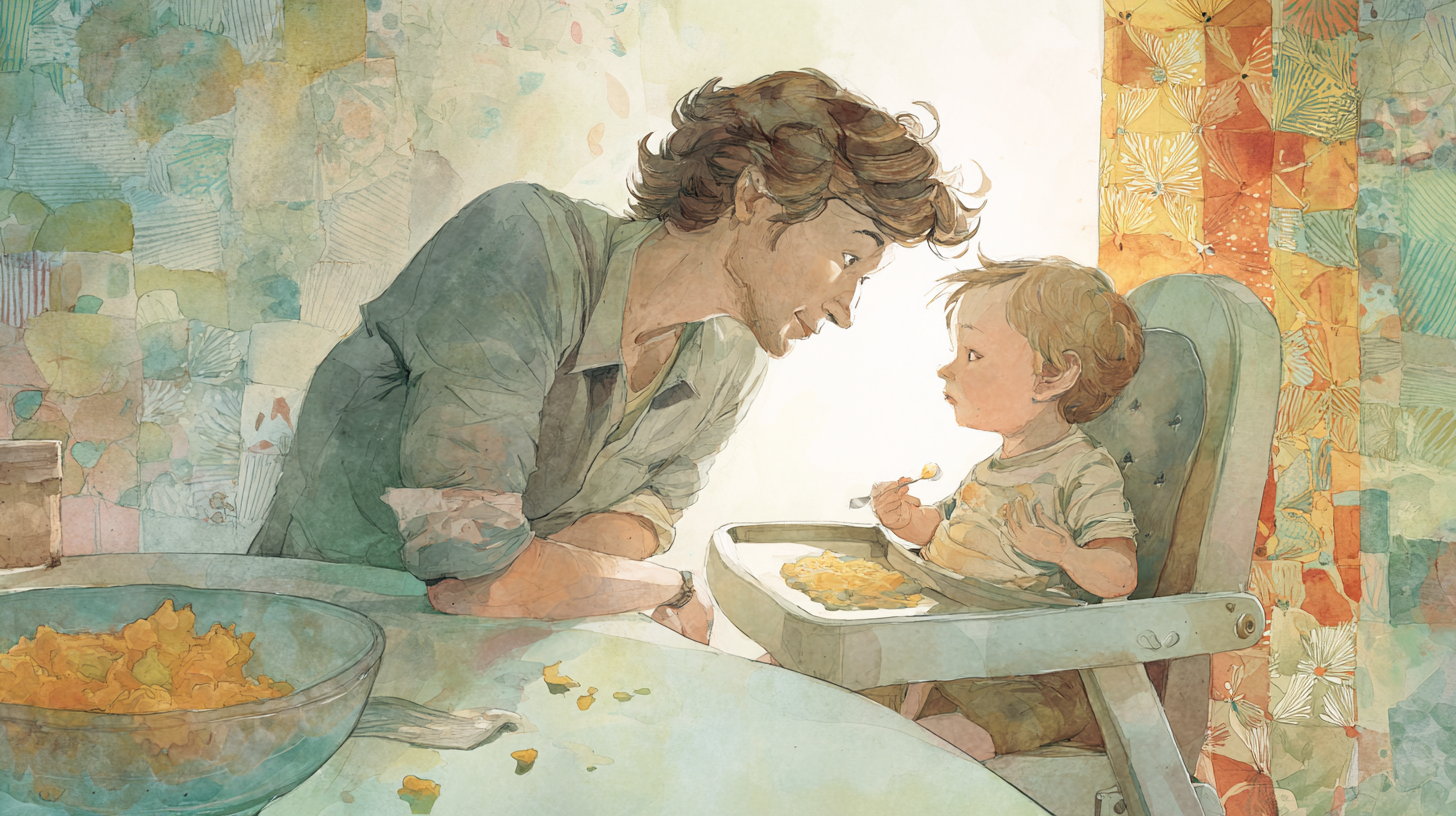
Clinical psychologists and parenting experts emphasize that children thrive in non-judgmental environments where mistakes become learning opportunities rather than character indictments. But before your child can experience that, you need to extend it to yourself. Grace isn’t something you give your child after you’ve perfected it in yourself—grace is the messy, imperfect practice of choosing kindness when everything in you wants to choose criticism.
The Hidden Cost of Harsh Self-Talk During Feeding
Every time you criticize yourself during a meal, your child absorbs that energy. They might not understand your words, but they read your tension, your frustration, your withdrawal. Research consistently shows that cultivating compassion in children correlates with healthier eating habits and reduced risk for maladaptive behaviors. But that cultivation begins with you.
When you think “I’m such a terrible parent for letting my child eat chicken nuggets again,” your body responds. Your shoulders tense. Your jaw clenches. Your voice develops an edge. Your child doesn’t need to speak your language to understand that something’s wrong—and children, being brilliant emotional detectives, often conclude that they are what’s wrong.
Your Grace Practice Library
Click each practice to reveal how it transforms your feeding experience:
The shocking truth? Most parents spend more time criticizing themselves in a single meal than they spend actually connecting with their child. Think about your last difficult feeding moment. How much mental energy went to berating yourself versus understanding what your child needed? That imbalance doesn’t just hurt you—it robs your child of your full, present, compassionate attention.
What Grace-Based Feeding Actually Looks Like
Grace-based feeding means releasing the fantasy of perfect mealtimes and embracing the reality of messy, imperfect, human ones. It means understanding that extending grace isn’t weakness—it’s the strongest thing you can do. When you choose compassion over criticism, you’re not lowering standards; you’re raising humanity.
Let me paint you a real picture: Your toddler throws sweet potato puree across the kitchen for the third time this week. In that moment, you have a choice. The critical voice says: “You’re too permissive. You’re raising a brat. You should have handled this better. What’s wrong with you?” The grace-filled voice says: “This is hard. My child is learning boundaries. I’m doing my best. We’ll try again tomorrow.”
Both voices are available to you. The critical one feels familiar, almost comfortable in its cruelty. The grace-filled one might feel foreign, even indulgent. But here’s what experts have discovered: when parents consistently choose the second voice, children develop better emotional regulation, healthier relationships with food, and stronger attachment bonds. The path of grace isn’t the easier path—it’s the better one.

Compassion-focused feeding examples include calmly acknowledging food refusal without pressure, offering choices without shaming, and respecting your child’s “no” without taking it personally. But before you can do any of that externally, you need to practice it internally. When you refuse to shame yourself for offering the same three foods your child will actually eat, you model self-respect. When you acknowledge your frustration without spiraling into self-hatred, you model emotional maturity.
The Caribbean Wisdom: Feeding with “Sweetness”
There’s a Caribbean concept that doesn’t translate perfectly into English but captures the essence of grace-based feeding: treating yourself and your child with “sweetness.” Not sugar-coating reality or avoiding necessary boundaries, but approaching the entire feeding relationship with tenderness, patience, and a deep trust that both of you are doing your best.
In Caribbean culture, mealtimes are sacred not because the food is perfect but because the connection is prioritized. A grandmother preparing simple Sweet Potato & Callaloo Rundown for her grandchild isn’t measuring herself against Pinterest standards—she’s pouring love, history, and nourishment into a bowl. That’s grace in action.
️ The Judgment Release Exercise
Click each judgment you’re ready to release. Watch them transform:
When you approach feeding with this Caribbean-inspired sweetness, you create space for both struggle and success. You can hold simultaneously that today was hard AND that you showed up. Your child refused dinner AND they’re still growing beautifully. You lost your temper AND you repaired the moment afterward. Grace doesn’t demand you choose one truth over another—it allows you to hold complexity without collapsing into self-hatred.
Rebuilding Trust: With Yourself First
Here’s the piece that trips up most well-intentioned parents: you can’t build trust with your child around food if you don’t trust yourself. Every time you override your intuition because some expert said something different, you erode self-trust. Every time you judge your reaction instead of examining what triggered it, you damage the relationship with yourself.
Grace-based feeding requires rebuilding that foundational trust. Start by noticing when you’re operating from fear versus wisdom. Fear says: “If I don’t control every bite, something terrible will happen.” Wisdom says: “My child’s body has intelligence. My role is to support, not control.” Fear masquerades as vigilance; wisdom feels like spaciousness.
Multiple authorities including psychologists and feeding therapists emphasize that parents and children thrive when mistakes are viewed as information rather than indictments. But internalizing that perspective requires consistent practice. Each time you catch yourself spiraling into criticism and choose to redirect toward curiosity instead—“What was happening for me in that moment? What was happening for my child?”—you strengthen the grace pathway in your brain.
Your Personalized Grace Story
Select one element from each category to generate your custom compassion narrative:
Trauma-informed care and intergenerational healing frameworks are keeping grace-based feeding in the spotlight, with forecasts suggesting broader adoption across parenting communities. But the movement isn’t about perfection—it’s about persistence. Every moment you choose differently rewires your default response. Neuroscience shows us that repeated patterns of self-compassion actually change brain structure, making grace progressively easier to access.
When Grace Feels Impossible: The Worst Days
Let’s address the elephant in the room: some days, grace feels like a luxury you can’t afford. You’re running on four hours of sleep. Your child has rejected every meal. You’re touched out, burned out, and one spilled cup away from losing it completely. Grace? You can barely find patience.
This is where the practice gets real. Grace isn’t reserved for your best days—it’s most needed on your worst ones. And here’s the paradox: when you extend grace to yourself on the hardest days, those days become slightly less hard. Not because circumstances change, but because you stop compounding difficulty with self-punishment.

One mother I know keeps a note on her refrigerator: “I am not the problem. The situation is hard.” On her worst days, when her toddler refuses the carefully prepared Cornmeal Porridge Dreams she made with love, she reads that note. It doesn’t make the food magically appealing to her child. But it does interrupt the cascade of self-blame that used to follow.
Critics of grace-based approaches sometimes argue it leads to permissiveness or lack of boundaries. But research consistently shows the opposite: the clearest challenges arise when compassion isn’t paired with clear, safe limits. Grace doesn’t mean letting your child eat candy for every meal. It means responding to limit-testing with calm firmness rather than anger or shame. It means saying “I understand you want dessert, and dinner comes first” without making your child feel bad for wanting what they want.
The Ripple Effect: How Your Grace Changes Everything
Here’s what happens when you consistently choose grace: your child starts choosing it too. Not immediately—children are brilliant at testing whether new approaches stick—but gradually. They watch you mess up and repair. They hear you speak kindly to yourself. They experience boundaries set with love rather than frustration. And slowly, they internalize a profound truth: mistakes aren’t catastrophes; they’re part of being human.
The rise of gentle and mindful parenting has created space for conversations about grace, but social media can sometimes make it feel performative. Most experts warn against perfectionism and emphasize that authentic connection and self-forgiveness enable healthier family dynamics. Your child doesn’t need you to be perfect—they need you to be real. They need to see you struggle and choose differently. They need to witness grace in action, messiness and all.
Your 7-Day Grace Journey Tracker
Click to mark each small victory. Watch your grace practice grow:
Think about what you want your child to internalize about food, about themselves, about making mistakes. Do you want them to approach challenges with harsh self-judgment or curious self-compassion? The answer is obvious—but here’s the uncomfortable truth: they will learn whichever one you model more consistently. Your grace practice isn’t just about improving mealtimes today; it’s about shaping how your child will speak to themselves for decades.
Practical Strategies: Grace in the Everyday Chaos
Theory is beautiful, but let’s get practical. How do you actually practice grace when your toddler just decorated your walls with mashed Yellow Yam & Carrot Sunshine?
First, acknowledge what you’re feeling without drowning in it. “I feel really frustrated right now” is different from “I’m such a terrible parent.” One is observation; the other is identity assassination. Practice the first until it becomes automatic.
Second, use the “and” technique. “I’m frustrated AND I love my child. This moment is hard AND I’m capable. I want to yell AND I’m choosing to pause.” The word “and” allows complexity. It prevents black-and-white thinking that fuels harsh self-judgment.
Third, create a grace ritual. One parent lights a candle before each meal as a reminder to choose compassion. Another takes three deep breaths while their child settles into the high chair. Find a small, consistent practice that signals to your nervous system: “We’re approaching this differently now.”
Fourth, build a grace community. Persistent cultural narratives about tough love and fear-based discipline undermine parents’ confidence in compassionate methods. Surrounding yourself with people who normalize struggle, celebrate repair, and model self-compassion makes grace sustainable. Find your people—online, in person, wherever they exist—and let them remind you of your inherent worth when you forget.
The Long View: What We’re Really Building
Feeding with grace isn’t ultimately about food at all. It’s about building a foundation of self-worth, resilience, and compassion that your child will carry forever. Every time you choose kindness over criticism—toward yourself or your child—you’re casting a vote for who they’ll become.
Forecasts suggest that skills-based, relationship-oriented parenting education will expand significantly, supported by digital content and professional support networks. Development of accessible resources and increased emphasis on repair and reconnection are anticipated to further destigmatize imperfection and promote resilience. But all of that starts in your kitchen, at your table, in the moments when you decide that grace is worth fighting for.
Some parents worry that grace-based feeding means abandoning structure or nutrition goals. But compassion and boundaries aren’t opposites—they’re partners. You can offer nutritious foods while respecting refusal. You can maintain meal schedules while allowing flexibility. You can hold limits while extending grace. The two coexist beautifully when you stop seeing them as contradictory.
Your Personalized Affirmation Wheel
Click the wheel to receive the exact encouragement you need right now:
Think about your hardest feeding moment this week. Now imagine approaching it with the same compassion you’d show a friend. You wouldn’t tell your friend they’re failing because their child refused vegetables. You’d remind them that feeding is complex, children are learning, and they’re doing their best. You’d offer understanding, not judgment. That same energy—that’s what you deserve to receive from yourself.
Tomorrow Starts with This Moment
You don’t need to wait until you feel ready to begin practicing grace. You don’t need to heal all your wounds or resolve all your triggers or become a different person. You can start exactly where you are, with the mess and the mistakes and the self-criticism still swirling. Grace doesn’t require perfection as its entry fee—it meets you in your imperfection and says, “You’re worth kindness right here.”
The journey from harsh self-criticism to genuine self-compassion isn’t linear. You’ll have days when grace flows easily and days when it feels impossibly distant. Both are part of the process. The goal isn’t to never criticize yourself again—it’s to notice when you do and choose differently more often. Progress, not perfection. Grace, not flawlessness.
Your child is watching you navigate this journey. They’re learning that adults struggle too, that change is possible, that mistakes can be repaired. They’re discovering that love doesn’t require perfection—it thrives in authenticity. When you stumble and get back up, you teach resilience. When you apologize for harsh words, you teach accountability. When you treat yourself with sweetness even on hard days, you teach self-worth.
Every meal is a new opportunity. Every moment offers a fresh choice. The spilled milk, the rejected dinner, the tantrum over the wrong plate—these aren’t tests you’re failing. They’re invitations to practice grace. Not graceful performance for an audience, but genuine, messy, imperfect choosing of compassion when criticism would be easier.
Start small. Tomorrow morning, when feeding gets hard, pause for three breaths before reacting. Notice the critical voice and thank it for trying to protect you, then choose a kinder narrative. When your child refuses the nourishing meal you prepared—maybe that Coconut Rice & Red Peas you made with such care—let yourself feel disappointed without making it mean you’ve failed. Disappointment is honest. Self-hatred is unnecessary.
Remember: feeding with grace isn’t about getting it right every time. It’s about showing up with intention, repairing when you stumble, and trusting that both you and your child are worthy of compassion exactly as you are. The meals will be messy. The journey will be imperfect. And through it all, grace will be available—not as a reward for perfect parenting, but as a practice that transforms everything it touches.
You’re not failing at feeding. You’re learning to feed with grace. And that learning—that beautiful, difficult, worthwhile learning—that’s exactly what your child needs to see.

Kelley's culinary creations are a fusion of her Caribbean roots and modern nutritional science, resulting in baby-friendly dishes that are both developmentally appropriate and bursting with flavor. Her expertise in oral motor development and texture progression ensures that every recipe supports your little one's feeding milestones while honoring cultural traditions.
Join Kelley on her flavorful journey as she shares treasured family recipes adapted for tiny taste buds, evidence-based feeding guidance, insightful parenting anecdotes, and the joy of celebrating food, culture, and motherhood. Get ready to immerse yourself in the captivating world of Kelley Black and unlock the vibrant flavors of the Caribbean for your growing baby, one nutritious bite at a time.
- Feeding with Grace: The Radical Act of Choosing Compassion Over Criticism - October 10, 2026
- The Gift of Presence: How Screen‑Free Mealtimes Quiet the Chaos and Deepen Your Bond - October 9, 2026
- Trust Your Journey: Why You Really Do Know Your Child Best - October 8, 2026