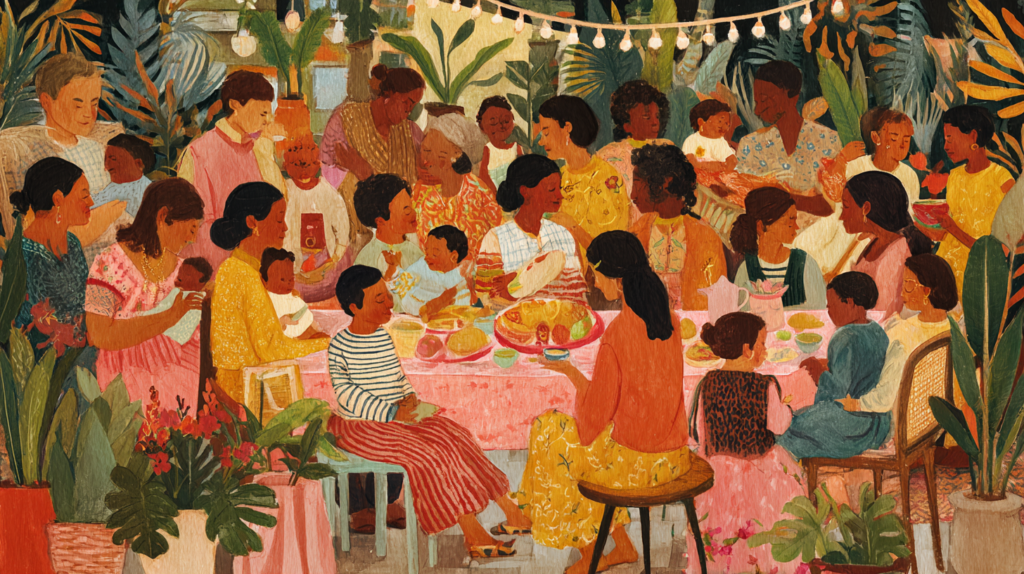
Building Your Feeding Village: How to Find the People Who Truly Have Your Back
Your baby’s feeding journey is not happening in a vacuum; it is happening in a swirl of opinions, WhatsApp messages, auntie advice, pediatric appointments, and late-night Google searches. Somewhere in that swirl lives your “village” – the people and systems that either steady your hand or shake your confidence when you are trying to nourish your little one.
The surprising truth from recent research is that your support network is not just “nice to have.” The quality of your social support can change how long you breastfeed, how confident you feel starting solids, how stressed you are at mealtimes, and even how your child learns to listen to their own hunger and fullness cues over time. A warm, responsive village nudges you toward calm, flexible feeding; a critical, intrusive village nudges you toward pressure, bribes, and battles.
This article walks you through exactly how to map your feeding village, spot who is truly supportive, set boundaries with the people who are not, and intentionally cultivate the connections that help you and your baby thrive. Along the way, you will get some honest Caribbean-flavored encouragement, practical scripts, and a few interactive tools to help you turn insights into action today, not “when life settles down.”

What Your Feeding Village Actually Is (Hint: It’s Bigger Than You Think)
When most parents hear “it takes a village,” they picture grandparents, a partner, maybe a best friend who brings over curry and holds the baby so they can shower. In feeding research, though, your village includes far more layers: your close relationships, your health-care team, community and peer support (online and offline), your workplace, and even the social policies that shape whether you can actually take the time to feed your baby the way you hope to.
At the center of your village are the people in your home or closest circle, especially the partner or co‑parent who shares the emotional and practical load. Studies that apply family stress frameworks to feeding show that the way partners share responsibilities, back up each other’s choices, and handle conflict has a direct link with how responsive or controlling feeding becomes. When stress is high and support is low, parents are more likely to fall into “just finish the bottle” or “one more bite” tactics, even when they know those strategies backfire.
Around that center is an orbit of extended family, friends, and community members who influence how safe or judged you feel. Grandparents can be powerful allies when they respect your feeding plan, or powerful saboteurs when they sneak extra bottles or push solids early “because that is how it has always been done.” Friends and other parents, whether in person or in group chats, can normalize diverse feeding choices and reassure you that your baby’s pace is still okay – or they can push one “right” way and leave you feeling like you are failing.
Beyond the personal circle, your village includes professionals and systems: nurses and midwives who guide you in those first hazy days, pediatricians and dietitians who help you troubleshoot, lactation or feeding therapists who support you through challenges, workplace policies that allow (or block) pumping and flexible schedules, community programs, and online peer support groups. Together, these layers create the context in which your feeding decisions live. The more aligned they are with evidence-based, responsive feeding, the easier it becomes to trust yourself and your baby.
How many layers does your current village cover? Tap everything you truly have.
The Science: Why Social Support Changes Feeding Outcomes
Research from the last few years keeps repeating one core message: you are not struggling because you are “too sensitive” or “not strong enough.” When parents feel supported, respected, and backed up, they are more likely to breastfeed longer if that is their goal, follow complementary feeding guidance more closely, and use more responsive feeding styles. When they feel undermined, pressured, or alone, they are more likely to feel helpless, stressed, and pulled toward battles around bottles, breasts, and bites.
Studies measuring breastfeeding self‑efficacy – basically “how confident do you feel feeding this baby?” – consistently show that higher perceived social support goes hand in hand with higher confidence and better breastfeeding outcomes. In some groups of parents, support and self‑efficacy were strongly linked, and those who felt more backed up were more likely to report successful latch, continuation of breastfeeding, and satisfaction with their feeding choices.
Similar patterns show up when babies start solids. In online surveys of parents navigating complementary feeding, the highest diet quality scores appear in families where caregivers feel confident, follow trusted guidelines, and use responsive practices like watching the baby’s cues instead of pushing a set number of spoonfuls. Those same parents often report having at least a few people in their corner who respect their decisions rather than undermining them at each meal.
Feeding does not happen in isolation from the rest of life. Research applying family stress models to feeding shows that money worries, food insecurity, couple conflict, and parental burnout can all squeeze parents into survival mode. Under that pressure, even the most well‑intentioned caregiver is more likely to bribe, pressure, or check out at mealtimes. What changes the equation is not “trying harder” but having a village that helps absorb some of that stress – whether through emotional support, practical help, or access to resources.
On the flip side, when social support is low, feeding challenges often hit harder. Studies on breastfeeding difficulties and maternal mental health find that those early struggles can trigger or worsen symptoms of depression and anxiety, especially when relatives or professionals dismiss or criticize instead of supporting. That is why building a feeding village is not just about food; it is also about protecting your mental health and your child’s long-term relationship with eating.
Supportive vs. Stressful: How to Spot the Difference
One of the most powerful shifts you can make is moving from “everyone who loves my baby is part of my village” to “only the people who actively support our feeding goals are part of our feeding village.” Love alone is not enough; your mental health and your baby’s self‑regulation need specific types of support. Research on family dynamics around feeding uses terms like “cooperation” and “undermining,” but you can think of it more simply as: does this person make it easier or harder for you to feed your baby in a way that feels right?
Supportive people tend to respect your chosen feeding method even if it is different from their preference. They ask how they can help and follow through on practical things like making you a snack while you nurse, rocking the baby after a bottle, or taking over mealtime cleanup so you can exhale. They listen when you say, “We are watching for hunger and fullness cues,” instead of lecturing about how babies should “empty the bottle.” They are curious, not defensive, when you explain a new approach like baby‑led weaning or responsive spoon feeding.
Stressful or undermining people usually show a different pattern. They might sneak extra feeds behind your back, loudly compare your baby’s weight gain to cousins, insist that your milk is not “strong” enough, or mock you for following “new‑age” guidelines. Sometimes professionals can become part of the stressful camp too: for example, a provider who dismisses your concerns, pressures you into a rigid plan without hearing your context, or shames you for supplementing instead of helping you find what works. Over time, this kind of “support” erodes trust in your own instincts and makes mealtimes feel like performance rather than connection.
Tap to explore the difference between a calming village and a stressful one.
- Listens to your goals (breastfeeding, combo feeding, formula feeding, or tube feeding) and checks in with “How can I help?”
- Backs you up in front of others, gently redirecting criticism away from you.
- Respects your boundaries around things like “no pressuring to finish the bottle” and “we do not use dessert as a reward.”
- Offers practical help – from washing bottles to cooking a simple meal – without making you feel indebted.
- Uses guilt or shame (“Good mothers breastfeed longer,” “In my day we never…”).
- Undermines your partner in front of the child or uses food to win favor (“Grandma will give you more if Mommy says no”).
- Ignores or mocks medical advice and pushes their own agenda relentlessly.
- Leaves you feeling smaller, more confused, or more anxious after conversations about feeding.
If you grew up in a culture where elders’ advice is rarely questioned, this part can feel especially tricky. In Caribbean families, for example, it is normal to hear strong opinions about when to start porridge, which bush teas cure colic, or how “proper” babies should look. The goal here is not to reject your culture; it is to honor the wisdom that truly helps while gently setting limits around the parts that increase stress or conflict with your baby’s needs. You are allowed to be the bridge between generations.
My Own Village Story (And Why It Might Sound a Bit Like Yours)
When my first baby arrived, my feeding village looked impressive on paper. My mom flew in with a suitcase full of Caribbean ingredients “for the baby,” my aunties lined up voice notes about their favorite porridges, and my friends sent endless links to feeding accounts. I had a pediatrician on speed dial, a lactation consultant recommended by the hospital, and a WhatsApp group titled “Breastfeeding Warriors” that pinged late into the night.
But in the quiet moments, I felt more judged than supported. One relative insisted the baby needed formula after every feed “just in case.” A friend made comments about how “real” success meant sticking with exclusive breastfeeding no matter how exhausted I felt. The group chat sometimes turned into a competition about ounces pumped and months breastfed, and I quietly stopped sharing when my reality no longer matched the vibe.
The turning point came one day when, between feeds, I caught myself dreading visits and obsessively rehearsing how to defend my choices. I realized that if my nervous system was this on edge, there was no way I could be the responsive, attuned parent I wanted to be at mealtimes. So I did something that felt radical at the time: I shrank my village down to the few people who left me feeling calmer after we talked about feeding, not more twisted up in knots.
I leaned more on the auntie who quietly washed dishes and made a simple pumpkin and coconut milk soup while I nursed, the friend who always asked, “What do you need from me today? A pep talk or just a listening ear?” and the pediatrician who treated formula as a tool, not a failure. That smaller but safer village gave me enough breathing space to build routines around nursing, bottles, and early spoon feeds that actually worked for my baby and my body.
Setting Boundaries With Unsupportive People (Without Losing Your Mind)
Boundaries are how you protect your feeding village from being overrun by other people’s anxiety, nostalgia, or control issues. They are not punishments; they are instructions for how to stay in a relationship with you in a way that is safe for your family. Research on family feeding dynamics suggests that when parents clearly and consistently protect certain “non‑negotiables” – like not forcing bites or not using food as a reward – children have an easier time listening to their own hunger and fullness cues.
In practical terms, boundaries work best when they are specific, calm, and repeatable. Instead of a vague “Don’t interfere,” try something like: “We are following our pediatrician’s plan to wait until six months for solids, so for now we are not giving her any mashed food. We would love your help with cuddles after feeds.” When someone comments on your baby’s body size, you might say, “We avoid talking about weight in front of the kids; we are focusing on helping them enjoy food and listen to their bodies.”
It is completely normal to worry that setting boundaries will cause conflict, especially with elders you respect or friends you do not want to lose. But remember: you can be warm and firm at the same time. Having a few scripts ready can make these moments less overwhelming, so your nervous system is not scrambling to improvise while you are already tired and touched out from feeding.
Choose a situation to see a ready‑to‑use boundary script you can tweak in your own words.
Over time, you will notice patterns. Some people adjust beautifully once you state your boundaries; they might even become stronger allies because they now understand how to show up for you. Others will test the limits repeatedly, and you may need to move them from “hands‑on helper” to “love from a distance.” Both outcomes are okay. Your responsibility is not to manage everyone’s feelings; it is to protect the conditions that allow you and your baby to eat, grow, and connect without chronic stress.
Curating the Helpers You Actually Need
Once you have started to spot who is truly supportive and where boundaries are needed, the next step is intentionally filling the gaps. The goal is not to build the biggest village; it is to build a village that covers your key needs: emotional, practical, informational, and structural. Emotional support means having at least one person who can sit with you in the hard moments without trying to fix everything. Practical support might be someone who can hold the baby while you shower, bring a pot of soup, or entertain older siblings during feeds.
Informational support is about having a small number of trusted, evidence‑based sources rather than an endless scroll of conflicting advice. That might look like a pediatrician or dietitian who respects your culture and circumstances, a lactation consultant or feeding therapist who explains options instead of issuing ultimatums, and one or two books or online resources you genuinely trust. Structural support comes from your workplace policies, local programs, and community spaces; for example, an employer who gives you flexible pumping breaks, a community health center that hosts feeding support groups, or a faith community that organizes meal trains for new parents.
In Caribbean households and diaspora communities, this might also include neighbors who drop off containers of callaloo soup, church aunties who make sure you have a hot meal after Sunday service, or cousins who share their favorite baby‑friendly versions of family dishes. These culturally grounded supports do more than fill bellies; they help your baby grow up with flavors and stories that connect them to their roots. You can lean into that richness while still adjusting recipes and routines to fit your baby’s developmental stage and safety guidelines.
Tap an ingredient your village loves using, and get a baby‑friendly idea you can ask someone to prep.
If you want a whole collection of Caribbean‑inspired baby meals your village can help you cook – from batata and apple purées to gentle dhal blends and pumpkin‑coconut mash – check out the Caribbean Baby Food Recipe Book: Easy & Healthy Homemade Meals for Infants & Toddlers. It is packed with over 75 ideas that turn family favorites into baby‑friendly dishes everyone can feel good about serving.
Online Communities, Peer Groups, and When to Scroll Away
Many modern feeding villages live partly on our phones. Internet‑based peer support – especially for breastfeeding or complex feeding situations – has been shown to boost parents’ confidence, knowledge, and sense of not being alone. Parents often say that in the middle of the night, it is the gentle replies from other tired caregivers that make the difference between giving up and trying one more feed. These groups can normalize the messy reality and remind you that there is more than one “right” way to feed a baby.
At the same time, social media can quietly crank up the pressure. Studies on parental burnout and “perfect parent” expectations suggest that constant comparison and performance can push parents toward stressing about optics instead of staying tuned into their baby’s cues. If you notice that certain accounts or groups leave you feeling more anxious, ashamed, or angry, that is good data. Your nervous system is telling you, “This is not village energy. This is a stage.”
A helpful rule of thumb: keep the online spaces that make you feel more curious, grounded, and kind toward yourself after you close the app, and step back from the ones that make you want to interrogate your baby’s every sip and bite. You can mute, unfollow, or quietly leave groups; you do not owe anyone an explanation for protecting your brain and your bonding time. Your baby cares a lot more about your presence than about any feeding aesthetic you might see online.

When Feeding Challenges Show Up: Turning to Your Village (Not Against Yourself)
Almost every family hits bumps in the feeding road. Maybe breastfeeding hurts more than you expected, your baby struggles with weight gain, solids spark gagging and drama, or mealtimes with a medically complex child feel more like a negotiation than a family moment. Research suggests that feeding difficulties affect a significant portion of children, especially those who are neurodivergent or have medical conditions, and that these challenges can be intensely stressful for caregivers.
In those moments, an aligned village can make a tremendous difference. Supportive professionals can help you tease apart what is developmentally normal, what needs extra evaluation, and what practical steps you can take this week. Family members who understand that feeding therapy is not “spoiling” but skill‑building will be more likely to honor food rules and routines set by your care team. Friends can offer non‑food support – like watching siblings during appointments or listening after a hard session – without minimizing what you are going through.
One often underused part of the village are fathers, partners, and non‑gestational parents. Interventions that deliberately include them – not just as backup bottle washers, but as equal partners in learning about feeding cues, routines, and problem‑solving – have shown promise for improving children’s diets and early stimulation. When both adults feel informed and valued, it is easier to divide tasks, share night shifts, advocate at appointments, and present a united front when relatives push back.
If feeding difficulties are affecting your mood or your relationship with your baby, that is not a sign you are failing; it is a sign that your nervous system is overwhelmed and needs more support. This could mean therapy, a support group for parents in similar situations, or community programs that pair families with home visitors or caseworkers. Using those resources is not weakness; it is village building at its most powerful.
Weaving Culture, Food, and Connection Into Your Village
One of the hidden gifts of a strong feeding village is that it helps your child grow up with food as a source of joy and belonging, not just nutrition. In Caribbean families, flavor is a love language. Think of soft plantain, mashed pumpkin with coconut milk, gentle dhal, or fragrant rice and peas adapted for small bellies. When you invite trusted relatives into your feeding plan, you are not only asking for help; you are opening the door for your baby to taste the foods that shaped your own childhood in age‑appropriate ways.
This is where practical tools can make life easier. A clear, baby‑focused guide to Caribbean ingredients and recipes gives your village something concrete to work from. Instead of debating whether allspice or thyme is “too much,” you can hand over a recipe that has already been tailored for babies, like a smooth batata and apple purée, a mild coconut rice with peas mash, or a pumpkin and callaloo blend that keeps the nutrients but goes easy on the salt and spice. That way, your auntie’s love and your baby’s safety can share the same pot.
If you would love step‑by‑step Caribbean baby recipes you can share with grandparents, babysitters, or partners, the Caribbean Baby Food Recipe Book: Easy & Healthy Homemade Meals for Infants & Toddlers is designed exactly for that. It includes ideas built around ingredients like sweet potatoes, plantains, beans, pumpkin, and tropical fruits, along with cultural notes so your little one can grow up tasting the island stories you grew up with – just in softer, safer, baby‑friendly form.
From “I’m On My Own” to “We’ve Got This”: Your Next Three Moves
At this point, you might be thinking, “Okay, I get it – the village matters. But between nap schedules and sinkfuls of dishes, how am I realistically supposed to fix my entire network?” The good news is you do not have to overhaul everything at once. Small, strategic shifts in how you define, protect, and grow your feeding village can add up quickly. Think of it less like a renovation and more like tending a garden: you pull a few weeds, water the plants that are already thriving, and then gently plant new seeds where there is space.
A simple starting point is to choose one relationship to gently upgrade, one relationship to boundary‑proof, and one new support to explore. Maybe you text a friend and say, “Can we be honest about feeding without trying to fix each other?” Maybe you tell a relative, “I really need you to trust that our plan is working for us right now.” Maybe you finally sign up for that local support group or follow a calmer, research‑based feeding account instead of the ones that spike your anxiety.
As you take those steps, remember this: your baby does not need a perfect parent with a perfect village. Your baby needs you – regulated enough to notice their cues, brave enough to protect your boundaries, and resourced enough to ask for help when feeding feels heavy. Every time you choose a calmer, kinder, more aligned village moment, you are shaping not just this mealtime, but the way your child will relate to food, their body, and connection for years to come.
Tap each step as you complete it to see how strong your feeding village is becoming.
If you are ready for that last step – bringing flavor, culture, and nutrition together in one place – you will love using the Caribbean Baby Food Recipe Book: Easy & Healthy Homemade Meals for Infants & Toddlers as a shared playbook for your feeding village. Hand it to a grandparent, flip through it with your partner, or use it to plan a weekend batch‑cooking session with friends. Let the recipes carry some of the mental load so you can spend more energy on the part only you can do: loving that little face in front of you.
One day, your child will not remember exactly how many ounces they drank or which purée you started first. What they will remember is how it felt to be fed in your home: the calm in your voice, the laughter around the table, the familiar smells of home cooking, and the way everyone seemed to be on the same team. Building your feeding village is how you create that feeling on purpose – for them, and for you.


Kelley's culinary creations are a fusion of her Caribbean roots and modern nutritional science, resulting in baby-friendly dishes that are both developmentally appropriate and bursting with flavor. Her expertise in oral motor development and texture progression ensures that every recipe supports your little one's feeding milestones while honoring cultural traditions.
Join Kelley on her flavorful journey as she shares treasured family recipes adapted for tiny taste buds, evidence-based feeding guidance, insightful parenting anecdotes, and the joy of celebrating food, culture, and motherhood. Get ready to immerse yourself in the captivating world of Kelley Black and unlock the vibrant flavors of the Caribbean for your growing baby, one nutritious bite at a time.
- The Feeding Revolution: Why Your Everyday Meals Are Changing the World - October 13, 2026
- Your Feeding Story Matters More Than The “Perfect” One Online - October 12, 2026
- Looking Forward: Stepping Into Your Confident Feeding Future - October 11, 2026