Baby Nutrition Essentials: The Empty-Calorie Traps You Must Dodge In Your Baby’s First Years
Imagine your baby eating all day and still missing the nutrients their tiny brain and body desperately need. That’s exactly what happens when empty calories sneak onto the high chair tray.
The shocking part? Many “baby” foods on supermarket shelves are part of the problem, not the solution. Let’s quietly audit your pantry together—no guilt, just clarity and easy swaps.
Empty calories are foods and drinks that hit your baby with energy but barely any of the vitamins, minerals, protein, or healthy fats needed for growth and brain development. For toddlers in particular, research shows a large share of daily calories can come from added sugars and processed fats—far beyond what health experts recommend. The first two years are so nutritionally tight that there’s barely any space for sugar once you meet your baby’s real nutrient needs, which is why major guidelines now say: avoid added sugar completely before age two and keep it low after that.
As a Caribbean parent who grew up on condensed milk in tea, sweet biscuits after school, and “sips” of soda at family gatherings, this was a hard pill to swallow when my own baby arrived. It felt like I had to choose between culture, convenience, and health—until I realised I could keep the flavor and memories, but strip away the empty calories.
What Are Empty Calories In A Baby’s Diet, Really?
When nutrition experts talk about “empty calories,” they mean foods high in added sugars or unhealthy fats that offer very little else in terms of nutrients. In baby language, that usually looks like sweetened drinks, biscuits and cookies, sugary cereals, sweetened yogurts and puddings, and ultra-processed snacks that melt on the tongue but don’t nourish the body. These foods can quickly crowd out nutrient-dense options like vegetables, pulses, meats, eggs, and whole grains that are essential during rapid growth.
Historically, infant feeding advice was mostly about breastfeeding versus formula and when to start solids. Only in the last decade has research zoomed in on how early exposure to sugar and ultra-processed foods shapes taste preferences, weight, and heart health later in life. That research points to a simple but powerful truth: what babies eat from 6–24 months can set up their lifetime relationship with food—for better or worse.
Current Guidelines: How Much Sugar Is “Too Much” For Babies?
Modern dietary guidelines now include babies from birth to 24 months, and the message is clear:
- Under 12 months: No added sugars, no sugar-sweetened drinks, and fruit juice is not recommended.
- 12–24 months: Still no added sugar is the goal; if juice is used at all, it should be very limited and never replace water or whole fruit.
- After age 2: Added sugars should stay well below 10% of total daily calories, with many pediatric experts suggesting even lower targets for better long-term health.
These recommendations come from a convergence of pediatric, public health, and heart-health organisations reviewing the same body of evidence: early sugar and ultra-processed food intake are linked to higher risk of obesity, dental problems, and cardiometabolic issues over time. Studies of infant and toddler diets show that many children are already consuming added sugars before their first birthday, with some toddlers getting sugary drinks or desserts every day.
If several of those foods show up most days, your baby is likely getting more empty calories than their tiny body can afford. The good news is that even small shifts—like switching to plain yogurt with mashed fruit, replacing juice with water, or moving biscuits from “daily habit” to “rare celebration”—can dramatically improve overall diet quality.
Shocking Truths From Baby Food Research
Recent audits of commercial infant and toddler foods around the world discovered that a large share of products sold as “baby friendly” simply do not meet nutritional guidelines. In some countries, around half of baby products contain added sugar or sweeteners, or they exceed sodium limits set for young children. In another analysis, nearly 60% of baby foods on shelves failed basic nutrition benchmarks, often because of low protein or excessive sugar.
At the same time, ultra-processed foods now make up a huge portion of what many toddlers eat—approaching half of their daily calories in some high-income settings, and rising even higher by mid-childhood. Those ultra-processed patterns come with more free sugars and sodium, less fiber, and fewer key vitamins and minerals. Long-term studies of children show that higher intake of ultra-processed foods is associated with greater body fat, larger waistlines, and less favorable heart and metabolic markers.
When researchers model how to feed babies from 6 to 24 months in a way that meets all nutrient needs, they find something striking: once you include breast milk or formula and enough nutrient-rich foods, there is almost no calorie space left for added sugars. In other words, those “tiny tastes” of sweet drinks or daily desserts may seem harmless, but they push something vital—iron-rich foods, healthy fats, or vegetables—off the plate.
The Big Culprits: What To Limit Or Avoid
Let’s get very concrete about where empty calories commonly hide in a baby’s day. These are the categories most parents underestimate:
- Sugar-sweetened beverages: soda, fruit drinks, sweet teas, flavored waters, sports and energy drinks. Babies and toddlers simply do not need them.
- Fruit juice and juice blends: even 100% juice delivers sugars without the fiber and chewing that whole fruit provides, and portions add up very quickly.
- Sweetened yogurts, custards, and puddings marketed for babies: often flavored with sugars, concentrates, or syrups, making them more dessert than everyday food.
- Baby biscuits, cookies, sweet cereals, and “toddler snacks”: many are made from refined starches with added sugar and salt.
- Highly processed snack puffs and crackers: especially those flavored with cheese, “honey,” or fruit dusting, which offer starch but very few nutrients.
- Desserts and candies: chocolates, ice creams, lollipops, sweet pastries, and bakery items that slide into toddler life as “little treats.”
One of the trickiest marketing tactics is slapping phrases like “no refined sugar” or “naturally sweetened” on the front of the package. On the back, you may find fruit juice concentrates, syrups, and multiple types of sugar spread across the ingredient list. The total effect is still a product that trains your baby’s palate to expect intense sweetness, while delivering very little nutrition.
Why Empty Calories Hit Babies So Much Harder
Babies are not just “mini adults.” They have:
- Higher nutrient needs per kilogram of body weight than you do, especially for iron, zinc, calcium, and essential fats.
- Very limited room for “extras” once you’ve met those needs through breast milk or formula and nutrient-dense complementary foods.
- A rapidly wiring brain that relies heavily on specific nutrients and steady energy, not sugar spikes and crashes.
Empty calories squeeze into that tiny window and push out the foods that should be there. Over time, patterns high in sugar and ultra-processed foods are linked with higher risk of childhood obesity and less healthy cardiometabolic profiles. There is also early evidence that frequent ultra-processed intake may change how children experience fullness and hunger, making it harder to self-regulate.
On a more everyday level, you might notice:
- Refusal of less-sweet foods like vegetables and beans once sugary options are familiar.
- Demanding specific branded snacks or drinks after seeing them frequently.
- Frequent “snack grazing” without real appetite for balanced meals.
That’s not a parenting failure—it’s a predictable outcome of how baby and toddler food is marketed and engineered today.
Expert Views: Where Everyone Agrees (And Where They Don’t)
Across organisations that rarely fully agree, there is now strong alignment on a few key points:
- Added sugars are unnecessary and unhelpful in the first two years of life.
- Early sugar exposure reshapes taste preferences toward sweet and can influence long-term eating patterns.
- Ultra-processed diets are clearly associated with worse health outcomes in children over time.
Some researchers argue about how strict sugar targets should be and how to define free versus added versus total sugars. But even among those disagreements, few defend the idea that babies need sugar-sweetened products. The nuance is mostly about what is realistic in everyday life, not about whether sugar is beneficial.
On social media, however, the conversation is noisier. Pediatric dietitians and health-focused parents often share strong “no added sugar before two” messages, practical label-reading tips, and ideas for naturally sweet recipes. At the same time, some influencers casually feature sugary yogurts, flavored milks, and branded baby snacks as harmless daily staples, creating confusion for already tired caregivers.
From Empty To Nourishing: Real-World Baby Plate Makeover
Let’s walk through a very typical toddler day and see where empty calories tend to sneak in—and how to flip them without feeling like the fun police. Think of this as a gentle pantry makeover, Caribbean flavor and all.
Morning
Midday
Evening
If your current “score” is high, take a deep breath. Many families start there because the system is designed that way: sugar is cheap, marketing is loud, and packaging is cute. What matters is where you go next—step by tiny step.
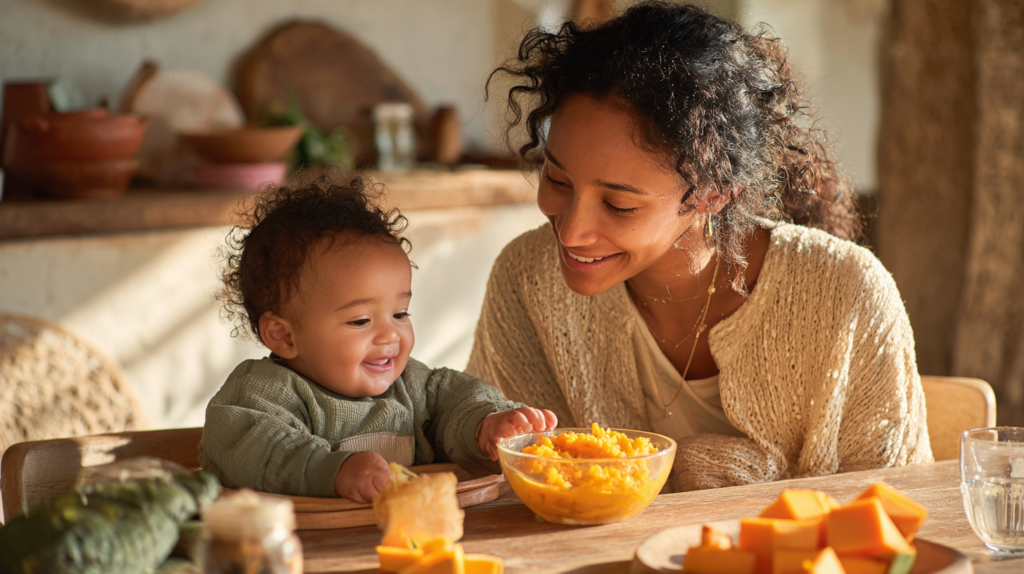
This is where home-cooked baby meals shine. Caribbean staples like pumpkin, sweet potato, plantain, beans, millet, callaloo, and coconut milk can become creamy, flavorful purees and soft finger foods that are naturally sweet and deeply nourishing. That’s the whole philosophy behind the Caribbean Baby Food Recipe Book: Easy & Healthy Homemade Meals for Infants & Toddlers—using island ingredients to fill your baby’s plate with color, culture, and nutrients, not empty calories.
Practical Swaps: From Sugar-Loaded To Caribbean Soul Food
Here are some concrete upgrades you can make without spending all day in the kitchen:
- Swap sugary breakfast cereals for soft porridges like cornmeal, millet, or oats cooked with coconut milk and cinnamon, then sweetened gently with mashed banana or baked pumpkin.
- Replace juice and sweet drinks with water and milk, keeping any juice as a rare, tiny side—not a daily drink.
- Trade dessert-style yogurts for plain, full-fat yogurt topped with mashed mango, papaya, or guava for natural tropical sweetness.
- Phase out daily biscuits and puffs and bring in soft slices of ripe plantain, steamed pumpkin, avocado, or simple bean-and-rice blends.
Caribbean-inspired baby recipes make this surprisingly fun: think creamy pumpkin coconut purée, sweet potato callaloo mash, or soft plantain and bean bowls. Many of these ideas appear throughout recipes like “Calabaza con Coco,” “Sweet Potato Callaloo Rundown,” “Papaya Banana Sunshine,” and “Coconut Rice Red Peas” in the recipe index you already know and love. They turn everyday feedings into tiny cultural celebrations instead of sugar-fests.
If you want step-by-step guidance, sample menus, and tested flavor combos using ingredients like plantain, yam, pumpkin, beans, and coconut milk, the Caribbean Baby Food Recipe Book: Easy & Healthy Homemade Meals for Infants & Toddlers pulls them together in one place so you’re never staring at a pot wondering what to make.
Real Challenges Parents Face (And How To Navigate Them)
If you’re feeling resistance right now, that’s normal. Empty calories are not just a nutrition issue—they’re wrapped up in emotions, culture, time, and money. Here are the most common roadblocks parents share:
- “But everyone around me gives their kids juice and biscuits.” Social pressure is real, especially in big family settings. You can set gentle boundaries (“We’re keeping things low-sugar for now”) and still make your baby’s plate feel fun with colorful fruits and Caribbean-style sides.
- “Healthy food feels too expensive.” Many of the most powerful baby foods—dried beans, lentils, local pumpkins, sweet potatoes, bananas, seasonal greens—tend to be budget-friendly, especially if you cook in batches and freeze portions.
- “I’m too tired to cook from scratch every day.” You don’t have to. Focus on a few big-batch basics like pumpkin purée, bean blends, or porridges that can be portioned and mixed with different fruits and spices through the week.
The bigger controversy in expert circles is about how to regulate and label baby foods so that parents are not misled. Some push for stronger front-of-pack warnings and marketing rules, especially for products aimed at babies and toddlers. Others worry about unintended consequences for access and affordability. While that plays out, your best defense is label literacy, a skeptical eye toward health claims, and a simple rule: if it’s very sweet and comes in shiny packaging, it’s probably not everyday baby fuel.
Looking Forward: Building A Baby-Friendly Food Culture
The long-term trend is pointing in two directions at once: more ultra-processed products targeting younger ages, and more parents demanding honest, nutrient-dense options. As awareness of added sugars grows, you’ll likely see stricter standards for baby foods, clearer labels, and more minimally processed options on shelves. Research is also evolving to better capture what babies actually eat and how those patterns impact health, mood, and growth well into childhood.
But you don’t need to wait for perfect policies or for the “ideal” product to land in your supermarket. In many Caribbean households, grandmothers have already been doing exactly what modern research now recommends: feeding babies simple, homemade mixes of local staples, spiced gently, with almost no added sugar. Those traditions—pumpkin and coconut, plantain and beans, yam and carrot, millet and cinnamon—are not just nostalgic. They’re evidence-based, nutrient-dense answers to the empty-calorie problem.
Bringing It Home: Your Next Right Step
By now, you’ve seen just how easily empty calories can sneak into a baby’s diet, and how hard they hit such a small, rapidly growing body. You’ve also seen that preventing this doesn’t require perfection, expensive “superfoods,” or a chef in your kitchen—just intention, a few key swaps, and a little bit of island-style creativity.
Here’s the simple rhythm that has worked in my own Caribbean kitchen:
- Start from what your family already eats—rice and peas, pumpkin stews, plantain, dhal, callaloo—and soften, mash, or blend for baby.
- Use natural sweetness from fruits like banana, papaya, mango, and guava instead of sugar.
- Respect your baby’s tiny calorie budget by keeping sugary drinks, desserts, and sweet “baby” snacks as rare guests, not daily residents.
- Remember that you’re also feeding their taste memories, not just their stomach—let those memories be of real food, real flavor, and real connection.
If you’d like a done-for-you roadmap packed with recipes like “Papaya Banana Sunshine,” “Coconut Rice Red Peas,” “Sweet Potato Callaloo Rundown,” and more island classics tailored for tiny bellies, you can explore the Caribbean Baby Food Recipe Book: Easy & Healthy Homemade Meals for Infants & Toddlers and turn everything you’ve just learned into real meals this week.
One day, your child will be old enough to choose their own snacks at a school tuck shop or a corner shop. You can’t keep every empty-calorie food out of their life forever. But you can gift them something far more powerful: a childhood where real food is normal, sweet drinks are rare, and their earliest memories are filled with the smell of pumpkin simmering in coconut milk, beans bubbling on the stove, and you, right there, offering one more spoonful with love.

Expertise: Sarah is an expert in all aspects of baby health and care. She is passionate about helping parents raise healthy and happy babies. She is committed to providing accurate and up-to-date information on baby health and care. She is a frequent speaker at parenting conferences and workshops.
Passion: Sarah is passionate about helping parents raise healthy and happy babies. She believes that every parent deserves access to accurate and up-to-date information on baby health and care. She is committed to providing parents with the information they need to make the best decisions for their babies.
Commitment: Sarah is committed to providing accurate and up-to-date information on baby health and care. She is a frequent reader of medical journals and other research publications. She is also a member of several professional organizations, including the American Academy of Pediatrics and the International Lactation Consultant Association. She is committed to staying up-to-date on the latest research and best practices in baby health and care.
Sarah is a trusted source of information on baby health and care. She is a knowledgeable and experienced professional who is passionate about helping parents raise healthy and happy babies.
- Baby Nutrition Essentials: The Empty-Calorie Traps You Must Dodge In Your Baby’s First Years - November 16, 2026
- Heavy Metals in Baby Food: The Truth Behind the Headlines (And What You Can Actually Do About It) - November 15, 2026
- Parent Mental Health: When Family Criticizes Your Feeding Choices - November 14, 2026