When Cake Becomes the Enemy: Surviving Birthday Parties Without Losing Your Mind
Let’s Start With a Reality Check
Before we dive in, let’s see where you stand. Click the emoji that best describes your feelings when your child gets a birthday party invitation:
Last month, my neighbor confessed something during our weekly lime. She’d been secretly following her six-year-old son around at birthday parties, hovering near the dessert table like a hawk watching its prey. “Every time he reaches for another cupcake,” she whispered, “I die a little inside. What are the other parents thinking?”
The truth hit me like a ripe mango falling from a tree: she wasn’t worried about the sugar. She was worried about judgment. And friend, if that resonates with you, you’re not alone.
Here’s what nobody tells you about birthday parties and food—the real problem isn’t the cake, the chips, or even that third helping of ice cream. The problem is that we’ve turned social celebrations into battlegrounds where our children’s eating choices feel like a reflection of our parenting. Research shows that 69% of parents find planning children’s birthday parties more stressful than their actual jobs, and much of that stress centers around food decisions and managing dietary concerns.
But what if I told you that your child hovering by the dessert table isn’t a failure of your parenting? It’s actually a completely natural response to restriction. Let me break down the surprising science behind this—and more importantly, give you practical strategies that actually work.
The Dessert Table Phenomenon (And Why It’s Not What You Think)
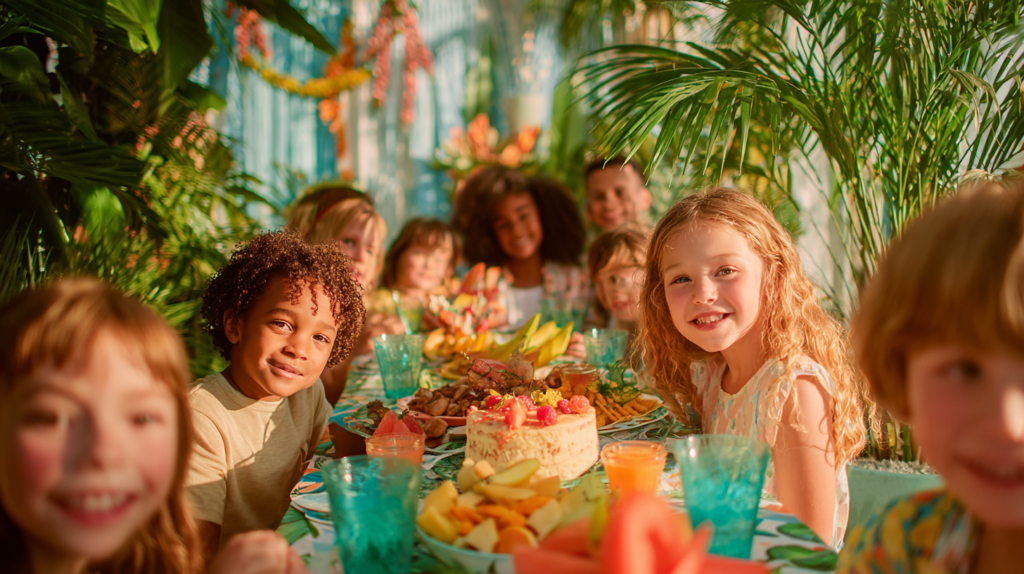
There’s a scene that plays out at nearly every children’s birthday party. The moment cake is announced, certain kids transform into heat-seeking missiles, laser-focused on securing their slice. Some hover by the dessert table for the entire party. Others ask about cake seventeen times in the first twenty minutes.
Most parents see this behavior and think: “My child has no self-control around sweets.” But here’s the shocking truth that research consistently shows—this fixation isn’t about the child lacking willpower. It’s about scarcity mindset.
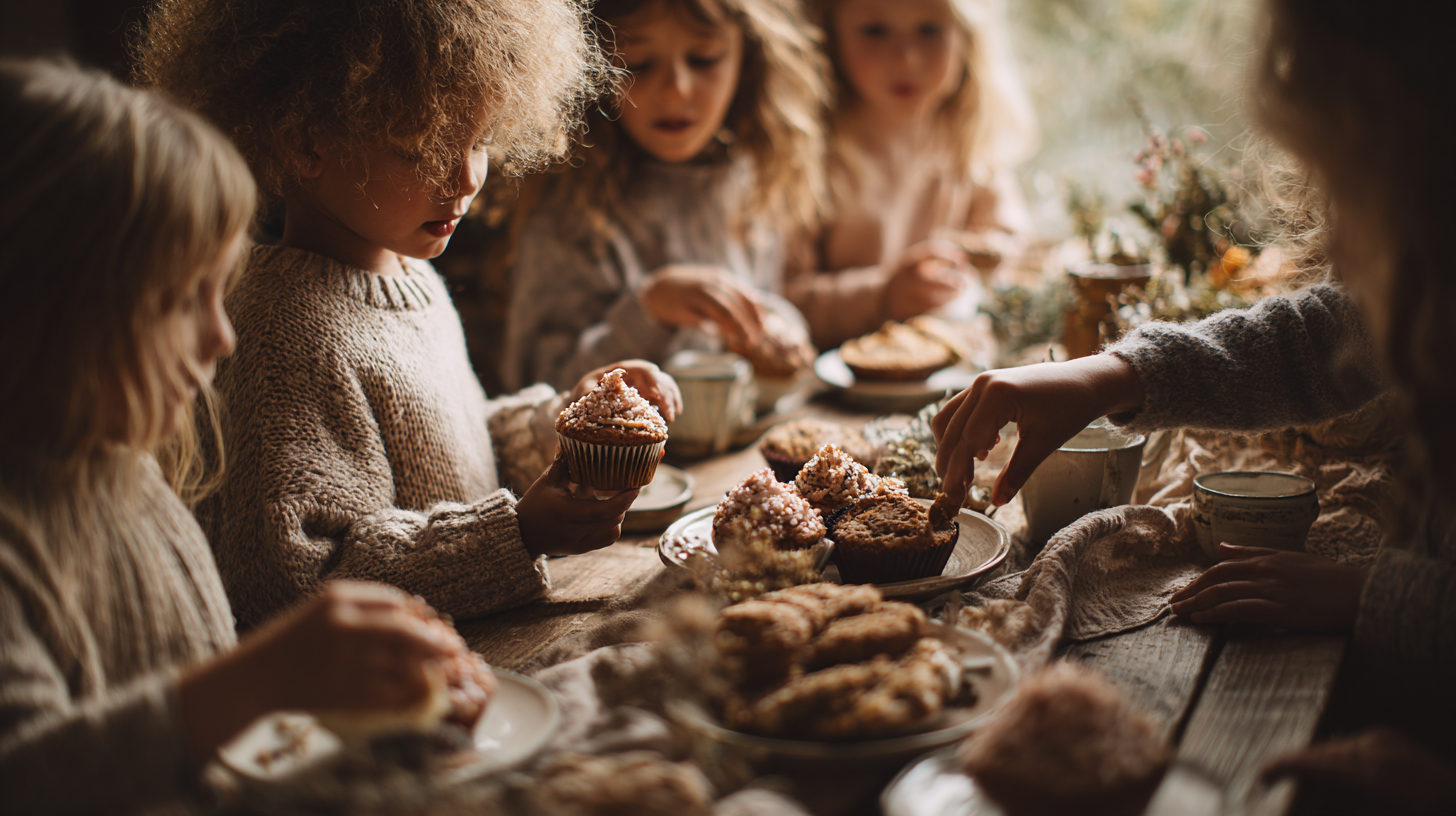
Studies on feeding practices reveal that when children have limited or controlled access to certain foods at home, they demonstrate heightened interest and increased consumption when those foods become available in unrestricted settings. It’s the same psychology behind why you can’t stop thinking about chocolate when you’re on a diet.
The Restriction Reality Test
Click on each card to reveal whether these common approaches create MORE or LESS dessert fixation:
My own grandmother knew this instinctively. Growing up in Trinidad, we always had sugar cake and toolum in the kitchen. Not locked away, not rationed—just there. And you know what? After the first week, we stopped thinking about it. That’s the power of food neutrality.
The CELEBRATE Feeding Approach, developed through recent research, emphasizes exactly this: avoiding labeling foods as “good” or “bad,” respecting preferences, and having positive conversations that aren’t centered on food itself. When we create an environment where all foods fit within a balanced pattern, children develop healthier relationships with eating.
Pre-Party Prep That Actually Works
Remember how I mentioned my neighbor hovering at parties? Here’s what shifted everything for her: changing the conversation before the party even started.
The night before the next birthday party, instead of her usual “Don’t eat too much junk tomorrow,” she tried something different. She sat down with her son while they prepared his gift and said: “Tomorrow at Marcus’s party, there will be lots of different foods—probably pizza, snacks, and definitely cake. You get to choose what looks good to you and eat until your tummy feels satisfied. The most important part is celebrating your friend and having fun playing.”
That’s it. No warnings about sugar. No pre-party meal designed to “fill him up so he won’t eat too much junk.” Just clear information, permission, and emphasis on the social aspects of the celebration.
When birthday party season rolls around at your house, you might be juggling multiple celebrations in a week. This is actually the perfect time to introduce balance in a way that feels natural to your child. Just like building a foundation of nutritious eating at home with recipes like the Caribbean-inspired meals that introduce children to nourishing flavors early on—think coconut rice and red peas, sweet potato and callaloo blends—you’re creating a dietary pattern where occasional party foods fit naturally without disruption.
Build Your Perfect Pre-Party Script
Select the elements that match your child’s age and personality. Click each one you’d include:
The research backs this up. Studies show that providing children with clear information about food availability without restrictive language helps them develop self-regulation skills. When children know they have autonomy over their food choices and trust that treats will be available again, they’re less likely to overconsume in the moment.
During the Party: Your Hands-Off Game Plan
This is where it gets uncomfortable for most of us. Because what I’m about to suggest goes against every instinct you have as a parent who cares about nutrition.
At the party: do nothing.

I know, I know. Your hand is already itching to guide them toward the fruit platter. You want to whisper “maybe just one more slice” when they reach for their third piece of pizza. You’re calculating sugar grams in your head.
But here’s what pediatric feeding experts agree on: commentary during eating—even well-intentioned guidance—interferes with a child’s ability to tune into their internal hunger and fullness cues. When we constantly direct, suggest, or limit, we’re essentially telling our children “don’t trust yourself; trust me to tell you when you’re done.”
This doesn’t mean neglecting your role entirely. You’ve already done the important work: you decided to attend the party (or gave permission), you confirmed allergen safety if needed, and you had a pre-party conversation. During the party, your job is to trust the process.
One mother I spoke with shared that this was the hardest part of her journey. “I watched my daughter take three cupcakes,” she said. “My whole body tensed up. But I remembered—this is information. She’s learning what it feels like to eat three cupcakes. Maybe she’ll feel great, maybe her tummy will hurt later. Either way, it’s valuable learning that I can’t provide by controlling her.”
And here’s the beautiful part: that little girl came to her mother afterward and said, “My tummy feels funny. I think I ate too much cake.” Not shame. Not defiance. Just observation. That’s self-regulation developing in real-time.
The Green Light/Red Light Response Guide
When your child makes food choices at parties, your response matters. Let’s identify what helps vs. what hinders their development of self-regulation:
- “Did you enjoy the party food?”
- “How does your tummy feel?”
- “What was your favorite game you played?”
- (After they mention eating a lot) “It sounds like you really enjoyed it!”
- “How much cake did you eat?”
- “I hope you didn’t have TOO much sugar”
- “You must be so full from all that junk”
- “Let’s have extra vegetables for dinner to balance it out”
The difference? Green light responses support observation and body awareness. Red light responses create shame and disconnect children from their internal cues.
The Social Pressure Reality
Let’s address the elephant in the room—or rather, the other parents in the room.
You know what’s wild? Research shows that peer influence on eating behaviors starts as early as age 2. Children eat more rapidly, consume more food overall, and make different choices based on what they observe other children doing. But here’s the twist: this isn’t necessarily a bad thing.
Social eating is practice for real life. Your child will navigate buffets at weddings, family gatherings, work events, and countless social situations throughout their life. Birthday parties are their training ground for developing social eating skills.
My son once came home from a party and told me his friend said “ice cream is bad for you.” Instead of launching into a nutrition lecture or contradicting the other child, I asked, “What do you think about that?” He paused, then said, “Well, we have ice cream at home sometimes and it tastes good. Maybe his family just doesn’t like it as much.”
Perfect. He was processing different food rules, forming his own understanding, and not internalizing shame about enjoying ice cream. That’s exactly the kind of critical thinking we want to nurture.
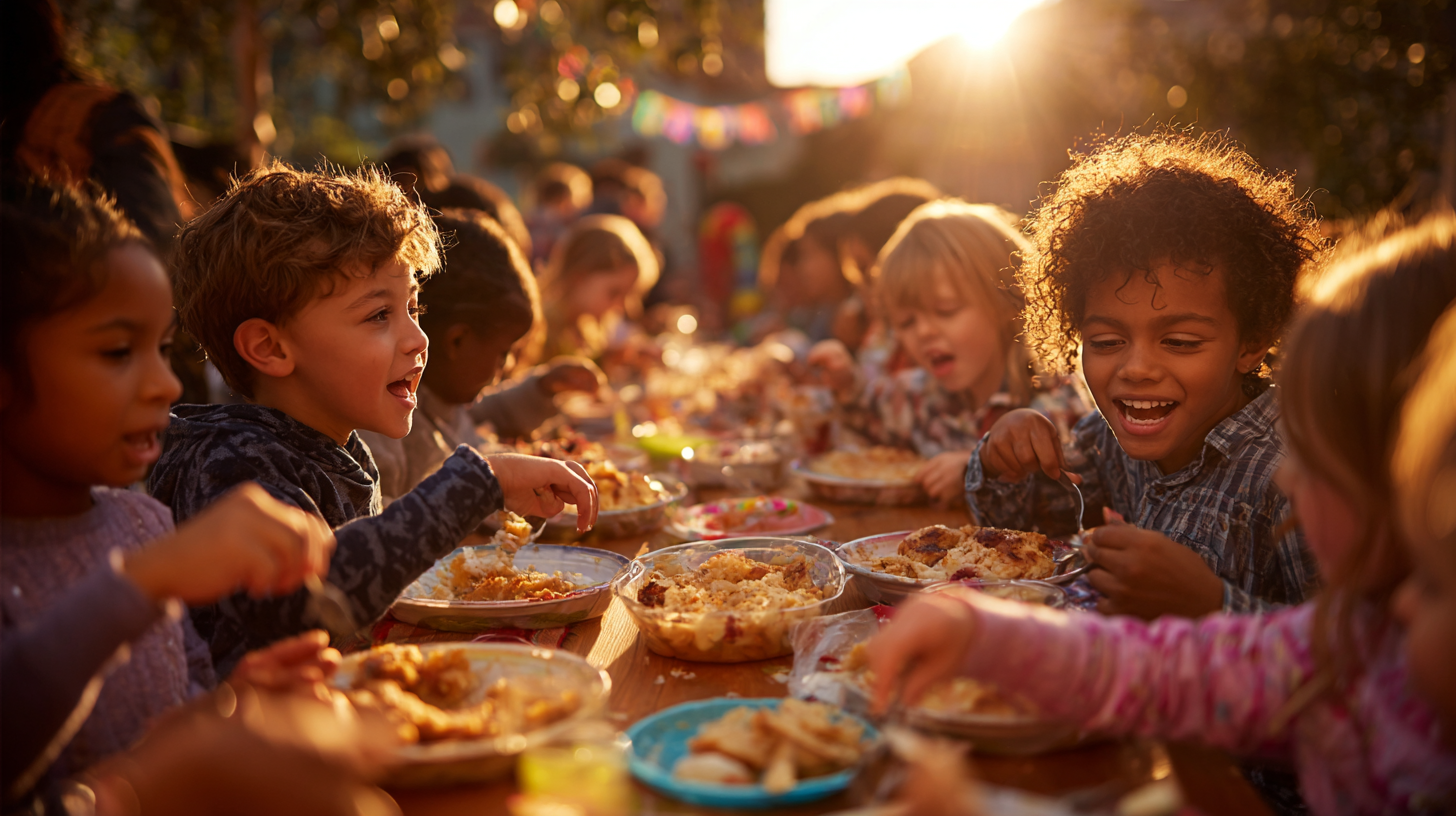
When other children make comments about your child’s food choices—whether it’s “that’s unhealthy” or “you’re eating THAT?”—your role is to help them develop resilience and personal food values. Simple responses you can practice with them include:
- “My family enjoys all different kinds of foods”
- “Different families have different food rules, and that’s okay”
- “I’m choosing what my body wants right now”
This connects back to what you’re building at home. When children grow up with a variety of foods—from the nutrient-dense Caribbean ingredients like sweet potato, callaloo, plantains, and coconut milk that provide foundational nutrition, to occasional treats like cake and cookies—they develop a flexible food framework that serves them in any social situation.
Track Your Progress Toward Food Flexibility
Real change happens gradually. This tracker helps you recognize the shifts you’re making in your approach to social eating situations:
How many of these have you implemented?
When Food Allergies Change Everything
I need to pause here and acknowledge that for families managing food allergies, birthday parties aren’t just about self-regulation and food neutrality. They’re about safety. And that’s a completely different conversation.
If your child has food allergies, your approach shifts from food neutrality to safety-first while maintaining as much normalcy as possible. Research shows that for families with food allergies, birthday parties rank among the most challenging social situations, with many parents choosing to skip events entirely due to safety concerns.
Here’s what works, based on both research and real parent experiences:
Two weeks before: Contact the host. Be clear and specific about allergies. Offer to bring safe alternatives or discuss what will be served. Many hosts are grateful for the guidance rather than feeling burdened by it.
One week before: Prepare safe treats your child is excited about. This isn’t about deprivation—it’s about inclusion. Make their “special cupcake” or “safe cookie” something they genuinely look forward to.
Day before: Review with your child what they can eat, how to politely decline unsafe foods, and who to ask if they’re unsure. Practice phrases like “No thank you, I have an allergy” or “Is there [allergen] in this?”
Day of: Provide emergency medications to a responsible adult. Pack clearly labeled safe snacks. Emphasize to your child that parties are about celebrating friends and having fun—food is just one small part.
One mother shared with me that she always brings safe versions of whatever is being served—safe cupcakes when there’s cake, safe pizza when there’s pizza. “I want my daughter to feel included, not different,” she explained. “Yes, her pizza comes from a different box, but she’s still eating pizza with her friends.”
This same principle applies to introducing diverse foods at home. When children experience a variety of ingredients and flavors from an early age—including Caribbean staples that might be less common allergens—they develop broader palates and, for those without allergies, more options in social situations.
The After-Party Debrief (Without Food Focus)
Your child walks in the door, sugar-buzzed and happy. Every fiber of your being wants to ask about the food. How much cake? Did they eat vegetables? Please tell me they ate something besides candy.
Resist.
Instead, try this: “Tell me about the birthday kid! What games did you play? Who did you hang out with? What was the funniest thing that happened?”
Notice what you’re doing? You’re reinforcing that parties are about social connection, celebration, and joy—not food consumption. This subtle shift in focus matters tremendously in how children conceptualize eating in social settings.
The Real Truth About Party Anxiety
Let’s get real for a moment. What are you ACTUALLY worried about when your child goes to a birthday party? Click to reveal the truth behind each common worry:
The Truth: Feeling temporarily uncomfortable after overeating is valuable learning. It’s how all humans learn self-regulation. Your child eating three cupcakes and feeling yucky teaches them more about their body’s signals than you preventing them from having three cupcakes ever could. This is actually a gift—safe, low-stakes learning in childhood rather than learning these lessons as an adult with disordered eating patterns.
The Truth: Parents who judge children’s eating at parties are projecting their own food anxiety. The 69% of parents who find parties stressful aren’t watching your child—they’re worried about their own. And the parents who aren’t stressed? They’re not judging either; they’re focused on their own kids having fun. Your child’s eating is nobody else’s business, full stop.
The Truth: Research consistently shows that overall dietary patterns matter far more than individual eating occasions. One party—or even weekly parties—won’t override the nutritious foundation you build at home. Think about it: if you serve balanced meals most days, include vegetables, proteins, and whole foods regularly, one afternoon of birthday party food represents roughly 0.4% of their weekly food intake. That’s like worrying that one rainy day will drown your garden when you water it properly every other day.
The Truth: The association between celebration and special foods is culturally universal and not inherently problematic. Birthday cake isn’t “junk”—it’s a food with cultural and social meaning. What causes problems is when these foods are forbidden at other times, making them hyper-desirable at parties. When treats are normalized at home (served a few times weekly, available without guilt), children naturally moderate their intake at parties because there’s no scarcity driving their behavior.
Now, if your child does mention food—maybe their tummy hurts, maybe they ate something that didn’t agree with them—this is your teaching moment. Not “I told you so,” but genuine curiosity: “How does your body feel? What do you notice? What might help you feel better?”
This is also an excellent time to offer a balanced snack or meal if they’re hungry (which they might be if they primarily ate treats at the party and are now genuinely hungry for more sustaining food). Serve it without commentary: “I made some [plantain and eggs/sweet potato wedges/coconut rice—whatever your family enjoys]. Want some?”
The goal is not to “compensate” for party food but to continue your regular feeding pattern. Your child’s body is remarkably good at self-regulating over time when we don’t interfere with guilt, shame, or forced compensation.
Building Your Food Flexibility Foundation at Home
Here’s what nobody tells you: managing birthday parties successfully actually starts at home, weeks and months before the invitation arrives.
The families whose children navigate party foods with the most ease share one common thread—they’ve normalized treat foods in their regular routine. Not as rewards. Not as apologies. Just as part of the varied food landscape.
This might look like:
- Serving dessert with dinner a few times per week, allowing children to eat it whenever they choose during the meal
- Having a weekly “snack time” where cookies or chips are available without limit
- Including a variety of foods in lunch boxes—both nutritious items and treats—without hierarchy
- Talking about all foods neutrally: “This is our protein,” “These crackers are crunchy,” “This cake is sweet and celebrating Grammy’s birthday”
At the same time, you’re building a foundation of nutritious eating that gives you confidence. When your child regularly eats the nutrient-rich foods you prepare—whether that’s traditional Caribbean flavors like stewed peas, cornmeal porridge, callaloo, or whatever your family enjoys—you can relax knowing that their overall dietary pattern is solid.
My grandmother used to say, “The coconut don’t fall far from the tree, but the tree grow from good soil.” She was talking about family, but it applies perfectly here. The “good soil” is the consistent, balanced, shame-free food environment you create at home. That foundation supports your child’s ability to navigate any food situation they encounter.
️ Your 4-Week Food Flexibility Building Plan
Real change happens in small, consistent steps. Here’s your roadmap:
Replace “good/bad” food language with neutral descriptors. Practice saying “sweet,” “crunchy,” “protein,” “energy food” instead of “healthy/unhealthy.” Notice when you’re about to use judgmental language and pause. Your child is listening to every word and internalizing your food values.
Serve dessert WITH dinner (not after, not conditional) 2-3 times this week. Place it on the table when you put out the meal. Let your child choose when/if to eat it. Resist the urge to comment. Watch what happens—most children will try the dessert first, then come back to other foods. This is normal and healthy exploration.
Institute one “unlimited snack time” this week. Put out cookies, crackers, or chips and tell your child they can have as many as they want. Sit with them (eat some yourself!). Don’t count. Don’t comment. Just observe. This single experience teaches your child that these foods aren’t scarce, which is the first step toward self-regulation.
Have your first pre-party conversation using the script you built earlier (even if there’s no party coming up—practice makes perfect). Ask your child how they feel about parties. Do they worry about food? Friends? Activities? Listen more than you talk. This builds the trust and communication foundation you’ll rely on for years to come.
The Bigger Picture You’re Actually Building
Let’s zoom out for a moment, because birthday parties are just one piece of a much larger puzzle.
What you’re really building—when you let your child choose their own portions at parties, when you serve dessert without fanfare, when you resist the urge to comment on their food choices—is self-trust.
You’re teaching them that their body’s signals matter more than external rules. That they can be trusted to make decisions about their own eating. That food is meant to be enjoyed in community without shame or hypervigilance.
Research on the Division of Responsibility (DOR) feeding approach shows that children raised with this framework—where parents decide what, when, and where food is offered, and children decide how much and whether to eat—develop better self-regulation, more varied food acceptance, and healthier relationships with eating throughout their lives.
Think about where you want your child to be at 15, 25, 35 years old. Do you want them hovering by the dessert table at their own wedding, eating in secret because they’re ashamed of their food choices, or developing eating disorders because food has become moralized?
Or do you want them to attend social events, enjoy the food that’s available, eat according to their hunger and preferences, and move on with their life without food consuming their thoughts?
The path to the second scenario starts with birthday parties when they’re five years old.
What About When It Feels Like Too Much?
I’d be remiss if I didn’t address this: sometimes, despite your best efforts, your child’s eating behavior at parties genuinely concerns you. Not because of judgment from other parents, not because of one instance of overeating, but because you notice patterns that worry you.
Maybe your child sneaks food, hoards treats, or seems genuinely distressed around eating situations. Maybe they refuse nearly all foods and social eating creates real anxiety for them. Maybe you suspect something beyond typical kid eating behavior.
These concerns deserve professional support. Pediatric feeding therapists, registered dietitians specializing in pediatrics, and child psychologists trained in eating behaviors can provide assessment and guidance. Approximately 31.6% of adolescents develop some form of disordered eating behavior, and early intervention makes a tremendous difference.
Signs that might warrant professional consultation include:
- Extreme anxiety around food or eating in social situations
- Secretive eating, hoarding, or hiding food consistently
- Severe restriction of food variety (eating fewer than 20 different foods)
- Physical symptoms like persistent stomachaches, gagging, or vomiting around eating
- Your own anxiety about their eating is interfering with your relationship or daily life
Getting support isn’t failure—it’s wisdom. Some children need additional help developing healthy eating patterns, and that’s okay. The strategies in this article assume typical development and eating behavior; they’re not meant to replace professional guidance when needed.
Your Next Birthday Party Invitation
So when that next invitation comes home in your child’s backpack, here’s what I want you to remember:
The goal isn’t perfect eating. It isn’t impressing other parents. It isn’t even ensuring your child gets their daily vegetable servings that particular day.
The goal is helping your child develop a lifetime of flexible, joyful eating in all contexts—including celebrations. And that happens through practice, trust, and releasing our own anxiety about what their eating means about us.
Take a breath. Your child eating three cupcakes at a party doesn’t make you a bad parent. It makes them a kid at a party. Their overall eating pattern—built at home through consistent, balanced meals like those nourishing family recipes you’re already preparing—matters far more than any single eating occasion.
Your Party Success Commitment
Before the next birthday party, make these commitments to yourself and your child. Click each one when you’re ready to commit:
Last week, my neighbor texted me from a birthday party: “Not hovering. Not commenting. It’s so hard but I’m doing it.” Then, an hour later: “He ate a balanced lunch when we got home and told me all about the bounce house. I think we’re going to be okay.”
Yes, friend. You’re going to be okay. Better than okay. You’re building something beautiful here—trust, flexibility, and joy around food. That’s worth more than any perfectly portioned party plate ever could be.
The Gift You’re Really Giving
Years from now, your child won’t remember how many cupcakes they ate at Sarah’s 6th birthday party. They won’t remember whether you served broccoli before dessert or made them finish their vegetables first.
But they will remember how food made them feel. Whether it was a source of stress and conflict or simply a pleasant part of life. Whether they could trust their own body’s signals or had to defer to external rules. Whether celebrating with friends was joyful or anxiety-provoking.
You’re not just managing birthday parties. You’re shaping their relationship with food, with their body, with pleasure and community for their entire life.
And that, my friend, is worth every uncomfortable moment of watching them take that third slice of cake without saying a word. That’s worth every judgmental look from other parents. That’s worth questioning everything you thought you knew about “healthy eating.”
Because at the end of the day, you’re not raising a child who eats perfectly. You’re raising an adult who can navigate food in all its contexts—celebratory, everyday, social, solitary—with confidence, joy, and self-trust.
Now that’s something worth celebrating. Cake, anyone?

Kelley's culinary creations are a fusion of her Caribbean roots and modern nutritional science, resulting in baby-friendly dishes that are both developmentally appropriate and bursting with flavor. Her expertise in oral motor development and texture progression ensures that every recipe supports your little one's feeding milestones while honoring cultural traditions.
Join Kelley on her flavorful journey as she shares treasured family recipes adapted for tiny taste buds, evidence-based feeding guidance, insightful parenting anecdotes, and the joy of celebrating food, culture, and motherhood. Get ready to immerse yourself in the captivating world of Kelley Black and unlock the vibrant flavors of the Caribbean for your growing baby, one nutritious bite at a time.
- The Feeding Revolution: Why Your Everyday Meals Are Changing the World - October 13, 2026
- Your Feeding Story Matters More Than The “Perfect” One Online - October 12, 2026
- Looking Forward: Stepping Into Your Confident Feeding Future - October 11, 2026