Batch Cooking Baby Food: The Time-Saving Strategy That Changes Everything
⏰ How Much Time Are You Really Losing?
Click to discover your current feeding time reality:
Here’s something most parenting books won’t tell you straight: you don’t actually need to spend an hour in the kitchen every single day to give your baby homemade, nutritious meals. That guilt you’re carrying? The one that whispers you’re not doing enough because you bought a pouch instead of steaming sweet potato from scratch at 6 PM on a Tuesday? It’s built on a myth.
The truth is simpler and more freeing than you think. What if I told you that one focused afternoon could set you up for an entire week—maybe even a month—of varied, nutrient-dense baby meals? No daily cooking marathons. No panic at dinner time. No choosing between your sanity and your standards.
That’s exactly what batch cooking baby food does. It’s not about being perfect or Pinterest-worthy. It’s about working smarter, reclaiming your time, and still offering your little one the best start with food. Many UK parents already view home-prepared foods as the “best option” for fruits, vegetables, and cooked-from-scratch meals when they have the time and resources. During the pandemic, families spent an average of 8-10 more minutes per day cooking and involved children in the kitchen more frequently, which signaled a broader return to home cooking—including baby food prep.
What Batch Cooking Really Means (And Why It Works)
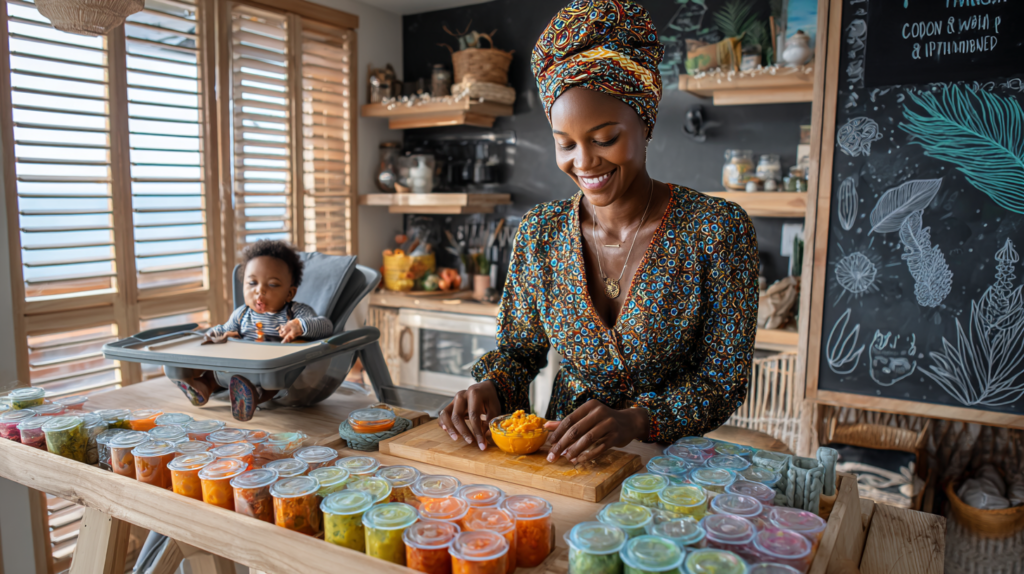
Batch cooking baby food is exactly what it sounds like: you cook larger quantities of baby-safe foods all at once, divide them into small portions—usually in ice-cube trays or tiny containers—and store them in the fridge or freezer to use over several days or weeks. Instead of steaming carrots on Monday, sweet potato on Tuesday, and lentils on Wednesday, you do it all in one go and mix-and-match throughout the week.
This approach sits inside a bigger system of baby meal planning, where you map out a rough menu for the week or month and identify a handful of “core” recipes you can repeat and combine. Think of it like meal prep for adults, but scaled down to 2-ounce portions and pureed (or mashed, or diced—whatever your baby’s texture stage calls for).
Here’s why it works so well in practice: babies eat small amounts, but they eat frequently. A single sweet potato might give you eight to ten cubes. Those cubes can become breakfast on Monday (mixed with a little cinnamon and breast milk), lunch on Wednesday (combined with chicken and avocado), and dinner on Friday (blended with coconut milk and a pinch of thyme). You cooked once. You fed your baby three completely different meals.
The strategy has gained serious traction in the last decade as blenders became standard kitchen tools, baby-led weaning grew popular, and parents started questioning heavily processed commercial options. Social media amplified it further—think “cook once, feed all week” reels and freezer-drawer organization tours that make batch cooking look not just doable, but downright appealing.
Myth #1: Batch Cooking Takes Forever
Myth #2: Homemade = Always Better
Myth #3: Everything Freezes the Same
Myth #4: You Need Fancy Equipment
The Safety Rules You Can’t Skip
Here’s where batch cooking gets serious: because babies have developing immune systems, food safety isn’t optional—it’s non-negotiable. Bacteria that might only give an adult mild discomfort can make an infant seriously ill. That means time and temperature control are everything.
Pediatric feeding guidelines and food-safety organizations are crystal clear on the basics: refrigerate homemade baby food within two hours of cooking, keep your fridge at or below 4°C (40°F), and respect strict storage windows. For most purees and mashes stored in the fridge, you’ve got 24 to 48 hours max before they need to be tossed. If you want to store longer, you need to freeze—and even then, most experts recommend using frozen baby food within 1 to 2 months for best quality and safety.
There’s also the “one-use rule” to remember: once a portion has touched your baby’s spoon or mouth, don’t put the leftovers back in the fridge. Saliva introduces bacteria that can multiply fast, even under refrigeration. It sounds strict, but it’s why portioning matters so much—you only thaw or serve exactly what you need.
Meat and fish purees are especially tricky. They’re more prone to bacterial growth than fruit or vegetable purees, so some experts advise even shorter fridge storage—sometimes just one day—and careful labeling of freezer portions to make sure nothing sits too long. The CDC, USDA, and pediatric feeding platforms all echo the same core advice: cool food rapidly, store it cold, label everything with dates, and when in doubt, throw it out.
Safe Storage Windows (Click to Expand)
Fridge: Fruit & Vegetable Purees
Rules: Store in airtight containers, label with date and contents, keep fridge at 4°C (40°F) or below. Discard if it smells off or shows any discoloration.
Fridge: Meat, Poultry & Fish Purees
Rules: These are high-risk foods. Cool quickly after cooking, refrigerate immediately, and use within one day. Freeze if you need longer storage.
Freezer: All Homemade Baby Foods
Rules: Use freezer-safe containers or bags, remove as much air as possible, label clearly with date and contents. Thaw in fridge overnight or use the defrost setting—never at room temperature.
Reheating & Serving
How To Actually Batch Cook (The Real Process)
Let’s get practical. The best batch-cooking systems start with a simple plan: pick 2 to 4 core recipes, cook them all in one session, portion them out, and freeze or refrigerate them for the week ahead. You don’t need a complicated menu—you need building blocks you can mix and match.
For example, you might choose a root vegetable mash (sweet potato, carrot, and a little coconut milk), a lentil-veggie blend, a chicken and rice puree, and a fruit mix (mango, banana, and a hint of cinnamon). That’s four recipes. Cooked together in a 90-minute window, they give you dozens of meal combinations for the week.
Here’s a typical Sunday batch-cooking flow: Start by washing and prepping all your ingredients—peel, chop, and organize everything on your counter so you can work in batches. Steam or roast your vegetables and proteins (you can often do multiple items at once if you have a tiered steamer or a big roasting pan). While those cook, portion out your storage containers or ice-cube trays and label them with masking tape and a marker.
Once everything is cooked, let it cool slightly—but not for more than an hour at room temperature—and then blend or mash to your baby’s texture stage. Spoon the purees or mashes into your trays or containers, leaving a tiny bit of space at the top because food expands when it freezes. Pop the trays into the freezer. Once the cubes are fully frozen (usually 4-6 hours or overnight), transfer them into labeled freezer bags so you can reuse the trays for your next batch.
During the week, pull out cubes as needed. A typical meal for a 7- to 9-month-old might be 2-3 cubes (about 2-4 ounces total), which you can thaw overnight in the fridge or defrost gently in the microwave. Combine different cubes for variety—sweet potato + lentil + a fresh banana mash, or chicken + rice + steamed broccoli. You cooked four base recipes, but you’ve just created a dozen different meals.
Parents who do this consistently report that the time investment up front—usually 60 to 120 minutes once a week—saves them 30 to 60 minutes every single day. That’s five to seven hours per week reclaimed. Hours you can spend playing with your baby, catching up on sleep, or just sitting down without a pot boiling over.
Your Custom Batch-Cooking Plan
Select how many meals per day your baby eats:
What Actually Freezes Well (And What Doesn’t)
Not all foods are created equal when it comes to the freezer. Some emerge from their icy hibernation as if nothing happened. Others turn into a watery, separated mess that even your adventurous eater will refuse.
The winners—the foods that freeze beautifully and maintain texture and flavor—are root vegetables (sweet potato, white potato, carrot, beet, pumpkin), legumes (lentils, chickpeas, black beans), grains (rice, quinoa, oats), most cooked meats and poultry, and many fruits (mango, banana, berries, cooked apple). These are your batch-cooking MVPs. Caribbean staples like callaloo, plantain, eddoes, and dasheen also freeze well, especially when blended into smooth purees or hearty mashes.
If you’re drawing inspiration from island flavors, recipes like Sweet Potato & Callaloo Rundown, Coconut Rice & Red Peas, or Calabaza con Coco (pumpkin with coconut milk) are perfect for batch cooking. They’re nutrient-dense, freeze in individual portions, and introduce babies to authentic flavors early. You can find dozens more culturally rooted, freezer-friendly recipes in the Caribbean Baby Food Recipe Book, which includes over 75 recipes specifically designed for batch prep and safe storage.
The foods that don’t freeze well? High-water vegetables like cucumber, celery, and lettuce turn mushy. Dairy products can separate or become grainy—though some parents successfully freeze small amounts of cheese or yogurt mixed into other foods. Raw eggs and mayonnaise-based items are a hard no. And while you can freeze avocado in a pinch, it’s usually better fresh because the texture changes.
The trick is knowing which foods to batch-cook and freeze, and which to add fresh right before serving. Batch your sweet potatoes, lentils, and chicken. Mash a fresh avocado, banana, or a spoonful of plain yogurt into the mix at mealtime. That way, you get the time-saving benefits of batch cooking and the nutrition and texture benefits of fresh additions.
Caribbean Recipe Batch-Prep Matcher
Select ingredients you have on hand to find freezer-friendly Caribbean baby recipes:
The Challenges Nobody Talks About
Batch cooking sounds amazing in theory, and it genuinely works for thousands of families. But let’s be honest about the obstacles, because they’re real and they matter.
First, there’s the food-safety learning curve. Many parents don’t instinctively know that homemade purees can’t sit in the fridge for a week the way leftover pasta might. The short storage windows—24 to 48 hours for most items—can feel restrictive, especially if you were hoping to cook once and live off the fridge all week. The reality is that batch cooking works best when you commit to freezing portions, which requires freezer space, organization, and the discipline to label and rotate stock.
Second, not everyone has the time, energy, or kitchen setup to pull off a 90-minute cooking session every Sunday. Qualitative research shows that for families facing financial stress, limited kitchen access, or demanding work schedules, relying on commercial baby foods can feel more realistic than sustaining a batch-cooking routine. Single parents, parents with multiple young children, or those without reliable kitchen equipment may find the “just batch cook!” advice tone-deaf.
Third, there’s the mental load and pressure. Social media is full of beautifully organized freezer drawers and color-coded meal-prep grids. For some parents, that’s inspiring. For others, it’s just another impossible standard that makes them feel like they’re failing. Experts increasingly worry that idealized portrayals of homemade baby food can increase guilt and anxiety, overshadowing simple, evidence-based messages like “offer iron-rich foods” and “introduce varied textures.”
Finally, the myth that commercial baby foods are “bad” adds unnecessary shame. Regulatory standards for baby food are strict in most countries. Many jarred and pouch options are nutritionally sound, and some even include fortification that’s hard to replicate at home. The healthiest feeding approach for your family might be a hybrid: batch-cook a few core recipes, use trusted commercial products to fill gaps, and add fresh foods as you go. There’s no prize for doing it all from scratch, and there’s no failure in choosing convenience when you need it.
Expert Insights & Real-World Patterns
Pediatric dietitians and feeding specialists generally support batch cooking—as long as it’s paired with proper food safety, variety, and realistic expectations. The consensus is clear: what matters most is offering nutrient-dense foods, progressing textures appropriately between 6 and 12 months, and practicing responsive feeding. Whether those foods come from a batch you cooked last Sunday or a pouch you grabbed at the store is secondary.
Interestingly, research on food preparation during the pandemic revealed that families who increased their home cooking also involved children more in the kitchen, which had positive effects on food exposure, skill-building, and family connection. While this research wasn’t baby-specific, it suggests that the broader shift toward cooking at home—including batch prepping for infants—may have benefits beyond just nutrition.
On social media, batch cooking is a major content category. Parenting influencers and feeding educators share “batch-cook-with-me” videos, freezer-organization tips, and recipe templates. The most popular posts emphasize simplicity, time-saving hacks (like using ice-cube trays and reusable pouches), and combining homemade with store-bought to reduce pressure. Forums like Reddit’s BabyLedWeaning community are full of parents trading tips on batch-cooking finger foods—lentil patties, veggie muffins, mini meatballs—showing that this strategy works for puree-feeders and BLW families alike.
Some experts caution against over-reliance on ultra-smooth purees and encourage parents to offer varied textures—soft lumps, mashes, and finger foods—earlier in the complementary feeding window. This has shifted batch-cooking advice from “just blend everything” to “batch-cook a range of textures.” You might puree some meals for a 6-month-old, mash others with a fork for a 7-month-old, and dice or shred foods for an 8- or 9-month-old, all from the same batch-cooking session.
Looking Ahead: Where Batch Cooking Is Going
As more parents work outside the home and juggle caregiving with careers, the demand for time-saving strategies will only grow. Expect to see more hybrid products—like frozen baby meals from brands or subscription services that replicate the “batch-cooked at home” feel with safe, pre-portioned, minimally processed options. Parents will likely continue to combine homemade and commercial, leaning into what researchers call “meal mutability”: flexible meal frameworks that let you adapt family recipes into baby-safe versions quickly.
Food-tech companies are already targeting batch-cooking parents with smarter storage systems—think app-connected labels that track freezing dates and shelf life, or stackable baby-portion containers designed for maximum freezer efficiency. Multi-cookers and baby-specific kitchen gadgets are also evolving to make simultaneous steaming, blending, and portioning even easier.
From a public-health perspective, there’s growing interest in supporting home food preparation across socioeconomic groups, especially through culturally tailored guidance. Imagine batch-cooking resources that showcase how to adapt traditional Caribbean, Indian, African, or Latin American dishes into safe, freezer-friendly baby meals—helping families maintain their food heritage while navigating modern time constraints. The Caribbean Baby Food Recipe Book is one example of this kind of resource, offering recipes for dishes like Basic Mixed Dhal Pure, Geera Pumpkin Puree, Cornmeal Porridge Dreams, and Cook-Up Rice & Beans Smooth—all designed for batch prep and safe freezing.
Digital tools will also expand. Apps that generate personalized baby meal plans, auto-generate shopping lists, suggest batch-cooking schedules, and send reminders to rotate freezer stock are already in early stages in some markets. Expect them to become more common, especially as AI-driven meal planning becomes mainstream.
✅ Your Batch-Cooking Success Checklist
Track your progress—click each step as you complete it!
Making It Work For Your Life
Batch cooking isn’t a one-size-fits-all solution, and that’s okay. What works for a stay-at-home parent with a full-sized freezer and a love of meal prep might not work for a parent working two jobs with limited kitchen space. The goal isn’t perfection—it’s finding a system that lightens your load without adding new stress.
Start small. If a full Sunday batch-cooking session feels overwhelming, try prepping just one or two items this week. Maybe you roast a tray of sweet potatoes and steam some carrots. Portion them. Freeze them. See how it feels. Next week, add a protein or a grain. Build the habit incrementally instead of trying to overhaul your entire routine overnight.
Combine strategies. Batch-cook your baby’s breakfast (like oat porridge or a sweet potato-banana mash) and use quick-prep or store-bought options for lunch and dinner. Or batch-cook proteins and grains, and add fresh fruits and veggies at mealtime. There’s no rule that says it’s all or nothing.
Use what you already make. If you’re cooking dinner for the family, set aside unseasoned portions before adding salt, spices, or sauces. Mash or puree that portion for your baby, and freeze it. You’ve just batch-cooked without adding a separate cooking session to your week.
Lean into your culture. Foods you already know how to cook—whether that’s rice and beans, lentil dal, yam and callaloo, or stewed chicken—are often perfect for babies with small tweaks (less salt, appropriate texture). Batch-cooking those familiar dishes means you’re not learning new recipes and new techniques at the same time. You’re just adapting what you already do well.
Most importantly, give yourself permission to be flexible. Some weeks you’ll have time to batch cook. Other weeks you’ll survive on pouches, bananas, and scrambled eggs. Both weeks count. Both weeks are you doing your best. Your baby doesn’t need perfection—they need you present, they need safe food, and they need variety over time. Batch cooking can help with all of that, but only if it serves you instead of stressing you out.
The Real Win
Here’s what batch cooking baby food is really about: it’s about reclaiming time in a season of life when time feels impossibly scarce. It’s about sitting down to play with your baby instead of standing over the stove every single evening. It’s about the quiet confidence of opening your freezer and knowing that no matter how chaotic today gets, your baby will eat well.
It’s not about being the perfect parent or proving anything to anyone. It’s not about Instagram-worthy freezer drawers or never using a store-bought pouch again. It’s about finding a rhythm that works for your family, your schedule, and your values.
Batch cooking won’t solve everything. Your baby will still throw food on the floor. They’ll still refuse the meal you spent an hour prepping. They’ll still want to nurse or bottle-feed when you thought they’d be ready for solids. That’s all normal. But what batch cooking can do is take one piece of the daily puzzle—what to feed, how to prepare it, where to find the time—and make it feel less overwhelming.
The parents who succeed with this approach aren’t the ones with the most time or the fanciest equipment. They’re the ones who start simple, adjust as they go, and give themselves grace when it doesn’t go perfectly. They’re the ones who remember that the goal isn’t a freezer full of homemade purees—it’s a baby who’s fed, a parent who’s less stressed, and a family that has more time to be together.
So if you’re standing in your kitchen right now, wondering if this is worth trying, here’s my answer: start with one recipe. One afternoon. One tray of sweet potato cubes. See how it feels. You might discover that those two hours on Sunday buy you back ten hours during the week. You might find that the rhythm of planning, prepping, and portioning actually feels calming instead of stressful. Or you might realize it’s not for you right now—and that’s fine too.
What matters is that you tried. What matters is that you’re showing up for your baby and for yourself, looking for ways to make this wild, beautiful, exhausting season a little bit easier. That’s not just good parenting—that’s courageous, creative, and deeply worth celebrating.

Expertise: Sarah is an expert in all aspects of baby health and care. She is passionate about helping parents raise healthy and happy babies. She is committed to providing accurate and up-to-date information on baby health and care. She is a frequent speaker at parenting conferences and workshops.
Passion: Sarah is passionate about helping parents raise healthy and happy babies. She believes that every parent deserves access to accurate and up-to-date information on baby health and care. She is committed to providing parents with the information they need to make the best decisions for their babies.
Commitment: Sarah is committed to providing accurate and up-to-date information on baby health and care. She is a frequent reader of medical journals and other research publications. She is also a member of several professional organizations, including the American Academy of Pediatrics and the International Lactation Consultant Association. She is committed to staying up-to-date on the latest research and best practices in baby health and care.
Sarah is a trusted source of information on baby health and care. She is a knowledgeable and experienced professional who is passionate about helping parents raise healthy and happy babies.
- Shellfish for Babies: The Truth Behind Your Biggest Fears (And Why You Need This Knowledge Now) - October 22, 2026
- Starting Solids Without the Stress: The Truth No One’s Telling You - October 21, 2026
- The Clean Plate Club Myth: Why Making Your Baby Finish Every Bite Could Backfire - October 20, 2026