Raw Vegetables for Baby: When Are They Safe?
Here’s the question that’s been haunting me since my little one turned six months: at exactly what moment does a carrot stop being a deadly projectile and become an acceptable snack?
I know, I know—it sounds dramatic. But if you’ve spent any time in parenting forums or scrolling through conflicting advice about introducing solids, you’ve probably felt that same knot in your stomach. One influencer swears by raw cucumber sticks for teething relief at seven months. Your pediatrician warns against anything harder than mashed banana until way later. Your mother-in-law insists she gave your partner raw carrot “back in the day” and he turned out just fine. Meanwhile, you’re standing in the produce aisle, vegetable in hand, wondering if this innocent piece of food could send you rushing to the emergency room.
The truth? There’s a reason this topic makes everyone nervous. Choking is a leading cause of unintentional injury death in children under three, and hard raw vegetables consistently show up on every major safety list. At the same time, vegetables are the foundation of healthy eating, and we desperately want our babies to love them early. So where’s the line? When does “too early” become “just right”? And how do we balance safety with the very real goal of raising adventurous eaters who don’t turn their noses up at anything green?
Let’s untangle this.
The Shocking Truth About Baby Choking Hazards
First, let’s talk about what makes raw vegetables dangerous—and why this isn’t just paranoid helicopter-parenting.
When pediatric emergency departments review foreign-body aspiration cases (that’s the medical term for “something got lodged in the airway”), hard raw vegetables like carrots, celery, and whole cherry tomatoes show up again and again. Reviews of real choking incidents in Canadian and Québec hospitals confirm that many of these events involve familiar foods parents assumed were safe. The problem isn’t that vegetables are inherently bad—it’s that babies and young toddlers lack the full set of skills needed to safely handle firm, slippery, or round textures.
Here’s what most parents don’t realize: chewing maturity develops slowly. At six months, most babies are just beginning to explore solids. They have their gums, their tongue, and a lot of enthusiasm—but no molars for grinding, limited lateral tongue movement, and immature coordination between chewing and swallowing. Even at 12 months, many toddlers are still mastering these skills. And crucially, their airways are much smaller and more vulnerable than ours. A chunk of raw carrot that you could easily cough out can completely block a baby’s windpipe.
Government health agencies, pediatric safety organizations, and hospital systems all converge on this point: pieces of hard raw vegetables or fruit—like raw carrots, apples, and celery—are choking hazards for infants and toddlers. Many resources explicitly recommend avoiding these foods entirely until around four years of age, or at minimum modifying them heavily (grated, steamed soft, cut into ultra-thin matchsticks) until chewing skills are well established.
⚠️ Choking Risk Game: Can You Spot the Danger?
Click on each vegetable to reveal whether it’s safe for a 10-month-old baby:
Why Social Media Is Getting It Wrong
Now here’s where things get messy.
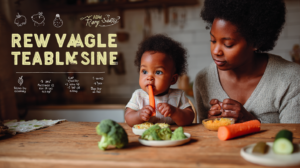
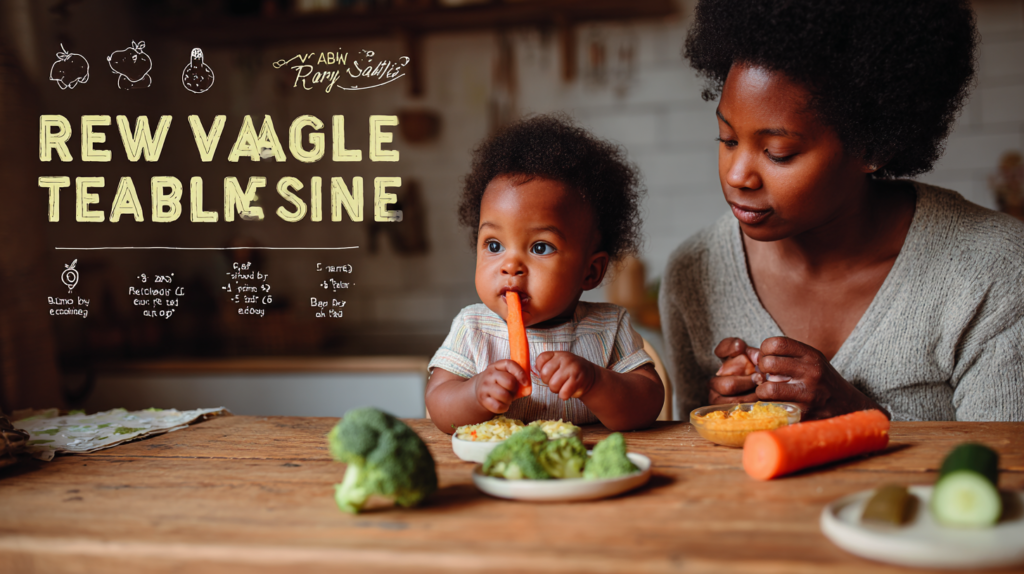
If you spend any time on Instagram or TikTok, you’ve probably seen those beautifully styled videos of six-month-olds gnawing on whole raw cucumbers, carrot sticks, or celery. The captions usually say something like “baby-led weaning” or “natural teething relief” or “building independence.” The babies look happy. The parents look confident. And suddenly you’re second-guessing everything your pediatrician told you.
Here’s what’s actually happening: social media thrives on visuals, not safety nuance. A video of a baby gumming a dramatic whole vegetable gets more engagement than a careful explanation of modified textures and gradual progression. Some baby-led weaning advocates believe that babies will “self-regulate” and stop if something’s too hard—but clinical evidence doesn’t support this as a reliable safety mechanism, especially for very young infants who are still learning what food even is.
This creates real confusion for parents. You see raw vegetables framed as both aspirational “clean eating” and as serious safety risks, often within the same scroll session. Commercial baby snack brands also market “veggie sticks” and “mini carrots” to toddlers, even though governmental and medical guidelines still classify these as choking hazards unless they’re heavily modified.
The gap between what we see online and what safety experts recommend isn’t just annoying—it’s dangerous. And it puts the burden on us, as parents, to figure out who to trust.
The Age-By-Age Reality Check
So when can you actually, safely offer raw vegetables? Let’s break it down by developmental stage, using guidance from pediatric organizations, public health agencies, and real choking-prevention research.
Under 6 months: No solids at all, including vegetables. This is the exclusive milk-feeding period (breast milk or formula). The main risk here isn’t choking on vegetables—it’s contamination. If you’re preparing homemade baby food for later, avoid using untested private well water (nitrates can cause methemoglobinemia, or “blue baby syndrome”) and never give honey before 12 months.
6 to 12 months: Vegetables should be cooked until they’re soft enough to mash easily with your fingers or the baby’s gums. Think steamed carrot batons that squish when pinched, soft roasted sweet potato wedges, or well-cooked broccoli florets. Avoid hard raw vegetable pieces entirely. This is when babies are learning to move food around their mouths, coordinate chewing and swallowing, and develop the muscle strength needed for more challenging textures. Raw vegetables don’t belong in this learning phase. If you’re drawing on Caribbean traditions—like the soft-cooked provisions, dasheen, and pumpkin featured in our Caribbean Baby Food Recipe Book—you’re already on the right track. Those recipes emphasize soft, mashable textures that protect babies while introducing authentic island flavors.
12 to 18 months: Continue offering soft-cooked vegetables as the main form. Some resources suggest you can begin introducing raw vegetables in highly modified textures—like finely grated carrot mixed into yogurt, or ultra-thin cucumber sticks with the peel and seeds removed—depending on your child’s individual chewing skills and close supervision. But this is not a free-for-all. Thick raw sticks, coin-shaped slices, and anything firm or round are still off the table.
18 months to 4 years: Gradually expand raw vegetables, but keep shapes thin (matchsticks, finely chopped) and always supervise. Many experts still recommend avoiding whole raw carrots, thick cucumber rounds, and baby carrots until closer to age four. This is the age where kids often think they can handle anything—but their airways are still small, and distraction during meals is common. Supervision and proper seating (upright, at a table, no running around with food) become just as important as texture.
Around 4 years and older: This is when most guidelines consider children more capable of handling harder textures. Whole raw carrots, apple slices, and similar foods may be introduced cautiously, depending on individual chewing maturity. But even here, teaching safe eating habits—chewing thoroughly, sitting still while eating—remains essential.
Your Baby’s Raw Veggie Timeline
Click each stage to see what’s safe at that age:
Myths That Need To Die
Let’s clear up some persistent myths that keep circulating—and causing confusion.
Click each myth card to reveal the truth
What About Nitrates? The Other Hidden Risk
Let’s talk about something most parents have never even heard of: nitrates in vegetables.
Certain vegetables—like beets, spinach, carrots, and some leafy greens—naturally contain higher levels of nitrates. In very young infants (especially under six months), high nitrate exposure can, in rare cases, cause methemoglobinemia, a condition where the blood can’t carry enough oxygen. It’s serious, but also highly preventable.
Here’s the good news: this risk is almost entirely limited to infants under six months and specific scenarios—like formula prepared with high-nitrate well water, or improperly stored homemade vegetable purees left at room temperature for too long. By the time your baby is six months old and starting solids, the risk from vegetables themselves is extremely low, especially if you follow basic food-safety practices.
What this means in practice:
- Start vegetables after six months, not before.
- If you’re using private well water to prepare baby food, have it tested for nitrate levels.
- Cook vegetables and refrigerate purees promptly—don’t leave them sitting out for hours.
- Rotate your vegetable choices; don’t feed only high-nitrate vegetables day after day.
- Trust that vegetables, when handled properly, are a nutritious, essential part of your baby’s diet—not something to fear.
Public health guidance is clear: do not avoid vegetables because of nitrates. The benefits of vegetable-rich diets far outweigh the minimal risk, as long as you’re introducing them at the appropriate age and handling them safely.
How To Prep Vegetables Safely At Every Stage
Now that we’ve covered the “when,” let’s talk about the “how.” Because the way you prepare vegetables matters just as much as the age you offer them.
Safe Prep Method Selector
Choose your baby’s age to see the safest prep methods:
For 6 to 9 months (early solids):
- Steam or roast vegetables until fork-tender. You should be able to mash them easily between your thumb and finger.
- Offer them as thick batons or large wedges—bigger than your baby’s fist, so they can hold one end and gnaw the other without the whole piece fitting in their mouth.
- Skip seasoning (no salt, sugar, or heavy spices) and keep it simple. A little coconut milk or a pinch of mild spice like cinnamon or ginger is fine if culturally appropriate.
- Examples: Steamed carrot batons, roasted sweet potato wedges, soft broccoli florets, mashed pumpkin. Our Caribbean Baby Food Recipe Book features recipes like Yellow Yam & Carrot Sunshine and Calabaza con Coco that nail this texture stage perfectly.
For 9 to 12 months (advancing textures):
- Continue soft-cooked vegetables, but now you can introduce slightly firmer mashes and smaller soft pieces.
- Vegetables can be mashed into grains (like rice or lentils) or blended into soups and stews.
- Still avoid raw hard vegetables—your baby is learning to chew, not mastering it yet.
- Examples: Mashed carrots mixed with rice and peas, soft-cooked christophine (chayote), dasheen mash, or callaloo blended into porridge.
For 12 to 18 months (early modified raw textures):
- Soft-cooked vegetables remain the safest and best option.
- If introducing raw vegetables, start with finely grated or ultra-thin matchsticks—like grated carrot mixed into yogurt or hummus, or paper-thin cucumber sticks with peel and seeds removed.
- Avoid thick chunks, coin-shaped slices, and anything firm or round.
- Always supervise, and ensure your child is seated upright at a table, not walking around or in a stroller.
For 18 months to 4 years (gradual raw introduction):
- Continue offering raw vegetables in thin, manageable shapes—matchsticks, finely chopped pieces, or thin slices.
- Save whole raw carrots, thick cucumber rounds, and baby carrots until your child is closer to four years old.
- Model safe eating habits: chew thoroughly, sit still, no talking with a full mouth, and no rushing through meals.
Real Talk: What This Looks Like In A Caribbean Kitchen
Let me tell you what this looks like in practice—because theory is one thing, but real life is another.
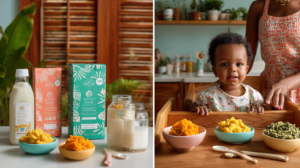
In my house, vegetables mean provisions. Yellow yam. Dasheen. Sweet potato. Pumpkin. Green banana. These are the foods I grew up eating, and they’re what I want my child to love too. The beautiful thing? These Caribbean staples are naturally perfect for babies. When cooked properly—boiled, steamed, or roasted until soft—they’re safe, nutrient-dense, and easy to mash or hold.
Take yellow yam, for example. Steam it until it’s fork-tender, mash it with a little coconut milk, and maybe a tiny pinch of thyme. That’s a complete baby meal right there—no choking risk, full of complex carbs and potassium, and it tastes like home. Same with dasheen: boil it until soft, mash it smooth, and pair it with a little callaloo or pumpkin for color and iron. You don’t need to complicate it.
But here’s where I see parents—especially in the diaspora—getting tripped up: we want to give our babies the full experience of our food culture, and that sometimes means rushing textures. Raw cucumber and carrot are common in Caribbean households, especially as quick snacks or in salads. But for babies? We have to slow down. Cook those carrots soft first. Grate that cucumber into a yogurt or coconut blend. Let them taste the flavors without the risk.
The recipes in our Caribbean Baby Food Recipe Book are designed exactly for this—authentic island flavors in textures that are safe for every stage. You’ll find things like Cornmeal Porridge Dreams, Sweet Potato & Callaloo Rundown, and Geera Pumpkin Puree—all cooked soft, all baby-safe, all rooted in tradition. Because raising a baby who loves Caribbean food doesn’t mean compromising safety. It means adapting tradition thoughtfully.
The Safety Checklist Every Parent Needs
Okay—let’s bring this all together with a practical checklist you can use every time you’re prepping vegetables for your baby.
✅ Your Raw Veggie Safety Checklist
Click each item as you go through your prep routine:
Use this checklist every time until these steps become second nature. Print it out, stick it on your fridge, share it with caregivers and grandparents. Safety isn’t about being paranoid—it’s about being prepared.
What Your Pediatrician Wishes You Knew
Here’s what I’ve learned from talking to pediatricians, emergency room doctors, and feeding therapists: they’re not trying to scare you, and they’re not anti-vegetable. They’ve just seen what happens when well-meaning parents offer foods before babies are ready—and they desperately want to prevent those trips to the ER.
What they wish every parent understood:
- Choking can happen silently. Unlike in the movies, a choking child often can’t cry, cough, or call for help. That’s why supervision—real, attentive supervision, not just being in the same room—is non-negotiable.
- Every baby develops at their own pace. Some 14-month-olds have great chewing skills; others are still figuring it out. Don’t assume that because your friend’s baby can handle something, yours automatically can too. Watch your child’s skills, not their birth certificate.
- There’s no prize for being the earliest. Introducing raw vegetables at 10 months instead of 18 months doesn’t make you a better parent or give your child a nutritional advantage. Patience and safety win every time.
- Cooked vegetables are just as nutritious as raw ones—often more so. Many nutrients in vegetables, like beta-carotene in carrots, are actually more bioavailable after cooking. You’re not depriving your baby of anything by steaming that carrot.
And here’s the big one: learn infant CPR and choking rescue techniques before you need them. Courses are available through hospitals, community centers, and online. Knowing what to do in an emergency doesn’t just save lives—it gives you the confidence to feed your baby without constant anxiety.
Your Path Forward
So here’s where we land.
Raw vegetables aren’t the enemy. But they’re also not appropriate first foods, and they remain a choking risk well into the toddler years unless they’re prepared thoughtfully. The safest path—the one backed by pediatric organizations, public health agencies, and real-world emergency data—is this:
- Start vegetables at six months, cooked soft and mashed or in large, grippable pieces.
- Avoid hard raw vegetables (carrots, celery, whole tomatoes) entirely until your child’s chewing and swallowing skills are well developed—generally not before 12 to 18 months, and even then only in highly modified forms.
- Delay whole raw carrots, thick cucumber rounds, and baby carrots until closer to age four, depending on individual readiness.
- Always supervise meals, keep your child seated upright, and know how to respond to a choking emergency.
This isn’t about being overprotective or depriving your baby of experiences. It’s about respecting developmental readiness and protecting a small, vulnerable airway while your baby learns one of the most complex skills they’ll ever master: eating.
And here’s the good news: you have time. There’s no rush. Your baby doesn’t need raw carrot sticks at eight months to become a healthy eater. What they need is a variety of safe, flavorful foods offered consistently, with patience and without pressure. The vegetables will still be there when they’re ready—and when they are, they’ll be able to enjoy them safely.
If you’re looking for a roadmap that combines safety, nutrition, and authentic Caribbean flavor, our Caribbean Baby Food Recipe Book is exactly that. It’s over 75 recipes designed for babies and toddlers, all rooted in island traditions, all prepared with the right textures for each stage. You’ll find everything from simple purees to family meals, all tested and safe.
Because at the end of the day, this isn’t just about keeping your baby safe from choking—it’s about raising a child who loves real food, who feels connected to their culture through what they eat, and who grows up knowing that mealtime is something to enjoy, not fear.
You’ve got this. Take it slow. Trust the process. And don’t let social media make you second-guess what you know deep down: that your baby’s safety comes first, always.

Expertise: Sarah is an expert in all aspects of baby health and care. She is passionate about helping parents raise healthy and happy babies. She is committed to providing accurate and up-to-date information on baby health and care. She is a frequent speaker at parenting conferences and workshops.
Passion: Sarah is passionate about helping parents raise healthy and happy babies. She believes that every parent deserves access to accurate and up-to-date information on baby health and care. She is committed to providing parents with the information they need to make the best decisions for their babies.
Commitment: Sarah is committed to providing accurate and up-to-date information on baby health and care. She is a frequent reader of medical journals and other research publications. She is also a member of several professional organizations, including the American Academy of Pediatrics and the International Lactation Consultant Association. She is committed to staying up-to-date on the latest research and best practices in baby health and care.
Sarah is a trusted source of information on baby health and care. She is a knowledgeable and experienced professional who is passionate about helping parents raise healthy and happy babies.
- Raw Vegetables for Baby: When Are They Safe? - October 18, 2026
- The Raw Truth About Unpasteurized Foods: What Every Caribbean Parent Must Know Before Baby’s First Bite - October 17, 2026
- Why Your Caribbean Kitchen Holds the Secret to Raising Confident, Culturally Rooted Children (And It’s Not What You Think) - October 16, 2026