When Travel Turns Feeding Upside Down: The Real Story Nobody Tells You
Because jet lag doesn’t just mess with your sleep—it rewrites your baby’s entire eating blueprint
First, Let’s Be Honest: What’s YOUR Travel Feeding Reality?
Choose the scenario that makes your heart race just thinking about it:
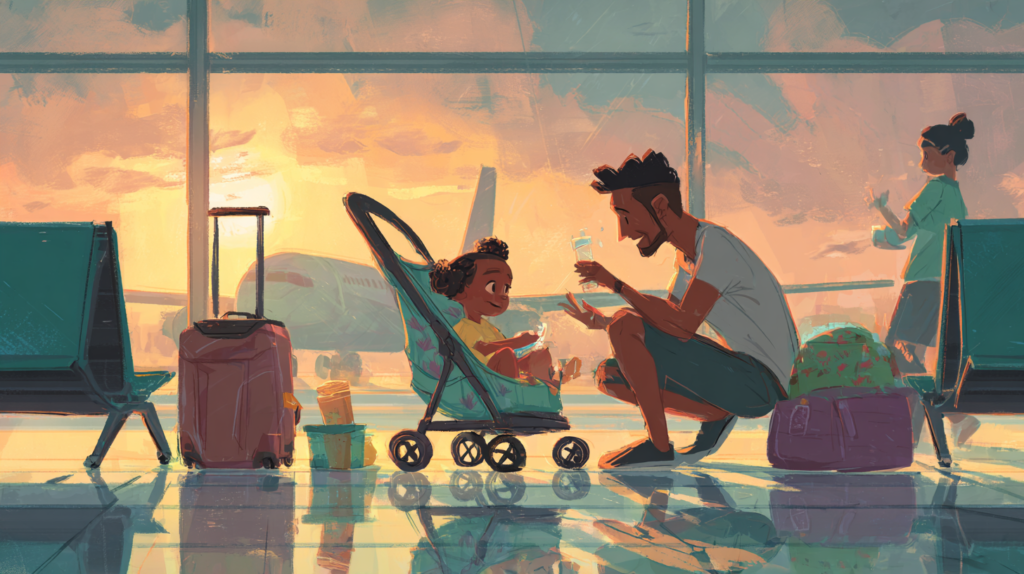
Three weeks ago, I watched a mama in the Kingston airport try to spoon-feed her eight-month-old pureed sweet potato at 2 a.m. local time while her baby screamed, arched her back, and swatted the spoon across two gate seats. The baby wasn’t being difficult. Her body clock was screaming “This is the middle of the night!”—even though the airport lights blazed overhead and her mother’s watch said it was breakfast time.
That moment? It’s the hidden truth about traveling with babies that nobody warns you about until you’re living it. We obsess over packing lists, TSA rules for formula, and whether the stroller will fit in the overhead bin. But the real challenge isn’t what you bring—it’s how travel completely dismantles the feeding rhythms you worked months to establish. And then, when you’re exhausted and disoriented yourself, you’re supposed to rebuild them on the fly in a hotel room that smells like industrial cleaner.
Here’s what pediatric travel medicine specialists have confirmed through years of research: infants are far more vulnerable to travel disruptions than older children or adults. Their immune systems are still developing, their circadian rhythms are fragile, and their ability to communicate discomfort is limited to crying and refusing to eat. When you cross time zones or change environments, you’re not just dealing with logistics—you’re asking a tiny human to recalibrate their entire biological system while sitting in a car seat or being passed between relatives they’ve never met.
The Biology of Disruption: Why Travel Hits Baby Feeding So Hard
Let’s start with the science that nobody explains at your pediatrician’s office. Your baby’s feeding schedule isn’t just a convenient routine you created—it’s wired into their circadian rhythm, the internal biological clock that regulates hunger, sleep, digestion, and even body temperature. When you travel across time zones, you force that clock into chaos. Studies on jet lag show that the human body can adjust by roughly one hour per day when shifting time zones. For an adult flying from New York to London (five hours ahead), that means five days of gradual adjustment. For a six-month-old who can’t understand why they’re being offered a bottle when their body thinks it’s naptime? It’s bewildering.
Recent pediatric travel health guidelines from the CDC and WHO explicitly identify time-zone shifts and routine disruptions as core challenges for infants, not just inconveniences. Babies don’t have the cognitive ability to rationalize, “I’m in a new place, so things feel different.” They just know something is profoundly wrong, and that distress manifests as feeding refusals, cluster feeding at odd hours, increased fussiness, and disrupted sleep—which then further disrupts feeding.
Add to this the physical stress of travel itself: cabin pressure changes during flights can cause ear discomfort and reduced appetite; dehydration is a real risk in dry airplane air and hot climates; unfamiliar sights, sounds, and smells overwhelm a baby’s developing sensory system. And if you’re breastfeeding, your own stress, dehydration, and missed pumping sessions can temporarily reduce milk supply, creating a vicious cycle where both you and baby are struggling.
⚡ Quick Myth Check: What Do You Think Happens?
Click on what you believe is TRUE:
The truth is counterintuitive. Babies don’t adjust faster—they struggle more because they can’t intellectually process the change. And trying to rigidly maintain a home schedule in a drastically different time zone often backfires, leading to more stress for everyone. The research-backed approach is gradual adjustment combined with flexible responsiveness.
The Three Phases of Travel Feeding Chaos (And How to Navigate Each One)
Every family travel experience breaks down into three distinct feeding phases, each with its own challenges and evidence-based strategies. Understanding these phases transforms panic into preparation.
Phase 1: The Transit Window (Airports, Flights, Road Trips)
This is when you’re physically moving between locations, and normal feeding routines are impossible. On flights, babies often want to feed more frequently—not because they’re hungry, but because sucking (breast, bottle, or pacifier) helps equalize ear pressure during takeoff and descent. Pediatric travel medicine sources specifically recommend feeding during ascent and descent to reduce ear pain and crying. But this creates a pattern of comfort-feeding that may not align with hunger, leading to confusion once you land.
For road trips, the challenge is different: you’re strapped into a moving vehicle where feeding a baby in a rear-facing car seat is unsafe and often illegal. Current safety guidelines recommend stopping every two to three hours for feeding breaks, diaper changes, and to prevent prolonged time in car seats (which aren’t designed for extended sleep and can pose respiratory risks for young infants). But those breaks extend travel time significantly, and babies may refuse to eat during stops because they’ve fallen asleep in the car or are overstimulated by the constant motion changes.
Smart transit strategies include: offering feeds on demand rather than by schedule; keeping baby well-hydrated (extra fluids if flying, as cabin air is extremely dry); using familiar comfort items like a favorite blanket or pacifier; and—this is critical—managing your own expectations. Accept that transit days are survival days, not “perfect routine” days.
Phase 2: The Arrival Adjustment (First 48-72 Hours)
You’ve arrived at your destination, and now the real work begins. This is when circadian misalignment hits hardest. Baby may be wide awake and ravenous at midnight, then refuse breakfast. Or they may sleep through usual feeding times and wake up frantic with hunger hours later. Sleep and feeding are intimately connected in infants—disrupted sleep means disrupted appetite, and vice versa.
Child sleep specialists who work with traveling families recommend a combined approach: use natural light exposure, adjust meal times gradually toward local time, and maintain one or two “anchor” elements from home (like a bedtime routine or a specific morning feed) to provide continuity. For example, if your baby always has a morning breastfeed or bottle at 7 a.m. home time, keep that feed even if local time says it’s 2 p.m.—then slowly shift it by 30 minutes each day toward the new local breakfast time.
During this phase, focus on overall nutrition and hydration over rigid schedules. Offer frequent small meals and snacks if baby is eating solids; keep offering breast or bottle even if baby seems disinterested; watch for dehydration signs (dry mouth, fewer wet diapers, sunken eyes). And—this is hard but important—resist the urge to introduce new foods during this adjustment window. Stick with familiar, safe foods that baby has eaten successfully at home. If your baby loves the sweet potato and callaloo purees from your Caribbean Baby Food Recipe Book, pack or prepare those rather than experimenting with unfamiliar local dishes when their system is already stressed.
Jet Lag Feeding Adjuster
How long will it take your baby to adjust? Let’s calculate:
Plan for gradual schedule shifts and flexible feeding windows.
Phase 3: The New Normal (Extended Stays and Return Home)
If you’re staying longer than a few days, baby will eventually settle into the new environment—but just as you get comfortable, it’s time to travel home and start the adjustment process all over again. This is the phase where many families make a critical mistake: they assume the return trip will be easier because baby has already “done this before.” In reality, the return adjustment can be just as disruptive as the initial one, especially if you’ve been gone long enough for baby to fully adapt to the destination schedule.
For extended trips, the key is creating mini-routines that provide structure without rigidity. Set up a consistent sleep space (even if it’s just a travel crib in a corner); establish a predictable morning and bedtime sequence; and if you’re somewhere with access to a kitchen, try to prepare at least one familiar meal per day. This is where having portable, adaptable recipes becomes invaluable. Caribbean staples like plantain, sweet potato, and rice and peas travel well conceptually—you can find similar ingredients in many international locations and recreate simplified versions of familiar flavors.
The Formula vs. Breastfeeding Travel Divide
The Feeding Method Secret Nobody Discusses
There’s a controversial truth about travel feeding methods…
The truth: Both breastfeeding and formula feeding have significant travel advantages AND disadvantages, but the “breast is easier for travel” advice oversimplifies reality and can make struggling parents feel like failures.
Breastfeeding advantages: No sterilization needed, no water safety concerns, always the right temperature, provides immune protection, and offers comfort during stressful transitions. Travel medicine organizations emphasize these benefits heavily.
But here’s what they don’t tell you: Breastfeeding during travel requires the mother to maintain her own hydration (harder when you’re busy sightseeing or sitting on planes), manage pumping schedules across time zones if baby’s feeding times shift, find private spaces to nurse in unfamiliar cultures, and deal with potential supply dips from stress and dehydration. Research confirms that missed feeds, inadequate fluid intake, and maternal stress can all temporarily reduce milk supply—and when you’re jet-lagged and anxious, restoring supply takes conscious effort.
Formula feeding advantages: Other caregivers can feed baby (giving traveling parents a break), feeding amounts are visible and measurable (reducing anxiety about whether baby is getting enough), and schedules can be more predictable.
The formula reality: You must source safe water (a serious concern in many international destinations), carry or purchase formula (not all brands are available everywhere), sterilize bottles and equipment (challenging in hotels), and navigate varying formula regulations and TSA liquid rules. Ready-to-feed formula solves many problems but is expensive and heavy to pack in quantity.
Bottom line: Your feeding method doesn’t determine travel success—your preparation and flexibility do. Don’t let anyone shame you for your choice or make you feel like you’re doing it “wrong.”
One of the most practical compromises I’ve seen is combination feeding while traveling: breastfeed when convenient (like during flights or at night in the hotel), but have ready-to-feed formula bottles as backup for moments when pumping isn’t possible or supply dips. This hybrid approach gives you the immune and comfort benefits of breastfeeding plus the reliability and shareability of formula. It’s not “giving up” on breastfeeding—it’s strategic adaptation.
Solid Foods on the Road: The Caribbean Kitchen Advantage
If your baby is eating solids, travel feeding gets simultaneously easier (more options) and more complex (more preparation needed). The challenge isn’t just “what to feed”—it’s food safety, availability, allergies, and maintaining nutritional balance when you don’t have your usual kitchen setup.
Here’s where a culturally grounded approach to baby food becomes a genuine asset. Caribbean cuisine is built on whole-food staples that are widely available, require minimal processing, and adapt beautifully to baby-friendly preparations: sweet potatoes, plantains, rice, beans, coconut milk, fresh fruits like mango and papaya. These ingredients appear in grocery stores and markets across much of North America, the Caribbean, parts of Europe, and beyond. Even in places where you can’t find the exact variety you’d use at home, you can usually find something close enough.
Before you travel, identify two or three simple, familiar recipes your baby loves that use portable, common ingredients. For example, a basic sweet potato and coconut milk puree requires only two ingredients and can be made in a hotel room with a small pot and a fork for mashing. A ripe plantain mashed with a little breast milk or formula is a complete meal in minutes. Rice and red beans—staples across the Caribbean—can be cooked soft and mashed for younger babies or offered as finger food for older ones. Having these flexible “anchor meals” means you’re not dependent on finding baby food pouches (which may not be available or may contain unfamiliar flavors your baby rejects) or stressing over restaurant menus.
The Caribbean Baby Food Recipe Book includes over 75 recipes designed around this exact philosophy—whole foods, minimal ingredients, easy to adapt. Recipes like Cornmeal Porridge Dreams, Coconut Rice & Red Peas, and Yellow Yam & Carrot Sunshine aren’t just nutritious; they’re travel-friendly because they use ingredients you can source almost anywhere and prepare with basic equipment.
Food safety is non-negotiable while traveling. Avoid unpasteurized dairy, undercooked meat or seafood, and raw fruits or vegetables unless you can peel or thoroughly wash them yourself. In destinations with questionable water safety, use bottled or boiled water for formula, washing produce, and cooking. Pack a few familiar snacks (like pouches or crackers) as emergency backups for delays or days when nothing else works.
What Pediatric Experts Wish Parents Knew (But Rarely Say Out Loud)
Busting the Biggest Travel Feeding Myths
Click each myth to reveal what research actually shows:
Here’s what pediatricians and travel medicine specialists consistently emphasize in clinical settings but rarely communicate clearly in public advice: some feeding disruption is not just common during travel—it’s expected and normal. Your job isn’t to prevent all disruption (impossible) but to minimize risk, maintain adequate nutrition and hydration, and respond flexibly to your baby’s cues. Trying to maintain perfect routines while traveling often creates more stress than it prevents, and that parental stress directly impacts your baby’s ability to settle.
Multiple studies on infant health during travel show that children aged 0-9 experience illness or significant disruption on the majority of trips. This doesn’t mean you shouldn’t travel—it means you should plan for imperfection, pack extra supplies, and give yourself permission to have “off” days where the only goal is survival and hydration.
The Caribbean Parent’s Travel Feeding Toolkit
Let’s get practical. Here’s what actually works, based on both research evidence and lived experience from families who travel regularly with babies:
Before You Go:
- Research water safety and formula availability at your destination. If water quality is questionable, plan to buy bottled water or boil and cool water for formula and food prep.
- If breastfeeding, practice pumping and storing milk at different times of day so you’re comfortable doing it in unfamiliar settings.
- Prepare or pack 2-3 days worth of familiar baby meals. For solids, this might be pouches, or pre-portioned frozen purees packed in a cooler for the first leg of your trip. For longer stays, bring a few key spices or ingredients that make food feel familiar (a small container of cinnamon, coconut milk powder, or mild curry powder can transform bland rice into something your baby recognizes).
- Gradually shift bedtime and wake time by 15-30 minutes per day in the week before travel if crossing multiple time zones. This won’t prevent all jet lag, but it reduces the shock.
- Pack double your usual supply of feeding essentials: bottles, pouches, spoons, bibs, formula, snacks. Travel delays happen.
During Transit:
- Feed during takeoff and landing to help with ear pressure. Even if it’s “off schedule,” prioritize comfort over timing.
- Offer extra fluids—especially on planes, which are incredibly dehydrating. For younger babies, this means more frequent nursing or bottles. For babies on solids, offer water in a sippy cup.
- Accept that transit days are survival days. If baby only wants to eat crackers and mashed banana on the plane, that’s fine. You’ll rebalance nutrition once you arrive.
- On road trips, stop every 2-3 hours. Use these breaks for full feeds in a comfortable position (out of the car seat), diaper changes, and movement. Trying to “push through” to save time often backfires with a screaming, uncomfortable baby.
At Your Destination:
- First 24 hours: hydration and comfort over everything else. Offer familiar foods, keep milk feeds on demand, watch for dehydration, and don’t stress about quantities or schedules.
- Days 2-3: Start introducing one local time anchor—like an outdoor breakfast at local morning time with lots of natural light, which helps reset circadian rhythm.
- Use local markets to find fresh, baby-safe ingredients. Sweet potatoes, bananas, avocados, rice, and beans are available almost everywhere. The Batata y Manzana or Plantain Paradise recipes from the Caribbean Baby Food Recipe Book can be adapted with whatever local sweet potato or plantain variety you find.
- At restaurants, order plain steamed vegetables, rice, beans, or soft-cooked meats you can mash or cut for baby. Skip heavily seasoned, fried, or salty dishes.
- If baby refuses meals but is nursing or taking bottles well, don’t panic. Babies can sustain on milk alone for short periods—it’s their primary nutrition until 12 months anyway.
The Return Trip:
- Expect a second round of adjustment when you get home. Plan for 3-5 days of schedule wonkiness even after a smooth trip.
- Don’t schedule important events or return to work immediately after international travel if possible. Give yourself a buffer.
- Reintroduce home routines gradually, using the same light/meal/sleep cues you used at destination to shift back.
When to Worry vs. When to Wait It Out
Most travel feeding disruptions resolve on their own within a few days to a week. But certain signs require immediate attention, regardless of whether you’re still traveling or back home:
- Dehydration: Fewer than 4-6 wet diapers in 24 hours, dry mouth, no tears, sunken fontanelle (soft spot), extreme lethargy, or dark concentrated urine.
- Persistent vomiting or diarrhea: Could indicate food poisoning, viral illness, or contaminated water. Babies dehydrate much faster than adults.
- High fever: Especially combined with feeding refusal. Travel exposes babies to new pathogens.
- Extreme feeding refusal: If baby refuses all food AND all milk feeds for more than 12-18 hours, seek medical evaluation.
- Signs of allergic reaction: Hives, swelling, difficulty breathing, or persistent vomiting after trying a new food.
Temporary appetite reduction, one or two skipped meals, fussiness, and sleep regression are all normal and not cause for panic—as long as baby is staying hydrated (taking breast, bottle, or sippy cup fluids), having wet diapers, and showing some normal alertness and engagement.
✈️ Your Travel Feeding Success Checklist
Track your preparation—each check brings you closer to a smoother trip!
The Truth About “Bounce-Back” Time
One question every parent asks: “How long until we’re back to normal?” The honest answer is frustratingly variable. Research suggests that for each hour of time zone shift, expect about one day of adjustment. But that’s a rough average for adults. Babies may take longer, especially if they’re younger (under six months), already struggling with sleep, or dealing with developmental leaps or teething at the same time.
A three-hour time zone shift might mean 3-5 days of wonky feeding and sleep. An eight-hour shift could take a week or more. And here’s the kicker: just when baby adjusts to the new time zone, you’re flying home and resetting again. This is why many experienced traveling families advocate for the “stay at least a week” rule—shorter trips mean you spend more time adjusting than enjoying.
Interestingly, parent stress and anxiety significantly impact how smoothly babies adjust. Multiple studies show that calm, confident caregivers who maintain consistency in emotional tone (even when outward schedules are chaotic) help babies regulate better than anxious caregivers who are rigidly focused on “getting back to normal.” Your baby reads your emotional state. If you’re spiraling because they missed a nap or refused lunch, they pick up on that stress—which makes settling even harder.
This is where the mindset shift matters. Instead of viewing travel disruptions as failures or setbacks, frame them as temporary adaptations. You’re not “ruining” your carefully established routine—you’re teaching your baby (and yourself) flexibility and resilience. Those skills have value.
Building Your Family’s Travel Feeding Philosophy
After talking to dozens of families who travel regularly with babies—from digital nomads to military families to Caribbean diaspora parents visiting relatives across the ocean—I’ve noticed a pattern. The families who handle feeding disruptions best aren’t the ones with the most expensive gear or the most detailed schedules. They’re the ones who’ve developed a clear, personalized feeding philosophy that balances structure with adaptability.
Your philosophy might be: “I prioritize breastfeeding and will adjust everything else around maintaining supply.” Or “I’m willing to combo-feed while traveling for flexibility, even though we’re exclusively breastfeeding at home.” Or “We’ll offer three familiar meals per day no matter what, and fill gaps with safe local snacks.” Or “As long as baby is hydrated and has some solid intake daily, I’m letting go of portion control while we’re gone.”
There’s no single “right” philosophy. But having one—thinking through your priorities and boundaries in advance—means you’re making decisions from a place of intention rather than reacting in panic at 3 a.m. in a hotel room.
For Caribbean families specifically, there’s often an additional layer: traveling “home” to visit family involves cultural food expectations and well-meaning relatives who want to share traditional foods with your baby. Having a clear philosophy helps you navigate those moments. “Yes, I’d love for baby to try a tiny taste of your festival, but their main meal will still be something I’ve prepared” is easier to say when you’ve already decided your boundaries.
Making Peace With Imperfection
Here’s the final truth, the one that took me years and multiple chaotic trips to accept: travel with a baby will never be as smooth as travel without one. You will have hard days. You will give your baby crackers for dinner and call it a meal. You will nurse or bottle-feed in weird places at weird times. You will question whether the trip was worth it.
And then, months later, you’ll look at photos of your baby’s face lit up by a new experience, or you’ll watch them enthusiastically eat a food they first tried while traveling, or you’ll realize how much more confident you’ve become in trusting your instincts—and you’ll know it was worth it.
Travel feeding disruptions are real, challenging, and sometimes overwhelming. But they’re also temporary. They don’t undo your good parenting or negate the routines you’ve worked hard to build. They’re just… part of the messy, beautiful, exhausting adventure of raising a tiny human in a big, complicated world.
So pack the extra pouches. Download the Caribbean Baby Food Recipe Book for inspiration on flexible, familiar meals you can recreate anywhere. Research water safety. Plan your feeding breaks. And then—this is important—give yourself permission to let go of perfection.
Because the goal isn’t a perfectly fed baby on a perfectly maintained schedule in a perfectly planned trip. The goal is a safe, loved, adequately nourished baby who gets to experience the world alongside parents who are doing their absolute best with imperfect information and unpredictable circumstances. That’s enough. You’re enough. And that trip you’re nervous about? You’ve got this—even when it feels like you don’t.
The magic isn’t in the here and now of a perfectly executed travel feeding plan. It’s in the resilience you’re building, the memories you’re creating, and the confidence you’re gaining with every imperfect, beautiful, chaotic moment. Safe travels, mama. Safe travels, papa. Your baby is lucky to have you—jet lag, feeding chaos, and all.

Expertise: Sarah is an expert in all aspects of baby health and care. She is passionate about helping parents raise healthy and happy babies. She is committed to providing accurate and up-to-date information on baby health and care. She is a frequent speaker at parenting conferences and workshops.
Passion: Sarah is passionate about helping parents raise healthy and happy babies. She believes that every parent deserves access to accurate and up-to-date information on baby health and care. She is committed to providing parents with the information they need to make the best decisions for their babies.
Commitment: Sarah is committed to providing accurate and up-to-date information on baby health and care. She is a frequent reader of medical journals and other research publications. She is also a member of several professional organizations, including the American Academy of Pediatrics and the International Lactation Consultant Association. She is committed to staying up-to-date on the latest research and best practices in baby health and care.
Sarah is a trusted source of information on baby health and care. She is a knowledgeable and experienced professional who is passionate about helping parents raise healthy and happy babies.
- Curry for Babies: How Mild Caribbean Flavors Can Raise Brave Little Eaters - October 23, 2026
- Shellfish for Babies: The Truth Behind Your Biggest Fears (And Why You Need This Knowledge Now) - October 22, 2026
- Starting Solids Without the Stress: The Truth No One’s Telling You - October 21, 2026