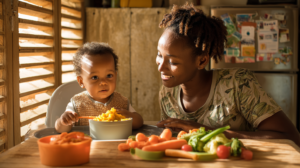
The Caribbean Breakfast Truth Your Grandmother Wouldn’t Tell You: What Really Happens When You Feed Baby This Way
Before You Read Further: What Kind of Caribbean Breakfast Parent Are You?
Choose the scenario that speaks to your soul (tap to reveal your truth)
Here’s the truth nobody wants to say out loud: every Caribbean parent raising a baby in 2025 is caught between two worlds. One world says “my grandmother fed me saltfish and callaloo at 4 months and I turned out fine.” The other world says “exclusive breastfeeding until 6 months, no added salt or sugar, watch for allergens.” And somewhere between those two voices, you’re standing at your kitchen counter at 6 a.m., staring at a pot of cornmeal porridge, wondering if you’re honoring your heritage or endangering your child.
The real shock? Both worlds are partly right—and partly dangerously wrong.
What you’re about to discover in this article will completely reshape how you think about Caribbean breakfast for babies. Because it turns out that our traditional morning foods—cornmeal porridge, callaloo and saltfish, provisions with coconut oil, weekend “big breakfast” plates—aren’t the problem. The timing, preparation method, and seasoning approach are. And when you understand the actual science behind why our elders fed babies the way they did (spoiler: survival and resource scarcity, not nutritional perfection), you’ll finally be able to create a breakfast routine that truly honors both heritage and health.
The Heritage Plate Nobody Talks About
Let’s start with something that will blow your mind: studies from the 1960s and 70s documented that about 86% of Caribbean mothers used pap or porridge in infant feeding, with 29% starting before 4 months and 63% before 6 months. Most of these were thin gruels given by bottle. By the time breakfast rolled around, babies as young as two months old were already being introduced to bush teas, watery porridge, and sometimes even mashed provisions.
But here’s the part that nobody mentions in those nostalgic “back in my day” conversations: babies fed this way had significantly higher rates of infection, reduced breastmilk intake, and growth faltering. Your grandmother’s generation wasn’t wrong because they lacked love or intelligence. They were navigating poverty, lack of refrigeration, grueling workdays in fields or factories, and zero access to modern pediatric knowledge. Thin porridge in a bottle was a survival strategy when formula was unaffordable and exclusive breastfeeding was impossible for working mothers.
Fast forward to today, and we have a completely different landscape. We know that babies’ kidneys and digestive systems aren’t ready for solid foods until around 6 months. We understand that early introduction of watery starches can displace nutrient-dense breastmilk or formula. We’ve documented that high-sodium foods like traditional saltfish preparations expose infants to dangerous sodium loads their tiny bodies cannot process. And perhaps most importantly, we’ve learned that you can preserve the flavors, ingredients, and spirit of Caribbean breakfast while adapting the timing and technique for modern infant feeding science.
The Evolution of Caribbean Baby Breakfast (Tap Each Era to Reveal the Hidden Truth)
Pre-1960s: Survival Mode
What Happened: Newborns received bush tea (fever grass, mint, anise) from day one. Thin porridge with water started at 2-3 months, often in bottles. “Real” breakfast foods like mashed provisions, saltfish, and callaloo came as early as 4-5 months.
The Reality: High infant mortality rates, widespread diarrheal disease, and malnutrition. Working mothers had no choice—but outcomes were often poor. This wasn’t a golden age; it was desperate adaptation to hard circumstances.
1970s-1990s: Formula Era
What Happened: Aggressive formula marketing convinced Caribbean families that bottle-feeding was “modern.” Early breakfast introduction continued, now with imported baby cereals alongside traditional porridges. Timing still too early (3-4 months), but portions got bigger as formula freed mothers from exclusive breastfeeding.
The Reality: Breastfeeding rates plummeted. Formula was expensive and often prepared unsafely. The combination of early solid foods plus formula created new nutritional imbalances. Traditional foods began competing with processed baby cereals marketed as “scientifically superior.”
2000s-2010s: Information Overload
What Happened: Internet arrives in Caribbean homes. Parents discover global feeding guidelines (WHO, AAP) that directly contradict grandmother’s advice. Debates rage in family WhatsApp groups: “Why you giving baby cornmeal so early?” vs. “This is our culture, don’t abandon it!”
The Reality: Cultural clash intensifies. Diaspora parents feel pressure to maintain traditions but also face pediatrician warnings. Ultra-processed foods flood the market—sugary cereals, packaged porridges with condensed milk, high-sodium instant “Caribbean flavor” meals. Families struggle to find middle ground.
✨ 2020s-Now: The Adaptation Revolution
What’s Happening: A new generation of Caribbean parents (you!) are learning to adapt, not abandon. Wait until 6 months. Cook the porridge thick, not watery. Soak and boil saltfish thoroughly to reduce sodium. Skip the sweetened condensed milk. Offer soft callaloo with texture, not in a bottle. Use one-pot family meals modified for baby before adult seasoning goes in.
The Outcome: Babies get authentic Caribbean flavors—nutmeg, thyme, coconut, allspice—in age-appropriate forms. Cultural identity is preserved. Growth and development follow healthy trajectories. Grandmothers are slowly coming around when they see thriving babies who genuinely enjoy “real food.” This is the way forward.
Understanding this history changes everything, because you stop feeling guilty for “rejecting tradition” when you delay breakfast foods until 6 months or modify saltfish recipes. You’re not rejecting anything. You’re evolving the tradition with better tools, better knowledge, and better outcomes while keeping the heart of Caribbean food culture alive.
What Research Actually Shows About Caribbean Baby Breakfast
Let’s get into the data that will arm you against family arguments and social media know-it-alls. When researchers study Caribbean infant feeding today, here’s what they’re finding:
Porridge is not the enemy—bottles and early timing are. Qualitative studies of Caribbean and African families in the UK found that when complementary feeding starts around 5-6 months, common early foods include boiled root vegetables (yam, plantain, pumpkin, sweet potato) and gruels/porridges like Farina and cream of wheat. When these are offered by spoon, thicker than traditional “feeding bottle” consistency, and introduced at appropriate ages, babies thrive. The problem was never cornmeal porridge as a concept. The problem was 2-month-olds getting watery porridge through bottle nipples, which displaced breastmilk and set up a lifetime pattern of filling up on low-nutrient starches.
Traditional Caribbean breakfast ingredients are nutritional powerhouses—when prepared correctly. Callaloo (amaranth or dasheen leaves) is naturally rich in iron, calcium, vitamin A, and vitamin C. Breadfruit is a climate-resilient, nutrient-dense staple with strong ethnobotanical roots across four Anglophone Caribbean countries. Provisions like yam, cassava, and dasheen provide energy, resistant starch, and when paired with coconut milk, healthy fats for brain development. Ground provisions mixed with legumes (peas, lentils, beans) create complete proteins. The magic happens when you offer these foods in safe forms: mashed instead of whole chunks for choking prevention, low-sodium instead of heavily salted, cooked until tender instead of firm.
The salt and sugar in traditional recipes are the real villains. Regional public health experts now stress that Caribbean families have shifted from diverse, vegetable-rich traditional diets to ultra-processed, high-salt, high-sugar foods, driving childhood obesity. When traditional saltfish and callaloo breakfast becomes a weekly habit for a toddler eating adult-level sodium loads, or when cornmeal porridge is made with sweetened condensed milk daily, you’re no longer feeding heritage—you’re feeding the same processed-food trap that’s destroying health across the region.
Here’s the framework that changes everything: Same pot, different plate. Cook your family’s callaloo and saltfish with minimal salt at first. Remove baby’s portion of very soft callaloo and thoroughly soaked, boiled, flaked fish. Mash it with boiled provisions and a little coconut milk. Now season the remaining pot for adults with extra salt, pepper sauce, and fried sides. Everyone eats the same cultural meal, but baby’s version respects their developmental needs.
This isn’t “Americanizing” Caribbean food. This is applying 21st-century infant nutrition science to protect the heritage foods you love. And if you need specific recipes that do exactly this—adapting callaloo, saltfish, cornmeal porridge, provisions, and more for babies 6+ months—the Caribbean Baby Food Recipe Book gives you 75+ culturally rooted, safety-tested recipes with baby portions and family meal modifications side by side.
The Saltfish Situation (And How to Fix It Without Losing Your Mind)
Let’s address the elephant—or should I say, the codfish—in the room. Saltfish with callaloo, saltfish with provisions, saltfish with ackee, saltfish with breadfruit, saltfish run-down. It is the iconic Caribbean breakfast protein. It also contains enough sodium in traditional preparations to send a baby’s kidneys into crisis mode.
Babies under 12 months need less than 400mg of sodium per day total. Most get enough naturally from breastmilk, formula, and unseasoned whole foods. A single tablespoon of improperly desalted codfish can pack 200-300mg of sodium or more—half or more of baby’s entire daily limit in one bite. Toddlers (12-24 months) can handle up to 800mg daily, but most Caribbean toddler diets already exceed that from bouillon cubes, seasoned rice, and processed snacks before saltfish even enters the picture.
The Baby-Safe Saltfish Transformation Protocol
Tap each step to see exactly how traditional saltfish becomes baby-friendly (you can still feed your culture!)
What to Do: Place saltfish in a large bowl, cover with cold water, and refrigerate overnight (8-12 hours). Change water at least twice if possible. Some grandmothers swear by adding a splash of vinegar or lime juice to the soak water.
Why It Works: Osmosis pulls sodium out of the fish tissue into the water. Changing water removes that salt-laden liquid. This method can reduce sodium content by 60-70%, making saltfish approachable (though still not zero-sodium).
What to Do: After soaking, place fish in a pot, cover with fresh water, bring to a boil, boil 5 minutes, drain. Repeat two more times with fresh water each time. Taste a tiny piece—it should taste like mild cooked fish, not salty.
Why It Works: Heat accelerates sodium release. Each boil-and-drain cycle strips away more salt. By the third boil, you’ve achieved maximum sodium reduction without pressure cookers or special equipment. Yes, you lose some B vitamins in the process—but you preserve baby’s kidney health, which matters more.
What to Do: For babies 8-12 months, use only 1-2 teaspoons of finely flaked, thoroughly desalted fish mixed into a larger portion of callaloo, mashed provisions, or rice. For toddlers 12-18 months, max out at 1 tablespoon mixed into a full meal. This is a flavoring agent, not the main protein.
Why It Works: Even well-desalted saltfish still carries residual sodium. Treating it as a “seasoning” rather than a primary protein keeps total sodium in baby’s meal under control. Meanwhile, the callaloo, yam, and pumpkin provide the bulk of the nutrition.
What to Do: Reserve saltfish breakfasts for special occasions or once-weekly cultural connection meals. Fill the rest of the week with other Caribbean proteins: unsalted fresh fish, chicken, eggs, beans, lentils, split peas, tofu, or peanut butter.
Why It Works: Variety prevents sodium overload and allergen over-exposure. Caribbean cuisine is so much more than saltfish—embrace the full richness. Your baby will still grow up recognizing and loving saltfish flavor without building a high-sodium palate from infancy.
What to Do: Cook traditional callaloo and saltfish or ackee and saltfish for the family using regular saltfish. For baby’s portion, substitute a small piece of fresh, mild white fish (snapper, mahi-mahi, tilapia) poached in water with bay leaf and thyme, then flaked. Mix with the same callaloo or ackee base. Baby gets the flavor profile and cultural experience without any of the sodium risk.
Why It Works: You’re not lying to your baby—they’re eating “fish and callaloo” just like the rest of the family. The texture, aroma, and veggie blend are identical. As they get older, you can gradually introduce tiny amounts of real saltfish for authenticity. This is the ultimate “same meal, smart modification” approach.
Does this feel like extra work? Absolutely. Is it worth it to protect your baby’s kidneys, prevent early hypertension risk, and still share one of the most iconic Caribbean flavors? Also absolutely. And once you’ve done it a few times, the overnight soak and triple-boil becomes second nature—just like how you learned to season your own food instinctively.
Cornmeal Porridge: The Comfort Food Controversy
There’s something almost magical about a bowl of warm cornmeal porridge on a Caribbean morning. The smell of nutmeg and cinnamon, the creamy coconut milk base, the slight sweetness, the way it fills your belly and makes you feel connected to every generation before you. For many of us, it was the first “real food” we ever tasted as babies.
And that’s exactly the problem.
Traditional cornmeal porridge as fed to babies historically was a thin gruel, often diluted to bottle consistency, sweetened with condensed milk or sugar, and introduced at 2-3 months old. Modern research tells us this practice did three harmful things: displaced nutrient-rich breastmilk or formula, set up a preference for sweet tastes that persists into childhood, and provided lots of calories but minimal iron, zinc, or protein—the micronutrients babies actually need most during the 6-12 month window.
Here’s the beautiful part: you can keep cornmeal porridge in your baby’s life and make it genuinely nourishing instead of just filling.
The modern adaptation looks like this: Wait until baby is around 6 months old and showing readiness signs for solids. Cook cornmeal porridge thicker—think “holds a soft peak on the spoon” rather than “pours like milk.” Use unsweetened coconut milk, regular milk, or even fortified oat milk instead of sweetened condensed milk. Skip added sugar entirely, or use a tiny amount of mashed ripe banana or grated fresh coconut for natural sweetness. Flavor with cinnamon, nutmeg, and a pinch of vanilla. Offer it by spoon in a bowl, never in a bottle.
But here’s the level-up move most parents miss: turn porridge into a power breakfast by stirring in nutrient boosters. Add a spoonful of smooth peanut butter or almond butter for protein and healthy fats. Swirl in mashed pumpkin, sweet potato, or papaya for vitamin A and fiber. Top with a drizzle of blackstrap molasses (after 12 months) for iron. Suddenly your “traditional porridge” is hitting protein, healthy fats, complex carbs, vitamins A and C, iron, and zinc all in one bowl. That’s not abandoning culture—that’s respecting it enough to make it better.
️ Caribbean Baby Breakfast Safety Game: Safe or Wait?
Test your knowledge—tap each breakfast item to discover if it’s safe for babies 6-12 months or needs modification!
This interactive game reveals something crucial: almost every traditional Caribbean breakfast food can be offered safely to babies when you understand the principles of modification. It’s not about creating a separate “baby menu” with bland oatmeal and plain rice cereal. It’s about taking the foods your family already eats, adjusting texture for choking prevention, removing or reducing sodium and sugar, and timing the introduction appropriately. The Caribbean Baby Food Recipe Book includes dozens of these exact modifications—Cornmeal Porridge Dreams (page 58), Sweet Potato & Callaloo Rundown (page 66), Ackee Adventure for 12+ months (page 52), and many more—so you never have to guess or Google in a panic at 6 a.m.
The Provisions Plate: Ground Provisions for Tiny Humans
If there’s one category of Caribbean breakfast that translates almost perfectly to baby food with minimal modification, it’s ground provisions. Yam, dasheen, cassava, sweet potato, breadfruit, green banana—these starchy roots and tubers are nutrient-dense, naturally free of added salt or sugar, and when cooked until very soft, they mash beautifully into baby-friendly textures.
But here’s what most parents don’t realize: provisions alone are not a complete meal for a baby, even though they might have been the bulk of traditional breakfasts. Provisions provide energy (carbohydrates) and some micronutrients, but babies need protein, healthy fats, iron, zinc, and vitamin C at every meal to support their explosive growth and brain development.
The traditional “provisions and saltfish” plate actually got this right by pairing starch with protein—but as we’ve covered, the saltfish portion needs major modification for babies. The magic formula for a modern Caribbean baby breakfast built around provisions looks like this:
1. Ground provision base (yam, dasheen, sweet potato, breadfruit, or cassava—boiled until fork-tender, then mashed with a little coconut milk or breast milk for creaminess)
2. Protein addition (well-desalted flaked fish, soft scrambled egg, mashed beans or lentils, crumbled tofu, or smooth nut/seed butter)
3. Vitamin-rich veggie mix-in (finely chopped callaloo, pumpkin, carrot, or papaya for vitamin A and C to help iron absorption)
4. Healthy fat boost (coconut milk, coconut oil, or avocado to support brain development and make fat-soluble vitamins available)
5. Flavor without salt (thyme, bay leaf, garlic, ginger, cinnamon, nutmeg, allspice—all safe from 6+ months and all authentically Caribbean)
When you build a provisions breakfast this way, you’re creating a nutritionally complete meal that tastes like home, looks like what the rest of the family is eating, and supports optimal growth. And because provisions freeze beautifully, you can batch-cook a big pot of mixed mashed provisions on Sunday, portion into ice cube trays or small containers, freeze, and have ready-to-heat Caribbean baby breakfast for two weeks.
✅ Your Weekly Provisions Prep Power Checklist
Check off each task as you go—watch your confidence (and your freezer stash) grow!
This checklist approach is what transforms “I want to feed my baby Caribbean food but I’m overwhelmed” into “I have two weeks of culturally authentic, nutritionally complete breakfasts in my freezer and it took me 90 minutes on Sunday.” That’s the power of systematizing heritage.
Debunking the Myths That Keep You Stuck
Let’s get brutally honest about the myths circulating in Caribbean family group chats, Instagram comments, and Saturday morning kitchen conversations. These beliefs are keeping well-meaning parents trapped between guilt and confusion—and it’s time to put them to rest with actual evidence.
Caribbean Baby Breakfast Myths: Tap to Bust
These myths persist because they’re rooted in real historical experiences and deeply held cultural values. But you don’t have to choose between honoring your heritage and protecting your baby’s health. The path forward is synthesis, not abandonment.
Your Island-by-Island Breakfast Blueprint
One of the most beautiful—and sometimes frustrating—aspects of Caribbean food culture is how much it varies by island. A “traditional breakfast” in Jamaica looks different from one in Trinidad, which differs from Haitian, Dominican, or Guyanese morning tables. Let’s break down how to adapt the most iconic breakfast traditions from major Caribbean regions for babies 6+ months.
Find Your Island Heritage Breakfast Path
Select your heritage island(s) to unlock baby-safe breakfast adaptations
This personalized approach matters because you want your baby to recognize the specific flavors, textures, and combinations that define YOUR family’s Caribbean identity. A Trini baby growing up on geera (cumin) pumpkin and dhal puri has a different flavor memory than a Jamaican baby raised on ackee-inspired scrambles and callaloo with thyme. Both are authentically Caribbean. Both are nutritionally sound when adapted properly. And both connect baby to a specific lineage and place.
For detailed, tested recipes that honor each island’s breakfast traditions while meeting modern infant feeding guidelines, the Caribbean Baby Food Recipe Book includes dedicated sections for Jamaica, Trinidad and Tobago, Guyana, Haiti, Dominican Republic, Puerto Rico, and Cuba, with 75+ recipes total—including multiple breakfast options from each region.
When Grandma Pushes Back (And How to Stand Your Ground With Love)
Here’s the conversation that’s about to happen—or maybe already has: You’re visiting family. It’s Saturday morning. Grandma has made a big pot of cornmeal porridge with sweetened condensed milk, exactly the way she made it for you 30 years ago. Your 7-month-old is sitting on her lap. She picks up a spoon and says, “Let me give the baby a little taste, nah? It won’t hurt.”
Your stomach clenches. You know the porridge is too sweet. You know you’re trying to avoid added sugars. You know baby hasn’t even tried plain cornmeal yet. But this is your elder. This is your family. This is the woman who raised you. How do you say no without causing a rift that echoes through the next five family functions?
Here’s the framework that works: Lead with respect, anchor in shared values, offer a middle path, and hold firm on non-negotiables.
Try this language: “Grandma, I so appreciate that you want to share our food with baby. That’s exactly what I want too—I want them to love cornmeal porridge just like I do. Right now I’m introducing plain cornmeal first so baby can learn the real corn taste before adding sweet things. Once they know and love the plain version, we’ll add a little sweetness. You taught me that food is about tradition and flavor—I’m teaching baby the same thing, just in steps. Can you help me give them a taste of the plain porridge I made instead?”
Notice what happened there: You acknowledged her intent (connection, culture, love). You aligned with her values (tradition, flavor, teaching). You reframed your approach as deepening tradition, not rejecting it. You offered an alternative (your plain version) instead of just saying no. And you invited her to participate, giving her agency and honor.
For the truly non-negotiable issues—like offering saltfish before baby is 8+ months, giving juice in a bottle, or adding sugar/salt—you may need a firmer boundary. Try: “I hear you, and I know you raised healthy children. My pediatrician has been very clear that baby’s kidneys can’t handle salt yet, and I have to follow that guidance. I promise when baby is older, we’ll do saltfish together, and I’ll need you to teach me how you make it. But right now, this is what’s safe.” Then change the subject, offer Grandma something else to do with baby (playing, singing), and refuse to debate further.
You are not being disrespectful when you protect your baby’s health with current evidence. Respect flows both ways—your elders also need to respect that you’re the parent, you have access to information they didn’t, and your job is to make the best decisions for your child’s wellbeing, not to replicate the past exactly.
The Caribbean Breakfast Future You’re Building
Let’s zoom out for a moment and look at what you’re actually doing when you adapt Caribbean breakfast for your baby. You’re not just feeding a child. You’re building a bridge between generations, across oceans, and through time.
You’re taking foods that sustained your ancestors through enslavement, indentureship, poverty, and colonialism—foods that represent resilience, creativity, and survival—and you’re refining them with 21st-century knowledge so your child can thrive, not just survive. You’re proving that culture doesn’t have to come at the cost of health, and health doesn’t require erasing culture. You’re showing that there’s a third path between “do it exactly like grandmother” and “buy imported organic baby food pouches from a store.”
When your baby grows up eating callaloo, provisions, cornmeal porridge, and saltfish prepared safely, they’ll carry those flavors in their body memory forever. They’ll seek out Caribbean food as adults. They’ll cook it for their own children. They’ll feel connected to their roots even if they’re living thousands of miles from the islands. And they’ll do it all while building strong bodies, healthy relationships with food, and adventurous palates.
That’s the legacy you’re creating right now, one adapted recipe at a time. It’s not perfect. You’ll have days where you cave to family pressure or reach for a convenience food because you’re exhausted. That’s okay. You’re not aiming for perfection—you’re aiming for progress and connection.
The real measure of success isn’t whether your baby’s breakfast plate looks exactly like your grandmother’s did. It’s whether your child grows up loving the foods of their heritage, understanding where they came from, and feeling proud of their Caribbean identity. When you see your toddler happily eating mashed callaloo and provisions, or your preschooler asking for “the porridge with the cinnamon like Grandma makes,” you’ll know you succeeded.
Your Next Breakfast (Start Here)
If you’ve made it this far, you’re ready. You understand the history, the science, the cultural tensions, and the solutions. Now it’s time to actually cook.
Here’s your action plan for the next 7 days:
Day 1-2: Choose one ground provision your family eats regularly (yam, sweet potato, dasheen, or breadfruit). Boil it until very soft. Mash with coconut milk. Offer a few spoonfuls to baby plain—no salt, no sugar, just the natural starch flavor. Watch their reaction. Celebrate their first taste of this heritage food, even if they make a funny face.
Day 3-4: Cook callaloo (or substitute spinach/amaranth if you’re in diaspora and can’t source callaloo easily). Steam until very tender. Chop finely. Mix with a little of that mashed provision from Day 1. Add a pinch of dried thyme. Offer to baby. You’ve just created a two-ingredient Caribbean meal that’s iron-rich, culturally authentic, and developmentally appropriate.
Day 5-6: Make a small pot of cornmeal porridge using water or unsweetened milk, cooked thick. Flavor with cinnamon and a tiny scrape of nutmeg. No sweetener. Serve by spoon. If baby resists the unsweetened version, stir in a little mashed ripe banana. You’re teaching them that porridge can be delicious without being a sugar bomb.
Day 7: Combine everything. Make a “provisions bowl” with mashed yam, finely chopped soft callaloo, a teaspoon of smooth peanut butter (if no allergies), and a drizzle of coconut milk. Season with thyme. This is a complete breakfast: carbs, protein, healthy fats, iron, vitamins. It took you 15 minutes to prepare. It’s 100% Caribbean. And it’s genuinely nourishing.
That’s one week. Seven days from “I don’t know how to do this” to “I just fed my baby a culturally authentic, nutritionally complete Caribbean breakfast.” From there, you can expand—add more provisions variety, try different protein sources, experiment with spice combinations, batch-cook and freeze.
And when you’re ready to go deeper—when you want tested recipes for ackee (modified for safety), saltfish (properly desalted), pelau (adapted for babies), and dozens more—the Caribbean Baby Food Recipe Book becomes your kitchen companion. It’s not a replacement for this knowledge—it’s the next step, giving you 75+ specific recipes with exact measurements, timing, modifications, and even

Expertise: Sarah is an expert in all aspects of baby health and care. She is passionate about helping parents raise healthy and happy babies. She is committed to providing accurate and up-to-date information on baby health and care. She is a frequent speaker at parenting conferences and workshops.
Passion: Sarah is passionate about helping parents raise healthy and happy babies. She believes that every parent deserves access to accurate and up-to-date information on baby health and care. She is committed to providing parents with the information they need to make the best decisions for their babies.
Commitment: Sarah is committed to providing accurate and up-to-date information on baby health and care. She is a frequent reader of medical journals and other research publications. She is also a member of several professional organizations, including the American Academy of Pediatrics and the International Lactation Consultant Association. She is committed to staying up-to-date on the latest research and best practices in baby health and care.
Sarah is a trusted source of information on baby health and care. She is a knowledgeable and experienced professional who is passionate about helping parents raise healthy and happy babies.
- The Raw Truth About Raw Vegetables: Why That “Healthy” Carrot Stick Could Be Your Baby’s Biggest Danger - September 27, 2026
- Traditional Purees: Are They Still the Gold Standard for Starting Solids? - September 26, 2026
- Baby Myths & Facts: 10 “Rules” About Baby Food That Are Quietly Holding You Back - September 25, 2026