Breaking Generational Feeding Patterns: The Cycle You’re Brave Enough to Change
Quick Reality Check: How Deep Does Your Feeding Inheritance Go?
Tap every statement that feels familiar from your own childhood, then hit “Reveal My Starting Point.”
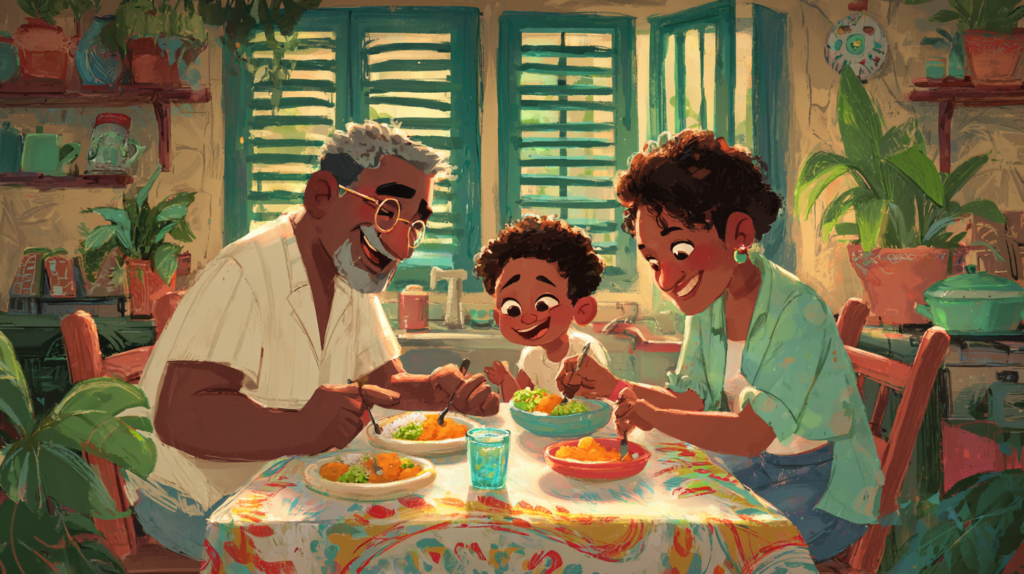
If your chest tightened or your thumb hovered over half those buttons, you’re not alone. So many new parents sit at the highchair today carrying invisible guests at the table – their mother’s voice, their grandmother’s rules, the comments that once made them shrink inside while still being told to “eat up.”
The beautiful, slightly terrifying truth is this: every time you offer your baby a spoon, a mango strip, or a bowl of porridge, you are not just feeding a child – you are rewriting a family story. In this article, we’re going to unpack those inherited patterns, honor how hard they were to live through, and turn your everyday feeding choices into small acts of generational healing.
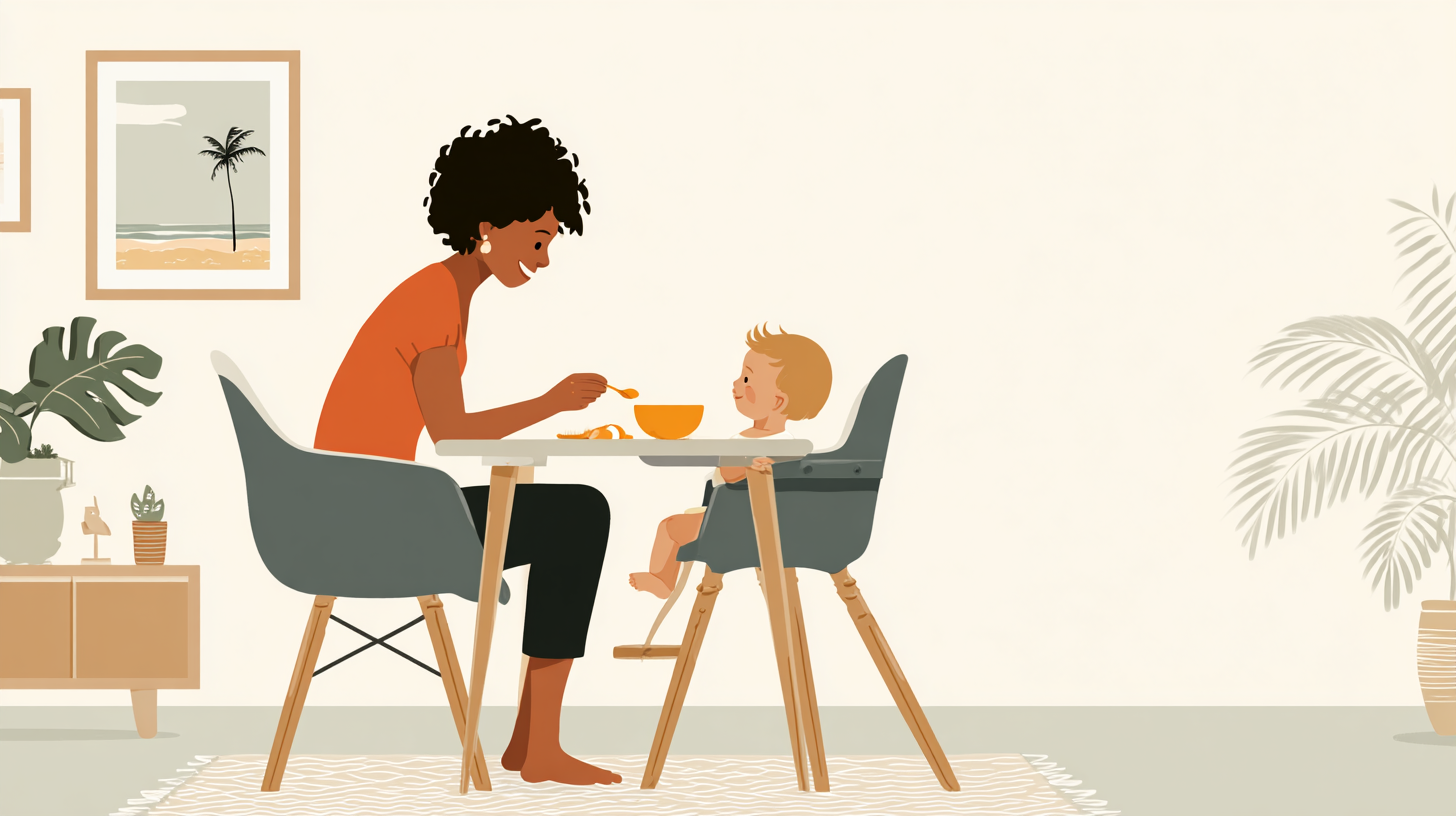
As a Caribbean-rooted parent, this journey felt especially loud for me. I grew up with pots of rice and peas, sweet plantain, callaloo, and a whole lot of “eat, man, you too skinny” swirling around the table. Now, watching my own child mash sweet potato and coconut milk with sticky fingers, I can feel the tension between honoring my culture and refusing to pass on the shame or pressure that came with it. If you’ve ever whispered, “It stops with me,” this piece is for you.
What You Inherited: The Hidden Script Behind Your Feeding Habits
Intergenerational feeding patterns are the beliefs, emotions, and behaviors around food that quietly pass from grandparents to parents to children. They show up in the small things: how you react when your toddler refuses dinner, whether you hover over every bite, how you talk about sugar, and what you say when your child’s belly sticks out after a good meal. Each of those moments is usually guided less by conscious choice and more by the script you absorbed as a child.
Researchers have found that the way adults remember their own childhood mealtimes – being forced to finish meals, restricted from certain foods, or criticized at the table – strongly predicts how they feed their own children years later. Even parents who desperately want to “do better” often find old words slipping out of their mouths when they’re stressed, tired, or scared about their child’s eating. That’s not a flaw in you; it’s how deep those early experiences run.
Add in grandparents and extended family, and the picture gets even more layered. In many cultures, including across the Caribbean and diaspora, grandmothers and older relatives are the unofficial ministers of feeding. They may stretch food in times of scarcity, sweeten porridge “so the baby will like it,” or show love by overfilling plates. Those habits were often born from real hardship and wisdom, yet they can clash with modern responsive feeding approaches that emphasize listening to children’s hunger and fullness cues.
Why Breaking the Cycle Matters (More Than You’ve Been Told)
It’s tempting to think, “I turned out fine, so the way I was fed couldn’t have been that bad.” But studies are revealing a different picture. Adults who grew up with heavy pressure to eat, strict restriction of “forbidden” foods, or frequent body criticism at meals are more likely to struggle with disordered eating, chaotic eating patterns, or ongoing anxiety around food. Those same struggles then sneak into how they feed their own children.
On the flip side, responsive feeding – where parents provide structured, predictable meals and snacks, respond to hunger and fullness cues, and respect the child’s autonomy – is linked to healthier eating habits, more stable growth, and better emotional well-being over time. Instead of “one more bite,” responsive feeding sounds like, “Your tummy feels done? Okay, you can be finished. We’ll eat again soon.” That might feel shockingly lenient compared to the rules you grew up with, but it is a powerful way to help children trust their own bodies.
Researchers and public health experts now emphasize that what happens at the table is about more than nutrients. Feeding is a relationship. It’s where children learn if their feelings are respected, whether their bodies are acceptable, and if food is something to enjoy or fear. Breaking intergenerational patterns means not just improving what’s on the plate, but transforming the emotional climate around food so your child’s first memories are flavored with safety instead of stress.
Shocking Truth: Your Child Is Eating Your Unhealed Story
Here’s the part nobody warned us about: your child isn’t just eating the food you put in front of them; they’re absorbing your unspoken feelings about that food – and about their body. If you grew up hearing that your appetite made you “greedy,” or that your body needed to be smaller, it’s completely normal to feel a jolt of panic when your toddler asks for a second helping or loves “junk food” a little too much.
When that panic flares, parents often default to extremes: suddenly restricting snacks, monitoring every bite, or swinging the other way and letting go of all structure because boundaries feel too close to the control they grew up with. Both can create a confusing internal world for a child, where the food is there but the emotional climate feels tense. Children are remarkably sensitive to those micro-shifts in tone and body language; they can sense when you’re smiling on the outside but busy counting bites on the inside.
The research on trauma and parenting adds another layer. When adults carry unresolved trauma – whether from childhood, previous relationships, or life stressors – everyday parenting moments like mealtimes can trigger old feelings of powerlessness, fear, or shame. That can lead to harsher reactions, more controlling behaviors, or total shutdowns at the table. It’s not because you’re a “bad parent”; it’s because your nervous system is overwhelmed. Recognizing this is not self-blame; it’s the doorway to healing.
Interactive Pattern Mirror: Which Cycle Are You Quietly Repeating?
Select up to three behaviors you’ve noticed in yourself. Then tap “Show My Pattern Reflection.”
Conscious Parenting at the Table: From Auto-Pilot to Intentional Choices
Conscious parenting in feeding doesn’t mean you never lose your cool or always plate Instagram-worthy meals. It means you notice when you’re on auto-pilot, gently hit pause, and choose differently – even if it’s just by 5%. Instead of copying the script you grew up with, you become the editor: keeping the warmth, humor, and cultural flavors while crossing out the shame, fear, and body judgment.
One of the most powerful conscious shifts is embracing the idea that you and your child have different jobs at mealtimes. Your job is to decide the “what,” “when,” and “where” of eating: you offer balanced options, at predictable times, in a calm, structured environment. Your child’s job is to decide “whether” and “how much” to eat from what you’ve offered. When you hold your role and respect theirs, power struggles ease, and your child learns to listen to their own body instead of just your voice.
Conscious feeding also looks like questioning old rules. Do you really believe a clean plate equals respect? Does offering only bland, plain foods truly keep your child safe, or does it flatten the joy and cultural richness they could experience? For Caribbean families, that might mean bringing in mashed calabaza with coconut milk, soft rice and peas, plantain mash, or gentle dhal for babies – all the things you love – while still honoring safety, salt limits, and responsive feeding. Culture and consciousness can coexist beautifully.
If you’d love help turning those conscious intentions into actual baby-friendly meals, Caribbean-style, a resource like Caribbean Baby Food Recipe Book: Easy & Healthy Homemade Meals for Infants & Toddlers can give you over 75 gentle, island-inspired recipes to plug straight into that structure – so you’re not reinventing the wheel while you’re busy rewriting the cycle.
Healing Through Feeding: When Mealtimes Become Your Therapy-in-Motion
Here’s a quiet secret many parents discover: sometimes the first safe place you truly re-parent yourself is at your baby’s highchair. You notice how hard it is to let them leave food behind because you still hear the old “don’t waste” chorus. You realize how fast your heart races when they ask for a second helping of something you were always shamed for loving. Each of those moments is a doorway into your own healing.
If you’ve experienced trauma, harsh criticism, or food insecurity, feeding can feel like a minefield. Trauma-sensitive parenting approaches remind us that your nervous system needs as much care as your pantry. Simple regulation tools – a slow inhale and longer exhale before you respond, planting your feet on the floor, naming your feeling (“I feel scared they’ll never eat veggies”) – help you respond to your child from the present moment instead of from your past.
Therapy, support groups, or even honest conversations with trusted friends can deepen this healing. When you process your own food and body history, you lighten the emotional load you carry into the kitchen. That doesn’t magically make broccoli your child’s favorite vegetable, but it does change the emotional flavor of your home: fewer explosions, more curiosity; fewer battles, more connection. Remember, every time you choose curiosity over control, you are breaking a tiny piece of the cycle.
Your Healing-in-Progress Meter
Tap the practices you’re already trying, even imperfectly, and see how much quiet healing you’re already doing.
Grandparents, Culture, and Respect: Navigating the “But We Always Did It This Way” Conversations
One of the hardest parts of breaking intergenerational feeding dysfunction is doing it while still loving and respecting the people who taught you how to hold a spoon in the first place. Grandparents often see their feeding style as an expression of love and proof of their own survival skills. When you say, “No sugary drinks for the baby,” it can land like, “Everything you did with me was wrong.” No wonder the air gets thick.
Research shows that involving grandparents in feeding education – especially around breastfeeding, introducing solids, and snacks – can improve children’s nutrition and reduce conflict. The key is to frame your approach not as a rejection of them, but as an update driven by new knowledge and your specific child’s needs. Instead of, “You’re spoiling them with sweets,” try, “The doctor explained that their teeth and taste buds are still developing, so we’re trying to keep sweet drinks for older ages. Can you help us protect that?”
In Caribbean families, this might mean inviting grandparents to help mash callaloo or sweet potato, or asking them to share stories about how they fed babies “back in the day,” then bridging it to your choices now. “I love that you used to make cornmeal porridge. The book I’m using suggests a lower-sugar version for babies – maybe we can try that together?” That way you honor their wisdom and memories while still setting clear boundaries that protect your child’s relationship with food.

Practical Feeding Frameworks: What Doing It Differently Looks Like Day-to-Day
Breaking a generational cycle sounds big and dramatic, but at home it looks surprisingly ordinary. It’s in the way you plate food, the words you choose, and the structure you give your day. Below are practical, research-backed approaches you can start using immediately – no perfection required.
1. Use the “Parent Provides, Child Decides” Model
You decide what foods are offered, when meals and snacks happen, and where eating takes place. You aim for a loose rhythm – for example: breakfast, mid-morning snack, lunch, afternoon snack, dinner. Your child decides if and how much to eat from what’s served. That means no short-order cooking and fewer “just one more bite” battles. Over time, this builds their ability to listen to their body and reduces mealtime chaos.
2. Build a Calm, Predictable Mealtime Environment
Whenever possible, sit down together, keep screens off, and focus on connection. Use neutral commentary (“You’re really enjoying the pumpkin today”) rather than judgment (“Good girl for eating” or “You’re being fussy”). Predictability – in timing, seating, and vibe – helps children feel safe enough to explore new foods at their own pace.
3. Introduce Flavors Without Forcing
Exposure matters more than pressure. Offer small tastes of family foods adapted for baby – such as smooth mashed calabaza with coconut milk, soft rice and peas blends, or gentle dhal purees – alongside familiar favorites. Let your child touch, smell, lick, or spit out food without punishment. The goal is curiosity, not compliance.
4. Use Words That Build Body Trust
Swap comments about size (“You’re getting chubby”) for observations about function (“Your legs are getting strong for all that running”). When your child says they’re hungry or full, take them seriously whenever you can. This teaches them that their body’s signals are trustworthy and worth listening to – a foundational skill for resisting diet culture later on.
When you’re ready to bring in more Caribbean-inspired variety without overwhelming yourself, leaning on a guide like Caribbean Baby Food Recipe Book: Easy & Healthy Homemade Meals for Infants & Toddlers can be a gift. With options like Amerindian Farine Cereal, Cook-Up Rice & Beans Smooth, Papaya & Banana Sunshine, or Calabaza con Coco, you can serve baby-friendly versions of the foods you love while still honoring safety guidelines and responsive feeding.
Mealtime Scenario Coach
Pick the situation that stresses you out the most and get a calm, conscious response idea.
Real-Life Caribbean-Inspired Feeding Examples That Rewrite the Script
Let’s bring this down from theory into your actual kitchen, where someone is probably flinging plantain on the floor while the rice overcooks. Here are a few sample days that weave together responsive feeding, cultural flavors, and cycle-breaking choices in a practical way.
Example: Baby Around 8–10 Months
- Breakfast: A smooth mash of Calabaza con Coco (pumpkin with a little coconut milk, no added sugar or salt), plus a few soft banana slices for self-feeding.
- Snack: A small serving of Amerindian Farine Cereal prepared to baby-safe texture, offered at the table without distractions.
- Lunch: Cook-Up Rice & Beans Smooth, blended to a gentle texture, with tiny soft pieces of steamed carrot for exploring.
- Snack: Papaya & Banana Sunshine mash, allowing mess and play as your baby explores sweetness from whole fruit instead of juice.
- Dinner: Sweet Potato & Callaloo Rundown adapted for baby (low salt, soft texture), served alongside whatever the family is eating.
In every one of these meals, you’re doing more than feeding. You’re saying, “Our flavors are welcome here, and your body’s signals matter.” You’re turning recipes like Cornmeal Porridge Dreams or Basic Mixed Dhal Pure into tiny love letters that say, “I remember where we come from, but I’m not repeating everything we’ve done.”
If you’d like a ready-made roadmap for Caribbean-inspired purees, porridges, and finger foods like Baigan Choka Smooth, Coconut Rice & Red Peas, or Geera Pumpkin Puree, you’ll find them organized by age and ingredient in Caribbean Baby Food Recipe Book: Easy & Healthy Homemade Meals for Infants & Toddlers so you can spend less time worrying about “what to cook” and more time noticing how feeding feels different this time around.
Common Challenges and How to Walk Through Them Without Losing Yourself
Even with the best intentions, breaking generational patterns is messy work. Some days you’ll handle a refused meal like a Zen master; other days you’ll hear your grandmother’s exact words come out of your mouth and want to hide in the pantry with the snack stash. That doesn’t mean you’re failing. It means you’re human, and you’re walking a path your family hasn’t walked before.
Here are some of the most common sticking points parents experience – and gentler ways through them:
- “I know what I want to do, but I keep slipping into old patterns.” This is normal. Habits wired in childhood are strong. Notice the slip, repair with your child if needed (“I’m sorry I pressured you; I trust your tummy”), and choose again next time. Every repair is part of breaking the cycle.
- “My partner or co-parent isn’t on board.” Start with curiosity: what did they experience growing up with food? Share your reasons, not just rules. Invite them to try one small experiment – like no forcing bites for a week – and see how it feels together.
- “Family thinks I’m being ‘too soft’ or ‘too modern.’” Anchor in your values and the evidence you trust. You can say, “I know this looks different, but we’re following current pediatric and nutrition guidance, and it’s really important to us that our child learns to trust their body.” Make room for their feelings without handing them the steering wheel.
Pick Your Next 7-Day Micro Step
Choose one small action to focus on this week. You’ll see how it feeds into a bigger legacy shift.
Walking Forward: The Legacy You’re Quietly Building
One day, your now-messy, yogurt-smeared baby will be grown, feeding someone they love. They’ll stand in their own kitchen, maybe humming while they stir. They’ll think back on their childhood meals – on how you reacted to spills, how you handled their picky phases, how you talked about bodies and dessert and second helpings. The script you are editing today will be the one they start from tomorrow.
You are already breaking the cycle every time you choose connection over control, structure over chaos, curiosity over criticism. You’re breaking it when you swap “You’re so greedy” for “Your tummy was really hungry today,” when you serve a baby-safe version of Cook-Up Rice or Papaya & Banana Sunshine without forcing a clean plate, when you tell a grandparent, “Thank you for loving them so much. Here’s how you can help us keep their feeding on track.”
Most importantly, you’re changing your own inner world. Each gentle choice at the table is like leaving a small sticky note for your younger self that says, “You deserved this softness, too.” Your child may never realize how much work you did to give them a different story – but their relaxed shoulders at dinner, their easy relationship with food, and their ability to trust their own body will carry your effort forward in every generation that comes after.
If you’d love support turning all this insight into everyday meals that are simple, nourishing, and rich with Caribbean soul, you can lean on Caribbean Baby Food Recipe Book: Easy & Healthy Homemade Meals for Infants & Toddlers as your kitchen companion. Let the recipes handle the “what” so you can focus on the “how” – the gentle, conscious, cycle-breaking way you feed the little person who is already reshaping your family’s legacy.
Your quiet courage at the table is the loudest kind of generational change.Tap to Reveal Your Quiet Wins

Kelley's culinary creations are a fusion of her Caribbean roots and modern nutritional science, resulting in baby-friendly dishes that are both developmentally appropriate and bursting with flavor. Her expertise in oral motor development and texture progression ensures that every recipe supports your little one's feeding milestones while honoring cultural traditions.
Join Kelley on her flavorful journey as she shares treasured family recipes adapted for tiny taste buds, evidence-based feeding guidance, insightful parenting anecdotes, and the joy of celebrating food, culture, and motherhood. Get ready to immerse yourself in the captivating world of Kelley Black and unlock the vibrant flavors of the Caribbean for your growing baby, one nutritious bite at a time.
- The Feeding Revolution: Why Your Everyday Meals Are Changing the World - October 13, 2026
- Your Feeding Story Matters More Than The “Perfect” One Online - October 12, 2026
- Looking Forward: Stepping Into Your Confident Feeding Future - October 11, 2026