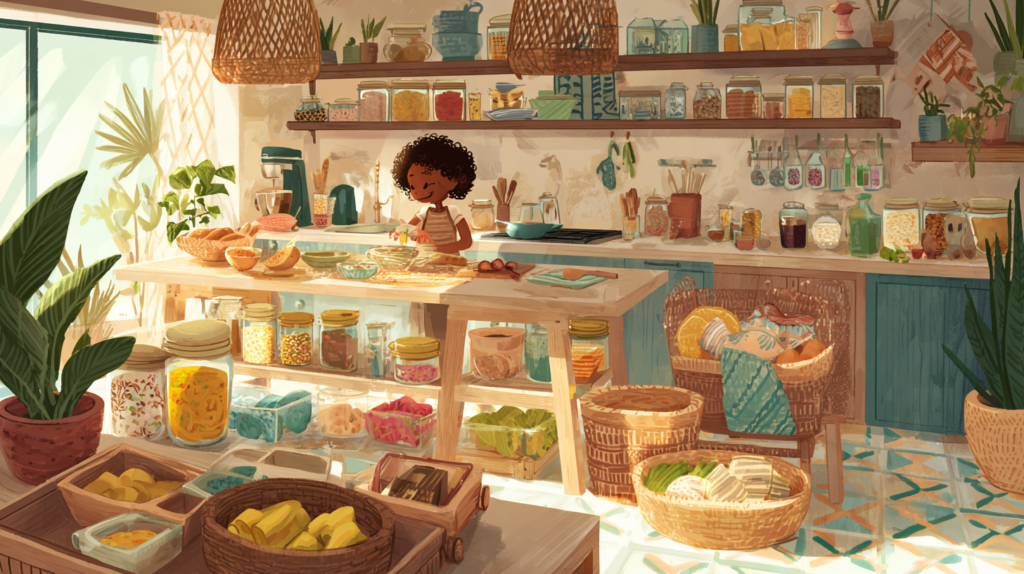
The Kitchen Revolution No One Told You About: How to Stock Your Baby’s First Pantry Like a Pro
Transform chaos into confidence with a meal-planning system that actually works
How many times have you opened your fridge this week, stared blankly at mismatched ingredients, and wondered what on earth to feed your baby?
Here’s the truth they don’t tell you in those glossy parenting magazines: the difference between parents who confidently whip up nutritious baby meals and those who stress-order yet another jar of commercial puree isn’t talent or time. It’s having the right ingredients in the right place at the right time.
When my neighbor showed me her chaotic pantry three months into her baby’s solid food journey, I recognized myself. Random half-bags of quinoa, expired lentils tucked behind canned goods, sweet potatoes sprouting in a forgotten corner. She’d spent hundreds on ingredients she never used because she had no system. Sound familiar?
The World Health Organization emphasizes that complementary foods should be timely, adequate, safe, and properly fed starting around 6 months of age. But here’s what they don’t highlight enough: having a well-stocked, organized kitchen is the foundation that makes following these guidelines actually possible in real life. The American Academy of Pediatrics agrees that introducing iron-rich foods early is crucial, yet most parents struggle simply because they don’t have these ingredients ready when mealtime hits.
This isn’t about becoming a gourmet baby chef or spending hours meal-prepping Instagram-worthy purees. This is about creating a kitchen environment where homemade baby food becomes the easier choice, not the harder one. Because when you know exactly what ingredients you have, where they are, and what meals you can create with them, feeding your baby transforms from a source of stress into something surprisingly manageable.
Why Your Kitchen Setup Matters More Than the Recipe
Let’s flip the script on everything you think you know about baby food preparation. Most parents start with recipes. They find a cute sweet potato puree tutorial, rush to the store, buy ingredients for that one meal, make it once, and then watch those same ingredients sit unused until they spoil. This backwards approach is exactly why homemade baby food feels overwhelming.
The secret is this: your kitchen infrastructure determines your success, not your cooking skills. When researchers studied food preparation practices among families with infants aged 7 to 13 months, they found that parents who maintained organized, well-stocked kitchens were significantly more likely to prepare diverse, nutrient-rich meals at home. The families who struggled weren’t lacking in motivation or knowledge—they were missing the systematic foundation that makes consistent meal preparation feasible.
Think about it like this: you wouldn’t try to build a house without first laying a foundation, yet we expect ourselves to feed our babies nutritious homemade meals without setting up the kitchen systems that make it possible. Recent dietary guidelines for infants 6-24 months specify that meeting micronutrient targets requires careful inclusion of iron-rich and zinc-rich foods in small, frequent meals. But how can you include these foods if you don’t consistently have them on hand?
The Caribbean approach to baby feeding understands this intuitively. When you look at traditional island kitchens, you’ll find staples like plantains, sweet potatoes, coconut milk, and various ground provisions that form the backbone of countless dishes. These aren’t random ingredients—they’re a carefully curated pantry that enables flexibility and creativity. The same sweet potato that becomes a simple mash for a 6-month-old can be combined with callaloo and coconut milk for an 8-month-old, or mixed into a cassareep-seasoned comfort food for a toddler. My Caribbean Baby Food Recipe Book was built on this exact principle—showing how strategic ingredient stocking multiplies your meal options exponentially.
The Shocking Truth About Nutrient Gaps in Homemade Baby Food
Click to uncover which critical nutrients most homemade baby food kitchens are missing:
Iron: The #1 deficiency in plant-based homemade baby diets. Breastmilk alone can’t provide enough after 6 months, and unfortified cereals won’t cut it.
Zinc: Critical for immune function and growth, yet often absent in vegetable-heavy purees. You need legumes, meat, or fortified foods.
Calcium: If you’re not using dairy or fortified alternatives, your baby likely isn’t getting enough for bone development.
Vitamin B12: Almost impossible to get from plant sources alone. Animal products or supplements are essential.
Solution: Stock your kitchen with iron-fortified cereals, lentils, eggs, plain yogurt, and small portions of meat or fish. These aren’t optional—they’re nutritional insurance.
Here’s the uncomfortable reality that most baby food blogs won’t tell you: even “improved” homemade complementary foods can lack critical micronutrients. Research across multiple regions shows that homemade baby foods based primarily on unfortified plant staples—even when carefully prepared—often fall short on iron, zinc, and calcium. This isn’t a failure of home cooking; it’s a predictable outcome of not stocking the right nutrient-dense ingredients.
The CDC and WHO both emphasize that complementary foods must fill the energy and micronutrient gaps left by breastmilk after 6 months. But here’s what that means in practical kitchen terms: you can’t just stock sweet potatoes and bananas and call it a day. You need a strategic mix of iron-fortified cereals, legumes (like the lentils in a Basic Mixed Dhal or the red peas in Coconut Rice & Red Peas), animal-source foods when possible, and healthy fats.
I learned this lesson the hard way when my friend’s pediatrician flagged her baby’s iron levels. She’d been making beautiful, organic purees from her garden—carrots, zucchini, homegrown tomatoes—and felt like she was doing everything right. But she wasn’t stocking iron-rich ingredients. Her kitchen setup was missing the foundation foods that would have prevented the deficiency in the first place.
The fix isn’t complicated, but it does require intentionality. U.S. Dietary Guidelines modeling work shows that meeting micronutrient targets between 6-24 months requires specific food combinations at each stage. For your kitchen, this translates to:
- Always having iron-fortified infant cereal on hand (not just for first foods, but as an easy iron boost you can mix into other purees)
- Keeping dried or canned legumes ready (lentils, beans, chickpeas—they store forever and pack serious nutrition)
- Maintaining a supply of eggs, plain yogurt, and affordable animal proteins (even small amounts make a huge difference in nutrient density)
- Stocking nuts and seeds in forms safe for babies (ground into powders or thinned nut butters add healthy fats and minerals)
When you stock these foundational nutrients strategically, you’re not just preparing individual meals—you’re building nutritional insurance into every eating occasion. Whether you’re making Geera Pumpkin Puree, Plantain Paradise, or a simple mashed avocado, you can quickly fortify it with iron-rich cereal or legume puree you already have prepared and frozen.
The 5 Kitchen Zones That Transform Baby Meal Prep
Professional chefs organize their kitchens into stations—prep, cooking, plating. Your baby food kitchen needs something similar, but adapted for the unique workflow of making small-batch, nutrient-dense meals. After testing dozens of configurations, I’ve found five zones that make the difference between chaotic meal scrambles and smooth, efficient feeding routines.
Zone 1: The Fresh Foundation Hub
This is your produce drawer and counter space dedicated to the vegetables and fruits you’ll use multiple times per week. The key is strategic rotation: keep 3-4 versatile vegetables at all times (sweet potatoes, carrots, broccoli, and one seasonal green), plus 2-3 soft fruits (bananas, avocados, and one other). When you use one, replace it. This isn’t complicated, but it’s powerful—you always have fresh options without waste or fridge overwhelm.
For Caribbean-inspired cooking, this zone expands to include ground provisions: yams, plantains (both green and ripe), breadfruit when available, and dasheen or eddoes. These aren’t exotic specialties—they’re nutrient powerhouses that store well and offer textures and flavors commercial baby food simply can’t match. The Yellow Yam & Carrot Sunshine in the recipe book starts right here in this zone.
Zone 2: The Protein & Dairy Command Center
Your refrigerator’s protein drawer and nearby shelves should house the nutrient-dense animal foods that fill micronutrient gaps. Keep plain whole-milk yogurt, eggs, and 1-2 proteins you can quickly prepare (ground meat, shredded chicken, or mild white fish). These don’t need to be fancy—a simple rotisserie chicken from the grocery store becomes several days of baby protein when shredded and frozen in portions.
Here’s the game-changer: pre-portion and freeze proteins immediately. When you cook chicken, immediately shred and freeze half in ice cube trays. When you buy ground beef, brown it all, season half simply, and freeze in tablespoon portions. Now you have protein ready to add to any puree or mash in 30 seconds, no cooking required.
How organized is your baby food freezer situation right now?
Zone 3: The Dry Goods Arsenal
This pantry section holds your nutritional insurance policy: iron-fortified cereals, dried legumes, whole grains, and shelf-stable backups. The brilliance of this zone is that everything in it has a long shelf life, so you can stock up once and draw from it for weeks.
Must-haves include: iron-fortified infant oat or rice cereal, dried lentils (red cook fastest), canned beans (for desperate days), quinoa or farro, rolled oats, and pasta for older babies. For Caribbean flavors, add split peas, pigeon peas, cornmeal for porridge, and farine if you can source it (the Amerindian Farine Cereal is incredible for variety).
The secret to this zone is visibility and access. Don’t bury your lentils behind ten other things. Keep your most-used items at eye level in clear containers. When you can see your ingredients, you use them. When they’re hidden, they expire.
Zone 4: The Flavor & Fat Station
This smaller zone near your stove holds the healthy fats, mild seasonings, and flavor builders that transform basic purees into meals babies actually enjoy. Stock olive oil, coconut oil, unsalted butter, coconut milk (full-fat), and age-appropriate seasonings. Yes, seasonings—babies can handle mild spices from 6-8 months, and research shows early flavor exposure encourages better eating later.
Caribbean cooking excels here because island seasonings are aromatic rather than spicy. A tiny pinch of thyme, a hint of cinnamon, a whisper of ginger—these transform a simple sweet potato from bland to interesting without overwhelming tiny taste buds. The month-by-month spice introduction guide in the cookbook walks you through exactly when and how much, but the key is having these seasonings ready and accessible.
Zone 5: The Batch Prep Freezer Archive
This is where meal planning stops being theoretical and becomes real life. One dedicated freezer section (even just a large freezer bag or two bins) holds your pre-made purees, proteins, and combo meals in labeled, dated portions. When organized properly, this zone means you can assemble a complete, balanced meal in under five minutes, even on your worst day.
The system: ice cube trays for purees (each cube is roughly 1 ounce), small silicone muffin cups for combo meals, and labeled freezer bags for organization. Make your labels descriptive: not just “sweet potato” but “sweet potato + coconut 11/15.” This matters when you’re sleep-deprived and trying to remember what’s safe for your baby’s current stage.
Food safety experts stress that proper refrigeration, reheating, and storage practices are non-negotiable for infants’ vulnerable immune systems. Your freezer zone is where this happens: cool foods within two hours of cooking, freeze in portions you’ll use in one sitting, and never refreeze thawed baby food. These aren’t suggestions—they’re safety requirements that your zone organization makes automatic.
The Weekly Stocking Rhythm That Eliminates Decision Fatigue
Here’s where most well-intentioned meal planning falls apart: people try to decide everything fresh each week. What should I make Monday? What ingredients do I need? What if baby doesn’t like it? By Wednesday, the system collapses under the weight of constant decision-making.
The solution is a rhythm, not a rigid plan. Instead of planning specific meals, you stock in categories and rotate on a predictable schedule. This is how Caribbean grandmothers have been feeding families for generations—not with Pinterest-perfect meal plans, but with a deep understanding of what ingredients to keep moving through the kitchen.
Click each category as you stock it to track your kitchen’s readiness level:
Your weekly rhythm should look something like this: Sunday or Monday becomes batch-prep day—not for the entire week’s meals, but for 2-3 versatile base purees and one protein. Maybe you roast sweet potatoes and beets, steam a big batch of green beans, and cook some chicken. Puree or mash each separately, freeze in portions, done. You’ve just created the building blocks for dozens of meal combinations.
Wednesday becomes restock and refresh day—you check your fresh foundation hub, replace anything used, and maybe steam one new vegetable to add variety. You’re not cooking full meals; you’re maintaining your ingredient ecosystem. Takes 20-30 minutes while dinner cooks.
Friday or Saturday becomes clearout and flex day—use up anything fresh that needs eating, combine older frozen portions into new combo meals, and plan your weekend batch prep. This prevents waste and keeps your zones from getting cluttered.
Notice what’s NOT in this rhythm: daily cooking from scratch, elaborate meal planning, or constant shopping trips. The rhythm maintains your zones, and the zones enable fast meal assembly. It’s a system that works with the chaos of infant care, not against it.
This is exactly how recipes like Coconut Rice & Red Peas or Sweet Potato & Callaloo Rundown become doable for busy parents. You’re not starting from zero each time—you already have coconut milk in your Flavor Station, sweet potatoes in your Fresh Hub, and if you’ve batch-prepped, maybe even some pre-steamed callaloo waiting in the freezer. Assembly, not cooking from scratch every single time.
Tools That Actually Matter (and the Ones That Don’t)
Walk into any baby store and you’ll find an overwhelming array of specialized baby food makers, warming systems, elaborate storage sets, and gadgets that promise to revolutionize your meal prep. Here’s what nobody tells you: most of it is unnecessary, and some of it actually makes your life harder by adding complexity and cleaning time.
After making thousands of baby meals, I can tell you with absolute certainty that your tool kit needs just six essentials:
- A steamer basket or multicooker with steam function – Steaming preserves nutrients better than boiling and requires zero skill. A $10 collapsible steamer basket in a pot you already own works perfectly.
- An immersion blender or basic blender – For purees, an immersion blender is magic because you blend right in the pot (one less dish). For larger batches and smoother textures, any basic blender works fine.
- A good fork and potato masher – Once baby reaches 8-9 months, you’ll mash more than puree. A simple fork does 80% of the work, and a basic masher handles the rest.
- Ice cube trays or silicone freezer cups – For portioning and freezing. Nothing fancy needed—I still use the $3 ice cube trays from the grocery store. Silicone muffin cups are great for combination meals.
- A reliable cutting board and sharp knife – You’ll be chopping a lot. A good knife makes it faster and safer. This isn’t baby-specific; it’s just good kitchen equipment.
- Glass or BPA-free storage containers with tight lids – For refrigerator storage and reheating. Glass is ideal because you can see what’s inside, it’s microwave-safe, and it doesn’t hold odors or stains like plastic.
That’s it. Everything else is optional or redundant. I’ve watched parents spend hundreds on elaborate baby food makers that are essentially just expensive steamers with built-in blenders—and then abandon them because they’re annoying to clean and take up counter space.
Now, here’s what many parents overlook but absolutely should invest in: good quality labels and a marker that writes on frozen surfaces. This sounds trivial until you’re staring at six unlabeled frozen cubes trying to remember if that’s butternut squash or sweet potato, and whether you made it last week or last month. Food safety guidelines emphasize that you need to know when foods were prepared—unlabeled freezer food is food waste waiting to happen.
One more tool worth mentioning: a kitchen scale. Not for baby’s portions (responsive feeding means you let baby decide how much to eat), but for tracking ingredient costs and reducing food waste. When you know that batch of lentil puree cost you $2.50 total, you’re more likely to use every last frozen cube instead of defaulting to a $1.50 jar of commercial food “just this once.”
The Real Cost Breakdown Nobody Shows You
Let’s talk money, because this is where the baby food industry has convinced millions of parents that homemade is impractical. They show you elaborate recipes with expensive organic ingredients and imply that feeding your baby real food will drain your budget. The truth is almost exactly the opposite—but only if you stock your kitchen strategically.
Here’s the actual math: One medium sweet potato costs about $0.70 and yields roughly 8-10 baby servings when pureed. That’s $0.07-0.09 per serving. Add a tablespoon of coconut milk ($0.08) and you have Calabaza con Coco-style nutrition for $0.15-0.17 per serving. The equivalent organic sweet potato pouch at the grocery store? $1.29 for 3.5 ounces—roughly three baby servings, or $0.43 per serving. That’s nearly triple the cost for less nutrient density.
The comparison gets even more dramatic with proteins and grains. A pound of dried red lentils costs around $1.50 and makes approximately 30 baby servings of protein-rich puree—that’s $0.05 per serving. The packaged lentil baby food? $1.19 per pouch, one serving. You’re paying 24 times more for commercial lentil puree than homemade. These aren’t exaggerations; these are actual grocery store prices.
But here’s the catch that makes the baby food industry’s model work: convenience is worth a premium when you’re not set up for efficiency. If you don’t have lentils stocked, don’t have them pre-cooked and frozen, and are staring at a hungry baby with no meal ready, that $1.19 pouch is a bargain. It’s solving your immediate problem. The industry knows this and builds their entire model around it.
This is exactly why kitchen stocking matters so much. When you maintain your five zones and follow the weekly rhythm, you’ve eliminated the scenario where commercial food is the only realistic option. You always have something ready or something that can be ready in five minutes. The convenience gap disappears, and suddenly the cost difference becomes impossible to ignore.
Let me break down a realistic weekly budget for a well-stocked homemade baby food kitchen serving a 6-12 month old:
- Fresh produce (3-4 vegetables, 2-3 fruits): $8-12
- Proteins (yogurt, eggs, one meat): $6-10
- Grains and legumes (restocking as needed): $3-5
- Healthy fats and seasonings (lasts multiple weeks): $2-4
- Total weekly investment: $19-31
That weekly budget provides 2-3 meals per day for your baby with variety, balanced nutrition, and plenty for freezer reserves. The equivalent commercial baby food budget for the same feeding schedule? $45-70 per week, minimum. Over a six-month period from 6-12 months, you’re looking at $500-800 in savings. Over the full complementary feeding period from 6-24 months, easily $1,200-1,500 saved.
And those savings assume you’re buying everything new. Factor in that your ground provisions (yams, plantains, cassava) can often be sourced affordably at Caribbean or international markets, that your dried legumes last for months, and that many of the foods in Caribbean baby food recipes are traditional specifically because they’re economical, and the financial case becomes overwhelming.
Navigating Food Safety Without Paranoia
This is where many parents freeze up—they’ve heard horror stories about homemade baby food causing illness, read conflicting advice about storage times, and worry they’ll accidentally harm their baby. The result? Paralysis, or defaulting to commercial foods that feel “safer” simply because someone else made them.
Let’s establish something crucial: homemade baby food is safe when you follow basic food safety principles. The same principles that keep your own food safe keep your baby’s food safe. You don’t need a food science degree; you need to understand and follow a few non-negotiable rules.
Food safety research emphasizes that infants are more susceptible to foodborne illness than older children and adults, which means the margin for error is smaller. But “smaller margin for error” doesn’t mean “impossibly difficult”—it means you need to be consistent and intentional with practices that might be optional for adult food.
The critical rules that are non-negotiable:
Temperature and time control: Hot food must go from cooking to refrigeration within two hours. In practice, this means you cook, puree if needed, portion into clean containers, cool to room temperature (20-30 minutes max), then immediately refrigerate or freeze. Don’t let baby food sit out on the counter “to cool” for hours—that’s the temperature danger zone where bacteria multiply.
Refrigerator storage limits: Homemade baby food purees last 48 hours in the refrigerator, maximum. Not three days, not “until it smells off”—48 hours. This is shorter than adult leftovers because baby food is often more finely pureed (more surface area for bacteria) and will be eaten by someone with a developing immune system. When in doubt, freeze it instead.
Freezer storage done right: Frozen baby food is safe for 3-6 months, but quality declines after 2 months. Label everything with the date and contents. Use freezer-safe containers or bags, remove as much air as possible, and keep your freezer at 0°F (-18°C) or below. And here’s the rule many people don’t know: never refreeze thawed baby food. Once it’s thawed, use it within 24 hours or discard it.
Serving contamination prevention: Once baby’s spoon touches the food, bacteria from their mouth enter the bowl. Any food the baby doesn’t finish within that meal needs to be discarded—you cannot save it for later. This means you portion conservatively. Better to serve less and offer more if baby’s still hungry than to waste an entire container of food because you served too much.
Reheating correctly: Refrigerated or frozen baby food needs to be heated to steaming hot (165°F/74°C) and then cooled to a safe eating temperature before serving. This kills any bacteria that might have developed during storage. Stir thoroughly to eliminate hot spots, and always test temperature on your wrist before feeding baby.
MYTH: “If it smells fine, it’s fine to feed baby.”
TRUTH: Harmful bacteria don’t always produce odor. Follow storage time limits, not your nose.
MYTH: “Freezing kills all bacteria, so frozen food is automatically safe.”
TRUTH: Freezing pauses bacterial growth; it doesn’t kill bacteria. Foods must be handled safely before and after freezing.
MYTH: “Room temperature baby food is gentler on baby’s stomach.”
TRUTH: Room temperature is the danger zone for bacterial growth. Serve cold from fridge or reheated to steaming and cooled.
MYTH: “You can partially thaw frozen baby food and refreeze the unused portion.”
TRUTH: Never refreeze thawed baby food. Thaw only what you’ll use within 24 hours.
MYTH: “Adding preservatives to homemade baby food extends safe storage time.”
TRUTH: Never add preservatives to baby food. Follow time limits and freeze for longer storage.
Now, here are the foods that require extra caution or should be avoided entirely for babies under 12 months: Honey (risk of botulism—absolutely no honey before 12 months, not even a taste). Unpasteurized dairy products. Raw or undercooked eggs, meat, or fish. Whole nuts (choking hazard; use only ground or as thinned nut butter). Added salt or sugar (baby’s kidneys and taste development don’t need them). These aren’t suggestions for “optimal” feeding—these are safety requirements.
For Caribbean recipes, this means some traditional preparation methods need modification for babies. The Ackee Adventure recipe is safe for 12+ months when properly prepared, but ackee must be fully ripe and correctly cooked to avoid toxins—this is one where following the recipe exactly matters immensely. Similarly, traditional cassareep contains cassava juice that requires specific processing; the Cassareep Sweet Potato recipe adapts the flavor safely for babies 12+ months.
The FDA and public health agencies are clear: when you follow basic food safety practices, homemade baby food is safe. The key is making these practices automatic through your kitchen systems. When your zones are set up correctly, contamination risks drop because you’re not constantly moving raw and cooked foods around each other. When your weekly rhythm includes regular fridge cleanouts, old food doesn’t linger. When your tools are simple, they’re easy to clean thoroughly. Safety becomes built into your workflow, not an extra step you have to remember.
What Social Media Gets Wrong About Baby Meal Prep
If you’ve spent any time on Instagram or TikTok looking for baby food inspiration, you’ve seen them: the elaborate rainbow puree spreads, the aesthetically perfect mini pancakes arranged like art, the “Sunday meal prep” videos showing parents preparing 47 different foods in matching glass containers. It looks aspirational, achievable, and like what “good parents” do.
Here’s what those perfectly curated posts don’t show you: the unsustainable amount of time required, the likelihood that half those carefully prepped meals will go uneaten, the fact that many influencers have help (off-camera partners, family members, or are literally being paid to create that content), and most importantly, the reality that complicated systems fail under real-life parenting pressure.
Recent research on social media’s influence on infant feeding practices reveals a concerning pattern: parents are receiving conflicting, often extreme advice that can distract from evidence-based nutrition principles. The problem isn’t that social media shares baby food ideas—it’s that it often prioritizes aesthetics and engagement over practicality and science. Viral trends like “baby food detoxes,” extreme dietary restrictions, or elaborate meal-art presentations can make parents feel inadequate when their own approach is simpler and more sustainable.
Some pediatric nutrition professionals now use social media specifically to counter these trends, emphasizing that nutrient density, appropriate textures, and responsive feeding matter far more than visual presentation. Your baby doesn’t care if their sweet potato is served in a cute silicone bear-shaped plate or a regular bowl. They care about taste, texture, and whether you’re present and responsive during the meal.
The most damaging social media myth is this: that preparing homemade baby food requires hours of daily effort and artistic skills. The Cornmeal Porridge Dreams recipe takes 15 minutes total. The Basic Mixed Dhal Pure takes 25 minutes, most of it unattended simmering, and yields a week’s worth of protein-rich servings. The Simple Metemgee Style Mash uses whatever ground provisions you have on hand, coconut milk from your Flavor Station, and a fork—maybe 20 minutes if you include cooking time.
These aren’t shortcuts or inferior options; they’re how Caribbean families have efficiently fed babies for generations. The wisdom isn’t in complexity—it’s in maintaining a stocked kitchen with versatile ingredients that work together in countless simple combinations.
If social media baby food content inspires you, that’s wonderful—use it for ideas and motivation. But filter everything through this question: “Is this sustainable for my real life, or am I watching someone’s highlight reel?” The perfectly styled meals can be goals, but your everyday reality should be the stocked kitchen zones and simple, nourishing combinations that you can maintain even on your hardest days.
Making It Work When Life Gets Messy
Everything I’ve shared so far assumes a relatively stable week—time for batch prep, regular grocery trips, functioning appliances, and a baby who cooperates reasonably well. But real life doesn’t always work that way. Teething strikes. Someone gets sick. Your freezer breaks. You’re traveling. Work explodes. The carefully maintained zones fall apart, and suddenly you’re back to opening an empty fridge and feeling overwhelmed.
This is where most baby meal planning systems completely fail—they only work when conditions are ideal. But a truly functional kitchen setup has built-in flexibility for when things go sideways. Here’s how to create that resilience:
The Emergency Backup Layer: In Zone 3 (your dry goods arsenal), maintain a dedicated “emergency shelf” with foods that require minimal preparation and no refrigeration. Shelf-stable pouches of plain purees (yes, even though we’re focused on homemade), canned pumpkin, canned sweet potato, quick-cooking grains, and pouches of beans or lentils. These aren’t for regular use—they’re your backup when the system temporarily breaks down. Having them means you never face a truly desperate mealtime situation.
The Minimal Viable Meal Formula: When you can’t batch prep, can’t shop, or are just barely functioning, you can still provide nutrition if you understand the minimal viable meal. For babies 6-8 months, it’s: one mashed vegetable or fruit + one fortified cereal + one fat source. That’s it. Mashed banana + iron-fortified oatmeal + a drizzle of coconut milk mixed in. Five minutes, one bowl, complete nutrition. For babies 9-12 months, add a protein: mashed avocado + scrambled egg + toast fingers. Still under 10 minutes, no elaborate prep needed.
These minimal meals won’t win any creativity awards, but they meet nutritional needs during survival mode. And here’s the thing: babies don’t know you’re in survival mode. They don’t care that you didn’t make a beautiful three-vegetable puree. They’re happy with consistent, safe, nourishing food served by a present caregiver.
The Flexible Zone Maintenance: Your zones don’t have to be perfect to be functional. If you can only maintain two of the five zones during a rough week, make it the Fresh Foundation Hub and the Freezer Archive. Those two give you produce and pre-made options, which covers most meals. The others can temporarily slide without completely derailing your feeding routine.
The Community and Family Leverage: This is where Caribbean food culture has it exactly right—feeding babies is often a communal effort. If your mother, mother-in-law, aunt, or neighbor offers to cook for you, tell them specifically what would help: “Could you make a big batch of stewed peas that I can freeze in portions for the baby?” or “Next time you’re cooking chicken, could you set aside some plain, unseasoned pieces before you add your spices?” Many family members want to help but don’t know how; giving them specific baby-friendly tasks turns their goodwill into practical support.
The Rotating Simplicity Practice: Even when life is stable, regularly practice minimal meal weeks. Choose one week per month where you deliberately simplify—five core ingredients, three basic recipes on rotation, minimal variety. This serves two purposes: it prevents flavor fatigue from always eating the same things, and it keeps you practiced in simplicity so it doesn’t feel like deprivation when you actually need it.
I learned this lesson during a particularly brutal teething week when my friend’s baby refused most foods and she was running on three hours of sleep. Her beautifully organized kitchen system had collapsed under the stress. But because she had emergency shelf-stable options, understood the minimal viable meal formula, and had family who’d helped her prep some basics the week before, she still managed to keep her baby fed without resorting to complete reliance on commercial food or feeling like a failure. The system had bend, not just rigidity.
Your Kitchen, Your Timeline, Your Way Forward
If you’re feeling overwhelmed by everything in this article, take a breath. You don’t have to implement all of this tomorrow. In fact, trying to transform your entire kitchen overnight is exactly the kind of unsustainable approach that leads to burnout and giving up.
The parents who succeed with homemade baby food aren’t the ones who go from zero to perfect systems in a week. They’re the ones who implement gradually, learn as they go, and customize everything to fit their specific life circumstances. Your kitchen doesn’t need to look like anyone else’s. Your stocking rhythm doesn’t need to match a schedule someone posted online. Your meal combinations will be different from mine, from your neighbor’s, from the baby food influencer you follow.
What matters is this: Do you have what you need when you need it? Are you stressed every single mealtime, or are most meals relatively smooth because you have ingredients and options ready? Is your baby getting nutrient-dense foods across the week, even if individual meals aren’t perfect?
Start with one zone. Just one. If you’re drowning in chaos, start with the Freezer Archive—batch prep three simple purees this weekend, portion and freeze them, and label clearly. Now you have backup meals ready when life gets overwhelming. Next week, tackle the Fresh Foundation Hub—stock your three vegetables and two fruits, commit to keeping them rotated. The week after, organize your Dry Goods Arsenal. Gradual implementation builds sustainable systems.
Or start with the weekly rhythm instead of the zones. Pick one day as batch-prep day, even if you only prep one or two items. Pick another day as restock day. Follow that rhythm for a month until it becomes automatic, then optimize your zones around it. There’s no single correct sequence—there’s only the sequence that works for your brain, your schedule, and your life.
The beautiful thing about approaching baby food through kitchen stocking and systems rather than individual recipes is that it scales with your baby’s growth. The same zones and rhythms that work for 6-month-old purees adapt seamlessly when your baby moves to mashed foods, then finger foods, then mini versions of family meals. You’re not learning a new system every few months; you’re evolving the same underlying structure.
When your 14-month-old is eating Yaroa Baby (sweet plantains, ground beef, and vegetables in an adapted Dominican style), you’re using the same Fresh Hub plantains, Protein Center ground beef, and Flavor Station seasonings that you relied on when they were six months old eating simple plantain puree. The sophistication increases, but the kitchen infrastructure remains constant.
Based on everything you’ve read, what’s your realistic first step this week?
And here’s what nobody tells you but everyone needs to hear: you will have setbacks. Zones will get disorganized. You’ll forget to restock and end up with wilted vegetables. You’ll batch-prep something your baby refuses to eat. The freezer will develop mystery cubes you forgot to label. This isn’t failure—this is the learning process. The parents who maintain homemade baby food long-term aren’t the ones who never mess up; they’re the ones who mess up, adjust, and keep going.
Caribbean grandmothers have a saying: “Every pot hab it cover”—every pot has its lid, meaning every problem has its solution. Your baby food challenges have solutions, and most of them live in how you set up and maintain your kitchen. Not in fancier recipes, not in more expensive ingredients, not in perfect execution. In simple systems that reduce friction and create easy defaults.
The Freedom on the Other Side
Three months into implementing even a basic version of this kitchen stocking system, most parents describe the same feeling: freedom. Not the absence of work—you still have to feed your baby multiple times daily—but freedom from the constant stress, decision fatigue, and last-minute scrambling that dominated early feeding experiences.
Freedom to say yes when your baby suddenly develops an appetite for an extra meal, because you have options

Expertise: Sarah is an expert in all aspects of baby health and care. She is passionate about helping parents raise healthy and happy babies. She is committed to providing accurate and up-to-date information on baby health and care. She is a frequent speaker at parenting conferences and workshops.
Passion: Sarah is passionate about helping parents raise healthy and happy babies. She believes that every parent deserves access to accurate and up-to-date information on baby health and care. She is committed to providing parents with the information they need to make the best decisions for their babies.
Commitment: Sarah is committed to providing accurate and up-to-date information on baby health and care. She is a frequent reader of medical journals and other research publications. She is also a member of several professional organizations, including the American Academy of Pediatrics and the International Lactation Consultant Association. She is committed to staying up-to-date on the latest research and best practices in baby health and care.
Sarah is a trusted source of information on baby health and care. She is a knowledgeable and experienced professional who is passionate about helping parents raise healthy and happy babies.
- The Clean Plate Club Myth: Why Making Your Baby Finish Every Bite Could Backfire - October 20, 2026
- The Protein Truth Nobody Tells You: What Your Baby Really Needs Between 6-12 Months - October 19, 2026
- Raw Vegetables for Baby: When Are They Safe? - October 18, 2026