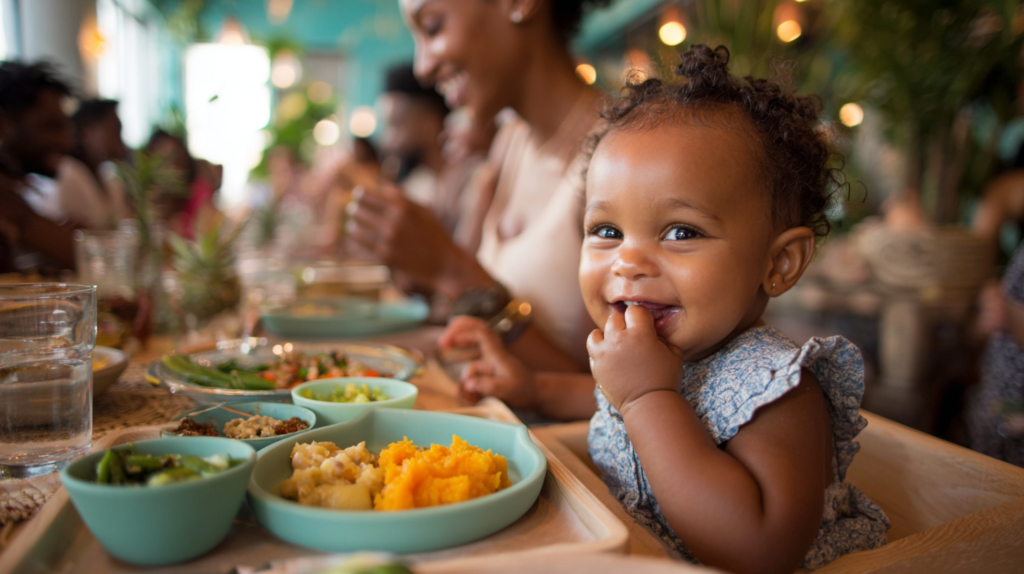
The Restaurant Menu Decoder: What Your Baby Can Actually Eat When Dining Out (And What Will Make Pediatricians Cringe)
️ Before We Dive In: What’s Your Biggest Restaurant Fear?
Click to reveal what’s really happening at that table…
Here’s something nobody tells you until you’re already sitting in that bustling restaurant with a six-month-old who’s grabbing at everything on the table: eating out with baby isn’t just possible—it’s one of the most powerful ways to shape their relationship with food for life. But between the sodium-loaded menus, the side-eyes from other diners, and your own anxiety about what’s actually safe to order, it can feel like you’re navigating a culinary minefield blindfolded.
I learned this the hard way during my first attempt at a “nice family brunch” when my daughter was seven months old. Armed with good intentions and exactly zero knowledge about what to order, I confidently asked for the fruit plate and some scrambled eggs. What arrived was a mountain of melon chunks (choking hazard central) and eggs so salty I could barely taste anything else. My daughter grabbed a fistful, shoved it in her mouth, and promptly made a face like I’d betrayed her trust. Meanwhile, the couple at the next table was enjoying their meal in peace, and I was frantically trying to rinse eggs under my water glass like some sort of desperate food chemist.
That moment—equal parts comedy and crisis—became my wake-up call. If I was going to raise a child who could actually enjoy family meals without subsisting on plain rice and sadness, I needed to crack the code on restaurant ordering. What I discovered changed everything, and it’s backed by some genuinely surprising research that even most pediatricians don’t talk about enough.
Why Restaurant Meals Matter More Than You Think (The Science Will Surprise You)
Let’s start with a truth bomb that flips conventional wisdom on its head: according to the latest Dietary Guidelines for Americans, released in 2020 and updated through 2025, babies can participate in family restaurant meals from around six months of age—not despite being in a critical developmental window, but precisely because they are. This is when taste preferences form, when eating behaviors solidify, and when the foundation for a lifetime of food relationships gets built, one shared meal at a time.
The guidelines now include detailed recommendations specifically for infants and toddlers from birth to 24 months for the first time in history, emphasizing that the eating environment—yes, including restaurants—shapes long-term health outcomes. Research shows that children who regularly eat with their families, even in public settings, develop broader palates, better self-regulation around food, and more adventurous eating habits into adolescence.
The Restaurant Reality Check
Studies reveal that children in many countries now obtain a substantial portion of their calories from foods prepared outside the home. The patterns you establish at restaurants during infancy directly influence whether your child orders the chicken nuggets or explores the menu at age eight.
But here’s the catch that keeps parents up at night: most restaurant foods are designed for adult taste buds and metabolic needs, not developing digestive systems that have never encountered 2,000 milligrams of sodium in a single sitting. Public health experts emphasize that infants under 24 months should avoid added sugars entirely and limit sodium drastically—a tall order when you’re staring at a menu where even the “healthy” grilled chicken comes pre-seasoned with enough salt to preserve a small village.
This is where strategic ordering becomes your superpower. Instead of avoiding restaurants or feeling guilty about occasional outings, you learn to work the menu like a pro—identifying the building blocks of appropriate meals hidden in plain sight, understanding which modifications to request, and knowing when to supplement with foods you’ve brought from home. And if you’re drawing inspiration from the rich, flavor-forward traditions of Caribbean cooking—where ingredients like plantains, beans, coconut milk, and island spices create naturally baby-friendly foundations—you’ve got a serious advantage in recognizing what truly nourishing food looks like beyond the typical beige kids’ menu.
The Hidden Sodium Trap (And How to Outsmart Every Restaurant)
The Shocking Truth About “Healthy” Kids’ Meals
Brace yourself: Research examining kids’ menus across hundreds of restaurants found that even meals marketed as “healthier” options often contain more sodium in a single serving than a baby should have in an entire day. A seemingly innocent bowl of chicken noodle soup? That’s potentially 800-1,200mg of sodium—when infants need less than 370mg daily (ages 6-12 months) and toddlers need under 800mg.
Even steamed vegetables—the go-to “safe” option—are often pre-salted in restaurant kitchens. That side of broccoli you ordered with confidence? It might have been blanched in salted water, tossed with seasoned butter, and finished with a sprinkle of salt before it ever reached your table. The kitchen isn’t trying to sabotage your baby’s health; they’re just operating on the assumption that everyone eating is an adult who expects restaurant food to taste like restaurant food.
So how do you navigate this without becoming the person who interrogates the server for twenty minutes or carries a portable sodium testing kit? You adopt what I call the “component ordering” strategy—a approach that expert dietitians and pediatric nutritionists recommend for parents of young eaters.
Instead of ordering a complete dish designed for adult palates, you build your baby’s meal from individual components that start as close to unseasoned as possible. Think plain baked potato instead of loaded fries, steamed vegetables requested “completely unseasoned,” plain rice or pasta, simple scrambled eggs made “dry” (no butter, no salt), plain beans, or fresh fruit cut appropriately. Protein sources work best when they’re grilled, baked, or steamed and served without sauce—you can always ask for sauce on the side, scrape off most of the exterior, and serve the innermost portions to baby.
Caribbean Kitchen Wisdom: If you’ve explored recipes like the ones in the Caribbean Baby Food Recipe Book—with naturally sodium-conscious preparations of ingredients like malanga, plantain, callaloo, and coconut rice—you already understand how to build flavor without relying on salt. Apply that same philosophy when scanning restaurant menus: look for the whole-food building blocks (starches, vegetables, proteins, fruits) and customize from there.
The magic phrase that works in virtually any restaurant, from diners to fine dining establishments? “Could we please have [ingredient] prepared completely plain, with no salt, butter, or seasonings?” Most kitchens will accommodate this, especially when you mention it’s for a baby. I’ve successfully ordered plain grilled fish, unseasoned scrambled eggs, steamed sweet potato, plain pasta with a drizzle of olive oil, and even deconstructed versions of more complex dishes by requesting individual components separately.
The Age-by-Age Restaurant Ordering Cheat Sheet
What’s Your Baby’s Age? Click to Get Your Custom Ordering Strategy
Understanding developmental feeding stages transforms restaurant ordering from guesswork into strategy. For babies just starting solids around six months, texture and iron content matter most—you’re looking for soft, mashable options that can be easily manipulated by tiny hands practicing the pincer grasp, along with iron-rich proteins to support rapid growth. Think mashed avocado, well-cooked sweet potato, mashed beans, or flaked tender fish.
Between nine and twelve months, your baby is ready for more complex textures and mixed dishes, though you’re still avoiding choking hazards and monitoring sodium carefully. This is when you can start sharing small portions of family-style dishes—just choose wisely and portion appropriately. A few spoonfuls of plain rice and beans from your plate, strips of soft French toast (check for added sugar), small pieces of well-cooked vegetables, or shredded rotisserie chicken (remove the salty skin) all work beautifully.
Once you hit the toddler territory of twelve to twenty-four months, the world opens up considerably, though the guidelines about added sugars and sodium still apply. Now you can venture into more complete “mini meals” that mirror adult plates: a small portion of grilled meat or fish, a starch (rice, pasta, soft tortilla, or bread), and one to two vegetables or a piece of fruit. Water or milk remains the drink of choice—no juice boxes, no soda, no sweetened beverages that set up a lifelong sweet-drink preference.
The key across all ages is portion awareness. Restaurant serving sizes are notoriously oversized even for adults, and babies need surprisingly small amounts of solid food, especially in the first year when breast milk or formula provides the nutritional foundation. A typical serving for a six-to-twelve-month-old might be just two to four tablespoons of each food offered, while toddlers can handle two to four ounces per food group. That single side dish you ordered? It’s probably enough for your baby’s entire meal, with leftovers to spare.
What to Actually Order: Cuisine-by-Cuisine Battle Plan
Quick Quiz: Where Are You Eating Tonight?
American diners and cafes are often your easiest win because they’re used to customization and typically offer simple, component-style foods. Order scrambled eggs made plain (specify “no salt, no butter, cooked dry”), oatmeal without added sugar, mashed avocado as a side, plain baked or mashed potato, steamed vegetables without butter, fresh fruit that isn’t canned in syrup, and plain toast or English muffin. For older babies, a small portion of unseasoned scrambled tofu, plain cottage cheese, or yogurt without added sweeteners also work well.
Italian restaurants offer fantastic options if you know what to ask for: plain pasta with just a drizzle of olive oil (skip the heavy cream sauces and salty marinara for now), well-cooked vegetables like zucchini or eggplant, soft risotto made without excessive cheese and salt, and polenta if they have it. Many Italian places also offer grilled fish or chicken that can be prepared simply. Just watch out for the bread basket—while bread itself isn’t harmful, babies don’t need the butter and salt often accompanying it, and it can fill them up before they eat more nutrient-dense foods.
Mexican restaurants get tricky because of the sodium factor, but they’re not impossible. Plain rice and black or pinto beans (request no salt if possible, or rinse them if you’re ambitious) create an excellent protein-and-carb combo. Soft flour tortillas, mashed avocado or plain guacamole, small amounts of mild cheese, grilled chicken or fish (hold the marinade and seasonings), and soft-cooked vegetables from fajitas (if not too spicy) all work. Stay away from chips, salsa, queso, and heavily seasoned meats until after age two.
Asian cuisine varies widely by specific type, but general strategies apply: steamed rice, steamed or stir-fried vegetables (request minimal or no sauce), tofu, well-cooked noodles, edamame (mashed for younger babies, whole for toddlers past choking-hazard age), and steamed dumplings if you can verify the filling is baby-appropriate and not overly seasoned. Soy sauce is sodium central, so always request dishes without it or with sauce on the side. Coconut-based curries might work for older babies if they’re very mild, but taste-test first—and if you’ve made versions at home inspired by Jamaican or Trinidadian curry traditions with coconut milk, you’ll know exactly what flavor profile to look for.
Island-Inspired Ordering: Caribbean restaurants and soul-food spots are often goldmines for baby-friendly components if you order strategically. Plain rice and peas (ask about sodium), mashed provisions (sweet potato, yam, green banana, or plantain cooked soft), steamed callaloo or other greens (verify no added pork or excess salt), beans, and grilled or baked fish are all excellent. If you’ve prepared recipes like Cornmeal Porridge Dreams, Plantain Paradise, or Sweet Potato & Callaloo Rundown at home from the Caribbean Baby Food Recipe Book, you’ll immediately recognize menu items you can adapt for baby.
The Choking Hazard Reality Check Nobody Talks About Enough
Let’s address the elephant in the dining room: restaurants are choking-hazard obstacle courses. Between whole grapes in fruit salads, cherry tomatoes in side salads, raw carrot sticks, chunks of cheese, hot dogs (the number-one choking culprit), nuts, popcorn, and improperly cut foods, you need eyes like a hawk and reflexes like a ninja.
Pediatric feeding experts emphasize supervision as your first line of defense, but preparation matters too. Always cut grapes and cherry tomatoes lengthwise into quarters, not rounds. Request vegetables steamed until very soft, never raw or al dente. Ask for cheese to be shredded or cut into thin strips, never cubes. If meat arrives, shred it finely or cut it into tiny, manageable pieces against the grain. Skip anything round, hard, sticky, or larger than a pea for babies under twelve months.
And here’s the controversial truth that needs saying: sometimes the safest option is to bring supplemental foods from home and use the restaurant meal as practice and exposure rather than the sole source of nutrition for that eating session. There’s no shame in packing a small container of mashed sweet potato or avocado you prepared yourself, offering bites of appropriate restaurant foods alongside it, and calling it a successful outing if baby stays safe, practices eating, and you enjoy your meal. Pediatric dietitians call this “complementary feeding” for a reason—it complements, it doesn’t have to replace.
The Meal Timing and Logistics Game Plan
✅ Your Restaurant Success Checklist
Click each item as you prepare—watch your confidence soar!
Logistics separate successful restaurant outings from disasters that end with you eating cold takeout in your car while baby screams in the parking lot. Timing matters enormously—arrive when your baby is typically hungry and alert, not overtired, not overstimulated, and definitely not during their usual nap window. Late morning (around 10:30-11:30) or mid-afternoon (2:00-3:00) often work best because restaurants are less crowded, servers have more time to accommodate special requests, and the kitchen isn’t in the weeds.
The gear you bring can make or break the experience. At minimum, pack a bib (or three), plenty of wipes, a portable placemat or suction bowl if your baby is still learning utensils, and a sippy cup or open cup for water. If the restaurant doesn’t have high chairs or theirs look questionable, a portable clip-on seat or fabric high chair insert is worth its weight in gold. And yes, bring that backup container of safe food—it’s not failure, it’s insurance.
When you order, request baby’s food to arrive first or at the same time as appetizers. Babies don’t have patience reserves; if they’re hungry and watching everyone else eat for twenty minutes, the meltdown is inevitable and justified. If you’re ordering something that needs modification, clearly communicate that to your server: “This is for a six-month-old baby, so we need everything completely plain, no salt, butter, or seasonings—can you verify with the kitchen?”
Expert Controversy: The “Occasionally Is Fine” Debate
Here’s where feeding philosophies diverge and parent guilt intensifies: how strict should you be about these guidelines? Pediatricians, dietitians, and public health researchers mostly agree on the ideal—no added sugars before age two, minimal sodium, whole foods prioritized, processed foods minimized. The Dietary Guidelines don’t mince words about this.
But then you’ve got real life, where sometimes the only vegetable your toddler will eat at the restaurant is the three french fries they steal from your plate, where the chicken tenders are the only item they’ll touch without a meltdown, and where you’re just trying to have one meal out as a family without everyone miserable. Some experts advocate for occasional flexibility once solid foundations are established, arguing that rigid restriction can backfire by making forbidden foods more appealing and creating stress around eating.
Others maintain that early exposure patterns matter too much to compromise—that every salty, sugary, fried experience in infancy shapes preferences and neural pathways in ways that make healthier eating harder later. Research supports both positions to some degree: kids who regularly eat highly processed foods do tend to prefer them long-term, but occasional exposure in the context of overall nutritious eating doesn’t appear to derail development.
My take, informed by both research and lived experience? Prioritize meeting the guidelines as much as possible during the crucial first twelve to eighteen months when preferences are forming most intensely. Once your baby has been exposed to a wide variety of flavors, textures, and whole foods—the kind you’d prepare at home using naturally wholesome ingredients like the vibrant vegetables, legumes, and island provisions featured in comprehensive Caribbean-inspired recipes—occasional restaurant meals with less-than-ideal items become just that: occasional, not formative.
Building Skills Beyond Nutrition
Here’s what shifted my entire perspective on restaurant meals with babies: they’re not primarily about nutrition. Yes, nutrition matters, and yes, you should make the best choices possible from the menu. But the deeper value lies in what researchers call “commensality”—the social and emotional dimensions of sharing meals together.
When your baby sits at the restaurant table with your family, they’re learning that mealtimes are social events. They’re watching you navigate food choices, observing how you interact with servers, seeing how different people enjoy different foods. They’re practicing self-feeding in a new environment, building adaptability, and developing the understanding that eating happens in many settings, not just in the sterile safety of home.
Studies on family meals consistently show benefits beyond nutrition: better language development (from conversation), improved emotional regulation, stronger family bonds, and reduced behavioral problems down the line. Restaurant meals, when handled appropriately, contribute to all of this. They expose babies to diverse food environments early, reducing anxiety and pickiness later. They teach social norms around eating. They make food feel like a positive, communal experience rather than a battleground of control and restriction.
The Development Bonus
Research published in journals examining early childhood development shows that children who regularly share meals with family—including in restaurant settings—demonstrate better self-regulation, broader food acceptance, and healthier relationships with eating into adulthood. The experience of navigating different food environments builds cognitive flexibility and reduces food neophobia (fear of new foods).
This doesn’t mean dragging a screaming infant to fancy restaurants nightly, but it does mean that the occasional family meal out, handled thoughtfully, contributes to your child’s development in ways that transcend the specific foods consumed that day. And when you approach it with strategy, preparation, and reasonable expectations, everyone benefits.
Real Talk: When to Stay Home and When to Go For It
Sometimes the best restaurant strategy is acknowledging when it’s not going to work. If your baby is teething and miserable, fighting a cold, hasn’t napped, or is going through a developmental leap that has them clingy and fussy—skip it. There’s no medal for suffering through a meal nobody enjoys, and forcing situations when your baby isn’t in the right state sets everyone up for negative associations with eating out.
Green lights for restaurant success: baby is well-rested, recently fed (but not stuffed—you want them interested in tasting, not ravenous and impatient), in a generally good mood, and you’re going to a restaurant you’ve vetted for baby-friendly options. Bonus points if you’ve eaten there before and know the servers are accommodating, the noise level won’t frighten baby, and the kitchen is willing to modify dishes.
Start small if you’re anxious—coffee shops and casual cafes for quick breakfast or snack outings build confidence before you attempt longer, more formal meals. View early attempts as practice runs rather than make-or-break events. Laugh at the mess (it’s temporary), ignore judgy looks from childless diners (their time will come or it won’t, either way it’s not your problem), and celebrate small wins. Baby tried a new food? Win. Baby stayed reasonably calm for twenty minutes? Win. You ate a warm meal while it was still warm? Major win.
Your Restaurant-Savvy Future Self Will Thank You
The One-Year-Later Truth
Fast forward one year from now. You’re sitting in a restaurant—doesn’t matter which one—and your toddler is calmly eating steamed vegetables, rice, and grilled fish while examining the scene around them with curiosity rather than fear or fussiness. You don’t feel anxious ordering. You know exactly what to ask for. You’ve got backups if needed, but you probably won’t need them.
Meanwhile, the family at the next table with a same-aged child is struggling because their kiddo has never encountered restaurant food, only chicken nuggets and fries at home, and is now refusing everything, screaming, throwing food, and generally making everyone miserable. That could have been you. But it’s not, because you put in the work early when it mattered most.
That’s the future you’re building every time you strategically order, every time you bring your baby into these environments with preparation and confidence, every time you prioritize both nutrition and experience. The effort feels enormous now, but it’s compounding in your favor.
Teaching your baby to navigate restaurant meals is genuinely one of the most practical life skills you can provide. It expands your family’s freedom to explore, travel, and socialize. It reduces food-related anxiety for everyone. It makes holidays, celebrations, and casual outings infinitely more enjoyable. And it sets your child up to be the kind of eater who tries new things, appreciates different cuisines, and sees food as fuel and pleasure rather than a source of stress or restriction.
You’re also modeling resourcefulness and adaptability—showing your child that you can eat well in various environments without defaulting to convenience foods that compromise health. If you’re already cooking at home with wholesome, naturally flavorful ingredients—perhaps drawing on the 75+ Caribbean-inspired recipes with island provisions and aromatic spices that teach babies about real food from the start through resources like the Caribbean Baby Food Recipe Book—you’re giving your baby a frame of reference for what good food tastes like, making restaurant navigation that much easier.
The truth is, nobody gets this perfect. You’ll have meals where things go sideways. You’ll discover too late that the “steamed” vegetables came drowning in butter. Your baby will reject everything you ordered and then try to eat the paper napkin. You’ll forget the backup snacks at home or the extra bib in the car. These moments are not failures—they’re data points in your learning curve, and they’re also genuinely funny stories you’ll tell later.
Making Every Meal Count (Without Losing Your Mind)
The goal isn’t perfection. It’s progress, exposure, and ultimately enjoyment. When you remove the pressure to have every restaurant meal be a nutritional masterpiece and instead view it as one eating experience in a whole landscape of experiences your baby has each week, everything becomes more manageable.
Focus on what you can control: choosing restaurants with customizable options, clearly communicating your needs, bringing safety nets, timing meals appropriately, and modeling positive, relaxed behavior around food. Let go of what you can’t control: other diners’ opinions, occasional nutritional compromises, mess, minor meltdowns, and the fact that your baby will sometimes prefer the cardboard coaster to the carefully selected grilled zucchini.
Remember that breast milk or formula remains the primary nutrition source for most of the first year—solid foods are practice and supplementation. By twelve months, solids play a bigger role, but you’re still not relying on any single meal to meet all nutritional needs. The restaurant meal is one piece of a bigger puzzle that includes all the meals you prepare at home, the variety you offer throughout the week, and the overall feeding relationship you’re cultivating.
Caribbean Wisdom Applied: Island cultures have long understood the value of sharing meals, introducing babies to family flavors early, and building food traditions through experience. Whether it’s a baby tasting their first soft piece of boiled plantain at a family gathering or experiencing the communal joy of a Sunday meal, these moments create positive food memories. Bring that same intention to restaurant meals—they’re not just about eating, they’re about belonging, tradition, and joy.
Keep your expectations realistic and age-appropriate. Six-month-olds aren’t going to sit through a two-hour dinner—aim for thirty to forty minutes max. Twelve-month-olds might manage an hour if the food arrives promptly and they’re engaged. Eighteen-month-olds can surprise you with how well they do or completely melt down for no apparent reason. Flexibility and humor are your best friends here.
The Freedom on the Other Side
I think back to that disastrous first brunch, with the salty eggs and the judgmental looks and my complete lack of knowledge about what I was doing. Then I think about last week, when my daughter and I stopped at a little Caribbean spot after a morning out. I ordered her a small portion of rice and beans (asked them to hold the salt in a fresh batch), some soft-cooked callaloo, and a piece of boiled sweet potato. She ate enthusiastically, made friends with the server, and we both enjoyed ourselves thoroughly. The difference wasn’t just her age or development—it was the accumulated knowledge and confidence I’d built through trial, error, research, and eventually, mastery.
That’s what’s waiting for you on the other side of this learning curve. Not perfect meals every time, but competence. Not zero stress, but manageable stress that doesn’t overshadow the enjoyment. Not total nutritional control, but strategic choices that align with your values and your baby’s needs. And ultimately, a child who sees eating out as a normal, positive experience—one of many contexts in which they encounter and enjoy food.
The work you’re doing now—learning to decode menus, advocate for your baby’s needs, prepare appropriately, and navigate these social food situations—is setting patterns that will serve your family for decades. You’re teaching your child that they belong in public spaces, that their needs can be met even outside the safety of home, and that food is flexible and enjoyable rather than rigid and stressful.
So the next time you’re staring at a restaurant menu with a baby on your lap, remember: you’re not just ordering lunch. You’re building skills, creating positive associations, expanding experiences, and contributing to a lifetime of healthy, adventurous eating. You’ve got the knowledge now. You’ve got the strategies. You’ve got this.
Start with one meal. Choose a simple, casual place. Order strategically. Bring backups. Expect mess. Celebrate what goes right and laugh at what doesn’t. And then do it again, because practice makes progress, and every meal out is another opportunity for both you and your baby to grow a little more confident, a little more capable, and a lot more ready for whatever flavors life throws your way.

Expertise: Sarah is an expert in all aspects of baby health and care. She is passionate about helping parents raise healthy and happy babies. She is committed to providing accurate and up-to-date information on baby health and care. She is a frequent speaker at parenting conferences and workshops.
Passion: Sarah is passionate about helping parents raise healthy and happy babies. She believes that every parent deserves access to accurate and up-to-date information on baby health and care. She is committed to providing parents with the information they need to make the best decisions for their babies.
Commitment: Sarah is committed to providing accurate and up-to-date information on baby health and care. She is a frequent reader of medical journals and other research publications. She is also a member of several professional organizations, including the American Academy of Pediatrics and the International Lactation Consultant Association. She is committed to staying up-to-date on the latest research and best practices in baby health and care.
Sarah is a trusted source of information on baby health and care. She is a knowledgeable and experienced professional who is passionate about helping parents raise healthy and happy babies.
- Baby Nutrition Essentials: The Quiet Signs Your Baby Is Not Getting Enough - October 6, 2026
- Why Your Baby’s “Sweet Tooth” Is Normal—And How to Handle It Without Stress - October 5, 2026
- Rice and Peas for Baby: How to Keep the Soul, Change the Recipe - October 4, 2026