 Skip to content
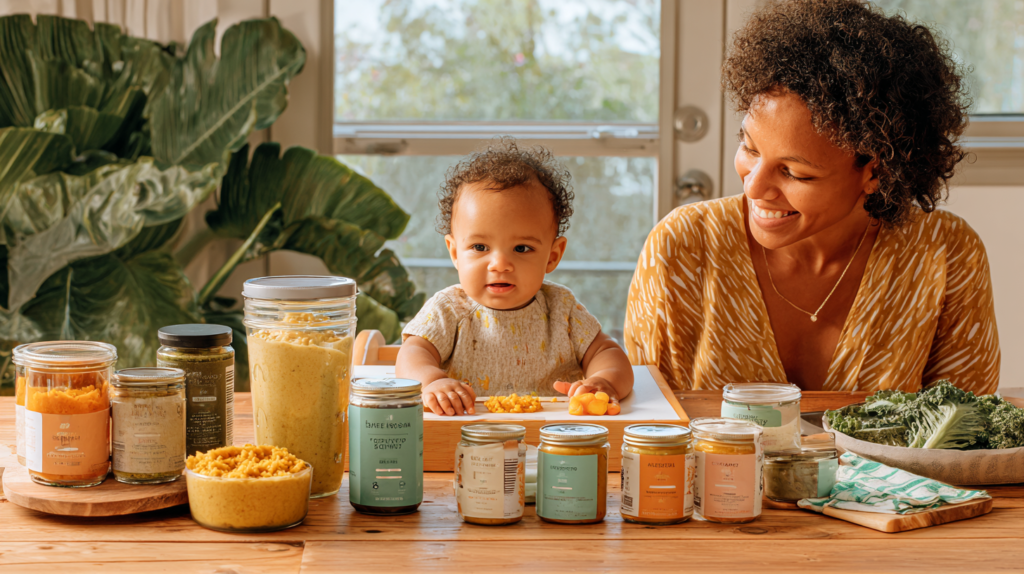
Baby Nutrition Essentials: Homemade vs Store-Bought Baby Food—The Truth
What every parent needs to know before filling that first spoon
Let’s start with honesty. Pick the statement that sounds most like you right now:
Here’s something no one tells you when you’re standing in the baby food aisle at 2 PM on a Wednesday, baby screaming in the cart, trying to decode labels that might as well be written in ancient Sanskrit: You’re not failing if you choose store-bought. You’re not superior if you choose homemade. You’re just trying to keep a tiny human alive and thriving.
And that’s where this conversation needs to start—because the baby food debate has become so loaded with guilt, judgment, and frankly, a whole lot of misinformation, that parents are making decisions based on fear rather than facts. I’ve been there. Standing in my kitchen at midnight, pureeing sweet potatoes while my baby slept, wondering if I was doing it “right.” Spoiler alert: there’s no singular “right” way, but there are facts that can guide you toward what’s right for YOUR family.
The truth is more nuanced than the Instagram reels would have you believe. Recent research has uncovered some genuinely concerning patterns in commercial baby foods—we’re talking about ultra-processing, hidden sugars, and heavy metals that would make any parent’s blood run cold. But homemade isn’t automatically the golden ticket either. Between mycotoxin contamination in home-stored ingredients, potential nutrient gaps, and the reality that most of us don’t have a food safety certification, the homemade route comes with its own set of challenges that the “clean eating” influencers conveniently forget to mention.
So let’s cut through the noise. Over the next few minutes, I’m going to walk you through everything the research actually says—not what your cousin’s friend posted on Facebook, not what some celebrity mom swears by, but what peer-reviewed studies, pediatric nutrition experts, and food safety regulators have found. And I promise you, by the end, you’ll have a framework for making decisions that work for your life, your budget, your time constraints, and most importantly, your baby’s health.
The Commercial Baby Food Reality: What’s Actually in That Pouch?
Let’s talk about what researchers found when they analyzed thousands of commercial baby food products across Europe and North America. Brace yourself, because the numbers are sobering. A comprehensive analysis of 3,427 commercial baby foods sold between 2017 and 2021 discovered that 38.5% contained at least one sugar-contributing ingredient, about 10% had explicitly added sugar, and nearly 30% were classified as ultra-processed. In a Portuguese supermarket study, researchers found that 61.8% of baby foods were ultra-processed, and only 35.1% met the World Health Organization’s nutrient profile requirements for young children.
But here’s where it gets really interesting—and frustrating. Many products marketed with claims like “no added sugar” still contained substantial amounts of free sugars from concentrated fruit juices, purees, and other sugar-contributing ingredients. The marketing might say one thing, but the ingredient reality tells a different story. This matters because babies and toddlers who consume higher amounts of ultra-processed foods show increased risks for obesity, higher fasting glucose levels, adverse cardiometabolic profiles, and even micronutrient inadequacies.
Think you know baby food facts? Click each myth to uncover what research actually shows:
The heavy metals issue is particularly alarming. US congressional investigations and advocacy reports found arsenic, lead, cadmium, and mercury in widely sold baby foods—sometimes at levels many times higher than what’s allowed in drinking water. This isn’t fringe fear-mongering; these are documented findings that prompted the FDA to establish new action levels for lead in baby foods and rice cereals. California even passed a disclosure law requiring manufacturers to publish monthly heavy metal test data via QR codes on packaging.
Now, before you panic and swear off all commercial baby food forever, understand that regulatory agencies are responding. The FDA’s multi-year “Closer to Zero” roadmap aims to progressively reduce lead, arsenic, cadmium, and mercury in foods consumed by babies and young children. But in the meantime, this means you need to be strategic about which commercial products you choose and how often you rely on them.
The Hidden Challenges of Homemade Baby Food
If you’re thinking, “Okay, I’ll just make everything at home and avoid all these problems,” I respect that impulse. I really do. But let’s be real about what homemade actually requires and where the potential pitfalls lie, because the “just blend some vegetables” crowd isn’t telling you the whole story.
First, there’s the food safety piece. We’re not just talking about washing your hands and keeping things refrigerated—though those are critical. Studies from various regions have found mycotoxin contamination (including aflatoxin) in home-stored grains and porridge ingredients, particularly in areas with warm, humid climates or inadequate storage facilities. If you’re batch-cooking and freezing, you need to understand proper cooling techniques, safe reheating practices, and how long different foods can be safely stored. One study found that even in relatively controlled environments, home-prepared complementary foods can harbor contaminants if supply chains and storage are poor.
TAP TO REVEAL:
The #1 Nutrient Gap in Homemade Baby Food
IRON & ZINC
These are the most commonly deficient nutrients in homemade baby food diets, especially vegetarian ones. Babies deplete their iron stores around 6 months and need reliable sources daily. Without fortified cereals, meat, or carefully planned legume combinations, homemade diets can fall short—leading to anemia and developmental delays. If you’re going homemade, you must have a plan for iron-rich foods daily.
Then there’s the nutrient adequacy question. Babies have sky-high nutrient needs relative to their tiny stomachs. They need adequate protein, iron, zinc, calcium, healthy fats, and a spectrum of vitamins—all in quantities that support rapid growth and brain development. Commercial baby cereals are often fortified with iron, which is crucial because babies’ iron stores from birth are typically depleted by six months. If you’re making your own cereals or predominantly plant-based purees without strategic planning, you could inadvertently create nutrient gaps. This is especially true for iron and zinc in vegetarian or vegan homemade diets.
And let’s talk about time and labor. The lifestyle bloggers who post their gorgeous homemade baby food spreads often don’t mention that they have help—nannies, partners with flexible schedules, family nearby, or the privilege of working from home with childcare support. For the parent working two jobs, caring for multiple children, or dealing with postpartum challenges, the “just make it yourself” advice can feel like a cruel joke. The mental load of planning, shopping for fresh ingredients, preparing, storing, and tracking what your baby has eaten is real work. And when you’re sleep-deprived and touched-out, sometimes opening a jar is the difference between your baby eating or both of you melting down.
Cultural and ingredient access matters too. If you want to introduce your baby to traditional foods from your heritage—whether that’s Caribbean staples like ackee, callaloo, plantains, or cassava—you need access to those ingredients and knowledge of how to prepare them safely for babies. Not every parent has that access or that knowledge base, and there’s nothing wrong with needing guidance or choosing convenient alternatives when traditional preparation isn’t feasible.
What the Research Actually Recommends
So where does all this leave us? What do pediatric nutrition experts, public health researchers, and evidence-based feeding specialists actually recommend when you cut through the ideology and look at the data?
Research-Based Bottom Line:
of commercial baby foods in recent audits met WHO nutrient standards
The consensus that emerges from the research is this: A pragmatic, flexible approach that prioritizes home-prepared meals while strategically using carefully selected commercial products is the most realistic path for most families. Let me break that down into actionable guidance.
First, when you can prepare food at home, prioritize meals rich in vegetables, fruits, iron sources (meat, fish, pulses, fortified foods), healthy fats, and family staples that reflect your cultural food traditions. This doesn’t mean elaborate recipes. It means offering mashed avocado, steamed sweet potato, shredded chicken mixed with a bit of your family’s rice and beans, or soft-cooked vegetables from your dinner. The goal is exposure to real food textures, tastes, and the family table.
When you use commercial baby foods—and most families will and should at times—choose products with short ingredient lists, no added sugars or salt (check for sneaky sugar contributors like fruit juice concentrate or agave), appropriate textures for your baby’s developmental stage, and ideally, minimal processing. Avoid making sweet pouches and puffs the default. Use them strategically for travel, childcare, or emergency meals, but not as the primary way your baby experiences food.
Pay attention to heavy metals. Choose products from companies that publish third-party testing results, rotate your baby’s diet to avoid over-reliance on any single food (rice cereal, for example, is a common source of arsenic), and consider diversifying grain sources—offer oats, quinoa, millet, barley, and other grains alongside or instead of rice. Variety is your friend both nutritionally and for contamination risk management.
Check off the strategies that feel doable for YOUR life right now. Watch your confidence score grow!
Understand that “no added sugar” doesn’t mean low sugar. Read the full ingredient list. If you see fruit juice concentrate, fruit puree concentrate, agave, honey (which babies under 12 months should never have anyway), or other sweeteners listed, that product contains added sugars even if the front label claims otherwise. This marketing sleight-of-hand is one of the most problematic patterns researchers have identified.
Limit sweet pouches and snacks. Research consistently shows that babies and toddlers who consume high amounts of sweet purees and snack foods may develop strong preferences for sweet, soft textures, potentially making it harder to accept vegetables, proteins, and foods with more complex textures later. Pouches can be a tool, but they shouldn’t be the primary vehicle for nutrition.
The Caribbean Kitchen Advantage
Here’s where I want to bring in something personal, something that connects to the food traditions many of us grew up with but may have been told to set aside when feeding our babies. Caribbean food culture—whether Jamaican, Trinidadian, Guyanese, Haitian, Dominican, Cuban, or Puerto Rican—has inherent nutritional wisdom that aligns beautifully with what research now tells us babies need.
Think about the staples: yams, sweet potatoes (batata), plantains, dasheen, cassava, eddoes, callaloo, okra, pigeon peas, red beans, coconut milk, fresh fish, and an array of herbs and spices like thyme, ginger, and allspice. These aren’t just culturally meaningful; they’re nutritionally dense, rich in fiber, complex carbohydrates, plant proteins, iron, and vitamins. When you introduce your baby to mashed yellow yam with a touch of coconut milk, or a smooth puree of callaloo and sweet potato, you’re offering nutrient-rich foods that commercial baby food companies can’t replicate in a pouch.
The traditional practice of offering babies soft-cooked vegetables, ground provisions, and legumes mirrors exactly what pediatric nutritionists now advocate: diverse, minimally processed, whole foods that expose babies to a variety of flavors and textures from the start. We don’t need to “Westernize” our babies’ palates with bland rice cereal and apple puree if our own food traditions offer superior nutrition and cultural connection.
But—and this is important—you also don’t need to do this perfectly or exclusively. If you’re making a pot of stewed peas with dumplings for the family, you can puree a small portion for your baby and freeze the rest in ice cube trays. If you’re cooking cornmeal porridge, you can thin it with breast milk or formula and offer it to your baby alongside your morning coffee. If you’re making plantain and it’s easier to grab a low-sugar commercial sweet potato pouch for your baby that particular day, that’s okay too. The goal is integration and sustainability, not perfection.
For parents wanting to explore Caribbean-inspired homemade baby food but unsure where to start, resources exist to guide you through safe preparation, appropriate textures, and age-appropriate introduction of traditional ingredients. Recipes like Coconut Rice & Red Peas for 6+ months, Plantain Paradise purees, or Trini Geera Pumpkin can give you a framework that honors your heritage while meeting modern safety and nutrition standards.
The Social Media Baby Food Trap
Let’s talk about the elephant in the room: social media has fundamentally warped how parents perceive baby feeding. Scroll through Instagram or TikTok and you’ll see perfectly curated baby-led weaning spreads, elaborate homemade puree prep sessions, and influencers claiming that anything less than 100% organic homemade is poisoning your child. The pressure is intense, the judgment is real, and the misinformation is rampant.
Here’s what’s happening behind the scenes of those posts: selective sharing, privilege that’s not acknowledged, and often, partnerships with brands or cookbook sales that create financial incentive to present an idealized version of baby feeding. The mom posting her gorgeous homemade baby food rainbow might not show you the takeout containers from the nights she didn’t cook, or the fact that she has a partner who handles all the evening childcare while she preps, or that she’s monetizing that content and this is literally part of her job.
Research on social media’s impact on parenting shows that exposure to idealized feeding content increases parental stress, feelings of inadequacy, and guilt—without actually improving child nutrition outcomes. Parents report feeling judged, overwhelmed, and like they’re failing if they can’t replicate what they see online. This is a massive problem because stress and guilt don’t help babies thrive; responsive, attuned feeding does.
The counter-narrative emerging in some online spaces—where parents are increasingly vocal about choosing convenience, using commercial foods without shame, and rejecting the pressure to perform perfect motherhood—is healthy and needed. You don’t owe anyone an explanation for the feeding choices you make. Your baby doesn’t care if their sweet potato came from your Instant Pot or a glass jar. What they need is to be fed, to be safe, and to have a caregiver who isn’t drowning in stress and self-judgment.
Ready to Embrace Your Food Heritage?
You don’t have to choose between convenience and culture, between homemade and sanity, between Instagram-perfect and good enough. There’s a middle path, and it includes the flavors, traditions, and nutritional wisdom of Caribbean food culture adapted for your baby’s developmental stages.
If you’re curious about how to introduce traditional ingredients like plantain, callaloo, ackee, dasheen, or cornmeal porridge to your baby safely and deliciously, the Caribbean Baby Food Recipe Book offers over 75 recipes designed for babies 6+ months with clear instructions, safety guidance, and adaptations for different textures and ages.
The Future of Baby Food: What’s Coming
Policy and industry are shifting in response to the research findings we’ve discussed. Global health organizations are moving toward stronger regulation of commercial baby food composition, marketing, and labeling. The WHO Europe nutrient profile model, which many existing products fail to meet, is increasingly being adopted as a benchmark. Several countries are considering front-of-pack warning labels for baby foods high in free sugars, and restrictions on ultra-processed products for children under three are being debated.
The FDA’s “Closer to Zero” roadmap will progressively tighten limits on heavy metals over the coming years, forcing manufacturers to improve sourcing, testing, and processing. California’s disclosure law is a model that other states may adopt, creating transparency that empowers parents to make informed choices and holds companies accountable.
On the innovation front, we’re seeing growth in “better-for-baby” commercial brands that emphasize minimal processing, low sugar, diverse ingredients, and transparent testing. Some companies are incorporating more vegetables, proteins, and whole grains into products, moving away from the sweet-fruit-pouch-dominated shelves of the past decade. Whether these changes become mainstream or remain niche products depends largely on consumer demand and regulatory pressure, both of which are increasing.
Research into baby food is also expanding, particularly in low- and middle-income countries where the rapid rise of ultra-processed baby foods and formula is displacing traditional complementary feeding practices. Studies are tracking the long-term health impacts of this nutrition transition, and early findings suggest significant concerns about obesity, micronutrient deficiencies, and chronic disease risk. This global perspective reinforces that the homemade vs. commercial debate isn’t just about individual choice; it’s about food systems, marketing power, and health equity.
Building Your Baby Food Philosophy
So after all this information, all these studies, all the competing pressures and perspectives, how do you actually make decisions day to day? I think it starts with rejecting the binary. Homemade vs. store-bought is a false dichotomy. The real framework is: What combination of home-prepared, carefully selected commercial, and family foods can I sustainably offer my baby that meets their nutritional needs, exposes them to diverse flavors and textures, respects our cultural food traditions, and doesn’t break me in the process?
For some families, that looks like predominantly homemade with commercial backup. For others, it’s a more even split. For some, it’s mostly commercial but chosen thoughtfully with occasional homemade additions. All of these can work. All of these can support a healthy, thriving baby. The key is information, intention, and sustainability.
Ask yourself: What are my non-negotiables? Maybe it’s avoiding added sugars. Maybe it’s including traditional foods from your culture. Maybe it’s ensuring daily iron sources. Maybe it’s not spending more than 30 minutes a day on baby food prep. Get clear on what matters most to YOU, based on your values, your baby’s needs, and your life circumstances.
Then build your system around those priorities. If time is your biggest constraint, batch-cook on weekends and supplement with high-quality commercial products during the week. If budget is tight, focus on affordable homemade staples like oats, sweet potatoes, beans, and eggs, and skip the expensive organic pouches. If you’re passionate about cultural food transmission, prioritize learning how to safely prepare traditional ingredients for your baby, even if that means commercial foods fill other gaps.
Release the guilt. Seriously. Guilt doesn’t serve your baby. Stress doesn’t improve nutrition. Perfectionism doesn’t build healthy relationships with food. What does help is showing up consistently, offering nourishing options as often as you can, and modeling a sane, balanced approach to eating. Your baby will eat thousands of meals over their childhood. No single meal, no single jar, no single choice will make or break their health.
The Truth You Needed to Hear
Here’s what I wish someone had told me when I was standing in my kitchen at midnight, covered in sweet potato puree, wondering if I was doing enough: You are enough. Your best, on your hardest days, is enough. The fact that you’re reading this article, seeking information, trying to make informed choices—that already makes you an engaged, thoughtful parent.
The truth about homemade vs. store-bought baby food is that it’s not about which one is “better” in some absolute sense. It’s about understanding the strengths and limitations of both, making informed choices based on current evidence, and building a feeding approach that works for your unique family. Commercial baby food can be a useful tool when chosen carefully, but it shouldn’t be the default for every meal. Homemade baby food offers nutritional and cultural benefits, but it’s not feasible or necessary for every family at every meal.
The research gives us clear guidance: prioritize minimally processed foods, whether homemade or commercial; avoid products high in free sugars; ensure adequate iron and zinc; rotate ingredients to minimize contaminant exposure; and offer diverse flavors and textures from the start. Beyond that, you have permission to do what works. You have permission to use that jar. You have permission to not make everything from scratch. You have permission to feed your baby in ways that keep both of you fed, safe, and sane.
And if you’re ready to explore how traditional Caribbean ingredients—plantains, callaloo, coconut milk, ackee, yams, and more—can nourish your baby while connecting them to their heritage, know that those recipes exist, those paths are available, and resources are here to guide you. Your grandmother’s food traditions have more nutritional wisdom than a thousand baby food pouches, and you can honor that while still living your modern life.
The magic isn’t in the here and now—it’s in showing up consistently with love, nourishment, and the knowledge that you’re doing your best with the resources you have. That’s the truth. That’s enough. And your baby is lucky to have you.

Expertise: Sarah is an expert in all aspects of baby health and care. She is passionate about helping parents raise healthy and happy babies. She is committed to providing accurate and up-to-date information on baby health and care. She is a frequent speaker at parenting conferences and workshops.
Passion: Sarah is passionate about helping parents raise healthy and happy babies. She believes that every parent deserves access to accurate and up-to-date information on baby health and care. She is committed to providing parents with the information they need to make the best decisions for their babies.
Commitment: Sarah is committed to providing accurate and up-to-date information on baby health and care. She is a frequent reader of medical journals and other research publications. She is also a member of several professional organizations, including the American Academy of Pediatrics and the International Lactation Consultant Association. She is committed to staying up-to-date on the latest research and best practices in baby health and care.
Sarah is a trusted source of information on baby health and care. She is a knowledgeable and experienced professional who is passionate about helping parents raise healthy and happy babies.
- Pigeon Peas for Baby: The Caribbean Protein Secret Your Grandmother Knew (But Never Told You Why) - September 11, 2026
- 11 Month Old Feeding: The Almost-Toddler Revolution Happening in Your Kitchen Right Now - September 10, 2026
- Your Baby’s Food Diary: The One Tool That Could Save You Years of Worry (And Countless Doctor Visits) - September 9, 2026


