 Skip to content
Starting Solids Guide: How Your First Bites Can Shape Picky Eating Later
A science-backed, Caribbean-flavoured roadmap for raising a curious, confident little eater.
One day you are mastering midnight feeds; the next, you are staring at a tiny spoon of purée wondering, “If I mess this up, will my baby be that toddler who only eats three beige foods?”
Here is the quiet truth many parents never hear: the way you start solids does not just fill tiny bellies, it quietly trains your child’s brain to either welcome new foods or fight them with every fibre of their being. Your starting method, your timing with textures, even how relaxed you look while that plantain lands on the floor all add up over time.
Research on early feeding shows that roughly half of toddlers will show some level of picky eating, but babies who meet a wide variety of flavours and textures before their first birthday are significantly less likely to stay picky as they grow.
In other words, every new taste you offer now is a quiet investment in peaceful family dinners later.
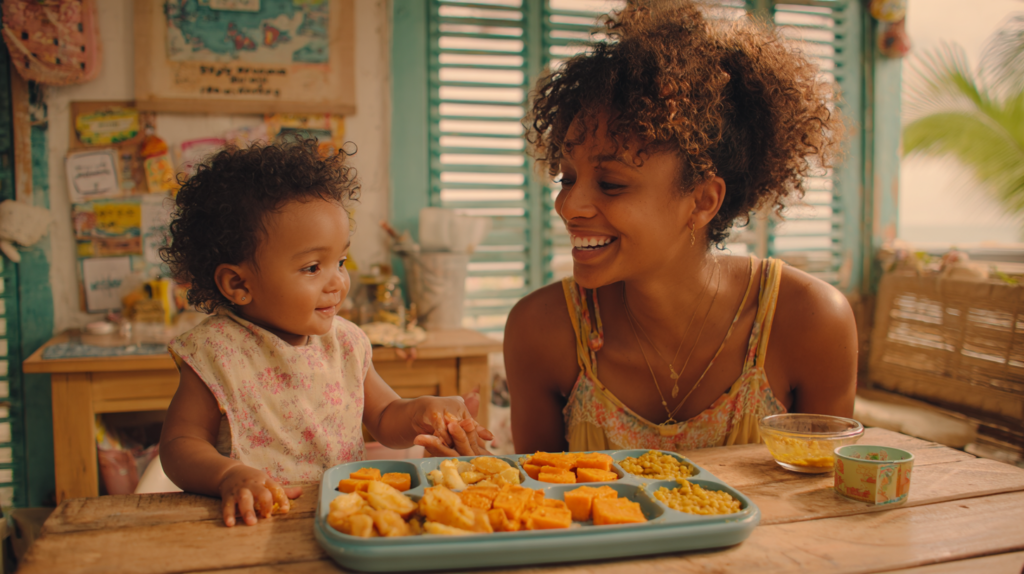
As a Caribbean parent, the first time sweet potato and callaloo landed on a highchair tray in this house, it felt like standing on a little bridge between generations: my grandmother’s pots on one side and my baby’s future plate on the other. That is really what starting solids is—your chance to pass down both nutrition and culture while shaping your child’s relationship with food.
This guide pulls together the best evidence on baby-led weaning, spoon-feeding, food variety, and texture timing, then adds practical island wisdom from kitchens filled with pumpkin, plantain, coconut milk, and beans. By the end, you will know how to choose (or blend) methods in a way that fits your family and dramatically lowers the chances of long-term picky eating.
What “Starting Solids” Really Means Today
Starting solids is the transition from an all-milk diet to solid foods—usually around six months, when your baby can sit with support, hold their head steady, and show interest in what is on your plate. It is not a single day on the calendar; it is an overlapping phase where milk, solids, and skills all share the stage.
Two big approaches dominate most parent WhatsApp chats and clinic visits: traditional spoon-feeding, where adults lead with purées and gradually increase texture; and baby-led weaning (BLW), where babies self-feed soft, graspable pieces of food from the start. Many modern families quietly do a hybrid without realising there is a name for it: some spoon, some finger foods, lots of experimentation.
Historically, parents were told to start solids as early as three or four months, long before babies were truly ready to chew or sit upright. Over time, research linked better timing to safer eating, improved growth, and lower risks around allergies and obesity, so most modern paediatric guidance shifted towards starting closer to six months and following your baby’s cues for readiness.
What has changed even more in recent years is the focus on responsive feeding: paying attention to your baby’s signs of hunger and fullness, letting them decide how much to eat, and avoiding pressure or force at the table. That one mindset—not the style of spoon or size of carrot—may be the most powerful factor in raising a flexible eater.
This shift matters because picky eating rarely begins from “one bad meal.” It grows out of repeated patterns: how often new foods show up, how tense the table feels, whether a baby is trusted to explore, and whether textures progress on time rather than getting “stuck” at ultra-smooth purées for months.
So when parents ask whether BLW or spoon-feeding is “right,” the deeper question is: which approach helps your baby explore more foods, more textures, and more autonomy—while still staying safe and well nourished? The rest of this guide is dedicated to helping you answer that question for your unique child.
Baby-Led vs Spoon-Feeding: Which Fits Your Family?
Before you decide, it helps to understand what each approach truly looks like on a regular Tuesday at home— not just in the perfect photos on Instagram. Use the quick interactive quiz below to see which method naturally lines up with your current situation.
Quick Check: Which starting method might fit your season of life best?
Tap the option that feels most like your current reality.
With baby-led weaning, babies feed themselves from the start using soft pieces of real food: strips of sweet potato, mashed plantain they can scoop with their hands, or tender pumpkin they can fist and gnaw. Parents love that babies practise chewing, hand–eye coordination, and appetite control early, and many notice that their children become more open to new textures and mixed dishes as toddlers.
With traditional spoon-feeding, parents or caregivers guide each bite, beginning with smooth purées and moving towards thicker mash, soft lumps, and then finger foods. This can feel reassuring if you worry about choking or need to closely track iron-rich foods like dhal, beans, fish, or fortified cereals, especially for smaller babies or those with medical considerations.
In the real world, a hybrid approach often does the best job of both nourishing the body and training the brain: you might offer iron-rich purées by spoon at the start of a meal, then place soft finger foods on the tray for your baby to explore with their hands. Over time, the spoon becomes more of a partner than a leader, and your child gradually shifts into more self-feeding while still getting the nutrients they need.
How Starting Method Ties Into Picky Eating Later
Here is the part that usually makes parents sit up: picky eating in the toddler years is incredibly common, but it is not random. Patterns in the first year—how many different foods babies taste, how early they meet lumps, and how pressured or relaxed meals feel—can all nudge the risk of long-term fussiness up or down.
Studies tracking babies through early childhood find that children who met a wide range of foods in their first year are less likely to get “stuck” on a tiny list later on. Likewise, babies who met lumpier textures by around nine months tend to be more comfortable with mixed dishes and family meals later, while those who stayed on very smooth textures for too long often struggle with anything that feels “bitty” or “chewy.”
The twist? Once you control for variety and texture timing, the specific label—BLW or spoon-feeding— becomes less important. What really seems to matter is whether a child is:
- Regularly meeting new foods and flavours.
- Moving through textures on time (not frozen at smooth purée for months).
- Allowed to decide how much to eat without being forced or bribed.
- Exposed to family-style dishes rather than completely separate “baby meals” forever.
That is good news: it means you can choose a method that fits your comfort level and culture, then focus your energy on variety, texture progression, and a calm, curious atmosphere at the table.
Texture Timeline Tracker
Slide to your baby’s age, and see what texture focus usually supports flexible eating.
As a Caribbean parent, this progression might look like a milky Cornmeal Porridge Dreams style bowl early on, then thicker spoonfuls with cinnamon and a hint of coconut milk later, followed by soft sticks of plantain or cubes of pumpkin your baby can hold and mash. The key is not just what is in the bowl, but how quickly you invite your baby to climb the texture ladder.
Key Numbers Every Parent Should Know
Data can feel cold when you have a warm little body on your lap, but a few evidence-based numbers can help you make clearer decisions without drowning in opinions. Here are some that tend to surprise parents:
- Roughly half of toddlers show some form of picky eating between ages one and three. That does not mean something went “wrong”; it means the system is naturally cautious with new foods— which is why repeated exposure matters so much.
- Babies who taste a broad variety of foods in the first year—especially when they cross that 10–12 food mark early— seem less likely to stay highly picky later on. Variety acts like a vaccine against rigidity.
- Exposure to lumpier, more complex textures before about nine months is linked to better acceptance later; delaying lumpier foods well into the second year makes it more likely your child will find them “suspicious.”
- Worldwide, most babies now start solids somewhere between five and six months, reflecting the shift away from very early introduction in previous decades.
When you zoom out to the market level, all this concern about starting well is reshaping the baby food world. Parents are looking beyond plain jars towards textured blends, mixed flavours, and options that mirror the family’s real cooking—including regional spices and ingredients used in gentle, baby-safe ways.
Common Myths, Quiet Truths
Around family tables and social media comment sections, myths about starting solids spread faster than mashed banana on a white shirt. Clearing those up is one of the easiest ways to lower your stress and give your baby a better shot at being a relaxed, adventurous eater.
Here are a few big ones, along with the quieter truths:
- Myth: “If I do not do pure baby-led weaning, my child will definitely be picky.”
Truth: Evidence suggests that it is the combination of variety, texture timing, and responsive feeding that matters most—not strict loyalty to one label. A well-run hybrid can be just as powerful. - Myth: “Spoon-feeding always creates power struggles.”
Truth: Power struggles come from pressure, not spoons. You can spoon-feed responsively by watching for your baby’s cues, taking breaks, and letting them grab the spoon or touch the food. - Myth: “Baby-led weaning is unsafe and always leads to choking.”
Truth: When foods are prepared in a baby-safe way and babies sit upright and alert, research does not show dramatically higher choking risk compared with traditional feeding. The big difference is how prepared and confident caregivers feel. - Myth: “If my baby spits something out once, they hate it forever.”
Truth: Many babies need ten or more exposures before accepting a new food. Spitting, poking, or even throwing is often just part of learning.
When you see the first attempt with, say, a mild pumpkin and coconut dish end up everywhere except your baby’s mouth, remember: the real win is the exposure, not the intake. You are rewiring their sense of “normal” one tiny encounter at a time.
Mini Picky-Eating Risk Checker
Tap all the statements that currently sound like you. Then hit “See my personalised insight”.
Expert Insights, Caribbean Wisdom
Professionals who work with feeding—paediatricians, dietitians, speech therapists—consistently highlight three big pillars: safety, nutrition, and the emotional tone around food. They might disagree on how “pure” your baby-led weaning needs to be, but they agree that babies thrive when meals feel safe, varied, and low pressure.
Many experts now talk about “responsive feeding,” which simply means you offer nutritious options while respecting your baby’s internal cues: you decide what and when to serve, they decide whether and how much to eat. This approach has been linked to better self-regulation, healthier growth, and fewer battles at the table.
In Caribbean households, there is also generational wisdom about introducing vibrant flavours early. Dishes inspired by callaloo, pumpkin, yellow yam, or soft green banana blends gently familiarise babies with the same ingredients the family eats. When you combine that cultural approach with modern guidance on safety and allergens, you get a powerful recipe for reducing picky eating while keeping your island heart on the plate.
If you want ready-to-go ideas rooted in this philosophy, you will love Caribbean Baby Food Recipe Book: Easy & Healthy Homemade Meals for Infants & Toddlers , which walks you through over 75 recipes that naturally build variety and flavour without overwhelming your baby.
Practical Roadmap: From First Bite to Family Plate
Let us turn all this research and theory into an actual plan you can follow, whether tonight’s menu is simple mashed sweet potato or a full Cook-Up Rice Sunday session. Think of this as a loose roadmap you can bend around your baby’s pace and your family’s culture.
1. Weeks 1–3: Gentle Entry, Strong Foundations
- Focus: Learning to sit, chew, and swallow safely while keeping milk as the main source of calories.
- Textures: Smooth purées or very soft finger foods, depending on your method, but no rush to “finish” bowls.
- Goal: Exposure to several single-ingredient foods, especially iron-rich ones.
Caribbean-inspired starters could include silky mashed pumpkin with a touch of coconut milk, a very smooth dhal-style lentil purée, or a blended sweet potato mash similar in spirit to recipes like Cassareep Sweet Potato (without the cassareep at this stage). If you prefer BLW, offer soft batons of cooked pumpkin or sweet potato that squish easily between your fingers.
In these first weeks, your only “job” is to present safe, tasty options and let your baby explore: grabbing, smearing, spitting out, and trying again. That messy curiosity is building confidence that will matter far more for picky eating than how much goes down on day one.
2. Months 7–9: Variety and Texture Take Centre Stage
- Focus: Increasing the number of foods tasted, especially vegetables, legumes, and grains.
- Textures: Thicker purées, soft lumps, finger foods, and mashable mixed dishes.
- Goal: Move beyond single foods into blends and early “family” flavours in baby-safe form.
This is a perfect window to introduce combinations similar to: a smooth version of Sweet Potato & Callaloo Rundown (well-cooked and finely chopped greens), a basic mixed dhal-style mash, or gentle rice-and-beans blends inspired by dishes like Coconut Rice & Red Peas with extra liquid for softness. Keep spices soft and aromatic rather than hot—think thyme, bay leaf essence (strained out), or a whisper of cinnamon.
As textures grow more interesting, babies discover that food can be lumpy and still safe. That single lesson alone may protect them later when the world suddenly offers crunchy carrots or fibrous greens. Offer new foods frequently, even if they were not loved the first time—each exposure is like another vote for flexibility.
3. Months 10–12 and Beyond: From Baby Meals to Shared Plates
- Focus: Letting your baby participate in more of what the family eats.
- Textures: Soft pieces, chopped foods, and mixed textures.
- Goal: Narrow the gap between “baby food” and “family food” while still respecting safety.
At this stage, you might mash a bit of Cook-Up Rice & Beans Smooth from the family pot, pull aside tender pieces of fish or chicken before heavy seasoning, or serve a deconstructed version of a dish like Yellow Yam & Carrot Sunshine where chunks are soft enough to squash. Each shared meal sends the message: “You belong at this table; these foods are part of your story.”
This is also when toddlers begin to assert themselves. They may happily eat papaya and banana blends one week and refuse them the next. Hold your nerve. Keep serving small portions of familiar and new foods together, keep the atmosphere calm, and remind yourself: your responsibility is the offering, not the outcome of any single meal.
If you want recipe inspiration that walks through this whole arc—from silky spoon-fed dishes to chunkier, family-style meals—take a peek at Caribbean Baby Food Recipe Book: Easy & Healthy Homemade Meals for Infants & Toddlers . Many recipes are inspired by the same index of dishes mentioned here, making it easy to plan a whole week of baby-safe Caribbean flavours.
Real-World Challenges (and How to Handle Them)
No matter how beautiful the roadmap looks, real life brings in-laws, limited budgets, work shifts, and babies who did not read the guidebook. The good news is that most common challenges have simple, research-aligned ways to respond that still protect your long-term picky-eating goals.
- Fear of choking: Learn the difference between normal gagging and true choking, keep your baby sitting upright, and follow safe-preparation guidelines (foods soft enough to mash with your fingers, no hard coin-shaped slices). Practise an infant first-aid course if you can—it builds your confidence, which in turn helps your baby relax at the table.
- Worry about iron: Whether you are using BLW, spoon-feeding, or hybrid, deliberately include iron-rich foods like lentils, beans, fish, and fortified cereals several times a week. Caribbean staples like mixed dhal, red peas, and some leafy greens can play starring roles here.
- Cultural pressure: Some relatives may insist you “fill them up” or use heavy seasoning early. You can honour your heritage by using traditional ingredients while still preparing them in baby-safe forms and gently explaining you are following updated guidance to keep baby’s system safe.
- Mess and time: It is completely valid to feel overwhelmed by constant cleanup. Use wipeable mats, serve smaller amounts at a time, and remember that a hybrid approach (some spoon-feeding plus some self-feeding) can reduce the chaos without sacrificing exploration.
Personally, there were evenings when the idea of another messy BLW dinner made me want to reach for a pouch instead. On those nights, the compromise looked like a small bowl of smoother food for sanity, plus two or three soft finger foods on the side for my baby’s learning. Progress over perfection is more than a quote—it is a feeding strategy.
Start with simple sweet potato or pumpkin purées, then gently introduce dishes inspired by combinations like sweet potato with callaloo or cassava-style mash. Over time, you can keep the core ingredients while changing textures— from smooth to lumpy, then to soft chunks stirred into rice or dhal.
Great for babies who are comforted by familiar tastes but ready to experiment with new textures.
Begin with smooth tropical fruits like banana or papaya, then gradually build blends similar in spirit to “Papaya & Banana Sunshine” or gentle soursop-style purées. Pair fruit with mild grains or root vegetables so your baby learns that sweet flavours can sit alongside more savoury notes.
Helpful for hesitant babies—familiar sweetness can make new textures feel less intimidating.
Move from very smooth bean or dhal purées into soft mash inspired by dishes like coconut rice with peas, farine-style cereals, or gentle rice-and-bean blends. Before seasoning heavily, pull out a portion for baby and thin with extra liquid so they learn the flavour profile while still eating safely.
This path is ideal for families who want to minimise separate cooking and quickly transition babies onto the “real” family menu.
If you are excited to map out full weeks of these pathways with recipes and storage tips, the Caribbean Baby Food Recipe Book: Easy & Healthy Homemade Meals for Infants & Toddlers gives you ready-made menus inspired by roots, fruits, and family pots—all designed to work within a solids-starting journey.
Looking Ahead: Your Baby’s Future Relationship With Food
So where does all of this leave you right now, in the thick of bibs and highchair wipes? The longer-term picture is unexpectedly hopeful. Even though picky eating is common in the toddler years, many children grow past it—especially when parents keep calmly offering variety, resist pressure tactics, and stay flexible with method as needs change.
Future research is digging even deeper into which early influences matter most: genetics, temperament, sensory sensitivity, parental anxiety, or feeding style. But you do not have to wait for perfect answers to take meaningful steps today. Almost every expert agrees that what you are already doing—showing up, caring about this, and trying to build positive experiences—matters more than any single choice of spoon or finger food.
From a Caribbean lens, there is also something powerful about choosing to share your real food culture from the start. When a baby grows up seeing callaloo, plantain, or soursop as familiar parts of home, it becomes much harder for them to narrow their world to nuggets and fries alone.
60-Second Reflection: Are You Setting Up a Future Food Explorer?
Count how many of these statements feel true for your family right now. Then tap the button for a personalised takeaway.
Your Next Step Starts With the Very Next Bite
Starting solids is not a test you pass or fail; it is a season of thousands of small, imperfect experiments. Some days your baby will devour mashed pumpkin with coconut and reach out for more. Other days, the same dish will be inspected like a suspicious seashell and tossed onto the floor. Both days count, because both are experiences that shape confidence and curiosity.
Whether you choose baby-led weaning, spoon-feeding, or a hybrid that is unapologetically your own, the principles that protect against long-term picky eating remain the same: move through textures on time, keep introducing new foods, stay calm when they are refused, and invite your child to share the real flavours of your family kitchen.
If you would like help turning those principles into an actual meal plan filled with island colours and nutrients, the Caribbean Baby Food Recipe Book: Easy & Healthy Homemade Meals for Infants & Toddlers is a beautiful next step. It brings together recipes inspired by sweet potato, mango, coconut milk, beans, plantain, and more, so you can start building a confident little eater with every Caribbean-spiced bite.
Years from now, when your child grabs a spoonful of callaloo or digs into a bowl of rice and peas without hesitation, you will not remember exactly which method you chose on day one. What you will remember is that you were brave enough to start, gentle enough to keep offering, and consistent enough to raise a child who knows that food is not something to fear—it’s home.

Expertise: Sarah is an expert in all aspects of baby health and care. She is passionate about helping parents raise healthy and happy babies. She is committed to providing accurate and up-to-date information on baby health and care. She is a frequent speaker at parenting conferences and workshops.
Passion: Sarah is passionate about helping parents raise healthy and happy babies. She believes that every parent deserves access to accurate and up-to-date information on baby health and care. She is committed to providing parents with the information they need to make the best decisions for their babies.
Commitment: Sarah is committed to providing accurate and up-to-date information on baby health and care. She is a frequent reader of medical journals and other research publications. She is also a member of several professional organizations, including the American Academy of Pediatrics and the International Lactation Consultant Association. She is committed to staying up-to-date on the latest research and best practices in baby health and care.
Sarah is a trusted source of information on baby health and care. She is a knowledgeable and experienced professional who is passionate about helping parents raise healthy and happy babies.
- 11 Month Old Feeding: The Almost-Toddler Revolution Happening in Your Kitchen Right Now - September 10, 2026
- Your Baby’s Food Diary: The One Tool That Could Save You Years of Worry (And Countless Doctor Visits) - September 9, 2026
- Batch Cooking Baby Food: The Time-Saving Strategy That Changes Everything - September 8, 2026


