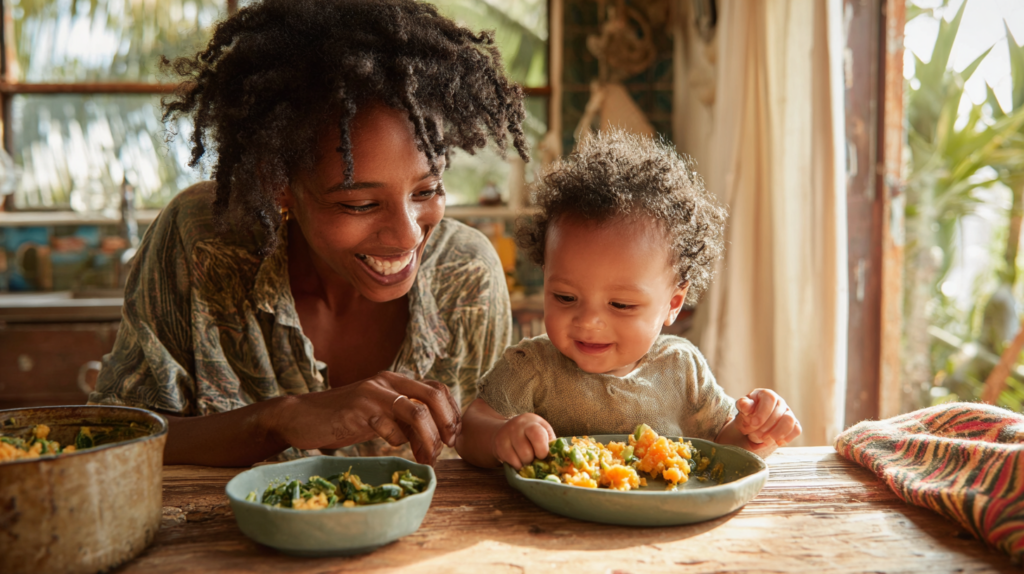
Okra for Baby: Why This Slimy Little Pod Might Be Your Child’s Secret Superfood
Okra’s story is older than any modern baby food pouch. It began in the fields of East Africa, sailed with traders across the Sahara and Mediterranean, crossed the Atlantic in the hands of enslaved Africans, and settled into Caribbean, Southern U.S., Middle Eastern, and South Asian kitchens as a comfort food for the whole family.
Once you see okra as part of a centuries-long story of survival, comfort, and nourishment, the slime starts to feel less scary—and a lot more magical.
Many new parents are told to start solids with bland cereals or beige purées, but in homes across Africa, the Caribbean, and parts of Asia, babies are tasting something very different: soft, slippery okra simmered in the same pot as the rest of the family’s dinner. It looks messy, it strings between the spoon and the bowl, and sometimes it makes parents raised on baby rice a little nervous.
Yet when okra is viewed through both cultural and scientific lenses, it emerges as one of the most quietly powerful vegetables you can offer in the first year of life. Beneath that slippery coat is a bundle of fiber, folate, vitamin C, vitamin K, magnesium, and plant compounds that support tiny guts, growing immune systems, and developing brains. At the same time, centuries of caregivers have relied on okra-based soups and stews to gently ease babies into the world of “real food.”
This article dives into the full story: what makes okra so special, how different cultures use it for babies, what current research says, how to handle the slime without panic, and exactly how to weave it into your baby’s meals in a way that feels safe, delicious, and deeply rooted in tradition.
What Exactly Is Okra, And Why Do So Many Cultures Feed It to Babies?
Okra (also known as quimbombó, bhindi, lady’s fingers, or ochro) is a green pod vegetable from the mallow family. It thrives in hot climates and has been grown for hundreds of years in regions that now include Ethiopia, Sudan, West Africa, the Mediterranean, the Caribbean, South Asia, and the southern United States. Its seeds, leaves, and pods are all edible, but for babies the soft cooked pod is the star player.
Inside each pod is a clear, gel-like substance called mucilage. This is what gives okra its famous “slimy” texture. For adults who did not grow up with it, the slime can be surprising or even off-putting. For families used to enjoying okra in soups and stews, the texture is normal and even prized—seen as soothing to the stomach and helpful for digestion. The same slippery quality that makes it stringy on your cutting board is part of what makes it gentle in your baby’s gut.
Across cultures, okra rarely appears as a stand-alone baby purée. Instead, it shows up in family dishes that everyone eats together: okra soup served with fufu in West Africa, callaloo-style stews in the Caribbean, mild okra tomato dishes in Mediterranean homes, and mixed vegetable curries or rice dishes in parts of India. Babies simply receive a thinned, mashed, or carefully prepared portion of what the adults are already eating, which is exactly the direction modern complementary feeding experts encourage.
- Rich in vitamin C, vitamin K, folate, and beta-carotene (vitamin A precursor) that support immunity, blood clotting, and healthy cell growth.
- Provides soluble and insoluble fiber plus mucilage, which help soften stools and support gut health during the bumpy transition to solids.
- Low in calories and naturally low in sugar, which lets you pair it with energy-dense foods like sweet potato, plantain, or beans.
- Integrates easily into cultural family meals, which helps babies learn family flavors and textures early on.
The Science Behind the Slime: Nutrition, Digestion, And Baby Health
When nutrition researchers look at okra, they see far more than a slimy vegetable. Analysis shows that okra pods contain meaningful amounts of vitamin C (for immune support and iron absorption), vitamin K (for healthy blood clotting and bone development), folate (critical in early development and still useful in infancy), and beta-carotene. There are also minerals like magnesium, potassium, and trace amounts of calcium that contribute to overall growth.
The real headline, though, is fiber and mucilage. Okra is rich in both soluble and insoluble fiber. Soluble fiber forms a gentle gel in the gut, which can help soften stools and support the balance of beneficial microbes. Insoluble fiber helps bulk up stool and keep things moving. Mucilage, the clear gel that clings to knives and cutting boards, acts as a natural lubricant for the digestive tract, which is one reason adults use okra to help with constipation and gut comfort.
Research in adults has linked okra intake with better blood sugar control and cholesterol profiles, thanks largely to its fiber and gel-forming compounds. While those specific outcomes have not been systematically studied in babies, the same properties—slower digestion of carbohydrates, a kinder texture on the gut, and stool-softening effects—are relevant during the complementary feeding period. Babies often experience constipation when solids begin, and adding small amounts of okra to the mix is one gentle, food-based strategy caregivers already use in many cultures.
Tap the statement that feels most like your current situation, and get a tailored starting tip.
One nuance to keep in mind: high-fiber, mucilaginous foods can sometimes cause gas or mild bloating in individuals with very sensitive guts. That does not make okra inherently unsafe, but it does mean you should watch your baby’s unique response. Introduce okra in small amounts, observe diapers and comfort, and build up gradually—just as you would with lentils, beans, or other fiber-rich foods.
Cultural Feeding Practices: How Different Traditions Use Okra for Babies
Okra is a powerful reminder that baby feeding is never just about nutrients. It is about memory, migration, and the dishes that feel like home. To understand how to use okra for your baby, it helps to look at how other cultures have done it for generations.
In many West African households, okra soup is a regular feature on the family table. The soup is often cooked with onions, tomatoes, leafy greens, and sometimes fish or meat, then served with a staple starch like fufu. When a baby is ready for solids, caregivers may take a portion of the soup, remove bones or tough bits, mash it more finely, and thin it to a safe consistency. The baby’s bowl has the same flavor profile as the adults’ plates, just adapted for safety and texture.
Across the Caribbean, okra appears in different forms: simmered with pumpkin and coconut milk in one home, folded into callaloo in another, or stewed with tomatoes and herbs. Again, babies are simply given a mashed, de-spiced, and sometimes strained portion of what the family already eats. From a Caribbean perspective, offering okra is not a “special superfood hack”—it is just how you make sure your child is truly eating with the family, not on the sidelines.
Modern complementary feeding research increasingly supports this kind of approach: instead of one-size-fits-all baby food, the emphasis is on culturally rooted family meals, shared with infants in safe textures. Okra fits beautifully into this picture. When you offer okra to your baby in the same dish everyone else is eating, you are teaching them not just about a vegetable—but about who they are and where they come from.
If you want more inspiration for weaving vegetables like okra into island-style baby meals, you will love the Caribbean Baby Food Recipe Book: Easy & Healthy Homemade Meals for Infants & Toddlers. It builds on the same philosophy: babies deserve real, culturally meaningful food that also ticks the nutrition boxes.
Real Numbers, Real Impact: What Current Feeding Research Tells Us
Large studies of complementary feeding across African and global communities consistently show three important patterns. First, infants who are offered a wider variety of vegetables and indigenous foods tend to have higher overall diet quality scores. Second, family dishes—rather than separate “baby-only” meals—are a primary source of vegetables in many cultures. Third, social and cultural beliefs strongly shape which foods feel “right” to offer first, and okra frequently appears in those culturally anchored choices.
Research in Ethiopian, South African, and Ghanaian settings has documented how traditional vegetables, including okra and related leafy greens, appear in meals for children under two. Diet modeling studies in these regions suggest that including such indigenous vegetables improves the overall nutrient adequacy of young children’s diets when combined with staples like grains and legumes. Meanwhile, complementary feeding guidelines inspired by Mediterranean and heritage diets emphasize exactly this combination: vegetables, pulses, and whole grains in a shared family context.
Parents themselves report similar themes. Qualitative studies with African and Caribbean diaspora parents in Europe and North America show that many caregivers still regard okra, callaloo, pumpkin, and similar vegetables as core “starter foods,” even when local health messaging focuses heavily on cereals or generic purees. Some parents describe feeling torn between what health professionals say and what their own parents and grandparents did. Yet, when diets are analyzed, the traditional patterns often align well with modern nutrition recommendations, especially when iron-rich foods and food safety are also addressed.
- It regularly appears in indigenous and heritage diets for young children, which are associated with better food diversity and nutrient intake.
- Its fiber and gel-forming compounds are consistent with foods that support the gut microbiome and regular stools during the transition to solids.
- It integrates easily into plant-forward, culturally rooted complementary feeding models recommended by many modern experts.
Expert Views, Social Media Trends, And the Quiet Okra Comeback
Nutrition experts who specialize in complementary feeding increasingly emphasize the importance of cultural fit. Instead of expecting every family to start with applesauce and oatmeal, they encourage parents to use the healthy staples already cooked in their homes—adapting texture, portion size, and seasoning to the baby’s needs. In this framework, okra-based dishes often move from “unusual baby food” to “obvious choice.”
Dietitians and pediatric feeding specialists highlight three main strengths of okra for babies: nutrient density, gut-friendly fiber, and versatility. Many recommend offering okra from around six months, either as part of a spoon-fed mash or as soft finger food for baby-led weaning, provided it is prepared without added salt and is cut to safe sizes. Their only caveats tend to relate to individual tolerance (watching for gas or discomfort) and ensuring babies also receive iron-rich foods, since vegetables alone are not sufficient for iron needs.
At the same time, social media has quietly been doing PR for okra. Parents share videos of babies slurping okra soups, toddlers devouring stewed ochro with rice, and little ones gleefully chewing on soft roasted pods. Some creators lean into humor—jokes about babies covered in slime—while others frame okra as a gut-loving, heritage ingredient that deserves more respect. These posts normalize okra in baby feeding in a way that formal guidelines sometimes struggle to do, especially among younger parents who may not have direct memories of their grandparents’ cooking.
When you weave all of this together—expert views, social media content, and cultural wisdom—the message is surprisingly consistent. Okra is not a novelty vegetable reserved for adventurous parents; it is already a normal, practical, and evidence-aligned part of baby feeding for millions of families worldwide. The question is less “Should I offer okra?” and more “How do I offer it in a way that fits my family and respects my baby’s pace?”
Challenges, Fears, And Controversies: Let’s Talk About the Slime Head-On
Even if you love the idea of culturally rich, vegetable-forward baby meals, the reality of okra’s texture can feel intimidating. The slime strings between your fingers, the pod looks glossy, and if your baby gags once, it is easy to wonder whether the whole idea was a mistake. This is where myths and real concerns often get tangled together.
On the myth side, some caregivers worry that the slime itself makes okra dangerous, as if it somehow increases choking risk. In reality, choking risk is primarily about size, shape, and firmness of food, not about slipperiness. A large chunk of raw carrot is more dangerous than a well-cooked, soft piece of okra, even if the carrot feels familiar. The slime can create more gagging (because the texture is unusual), but gagging is a protective reflex, not a sign that the food is unsafe.
On the real concern side, the slippery coating can make it hard for beginners at baby-led weaning to grip okra. Without thoughtful preparation, a pod can slide right out of a baby’s hand, which is frustrating for everyone. Some babies also genuinely dislike the mouthfeel at first. When that happens, it is easy to label okra a “no-go food” instead of treating it like any other new texture that requires gradual exposure.
- “The slime means choking.” In fact, choking risk depends mainly on size and firmness. Properly cooked, soft okra in baby-safe shapes can be safer than many firm finger foods.
- “One gag means my baby hates okra.” Gagging is a normal part of learning to manage new textures, especially slippery ones. Repeated, low-pressure exposure often turns gagging into confident chewing.
- “Okra will upset every tiny tummy.” Some babies may be more sensitive to fiber, but many tolerate small amounts of okra well, especially when introduced gradually.
There is also a quieter tension between traditional wisdom and modern health messaging. In some communities, okra soups and stews are believed to help babies “learn to swallow” or transition to family foods more smoothly. Health professionals, however, may focus instead on boosting iron intake, managing allergies, and balancing food groups. When those worlds clash, parents can feel judged for following family practices, even when those practices are nutritionally sound.
A more helpful way forward is to combine the strengths of both. Keep the okra soups, cultural stews, and family recipes that matter to you, while also making sure iron-rich foods, safe textures, and basic food safety principles are in place. That way, okra stays where it belongs—in the bowl, not in the “forbidden” category.
Practical Step-By-Step: How to Introduce Okra to Your Baby
Now for the part every parent wants: the “how.” Whether you are pureeing, doing baby-led weaning, or following a mixed approach, there are safe, practical ways to introduce okra that honor both culture and evidence.
Tap the statements that are true for your baby right now, then check the readiness guidance below.
For many families, okra will not be the very first solid food. It often works best once your baby has already met a few simpler textures like mashed sweet potato, plantain, or pumpkin. Caribbean-inspired dishes, for example, commonly pair okra with those ingredients in ways that feel familiar and comforting. If you enjoy that style of cooking, the recipe index for Quimbomb Suave (a gentle Cuban okra purée) sits right alongside other island favorites like Calabaza con Coco (pumpkin with coconut milk) and Coconut Rice with Red Peas. Those combinations are ideal for babies once they are comfortable with basic solids.
Here are three practical starting routes you can mix and match:
- Route 1: Spoon-fed okra mash. Simmer chopped okra with a mild base such as pumpkin, sweet potato, or rice until everything is very soft. Remove any tough bits and blend or mash, adding breastmilk, formula, or cooking water to thin as needed. This approach echoes dishes like mild okra purees and Caribbean-style stews for 8–12 month olds.
- Route 2: Soft okra finger strips. Steam or roast whole okra pods until they are completely soft. Slice lengthwise into strips thick enough for your baby’s fist, with the seeds intact. The texture will be slippery, but the softness and elongated shape make it appropriate as a supervised finger food.
- Route 3: Mixed family bowl adaptation. If you are already making an okra-based dish for the family—such as a mild stew with pumpkin, rice, or beans—take a baby portion before adding salt, chilies, or very strong spices. Mash or finely chop to the right texture for your child’s age and feeding style.
If you love the idea of rooting your baby’s meals in Caribbean flavors, the Caribbean Baby Food Recipe Book: Easy & Healthy Homemade Meals for Infants & Toddlers is a powerful companion. Its recipes for pumpkin coconut dishes, plantain mash, millet porridges, and gentle stews give you a foundation to which you can easily add finely chopped okra as your baby grows more confident.
Unknown (But Powerful) Truths About Okra for Babies
Most baby-feeding advice reduces vegetables to vitamins and minerals, but okra carries a few lesser-known truths that can shift how you see your baby’s plate.
Truth 1: The slime can actually help with texture learning. Babies need to practice managing a wide range of textures, not just smooth purées. Slippery foods like okra challenge the mouth and tongue in a different way than mashed potatoes or bread. Under supervision, this practice builds coordination and reduces texture sensitivity over time. That means a child who has experienced okra is often more flexible and less picky when they encounter other “weird” textures later on.
Truth 2: Okra can act as a bridge between generations. In many Caribbean and African families, grandparents are used to feeding babies bites straight from the family pot—often okra-rich soups or stews. When you learn how to adapt those dishes safely for modern guidelines (avoiding excess salt, removing bones, ensuring soft textures), you create space for grandparents’ wisdom to coexist with current science. That bridge can ease family tensions and deepen your baby’s sense of belonging.
Truth 3: Okra pairs beautifully with other baby superfoods. Okra on its own is great, but its true power shows up when you pair it with ingredients like sweet potato, plantain, beans, millet, or pumpkin. Caribbean-style recipes such as Coconut Rice with Red Peas, Sweet Potato Callaloo, or Green Papaya dishes become ideal canvases where chopped okra can quietly boost fiber and micronutrients. As your baby grows, you can evolve from simple okra mash to more advanced combinations inspired by those classic island recipes.
Truth 4: The way you talk about okra shapes your baby’s relationship with it. When caregivers describe okra as “gross but healthy” or make faces at the slime, babies pick up on that. When okra is introduced as “what our family eats,” “what Grandma loves,” or “your superhero soup,” it becomes a source of pride rather than something to fear. Framing matters as much as preparation.
Personal Caribbean-Inspired Reflections: When My Baby Met Okra
The first time okra appeared on our baby’s high chair tray, it was not in a perfect Instagram-safe format. It was leftovers from a big Sunday pot: a pumpkin and ochro stew with coconut milk, callaloo leaves, thyme, and a small amount of fish for the adults. Before seasoning it for the grown-ups, a portion had been scooped out and left plain for our little one.
The okra was sliced into long, soft strips. The pumpkin had broken down into a silky mash. Within seconds, baby’s hands were coated in green and orange streaks, fingers sliding as the mucilage did its thing. There was gagging, then wide eyes, then a little grin. It was messy in the way only Caribbean baby meals can be—colorful, fragrant, unapologetic.
What surprised us most was not that baby eventually swallowed the okra. It was that every older family member who watched that meal felt seen. The dish on the tray looked like their childhood plates: a mix of roots, greens, and okra simmered together. In that moment, baby was not just “starting solids.” Baby was stepping into a story that stretched from village kitchens and tin-roof houses all the way to our modern dining table.
If you want the same feeling with a bit more structure, you will find recipes that echo that Sunday pot—pumpkin with coconut milk, gentle millet cereals, plantain-based dishes, and mild stews—in the Caribbean Baby Food Recipe Book: Easy & Healthy Homemade Meals for Infants & Toddlers. Those frameworks make it very simple to fold okra in when you and your baby are ready.
Your Next Best Step With Okra
Okra will never be as tidy as a beige baby cereal, but that is exactly its gift. It brings color, culture, and complexity to your baby’s meals in a way few vegetables can. It is rooted in centuries of feeding wisdom, supported by modern nutrition science, and naturally aligned with current recommendations to share real, family foods with infants from around six months.
If you feel hesitant, start small. Let baby lick a bit of okra mash from your finger, stir a little into a familiar pumpkin dish, or place one soft strip on the tray alongside more classic options. Watch, learn, and repeat. Over time, the slime will become just another texture your child knows how to handle—and perhaps even love.
Most of all, see okra as an invitation. An invitation to honor your heritage, to broaden your baby’s palate, and to trust that messy, flavorful, culturally grounded meals can be every bit as “correct” as any pediatric handout. The goal is not perfection. The goal is a child who grows up recognizing the taste of home, one slippery spoonful at a time.
When you are ready to turn this inspiration into a full baby menu—okra included—lean on tools that respect both nutrition and culture. A great place to start is the Caribbean Baby Food Recipe Book: Easy & Healthy Homemade Meals for Infants & Toddlers, with its 75+ island-inspired recipes built for small bellies and big flavor. Pair those recipes with the ideas in this article, and you will be well on your way to raising a little eater who is confident with slime, proud of their heritage, and deeply nourished from the very first bites.

Expertise: Sarah is an expert in all aspects of baby health and care. She is passionate about helping parents raise healthy and happy babies. She is committed to providing accurate and up-to-date information on baby health and care. She is a frequent speaker at parenting conferences and workshops.
Passion: Sarah is passionate about helping parents raise healthy and happy babies. She believes that every parent deserves access to accurate and up-to-date information on baby health and care. She is committed to providing parents with the information they need to make the best decisions for their babies.
Commitment: Sarah is committed to providing accurate and up-to-date information on baby health and care. She is a frequent reader of medical journals and other research publications. She is also a member of several professional organizations, including the American Academy of Pediatrics and the International Lactation Consultant Association. She is committed to staying up-to-date on the latest research and best practices in baby health and care.
Sarah is a trusted source of information on baby health and care. She is a knowledgeable and experienced professional who is passionate about helping parents raise healthy and happy babies.
- The Reflux Myth That’s Keeping Your Baby (and You) Up at Night - October 2, 2026
- The Weight That Keeps You Up at Night: Finding Peace When Your Baby Looks “Too Skinny” - October 1, 2026
- Messy Eater, Healthy Baby: How Much Mealtime Chaos Is Actually Normal? - September 30, 2026