
Imperfect Feeding: Why Messy, Real-Life Parenting Is Exactly What Your Child Needs
If your kitchen floor tells a different story than your social media feed, you are not failing—you are feeding a real child in a real life.
In the last decade, research and lived experience have quietly agreed on one thing: there is no such thing as a perfect feeding parent. Yet perfectionistic parents keep trying anyway—counting bites, memorizing rules, and blaming themselves every time dinner ends in tears (theirs or the baby’s). Behind the scenes, studies reveal that feeding difficulties are common, judgment is everywhere, and the happiest, healthiest families are not the tidiest. They are the ones who learn to embrace imperfect feeding as both normal and deeply human.
How intense is your “feeding guilt” right now? Tap the number that feels closest.
From Perfect Plates to Real-Life Bowls: How Feeding Ideals Took Over
Feeding children was not always a competitive sport. For most of history, parents didn’t have growth charts in their pockets or a thousand “what I feed my toddler in a day” videos to compare themselves to. Meals were guided by culture, season, and survival: whatever was available, filling, and familiar often became the family staple. In Caribbean households, that might have meant soft callaloo with yam, rice and peas, breadfruit, or porridge stirred slowly on the stove.
Over the last few decades, three forces collided: highly detailed nutrition science, rising anxiety about children’s health and weight, and the constant exposure of social media. Together, they created an invisible checklist in many parents’ minds: vegetables at every meal, no processed foods, perfect timing between snacks, zero food waste, and certainly no meltdowns at the table. When real babies did what babies do—throwing, refusing, fixating on one food—parents understandably assumed the problem was them.
Meanwhile, research on modern parenting highlights a different reality: parents are balancing unpredictable work schedules, economic stress, and often limited support. Family meals happen in the middle of homework, traffic, and fatigue. Imperfect feeding is not a moral flaw; it is a reflection of the world you are actually living in. When you hold yourself to 1950s ideals in a 2025 reality, of course it feels like you’re always falling short.
Mindset Ladder: Where Are You Standing Today?
Tap the sentence that feels the most like your current inner voice around feeding.
Imperfect feeding is, at its core, a response to this collision between impossible ideals and real-life logistics. It asks, “What if the goal was not flawless plates, but a resilient relationship with food?” That tiny shift changes the questions you bring to the table: from “How do I get them to eat perfectly?” to “How can we keep curiosity, culture, and connection alive—even when they spit out the callaloo?”
The Science of Imperfect Feeding: What the Research Actually Shows
When researchers study family feeding, they are not grading you on how many colors are on your plate. They are looking at patterns: how parents talk about food, how much pressure children feel, how chaotic or calm the environment is, and how kids respond over time. Across different cultures and income levels, several consistent findings keep showing up.
1. Feeding difficulties are not rare outliers. Many studies suggest that a sizeable chunk of young children—often estimated around one in three—experience some form of feeding difficulty. That includes picky eating, food refusal, slow eating, texture aversions, or anxiety-driven behaviors. Families living with developmental differences or medical conditions face even higher rates. The takeaway: if your child struggles, you are not the odd one out; you are in large, very human company.
2. Household “chaos” is common—but it’s how you respond that matters. Real homes are noisy, busy, and sometimes unpredictable. Research on household chaos finds that when caregivers respond to that chaos with more warmth, mindfulness, and responsiveness (rather than more harshness and control), children’s behavior and emotional development tend to fare better. At the table, that looks like staying curious, setting simple routines, and allowing mess, rather than punishing every spilled cup.
3. Warm, responsive feeding styles are protective. Studies that compare different feeding styles consistently show that harsh, controlling approaches—forcing bites, shaming leftovers, threatening consequences—are linked to more anxiety, more power struggles, and sometimes more disordered eating patterns later on. Responsive approaches, where parents notice hunger and fullness cues, offer reasonable structure, and allow exploration, support healthier self-regulation and more positive attitudes toward food.
Imperfect feeding fits directly into this responsive framework. It doesn’t mean abandoning structure; it means prioritizing cues, connection, and flexibility over strict rules. In practice, that could be offering a small “safe” food alongside something new, tolerating some food waste as part of learning, or accepting that a stressed parent may reach for frozen options and still be a loving, effective feeder.
Ugly Feelings & Real Risks: What Perfectionism Does to Feeding
Perfectionism can feel protective. If you grew up with food insecurity, chronic illness in the family, or criticism about your own body, you might carry an inner vow: “My child will eat better than I did. I will get this right.” But when that vow turns into an unforgiving standard, it can quietly undermine the very relationship you’re trying to protect.
Parents who aim for perfect feeding often describe constant self-doubt: Was that snack too sugary? Did I introduce this food too late? Should I have forced three more bites? They might feel pressured by relatives, medical systems, and social media narratives that equate “good parenting” with perfect control of a child’s plate. Children, in turn, may learn that mealtimes are tests instead of conversations. Some become more anxious, others more oppositional, and many become less tuned into their own hunger and fullness signals.
Research on social media and eating attitudes adds another layer. Exposure to idealized content—perfect bodies, perfect meals, rigid “clean eating” standards—has been linked to increased anxiety, shame, and disordered patterns in both adults and teens. Younger children absorb this indirectly through the adults who care for them. When you are constantly being told your efforts are “not enough,” it is very hard to offer your child relaxed, confident leadership around food.

None of this means you should stop caring. It means the way you care matters. A parent who serves a mix of comforting Caribbean staples and simple store-bought snacks, while offering calm encouragement and respecting “no more, Mommy” is often doing far more for long-term health than one who offers flawless plates with a side of tension and fear.
If you’d like help turning those cultural flavors into baby-friendly meals without adding more pressure, the Caribbean Baby Food Recipe Book: Easy & Healthy Homemade Meals for Infants & Toddlers gathers over 75 recipes based on ingredients like sweet potato, mango, coconut milk, plantain, and beans—so you can lean on tested combinations instead of overthinking every spoonful.
Mess as Medicine: Why Chaos at the Table Can Be a Good Sign
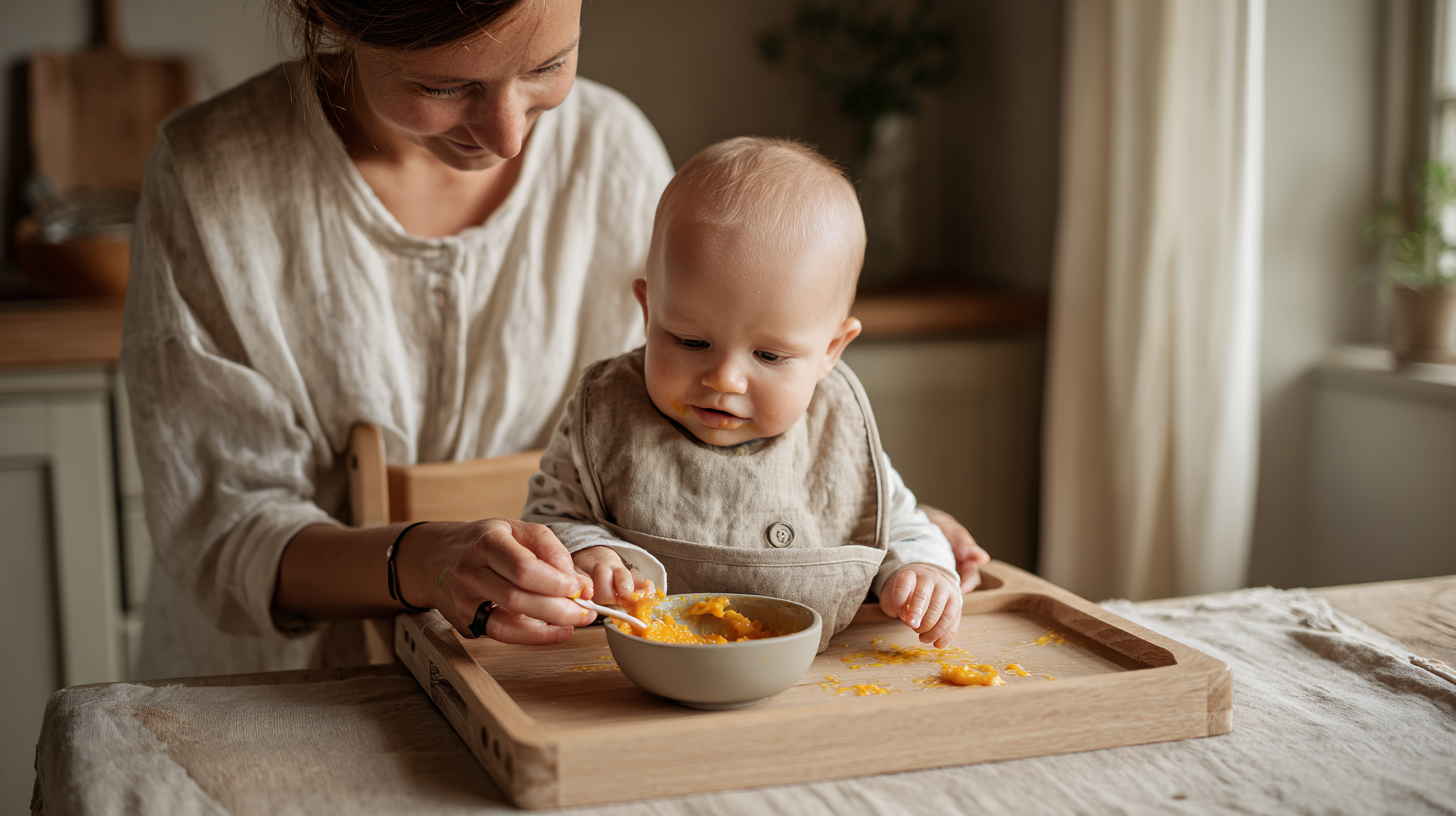
Here’s the part that can be hardest to accept when you love a clean kitchen: mess is not the opposite of progress. For babies and toddlers, mess is progress. When a child dips their fingers into a soft pumpkin-coconut mash, smears a dollop of callaloo across the tray, or drops a spoonful of rice just to watch it fall, they are doing sensory and motor work that no feeding schedule can replace.
Professionals who support children with feeding difficulties often build their entire therapy sessions around controlled exploration: touching, smelling, licking, and only eventually chewing or swallowing. The reason is simple: comfort with food happens in layers. A child who is allowed to look, touch, and smell without pressure is more likely to grow into a child who tastes, chews, and eventually enjoys variety. A child who is scolded or rushed through these stages may build an association between food and stress.
Imperfect feeding leans into this developmental truth. It sees the yogurt on the bib and the plantain on the floor and says, “This is annoying, but it is also training.” It allows for paper towels and humor. For Caribbean families, it can also mean reimagining traditional dishes in mess-friendly formats: a soft version of rice and peas, a gently mashed sweet plantain and avocado blend, or a smooth lentil puree that can be scooped, smeared, and slowly accepted on your child’s terms.
Caribbean-Inspired Messy Meal Ideas
- Offer a small bowl of smooth pumpkin with coconut milk and let baby “paint” the tray before guiding a spoonful to their mouth.
- Serve mashed ripe plantain with a drizzle of coconut milk alongside a familiar finger food, like a soft toast strip, to lower the pressure.
- Make a gentle lentil or dhal-style puree and allow dipping with steamed cassava sticks—even if some sticks become drumsticks instead.
You’ll find many similar ideas—like Papaya Banana blends, coconut-based porridges, and bean-rice combinations—in the Caribbean Baby Food Recipe Book: Easy & Healthy Homemade Meals for Infants & Toddlers, designed to keep flavor and nutrition high while your expectations stay human.
Interactive Progress Check: How Imperfectly Are You Feeding Already?
One of the most surprising truths from family feeding research is that many parents are already doing more “right” than they think. The brain of a perfectionist rarely gives credit for partial wins, though—so let’s measure yours in a different way.
Imperfect Wins Tracker
Tap “Done” next to each imperfect win you’ve already experienced. Watch how your progress bar shifts.
Each of these small choices aligns with what experts look for when they talk about responsive feeding: honoring cues, creating space for exploration, and weaving culture into daily routines. If you only ticked off one box, that is one more than zero. If you ticked off all four, you’re already living the imperfect feeding life your inner critic swore you didn’t deserve.
Expert Voices, Lived Stories: What the Pros and Parents Are Saying
Feeding therapists, pediatric dietitians, and researchers around the world increasingly emphasize that their most successful interventions do not happen in sterile, perfectly controlled environments. They happen in busy homes, with siblings running around, parents juggling responsibilities, and meals that look like your life—not a catalog.
Experts who work with pediatric feeding disorders talk about the importance of co-regulation: the idea that children borrow their caregiver’s calm. When a parent can stay grounded—acknowledging frustration, but not panicking—children have more space to try, spit, re-try, and eventually accept new foods. That groundedness becomes even more powerful when professionals actively validate parents’ feelings, rather than layering on more judgment.
On the lived-experience side, more and more parents are sharing unfiltered feeding stories online: the nights when dinner is cereal, the weeks when a child lives on three favorite foods, the therapy sessions that feel like two steps back before one step forward. These stories don’t cancel out medical guidance or structure; they make room for feelings. For perfectionistic parents, hearing another mother say, “We’re working with a feeding therapist, and last night’s dinner was still a mess,” can be the crack in the wall that lets self-compassion in.
What Type of Feeder Are You—Today?
Tap the option that sounds most like what you tend to do when a meal goes “wrong.”
Professionals would call that “experimenter” style a responsive, flexible approach, and the research is kind to it. You don’t ignore patterns or concerns, but you also don’t assume every difficult meal is a referendum on your worth. You collect observations, adjust, ask for help when needed, and keep culture and connection on the table—even if the vegetables go untouched that day.
Practical Imperfect Feeding Scenarios (With Caribbean Flavor)
Let’s walk through a few practical scenarios and how an imperfect, research-informed response might look. These are not prescriptions, but patterns you can adapt.
Scenario 1: The Carefully Cooked Reject
You spent an hour making a smooth lentil and pumpkin puree with coconut milk, plus soft rice on the side. Your toddler takes one bite, makes a face, and pushes the bowl away.
Imperfect response: You take a slow breath, resist the urge to say “after all that work,” and slide a familiar food into the picture—maybe a piece of soft toast or some fruit. You leave the bowl within reach and say, “You don’t have to eat it, but it can stay here if you feel curious again.” This honors research on pressure (less is more) and still protects exposure: the food remains visible and non-threatening.
Scenario 2: The Drive-Through Dinner
It’s late, the baby is fussy, and the pantry looks like tumbleweed. You grab something from a drive-through because the alternative is everyone crying.
Imperfect response: You choose the gentlest available options, offer water, and sit together while you eat, even if it’s picnic-style in the living room. Instead of silently judging yourself, you name the reality: “Today was hard, but we still ate together. Tomorrow we’ll bring back some of our usual foods.” From a research standpoint, the occasional convenience meal has far less impact than the chronic stress of guilt and shame.
Scenario 3: The Caribbean Grandparent Commentary
You’re at a family gathering and an elder comments, “Back in my day, children ate what they got. This one too picky!” as your child refuses a spoon of stewed peas.
Imperfect response: You smile and say, “We’re learning at his pace. He’ll get there.” Later, you offer a small, softer version of stewed peas mashed with rice at home, where the pressure is lower. You are honoring culture, but also honoring modern understanding of sensory needs and temperament. The research on family influence in feeding difficulties suggests that this kind of gentle boundary-setting is protective.
Scenario 4: The Repetitive Eater
Your two-year-old only wants rice and one particular fruit most evenings, despite your best efforts.
Imperfect response: You consistently include one or two safe foods (like the rice and fruit) while adding a tiny portion of something new or familiar-but-rejected nearby. You avoid bribes or threats, and you keep serving those new foods without making them a battlefield. Studies on picky eating show that repeated, low-pressure exposure over time is one of the strongest predictors of eventual acceptance.
A Tiny Imperfect Meal Planner: Build Your Week Without Burning Out
Instead of planning seven days of flawless meals, try building a week that expects mess, repetition, and shortcuts. The goal is to keep nutrition and culture in the picture without handing perfectionism the menu.
Tap to Build a Mess-Friendly Week
Tap “Idea” next to each day to see a realistic, Caribbean-leaning suggestion.
If you want more structure without more pressure, the Caribbean Baby Food Recipe Book: Easy & Healthy Homemade Meals for Infants & Toddlers can function as your “idea bank.” You can pick one or two recipes per week—say, a mango-coconut puree and a bean-rice dish—and rotate them as anchors, instead of reinventing every meal from scratch.

Where Imperfect Feeding Is Headed (And Why That’s Good News)
Looking at recent trends, imperfect feeding is not just a personal coping strategy; it’s part of a broader shift. Families are speaking more openly about feeding disorders, picky eating, and parental burnout. Researchers are paying more attention to real-life constraints instead of ideal lab conditions. Therapists are increasingly focused on family-centered outcomes: not just weight or nutrient intake, but joy, confidence, and reduced stress at mealtimes.
At the same time, more diverse voices are entering the conversation, bringing non-Western and culturally rich perspectives on feeding. Caribbean, African, Latin American, and Asian families are showing how traditional dishes can be adapted for babies without erasing their flavors. As this continues, the definition of “healthy eating” will hopefully expand—leaving more room for plantain, callaloo, coconut, and beans alongside global staples like oats and broccoli.
The opportunity for parents is simple but profound: you can be part of this shift in your own kitchen. Every time you choose connection over criticism, curiosity over control, and reality over ideals, you are helping build a new normal—one where good parenting is not measured by spotless bibs but by children who trust their bodies and feel safe with food.
Taking Your Next Imperfect Step
There will always be voices telling you to try harder, do more, and never let a chip or a spill slip through your guard. But research, real families, and your own nervous system are whispering something different: you are allowed to be an imperfect feeder and an excellent parent at the very same time. Your child doesn’t need flawless execution. They need a grown-up who is willing to learn, laugh, and keep showing up—even when the rice flies.
So your “homework” is not to build another rigid meal plan. It’s to choose one tiny way to be kinder to yourself at the table this week. Maybe that’s allowing five extra minutes for messy exploration, resisting the urge to apologize for a simple dinner, or gently telling a relative, “We’re doing what works for us right now.” These micro-acts of self-compassion are not selfish; they are the foundation of the calm your child will borrow.
And if you’d like a companion that respects both your heritage and your bandwidth, the Caribbean Baby Food Recipe Book: Easy & Healthy Homemade Meals for Infants & Toddlers is a gentle way to keep flavor, nutrition, and culture on the table—without demanding that you become the “perfect” feeding parent. You’re already the one your child wants. The rest is just seasoning.

Kelley's culinary creations are a fusion of her Caribbean roots and modern nutritional science, resulting in baby-friendly dishes that are both developmentally appropriate and bursting with flavor. Her expertise in oral motor development and texture progression ensures that every recipe supports your little one's feeding milestones while honoring cultural traditions.
Join Kelley on her flavorful journey as she shares treasured family recipes adapted for tiny taste buds, evidence-based feeding guidance, insightful parenting anecdotes, and the joy of celebrating food, culture, and motherhood. Get ready to immerse yourself in the captivating world of Kelley Black and unlock the vibrant flavors of the Caribbean for your growing baby, one nutritious bite at a time.
- Imperfect Feeding: Why Messy, Real-Life Parenting Is Exactly What Your Child Needs - October 3, 2026
- Your Child’s Relationship with Food: The Quiet, Life-Long Gift You’re Giving Every Day - October 2, 2026
- The Feeding Journey That Quietly Transforms You Too - October 1, 2026