Beyond Cupcakes: How Allergy-Friendly Classroom Celebrations Are Transforming Childhood (And Why Every Teacher Needs This Guide)
That conversation changed everything for me. It made me realize something profound: we’ve been celebrating wrong this whole time.
Here’s the truth nobody wants to talk about: when we center classroom celebrations around food—especially homemade treats that can’t be traced, labeled, or trusted—we’re not creating magic for all children. We’re creating a two-tiered system where some kids get cupcakes and connection, while others get isolation and fear. And here’s what shocked me most when I started researching this topic: the children who feel most excluded often remember these moments for decades.
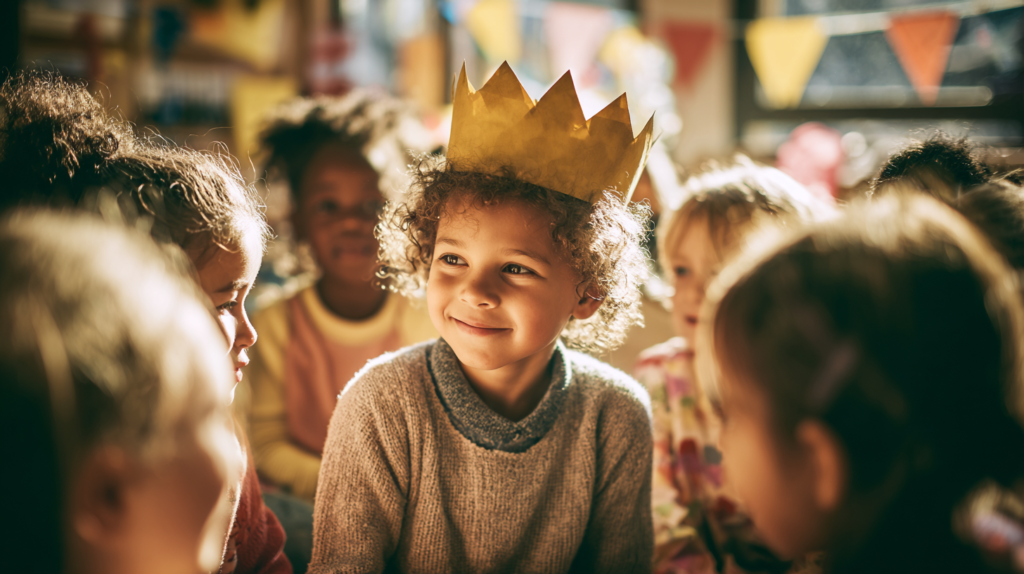
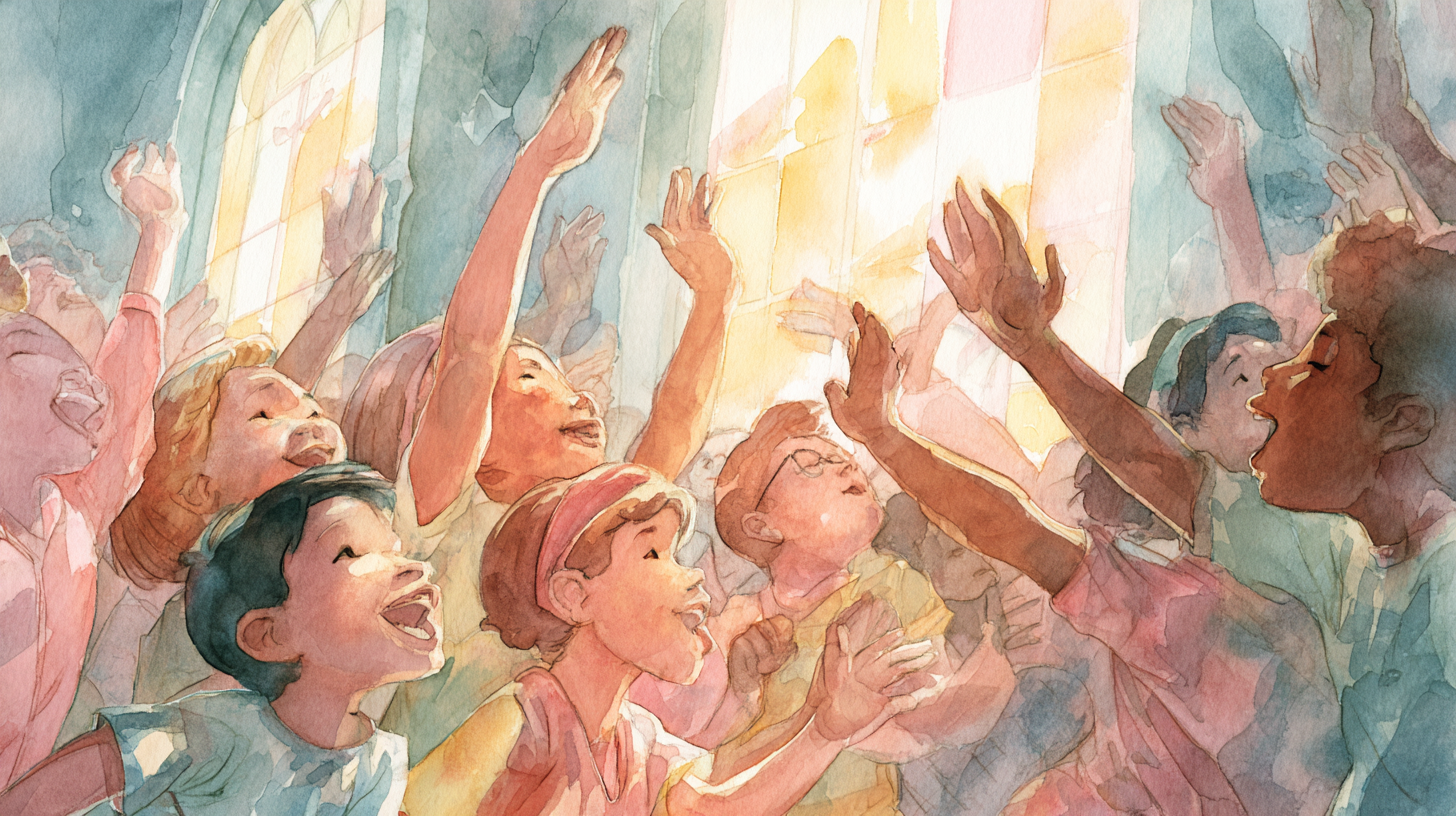
But here’s where this story gets hopeful, even revolutionary. Across North America, the Caribbean, Europe, and beyond, teachers and parents are discovering something beautiful: when you remove food from the celebration equation, you don’t subtract joy—you multiply it. You create space for creativity, inclusion, and memories that actually stick. Not the sugar-crash kind of “stick,” but the “remember when we all made crowns together in third grade” kind of stick.
This isn’t just another “here are three alternatives to cupcakes” listicle. This is a comprehensive, research-backed, deeply practical guide to transforming how we celebrate in classrooms. Whether you’re a teacher drowning in conflicting parent requests, a room parent trying to plan an inclusive party, or an administrator crafting district policy, this guide gives you everything: the why, the how, the real-world examples, and even the words to say when someone pushes back.
Quick Reality Check: Test Your Celebration Knowledge
Before we dive deep, let’s see what you already know. Select your answer:
The Hidden Crisis in Our Classrooms: What the Research Actually Shows
Let’s start with some numbers that should make every educator and parent sit up straight. According to comprehensive reviews published between 2022-2025, approximately 6-8% of children in developed countries now have diagnosed food allergies. That’s not a typo. In a typical classroom of 25 students, you’re looking at two children—sometimes more—who are managing life-threatening dietary restrictions.
But here’s what the statistics don’t capture: the emotional toll. Recent qualitative research with school-age children reveals something heartbreaking. Kids with food allergies describe living with “daily fear, social restrictions, emotional stress, isolation, teasing, and exclusion from peers.” When researchers interviewed elementary students about their experiences, one common theme emerged: celebration and party times were when they felt most different, most alone, most “other.”
A 2023 study of kindergarten teachers found that 81.9% had encountered students with food allergies in their classrooms, yet only 13.5% had received any formal training in allergy management. Think about that gap for a moment. We’re asking educators to navigate life-threatening situations with essentially no preparation. Meanwhile, over half of parents with food-allergic children report that school parties are a major source of anxiety and stress for their entire family.
Here’s where it gets even more interesting. When schools shifted to non-food celebration models, something unexpected happened. Teachers reported improvements across the board: better classroom behavior (no sugar crashes), reduced stress (no last-minute ingredient checks), increased inclusion (every child participates), and surprisingly, enhanced learning opportunities (crafts, games, and projects tied to curriculum).
The CDC has been saying it for years, but it bears repeating: food-based rewards and celebrations are a major source of excess sugars and calories in children’s diets AND a common pathway for dangerous allergen exposure. Their recommendation? Schools should work toward providing only healthy foods and beverages at events—or better yet, offering non-food rewards and celebrations entirely.
The Caribbean Wisdom: What Traditional Celebrations Teach Us
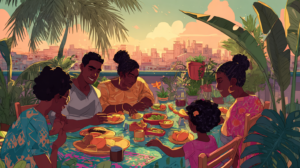
This wasn’t because of allergies. It was because these cultures understood something we’ve forgotten: connection is the cake. Everything else is just decoration.
When I researched celebration models globally, I found something fascinating. Many non-Western cultures have celebration traditions that naturally avoid the pitfalls we’re struggling with. They emphasize participation over consumption, creativity over sugar, and collective joy over individual indulgence. We’re not inventing something new here—we’re recovering something ancient and wise.
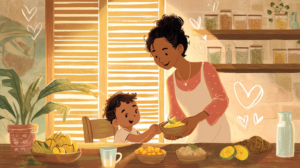
For families wanting to bring these cultural flavors home (safely!), our Caribbean Baby Food Recipe Book includes over 75 island-inspired recipes like Batata y Manzana (white sweet potato with apple), Coconut Rice with Red Peas, and Calabaza con Coco (pumpkin with coconut milk)—perfect for home celebrations with even the youngest family members, all with clear ingredient lists for allergy-conscious families.
The Complete Non-Food Celebration Toolkit: 50+ Ideas That Actually Work
This is where we move from theory to practice. After interviewing dozens of teachers, reviewing school policies from across North America, and compiling successful strategies from parent groups, I’ve organized these ideas into five power categories. Each one is field-tested, age-adaptable, and designed to create the kind of memories kids carry forever.
Category 1: Recognition & Spotlight Experiences
Children crave being seen more than they crave sugar. These ideas put the birthday child or honored student at the center of genuine attention and celebration:
The birthday child gets special privileges throughout the day: choosing the morning greeting, leading the line, selecting songs for transitions, picking which book gets read aloud, sitting in a decorated “throne” chair. One teacher told me, “Kids talk about their Star Day for months afterward. The cupcakes? Forgotten by lunch.”
Classmates interview the birthday child with fun questions (superpower you’d want, favorite memory, dream adventure) and compile responses into an illustrated booklet the child takes home. It becomes a time capsule of that moment in childhood.
Create a paper crown or cape, then have each classmate write one specific, genuine compliment or kind observation about the birthday child. The birthday child wears it during the day and takes it home as a keepsake. (Pro tip: Teachers can review compliments beforehand to ensure they’re meaningful and appropriate.)
The birthday child brings photos from different ages and shares short stories with the class. It’s public speaking practice disguised as celebration, and children absolutely love being the center of this kind of positive attention.
Category 2: Crafts & Keepsakes (With Caribbean Flair!)
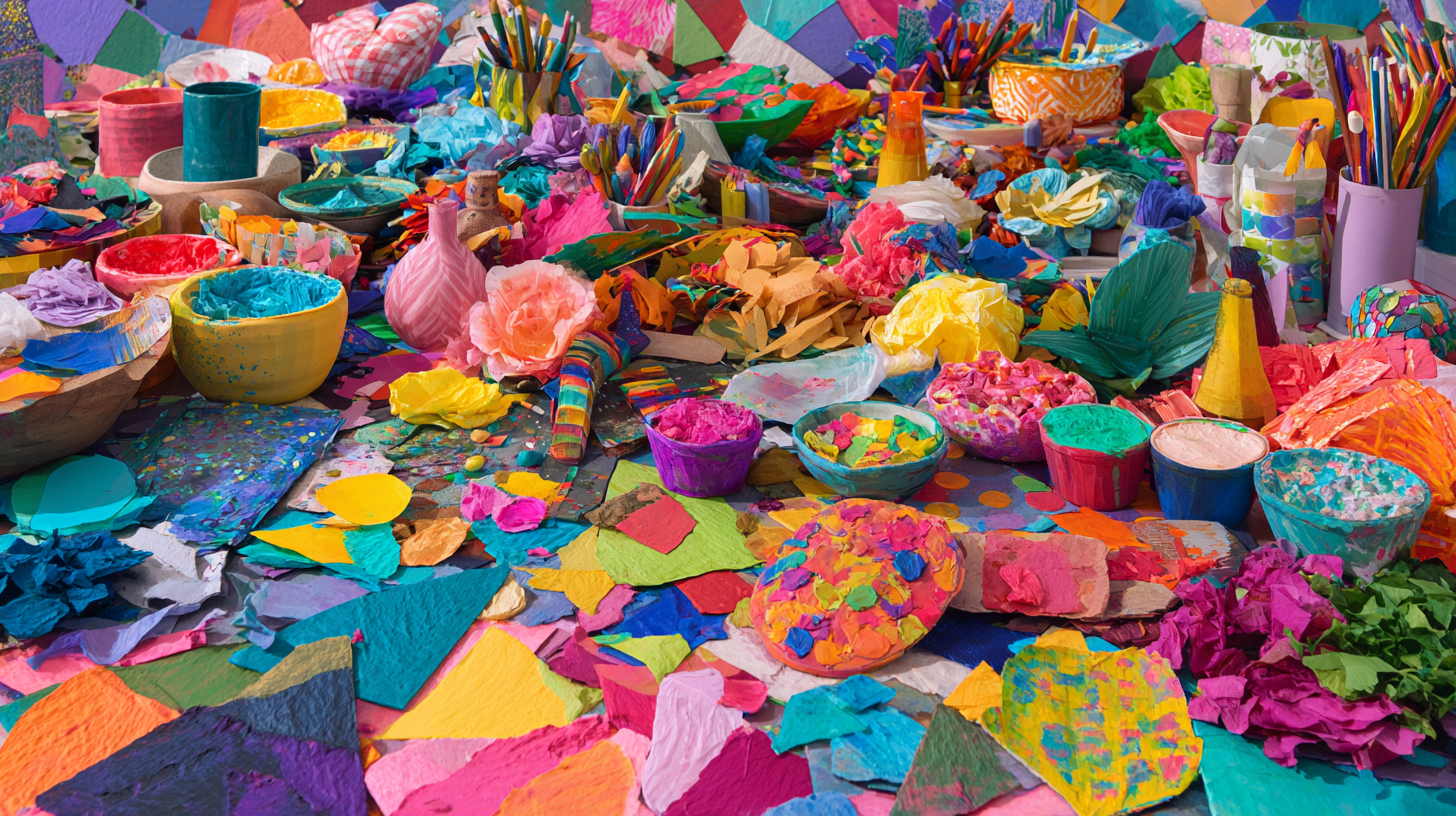
Hands-on creation gives children something tangible to remember while keeping hands busy and minds engaged:
Create a large banner where every child contributes art, signatures, or messages for the birthday child. Alternatively, make a rotating “birthday month” banner that stays up all month featuring everyone celebrating that month.
Make simple shakers using sealed containers with rice or beans, or decorate rhythm sticks. Learn a simple island rhythm pattern together. (Connect this to music curriculum—instant educational value!)
Use paper plates, markers, feathers, and safe craft supplies to create colorful carnival-style masks. Research real Caribbean carnival traditions as a class—cross-curricular magic!
Simple, quick, useful, and customizable for any theme or season. Children can use theirs immediately in their reading books.
Collect leaves or flowers (check for allergies first!), press them, and create bookmarks or cards. Connect to science curriculum on plant identification.
Category 3: Movement, Games & Joyful Chaos
Physical activity releases endorphins—nature’s happiness chemical—and creates shared joy without a single allergen:
Let the birthday child curate a playlist (pre-approved by teacher) and lead a 15-minute freeze dance party. Add variations: freeze in funny positions, freeze in pairs, freeze making silly faces.
Set up silly relay stations: balancing bean bags, crab-walking, hopping, spinning. Teams rotate through. The birthday child gets to design one special challenge.
Hide positive notes or small non-food prizes around the classroom or school (with admin permission). Create riddles or math problems as clues—instant curriculum integration!
Teach traditional circle games like “Brown Girl in the Ring” or simple versions of limbo. These are cultural education AND physical activity combined.
Set up quick challenges using classroom supplies: stack cups, move cotton balls with a straw, balance pencils. Everyone participates, everyone laughs.
Category 4: Service & Experience-Based Celebrations
Turning attention outward creates meaning and teaches empathy—powerful lessons wrapped in celebration:
The class makes cards for hospital patients, nursing home residents, or first responders. The birthday child leads the project and delivers cards (virtually or in person with supervision).
Each student creates a display about something they’re learning or passionate about. The birthday child is the “museum director” and leads the gallery walk.
Instead of bringing treats, the birthday family donates a book to the classroom library. The birthday child reads it aloud (or the teacher reads it) and writes a special message on the inside cover. The gift lasts all year.
Start or contribute to a class garden. Plant seeds in small containers, care for them over time, and watch growth—a living metaphor for growing up!
Category 5: Take-Home Treasures (Non-Food Treat Alternatives)
Some parents feel uncomfortable sending “nothing.” Here are inexpensive, safe alternatives children actually enjoy:
| Item | Why It Works | Approximate Cost |
|---|---|---|
| Special pencils or erasers | Practical, immediately useful, themed options available | $0.25-0.50 each |
| Stickers or temporary tattoos | Kids love them, zero waste after use | $0.10-0.30 each |
| Small notepads or bookmarks | Useful for schoolwork, can be themed | $0.40-0.75 each |
| Bubbles (small bottles) | Outdoor fun, universally loved | $0.50-1.00 each |
| “Experience coupons” | Sit by friend, choose game, pick playlist—no cost! | FREE (teacher-created) |
| Seeds or small plants | Educational, connects to science, grows over time | $0.50-1.50 each |
Build Your Perfect Celebration: Interactive Planner
Select your celebration parameters and get a custom recommendation:

Real Implementation: What Actually Happens When Schools Make the Switch
Theory is beautiful, but implementation is where rubber meets road. Let me share three real-world scenarios from schools that successfully transitioned to allergy-friendly, food-free celebrations:
The Challenge: Parents were resistant, claiming food-free birthdays would “ruin tradition.”
The Solution: Admin created a “Birthday Menu” with 10 pre-approved celebration options (all non-food). Teachers piloted it in kindergarten, where resistance was lowest. Within one year, 85% of families chose non-food options voluntarily because children were coming home happier and teachers were raving about easier classroom management.
The Result: By year three, the entire school was food-free for birthdays. Parent complaints dropped to nearly zero. Teacher stress decreased measurably. Most importantly: three children with severe allergies who had previously missed parties now participated fully in every celebration.
The Challenge: High allergy rates meant constant worry and multiple EpiPen incidents per year.
The Solution: School went completely food-free for all classroom celebrations (food still allowed in cafeteria with strict protocols). They trained all staff in non-food celebration facilitation and created a “Celebration Closet” stocked with craft supplies, games, and activity kits teachers could grab anytime.
The Result: Zero classroom allergic reactions in three years. Teacher satisfaction scores increased. Parent surveys showed 94% approval rating for the policy. Several students told counselors they “finally felt safe at school.”
The Challenge: Limited resources and traditional community resistant to change.
The Solution: One passionate teacher started in her own classroom, documenting everything. She showed data: time saved, behavior improvements, student feedback. She invited other teachers and parents to observe her celebrations. Organic spread took two years.
The Result: School-wide adoption happened through grassroots modeling rather than top-down mandate. Community now sees this teacher as innovative rather than restrictive. The school has become a regional model, hosting visits from other districts.
The Resistance You’ll Face (And Exactly What to Say)
Let’s be honest: not everyone will love this idea immediately. Change is hard, especially when it touches tradition and emotion. Here are the most common objections and evidence-based responses:
️ Resistance Navigator: Click for Responses
Data to share: Research on childhood memory shows experiences and emotions stick far longer than consumables. Plus, current traditions (sugar-heavy classroom treats) only became widespread in the 1980s—they’re newer than you think!
Practical tip: Create a “celebration cart” or closet with ready-to-go supplies. Initial setup takes a weekend; ongoing use is simpler than coordinating food logistics.
Example: One family couldn’t bring in traditional sweets, so they taught the class a folk tale and a circle game from their heritage. The children learned it, loved it, and still play it months later. That’s cultural transmission that lasts!
Bonus data: Schools that implement food-free policies report improvements in behavior, focus, and classroom community—benefits that extend far beyond allergy safety.
The Expert Consensus: What the Research Community Says
Let’s cut through opinion and look at what leading medical, educational, and public health organizations actually recommend:
- Centers for Disease Control (CDC): Explicitly recommends schools provide only healthy foods and beverages at celebrations—or better yet, offer non-food rewards and recognition. They cite both allergy safety and childhood nutrition concerns.
- GA2LEN and European Federation of Allergy (2024 Consensus Statement): Calls for “common approach to managing food allergy at school” that includes minimizing unnecessary food in classrooms, standardized staff training, and clear policies that prioritize student safety and inclusion.
- American Academy of Pediatrics: Supports reducing food-based rewards and celebrations in schools as part of comprehensive allergy management and healthy eating promotion.
- Multiple Teacher Associations: Survey data shows teachers prefer non-food celebrations once they experience them—citing reduced stress, better behavior management, and easier logistics.
- Parent Advocacy Groups (FARE, FAACT): Provide toolkits and resources for transitioning to non-food celebrations, noting that these changes improve quality of life for entire families of food-allergic children.
The Future: Where This Movement is Heading
After spending months researching this topic, interviewing educators, and tracking policy changes, I see five clear trends emerging:
1. District-Wide Standardization: More school districts are moving toward comprehensive, standardized celebration policies rather than leaving it up to individual teachers or PTAs. This reduces confusion and ensures equity across schools.
2. Integration with SEL (Social-Emotional Learning): Forward-thinking schools are recognizing that non-food celebrations naturally teach empathy, inclusion, kindness, and emotional intelligence—core SEL competencies. Celebrations are becoming intentional teaching moments, not just “party time.”
3. Student Co-Design: Schools are increasingly involving students in designing celebration options, leading to more creative, age-appropriate, and genuinely enjoyable traditions. When kids have agency, buy-in soars.
4. Tech-Enabled Communication: Apps and platforms that streamline communication between teachers and families about celebrations, dietary needs, and event planning are reducing the administrative burden and making implementation smoother.
5. Cross-Cultural Learning: As schools become more diverse, there’s growing interest in celebration models from non-Western cultures that naturally emphasize community, music, storytelling, and shared experiences over food. We’re learning from global wisdom.
Your Action Plan: Start Where You Are
Feeling overwhelmed? Don’t be. Change doesn’t have to happen overnight. Here’s your step-by-step roadmap based on your role:
✅ Readiness Assessment: Where Are You in Your Journey?
Check all that apply to you:
If You’re a Teacher:
- Start small: Try one non-food birthday celebration this month. Document what works.
- Build your toolkit: Gather supplies for 3-5 go-to celebrations so you’re always ready.
- Communicate proactively: Send a note to families at the start of the year explaining your celebration approach and why.
- Connect with allies: Find one other teacher interested in this approach and support each other.
- Track outcomes: Keep simple notes on student reactions, behavior, and participation—you’ll want this data when others ask about results.
If You’re a Room Parent:
- Educate yourself first: Use this guide to understand the full picture—not just allergies but all benefits.
- Propose solutions, not just problems: When suggesting non-food celebrations, come with 3-4 specific, detailed plans ready to implement.
- Partner with the teacher: Make sure your ideas align with classroom needs and teacher preferences.
- Make it easy: Offer to coordinate supplies, send templates for other parents, or even run the activity yourself.
- Share success: After a great non-food celebration, share photos and reactions with other parents—let positive peer pressure work for you!
If You’re an Administrator:
- Create clear, district-wide policy: Ambiguity creates anxiety. Clear guidelines create confidence.
- Provide resources: Don’t just ban food—offer alternatives, training, supplies, and ongoing support.
- Train all staff: Include bus drivers, cafeteria workers, and substitutes—everyone who interacts with children.
- Communicate the “why”: Help your community understand this isn’t restrictive—it’s expansive. It includes MORE children, not fewer.
- Celebrate wins publicly: Share stories of successful inclusive celebrations in newsletters, on social media, at board meetings.
The Transformation I’ve Witnessed (And The One Awaiting You)
But here’s the plot twist: the text that followed was from a different parent—one who’d initially resisted the change. She wrote: “I thought I’d hate this. But watching ALL the kids participate equally, seeing my son excited about the scavenger hunt he got to design, noticing there’s no post-party sugar crash and behavior problems… I get it now. This is better. For everyone.”
That’s the thing about truly inclusive practices: they lift everyone. When we remove barriers for the most vulnerable, we often discover we’ve improved the experience for all. Food-free celebrations aren’t about restriction—they’re about reimagining what’s possible when connection, not consumption, sits at the center of our celebrations.
Here’s what I want you to take away from this comprehensive guide: You have everything you need to start transforming celebrations right now. You don’t need permission from your entire district. You don’t need a massive budget. You don’t even need everyone to agree with you at first. You just need to start—one celebration, one classroom, one brave choice to prioritize inclusion.
The research is clear. The expert consensus is strong. The real-world examples are abundant. But most importantly, the children are waiting. They’re waiting for celebrations where nobody sits alone in the nurse’s office. Where nobody feels “difficult” or “other.” Where joy multiplies instead of divides.
Start today. Start small. Start with one birthday, one idea, one conversation. And watch what happens when you replace cupcakes with connection, frosting with fun, and exclusion with the kind of joy that actually lasts.
Because childhood isn’t measured in sugar grams. It’s measured in moments where a child felt seen, safe, and celebrated for exactly who they are.
And that? That’s a tradition worth starting.

Kelley's culinary creations are a fusion of her Caribbean roots and modern nutritional science, resulting in baby-friendly dishes that are both developmentally appropriate and bursting with flavor. Her expertise in oral motor development and texture progression ensures that every recipe supports your little one's feeding milestones while honoring cultural traditions.
Join Kelley on her flavorful journey as she shares treasured family recipes adapted for tiny taste buds, evidence-based feeding guidance, insightful parenting anecdotes, and the joy of celebrating food, culture, and motherhood. Get ready to immerse yourself in the captivating world of Kelley Black and unlock the vibrant flavors of the Caribbean for your growing baby, one nutritious bite at a time.