Skip to content

The Food Allergy Action Plan That Actually Works: Your Family’s Life-Saving Blueprint
⚡ Your Emergency Response Time Reality Check
How quickly could you respond to an anaphylactic reaction right now? Click through this scenario to find out:
At Home
Your child ate something new
At School
Teacher calls about symptoms
️ At Restaurant
Hives appear after meal
At Birthday Party
Friend’s house, unknown foods
Your Current Gap:
Three years ago, I watched my friend freeze in absolute terror when her daughter’s lips started swelling at a family cookout. She had an EpiPen. She had a doctor’s form. She’d been “prepared” for two years. But in that moment, when seconds mattered, she couldn’t remember which symptoms meant inject now versus wait and watch. Her hands shook as she fumbled through her purse, searching for the laminated card she knew was somewhere in there.
That moment changed everything for both of us. Because having a food allergy action plan isn’t the same as having one that actually works when your brain goes into panic mode and your child is struggling to breathe. The difference between a piece of paper from your allergist and a functional emergency system can literally save your child’s life.
Here’s what nobody tells you about food allergy management: the medical form is just the starting point. Recent data shows that about 45% of severe allergic reactions in children happen at school, and many occur in kids who didn’t even have a prior allergy diagnosis. Research from 2025 confirms that while individualized written plans improve outcomes, families need scenario-specific protocols, practiced routines, and communication systems that work under stress—not just during calm doctor visits.
The gap isn’t in medical knowledge. It’s in translation. It’s in the distance between “call 911 if symptoms are severe” and knowing exactly what severe looks like when your toddler is crying and you’re second-guessing yourself. It’s in having a plan for the school nurse but no system for the soccer coach, the grandparents, or the restaurant server. And it’s in assuming that once you’ve created a plan, you’re done—when the truth is, a working system requires practice, updates, and buy-in from everyone in your child’s life.
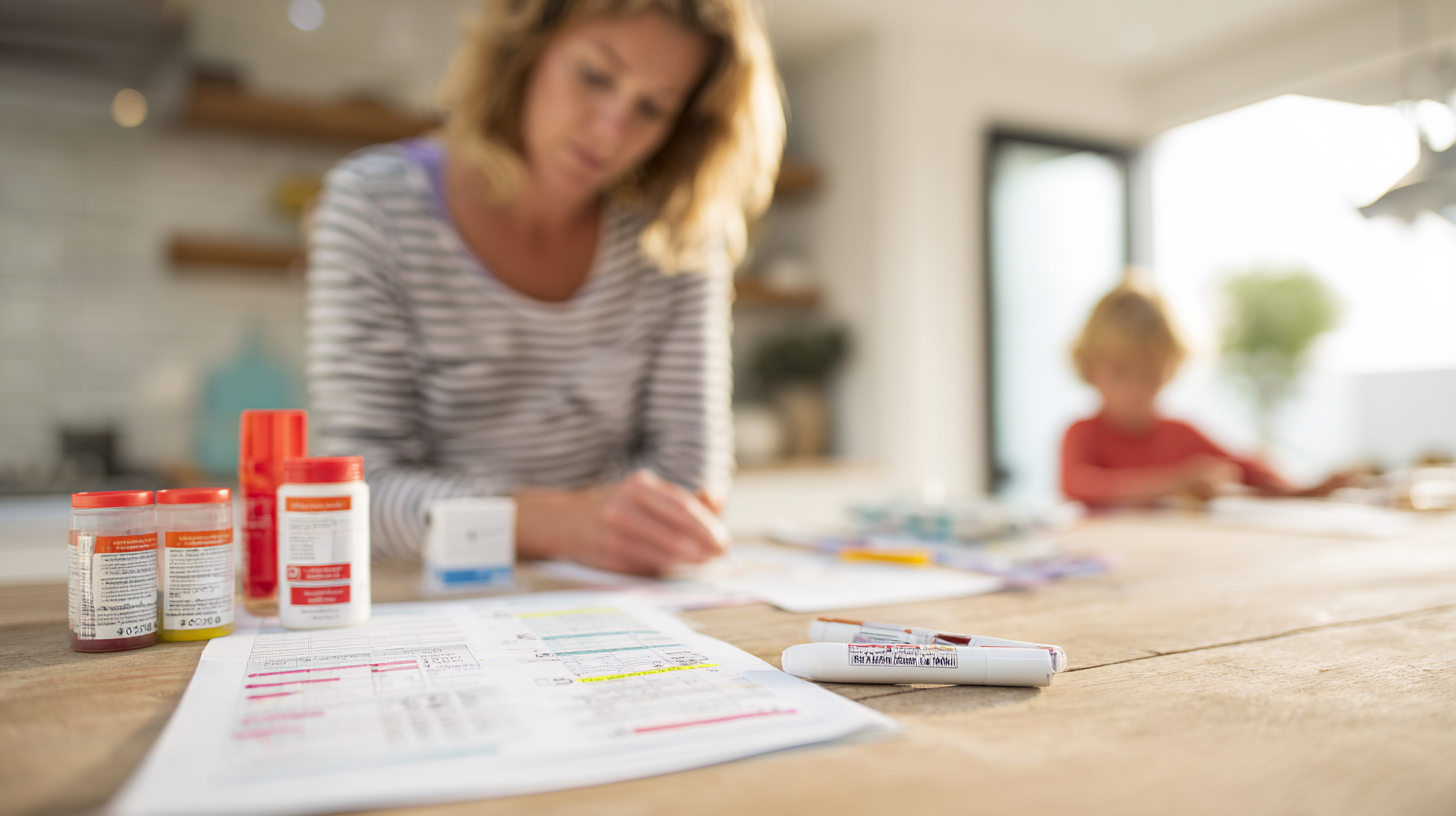
Why Most Allergy Plans Fail When You Need Them
The problem with generic medical advice is that it assumes you’ll have perfect conditions during an emergency. You won’t. You’ll have a screaming child, panicked bystanders asking what they should do, and your own adrenaline making it hard to think straight. Studies examining family management of food allergies reveal that parents with low self-efficacy—meaning they doubt their ability to handle emergencies—end up restricting their children’s activities far more than necessary, which impacts quality of life without actually improving safety.
Most allergist-provided action plans follow a color-coded format: green for everyday prevention, yellow for mild symptoms with watchful waiting, and red for severe symptoms requiring immediate epinephrine and emergency services. This framework is evidence-based and widely recommended by organizations like FARE and AAFA. But here’s where families get stuck: the form lists symptoms, but it doesn’t prepare you for decision-making under pressure. It tells you to give epinephrine for difficulty breathing, but doesn’t clarify whether that means loud wheezing or just rapid breathing from crying.
A 2025 clinical report on school-based food allergy management emphasized that written plans work best when paired with staff training, accessible medication, and regular drills—yet many families focus only on getting the form signed and never practice using it. In schools where nurses implemented comprehensive protocols including prevention education, emergency response rehearsals, and clear communication with families, severe reactions were recognized faster and treated more effectively.
Another critical failure point is assuming one plan fits all settings. Your home protocol needs to account for where you store epinephrine, who else might be supervising your child, and how to coach a frightened caregiver through injection steps. Your school plan must navigate institutional policies, coordinate with health staff and teachers, and ensure medication follows your child to field trips and sports. Your travel system requires portable checklists, translations for international trips, and backup medications.
The research is clear: families who build scenario-based routines, practice emergency responses, and create plain-language scripts for caregivers report significantly less anxiety and greater confidence. One study on behavioral interventions for youth with food allergies found that programs teaching problem-solving, advocacy skills, and coping strategies—not just medical facts—improved both psychological wellbeing and safety behaviors. The takeaway? Your action plan must be a living toolkit, not a static document.
Myth Buster Challenge: Can You Spot the Truth?
Test your knowledge with these common action plan myths. Click your answer!
1. If symptoms are mild, you should always wait before using an EpiPen:
2. You only need to update your action plan when you see the allergist:
3. School staff are legally required to administer epinephrine:
Building Your Core Medical Emergency Plan
Start with the foundation: a clinician-signed emergency care plan that meets current anaphylaxis guidelines. The updated 2023 recommendations, reflected in tools like AAFA’s Food Allergy Emergency Care Plan, include clearer symptom descriptions for different age groups, explicit guidance on when watchful waiting is appropriate for mild reactions, and accommodation for all epinephrine delivery systems including newer nasal spray options. Your allergist should complete this form, but you need to actively participate in its creation.
Insist on specificity. Instead of “difficulty breathing,” ask your doctor to define what that means for your child’s age: Is it stridor, retractions, inability to speak in full sentences, or oxygen saturation dropping below a certain level? Instead of “give two doses if no improvement,” clarify the exact time window—typically five to fifteen minutes—and what counts as improvement. Write down examples: if hives are spreading but breathing is normal, do you inject or observe? If your child vomits once but seems otherwise okay, what’s the protocol?
Your medical plan must include allergen names in multiple formats: common names, scientific names, and hidden ingredient aliases. Milk allergy isn’t just dairy—it’s casein, whey, lactose, and dozens of other terms. Tree nut allergies require listing every specific nut your child reacted to, because someone who is allergic to cashews might tolerate almonds. This level of detail matters when you’re reading labels at midnight or coaching a substitute teacher through lunch supervision.
Medication details should be exhaustive: exact epinephrine dose by weight, which brand and device type you use, where it’s stored at home and school, and expiration dates for all injectors. Many families keep one at home, one at school, one in the car, and one in a travel bag—and every location should be documented. Some plans now include photos of the child and of the specific epinephrine device to reduce confusion during emergencies.
Emergency contacts need hierarchy and backup. Primary contacts with multiple phone numbers, plus secondary contacts if parents are unreachable, plus the child’s allergist with direct line and after-hours answering service. Some families add a “medical emergency card” with all this information condensed onto a wallet-sized laminated sheet that travels with the child everywhere. The idea is that any adult—grandparent, coach, even a stranger—could grab that card and have everything needed to help.
After you have the medical form, translate it into a one-page family summary in plain language. This isn’t a replacement; it’s a supplement. Use simple sentences: “If Noah’s lips swell, tongue feels thick, or he has trouble breathing, inject EpiPen into outer thigh immediately and call 911. Stay with him. Give second EpiPen after 5 minutes if symptoms don’t improve or get worse.” This version is what goes on your refrigerator, in your diaper bag, and in your emergency binder. When you’re teaching a new babysitter, you hand them this sheet first, then show them the detailed medical plan.

Scenario-Based Protocols That Save Time
Generic advice says “avoid allergens.” Scenario-based protocols show you how. At home, your system includes designated safe storage for allergen-free foods, separate cutting boards and utensils to prevent cross-contact, and clear rules about handwashing before and after meals. You establish zones: maybe the kitchen counter is a safe space where allergen foods aren’t allowed, while the dining table requires wipeable placemats that get sanitized after every meal. You create visual cues—stickers or labels—so everyone, including young siblings, knows which foods are off-limits.
Your home protocol also covers visitors. You script the conversation: “We’re so glad you’re coming for dinner. Our daughter is severely allergic to peanuts and tree nuts. We keep our home nut-free, so please check ingredient labels if you’re bringing any food. If you’ve eaten nuts before arriving, please wash your hands thoroughly when you get here.” Some families keep a guest information sheet by the door that lists the allergen, explains cross-contact risks, and points out where emergency medication is stored. This isn’t about being rude—it’s about setting everyone up for a safe, enjoyable visit.
School communication starts months before the first day. You schedule a meeting with the school nurse, teacher, and principal to review the action plan, demonstrate epinephrine injection, and walk through daily routines like lunch, snack time, and birthday celebrations. You provide multiple copies of the medical plan—one for the health office, one for the classroom, one for the cafeteria manager. Many families also create a “classroom allergy poster” with the child’s photo, allergen list, and emergency steps in large, easy-to-read text so any adult in the room can respond quickly.
You establish a communication loop. Some parents use a daily log where the teacher notes what the child ate and any symptoms observed, even minor ones. Others rely on a messaging app or email update once a week. The goal is to catch problems early: if your child is developing eczema or stomach issues, it might signal a new sensitivity or accidental exposure. You also negotiate policies around class parties, field trips, and shared snacks, often offering to provide safe alternatives so your child isn’t excluded.
For restaurants and social events, your protocol includes advance reconnaissance. You call ahead to explain the allergy, ask about ingredient sourcing and kitchen practices, and confirm whether staff can safely accommodate you. When you arrive, you speak directly with the chef or manager, not just the server. You carry “chef cards”—small laminated cards listing allergens and cross-contact concerns in professional language—to hand over. You scan the table for bread baskets, shared appetizers, or sauces that might pose risks. And you always, always have your emergency kit with you, easily accessible in a bag at your feet or on the table.
Traveling requires a portable system. You pack a folder with copies of the action plan, a letter from your allergist explaining the need for injectable medication (for security), and translations of key allergy phrases if going international. You research hospitals near your destination and save their addresses in your phone. You bring extra epinephrine—more than you think you’ll need—because you can’t count on finding a pharmacy that stocks your brand. And you establish new routines: maybe you’ll only eat at restaurants with simple menus you can vet, or you’ll cook most meals in a vacation rental and pack safe snacks for day trips.
Each scenario protocol should include a checklist. For school: ✓ Current action plan on file ✓ Unexpired epinephrine in health office and classroom ✓ Teacher trained on symptoms and injection ✓ 504 plan or IHP updated ✓ Communication system in place ✓ Safe snack alternatives provided. For travel: ✓ Extra EpiPens packed ✓ Allergist letter ✓ Safe snacks for journey ✓ Emergency contacts with local time zones ✓ Nearest hospital located. Checklists take the cognitive load off your brain and ensure you don’t forget critical steps.
Emergency Response Simulator
Practice makes perfect. Walk through this emergency scenario to see how prepared you really are:
Time Elapsed:
Step 1: Recognition
Your 4-year-old ate a cookie at a friend’s house. Within 3 minutes, he says his mouth feels “funny” and you notice hives appearing on his neck.
What do you do first?
Step 2: Administration
You have your EpiPen. His breathing seems okay but hives are spreading. Remember: two or more body systems affected = anaphylaxis.
What’s next?
Step 3: Post-Injection Protocol
You’ve injected epinephrine and called 911. Symptoms are stabilizing. Ambulance is 8 minutes away.
What do you do while waiting?
Final Step: Your Response Time
In a real emergency, every second counts. Epinephrine is most effective when given early. Delayed treatment is one of the leading risk factors for fatal anaphylaxis.
✅ You completed the simulation! In an actual emergency, aim to inject epinephrine within the first 3-5 minutes of symptom onset. Practice with expired trainers regularly so this becomes automatic.
School Communication That Actually Protects Your Child
School is where most parents lose sleep, and for good reason. Your child will spend six to eight hours a day in an environment where you can’t directly supervise allergen exposure or symptom recognition. The 2025 guidance on school food allergy management recommends a layered approach: individualized healthcare plans, staff training, environmental controls, emergency medication access, and regular communication between families and school personnel. But translating recommendations into daily practice requires advocacy, persistence, and documentation.
Start by understanding your legal rights. In the United States, children with life-threatening food allergies may qualify for protections under Section 504 of the Rehabilitation Act or the Americans with Disabilities Act, which require schools to provide accommodations that ensure equal access to education. A 504 plan is a legally binding document that outlines specific modifications: allergen-free tables in the cafeteria, permission to carry epinephrine, nurse availability during field trips, or protocols for class parties. Some families also use Individualized Healthcare Plans (IHPs), developed by school nurses, which focus more on medical management details.
Your preparation begins with a pre-school-year meeting. Request a formal sit-down with the school nurse, classroom teacher, cafeteria manager, principal, and anyone else who will have regular contact with your child. Bring copies of your action plan, a fact sheet about your child’s specific allergy, and a list of requested accommodations. This isn’t a quick drop-off; it’s a working session where you demonstrate how to use an EpiPen (using an expired trainer), walk through symptom recognition, and answer questions. Many families also bring safe snacks to show what’s acceptable and explain what cross-contact means in practical terms.
Communication systems need to be proactive, not reactive. Some families use a weekly email or app check-in where the teacher reports on any food-related activities, upcoming events, or concerns. Others prefer a daily log sheet that travels back and forth in the child’s backpack, noting what was eaten at lunch and snack and whether any symptoms occurred. The key is creating a routine so that small issues get flagged early—maybe your child is repeatedly refusing school lunches, which could signal anxiety, or developing rashes that might indicate hidden allergen exposure.
Field trips and special events require additional planning. You provide portable copies of the action plan, ensure epinephrine travels with your child (not on a separate bus with the first aid kit), and confirm that at least one trained adult will be present. Some parents volunteer as chaperones for high-risk events. Others work with the school to establish a policy: no food-related field trips without advance notice and parent approval, or all field trips must include a staff member trained on the child’s specific emergency plan. These negotiations can be challenging, but they’re essential.
Classroom culture matters as much as policy. You want to foster an environment where your child feels safe and included, not isolated or singled out. Work with teachers to educate classmates in an age-appropriate way: “Some friends have allergies to certain foods, just like some friends need glasses or have asthma. We all help keep our classroom safe by washing hands and not sharing snacks.” Some families bring in allergy-friendly treats for the whole class on birthdays or celebrations so their child isn’t left out. Others provide a “safe snack bin” in the classroom that the teacher can draw from whenever there’s an unexpected party.
Documentation is your safety net. Keep copies of every email, meeting note, 504 plan, and action plan update. If your child has a reaction at school, request a written incident report detailing what happened, how it was handled, and what follow-up occurred. If accommodations aren’t being honored—say, the teacher repeatedly forgets to check ingredient labels for class treats—document the lapses and escalate to administration. You’re not being difficult; you’re protecting your child’s civil rights and physical safety.
The social-emotional component can’t be ignored. Children with food allergies often experience anxiety, fear of reactions, and social isolation. Schools can help by promoting inclusion, training staff to recognize allergy-related anxiety, and providing counseling support when needed. Research on psychosocial impacts shows that when schools take allergies seriously and normalize accommodations, children feel more secure and parents report lower stress levels. Conversely, when children are excluded, teased, or made to feel burdensome, the mental health toll can be significant.
Your Action Plan Readiness Tracker
Check off each item as you complete it. Watch your readiness score climb!
Training Caregivers and Family Members
The people who love your child the most can also be the hardest to train. Grandparents who raised their own children without ever hearing about EpiPens. Babysitters who’ve never dealt with a serious allergy. Siblings who don’t understand why they can’t share their peanut butter sandwich. These are the people who will be present during weeknight emergencies, weekend playdates, and family gatherings—and they need clear, practical training that respects their relationship with your child while prioritizing safety.
Start with empathy and education. Many older relatives grew up when food allergies were rare or not well understood, and they may not grasp the severity. Share resources: videos showing anaphylaxis symptoms, articles from trusted medical sources, or even a brief consult with your allergist where grandma can ask questions directly. Frame it as “helping us keep [child’s name] safe so you can enjoy time together” rather than “you need to do this perfectly or else.”
Hands-on demonstration is essential. Don’t just hand someone the action plan and assume they’ll figure it out. Walk through each step: here’s where we store the EpiPen, here’s how you remove the cap, here’s where you inject (outer thigh, even through clothing), here’s how hard you push and how long you hold. Use an expired trainer device so they can practice multiple times. Have them repeat the steps back to you. Then ask: “If you saw hives and heard wheezing, what would you do first?” This active learning cements the process far better than reading instructions.
Create caregiver-specific cheat sheets. For grandparents watching your child for an afternoon, provide a one-page guide: approved snacks listed by brand name, emergency contacts with photos, step-by-step EpiPen instructions with pictures, and a script for calling 911. For a regular babysitter, you might add routine details: safe meal options, handwashing requirements, what to do if a neighbor brings over cookies. Tailor the information to the situation. Someone watching your child for two hours doesn’t need your full medical history; they need the essentials in a format they can quickly reference.
Role-play scenarios together. Say: “Let’s pretend you’re at the park with [child’s name] and another kid offers him a granola bar. What do you do?” Or: “Imagine he starts saying his throat feels tight. Walk me through your response.” These exercises reveal gaps in understanding and build confidence. They also normalize the idea that emergencies, while rare, are manageable with the right preparation. Caregivers who have rehearsed the steps are far less likely to freeze in a real crisis.
Address emotional resistance with facts. Some family members may push back: “You’re being overprotective,” or “A tiny bit won’t hurt.” Respond calmly with evidence: “Even trace amounts can cause anaphylaxis in highly allergic individuals. His allergist confirmed that strict avoidance is the only safe approach.” Share statistics if needed: severe reactions can progress rapidly, and delayed epinephrine use is a major risk factor for fatal outcomes. Most people will respect boundaries once they understand the stakes.
Keep training current. Allergies, medications, and family routines change. Review emergency protocols with regular caregivers every few months. When epinephrine expires and you get new injectors, show them the updated device. If your child develops a new allergy or outgrows an old one, communicate immediately. A training session from two years ago is outdated; caregivers need to know the present reality.
Empower your child, too. Age-appropriate self-advocacy is critical. Preschoolers can learn to say “I can’t eat that, I have allergies,” and to tell an adult if their mouth feels funny. School-age children can identify their allergen on labels, carry a medical alert bracelet, and know where their epinephrine is stored. Teens can be trained to self-inject if mature enough. The goal is gradual independence supported by a safety net of informed adults. When children understand their allergy and feel confident speaking up, they’re safer even in situations where caregivers aren’t perfectly trained.

Real-World Implementation for Different Settings
Theory is useless without practice. You need implementation systems that fit into your actual life: the chaos of morning dropoff, the exhaustion of weeknight dinners, the unpredictability of social invitations. Families who successfully manage food allergies long-term are those who’ve developed automatic routines that don’t require constant mental effort. When checking ingredient labels becomes as reflexive as buckling a seatbelt, you’ve built a sustainable system.
In your home kitchen, start with zoning and labeling. Designate one cabinet or shelf for allergen-free foods only. Use colored stickers or labels: green for safe, red for unsafe, yellow for “check ingredients.” Some families keep allergen-containing foods in a separate area, maybe a high cupboard that young children can’t reach, reducing accidental exposure. Invest in dedicated cookware: one cutting board and set of utensils exclusively for allergen-free meal prep, stored separately and washed in the dishwasher on high heat.
Meal planning becomes strategic. Many families batch-cook safe meals on weekends and freeze portions for busy weekdays, reducing the temptation to grab convenience foods that might not be safe. If you’re cooking one meal for the family, you might prepare the allergen-free base first, then add the problematic ingredient to adult portions afterward. For example, cook pasta with safe sauce, serve your child’s portion, then stir in shrimp or dairy for everyone else. This inclusion strategy means your child isn’t eating separate “allergy food”—they’re eating the family meal, just a customized version.
Grocery shopping requires vigilance but can be streamlined with tools. Many families photograph labels of confirmed safe products and keep a digital album on their phone for quick reference. Apps that scan barcodes and flag allergens can help, though you should always double-check labels yourself since formulations change. Stick to brands you trust and buy in bulk when possible. Join online allergy communities where parents share newly discovered safe products or alert each other to recalls and formula changes.
Restaurant dining demands assertiveness. Call ahead during non-peak hours to speak with a manager or chef. Explain your child’s allergy clearly and ask specific questions: “Do you use shared fryers for french fries and breaded items?” “Can the kitchen prepare a meal using clean utensils and surfaces?” When you arrive, restate the allergy to your server and ask them to communicate directly with the chef. Some families bring a “chef card”—a small printed card that lists allergens and cross-contact concerns—to hand to the kitchen. Don’t be embarrassed to be thorough; your child’s safety comes first.
If a restaurant can’t safely accommodate you, don’t risk it. There’s no shame in leaving or choosing a different venue. Many families identify a few “safe” restaurants where staff know them and can reliably provide allergy-friendly meals, then stick to those spots for dining out. Some cultures, like those in the Caribbean where I grew up, have strong communal cooking traditions. When attending family events, I often offer to bring a dish made with safe ingredients that my child can eat—and that everyone else will enjoy too. Foods like Coconut Rice & Red Peas or Plantain Paradise from our Caribbean Baby Food Recipe Book are naturally free of many common allergens and become inclusive options for mixed gatherings.
For birthday parties and playdates, establish clear protocols. Some parents send safe snacks with their child so there’s always an acceptable option. Others call the host in advance to review the menu and offer to bring an allergy-friendly version of treats being served—if everyone’s having cupcakes, you send a safe cupcake. You educate your child to never eat anything unless they’ve checked with you or another trusted adult first, and to always have their emergency kit nearby. Hosting parties at your home gives you full control over food but requires extra prep; hosting at an allergen-free venue like a trampoline park or pool can reduce stress.
Travel is where flexibility matters most. Pack a cooler with safe meals and snacks for the journey. Research grocery stores and restaurants at your destination. If staying in a hotel, request a room with a mini-fridge and microwave so you can prepare simple meals. Bring extra epinephrine—more than you think you’ll need—and keep it with you at all times, not in checked luggage. If flying, inform the airline of your child’s allergy; some carriers will make announcements asking other passengers not to eat certain foods, though you shouldn’t rely solely on this protection.
International travel adds complexity. Learn key phrases in the local language: “My child is allergic to [allergen]” and “This is an emergency, we need a hospital.” Carry a translated version of your action plan and a letter from your doctor explaining your need to carry injectable medication. Research whether your epinephrine brand is available abroad in case you need a replacement. Identify English-speaking hospitals or clinics near your accommodations. Some families purchase travel insurance that includes medical evacuation coverage for added peace of mind.
In every setting, the principle is the same: prepare in advance, communicate clearly, and never compromise on safety for the sake of convenience or social pressure. Families who thrive with food allergies are those who’ve integrated management into their lifestyle so thoroughly that it becomes second nature. It’s not about living in fear; it’s about living confidently because you’ve built robust systems that work.
5 Shocking Truths About Allergy Plans Nobody Tells You
Click each myth to reveal the truth that could change how you manage allergies:
✅ TRUTH:
Antihistamines like Benadryl treat mild allergic symptoms but do NOT stop anaphylaxis. Only epinephrine can reverse a severe reaction. Never delay using an EpiPen while waiting for antihistamines to work.
✅ TRUTH:
ALWAYS go to the emergency room after using epinephrine, even if symptoms resolve. Biphasic reactions—where symptoms return hours later—occur in up to 20% of cases. Medical observation is essential.
✅ TRUTH:
Oral immunotherapy (OIT) is a medical treatment supervised by allergists, NOT something to try at home. Unsupervised exposure can cause severe reactions. While some children naturally outgrow allergies, this is unpredictable and must be confirmed through medical testing.
✅ TRUTH:
Even microscopic amounts of an allergen can trigger reactions in highly sensitive individuals. Shared cutting boards, utensils, fryers, and serving spoons can transfer enough protein to cause anaphylaxis. Cross-contact is a serious risk that requires strict kitchen protocols.
✅ TRUTH:
IgE-mediated food allergies are diagnosed through specific blood tests and clinical history. They’re a legitimate immunological condition, not a preference or intolerance. Severe food allergies send someone to the ER every 3 minutes in the US and can be fatal without proper treatment.
Addressing Psychological and Social Challenges
Managing a food allergy isn’t just a medical challenge—it’s an emotional journey for the whole family. Research consistently shows that children with food allergies and their parents experience higher levels of anxiety, stress, and reduced quality of life compared to families without allergies. But the data also reveals something crucial: when families develop strong coping strategies, receive social support, and build confidence in their management skills, these negative impacts diminish significantly. Your action plan must address the mental health component alongside the physical safety component.
Parental anxiety is real and justified. You’re navigating a condition that carries genuine risk of serious harm, and society doesn’t always understand or accommodate that reality. But unchecked worry can become counterproductive, leading to over-restriction of your child’s activities and inadvertently teaching them that the world is a dangerous place to be feared. Studies on parental self-efficacy show that parents who feel confident in their ability to manage allergies—because they’ve practiced emergency responses, built support networks, and successfully navigated challenges—report less anxiety and allow their children more age-appropriate independence.
Children pick up on parental stress. If you constantly hover, express fear about every food offered, or avoid social situations entirely, your child learns to do the same. The goal is to model calm vigilance: “We check ingredients because we’re smart and careful, not because we’re scared.” You can acknowledge the reality—“Yes, you have an allergy, and yes, we need to be cautious”—while also emphasizing capability: “And you know what to do if something goes wrong. You’re strong, I’m prepared, and we have a great team helping us.”
Social isolation is a common challenge. Birthday parties where your child can’t eat the cake. School lunches where they sit at the allergen-free table away from friends. Family gatherings where well-meaning relatives pressure you to “just let them have a little bite.” These situations are exhausting and heartbreaking. But they’re also opportunities to teach your child self-advocacy, resilience, and creativity in finding alternative ways to participate.
Some families reframe celebrations. If traditional birthday cake isn’t safe, maybe your tradition becomes bringing a special allergy-friendly dessert that’s even better than cake, and everyone wants to try it. When my own family started exploring Caribbean-inspired recipes free from common allergens, like Mango Coconut Rice or Sweet Plantain mash, we found that these vibrant, flavorful dishes became favorites for the whole family—not just the child with allergies. Food restrictions became an invitation to explore new cuisines rather than a limitation.
At school, inclusion strategies make a huge difference. Work with teachers to ensure your child isn’t isolated during meals or singled out in ways that feel punitive. Some schools have moved away from “peanut-free tables” in favor of training all students on allergy safety and creating a culture where everyone washes hands and doesn’t share food. When children feel included and supported by peers, their self-esteem and social confidence grow.
Bullying is unfortunately common. Children with food allergies report being teased, having allergens waved in their faces, or being deliberately exposed as a “prank.” This is not harmless; it’s a form of assault that can cause severe physical harm and lasting psychological trauma. Schools must take these incidents seriously, with clear consequences for perpetrators and support for victims. Parents should document bullying, advocate for anti-bullying education that includes food allergies, and ensure their child has access to counseling if needed.
Peer education can help. Some families, with their child’s permission, present to the class about food allergies in a positive, informative way. They might bring props, answer questions, and emphasize that allergies are just one part of who their child is—not a weakness or something to be ashamed of. When classmates understand the condition, they’re more likely to be allies than bullies.
Empowering your child with age-appropriate responsibility builds confidence. Younger children can help choose safe snacks at the grocery store or identify their allergen on labels. Older children can practice reading ingredients independently, carry their own epinephrine (if appropriate), and speak up when they’re unsure about a food. Teens can learn to self-inject, communicate with restaurant staff, and educate friends. This gradual transfer of responsibility prepares them for adult independence while maintaining appropriate oversight.
Mental health support should be part of your management plan if needed. Some children develop significant anxiety around food, eating in public, or separation from parents. Cognitive-behavioral therapy, exposure-based interventions, and family therapy can all be helpful. Newer programs specifically designed for food allergy-related anxiety teach coping skills, problem-solving strategies, and gradual exposure to feared situations in a safe, controlled way. Don’t hesitate to seek professional help if your child’s anxiety is interfering with daily functioning or

Kelley's culinary creations are a fusion of her Caribbean roots and modern nutritional science, resulting in baby-friendly dishes that are both developmentally appropriate and bursting with flavor. Her expertise in oral motor development and texture progression ensures that every recipe supports your little one's feeding milestones while honoring cultural traditions.
Join Kelley on her flavorful journey as she shares treasured family recipes adapted for tiny taste buds, evidence-based feeding guidance, insightful parenting anecdotes, and the joy of celebrating food, culture, and motherhood. Get ready to immerse yourself in the captivating world of Kelley Black and unlock the vibrant flavors of the Caribbean for your growing baby, one nutritious bite at a time.
- You’re More Than Just the Person Who Feeds Your Baby - September 12, 2026
- You’re Doing Your Best: The Self-Compassion Revolution Every Feeding Parent Needs - September 11, 2026
- Feeding Therapy: Your Family’s Roadmap from Overwhelm to Progress - September 10, 2026