When Dinner Becomes a Time Machine: Teaching History Through Your Family Table
What’s Your Family’s Food Heritage?
Click on all the culinary traditions that run through your family’s veins—you might be surprised at how many stories are waiting at your dinner table!
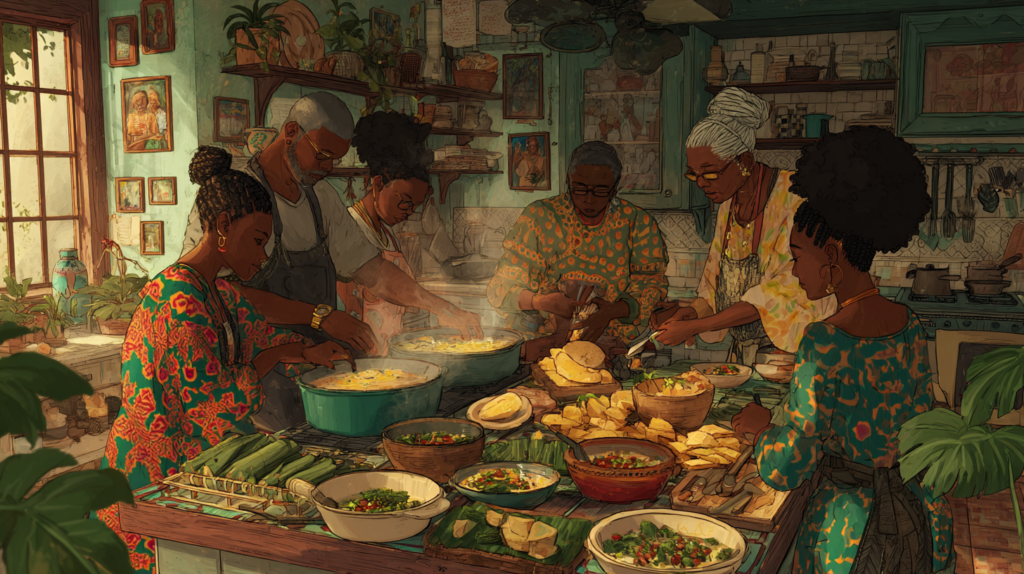
Last Sunday evening, my kitchen smelled like my grandmother’s kitchen used to—warm coconut milk simmering with cinnamon, sweet plantains caramelizing in the pan, and the earthy aroma of ground provisions bubbling away. But this wasn’t just dinner. This was a history lesson my seven-year-old would actually remember.
While we stirred and tasted, I told her about the Taino people who first cultivated these ingredients on Caribbean islands, about the African women who transformed simple cassava into a hundred different dishes during the darkest chapters of history, about the Indian grandmothers who carried curry spice techniques across oceans. She listened—truly listened—in a way she never does when I try to make history homework exciting.
That’s when it hit me: we’ve been teaching history backwards. We’re asking kids to memorize dates and names when we could be asking them to taste the past, to smell it, to recreate it with their own hands. Food isn’t just something we eat—it’s a time capsule, a survival story, and a love letter from ancestors we never met.
The Forgotten Classroom in Your Kitchen
The intersection of traditional food and history education centers on something powerful: recipes and culinary practices provide a tangible link to cultural, economic, and social developments across time. Teaching history through food leverages the universality of eating, making the subject engaging for all ages while illuminating patterns of migration, technological change, and cultural exchange.
Historically, recipes have been passed down orally and in written form, often reflecting societal values, available resources, and cross-cultural interactions. Think about it—every dish tells multiple stories. A simple pot of rice and peas speaks of agricultural innovation, trade routes, colonial economics, and resistance movements all at once. This approach is finding renewed relevance as families and educators use historical recipes and food traditions to instill a sense of heritage, sharpen critical thinking, and encourage hands-on learning at home.
In the last 1-3 years, there has been a significant increase in experiential education programs, including food-centered history curricula, particularly among homeschooling families and cultural institutions. Food museums, heritage cooking workshops, and online recipe platforms have reported rising engagement in their historic food-related content since the pandemic. User submissions of family food histories to digital archives have grown by over 40% in the US and Europe since 2021.
According to the American Historical Association, digital collections blending food history and primary sources are among the most accessed teaching materials for K–12 and family learning contexts. This surge isn’t accidental—it’s happening because food makes history personal, visceral, and memorable in ways textbooks never could.
The Science of Why Food Sticks in Memory
The Shocking Truth About Learning Through Taste
Our brains process food memories differently than any other type of learning. Click below to discover why your child will remember a historical recipe years after they’ve forgotten what they studied for last week’s test.
Here’s what researchers have discovered:
• Multi-sensory encoding: When we cook and taste historical recipes, we engage smell, taste, touch, sight, and sound simultaneously. This creates multiple neural pathways to the same memory, making it significantly more “sticky” than information learned through reading alone.
• Emotional anchoring: Food activates the amygdala—the brain’s emotional center—which is directly connected to long-term memory formation. That’s why you can remember your grandmother’s kitchen from 30 years ago but not what you studied last month.
• Procedural memory advantage: Cooking engages procedural memory (the “how to” system), which is one of the most durable forms of memory. Once your hands learn to make dumplings the way Jamaican women have for generations, that knowledge becomes almost impossible to forget.
This explains why experiential food education programs report that children retain historical information at rates up to 70% higher than traditional textbook learning—a statistic that should fundamentally change how we think about teaching history.
Experts in food history, like anthropologists and culinary historians, emphasize the value of studying recipes as primary sources that reveal migration, trade, adaptation, and cultural identity. Think about Caribbean cuisine for a moment. When you prepare a dish like callaloo—with its West African roots, Amerindian techniques, and adaptations forged under colonialism—you’re not just cooking. You’re tracing the movement of peoples, the exchange of knowledge under impossible circumstances, and the creative resilience that defined survival.
Social media conversations and forums highlight ongoing debates over authenticity versus adaptation in traditional recipes, with families and food historians discussing how dishes change through migration or ingredient availability. Leading voices in the discipline, such as Rachel Laudan and contributors to the American Historical Association and Sapiens, note that foodways are not only about sustenance but also carry deep cultural and symbolic meanings.
Every ingredient has a passport. Every cooking technique has an origin story. When you teach your child to make a simple dish like coconut rice and peas from traditional Caribbean recipes, you’re teaching them about agricultural innovation in tropical climates, the economics of the spice trade, and how enslaved peoples maintained cultural identity through food traditions.
Breaking Through to Reluctant Learners
History Teaching Challenge: What’s Your Struggle?
Select the statement that best describes your current challenge with teaching history to your children:
The truth is, every one of those challenges points to the same solution: experiential learning through food. Prominent breakthroughs in recent years include the integration of historical food assignments in school and homeschool curricula, where students recreate and research recipes from various eras. There’s a growing trend toward using online resources, such as the Food Timeline and RecipeDB, which map the origins and evolution of iconic dishes globally.
Museums, universities, and cultural organizations are increasingly offering virtual cooking classes and historically themed food events, encouraging cross-generational learning and cultural exchange. But you don’t need to wait for an institution to make this happen—your kitchen is already a fully equipped history laboratory.
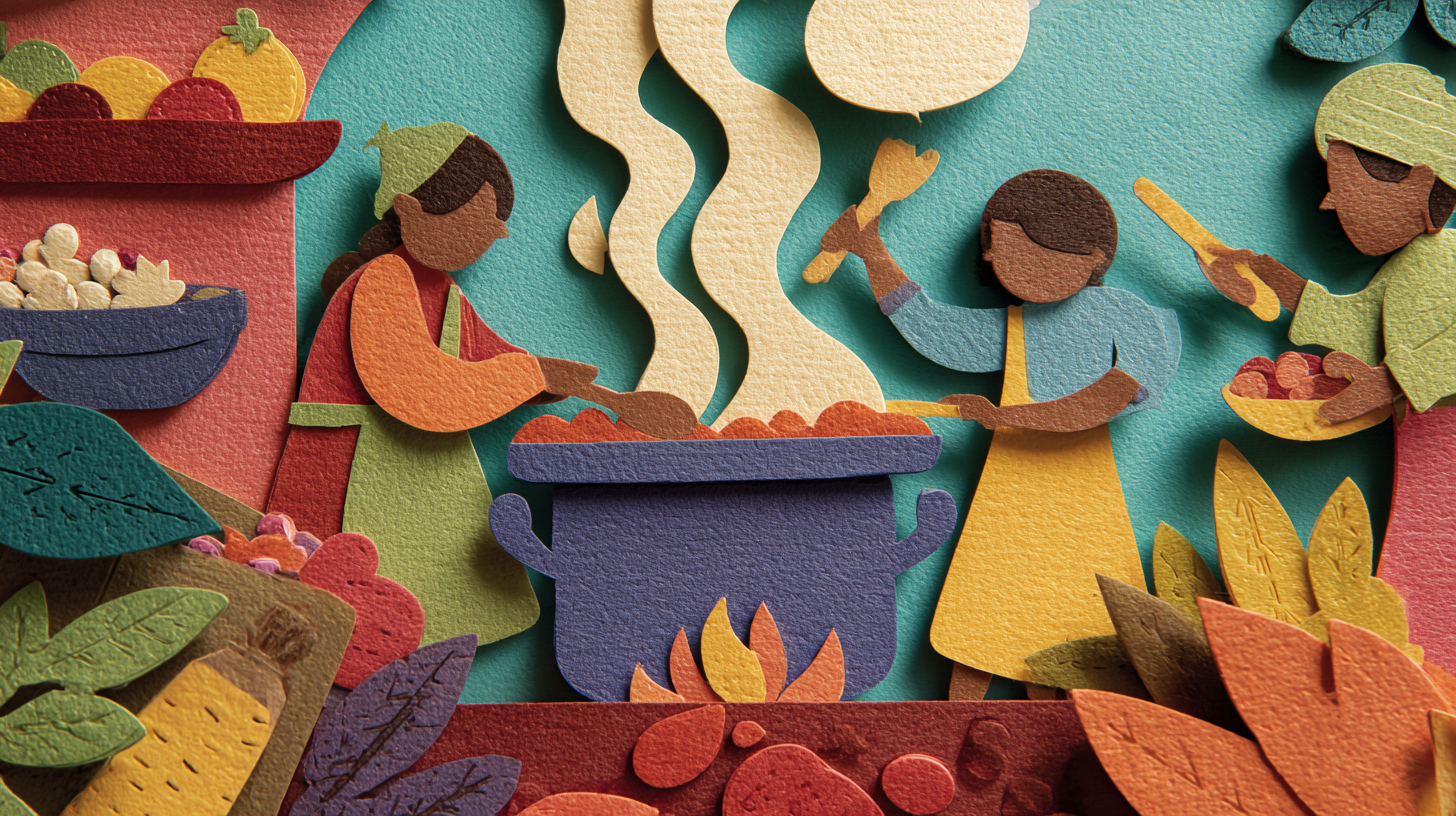
Consider this approach: instead of reading about the Columbian Exchange, cook it. Make a meal that couldn’t have existed before 1492—tomatoes from the Americas in an Italian sauce, potatoes (native to Peru) in an Irish stew, or plantains (brought from Africa and Southeast Asia) in Caribbean dishes. Then make a meal using only ingredients available in Europe before Columbus. The difference becomes visceral, memorable, and profound.
The Time-Travel Timeline: Cooking Through the Centuries
⏰ Journey Through Food History
Slide through time to discover what families were eating—and why it mattered:
1400s – Pre-Columbian Era
Caribbean indigenous peoples cultivated cassava, sweet potatoes, peppers, and corn using sophisticated agricultural techniques. These weren’t just crops—they were technologies that would eventually feed the world. Teach your children: before colonization, these islands had developed agricultural systems so efficient they supported complex civilizations.
Families can engage in “cooking through the centuries” projects, selecting and preparing recipes from different historical periods or world cultures, then discussing the historical context of each dish. Classrooms and homeschool environments use historical recipes for cross-disciplinary projects, blending history, math, reading, and home economics as children measure, cook, and reflect on the experience.
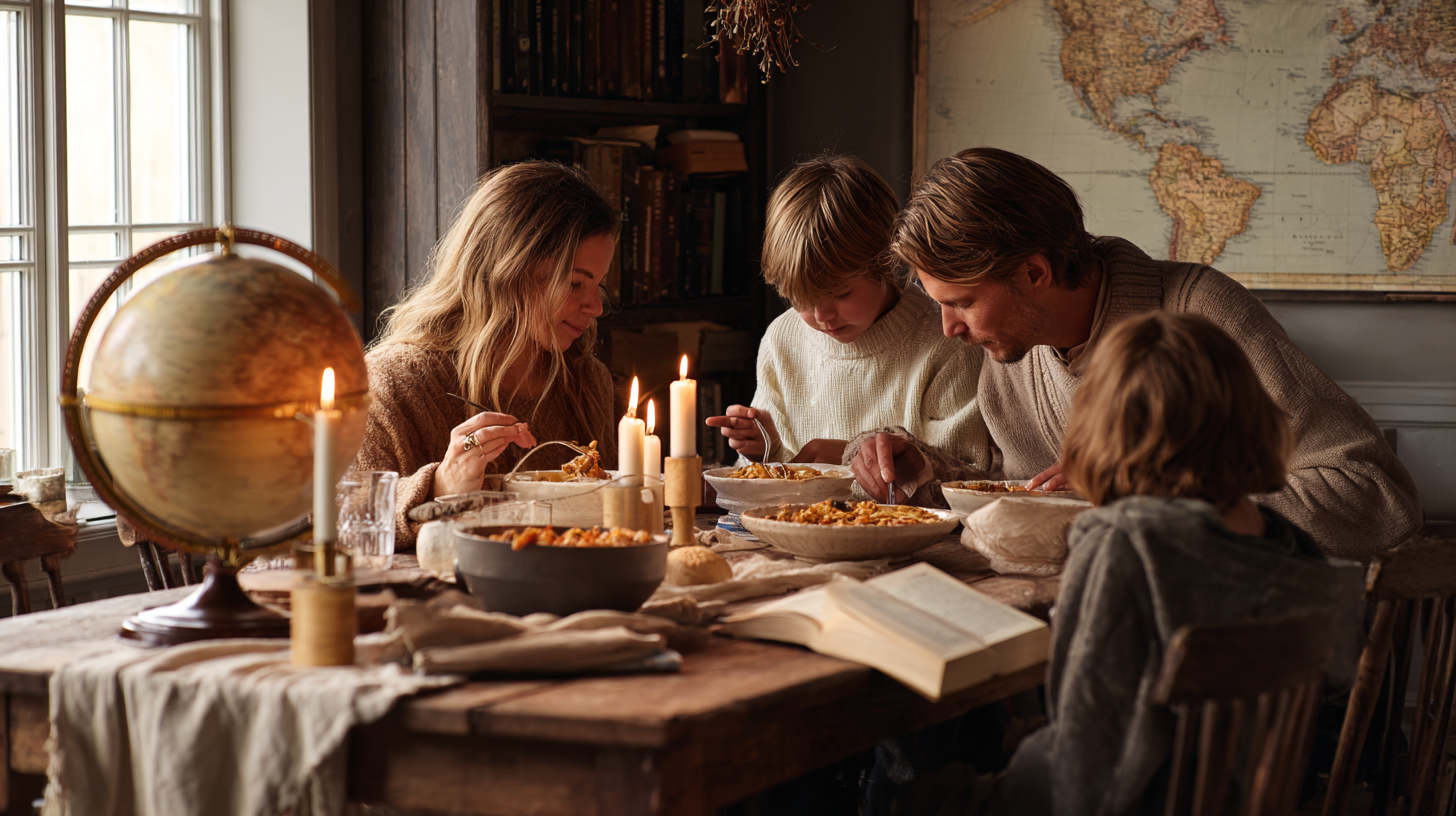
Start small. Choose one night a week as “History Dinner Night.” Let your children pick an era, research a dish from that time, and help prepare it. The first week might be ancient Rome with honey-glazed dormice (or a more palatable Roman alternative). The next could be medieval England with pottage. Then jump to 1920s Harlem during the Renaissance, or 1970s Jamaica during reggae’s golden age.
Each meal becomes a portal. You’re not lecturing—you’re cooking together, tasting together, and making memories that will outlast any textbook. This is exactly the kind of hands-on approach that helps children develop lifelong food literacy, similar to introducing babies to diverse flavors and traditional ingredients early in life.
When Recipes Become Resistance: The Untold Stories
Flip the Cards: Hidden Histories in Common Dishes
Click each card to reveal the powerful story behind seemingly simple foods:
Ackee and Saltfish
Jamaica’s National Dish
Ackee fruit was brought to Jamaica on slave ships from West Africa. Enslaved Africans transformed this potentially toxic fruit into a nutritious staple—mastering the precise timing of when it’s safe to eat. This dish represents botanical knowledge preserved under oppression, a testament to survival and expertise passed down through generations despite attempts to erase culture.
Cornmeal Porridge
Caribbean Breakfast Staple
Corn traveled from the Americas through Africa and back to the Caribbean. This humble porridge represents the triangular trade—but also how African and Caribbean cooks transformed a colonizer’s cheap provision into something nourishing, delicious, and culturally significant. The addition of coconut milk, nutmeg, and cinnamon turned subsistence into celebration.
Ground Provisions
Yams, Dasheen, Cassava
These robust root vegetables were specifically chosen by enslaved people for “provision grounds”—small plots where they could grow their own food. They selected crops that thrived in difficult conditions, stored well, and provided maximum nutrition for families. This was agricultural resistance: creating food security in a system designed to keep them dependent.
These stories matter profoundly. Issues include the risk of oversimplifying or romanticizing the past when recreating historical dishes, especially where ingredients or methods are lost or modified over time. Food evolution often raises important debates about cultural appropriation, authenticity, and the erasure or commercialization of minority heritage recipes.
Another concern is accessibility—modern households may lack the time, tools, or local ingredients to authentically recreate certain traditional recipes. But here’s the thing: the goal isn’t perfect historical accuracy. The goal is connection, understanding, and the transmission of values and stories that would otherwise be lost.
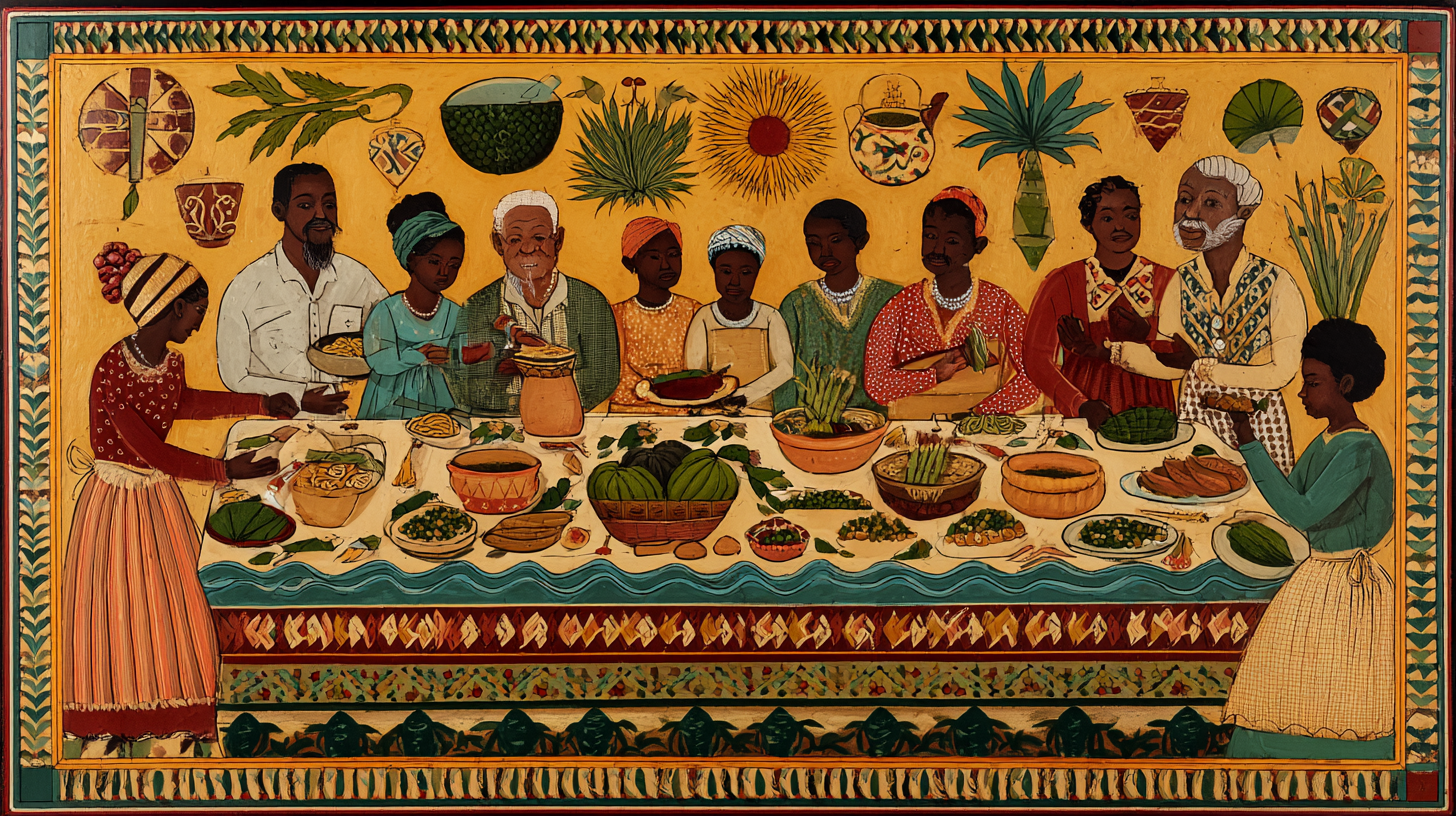
When you teach your children to make dishes like cassareep sweet potato or callaloo, you’re doing more than passing down recipes. You’re teaching them that their ancestors were brilliant—that people who weren’t allowed to read or write still managed to preserve encyclopedic knowledge of botany, nutrition, and cooking chemistry. You’re teaching them that culture survives through everyday acts, not just through grand gestures.
Building Your Family Food Heritage Project
✅ Your Heritage Kitchen Journey
Check off each step as you build your family’s living history project. Watch your progress grow!
Cultural heritage initiatives encourage communities to document and share their food stories, such as compiling family cookbooks or participating in oral history projects, providing a platform for intergenerational learning and preserving unique traditions. You can start your own version of this right now, tonight, with whatever resources you have available.
The beauty of food history education is that it scales. You don’t need a museum budget or professional equipment. A conversation with a grandparent, a simple recipe, and a willingness to ask “why” and “how” can unlock entire worlds. Why do we soak beans overnight? How did people preserve food before refrigeration? What does it mean that certain spices were once worth more than gold?
Each question leads to another, and suddenly your children are learning about economics, chemistry, geography, and social justice—all through the lens of something they encounter three times a day. This same principle applies when you introduce babies to traditional foods—you’re not just feeding them, you’re connecting them to generations of knowledge and culture, much like the diverse recipes found in Caribbean baby food traditions.
The Future Is Cooked at Home
Experts predict continued growth in family-focused educational programs that use traditional food to teach history, spurred by the popularity of experiential learning and food media. Opportunities include collaborations between historians, chefs, and educators to create multicultural cookbooks, documentaries, and immersive workshops designed for children and families.
Technological advances, such as interactive recipe apps and virtual museum tours, are expected to make historical food education increasingly accessible worldwide. But the most powerful technology is still the oldest one: sitting down together to share a meal and the stories that come with it.
In my grandmother’s generation, food knowledge was transmitted naturally, constantly, through daily participation in cooking. Children learned by watching, by helping, by tasting and adjusting and remembering. Somewhere along the way, we professionalized cooking so much that we forgot it was also our most effective educational tool.
We’re not just talking about nostalgia here. We’re talking about a pedagogical approach that has emerged from centuries of practice—one that modern research is finally validating. When anthropologists and food historians study recipes as primary sources, they’re doing exactly what grandmothers have always done: reading history in the ingredients, techniques, and flavors that survived when so much else was lost.
Starting Today: Your First Heritage Meal
Here’s your assignment, if you choose to accept it: This week, cook one dish from your family’s heritage or from a culture you want your children to understand better. It doesn’t have to be complicated. It doesn’t have to be perfect. It just has to be intentional.
Before you cook, do fifteen minutes of research with your children. Where did this dish originate? Who typically made it, and why? What historical events shaped its evolution? Were any ingredients substitutions born from necessity? What occasions called for this particular food?
While you cook, talk about what you’re doing and why. Explain techniques. Share stories. Let them smell the spices, feel the textures, see the transformations. If you’re making something like plantain porridge, talk about how this simple dish connects to Taino agricultural practices, African diaspora foodways, and present-day Caribbean identity.
After you eat, ask questions: How do you think this tasted different 100 years ago? What ingredients might have been easier or harder to get? Why do you think people kept making this dish even when they moved far from home? What does this food tell you about the people who created it?
These conversations—these ordinary moments in your kitchen—are doing something extraordinary. They’re making history tangible, personal, and relevant. They’re teaching your children that they’re part of a continuous story, connected to people and places they’ve never seen but can taste and smell and feel in every bite.
The Meal That Keeps Teaching
That Sunday dinner I mentioned at the beginning? My daughter still talks about it. She tells her friends about the Taino people and their cultivation techniques. She’s asked to make that meal again. She’s started asking questions about where other foods come from. One simple act of intentional cooking opened a door that textbooks had kept firmly closed.
This matters more than ever in our current moment. In an era when cultural connections are often reduced to social media posts and commercialized celebrations, teaching history through food offers something authentic and nourishing—literally and figuratively. It honors the past without fetishizing it. It preserves tradition while allowing for evolution and adaptation.
Every dish tells multiple stories—of innovation and adaptation, of survival and celebration, of loss and preservation. When we cook these dishes with our children, we’re not just feeding their bodies. We’re feeding their sense of identity, their connection to ancestors, their understanding of how the world came to be the way it is.
We’re teaching them that history isn’t something that happened to other people in distant places. It’s something that lives in our kitchens, our taste memories, our family recipes. It’s something they can touch and taste and pass forward to their own children someday.
The most powerful classroom has always been the one where we gather to break bread together. The most effective history lesson has always been the one we can taste. And the most important cultural preservation work has always happened not in museums and archives—though those matter too—but in ordinary kitchens where ordinary people decide that their traditions are worth the time, effort, and love required to keep them alive.
So tonight, or tomorrow, or this weekend—start cooking history. Start small if you need to. Start imperfectly. Just start. Because every time you teach your children to make a traditional dish, you’re doing something revolutionary: you’re making sure that the stories, wisdom, and love of countless ancestors don’t end with you. You’re keeping history alive, one meal at a time.
And unlike a textbook they’ll forget the moment the test is over, the taste of their heritage—that stays with them forever. That becomes part of who they are. And when they grow up and cook these dishes for their own families, they’ll remember not just the recipe, but the stories you told, the connections you made, and the love you poured into every pot. That’s not just teaching history. That’s making it.

Kelley's culinary creations are a fusion of her Caribbean roots and modern nutritional science, resulting in baby-friendly dishes that are both developmentally appropriate and bursting with flavor. Her expertise in oral motor development and texture progression ensures that every recipe supports your little one's feeding milestones while honoring cultural traditions.
Join Kelley on her flavorful journey as she shares treasured family recipes adapted for tiny taste buds, evidence-based feeding guidance, insightful parenting anecdotes, and the joy of celebrating food, culture, and motherhood. Get ready to immerse yourself in the captivating world of Kelley Black and unlock the vibrant flavors of the Caribbean for your growing baby, one nutritious bite at a time.
- The Feeding Revolution: Why Your Everyday Meals Are Changing the World - October 13, 2026
- Your Feeding Story Matters More Than The “Perfect” One Online - October 12, 2026
- Looking Forward: Stepping Into Your Confident Feeding Future - October 11, 2026