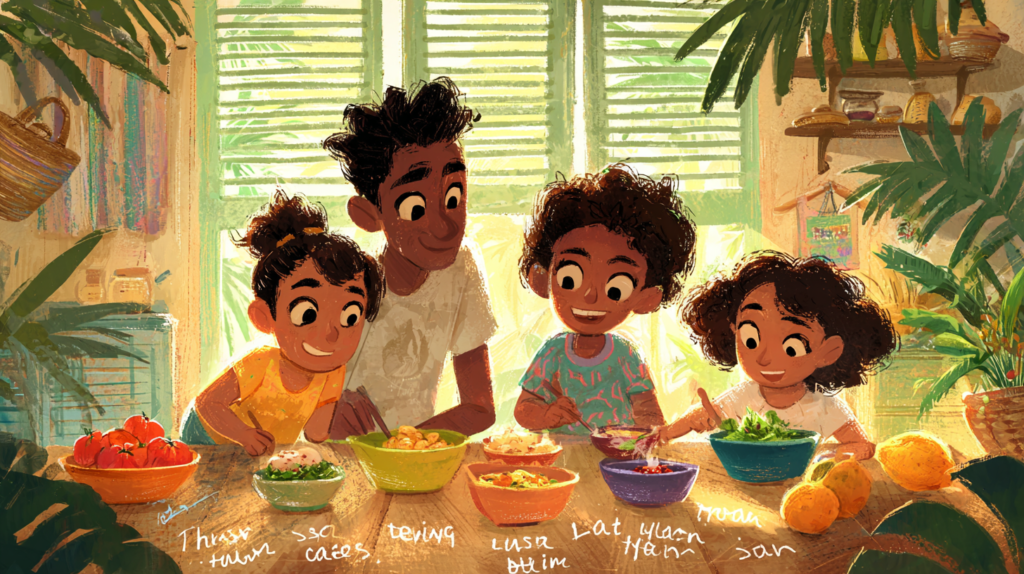
The Fifth Taste Revolution: Why Your Kids Need to Know About Umami (And How It Changes Everything at Dinner)
It’s UMAMI – The Fifth Taste!
Shocking truth: Most kids (and adults!) have never heard of umami, even though it’s in foods they eat every day. Umami is the savory, rich, “meaty” taste in tomato sauce, cheese, mushrooms, and even breast milk. When kids learn to recognize and name umami, they become more adventurous eaters and appreciate complex, healthy flavors beyond just “sweet” or “salty.”
Here’s something that changed everything for me as a parent: my six-year-old daughter refused mushrooms for years. She’d push them to the side of her plate, make faces, and tell me they were “weird and slimy.” Then one afternoon, I sat down with her and asked a simple question: “Can you describe how this tastes?” She struggled. She didn’t have the words.
That moment made me realize something powerful. We spend so much time teaching our children colors, shapes, and numbers, but we forget to teach them how to talk about taste. And when children can’t describe what they’re experiencing, they default to the only framework they know: “yummy” or “yucky.” That’s it. Two words to describe the entire universe of flavor.
But here’s where it gets interesting. There’s a fifth taste that most of us never learned about in school, a taste that scientists only officially recognized in the early 2000s, and a taste that holds the key to helping our children become confident, adventurous eaters. It’s called umami, and once you understand it, you’ll see your family’s relationship with food transform in ways you never imagined.
What Nobody Told You About Umami
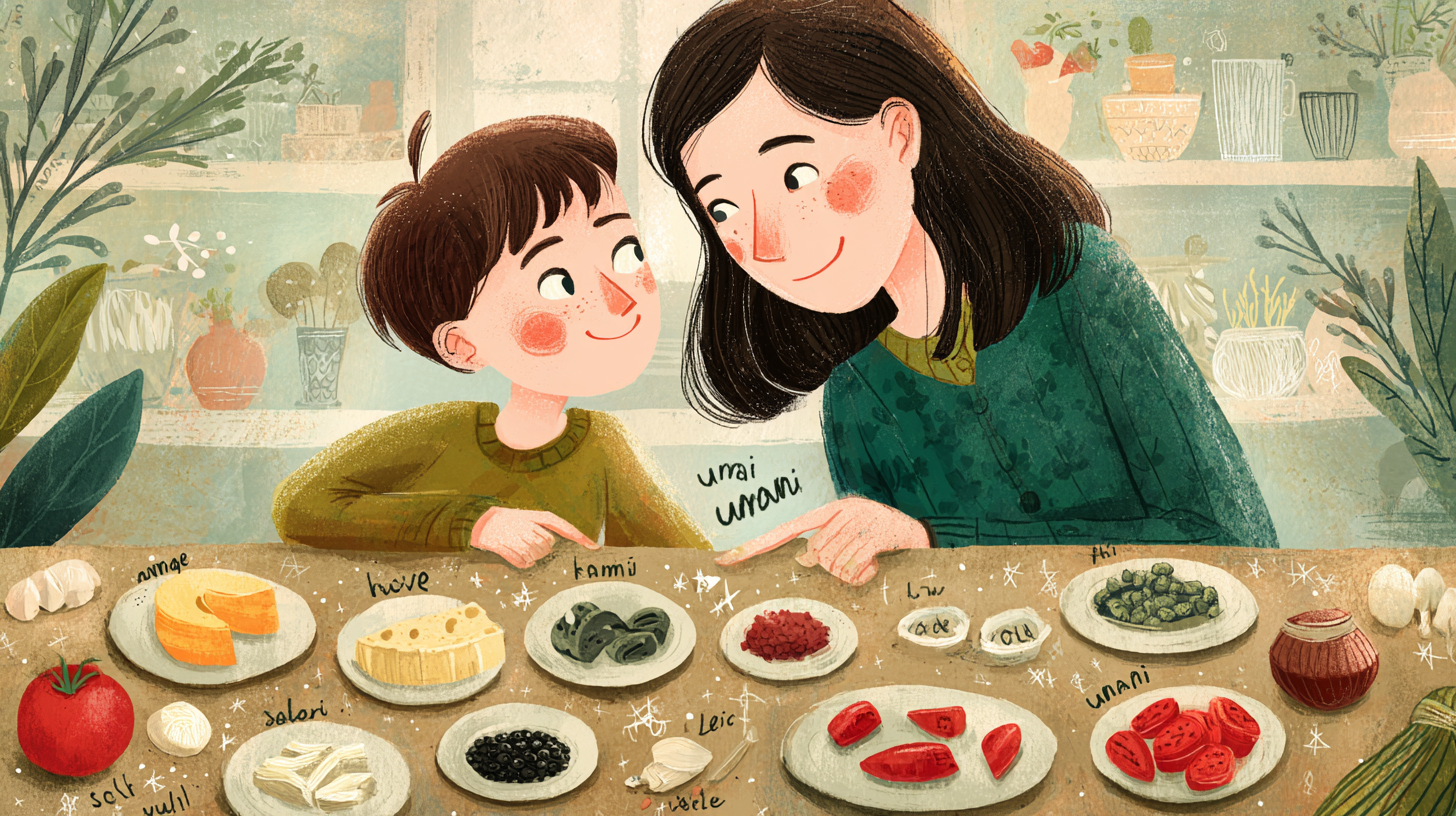
Umami is the savory, rich, deeply satisfying taste you experience when you bite into a perfectly ripe tomato, when you sprinkle aged Parmesan on pasta, when you savor a bowl of chicken soup that’s been simmering for hours. It’s the taste that makes you close your eyes and say, “Now that’s delicious.”
The word comes from Japanese—umai meaning “delicious” and mi meaning “taste”—and it was identified in 1908 by chemist Kikunae Ikeda, who isolated glutamate from kombu seaweed broth. But Western science didn’t fully accept umami as a basic taste until researchers discovered specific umami receptors on our tongues in the late 1990s. That means for generations, we were teaching our kids an incomplete picture of how taste actually works.
Here’s the fascinating part: umami is one of the very first tastes your baby ever experienced. Breast milk contains relatively high concentrations of free glutamate—the compound that creates umami flavor. Your infant’s first meals were rich in this savory, protein-signaling taste. Babies respond positively to umami from birth, unlike bitter flavors which they instinctively reject. This suggests that umami appreciation is hardwired into us, yet somehow we’ve lost the language and awareness to cultivate it as our children grow.
Did you know? Research shows that umami taste signals the presence of protein-rich foods to our bodies. When combined with nucleotides (found in meat, fish, and mushrooms), the umami signal can be up to eight times stronger. This is why dishes that combine ingredients like tomatoes and cheese, or chicken and mushrooms, taste so incredibly satisfying—even to picky eaters.
Think about the foods your children already love: pizza with melted cheese and tomato sauce, mac and cheese, chicken nuggets dipped in ketchup, a grilled cheese sandwich. These aren’t just “kid foods”—they’re umami bombs. Your kids are already umami lovers; they just don’t know it yet. And that lack of awareness is costing them opportunities to expand their palates.
The Flavor Vocabulary Gap
When I started paying attention to how my kids described food, I noticed a pattern. They had dozens of words for emotions, hundreds of words for toys and games, but when it came to taste? They were working with a vocabulary of about five words: sweet, salty, spicy (which usually just meant “hot”), yucky, and yummy.
This limited vocabulary creates a limited palate. When children can’t describe what they’re tasting, they can’t process new flavors, they can’t communicate preferences, and they definitely can’t develop appreciation for complex, layered tastes. They end up stuck in a loop of familiar, simple flavors—usually heavily sweet or salty processed foods—because those are the only sensations they can recognize and name.
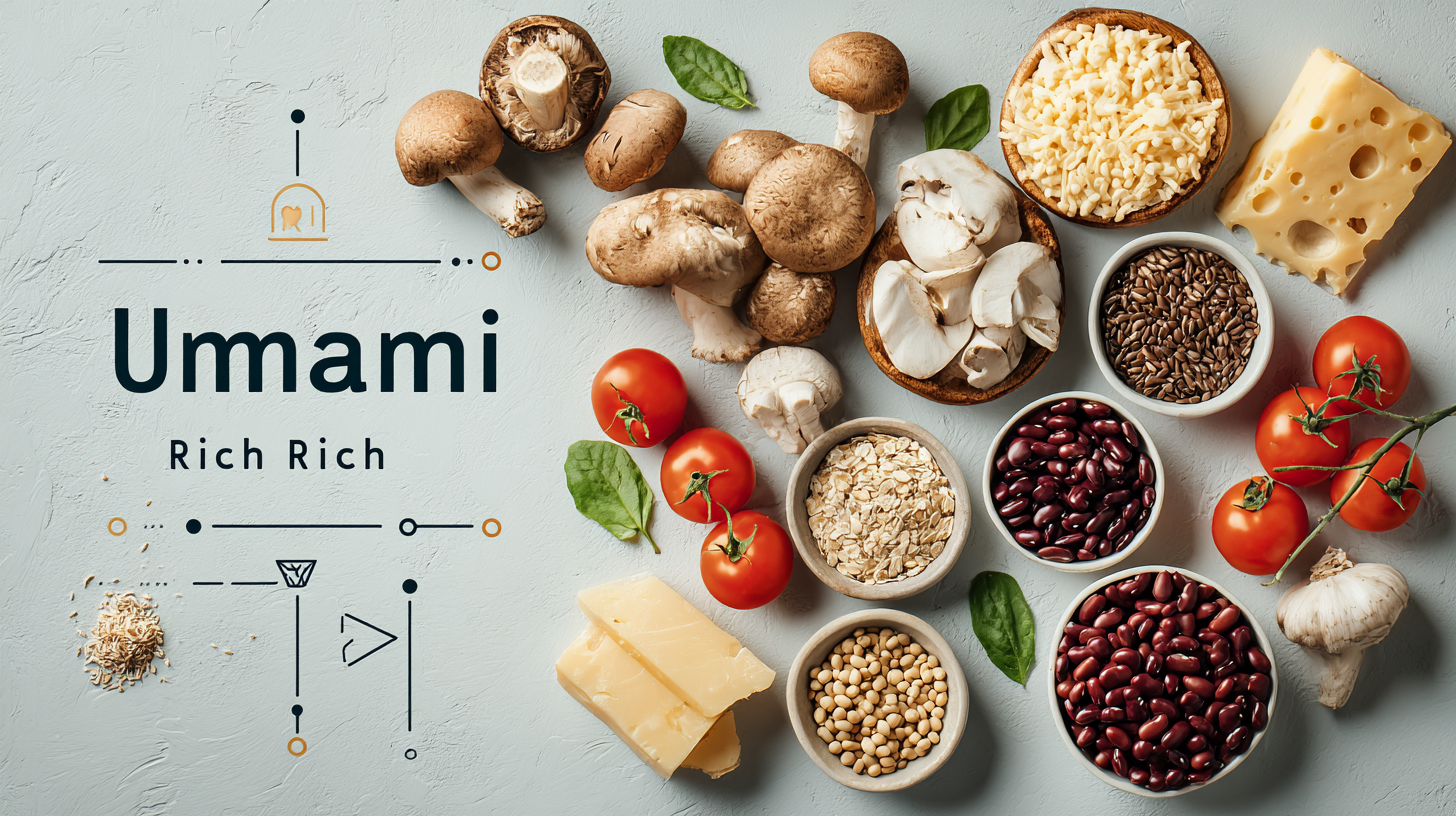
Exciting discovery: These everyday foods are all umami-rich! Notice how many of them are things your kids might already enjoy in familiar dishes. The key is helping them recognize and name that savory richness.
But when we introduce umami as a concept—when we give children the language to identify that deep, savory, mouth-watering sensation—something magical happens. Suddenly, they have a framework for understanding why that aged cheddar tastes different from young cheddar, why Grandma’s slow-cooked stew is more satisfying than a quick soup, why a ripe summer tomato tastes nothing like a pale winter one.
Developmental research confirms this. Studies show that infants and toddlers naturally accept sweet and umami tastes more readily than bitter or strongly sour ones, yet by school age, many children have developed narrow taste preferences because they’ve never been taught to explore and articulate flavor differences. The good news? It’s never too late to start building that vocabulary.
Science Meets the Dinner Table
Let me share what the research actually tells us, because this is where things get really exciting. When scientists study how umami works in our bodies, they’ve discovered that it does far more than just taste good.
Umami is triggered primarily by glutamate (an amino acid) and certain nucleotides like inosinate and guanylate. These compounds signal to our bodies: “Hey, protein here! This food has nutrients you need!” That’s why umami-rich foods tend to be nutritionally dense—aged cheeses, legumes, meat broths, fermented foods, mushrooms, tomatoes, and seafood.
But here’s where it impacts your family: umami can help reduce sodium in foods while maintaining flavor satisfaction. Food manufacturers and public health researchers have found that using umami-rich ingredients like mushroom extracts, tomato concentrates, or yeast extracts allows them to cut sodium by significant percentages without sacrificing taste. For parents trying to reduce salt in their kids’ diets while keeping meals appealing, understanding umami is your secret weapon.
Even more fascinating? That synergistic umami effect I mentioned—the way glutamate and nucleotides amplify each other—explains why certain food combinations are culinary classics across cultures. Tomatoes (high in glutamate) with cheese (also high in glutamate) on pizza. Chicken (inosinate) with mushrooms (guanylate) in soup. These aren’t accidents. These are flavor combinations that create umami explosions on our taste buds, making the food more satisfying, more memorable, and yes, more likely to be eaten by your cautious seven-year-old.
Caribbean Flavors and Umami Wisdom
Now, if you’ve been following along with my journey into Caribbean-inspired family cooking, you already know that island cuisine is rich with bold, complex flavors. But here’s something that surprised me: traditional Caribbean cooking is loaded with umami, even though we don’t usually talk about it that way.
Think about it. The slow-simmered beans in Jamaican rice and peas—umami. The aged cheddar in Trinidadian macaroni pie—umami. The ripe tomatoes and bell peppers in sofrito—umami. The fermented and aged ingredients in so many island dishes are delivering that satisfying, savory depth that keeps families coming back for seconds.
When I made Baigan Choka (that smoky Trinidadian roasted eggplant dish), I realized the umami was coming from multiple sources: the roasted eggplant itself, the sautéed onions and garlic, and the tomatoes cooked down until jammy. My daughter, who swore she hated eggplant, ended up asking for a second helping because the umami richness made it taste “really good—like, not weird at all, Mommy.”
Or consider the Cuban classic picadillo—ground beef with tomatoes, olives, and raisins. The combination of meat (inosinate), tomatoes (glutamate), and aged olives creates layers of umami that make this dish deeply satisfying even for little ones. When you’re introducing these flavors to babies and toddlers (you can find age-appropriate versions in my Caribbean Baby Food Recipe Book, which includes recipes like Picadillo Suave for 12+ months), you’re not just feeding them—you’re training their palates to appreciate complex, nutritious flavors from the start.
One of my favorite discoveries was making Cook-Up Rice & Beans with my kids. This Guyanese one-pot wonder combines coconut milk, pigeon peas, and often a bit of salted meat or fish. The umami comes from the beans themselves, any protein you add, and the way the coconut milk carries and rounds out all those savory flavors. It’s comfort food that teaches kids to love legumes—something many parents struggle with.
Island Umami Tip: When making Caribbean-inspired meals for your family, don’t skip the “base” ingredients like tomatoes, onions, garlic, and peppers. These aromatics aren’t just for flavor—they’re building umami foundations that make vegetables, beans, and whole grains more appealing to developing palates.
Real Talk About Challenges
Let me be honest: teaching umami awareness to kids isn’t always smooth sailing. There are real challenges, and I’ve faced most of them in my own kitchen.
The MSG confusion is probably the biggest one. When you start talking about umami and glutamate, some parents immediately think of MSG (monosodium glutamate) and all the negative associations that come with it. Here’s the truth: scientific reviews have found MSG to be generally safe at typical intake levels, and the glutamate in MSG is chemically identical to the glutamate in tomatoes, cheese, and breast milk. But the stigma persists, creating confusion for families trying to distinguish between naturally occurring umami in whole foods and added flavor enhancers in heavily processed products.
My approach? I focus on teaching kids to recognize umami in whole, minimally processed foods. We talk about how a ripe tomato tastes different from an unripe one, how aged cheese has more “flavor power” than fresh cheese, how a long-simmered soup tastes richer than a quick one. This grounds umami education in real food experiences, not abstract chemistry.
Then there’s neophobia—the fear of new foods that peaks around age two and can persist for years. Many umami-rich foods (mushrooms, seaweed, fermented foods, aged cheeses) have textures or appearances that trigger this instinctive wariness. My daughter’s mushroom resistance was pure neophobia. She’d never tried them, but she’d decided they were “gross” based on how they looked.
The breakthrough came when I stopped pushing and started exploring. We made it a game: “Let’s be taste scientists and see if we can find the umami.” We cut mushrooms into different shapes, cooked them different ways, and most importantly, we talked about them without pressure to eat them. When she finally tasted a tiny piece of sautéed mushroom mixed into her favorite pasta, she could articulate: “It’s kind of earthy and meaty, but not like chicken.” That was her umami vocabulary developing in real-time.
Exactly right! The best approach is to start where your child already is. If they love pizza, talk about how the cheese and tomato sauce create that savory, satisfying flavor—that’s umami! If they enjoy eggs or chicken, point out that “meaty” richness. Building on familiar positives creates confidence and curiosity, rather than resistance.
Another challenge? Educational materials often still leave umami out. Many children’s books, school science lessons, and even parenting resources still teach the outdated “four tastes” model. This means you might be swimming upstream, trying to teach your kids something their teachers haven’t covered or that contradicts what they learned in kindergarten.
My solution has been to frame umami education as cutting-edge knowledge—”You’re learning something scientists only figured out recently! You might know more than your teacher about this!” Kids love being experts, and positioning umami as advanced knowledge rather than contradictory information helps them embrace it.
The Future Your Kids Deserve
Here’s what gets me excited when I think about the long game: children who grow up with umami awareness are being set up for a lifetime of better eating.
Research is increasingly showing that early exposure to diverse flavors—including umami—through breast milk, complementary feeding, and family meals shapes long-term food preferences and dietary quality. Kids who learn to recognize and appreciate umami are more likely to accept vegetables (many of which have umami when cooked properly), to enjoy protein-rich legumes and fish, and to prefer minimally processed foods over heavily sweetened or salted junk.
There’s also a growing movement toward structured flavor education in schools and nutrition programs. Some countries are already incorporating the five basic tastes into early childhood curricula, teaching kids to describe food more precisely and become more adventurous eaters. As awareness grows, we’re likely to see umami lessons show up in science classes, cooking programs, and even food packaging designed for families.
For those of us raising kids in multicultural households or wanting to introduce global flavors, umami is the bridge. Asian cuisines have always celebrated umami through ingredients like soy sauce, miso, fish sauce, and kombu. Latin American cooking uses tomatoes, aged cheeses, and slow-cooked beans. African cuisines feature fermented ingredients and rich stews. European traditions include aged meats, cheeses, and mushrooms. When kids understand umami, they have a framework for appreciating diverse food cultures, not just tolerating them.

Your Umami Action Plan
Alright, enough theory. Let’s talk about what you can actually do this week to start building umami awareness in your household. These are strategies I’ve tested with my own kids and with families in my community, and they work because they’re simple, fun, and rooted in real food.
Start with a taste map activity. Get five small bowls and put a different taste in each: something sweet (a bit of honey or fruit), something salty (a pinch of salt or a cracker), something sour (lemon juice or pickle), something bitter (unsweetened cocoa or a tiny piece of dark greens), and something umami (a small piece of Parmesan, a cherry tomato, or a button mushroom). Sit down with your kids and taste each one together, talking about how it feels on your tongue, where you notice it most, and what words you’d use to describe it.
The goal isn’t to make them love all five tastes immediately—it’s to build vocabulary and awareness. When my son described the Parmesan as “like, meaty but not meat, and it makes my mouth water,” I knew we were getting somewhere. He now uses “savory” and “umami” interchangeably when describing foods he enjoys, and that precision helps him be more adventurous.
Create umami-rich family meals using familiar ingredients. You don’t need exotic ingredients to showcase umami. Here are some easy wins:
- Tomato-based pasta with Parmesan: The combination of cooked tomatoes and aged cheese is umami synergy at its finest. Let your kids help grate the cheese and stir the sauce, talking about how the flavors develop.
- Mushroom “meat” tacos or burgers: Finely chopped mushrooms mixed with ground meat (or as a vegetarian substitute) add umami depth and moisture. Kids often don’t even notice the mushrooms, but they do notice the food tastes “really good.”
- Egg dishes with cheese: Scrambled eggs, omelets, or frittatas with melted cheese combine two umami powerhouses. Add some sautéed tomatoes or spinach for extra nutrition and flavor.
- Bean-based stews and soups: Whether you’re making Caribbean-style stewed peas, Cuban black beans, or a simple lentil soup, the beans themselves are umami-rich. Enhance them with tomatoes, a splash of soy sauce, or a Parmesan rind simmered in the pot.
- Roasted vegetables with miso butter: Toss roasted carrots, sweet potatoes, or broccoli with a tiny bit of miso mixed into butter. The umami transformation makes vegetables irresistible.
For families incorporating Caribbean flavors (like mine), you’ve got a treasure trove of umami-rich options. The Geera Pumpkin Puree recipe in my cookbook combines roasted pumpkin with cumin and garlic—both umami-enhancing ingredients. Sweet Potato & Callaloo Rundown gets its umami from coconut milk and the leafy greens themselves. Even simple Coconut Rice & Red Peas is an umami education disguised as comfort food.
Remember: This isn’t a race. Some kids zoom through these steps in a few weeks; others take months. The key is consistency and making it fun, not stressful. Every small win—every new word in their flavor vocabulary, every new food they’re willing to try—is progress.
Use cooking as teaching time. When you’re making dinner, narrate what you’re doing in terms of umami. “I’m adding these mushrooms because they’ll make the sauce taste richer and more savory—that’s umami building up.” Or, “We’re going to let this soup simmer for a while so the flavors can develop. The longer it cooks, the more umami we get from the tomatoes and beans.”
This doesn’t have to be formal or scientific. It’s just about making flavor development visible and vocabulary normal. My kids now automatically ask, “Is this going to have umami?” when we start cooking, and they’ve become invested in the process because they understand what we’re building toward.
Create a flavor journal or chart. Some families love getting creative with this. You can make a simple chart with columns for sweet, salty, sour, bitter, and umami, then have your kids draw or write down foods they try in each category. Or use a notebook where they describe new flavors they experience. The act of reflecting and recording helps solidify the learning.
One family I know turned it into a sticker chart—every time their daughter tried a food from each taste category, she got a sticker. After collecting a full set, they’d do something special together. The gamification worked because it made taste exploration feel like an adventure, not a chore.
Leverage naturally umami-rich Caribbean ingredients. If you’re already incorporating island flavors into your family meals, you’re ahead of the game. Ingredients like:
- Ripe plantains (especially when fried or roasted until caramelized—umami develops through the Maillard reaction)
- Tomatoes and bell peppers in sofrito bases
- Aged cheeses in macaroni pie or as toppings
- Slow-cooked beans in any of the island traditions—Jamaican gungo peas, Trini dhal, Cuban black beans, Puerto Rican habichuelas
- Coconut milk in rundown dishes (the richness carries and enhances other umami flavors)
- Fermented seasonings like Scotch bonnet pepper sauces (used sparingly and appropriately for age)
These ingredients aren’t just culturally significant—they’re flavor education tools. When you make something like Mangú Morning (mashed green plantains with sautéed onions), you can talk about how the caramelized onions add umami depth to the mild plantains. Or when you’re preparing Fricase de Pollo (that Puerto Rican chicken stew), point out how the chicken, tomatoes, and olives all contribute umami, making every bite deeply satisfying.
For inspiration and age-appropriate recipe adaptations, my Caribbean Baby Food Recipe Book includes over 75 recipes organized by age and region, with many highlighting these natural umami builders. Recipes like Karhee Curry Blend (12+ months) or Simple Metemgee Style Mash (8+ months) introduce complex, savory flavors gently, setting the foundation for umami appreciation from the very beginning.
What Changes When Kids Understand Umami
Let me paint you a picture of what life looks like on the other side of this journey, because I want you to see why this effort matters.
Six months after we started actively teaching umami awareness in our house, my daughter—the mushroom refuser, the vegetable skeptic—came home from a playdate and announced, “Mom, their soup had really good umami, but I think ours is better because you use more mushrooms.” I almost dropped the dish I was washing.
That single comment represented so much growth: she’d tried soup at a friend’s house (something she never would have done before), she’d analyzed it using her flavor vocabulary, and she’d made a comparison that showed preference rather than just rejection. This is the power of language and awareness.
Here’s what typically shifts when kids develop umami awareness:
They become more confident trying new foods. When children have a framework for understanding flavor, unfamiliar foods feel less threatening. Instead of “This looks weird, I won’t like it,” they think, “I wonder if this has umami? Let me try a bite and see.” That subtle shift in mindset changes everything.
They ask better questions about food. Instead of “What is this?” followed immediately by “I don’t like it,” you hear “What makes this taste savory?” or “Is this umami or salty?” They’re engaging with food intellectually and sensorially, which leads to genuine curiosity rather than defensive rejection.
Vegetables and legumes become more acceptable. This is huge for parents struggling with produce intake. When kids understand that roasted vegetables develop umami (through caramelization), that beans are naturally umami-rich, that mushrooms are “umami superstars,” these foods move from the “yucky” category to the “interesting” category. Not every kid will become a vegetable enthusiast overnight, but awareness creates openings.
They develop preferences beyond just sweet. So many children default to preferring sweet foods because that’s the most obvious, immediately gratifying taste. But when they learn to recognize and value umami, they start choosing savory snacks, enjoying protein-rich meals, and even craving dishes with complex flavors. My son now chooses cheese and crackers over cookies more often than not—not because we’ve banned sweets, but because he genuinely enjoys that savory satisfaction.
Mealtime battles decrease. This doesn’t mean every dinner is peaceful perfection, but there’s less resistance when kids feel like they understand what they’re eating and can articulate their experiences. The power struggle shifts from “You have to eat this” to “Let’s figure out what flavors you’re noticing.”
They become little food educators. Kids love sharing knowledge, especially when they feel like experts. My children now explain umami to their friends, to their grandparents, even to their teachers. This peer-to-peer and child-to-adult teaching reinforces their own learning and spreads awareness in ways formal education never could.
The Bigger Picture
Teaching umami awareness isn’t just about expanding your child’s palate—though that alone would be worth it. It’s about giving them agency and competence in an area that impacts their health, their cultural identity, and their lifelong relationship with food.
Think about it this way: every day, your children will face food choices. As they grow, those choices will shift from your control to their own. When they’re at school, at friends’ houses, eventually living independently, what framework will guide their decisions?
If their flavor vocabulary is limited to “sweet, salty, yummy, yucky,” they’re vulnerable to processed foods engineered to hit those basic pleasure buttons without providing nutrition. But if they can recognize and articulate complexity—if they value umami richness, if they appreciate how flavors develop and combine, if they’ve been taught that “delicious” can mean deeply savory rather than just heavily sweet—they’re equipped to make choices that truly nourish them.
This is especially important for families navigating cultural identity through food. For Caribbean families like mine, teaching kids to appreciate the umami in traditional dishes means teaching them to value their heritage. When my daughter understands why Stewed Peas tastes so rich and satisfying, or when my son recognizes the umami layers in Baigan Choka, they’re not just eating—they’re connecting to generations of culinary wisdom.
The same applies to any cultural tradition. Asian families teaching kids about miso and fish sauce, Italian families explaining aged Parmigiano-Reggiano, Mexican families introducing mole with its complex umami from chocolate and chiles—these aren’t just cooking lessons. They’re identity lessons. They’re saying, “This is who we are, and these flavors matter.”
Your Next Step
I’m going to leave you with something my dad once told me, adapted slightly for this journey we’re on. He said the best time to plant a tree is twenty years ago, and the second-best time is today. The same is true for building your child’s flavor vocabulary.
Maybe you wish you’d started this when they were infants, introducing umami-rich purées from the very beginning. Maybe you’re reading this with a picky eight-year-old and feeling like you’ve missed the window. You haven’t. The second-best time is right now, today, with whatever meal comes next.
Here’s your assignment, if you’re ready to take it: sometime in the next three days, sit down with your child and do a simple taste test. You don’t need fancy ingredients. Grab five things from your kitchen—maybe a strawberry (sweet), a pretzel (salty), a pickle or lemon slice (sour), a bit of unsweetened cocoa or kale (bitter), and a cherry tomato or piece of cheese (umami). Taste them together. Talk about them. Don’t worry about being perfect or scientific—just be curious together.
That one small action will set something in motion. It will open a conversation that continues at future meals, that deepens every time you cook together, that eventually transforms how your child sees food and themselves as an eater.
And here’s the beautiful truth: you don’t need to know every step of the journey ahead. You don’t need to be a chef or a food scientist or have all the answers. You just need to take that first step—the next one—and see where it leads.
Because the magic isn’t in reaching some perfect destination where your kids eat everything without complaint. The magic is in the process—in who they become along the way. In the confidence they build. In the vocabulary they develop. In the curiosity they cultivate. In the connection to culture and family they strengthen with every meal.
So go ahead. Start exploring umami with your kids. Make it fun. Make it yours. And watch as their world of flavor—and their world in general—expands in ways you never imagined possible.
This moment right now? It’s the perfect time to begin. Not tomorrow, not when they’re “ready,” not when you have the perfect setup. Now. Because taste education isn’t about waiting for the right moment—it’s about creating moments of discovery, one meal at a time.
And who knows? Six months from now, you might find yourself standing in the kitchen, listening to your child explain umami to their grandmother, and realizing that this small shift in how you talk about food has changed everything. That’s not just possible—it’s exactly what happens when you give kids the language to understand and appreciate the full spectrum of flavor.
Welcome to the umami revolution. Your family’s flavor journey starts here.

Kelley's culinary creations are a fusion of her Caribbean roots and modern nutritional science, resulting in baby-friendly dishes that are both developmentally appropriate and bursting with flavor. Her expertise in oral motor development and texture progression ensures that every recipe supports your little one's feeding milestones while honoring cultural traditions.
Join Kelley on her flavorful journey as she shares treasured family recipes adapted for tiny taste buds, evidence-based feeding guidance, insightful parenting anecdotes, and the joy of celebrating food, culture, and motherhood. Get ready to immerse yourself in the captivating world of Kelley Black and unlock the vibrant flavors of the Caribbean for your growing baby, one nutritious bite at a time.
- The Feeding Revolution: Why Your Everyday Meals Are Changing the World - October 13, 2026
- Your Feeding Story Matters More Than The “Perfect” One Online - October 12, 2026
- Looking Forward: Stepping Into Your Confident Feeding Future - October 11, 2026