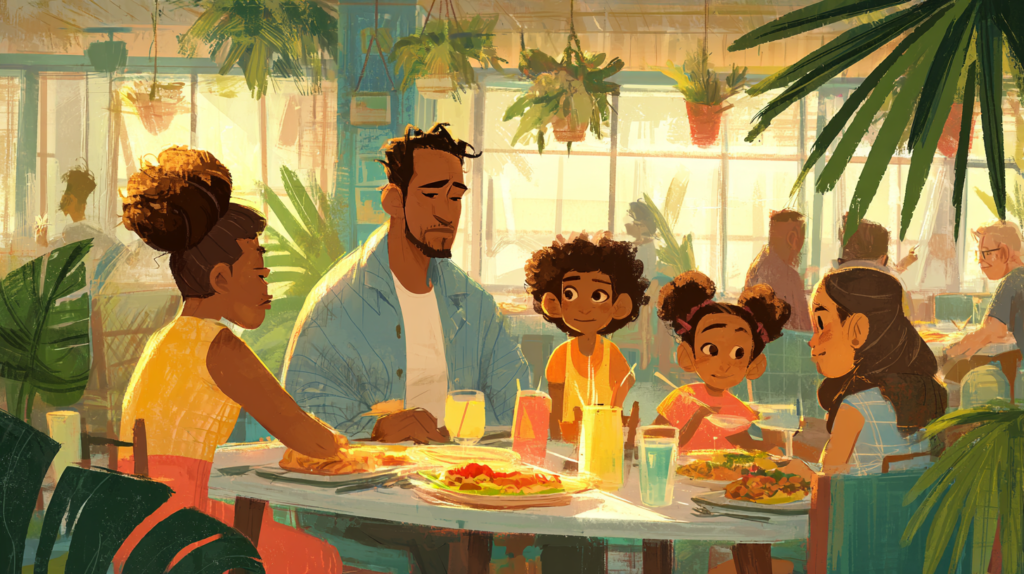
When Restaurant Plates Become Family-Sized Battles: The Real Talk About Portion Control Nobody’s Having
Before we dive deep, let’s see where you stand. Click the scenario that hits closest to home:
Here’s something nobody tells you when you become a parent: restaurant dining transforms from a leisurely pleasure into a high-stakes negotiation involving oversized portions, judgmental glances, and the silent shame of doggy bags. You sit down expecting a nice family meal, and what arrives could feed a small village. The truth? You’re not imagining it, and you’re definitely not alone in this struggle.
I remember sitting at a family restaurant in Kingston with my little one, watching a plate the size of a steering wheel land in front of her. The server smiled proudly, as if delivering abundance was victory itself. My daughter took three bites, looked up at me with those big eyes, and said, “Mommy, I’m full.” Meanwhile, I’m calculating the $15 we just spent on what’s essentially becoming trash. That moment? That’s when I realized we needed to completely rethink how we approach restaurant portions as families.
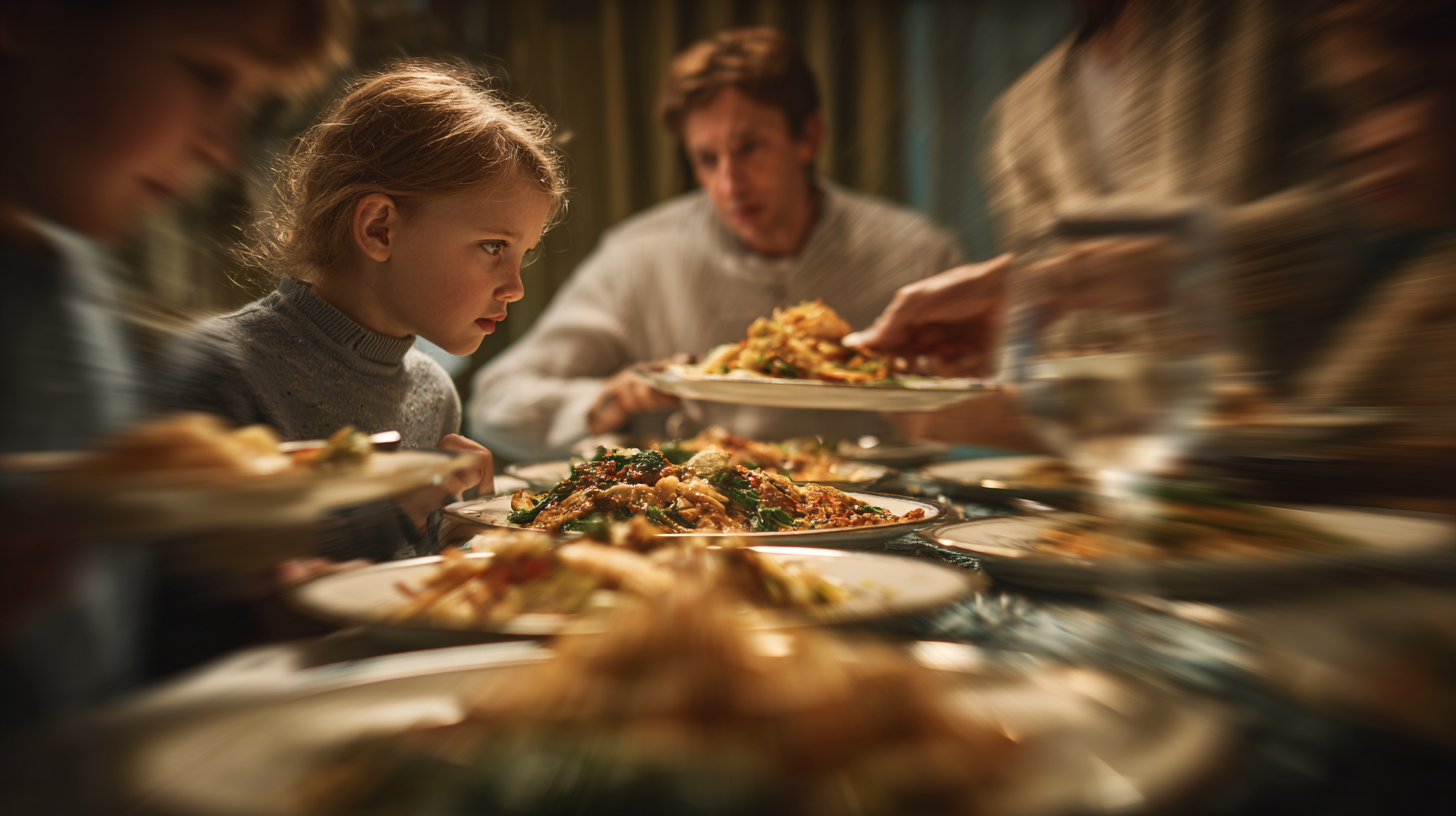
The portion size crisis in restaurants isn’t just about getting more bang for your buck anymore. It’s become a public health concern, an environmental disaster, and frankly, a massive source of family stress. Recent research shows that 75% of US consumers now actively want smaller portions for less money, yet restaurants continue serving meals that contain 2-3 times the recommended serving size. We’re trapped in a bizarre cultural expectation where bigger equals better value, even when it means throwing away half the plate and stretching our stomachs beyond comfort.
The Shocking Truth About Restaurant Portion Sizes
Let me hit you with some numbers that’ll make your jaw drop. Over the past four decades, restaurant portions have exploded to sizes that would shock our grandparents. A standard restaurant entrée now averages between 800-1,200 calories—that’s more than half of what most adults need in an entire day. For children, the disparity is even more alarming. What’s marketed as a “kids’ meal” often contains 600-800 calories, nearly matching adult nutritional needs from decades ago.
The portion size effect is real and scientifically documented: when we’re served more food, we unconsciously eat more, regardless of hunger cues. Studies consistently show that larger portions lead to consuming 30-50% more calories than we would with appropriately sized servings. This isn’t a willpower issue—it’s human psychology colliding with food industry economics.
Here’s what really gets me: 48% of diners report leaving food behind specifically because portions are too large, and 63% express genuine concern about the waste they’re creating. We know it’s too much. Restaurants know it’s too much. Yet the cycle continues because of deeply ingrained cultural expectations about value and hospitality.
What restaurants don’t want you to know about why portions keep growing…
Restaurant portions aren’t large because of generosity—they’re large because of profit margins. Here’s the reality: food costs typically represent only 28-35% of menu prices. The actual food on that oversized plate costs the restaurant far less than you’d imagine. By serving massive portions, restaurants create a perception of value that justifies higher prices, even though most of that “value” ends up in the trash. Even more surprising? Restaurants actually prefer when you don’t take leftovers home, because doggy bags create packaging costs and don’t bring you back as quickly for another paid meal. The industry has conditioned us to equate portion size with restaurant quality, creating a race to the bottom where everyone loses—except their bottom line.
Why We’re Stuck in the Portion Trap
The psychology behind our portion struggles runs deeper than simple economics. We’ve been culturally conditioned through several powerful narratives that make managing restaurant portions feel almost impossible. The “clean plate club” mentality, drilled into many of us from childhood, creates genuine guilt when food remains uneaten. We hear our parents’ voices: “Children are starving somewhere,” or “Don’t waste good food.”
Add to this the social performance aspect of dining out. Asking to share a plate can feel like admitting you can’t afford your own meal. Requesting a doggy bag might signal to others that you’re taking home “scraps.” These aren’t rational concerns, but they’re incredibly real emotional barriers that keep us trapped in unhealthy eating patterns.
For families with young children, the pressure multiplies. You’re already managing behavior, dealing with picky eaters, and trying to enjoy a rare moment out of the house. The last thing you want is to draw more attention by negotiating portion sizes or making special requests. So you order the standard kids’ meal, watch your child eat one-quarter of it, and silently absorb the waste and cost.
The Real Cost of Oversized Restaurant Servings
Beyond the immediate wallet hit, oversized restaurant portions exact a much heavier toll on our families. The health implications are staggering. Regular consumption of oversized portions is directly linked to obesity rates, which have tripled in children over the past four decades. When kids grow up thinking restaurant portion sizes are normal, they internalize distorted expectations about how much food constitutes a meal.
The environmental impact compounds the problem. Food waste from restaurants contributes significantly to methane emissions in landfills. When we consider the resources used to produce, transport, and prepare food that ultimately gets thrown away, the waste becomes unconscionable. Each uneaten restaurant meal represents wasted water, energy, agricultural resources, and labor.
Then there’s the emotional cost. Parents report significant stress around restaurant dining with children, worrying about waste, managing expectations, and navigating the social dynamics of portion control. This stress transforms what should be a pleasant family experience into an anxiety-inducing event. Some families simply stop eating out altogether, which eliminates an important social and cultural experience from their lives.
Calculate how much you’re potentially wasting on oversized portions
Game-Changing Strategies for Managing Restaurant Portions
The good news? You can completely transform your restaurant experience with strategic planning and a shift in mindset. These aren’t about deprivation or making dining out complicated—they’re about reclaiming control, reducing stress, and actually enjoying your meals.
The Pre-Order Research Strategy: Before you even leave home, look up the restaurant’s menu online. Many establishments now include portion size information or photos that give you realistic expectations. This advance knowledge lets you plan sharing strategies or identify which items are appropriately sized. Some families make this a fun activity, letting kids browse the menu together and decide in advance what they’ll share.
The Appetizer-as-Entrée Approach: Here’s a secret that completely changed how my family dines out: appetizers often provide perfectly portioned meals, especially for children. A child-friendly appetizer paired with a side of vegetables frequently offers better nutrition and appropriate sizing than kids’ menu entrées. Plus, appetizers are often more interesting and varied, exposing children to broader flavors. Don’t let menu categories dictate your choices—order what makes sense for your family’s needs.
The Strategic Splitting System: Sharing doesn’t have to be awkward. When you frame it as a family-style dining experience, it becomes an adventure rather than an admission of anything negative. Order 2-3 entrées for a family of four, add extra vegetables or sides, and let everyone sample different dishes. This approach reduces waste, introduces variety, and often ends up costing less than individual oversized meals. The key is communicating this plan confidently to servers: “We’d like to order family-style and share these dishes.”
Many Caribbean families naturally embrace this communal approach to dining. Growing up, sharing wasn’t about portion control—it was about connection, trying a bit of everything, and making the meal a shared experience rather than an individual transaction. When I prepare meals at home using recipes from the Caribbean Baby Food Recipe Book, I love how dishes like Coconut Rice & Red Peas or Sweet Potato & Callaloo naturally encourage family-style serving, teaching children that meals are meant to be shared experiences.
Teaching Children Appropriate Stopping Points
Perhaps the most valuable gift we can give our children is the ability to recognize their own hunger and fullness cues, regardless of how much food is in front of them. This skill serves them far beyond restaurant meals—it becomes a lifelong foundation for healthy eating relationships.
The Body Listening Practice: Before, during, and after meals, help children tune into their bodies with simple questions: “How does your stomach feel right now? Are you starting to feel comfortable? Do you feel you need more, or is your body telling you it has enough?” This language shifts focus from the external (how much is left on the plate) to the internal (what their body actually needs).
Children naturally have strong hunger and fullness regulation—until we inadvertently train it out of them with external pressures. Research shows that children who are encouraged to clean their plates lose touch with internal cues, while those allowed to stop when satisfied maintain better long-term weight regulation and healthier relationships with food.
The “Just Right” Portion Game: Make portion awareness fun rather than restrictive. When food arrives, have children estimate what a “just right” portion might look like for them, perhaps using their hands as measurement tools (a palm-sized portion of protein, a fist-sized portion of vegetables). This isn’t about rigid rules—it’s about developing awareness and personal body literacy.

Modeling Without Moralizing: Children watch everything we do and internalize our attitudes. When we casually say, “I’m going to save half of this for tomorrow because I’m satisfied,” or “This portion is huge—let’s share it,” we normalize appropriate eating behaviors without making food a moral issue. Avoid language like “good” or “bad” foods, “clean plates,” or “wasting.” Instead, focus on satisfaction, enjoyment, and body respect.
Eliminating Leftover Shame: The Doggy Bag Revolution
The declining use of doggy bags represents a disturbing cultural shift, particularly in urban areas where food delivery apps have made restaurant meals more disposable. Only 12% of Americans report never taking leftovers home, but the shame and inconvenience surrounding the practice keep many from doing it consistently.
Let’s reframe this entirely: taking food home isn’t about poverty, cheapness, or desperation. It’s about respecting resources, maximizing value, and making environmentally conscious choices. When we normalize doggy bags for our children, we teach them that waste is the shameful choice, not conservation.
The Proactive Approach: Don’t wait until the end of the meal to think about leftovers. When oversized portions arrive, immediately ask for a container and set aside what you won’t finish. This prevents the awkward situation of picking through a half-eaten plate. Some families make this a ritual: “First, let’s save tomorrow’s lunch before we start eating.” It’s practical, waste-reducing, and teaches planning skills.
The Sustainability Narrative: Teach children that taking leftovers home is an environmental act. Explain how food waste contributes to climate change, how restaurant food required resources to produce and prepare, and how being thoughtful about waste represents maturity and responsibility. Children respond powerfully to these values-based explanations, especially when we connect them to causes they care about like protecting animals or preserving nature.
Progressive restaurants are beginning to embrace this shift by offering attractive, sturdy containers and even incorporating leftover-friendly packaging into their service model. Some establishments now proactively ask if you’d like them to package remaining food, removing the burden of requesting it. Support these restaurants vocally—their practices deserve recognition and encourage industry-wide change.
Click each strategy as you commit to trying it. Track your progress:
Look up portion sizes and plan sharing strategies
Explore more interesting, appropriately sized options
Order fewer dishes and share among the family
Ask hunger/fullness questions before, during, and after meals
Set aside extras before eating begins
Make specific requests without apology
Click items above to build your personalized strategy
How Restaurants Are Beginning to Change
Consumer demand is finally starting to shift restaurant industry practices. Major chains including Panera, Subway, Olive Garden, and P.F. Chang’s have begun piloting smaller portion options, acknowledging that the supersizing trend has reached its limit. These changes reflect both economic pressures (rising food costs) and evolving consumer preferences toward health and sustainability.
The data supporting this shift is compelling. A Georgetown University study found that 50% of consumers now actively want smaller portions at reduced prices. Meanwhile, 64% of Americans are moving toward snack-style eating patterns rather than three large daily meals, fundamentally changing what they seek from restaurant experiences.
Some innovative restaurants are experimenting with transparent portion customization, allowing customers to select small, medium, or large options for the same dish at tiered price points. Others are highlighting “light portions” or “lunch-sized dinners” on their menus. These approaches acknowledge the reality that one size truly doesn’t fit all, and that families need flexibility.
The rise of appetite-suppressing medications like Ozempic is also influencing restaurant portion trends. As more people require smaller servings, restaurants that adapt quickly will capture market share. This pharmaceutical shift might accomplish what decades of nutrition education couldn’t: forcing the industry to right-size its portions to match actual consumer needs.
Supporting restaurants that embrace these progressive practices sends a powerful market signal. When you encounter appropriate portion sizing, smaller menu options, or proactive sustainability measures, tell the manager you appreciate it. Leave positive reviews mentioning these specific practices. Consumer feedback drives business decisions far more effectively than external pressure.
Practical Restaurant Scenarios and Solutions
Theory is wonderful, but let’s get practical with real scenarios families face and specific solutions that work.
Scenario: The Birthday Party Restaurant You’re celebrating your child’s birthday at a restaurant. Everyone’s excited, and you don’t want to be “that parent” making everything complicated. Solution: Call the restaurant in advance. Explain you’re celebrating but want to minimize waste. Ask if they can prepare half-portions for the kids or if family-style platters are available. Many restaurants appreciate the advance notice and will work with you, sometimes even creating special pricing. Frame it positively: “We want to focus on celebration rather than overwhelming the kids with food.”
Scenario: The Picky Eater Dilemma Your child only eats three foods, none of which are substantial entrees. The kids’ menu choices guarantee waste. Solution: Order à la carte sides that match what your child will actually eat. Most restaurants have sides of plain rice, steamed vegetables, fruit, or bread. Create a custom kids’ meal from sides for a fraction of the cost and zero waste. If the restaurant pushes back, calmly explain that you’re trying to avoid waste and your child has specific preferences. Most establishments understand, especially if you’re ordering full meals for adults.
Scenario: The Extended Family Judgment You’re dining with older relatives who grew up with “clean plate” mentality and comment on your children not finishing meals or your portion management strategies. Solution: Prepare a brief, respectful explanation in advance: “We’re teaching the kids to listen to their bodies rather than external cues. Research shows this helps them develop healthy eating relationships long-term.” Then redirect: “The food is delicious—are you enjoying yours?” Don’t engage in extended debate during the meal. If necessary, have a more in-depth conversation privately later.
Scenario: The Business Dinner with Kids You need to take your children to a restaurant meeting or semi-formal occasion where their behavior matters. Solution: Feed them a substantial snack before leaving home. At the restaurant, order simple, small items they like—even if it’s just bread and butter or a single appetizer to share. The goal is keeping them comfortable and occupied, not providing their main nutrition for the day. This reduces pressure on everyone and minimizes waste if they don’t eat much.
Building Cultural Food Literacy at Home
The most effective strategy for managing restaurant portions happens long before you leave your house. When children grow up with consistent, appropriate portion sizes at home, they develop internal references that help them navigate external food environments.
This is where home cooking becomes invaluable, particularly when you’re introducing diverse, flavorful foods that build adventurous palates. Caribbean cuisine offers a perfect foundation for this education because it emphasizes shared dishes, bold flavors in moderate portions, and vegetable-forward meals. When children grow up eating Callaloo or Pumpkin & Coconut dishes at home, they learn that satisfying meals don’t require massive quantities.
The Caribbean Baby Food Recipe Book has been transformative for our family’s approach to portion literacy. Starting babies with recipes like Plantain Paradise or Sweet Potato & Callaloo Rundown establishes early flavor exposure while teaching appropriate serving sizes. As children transition to family meals, dishes like Cook-Up Rice & Beans or Yellow Yam & Carrot Sunshine naturally come in reasonable portions that satisfy without overwhelming.
Home cooking also provides opportunities to teach measurement and estimation skills. Let children help plate their own portions using serving spoons, bowls, or their own hands as guides. Over time, they internalize what appropriate amounts look like for their bodies, making restaurant portion management far more intuitive.
Create a weekly rhythm where some meals are clearly designated as “sharing meals”—large pots of stew, casseroles, or platters where everyone serves themselves. This mimics the family-style restaurant approach in a low-stakes environment where children can practice portion judgment without waste consequences or social pressure.
How ready are you to implement these strategies? Choose your confidence level for each:
Moving Forward With Confidence and Compassion
Here’s what I want you to remember as you navigate this journey: managing restaurant portions isn’t about perfection, restriction, or making dining out miserable. It’s about reclaiming agency over your family’s health, finances, and values in an environment designed to overwhelm you.
Every small step matters. If all you do this week is ask for a doggy bag without apology, that’s progress. If you successfully order family-style once this month, that’s transformation. If you have one conversation with your child about listening to their body, you’ve planted seeds that will grow for years.
You will have meals where everything goes wrong—where you order too much, waste happens, and children melt down. That’s not failure. That’s learning. Every restaurant visit is practice, and the more you implement these strategies, the more natural they become until they’re simply how your family dines.
The broader cultural shift toward appropriate portions won’t happen overnight, but it’s beginning. Each time you confidently request modifications, share dishes, or take leftovers home, you normalize these behaviors for your children and others around you. You become part of the solution, challenging the supersizing culture one meal at a time.
Your children are watching, absorbing, and building their own relationships with food based on what you model. When they see you prioritizing body respect over external pressures, valuing sustainability over social performance, and approaching food with flexibility and joy, they internalize these lessons in ways no lecture could achieve.
Restaurant dining can be one of life’s genuine pleasures—a time for connection, celebration, and experiencing flavors you might not create at home. Don’t let portion anxiety steal that joy. With these strategies, advance planning, and a mindset shift, you can transform restaurant meals from stress-inducing obligations into confident, enjoyable family experiences.
Start small. Pick one strategy from this article that resonates most and commit to trying it at your next restaurant meal. Notice what works, adjust what doesn’t, and gradually build your family’s personalized approach. There’s no single right way to manage portions—there’s only what works for your unique family dynamics, values, and needs.
And remember: the most important portion isn’t what’s on the plate. It’s the portion of attention, love, and presence you bring to the table. When meals become about connection rather than consumption, the portion sizes matter far less than the memories you’re creating together.
The restaurant industry is changing because families like yours are demanding better. Your voice matters. Your choices matter. And your children are learning from every decision you make. Navigate these oversized servings with confidence, teaching your family that true satisfaction comes from honoring their bodies, respecting resources, and enjoying food without guilt or waste.
That steering-wheel-sized plate my daughter couldn’t finish? We took it home, and it became her lunch the next day—which she enthusiastically devoured because it was exactly what her body needed at that moment. Now that’s good value, in every sense of the word. And for inspiration on creating appropriately portioned, nutritious meals at home that complement your restaurant strategies, the Caribbean Baby Food Recipe Book offers over 75 recipes designed to build healthy eating foundations from infancy through toddlerhood.

Kelley's culinary creations are a fusion of her Caribbean roots and modern nutritional science, resulting in baby-friendly dishes that are both developmentally appropriate and bursting with flavor. Her expertise in oral motor development and texture progression ensures that every recipe supports your little one's feeding milestones while honoring cultural traditions.
Join Kelley on her flavorful journey as she shares treasured family recipes adapted for tiny taste buds, evidence-based feeding guidance, insightful parenting anecdotes, and the joy of celebrating food, culture, and motherhood. Get ready to immerse yourself in the captivating world of Kelley Black and unlock the vibrant flavors of the Caribbean for your growing baby, one nutritious bite at a time.