Food Budgeting Education: Turning Everyday Meals Into Your Child’s Money School
Before you even finish this article, your child could “budget” their next snack like a tiny CFO—and love it.
If we spend money on food every week anyway, why not turn those grocery runs, lunchboxes, and Sunday stews into powerful lessons on budgeting, choices, and long‑term thinking?
In many homes, kids hear “We can’t afford that” or “That’s too expensive” long before anyone explains what a budget actually is. Meanwhile, we are already doing the most hands‑on money activity there is: feeding our families multiple times a day. Food is concrete, emotional, and repetitive—exactly the kind of real‑life classroom kids need to truly understand money.
Research on early financial literacy shows that children can start learning about money concepts in preschool, and that simple budgeting and saving lessons in primary school improve both their knowledge and behavior later on. At the same time, the adults who manage money and meals—often mothers—have a huge impact on whether a household is food‑secure or constantly stressed by grocery costs. When caregivers feel more confident with money, their children not only eat better, they also grow up with stronger financial habits.
In this guide, you’ll learn how to turn everyday eating into financial literacy training: from teaching wants vs. needs to comparing prices, calculating meal costs, and making trade‑offs. Along the way, you’ll find interactive tools, Caribbean‑inspired examples, and practical scripts you can use tonight—whether you’re batch cooking lentils or sharing a plantain snack on the porch.
Why Food Is the Perfect Classroom for Money Skills
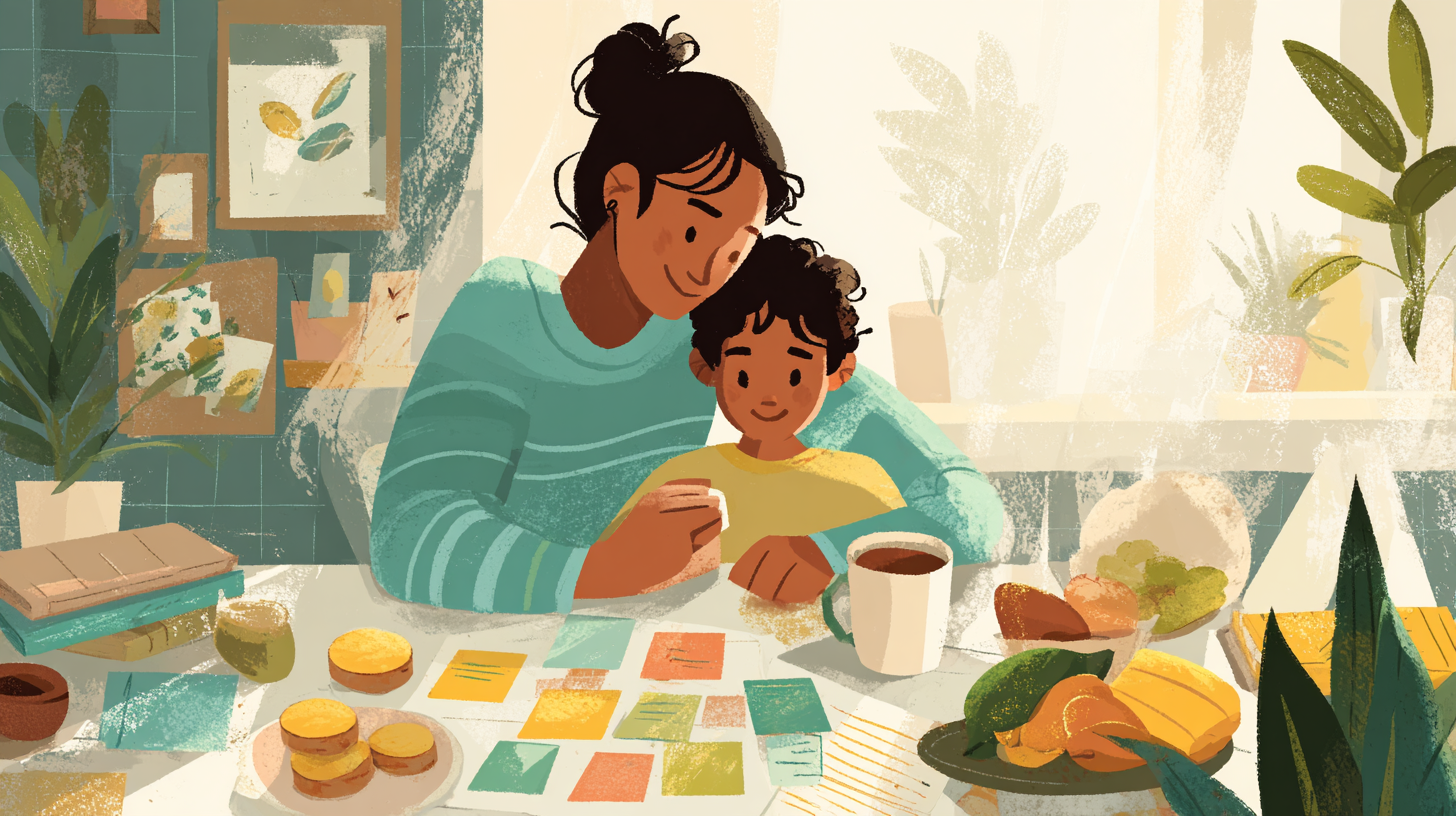
Most traditional money lessons start with piggy banks and savings goals, which are helpful but abstract. Food, in contrast, is immediate: children can see the price tag on bananas, feel the weight of a bag of rice, and taste the result of choosing a cheaper brand so the family can afford dessert too. That direct cause‑and‑effect helps money finally make sense.
Studies in primary schools and junior high show that even short, focused financial education programs can significantly improve children’s financial knowledge and increase their likelihood of saving. When lessons are tied to real‑world projects—planning a menu, running a pretend café, or budgeting for snacks—children engage more deeply and remember the concepts for longer. They start to understand that numbers on a page represent real trade‑offs in their daily lives.
At home, food is one of the biggest recurring expenses, which makes it a powerful bridge between budgeting and well‑being. Research on maternal financial literacy, for example, finds that households where mothers are confident managing money are much more likely to be food‑secure. That means children get regular, stable access to nutritious meals, and they see money used to support—not constantly threaten—their everyday comfort.
The Hidden Numbers on Your Family’s Plate
Behind every plate of food is a chain of decisions: which store to shop at, which brands to choose, whether to buy fresh or frozen, and how much to cook so leftovers stretch. Children usually only see the final meal, not the calculations that made it possible. When you gently pull back the curtain, you teach them that money and food are connected through choices, not magic.
Large‑scale data show that in many countries, families spend a significant share of their budgets on children’s needs, and food is a major portion of that. At the same time, millions of children live in households that struggle to afford enough food. For these families, even small budgeting wins—like choosing a cheaper protein or planning meals to avoid waste—can relieve pressure. Teaching kids about the numbers on their plates is not about burdening them with worry; it’s about helping them see how smart choices can stretch limited resources.
You might say, “This pot of sweet potato callaloo cost less than one fast‑food meal for the family, and it will feed us twice.” That one sentence begins to link cost, quantity, and value in your child’s mind. If you cook Caribbean‑inspired meals, the ingredients themselves—plantain, pumpkin, peas, coconut milk—are perfect tools for comparing prices, talking about seasonal bargains, and explaining why you choose certain items over others.
Q1. You have a tight week. Your child asks for a pricey cereal that will last 3 days. You can:
Q2. You’re planning Sunday lunch. Your child wants takeout fried chicken; your plan is a home‑cooked chicken stew with pumpkin and rice that costs less and feeds twice.
Wants vs. Needs: The Grocery Aisle Version
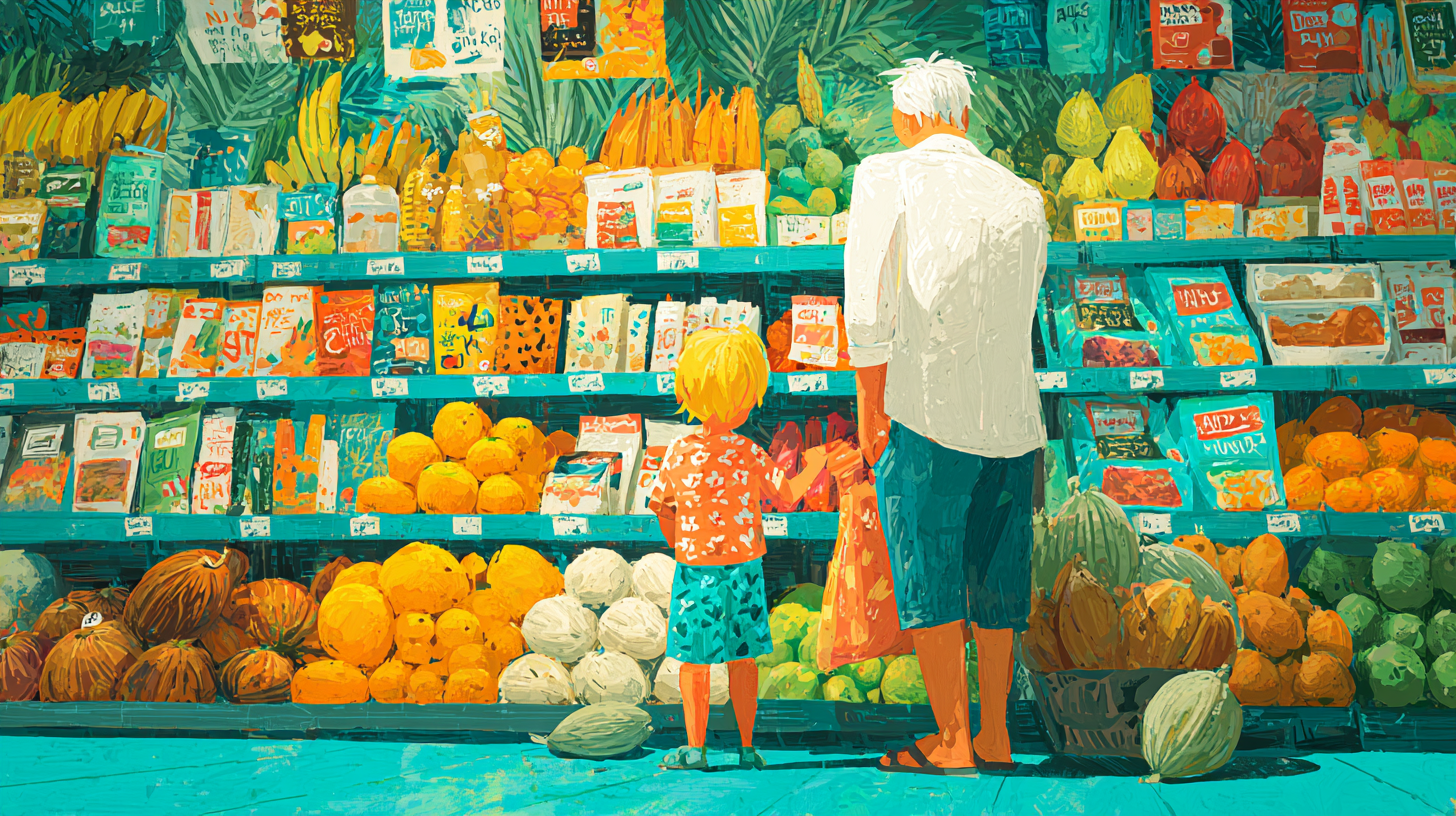
“Needs vs. wants” can sound abstract until your child is standing in front of a shelf stacked with cookies, cereals, and snack packs. The grocery store is one of the best places to practice this distinction in a way that feels playful, not preachy. You are surrounded by real‑time examples: rice and lentils that feed the whole family versus novelty snacks that disappear in an afternoon.
Financial literacy educators recommend starting this conversation early, because even preschoolers can categorize items and understand that some things are essential and others are “nice to have.” In one classroom activity, children plan a simple grocery list for a “family profile” and must decide what to buy first within a set budget. At home, you can adapt this by asking, “What must be in our cart so everyone can eat this week?” and “What could we add if we still have money left?”
Caribbean kitchens offer especially vivid opportunities here. A bag of dried beans, a tin of coconut milk, and a few sweet potatoes can become a comforting stew that stretches across several meals. That’s a “need.” A fancy imported juice or packaged dessert might be a “want.” The goal is not to ban the wants but to show how they fit into the bigger picture: “If we choose this juice today, we’ll pick a simpler snack so we keep enough for fresh fruit.”
Turning Meal Planning Into a Budget Game
If you already plan meals to stay sane during the week, you’re halfway to running a mini money workshop at home. Research on project‑based learning shows that when kids help design real‑world projects—like menus, markets, or small “businesses”—their financial understanding improves more than from lectures alone. Meal planning is a built‑in project: there’s a clear budget, a fixed number of meals, and constraints like time, preferences, and nutrition.
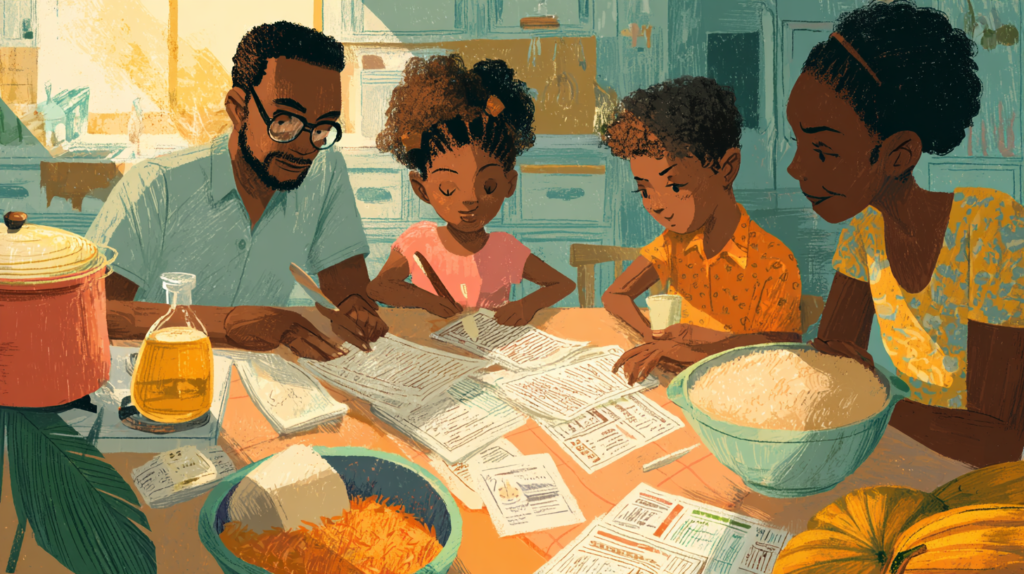
One simple approach is to give older kids a slice of the weekly budget and a specific job: “You’re in charge of planning breakfasts for three days with $12.” They look up recipes, compare prices, and decide whether to go for oats with fruit, eggs and toast, or yogurt parfaits. When they see how far their budget stretches—or doesn’t—they experience firsthand why adults obsess over unit prices and weekly flyers.
If your family loves Caribbean flavors, you can plug in meals that are naturally budget‑friendly but still exciting. Dishes anchored in ingredients like sweet potato, pumpkin (calabaza), plantain, rice, peas, and beans are excellent for these exercises because they’re filling, versatile, and often less expensive per serving than heavily processed foods. Kids learn that “budget” doesn’t mean “boring”; it means being clever with spices, combinations, and leftovers.
If you’re ready to explore more Caribbean‑inspired meals that stretch your budget while nourishing your little one, you’ll love the Caribbean Baby Food Recipe Book: Easy & Healthy Homemade Meals for Infants & Toddlers . It’s packed with ideas that turn staples like plantain, pumpkin, beans, and coconut milk into meals your child will actually be excited to eat.
| Ingredient | Estimated Cost | Tap to Add |
|---|---|---|
| Rice (for the whole family) | $1.00 | Add |
| Dry beans or peas | $1.50 | Add |
| Pumpkin or sweet potato | $1.20 | Add |
| Coconut milk | $1.00 | Add |
| Seasonings & aromatics | $0.80 | Add |
Expert Insights: What Actually Works for Kids
When researchers test financial education in real classrooms, a few patterns keep showing up. First, starting early matters: preschoolers who learn basic money ideas in playful, age‑appropriate ways build stronger skills later on. Activities like pretend markets, token “payments,” and picture‑based budgeting games help them grasp that resources are limited and choices matter.
Second, primary school students learn more effectively when they are actively involved—designing projects, making decisions, and seeing the consequences—rather than passively listening. Programs that include budgeting and planning, not just saving, lead to bigger improvements in financial knowledge and in practical behaviors like tracking spending or setting aside money. When a lesson links directly to daily life, like grocery shopping or cooking, it sticks.
Third, experts emphasize that parents are powerful role models. In many families, the person who plans meals and manages the food budget has enormous influence both on how well the household eats and on how children think about money. Studies connecting caregiver financial literacy to household food security suggest that when adults understand budgeting and feel less overwhelmed by it, children benefit twice: they see fewer food‑related crises and they witness calmer, clearer money decisions in action.
Shocking Truths About Kids, Food, and Money
Here’s one truth that might sting a bit: your child is already learning about money from your grocery cart, whether you intend it or not. If they mostly see last‑minute takeout, frantic “We’re out of everything again,” or arguments about what’s “too expensive,” that becomes their script about how food and money work. If they see list‑making, comparison, and calm trade‑offs, that becomes their script instead.
Another under‑discussed truth is that many children live with food insecurity even in communities that look comfortable from the outside. For those kids, the lessons they absorb may be about scarcity, anxiety, and shame rather than about planning and empowerment. When we teach financial literacy through food, we have to hold that reality gently: budgets are not a game for everyone. For some families, budgeting is how they survive.
Finally, the system is not neutral. It’s easy to tell parents to “just budget better,” but rising food costs, low wages, and limited access to affordable fresh foods make the playing field highly uneven. Teaching your child to budget with food should never become self‑blame for circumstances you can’t fully control. Instead, the goal is to equip them with skills that help them navigate an unfair system with as much clarity, compassion, and resilience as possible.
Real-Life Challenges (And How Not to Pass on the Stress)
If you grew up in a home where money was either a constant fight or a taboo topic, turning meal times into “money school” may sound terrifying. Many parents worry that talking about budgets will scare their kids or make them feel responsible for adult problems. It’s a valid concern—especially if you are already stretched thin. But silence doesn’t protect children; it just leaves them to fill in the gaps with their own worries.
A more helpful approach is to be honest about limits while emphasizing agency. Instead of “We’re broke, stop asking,” try “We have a food budget that helps us pay for everything we need. Let’s see what we can choose together inside that budget.” This shifts the story from helplessness to problem‑solving. The same problem exists, but now your child is a teammate, not a burden.
Another challenge is the temptation to frame every decision in moral terms: cheap staples as “good” and any treat as “bad” or “wasteful.” That kind of language can tangle money messages with shame and diet culture. A better frame is value and balance: “This bag of lentils feeds us twice, which frees up money for mangoes,” or “If we choose the fancy dessert this week, we’ll keep other snacks simple so we stay within our budget.” The numbers stay clear, but no one is labeled “good” or “bad” for wanting a treat.
Age-by-Age Food Budgeting Ideas
You don’t have to wait until your child is a teen with a part‑time job to start using food as a money lesson. The key is to match the activities to their developmental stage and keep things hands‑on and playful. Here’s a simple progression you can adapt to your own culture, diet, and schedule.
For toddlers and preschoolers, focus on naming and sorting. They can help spot items on the shelf, match pictures on a list, and talk about which foods help their bodies grow strong. You might say, “We always buy rice and beans first because they feed us for many meals. Then we see what extras we can add.” You’re planting seeds about priorities without expecting them to grasp all the math.
For early primary kids, layer in comparison. Ask them to look at two versions of the same item and notice what’s different: price, size, or number of servings. You can say, “This tin of coconut milk is cheaper and gives us the same amount. If we choose this, we can also get plantain.” Let them help circle sale items on flyers, count how many meals you’ll get from a pot of stew, or estimate how many days a bunch of bananas will last.
Older children and tweens can handle more responsibility. Give them a mini‑budget for a specific task—breakfasts, snacks, or Sunday dessert—and let them research options, plan, and shop with guidance. Teens can plan full meals, cost out recipes, and compare the price of home‑cooked dishes to takeout. The more autonomy they have, the more natural it will feel later when they manage their own food and money in college or their first apartment.
Caribbean-Inspired Budget Lessons Kids Actually Remember
Growing up Caribbean or in a Caribbean‑influenced home often means learning early that a big pot can stretch a small budget. A single bag of rice and peas, some pumpkin, a tin of coconut milk, and a handful of herbs become a meal that feeds everyone and sometimes the neighbors too. As a parent, you can make this wisdom visible to your kids instead of keeping it in your head.
For example, if you’re making a pumpkin‑coconut stew or a sweet potato callaloo dish, talk through the choices aloud: “We bought this whole pumpkin because it was cheaper than buying pre‑cut pieces, and we can use it in two different meals. That saves enough for bananas and papaya later in the week.” You’re not only teaching math; you’re honoring ancestral strategies—like cooking in batches, using root vegetables, and reimagining leftovers—that have always helped families survive economic ups and downs.
Many Caribbean‑style baby and toddler recipes rely on affordable staples like sweet potatoes, plantains, beans, millet, and pumpkin. These ingredients are perfect for budget lessons because they showcase how simple foods can be transformed with spices and creativity. When your little one enjoys a smooth plantain blend or a creamy millet porridge, you can mention, “This bowl cost less than a store‑bought pouch, and we still have plenty left to freeze for another day.”
If you’d like ready‑made inspiration for low‑waste, big‑flavor meals that fit into a budget, the Caribbean Baby Food Recipe Book: Easy & Healthy Homemade Meals for Infants & Toddlers offers over 75 recipes built on exactly these kinds of ingredients—sweet potato, pumpkin, plantain, coconut milk, beans, and more. It’s an easy way to show kids how resourcefulness and culture come together on the plate.

From Tiny Choices to Lifelong Money Confidence
One of the biggest regrets people share late in life is wishing they had lived more intentionally—less on autopilot, more aligned with what truly mattered to them. As a parent, you don’t control everything your child will face, but you do influence the stories they tell themselves about money, food, and security. Every time you invite them into the “why” behind your grocery decisions, you write a new story together.
Food budgeting education is not about perfection. Some weeks you’ll meal‑plan like a pro; other weeks you’ll be grateful just to put anything on the table. What matters is the pattern your child sees over time: that money is something you can talk about, that trade‑offs are normal, and that even when resources are tight, smart choices and shared meals are still possible. Those lessons are worth far more than any single “teachable moment.”
As your child grows, they will face vending machines, school cafeterias, takeout apps, and eventually their own rent and grocery bills. When that day comes, the quiet rehearsals you’ve done together—comparing plantain prices, planning a lentil soup week, or stretching a pot of rice and peas—will be the rhythm they lean on. You’re not just raising a child who knows what a budget is; you’re raising someone who trusts themselves to make thoughtful decisions with whatever they have.
If you’re ready to keep weaving culture, flavor, and financial wisdom together in your kitchen, consider bookmarking the Caribbean Baby Food Recipe Book: Easy & Healthy Homemade Meals for Infants & Toddlers as your companion. Let your recipes carry the tastes of home, and let your conversations around those recipes quietly train the next generation to handle money—and meals—with courage and care.

Kelley's culinary creations are a fusion of her Caribbean roots and modern nutritional science, resulting in baby-friendly dishes that are both developmentally appropriate and bursting with flavor. Her expertise in oral motor development and texture progression ensures that every recipe supports your little one's feeding milestones while honoring cultural traditions.
Join Kelley on her flavorful journey as she shares treasured family recipes adapted for tiny taste buds, evidence-based feeding guidance, insightful parenting anecdotes, and the joy of celebrating food, culture, and motherhood. Get ready to immerse yourself in the captivating world of Kelley Black and unlock the vibrant flavors of the Caribbean for your growing baby, one nutritious bite at a time.