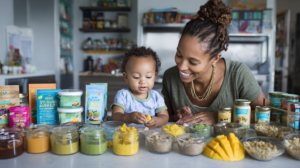
Mindful Eating with Children: Building Awareness Without Pressure
Before We Begin: What’s Your Biggest Mealtime Challenge?
Click the scenario that resonates most with your family right now:
Here’s something most parenting articles won’t tell you: the way we teach our children about food today might be the very thing creating the eating struggles we’re desperately trying to avoid tomorrow.
Last week, I watched my friend’s four-year-old push away a plate of roasted vegetables while her mother’s frustration mounted. “Just try one bite,” she pleaded. “It’s good for you.” The child’s face tightened. The table grew tense. And I recognized that scene because I’d lived it myself—that uncomfortable dance between wanting our children to eat well and accidentally turning mealtimes into battlegrounds.
The truth? A 2025 study involving 200 preschoolers revealed that children who participated in mindful eating interventions showed a clinically significant decrease of 0.20 in their BMI z-score, while household food insecurity dropped from 51% to 36%. But here’s what researchers discovered that changes everything: the magic wasn’t in what children ate—it was in how they learned to experience food without judgment or pressure.
What if I told you there’s a way to help your child develop a healthy relationship with food that doesn’t involve bribes, battles, or anxiety? A way that actually works with their natural curiosity instead of against it?
That’s exactly what mindful eating for children offers—and it’s nothing like the restrictive “mindfulness” trends you might be imagining.

The Silent Problem No One’s Talking About
We live in a culture obsessed with children’s eating. Every playdate conversation eventually circles back to it. “Is your child eating enough vegetables?” “Mine won’t touch anything green.” “I have to sneak nutrition into everything.”
Behind these casual exchanges lurks a deeper anxiety: we’re terrified we’re doing it wrong. And that fear? It’s being transmitted directly to our children through every “good job for finishing your plate” and every “you can’t have dessert unless you eat your broccoli.”
Research from 2024 examining mindful eating in children found something striking: children with higher mindful eating scores showed greater adherence to healthy dietary patterns and stronger environmental awareness. But here’s the kicker—those scores were significantly lower in children with obesity, suggesting that pressure-based feeding approaches might be contributing to the very outcomes we’re trying to prevent.
The gap nobody’s addressing? We’re teaching children what to eat without teaching them how to eat. We’re focusing on nutrition while completely overlooking the relationship with food that will shape their eating patterns for decades to come.
What Mindful Eating Actually Means (And What It Doesn’t)
Let me clear up the confusion right now: mindful eating for children isn’t about sitting in lotus position contemplating a raisin for twenty minutes. It’s not another rule. It’s not making mealtimes longer or more complicated.
Mindful eating is simply paying attention—intentionally and without judgment—to the experience of eating. For children, this translates into age-appropriate practices that honor their developmental stage while building genuine food awareness.
Think of it this way: when was the last time you actually tasted your food instead of just eating it while scrolling through your phone? Children naturally possess this present-moment awareness—until we train it out of them with our own anxious feeding practices.
The approach has evolved significantly from adult mindfulness practices to become specifically adapted for pediatric feeding. Current evidence-based methods emphasize responsive feeding, where caregivers recognize and respond to children’s hunger and satiety cues through reciprocal, nurturing practices rather than controlling or pressuring behaviors.
Age-Appropriate Mindful Eating Practices
Select your child’s age range to discover practices that actually work:
Here’s what makes this approach revolutionary: instead of external rules about portions and “good” versus “bad” foods, mindful eating teaches internal awareness. Children learn to recognize their own hunger signals, identify fullness cues, and explore foods through sensory experiences without any expectation to eat.
The Sensory Revolution: Food Exploration Without Eating Pressure
Picture this: your child is playing with their food. Squishing cooked sweet potato between their fingers. Examining the texture of quinoa grains. Maybe even building a tower with cucumber slices.
Your first instinct? Probably to stop them and redirect toward “proper” eating. But here’s the shocking truth that feeding specialists have discovered: food play is one of the most powerful tools for building positive food relationships.
Children with sensory-based feeding needs—and honestly, that’s most children to varying degrees—require numerous low-pressure exposures before they’re ready to try a food. We’re talking 10 to 15 exposures just to build familiarity and comfort.
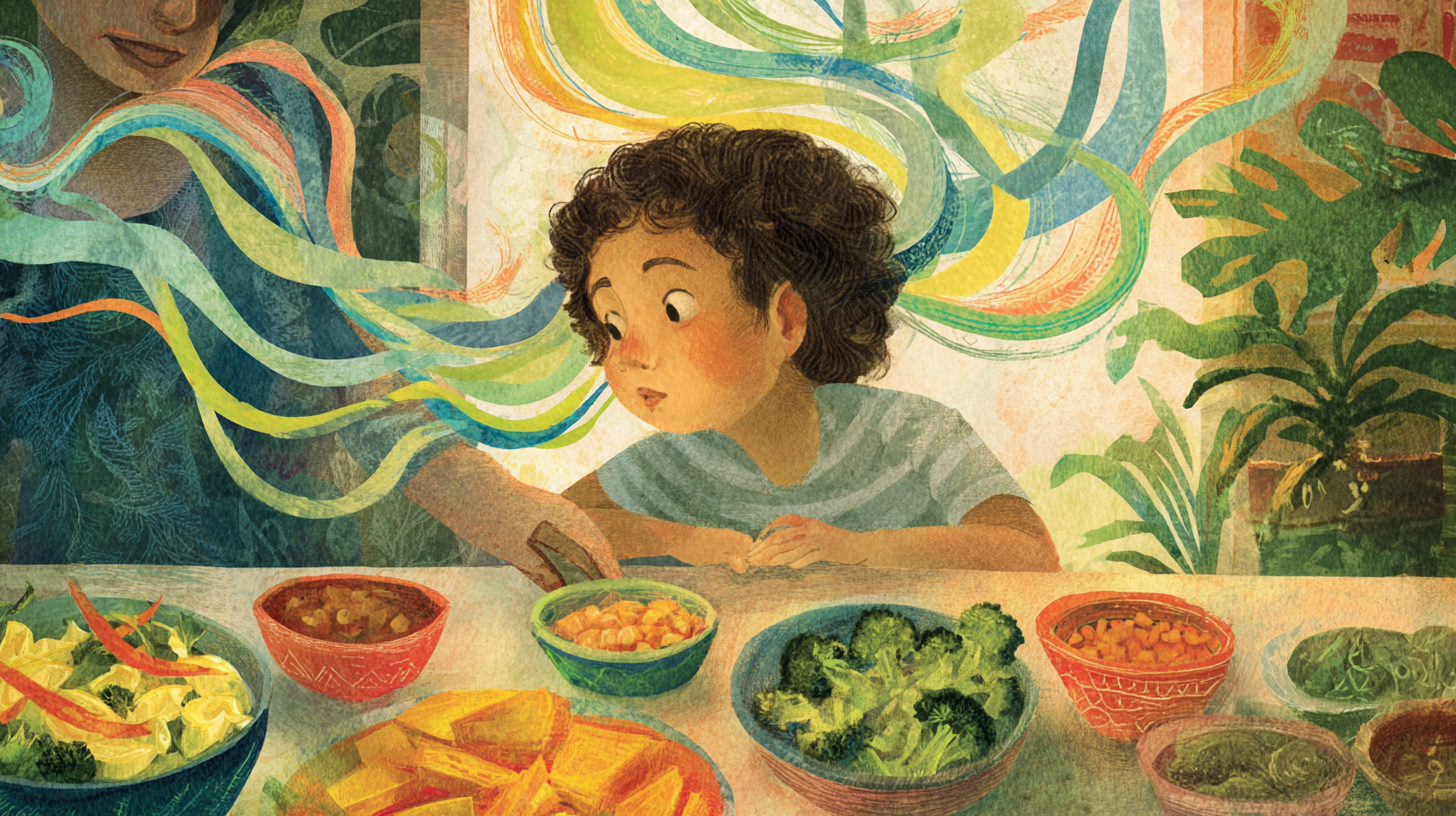
Food play activities offer pressure-free exploration opportunities that work like arts and crafts but use plates, sprinkles, and ingredients instead of paper and glue. Children create funny faces on plates, explore different textures, and investigate foods through all their senses—without any expectation to eat a single bite.
When you remove the pressure to eat, something remarkable happens: curiosity takes over. That vegetable your child has refused for months? They might touch it during food play. Then smell it. Then, weeks later, lick it. And eventually, when they’re ready on their own timeline, they’ll eat it.
Sensory Exploration Activity Generator
What food is your child currently refusing? Click to get a custom sensory exploration approach:
The language we use during these explorations matters tremendously. Instead of “This is yummy!” or “That’s gross,” we use neutral, descriptive language. “This apple is crunchy and red.” “These black beans feel smooth and round.” “The plantain smells sweet when it’s ripe.”
This approach, backed by feeding therapists and pediatric nutritionists, reduces mealtime stress while supporting children’s sensory awareness and vocabulary development. It’s the opposite of pressure—and it works precisely because of that.
If you’re looking to introduce sensory-rich foods that children can explore through touch, smell, and eventually taste, the Caribbean Baby Food Recipe Book offers over 75 recipes featuring diverse textures and flavors like sweet potatoes, mangoes, coconut milk, and plantains—perfect ingredients for sensory exploration activities.
Present-Moment Awareness: Teaching Kids to Actually Taste Their Food
Here’s a question that might sting a little: when was the last family meal where screens were off, conversation flowed naturally, and everyone actually paid attention to their food?
If you’re drawing a blank, you’re not alone. Modern family life moves at a frantic pace. We eat in cars, in front of televisions, while scrolling through phones. And our children are learning that food is just fuel to be consumed mindlessly while doing something else.
But here’s what research on responsive feeding tells us: feeding is not solely physiological—it’s a shared social-emotional experience. The 2025 guidance for healthcare providers emphasizes creating positive, nurturing feeding environments with limited distractions, recognizing that the caregiver’s central role extends far beyond nutrition to establishing joyful eating experiences.
Present-moment awareness practices for children start simply. For toddlers and preschoolers, it might mean putting forks down between bites. Taking smaller bites. Encouraging sips of water throughout the meal rather than chugging at the end.
For elementary-age children, you can introduce more structured activities. The “mindful snack” exercise asks children to observe a food’s appearance, shape, size, color, and smell before eating. Then they take a small “mindful bite,” sometimes closing their eyes to explore the taste more fully, paying attention to how it feels in their mouth and how the flavor changes as they chew.
Give each family member a sultana or grape. Before eating, spend time observing its appearance, feeling its texture, smelling it. Then, with eyes closed, slowly place it in your mouth. Don’t chew immediately—just notice the sensation. When you do chew, do it slowly, experiencing how the taste and texture change. Afterward, talk about the experience together.
This simple five-minute activity teaches more about mindful eating than a hundred lectures about “eating slowly.”
For older children ages 9-12, you can introduce the STOP acronym: Stop what you’re doing, Take a breath, Observe how you’re feeling (physically hungry or emotionally seeking comfort?), Proceed with awareness.
The real magic happens when mindful eating becomes woven into family culture rather than a separate “activity.” That means creating calm, distraction-free eating spaces. Turning off televisions and putting away devices. Establishing a practice where everyone stays seated until all are finished, allowing intentional opportunity to check in with bodies about fullness or desire for seconds.
Non-Judgmental Food Exploration: Ditching the “Good Food/Bad Food” Trap
I need to share something that might challenge everything you’ve heard about teaching children nutrition: categorizing foods as “good” or “bad,” “healthy” or “unhealthy,” might be doing more harm than good.
Stay with me here. I’m not suggesting we abandon nutrition education or feed children exclusively candy. What I’m saying is that the binary food categorization we’ve all absorbed creates the very food anxiety and restrictive eating patterns we’re trying to prevent.

Non-judgmental food exploration means approaching all foods with curiosity rather than evaluation. Instead of “Broccoli is good for you, you need to eat it,” try “This broccoli tree has tiny green tops—what do you notice about it?” Instead of “Too much sugar is bad,” try “How does your body feel after eating different foods?”
This subtle language shift moves from external control to internal awareness. You’re not imposing rules; you’re teaching observation skills. And those observation skills become the foundation for a lifetime of intuitive, healthy eating.
The approach aligns with responsive feeding principles that emphasize the caregiver’s role in determining what foods are offered, when they’re offered, and where eating happens—while the child determines whether to eat and how much. This division of responsibility removes pressure while maintaining appropriate structure.
Real-World Implementation: Making It Work in Your Kitchen
Theory is beautiful. Real life with hungry, cranky children? That’s a different story. So let’s talk about what mindful eating actually looks like when you’re juggling work deadlines, picky eaters, and the reality that dinner needs to happen in the next thirty minutes.
The most successful implementation starts small. You don’t overhaul your entire feeding approach overnight. You begin with one practice and build from there.
For families with toddlers and preschoolers: Start with a simple pre-meal practice. Before eating, everyone takes three deep breaths together. This two-minute ritual helps children (and adults) transition from active play to calm eating. You’ve already introduced mindfulness without anyone realizing it.
Next, implement the “describe your food” game. Each person at the table shares one observation about their meal using sensory language. “My rice is fluffy and white.” “These beans smell like coconut.” “This plantain is yellow and soft.” It takes maybe five minutes total but trains observation skills that are the foundation of mindful eating.
For families with elementary-age children: Introduce the “hunger scale” check-in before meals. Ask children to rate their hunger from 1-10. After eating for a few minutes, check again. Then once more at the end of the meal. This practice teaches them to recognize internal cues rather than relying on external signals (like a clean plate) to determine when they’re done.
You can also implement mindful cooking practices. When children help prepare meals—even simple tasks like washing vegetables, stirring pots, or arranging ingredients—they become invested in the food. Research shows that involvement in meal preparation increases children’s willingness to try new foods because they feel responsible for and connected to what they’ve created.
Speaking of meal preparation, incorporating diverse, flavorful ingredients during cooking creates natural opportunities for sensory exploration. The Caribbean Baby Food Recipe Book includes age-appropriate versions of dishes like Calabaza con Coco (pumpkin with coconut milk), Sweet Potato & Callaloo Rundown, and Plantain Paradise—recipes that engage multiple senses through vibrant colors, aromatic spices, and varied textures.
Your 4-Week Mindful Eating Implementation Plan
Click each week to reveal your focus area:
For families dealing with picky eating: The no-pressure approach requires patience but delivers results. Start by creating safety in children’s bodies and mealtime environments. Offer opportunities for food exploration without any pressure to eat. This might mean letting your child touch a food with a utensil before touching it with fingers. Or smelling it before any touching happens. Each tiny interaction builds positive associations.
Implement pre-meal routines that provide regulating sensory input. This might be a few minutes of movement (jumping jacks, dancing), deep pressure activities (bear hugs, squeezing play dough), or calming exercises (deep breathing, listening to soft music). A regulated nervous system is essential because dysregulated children literally cannot focus on new foods—their bodies are in survival mode.
The realistic timeline? Research suggests that establishing new eating habits may take 2-3 months, while observing meaningful changes in overall eating patterns often requires a year or more. This isn’t a quick fix—it’s a fundamental shift in how your family approaches food.
Navigating Challenges and Setbacks
Let’s address the elephant in the room: this isn’t always going to go smoothly. Some days, your child will still refuse everything. Some meals will still end in tears (yours or theirs). And you will absolutely question whether this whole mindful eating thing is actually working.
That’s normal. That’s part of the process. And it doesn’t mean you’re doing it wrong.
The biggest challenge families face? Consistency in a world that doesn’t support these practices. You’re trying to create calm, mindful mealtimes while grandparents are bribing with dessert, schools are using food as rewards, and every birthday party centers around sugar-laden treats.
Here’s the truth: you can’t control every eating experience your child has. But you can control the culture you create at home. And research shows that family eating practices have more influence on children’s long-term food relationships than occasional external experiences.
Another significant challenge is dealing with your own food baggage. Most of us grew up with “clean your plate” rules, dessert rewards, and judgments about body size. Undoing those deeply ingrained patterns while simultaneously teaching our children differently requires conscious effort and self-compassion.
You will catch yourself saying “good job eating your vegetables” or “you can have a treat if you finish your dinner.” When this happens, don’t spiral into guilt. Simply notice it, take a breath, and redirect. You might even acknowledge it to your child: “You know what? I’m learning to talk about food differently. Let me try that again.” This models something incredibly valuable: that learning and changing is a lifelong process.
Cost and food access present real barriers for many families. Fresh produce, diverse ingredients, and time for food preparation aren’t equally accessible. If you’re working multiple jobs or living in an area without nearby grocery stores, implementing elaborate mindful eating practices might feel impossible.
The good news? The core principles of mindful eating don’t require expensive ingredients or extensive time. Mindfulness is about awareness, not perfection. You can practice sensory observation with whatever foods you have access to. You can create calm eating environments without spending money. You can use descriptive language regardless of what’s on the plate.
For families navigating food insecurity, the 2025 study’s finding that mindful eating interventions reduced household food insecurity from 51% to 36% offers hope. When children develop better awareness of hunger and fullness cues, food stretches further. When families reduce food battles and waste from refused meals, resources are used more efficiently.
The Cultural Context: Mindful Eating Across Different Food Traditions
One critical aspect often missing from mainstream mindful eating discussions is cultural context. Food isn’t just nutrition—it’s culture, identity, and connection to heritage.
For Caribbean families, food carries generations of tradition. The spices, preparation methods, and specific dishes connect children to their ancestry. Mindful eating in this context means helping children appreciate not just the sensory qualities of food but also the stories and cultural significance behind what they’re eating.
When you’re preparing traditional recipes—whether that’s Jamaican stewed peas, Guyanese cook-up rice, or Haitian mayi ak gwomanje—you’re offering more than nutrition. You’re offering cultural transmission. And mindful eating practices enhance this by encouraging children to pay attention, ask questions, and develop deeper connections to their heritage.
The beauty of sensory exploration is that it works with any cuisine. Examining the texture of cassava, noticing the aroma of allspice, describing the color of callaloo—these practices honor cultural foods while building mindful eating skills.
Recipes that incorporate traditional Caribbean ingredients like plantains, coconut milk, sweet potatoes, and beans from the Caribbean Baby Food Recipe Book provide age-appropriate ways to introduce these heritage flavors, creating opportunities for both sensory exploration and cultural connection.
This cultural lens is essential because feeding practices themselves are culturally influenced. Responsive feeding might look different across cultures. Food combinations, meal timing, and feeding methods vary. The key is adapting mindful eating principles to honor your family’s cultural context rather than imposing a one-size-fits-all approach.
The Science Behind Why This Actually Works
At this point, you might be thinking, “This sounds nice in theory, but does it actually change anything?”
The research says yes—emphatically.
A 2024 meta-analysis examining mindfulness-based eating interventions found they effectively improve eating habits and reduce food cravings among school-age children and adolescents. The mechanisms are neurobiological: mindfulness practices literally change how the brain processes food-related stimuli and hunger/satiety signals.
When children practice present-moment awareness during eating, they strengthen neural pathways associated with interoception—the ability to sense internal body signals. This is the foundation of intuitive eating: knowing when you’re genuinely hungry versus eating for emotional reasons, recognizing true fullness versus the urge to keep eating because food is available.
The 2025 study on the MEALs (Mindful Eating and Active Living) program demonstrated that family-based interventions combining mindfulness with hands-on cooking created sustainable behavior changes. Participants didn’t just learn about mindful eating—they practiced it repeatedly in supportive environments until it became habitual.
Perhaps most compelling is the research on parental influence. Studies show that parental mindful eating is associated with decreased emotional eating behaviors among children and adolescents. When you model mindful eating—eating slowly, paying attention to your food, responding to your own hunger cues—your children absorb these patterns through observation.
The long-term implications extend far beyond childhood. Research suggests that early food experiences significantly shape lifelong eating behaviors. The period from infancy through early childhood represents a critical window for establishing healthy dietary patterns. What you’re teaching now about food awareness, body trust, and non-judgmental exploration becomes the foundation for decades of eating decisions.
Looking Forward: Raising Intuitive Eaters in a Diet-Obsessed World
Here’s the bigger picture that makes all of this matter so much: we’re raising children in a culture obsessed with dieting, body size, and food restriction. A culture where kids as young as five express concerns about their weight. Where teenagers develop eating disorders at alarming rates. Where adults spend lifetimes fighting their own bodies and food relationships.
Mindful eating isn’t just about getting kids to eat vegetables. It’s about building armor against diet culture. It’s about establishing internal trust in their bodies before external messages teach them to doubt those signals.
When you teach your child to recognize hunger and fullness cues, you’re teaching them to trust their body’s wisdom. When you allow food exploration without pressure, you’re demonstrating that food is safe, not something to fear or control. When you use non-judgmental language, you’re showing that eating isn’t a moral issue requiring constant evaluation.
This matters because the alternative—the pressure-based, control-oriented feeding many of us experienced—creates the exact problems it claims to prevent. Restricting “unhealthy” foods increases their appeal and contributes to binge eating. Pressuring children to eat more creates resistance and decreases food acceptance. Praising kids for eating “good” foods teaches them to distrust their own preferences and hunger signals.
The future of children’s eating is shifting toward responsive, intuitive approaches that honor children’s autonomy while providing appropriate structure. Digital tools and eHealth interventions are making evidence-based feeding education more accessible. Healthcare providers are increasingly trained in responsive feeding principles. Early childhood education settings are implementing mindful eating curricula.
But the most powerful intervention? It’s what happens at your family table. It’s the culture you create around food. It’s the messages you send—intentionally and unintentionally—about eating, bodies, and trust.
Your Next Bite: Making This Real Starting Today
Knowledge without action remains theoretical. So let’s talk about what you’re actually going to do after you finish reading this article.
You don’t need to implement everything at once. In fact, trying to change everything simultaneously usually leads to overwhelm and giving up. Instead, choose one practice—just one—to focus on this week.
Maybe it’s removing screens from mealtimes. Maybe it’s introducing sensory description language. Maybe it’s simply pausing before meals for three deep breaths together. Pick the practice that feels most manageable and doable for your family’s current reality.
Commit to it for one week. Not perfectly—just consistently enough to establish a new pattern. Notice what happens. Pay attention to your child’s responses. Observe your own reactions and triggers around food.
After that week, assess. Did it feel sustainable? Did you notice any shifts in your child’s eating or your own stress levels? Then decide whether to continue with that practice while adding another, or to adjust and try something different.
The journey toward mindful family eating isn’t linear. You’ll have weeks where everything clicks and mealtimes feel peaceful. You’ll have weeks where it all falls apart and you’re back to negotiating over every bite. Both are normal. Both are part of the process.
Before you close this page, identify your one focus practice for this week. Say it out loud or write it down. Making that concrete commitment increases the likelihood you’ll actually implement it. And implementing one small practice is infinitely more valuable than knowing about a hundred practices you never try.
Remember: you’re not just feeding your child for today. You’re shaping their relationship with food for a lifetime. You’re teaching them whether their body is trustworthy or something requiring constant external control. You’re demonstrating whether eating is a source of joy and connection or a battlefield requiring constant vigilance.
The stakes feel high because they are. But here’s the relief: you don’t have to be perfect. You just have to be intentional. You just have to keep showing up, practicing awareness, and choosing responsiveness over control.
Some days, that will mean a beautiful mindful meal where everyone tries new foods and shares observations about their eating experience. Other days, it will mean getting any food into anyone while maintaining your sanity. Both count. Both matter.
The magic isn’t in perfection—it’s in the consistent, imperfect practice of bringing awareness to feeding. It’s in choosing curiosity over judgment, exploration over pressure, trust over control.
The Meal That’s Always Waiting
I started this article by asking what most parenting advice won’t tell you. Here’s the final truth: your relationship with food gets transmitted to your children whether you intend it to or not. They’re watching how you talk about your body. They’re absorbing your anxiety about their eating. They’re learning whether food is friend or foe based on the culture you create.
But here’s the beautiful flip side: every meal is an opportunity to practice differently. Every snack is a chance to choose awareness over autopilot. Every food interaction offers the possibility of building trust instead of control.
You don’t have to wait until you’ve healed all your own food issues. You don’t need to have everything figured out. You just need to start where you are, with what you have, doing what you can.
The table is set. The opportunity is waiting. Your child is ready to learn that their body is wise, food is safe, and eating can be a joyful, pressure-free experience.
The only question left is: what will you choose for your next meal together?
Because that next meal—not some future perfect scenario—is where the transformation begins. Right there, in your imperfect kitchen, with your imperfect family, making imperfect progress toward a more mindful, trusting, joyful relationship with food.
And honestly? That’s the most perfect thing you could offer your child.
For families ready to explore diverse flavors and textures that support sensory development and cultural connection, the Caribbean Baby Food Recipe Book provides over 75 age-appropriate recipes that turn everyday feeding into opportunities for mindful exploration—from simple first foods to family meals that celebrate heritage while nourishing bodies.

Kelley's culinary creations are a fusion of her Caribbean roots and modern nutritional science, resulting in baby-friendly dishes that are both developmentally appropriate and bursting with flavor. Her expertise in oral motor development and texture progression ensures that every recipe supports your little one's feeding milestones while honoring cultural traditions.
Join Kelley on her flavorful journey as she shares treasured family recipes adapted for tiny taste buds, evidence-based feeding guidance, insightful parenting anecdotes, and the joy of celebrating food, culture, and motherhood. Get ready to immerse yourself in the captivating world of Kelley Black and unlock the vibrant flavors of the Caribbean for your growing baby, one nutritious bite at a time.
- When Birthday Cake Isn’t the Main Course: Celebrating Connection Over Confection - July 21, 2026
- When Birthday Cake Becomes a Battlefield: The Hidden Truth About Celebrating with Food Allergies - July 20, 2026
- When Food Becomes a Wall: Breaking Through Social Isolation for Kids with Dietary Restrictions - July 19, 2026