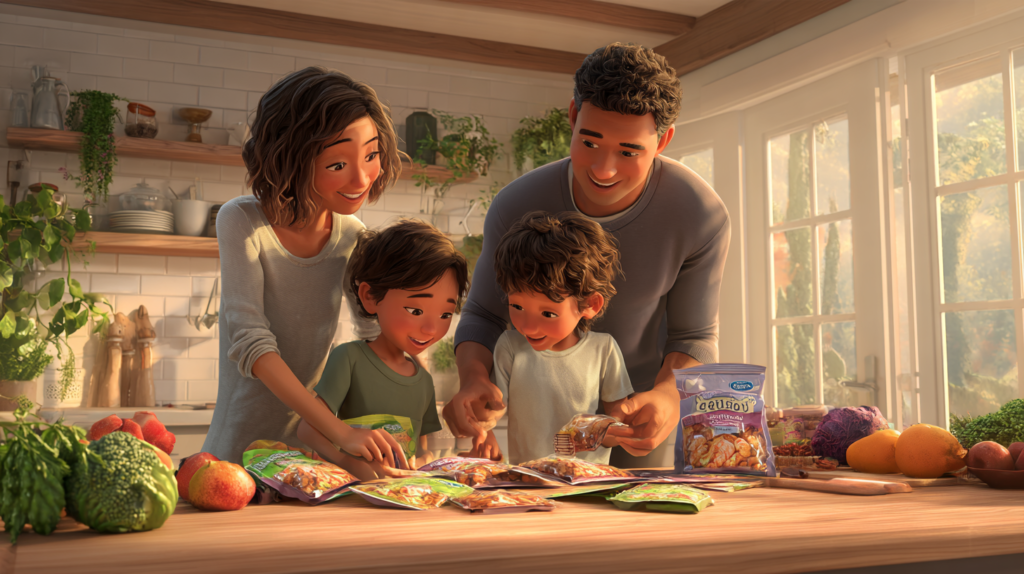
The Label Breakthrough: How Teaching Kids to Read Food Packages Changed Everything in Our Kitchen
Last Tuesday at the grocery store, my seven-year-old picked up a box of “healthy” granola bars and said, “Mommy, this has more sugar than a cookie.” She wasn’t guessing. She’d read the label. Standing there between the cereal and snack aisles, I had one of those moments—you know the kind—where you realize something fundamental has shifted.
Here’s what nobody tells you about raising kids in a world where 70% of children’s diets consist of ultra-processed foods: the real battle isn’t about saying no. It’s about giving them the tools to say, “Wait, let me check.” Because when children understand what they’re eating—really understand it—the whole dynamic changes. They stop being passengers in their nutrition journey and become navigators.
Three years ago, I couldn’t have imagined my daughter voluntarily comparing ingredient lists or calculating added sugars. The transformation didn’t happen overnight, and it wasn’t about forcing vegetables or banning treats. It happened because we turned food labels into a language she could speak. And just like learning to read opened up the world of books, learning to decode packages opened up the world of informed choices.
Interactive: Guess the Hidden Sugar!
Click on a product to reveal how much added sugar is actually hiding inside. The results might shock you!
6 oz container
8 oz serving
1 cup serving
1 bar
Why This Matters More Than Ever
Walk into any supermarket today, and you’re navigating a minefield of marketing genius. Packages scream “natural,” “organic,” and “made with real fruit” while containing ingredient lists that read like chemistry experiments. The food industry spends billions engineering products that bypass our rational decision-making and go straight for the pleasure centers in our brains—and they’re marketing directly to our children.
Recent CDC data reveals an uncomfortable truth: ultra-processed foods now make up approximately 70% of children’s diets. These aren’t just convenient snacks; they’re products specifically designed to be hyper-palatable, easy to overconsume, and difficult to say no to. According to a 2024 study, approximately 46% of parents demonstrated poor food literacy, which directly influenced their children’s health outcomes. When parents struggle to interpret nutrition information, their kids inherit that gap.
But here’s where it gets interesting: research from 2023 and 2024 shows that educational interventions work. When children learn to read and interpret food labels, they make measurably healthier choices. A multifaceted food literacy program for adolescents that combined theoretical learning with practical activities resulted in significant improvements in nutrition knowledge, label interpretation skills, and actual food selection behaviors. The abbreviated Nutrition Detectives Program proved that even a 45-minute intervention could improve elementary students’ food-label literacy.
The magic happens when we stop treating nutrition education as abstract concepts and start teaching it as a practical life skill. Just like we teach kids to look both ways before crossing the street, we can teach them to check the label before opening the package.
The Foundation: What Kids Actually Need to Know
Teaching label literacy isn’t about turning children into nutritionists. It’s about giving them three core competencies that will serve them for life: understanding serving sizes, recognizing added sugars, and identifying sodium content.
Start with serving sizes because this is where food companies get creative. That innocent-looking bag of chips? It probably contains 2.5 servings. The “healthy” granola? One serving is often laughably small—maybe a quarter cup when most kids pour themselves triple that amount. When my daughter learned to check serving sizes first, everything else clicked into place. She realized that the “only 8 grams of sugar” on the front of the package actually meant 24 grams when she ate the whole thing.
Sugar awareness is your second pillar, and it’s trickier than it sounds. Added sugars hide under more than 60 different names on ingredient lists: high-fructose corn syrup, maltose, dextrose, cane juice, brown rice syrup, and “fruit juice concentrates” that sound healthy but function exactly like sugar. The 2016 FDA label update now requires manufacturers to separate “added sugars” from naturally occurring sugars, making this easier—but only if you know to look for that line.
Here’s a powerful visualization technique that resonates with kids: have them measure out the sugar content in teaspoons. A 2022 study exploring parents’ responses to sugary drink warning labels found that showing sugar content in teaspoons created tangible, memorable impact. When children see 16 teaspoons of sugar laid out on the counter—the amount in a typical 20-ounce soda—it transforms abstract numbers into concrete reality.
Sodium education completes the foundation. Most children have no idea what sodium even is, let alone why it matters. Frame it as something their growing bodies need in small amounts but that processed foods deliver in massive doses. The American Heart Association notes that children consume significantly more sodium than recommended, primarily from packaged and restaurant foods. Teaching kids to spot high sodium content (anything over 20% daily value) helps them understand why that innocent-looking mac and cheese cup might make them feel bloated or thirsty afterward.
When introducing these concepts, especially to younger children, consider incorporating familiar flavors and ingredients from diverse cuisines. For instance, the Caribbean Baby Food Recipe Book features over 75 recipes using naturally flavorful ingredients like sweet potatoes, coconut milk, and spices that teach children to appreciate real food tastes—making heavily processed alternatives less appealing by comparison.
Become a Label Detective!
Which ingredients are actually just SUGAR in disguise? Click to reveal!
Starting the Conversation: Age-by-Age Strategies
The trick to teaching label literacy is meeting kids where they are developmentally. A five-year-old won’t care about percent daily values, but they’ll love playing “ingredient detective.” A teenager might roll their eyes at a cutesy game but will engage if you frame it as taking control of their own health and athletic performance.
Ages 4-6: Make It Visual and Playful
Young children think in concrete terms, so abstract nutrition concepts need translation into things they can see and touch. Start with ingredient recognition: can they find ingredients they know versus ones that sound like science experiments? Create a game where they spot foods with fewer than five ingredients or identify products where the first ingredient is a whole food they recognize.
One mother in a 2023 case study taught her preschooler to look for the “strawberry picture”—if the package showed strawberries but the ingredient list didn’t include actual strawberries near the top, they’d skip it. This simple rule helped her child understand that marketing images don’t always match what’s inside. Australian research showed that over 70% of preschool children who participated in food literacy programs asked for and ate more vegetables, demonstrating that early education creates lasting impact.
Make label reading a treasure hunt at the grocery store. “Can you find a cereal where whole grain is the first ingredient?” or “Let’s see if we can spot a snack with no added sugar.” Keep it light, praise their observations, and never use food as punishment or reward during these lessons.
Ages 7-10: Introduce the Numbers
Elementary-aged children can start working with actual numbers on the nutrition facts panel. Teach them the “5 and 20” rule—a guideline that makes quick label assessment accessible: 5% daily value or less means low in that nutrient, 20% or more means high. This empowers them to make snap judgments about whether something is high in fiber (good!) or high in sodium (maybe not for every day).
Seven-year-olds can absolutely calculate serving sizes with your guidance. If the package says it contains 2.5 servings and they plan to eat the whole thing, they can multiply the sugar grams by 2.5. Will they do it perfectly? Not at first. But the process itself—the act of checking, calculating, and comparing—builds critical thinking skills that extend far beyond nutrition.
A 45-minute program called Nutrition Detectives proved remarkably effective with this age group. The intervention taught elementary students to examine both the nutrition facts panel and the ingredient list, focusing on finding added sugars and recognizing marketing tricks. Post-program assessments showed significant improvements in their ability to identify healthier options.
Ages 11-14: Empower Independence and Critical Thinking
Preteens and young teenagers are developmentally primed for abstract thinking and questioning authority—make that work in your favor. Frame label literacy as a way to see through marketing manipulation and take control of their own choices. A 2024 multifaceted food literacy intervention for adolescents combined theoretical learning, practical label-reading activities, and digital tools like MyFitnessPal. The comprehensive approach resulted in measurable improvements in nutrition knowledge, self-regulation, and actual dietary behaviors.
Adolescents care about performance—whether that’s athletic, academic, or social. Connect label reading to their goals: “That energy drink promises performance, but let’s look at what’s actually in it.” Teach them to identify all the disguised sugars in ingredient lists: anything ending in “-ose” (glucose, fructose, maltose), any syrup (corn syrup, rice syrup, maple syrup), and fruit juice concentrates.
Encourage them to compare products. “You want mac and cheese? Great—let’s compare three brands and you choose which one based on the labels.” This approach respects their growing independence while ensuring they have the tools to choose wisely.
Daily Sodium Reality Check
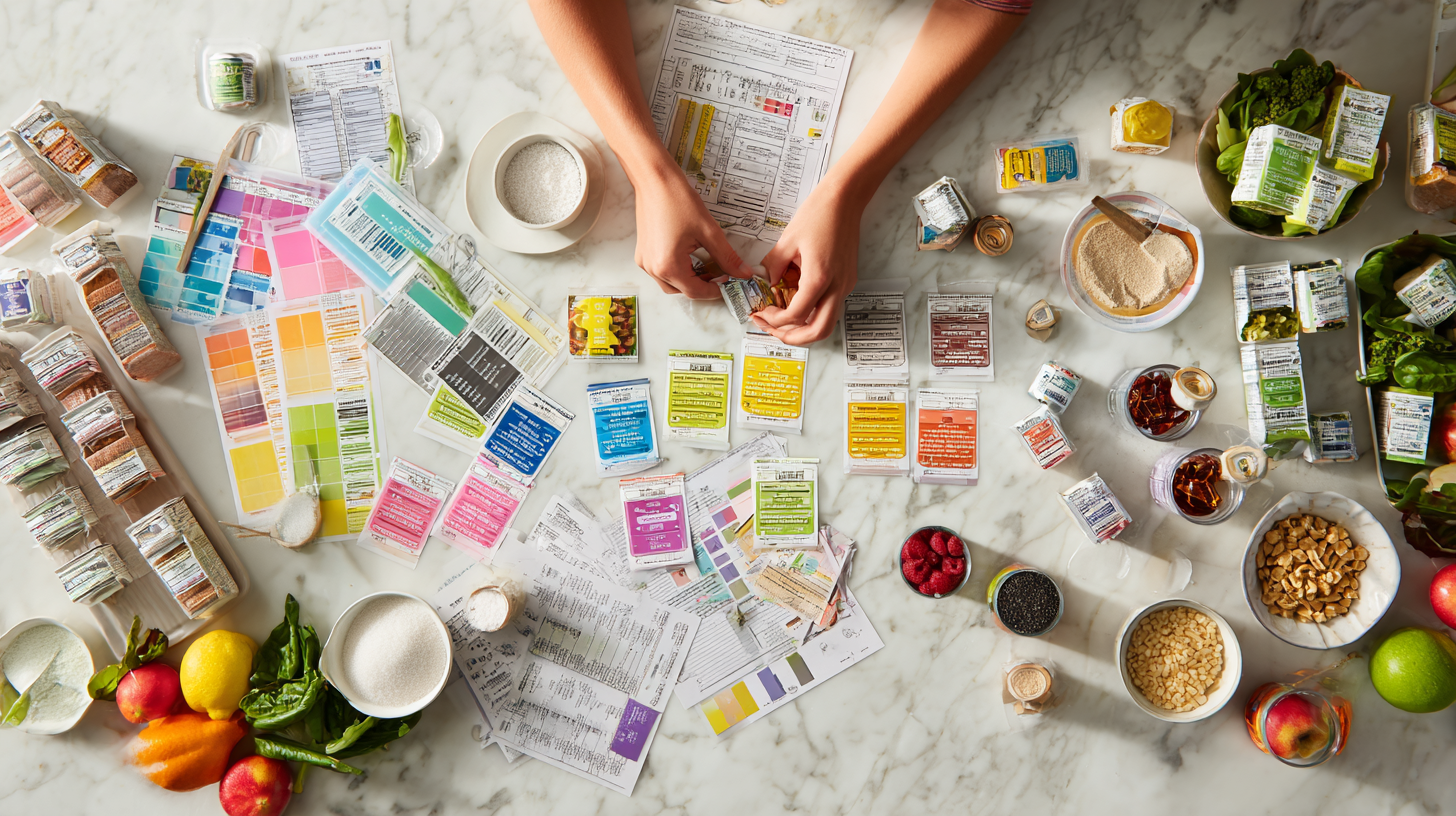
Build a typical kid’s lunch and see how fast sodium adds up! (Recommended daily limit for kids: 1,200-1,500mg)
480mg
340mg
270mg
310mg
420mg
520mg
Total Sodium: 0mg
The Grocery Store Becomes Your Classroom
Theory is nice, but label literacy truly clicks when kids practice it in real-world settings. The grocery store transforms from a chore into an interactive learning lab—if you approach it intentionally.
Start with comparison shopping for products they actually want. “You want granola bars? Perfect. Let’s compare three brands.” Hand them two or three options and ask them to identify which has less added sugar, more fiber, or fewer unrecognizable ingredients. Early on, you’ll guide the process; eventually, they’ll do it independently. A 2023 study examining educational interventions in India found that when adolescents participated in structured label-reading activities during shopping trips, their ability to determine healthier options improved significantly—and the skill transferred to purchases they made independently.
Create specific challenges that make label reading feel like a game rather than a lesson. “Can you find a bread where the first ingredient is whole wheat flour?” or “Let’s see if we can spot a yogurt with less than 10 grams of sugar.” These focused missions keep kids engaged without overwhelming them with information.
Don’t skip the “why” conversation. When you choose one product over another, explain your reasoning out loud. “I’m picking this salsa because it has no added sugar and only ingredients we recognize—tomatoes, peppers, onions, lime juice, cilantro. This other one has high fructose corn syrup as the third ingredient, which we don’t need in salsa.” These mini-explanations model the decision-making process you want them to internalize.
For younger children, consider using technology as a bridge. Apps like The Sugar App allow kids to scan barcodes and instantly see hidden sugar content visualized in tangible ways. While you don’t want to rely entirely on apps, they can make abstract concepts concrete and keep tech-savvy kids engaged in the learning process.
The most powerful grocery store lessons happen when you occasionally let kids make their own choices—even imperfect ones—based on label information. If your daughter reads the labels and still chooses the higher-sugar cereal, let her have it (within reason). The goal isn’t perfection; it’s informed decision-making. Maybe next time, armed with the experience of how that cereal made her feel, she’ll choose differently.
Master the 5-and-20 Rule!
Quick rule: 5% DV or less = LOW, 20% DV or more = HIGH. Test your skills!
Question 1: A snack has 23% Daily Value of fiber. Is this good?
Question 2: A packaged meal has 35% Daily Value of sodium. Should you choose it often?
Question 3: A drink has 3% Daily Value of calcium. Is this a good calcium source?
At Home: Making It Stick Beyond the Store
Grocery store lessons create the foundation, but label literacy truly becomes second nature when you integrate it into everyday family life. The kitchen is where theory transforms into practice, where reading becomes doing.
Start with a pantry audit—but make it collaborative rather than punitive. Pick a Saturday morning, gather the kids, and pull everything out. Have them read labels and sort items into categories: “definitely healthy,” “sometimes foods,” and “rarely foods.” You’ll be amazed at what they notice when they’re actually looking. One father reported that his ten-year-old discovered their “healthy” breakfast bars had more sugar than the cookies they’d been avoiding—a revelation that sparked genuine curiosity about other products they’d assumed were nutritious.
Create family cooking projects that require label reading. When making homemade versions of favorite processed foods, have kids compare the ingredient list of your homemade version with the store-bought equivalent. Making banana muffins from scratch with identifiable ingredients (bananas, whole wheat flour, eggs, honey, cinnamon) versus reading the label on store-bought muffins (enriched flour, sugar, soybean oil, corn syrup, modified food starch, artificial flavors) provides visceral understanding of the difference between real food and processed products.
Establish a “sugar teaspoon challenge” at home. Keep a measuring teaspoon handy and, when kids ask for certain packaged foods, have them measure out the actual sugar content into a bowl. Seeing 12 teaspoons of sugar piled up—the amount in a typical large soda—creates memorable, tangible impact that abstract nutrition facts can’t match. Research from 2022 showed that visual representations of sugar content (teaspoons or pictograms) significantly influenced parents’ and children’s food choices, with participants finding these representations more credible and personally relevant than just numbers.
Make recipe makeovers a family activity. Pick a favorite recipe that traditionally uses processed ingredients and work together to find healthier alternatives by comparing labels. Choosing whole grain pasta over regular, selecting lower-sodium broth, or finding natural nut butters with oil separation at the top (a sign of minimal processing) teaches applied label literacy. These substitutions demonstrate how understanding labels empowers better cooking and eating at home.
Don’t underestimate the power of social media and peer influence for older kids. While research shows that social media influencers significantly expose children to unhealthy food marketing—with products like MyMuse water and Coca-Cola featured prominently by influencers on platforms like TikTok and Instagram—you can counter this by following accounts that promote nutrition education. A 2023 review of social media interventions for adolescent nutrition found that Instagram and Facebook-based programs improved dietary behaviors when they included practical content, peer support, and family involvement. Help your teen find nutrition-focused creators who make healthy eating look aspirational rather than restrictive.

Smart Shopping Challenge!
You have $20 to build a healthy after-school snack stash. Choose 4 items! (Tap to select)
$4 | 0g added sugar
$5 | 18g added sugar
$4 | 0g added sugar
$6 | 0g added sugar
$3 | High sodium
$5 | 6g added sugar
$5 | 0g added sugar
$4 | 39g added sugar
Budget: $20 | Items: 0/4
Overcoming the Biggest Challenges
Let’s be honest: teaching label literacy isn’t always smooth sailing. You’ll encounter resistance, confusion, and moments where you wonder if any of this is sinking in. Here’s how to navigate the most common obstacles.
Challenge 1: “Math is hard, Mom!”
Studies consistently show that questions requiring numeracy skills—calculating serving sizes or interpreting percentages of daily values—are the most challenging aspects of label literacy, particularly for families with lower numeracy skills. This creates genuine equity concerns, as families from lower socioeconomic backgrounds often have less access to nutrition education resources and may struggle more with mathematical label interpretation.
The solution? Start with visual patterns rather than precise calculations. Teach kids to compare relative values: which product has the bigger number for fiber? The smaller number for sugar? The shorter ingredient list? Once they’re comfortable with comparisons, introduce simple rules like “5 and 20” that minimize calculation requirements. For younger children, skip the math entirely—focus on recognizing whole food ingredients and understanding that the first few ingredients make up most of what they’re eating.
Challenge 2: Marketing Manipulation
Food packages are designed to mislead. Products scream “natural,” “organic,” “made with real fruit,” or “whole grain” while containing massive amounts of added sugar and sodium. Research reveals that ultra-processed foods are aggressively marketed to children with attractive packaging, cartoon characters, and celebrity endorsements because these are the most lucrative products in grocery stores. Marion Nestle, professor emerita of nutrition at NYU, notes that companies “target them directly at children,” making them appear trendy and desirable.
Counter this by teaching kids to ignore the front of the package entirely and flip directly to the nutrition facts and ingredient list. Play “spot the marketing trick”—have them identify when packages use words like “natural” (which has no legal definition) or feature images of whole foods that barely appear in the actual ingredient list. One teenager reported feeling “angry but empowered” when she realized her favorite “fruit” snacks contained more corn syrup than actual fruit—that emotional response fueled her motivation to read labels consistently.
Challenge 3: Peer Pressure and Social Situations
Your child might be fully on board with label reading at home, but what happens at birthday parties, playdates, or when friends pull out ultra-processed snacks at lunch? The social dynamics of childhood food choices are complex and powerful.
Address this head-on with your kids. Acknowledge that sometimes, choosing differently from their peers feels uncomfortable. Frame label literacy not as restriction but as personal empowerment: “You have information other kids don’t have yet, and you get to decide what to do with it.” Emphasize that informed choices don’t mean perfect choices—sometimes the right decision is enjoying birthday cake with friends, and that’s okay.
Help them develop scripts for navigating social situations. “No thanks, I’m good” works perfectly without needing to explain label-reading habits. For older kids dealing with more persistent peer situations, “I’m training for soccer and being careful about what I eat” provides socially acceptable framing without sounding preachy.
Challenge 4: Balancing Education with Enjoyment
Perhaps the trickiest challenge is teaching nutrition awareness without creating food anxiety or disordered eating patterns. Parents legitimately worry about fostering unhealthy relationships with food when emphasizing label reading and nutritional content.
The key is messaging. Always frame label literacy as understanding and empowerment, never as restriction or judgment. Avoid labeling foods as “good” or “bad,” “clean” or “dirty.” Instead, talk about “everyday foods” and “sometimes foods,” or foods that give us sustained energy versus quick energy. Emphasize how different foods make our bodies feel rather than how they affect appearance or weight.
Colleen Sloan, PA-C, RDN, emphasizes this approach: “Instead of focusing the conversation on restrictions—like ‘cut back on sugar’ or ‘limit soda’—teaching teens to read nutrition labels encourages awareness and better decision-making.” Awareness-based education builds autonomy and critical thinking rather than rebellion and shame.
If you notice signs of food anxiety—excessive worry about eating certain foods, refusing entire food groups, or obsessive label checking—pull back on the intensity and consider consulting a pediatric dietitian or therapist specializing in child feeding issues. The goal is informed enjoyment of food, not fear.
The Bigger Picture: Why This Skill Matters for Life
Teaching children to read food labels isn’t just about childhood nutrition—though that alone would be sufficient justification. It’s about equipping them with critical thinking skills, consumer awareness, and health literacy that will serve them throughout their lives.
Consider what label-literate children actually gain: the ability to question marketing claims, the numeracy skills to interpret data, the health knowledge to make informed decisions, and the confidence to navigate an increasingly complex food landscape. These are transferable skills that extend far beyond the grocery store. A child who learns to critically evaluate nutrition claims becomes an adult who questions other types of persuasive marketing. A child who practices comparing data on food labels develops analytical skills applicable to countless other domains.
Research from 2023 and 2024 demonstrates that food literacy interventions in childhood create lasting impact. Children who participate in comprehensive nutrition education programs show improved knowledge, attitudes, and actual dietary behaviors that persist over time. More importantly, maternal food and nutrition literacy can mitigate negative effects of food insecurity on children’s eating habits, suggesting that these skills provide protective benefits across generations and socioeconomic circumstances.
The public health implications are significant. With childhood obesity rates climbing and chronic diseases linked to diet appearing earlier in life, creating a generation of nutrition-literate consumers could shift entire market dynamics. When enough consumers demand transparency and healthier options, manufacturers respond. Already, we’re seeing companies reformulate products in response to consumer pressure—reducing added sugars, removing artificial ingredients, and improving nutritional profiles. Your child’s label-reading habit contributes to that broader cultural shift.
Teaching label literacy also counteracts the pervasive influence of ultra-processed food marketing targeting children. When a child understands that the cartoon character on the cereal box doesn’t mean the product inside is healthy, they become less susceptible to manipulative advertising. This consumer awareness, developed early, protects them from exploitation throughout their lives.
Perhaps most importantly, label literacy supports the development of intrinsic motivation around health. Instead of external rules about what they can and cannot eat, children develop internal frameworks for making decisions aligned with their own wellbeing. This autonomy—the sense that they are the agents of their own health choices—predicts better long-term outcomes than any amount of restriction or control.
Your Family’s Label Literacy Journey
Track your progress! Click each step as you accomplish it together.
Show kids where to find nutrition facts and ingredient lists
Complete one label-reading challenge at the store together
Identify hidden sugars in 5 different products
Read labels of everything in your pantry together
Have your child independently compare 3 products and choose one
Practice using daily value percentages to assess nutrients
Create a healthier version of a favorite food using label reading
Your child makes their own label-based choice without prompting
Resources and Tools to Support Your Journey
You don’t have to create label literacy education from scratch. Numerous programs, apps, and resources exist to support your efforts—many of them free and evidence-based.
The FDA’s “Read the Label” campaign specifically targets children ages 9-13 with educational videos, infographics, interactive tools, and activities available in both English and Spanish. Designed for educators, parents, and community outreach leaders, these resources provide structured, age-appropriate content that makes nutrition facts accessible and engaging. The campaign challenges kids to actively look for and use nutrition facts labels as a key component of maintaining a healthy diet.
Digital tools like MyFitnessPal (used successfully in adolescent nutrition interventions), The Sugar App (which lets users scan barcodes to reveal hidden sugar content), and Recipe IQ (which uses optical character recognition to instantly analyze nutritional content of photographed recipes) can make label reading more interactive and teen-friendly. While apps shouldn’t replace fundamental understanding, they can reinforce concepts and keep tech-savvy kids engaged.
School-based programs are expanding as well. The Foodbot Factory digital curriculum-based nutrition education intervention, designed for elementary school classrooms, combines engaging digital content with practical label-reading instruction delivered over consecutive days. While primarily for classroom use, parents can request similar content or ask schools to implement evidence-based nutrition education programs.
Social media, used thoughtfully, can support rather than undermine nutrition education. While research shows that influencers significantly expose children to unhealthy food marketing, social media-based nutrition interventions have proven effective when they include practical content, peer support, and family involvement. Help your teen follow registered dietitians, nutrition scientists, and food literacy advocates who make healthy eating look aspirational. Accounts that demonstrate cooking with whole ingredients, decode nutrition research, or expose manipulative marketing tactics can complement your at-home education.
Consider connecting with local programs as well. Many hospitals, public health departments, and community centers offer family nutrition workshops. Cooking classes specifically designed for parents and children together provide hands-on experience reading labels, comparing ingredients, and preparing healthier versions of favorite foods. These structured environments reinforce what you’re teaching at home while providing peer support and professional guidance.
If you’re concerned about your child’s relationship with food or need more specialized support, pediatric dietitians can provide personalized guidance that considers your child’s developmental stage, health needs, and family food culture. Insurance often covers nutrition counseling when referred by a pediatrician, making professional support more accessible than many families realize.
Where the Journey Leads
Three months after my daughter started reading labels, something remarkable happened. We were at a friend’s house for dinner, and the host offered the kids a choice of drinks. My daughter scanned the options—juice boxes, soda, flavored water, and plain water. Without hesitation, she chose plain water, then quietly added, “Maybe I’ll have juice later.” No drama. No lecture about sugar content. Just a calm, informed choice that prioritized how she wanted to feel during active play.
That moment crystallized why this matters. Not because she made the “perfect” choice (though plain water was a great option). But because she made a choice—consciously, confidently, based on information she understood. She wasn’t following my rules or rebelling against them. She was navigating her own path, equipped with tools to make decisions aligned with her own wellbeing.
This is what food literacy looks like in practice: kids who pause before grabbing snacks, not out of fear but out of curiosity. Teenagers who compare nutrition labels at convenience stores and choose based on actual content rather than packaging claims. Young adults who enter college armed with skills to navigate dining halls and grocery stores independently. Grown humans who understand that their food choices matter and have the knowledge to make ones that support their health, energy, and long-term wellbeing.
The research confirms what intuition suggests: these skills persist. Children who develop food literacy maintain better dietary patterns into adolescence and adulthood. More importantly, they pass these skills to the next generation, creating intergenerational change that extends far beyond individual families.
Will every grocery trip be a teachable moment? No, and it shouldn’t be. Will your kids always make the healthiest choice? Absolutely not—and that’s okay. The goal isn’t nutritional perfection; it’s nutritional awareness. It’s raising children who understand what they’re putting into their bodies and can make informed decisions based on that understanding.
The current food environment is overwhelming, manipulative, and designed to bypass our rational decision-making. But when we equip our children with label literacy—the ability to see through marketing, interpret data, and make informed choices—we give them agency in a system designed to remove it. That agency, that sense of empowerment and autonomy around food, is perhaps the most valuable gift we can offer.
So start small. Pick one label at the next grocery trip. Ask one question about ingredients at dinner. Make one comparison between two products. These tiny actions accumulate into profound understanding. And one day, probably when you least expect it, you’ll watch your child independently read a label, think it through, and make a choice that reflects everything you’ve been teaching. That moment—watching them navigate their nutrition journey with confidence and knowledge—is worth every slightly-longer grocery trip, every pantry audit, every conversation about hidden sugars.
Because ultimately, this isn’t just about reading labels. It’s about reading the world—critically, thoughtfully, and with the tools to make choices that honor their health, their values, and their future. And that’s a literacy worth investing in.
Your Next Step
The label literacy journey doesn’t require perfection—just progress. This week, commit to one concrete action: have your child read the label on one product they regularly eat and discuss what they notice. Maybe it’s their favorite cereal, their go-to snack bar, or their preferred juice. Just one label. One conversation. See where it leads.
You’ve got the information now. The research, the strategies, the interactive challenges, the resources. Everything you need to turn your kitchen and your grocery trips into opportunities for empowered, informed decision-making. The question is: what will you do with it?
Because the only regret you’ll have is not starting earlier. So start today.

Kelley's culinary creations are a fusion of her Caribbean roots and modern nutritional science, resulting in baby-friendly dishes that are both developmentally appropriate and bursting with flavor. Her expertise in oral motor development and texture progression ensures that every recipe supports your little one's feeding milestones while honoring cultural traditions.
Join Kelley on her flavorful journey as she shares treasured family recipes adapted for tiny taste buds, evidence-based feeding guidance, insightful parenting anecdotes, and the joy of celebrating food, culture, and motherhood. Get ready to immerse yourself in the captivating world of Kelley Black and unlock the vibrant flavors of the Caribbean for your growing baby, one nutritious bite at a time.
- The Feeding Revolution: Why Your Everyday Meals Are Changing the World - October 13, 2026
- Your Feeding Story Matters More Than The “Perfect” One Online - October 12, 2026
- Looking Forward: Stepping Into Your Confident Feeding Future - October 11, 2026