 Skip to content
The Choking Hazard List Every Parent Needs (But Most Never See Until It’s Too Late)
Here’s something that’ll stop you mid-scroll: a child dies from choking every five days in the United States. Every. Five. Days. And here’s the part that keeps me up at night—nearly all of these deaths are preventable.
When my niece turned six months old, I watched my sister confidently mash up some banana for her first taste of solid food. Then her neighbor casually mentioned, “Oh, you know grapes are dangerous, right?” My sister froze. Grapes? The same grapes she’d been planning to pack for snacks? That moment—that tiny crack of doubt—sent her down a rabbit hole that every parent knows too well. Which foods are actually safe? How small is small enough? And why does every grandmother seem to have a different opinion?
So here’s the truth nobody wants to say out loud: most of us are winging it when it comes to choking hazards. We hear bits and pieces—cut grapes lengthwise, avoid popcorn—but there’s no comprehensive, visual, actual reference that shows you exactly what to do. Until now.
Quick Check: How Prepared Are You Really?
Let’s find out if you’re ready for the moment every parent dreads. Choose what you’d do first:
The Size Guide Nobody Told You About
Remember how I said we’re all winging it? That stops right here. The golden rule for choking prevention isn’t complicated, but it’s specific: anything smaller than 1.25 inches in diameter (about the size of a U.S. quarter) is a potential choking hazard for kids under four.
But here’s what shocked me when I started researching this—that standard hasn’t been updated since 1989. Think about that. Our kids are physically larger than they were 35 years ago, yet we’re still using the same measurements. The Small Parts Test Fixture (that’s the official name) doesn’t account for modern child development, which means some “safe” toys and foods can still cause choking.
The practical version? If it fits through a toilet paper roll, it’s too small for little hands and mouths. Keep one in your kitchen as a quick visual reference. Your grandparents might think you’re being overly cautious, but approximately 12,000 children end up in emergency rooms every year because someone thought “just this once” would be fine.
The Usual Suspects (And Their Sneaky Cousins)
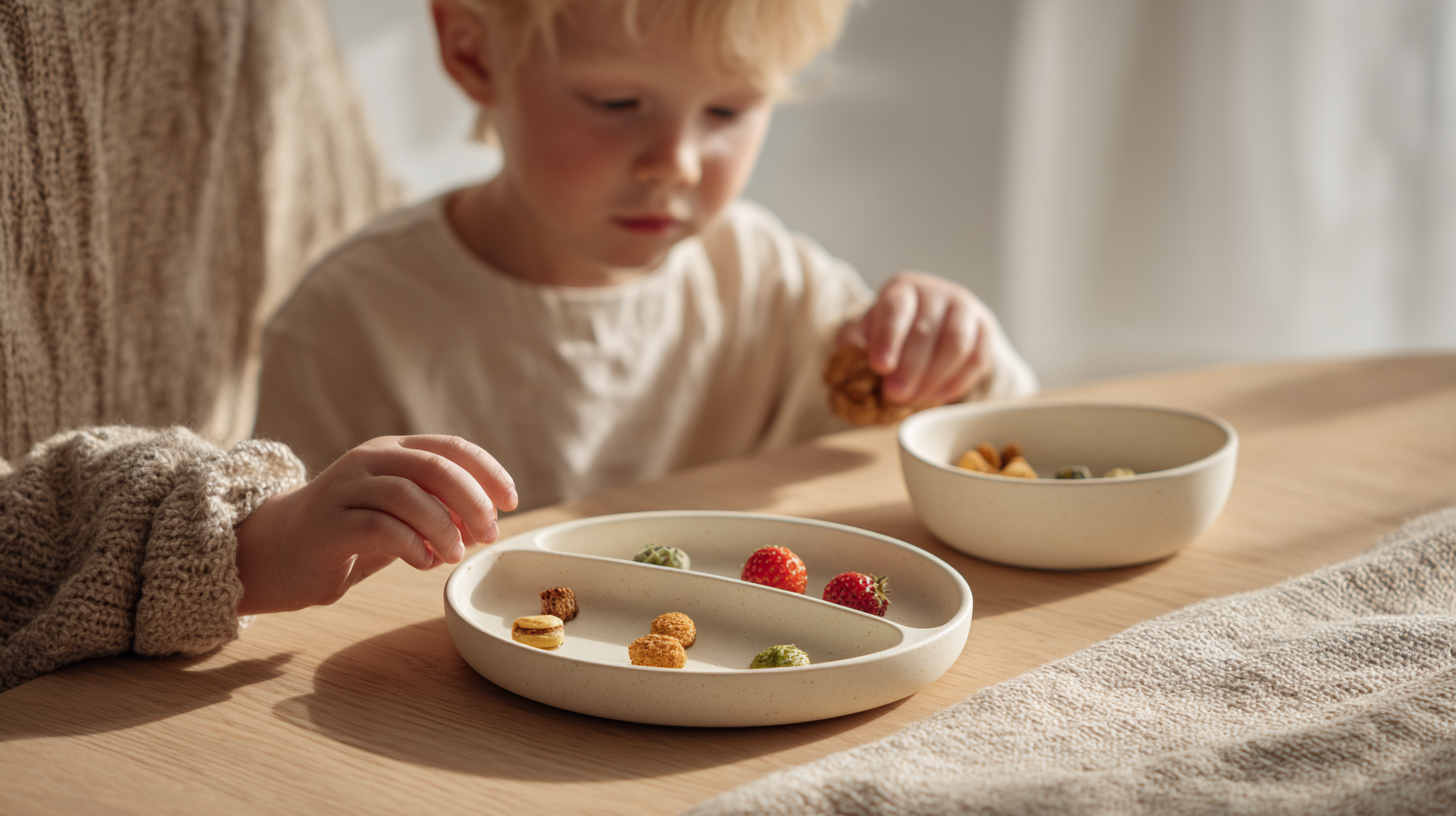
Everyone knows about grapes and hot dogs. But let me tell you about the foods that surprise even experienced parents—the ones hiding in plain sight at every family gathering, every daycare snack time, every well-meaning grandparent’s house.
Food Danger Meter: Click to Reveal the Risk Level
Think you know which foods are most dangerous? Tap each one to see where it really ranks:
The RED ALERT list (avoid completely until age 4+):
- Hot dogs – The #1 food seen in pediatric emergency rooms for choking. That perfect cylindrical shape? It’s basically designed to plug a child’s airway.
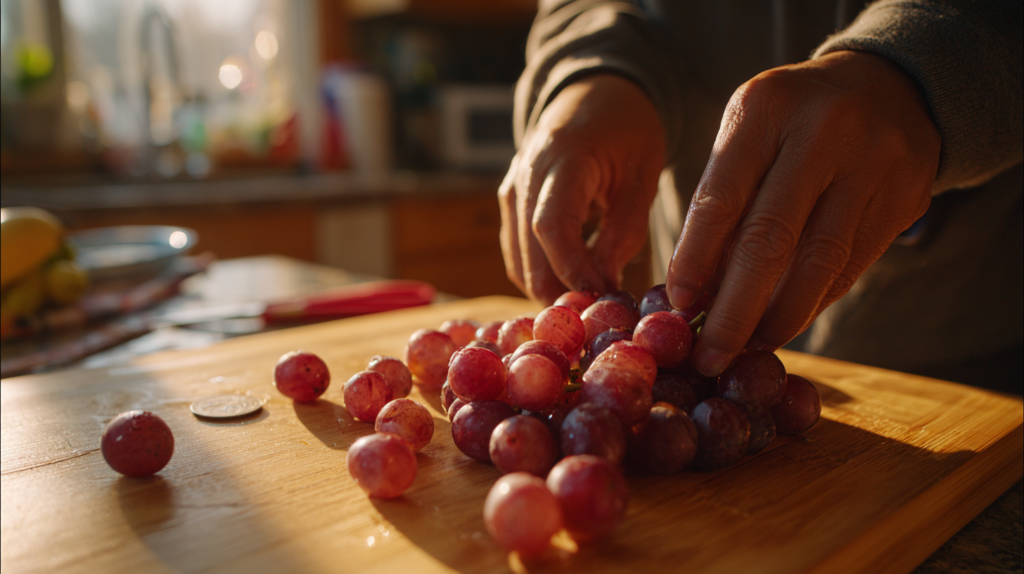
- Whole grapes and cherry tomatoes – Round, slippery, and exactly airway-sized. Even halves aren’t enough—you need to quarter these lengthwise.
- Popcorn – Those fluffy kernels get stuck in the smallest airways and can’t be easily dislodged.
- Hard candy, gummy bears, taffy – Sticky or hard textures that kids can’t chew properly and won’t dissolve quickly.
- Whole nuts and seeds – Small, hard, and impossible for developing teeth to break down effectively.
- Chunks of meat or cheese – Tough textures that require serious chewing power kids don’t have yet.
- Raw hard vegetables – Carrots, celery, and broccoli stems in their raw form are too crispy and don’t break down easily.
Now here’s where it gets Caribbean-interesting. In my Caribbean Baby Food Recipe Book, we work with ingredients like green figs (bananas), callaloo, and ackee—foods that are naturally soft when cooked properly. But even these island staples need respect. Raw green fig? Rock hard and dangerous. Properly cooked and mashed? Perfect for babies 6 months and up.
Age-Stage Food Checker: What Can YOUR Child Actually Eat?
Select your child’s age to see their personalized safe/avoid list:
The Preparation Methods That Actually Work
This is where most choking prevention guides stop—they tell you what to avoid but not how to make things safe. That’s like telling someone to avoid water instead of teaching them to swim. So let’s talk real-world prep methods that turn high-risk foods into safe options.
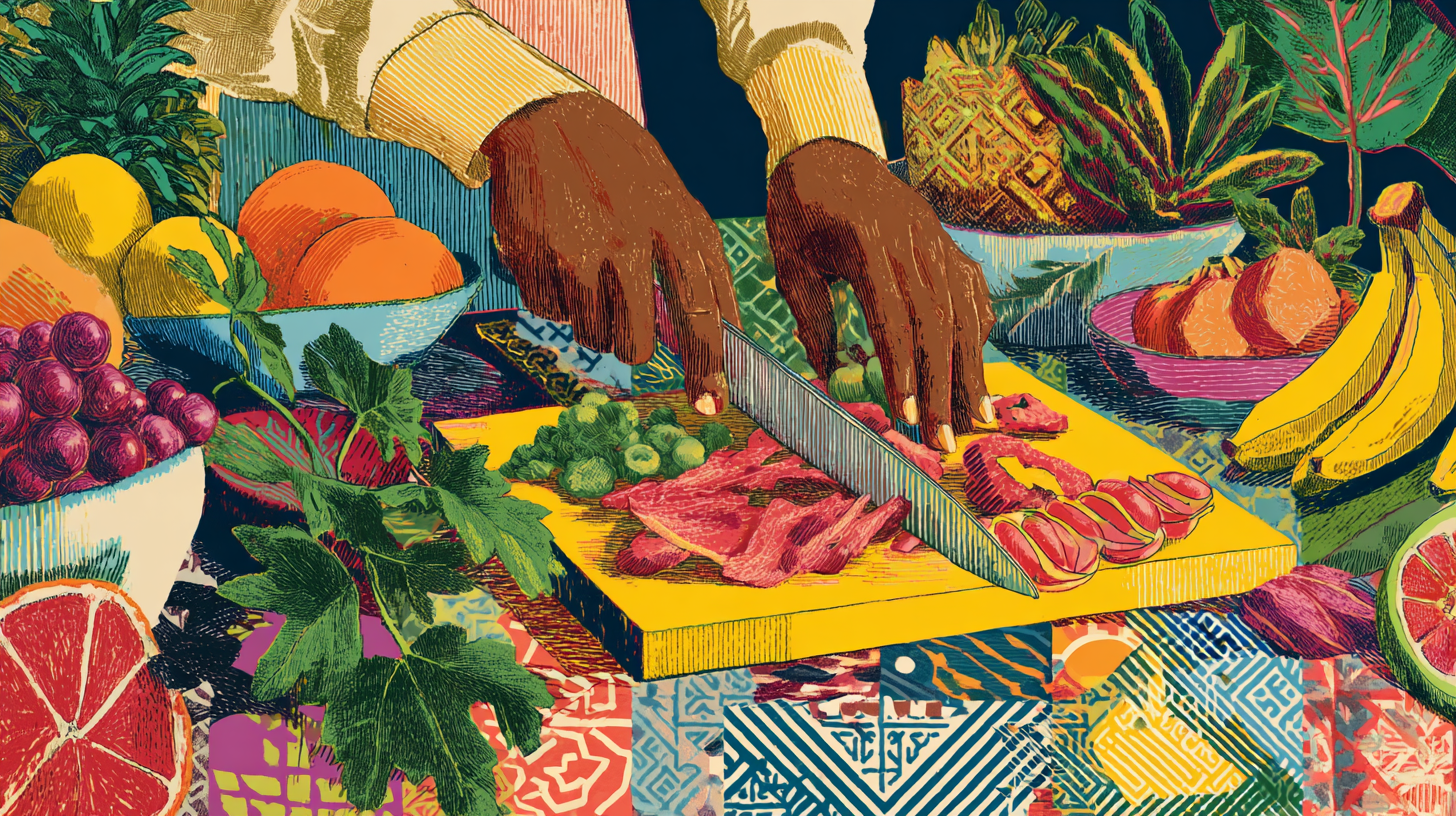
Prep Method Reveals: Click Each Food for the Safe Way
❌ Wrong way: Cutting in half (still round and slippery)
✅ Right way: Quarter lengthwise into tiny strips. Yes, it’s tedious. Yes, it’s worth it. Each grape should be 4 pieces minimum.
Pro tip: Do a whole container at once and store in the fridge. Takes 5 minutes and lasts for days.
❌ Wrong way: Round coin-shaped slices
✅ Right way: Cut lengthwise into quarters first, THEN slice into ½-inch pieces. This breaks up that dangerous cylinder shape completely.
Caribbean twist: Try the same technique with plantains—lengthwise strips work beautifully for finger foods.
❌ Wrong way: Serving raw carrot sticks as teething toys
✅ Right way: Steam or roast until fork-tender, or grate finely. Raw = wait until age 4+.
What works: That Carrot & Yellow Yam Sunshine from my cookbook? Cooked soft and mashed smooth—full flavor, zero stress.
❌ Wrong way: Spoonfuls or thick globs
✅ Right way: Spread paper-thin on toast or mix thoroughly into oatmeal/yogurt. Thick nut butter can conform to airways.
Safe amount: Think “barely there” layer, not “generous spread.”
❌ Wrong way: Raw apple slices or chunks
✅ Right way: Peel, cook until soft, or grate finely. Applesauce is your friend.
Island option: Try recipes like Batata y Manzana (white sweet potato & apple) where everything’s cooked down together.
❌ Wrong way: Chunks or cubes
✅ Right way: Shred, mince, or grind finely. Pieces should be no larger than ½ inch and easy to mash with fingers.
Moisture matters: Mix with sauce, broth, or coconut milk to keep things moist and manageable. Those recipes like Picadillo Suave in the cookbook? Perfect example of properly prepared meat for toddlers.
The pattern you’re seeing? Shape, size, and texture matter more than the actual food. A grape isn’t dangerous because it’s a grape—it’s dangerous because it’s perfectly sized to block an airway. Change the shape, you change the risk.
What the Baby-Led Weaning Crowd Gets Wrong (And Right)
Let’s talk about the elephant in the room: baby-led weaning. The internet is convinced it’s either the most dangerous thing ever or completely safe, depending on which Instagram account you follow.
Here’s what the actual research says: baby-led weaning doesn’t increase choking risk compared to traditional spoon-feeding—but only when parents are properly educated about food preparation. The problem? By 7 months old, 52% of babies in studies had already been given high-choking-risk foods. By 12 months? That number jumped to 94%.
Translation: The method isn’t the problem. Parent education is.
Whether you’re team puree, team baby-led weaning, or somewhere in between (like most of us), the rules stay the same: proper size, shape, and texture. That’s it. The recipes in my Caribbean cookbook work for both approaches because they’re designed around those core safety principles—everything from smooth purees like Calabaza con Coco to finger-friendly options like properly prepared plantain strips.
The Environmental Factors Nobody Mentions
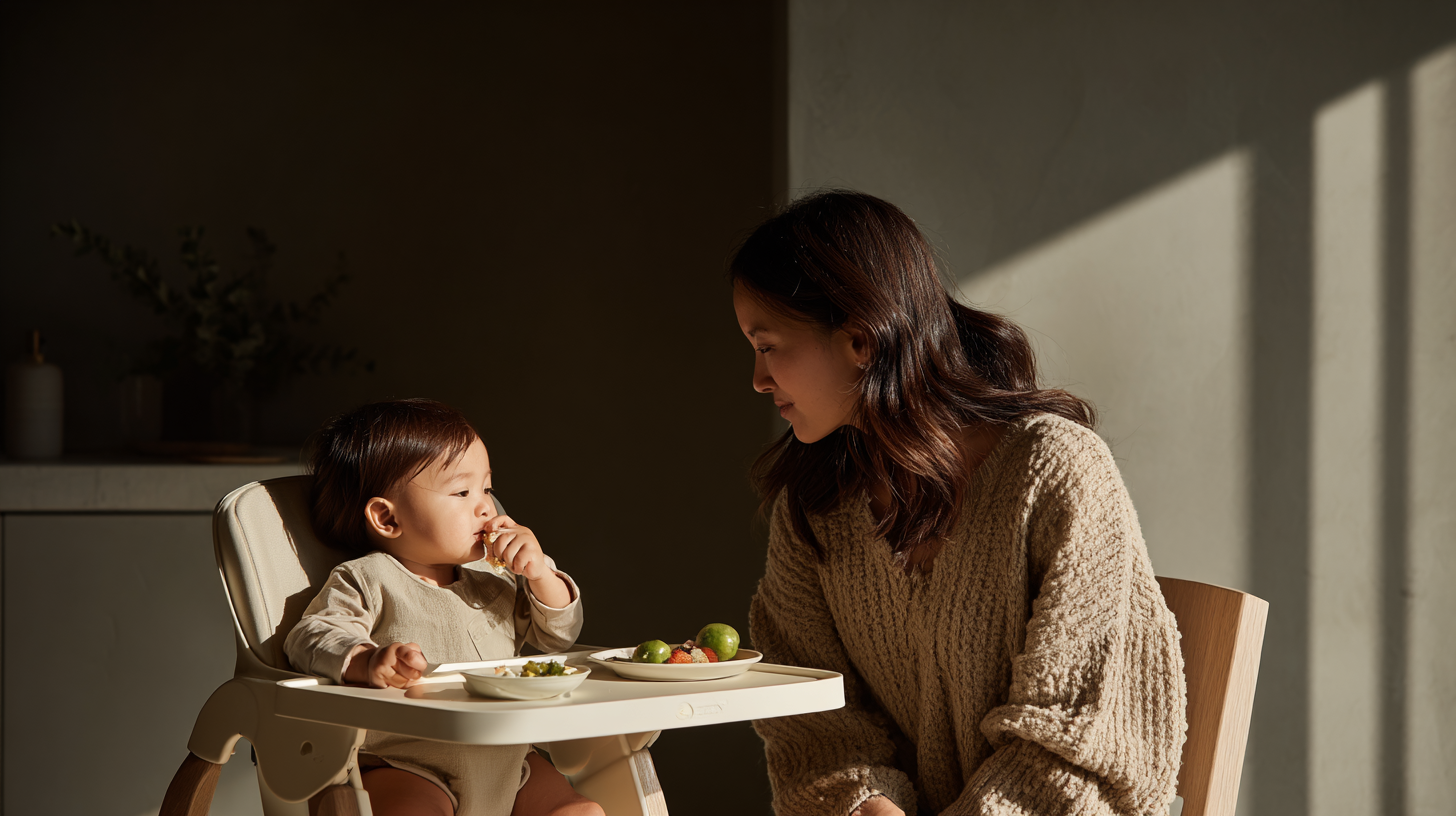
Here’s a shocking truth: where and how your child eats matters just as much as what they eat. You can prep every food perfectly and still end up in the danger zone if you’re not paying attention to the environment.
High-risk scenarios to avoid:
- Car rides – You can’t properly supervise or respond quickly if you’re driving. That “quick snack” in the car seat can turn into a nightmare when you’re stuck in traffic.
- While walking/playing – Running with food in their mouth is a choking incident waiting to happen. Always seated, always supervised.
- Lying down – Gravity is not your friend here. Upright position only, preferably in a high chair with proper support.
- Around siblings – Your 5-year-old doesn’t understand choking risks. They’ll happily share their popcorn with baby. Monitor what older kids are giving younger ones.
One mama I know learned this the hard way at a birthday party. Her 2-year-old was running around when another kid handed her a lollipop. By the time she noticed, her daughter had already bitten off a chunk. Everything turned out fine, but she told me later: “I thought I was watching. But ‘watching’ in a room full of kids isn’t the same as sitting with them during a meal.”
Your Kitchen Safety Score: Let’s Calculate Your Risk Level
Answer these quick questions to see how your current setup measures up:
Where does your child typically eat snacks?
How do you prepare grapes?
Do you have a plan for choking emergencies?
Hot dogs in your house are:
When Things Go Wrong: The Response That Saves Lives
Every parent’s worst nightmare—your child is choking, and you have seconds to act. Not minutes. Seconds. This is where knowledge becomes the difference between life and death.
First, know the difference between gagging and choking. Gagging is loud, uncomfortable, and looks scary—but it’s your child’s natural protective reflex working. They’re coughing, making noise, maybe looking distressed, but air is moving. Leave them alone. I know that sounds harsh, but interfering with gagging can actually turn it into real choking.
Choking is silent. That’s the terrifying part. Your child can’t cry, can’t cough, can’t make sound. They might clutch their throat, turn blue, or go limp. This is your emergency.
⚠️ Emergency Response Simulator: What Would You Do?
Your 18-month-old is eating lunch. Suddenly they stop making noise, their eyes widen, and they’re clutching at their throat. No sound is coming out. What’s your FIRST move?
The protocol that actually works (certified by American Red Cross & American Heart Association):
For infants under 1 year:
- Position baby face-down on your forearm, supporting their head and jaw
- Give 5 firm back blows between shoulder blades with the heel of your hand
- Turn baby face-up, still on your arm
- Give 5 chest thrusts with two fingers in the center of the chest
- Repeat until object dislodges or baby becomes unconscious (then start CPR)
For children over 1 year:
- Give 5 back blows between shoulder blades while they’re bent forward
- Perform 5 abdominal thrusts (Heimlich maneuver) – fist above belly button, other hand on top, quick upward thrusts
- Alternate between back blows and abdominal thrusts until object dislodges
What NOT to do: Do not attempt to sweep the mouth with your finger unless you can clearly see the object—you risk pushing it deeper. Do not use those anti-choking devices you see advertised on social media. The FDA explicitly warns that these delay critical intervention time and lack proper testing. Stick with the proven protocols.
Here’s what I tell every parent I meet: Take a certified infant CPR and choking response class. Not online. In person. Where someone can correct your hand position and pressure. It’s a few hours that could save your child’s life. Most hospitals, community centers, and fire stations offer these classes regularly.
The Cultural Food Conversation We Need to Have
Let me get real with you for a minute. If you’re from a Caribbean, Latino, African, or Asian background, you’ve probably heard this from older family members: “We fed you this and you turned out fine.” And you know what? They’re not wrong that you survived. But survival isn’t the goal—thriving is.
Food is culture. Food is love. Food is connection to our ancestors and our identity. I’m not asking you to abandon that. What I’m asking is for you to adapt traditional foods so they’re safe for modern knowledge. Your grandmother’s recipes can absolutely work—they just need proper preparation for little ones.
That’s exactly why I created the Caribbean Baby Food Recipe Book. Because I was tired of hearing “baby food” and seeing jars of apple puree when my culture has callaloo, ackee, green fig, sweet potato, and plantain. These foods are nutritionally superior in many ways, but they need to be prepared correctly for developing systems.
Take ackee, for instance. It’s Jamaica’s national fruit, rich in healthy fats and protein. But served wrong? It’s a choking hazard. Served right—mashed smooth with a bit of coconut milk—it’s perfect for babies 12 months and up. Same food, different preparation, completely different outcome.
The book has over 75 recipes that honor Caribbean ingredients while following modern safety guidelines. Foods like yam, dasheen, christophine, malanga—all properly prepared for each age stage. Because your baby deserves to taste their heritage safely.
What This Really Comes Down To
Ten years ago, when my sister first started researching choking hazards, she told me something that stuck: “I thought the hard part would be labor. But the real challenge is keeping them alive after they’re born.”
She wasn’t being dramatic. She was being honest about the weight every parent carries—the knowledge that one wrong food, one moment of distraction, one time you thought “just this once” could change everything forever.
But here’s the truth that nobody talks about: you can’t eliminate every risk. You can’t bubble-wrap childhood. What you can do is make informed decisions. You can learn proper preparation. You can know what to do when things go wrong. You can set up your environment for success. And you can stop feeling guilty about being cautious.
Because approximately 12,000 kids end up in emergency rooms each year for choking. That’s not you being paranoid—that’s you being prepared. There’s a massive difference.
Every time you quarter those grapes, every time you cook those carrots until they’re fork-tender, every time you make your toddler sit down to eat instead of running around—you’re not being overprotective. You’re being the kind of parent who understands that the magic isn’t in preventing every fall or every scrape. It’s in preventing the preventable tragedies.
And here’s what I want you to remember when that voice in your head says you’re overdoing it: the parents who’ve been through a choking scare will tell you they wish they’d been more careful, not less. Every single time.
So go ahead and be the parent who cuts grapes into tiny pieces. Be the parent who says no to popcorn at the movies. Be the parent who takes the time to properly prepare every meal. Because the alternative—sitting in an emergency room wishing you’d been more careful—that’s not a moment anyone should have to experience.
The foods that bring you joy, that connect you to your culture, that make your family table feel like home—those can all be part of your child’s life. They just need respect, preparation, and knowledge. And now you have all three.
Start with one change today. Maybe it’s setting up a proper eating space. Maybe it’s taking that CPR class you’ve been putting off. Maybe it’s finally grabbing the Caribbean Baby Food Recipe Book so you can introduce your heritage safely. Whatever it is, start there. Because small steps in the right direction are still steps forward.
And the next time someone tells you you’re being too careful? Smile and remember: you’re not being too careful. You’re being exactly careful enough. Because that’s what love looks like when it’s paying attention.

Kelley's culinary creations are a fusion of her Caribbean roots and modern nutritional science, resulting in baby-friendly dishes that are both developmentally appropriate and bursting with flavor. Her expertise in oral motor development and texture progression ensures that every recipe supports your little one's feeding milestones while honoring cultural traditions.
Join Kelley on her flavorful journey as she shares treasured family recipes adapted for tiny taste buds, evidence-based feeding guidance, insightful parenting anecdotes, and the joy of celebrating food, culture, and motherhood. Get ready to immerse yourself in the captivating world of Kelley Black and unlock the vibrant flavors of the Caribbean for your growing baby, one nutritious bite at a time.
- You’re Doing Your Best: The Self-Compassion Revolution Every Feeding Parent Needs - September 11, 2026
- Feeding Therapy: Your Family’s Roadmap from Overwhelm to Progress - September 10, 2026
- When to Seek Professional Feeding Help: Your Complete Guide to Recognizing Warning Signs and Taking Action - September 9, 2026


