Creating Meaningful Family Food Rituals: Building Memories That Last Generations
Discover Your Family’s Food Memory Potential
Before we dive in, let’s reveal something powerful about your family. Click the button that resonates with where you are right now:
Three years ago, my grandmother passed away. But here’s what stays with me every single day: the sound of her humming while stirring curry, the smell of coconut milk simmering with spices, the way she’d save the first ripe mango from her tree just for me. These aren’t just memories. They’re the foundation of who I am.
And here’s the truth that research is now confirming: families who intentionally build food rituals create something that transcends nutrition. They’re building emotional security, identity, and connection that shapes children for life. Recent studies show that family cooking and shared meals significantly enhance family cohesion, improve emotional bonds, and foster communication that lasts across generations.
Yet here we are, living in a world where family dinners are becoming endangered traditions. Where drive-throughs replace dinner tables. Where screens get more attention than the people sitting across from us. But what if I told you that the simple act of establishing meaningful food rituals could be the most powerful investment you make in your family’s emotional wellbeing?
This isn’t about Pinterest-perfect tablescapes or gourmet meals. This is about something deeper, something more primal. It’s about the moments that your children will carry with them long after you’re gone. The traditions that will shape how they show love to their own families.

The Science Behind Food Memories and Emotional Bonds
Let me tell you something that might surprise you: the emotional atmosphere during meals matters more than what’s on the plate. Research from 2025 reveals that family meals are linked to better nutritional health, reduced anxiety and depression in children, improved self-esteem, and lower risk of behavioral problems. But it goes deeper than that.
When families share meals together, something neurologically powerful happens. The brain releases oxytocin, the same bonding hormone released during breastfeeding and physical touch. This is why your child remembers not just the taste of your cooking, but the feeling of belonging, of being seen, of being loved.
Studies show that higher frequency and quality of family meals correlate with psychological flourishing and better family functioning. Think about that for a moment. The simple act of sitting down together, sharing food, creating rituals around mealtime—this isn’t just nice to have. It’s foundational to your child’s psychological development.
And here’s where it gets even more interesting: food rituals create what psychologists call “autobiographical memory anchors.” These are the memories that help us understand our own life story, our identity, where we come from. When your child helps you make your grandmother’s recipe, they’re not just learning to cook. They’re learning who they are. They’re connecting to something bigger than themselves.
The research is clear: families that establish consistent food traditions report stronger emotional connections, better communication patterns, and children who grow into adults with healthier relationships with food, family, and themselves. This is the legacy we’re talking about building here.
Understanding Food Traditions as Emotional Language
Here’s what nobody tells you about food traditions: they’re not really about the food at all. They’re about creating a language of love that your family will speak for generations.
When my daughter was learning to make plantain porridge with me, she wasn’t just learning a recipe. She was learning that patience matters, that some things can’t be rushed, that the best things in life require attention and care. She was learning that our Caribbean heritage isn’t something distant and abstract—it’s alive, it’s in her hands, it’s in the way she stirs the pot.
Food traditions serve as expressions of belonging, identity, and emotional security. Recent studies emphasize that the emotional experiences of family meals are vital for family well-being and strengthening relationships. This is why food shows up at every significant moment in human culture: births, deaths, celebrations, grief. Food is how we say the things we can’t put into words.
Build Your Tradition Blueprint
Click on traditions you want to start or already practice. Watch your family culture come alive:
Think about your own childhood. What food memories do you carry? I’m willing to bet it’s not the fancy restaurant meals. It’s the ordinary moments made extraordinary through repetition, through presence, through love. It’s your mom’s pancakes every Saturday morning. Your dad’s terrible jokes while grilling. The way your family gathered in the kitchen, everyone with a role, everyone belonging.
This is what we’re creating when we establish food rituals: a sense of predictability and security in an unpredictable world. Children thrive on rituals because rituals say, “This is who we are. This is what we value. You belong here.” And in a world that constantly tells our children they need to be something else, somewhere else, that message of belonging is everything.
Experts emphasize that food is deeply tied to emotional security, trust, and belonging. When you pass down recipes, when you recreate your grandmother’s dishes, when you invent new traditions that honor both heritage and creativity, you’re building what researchers call “family identity capital”—the shared stories, values, and practices that define who your family is.
Cultural Heritage: Preserving Roots Through Food
Let me tell you about my friend Maria. She’s third-generation Dominican-American, and she was terrified she’d lose her culture, that her children would grow up disconnected from their roots. Then she started making mangú with her kids every Sunday morning. Not just cooking it, but telling them stories while they cooked. Stories about her abuela, about Santo Domingo, about what it means to be Dominican.
Now her eight-year-old corrects her pronunciation of Spanish words. Her five-year-old asks to watch videos of street vendors in the Dominican Republic making yaroa. Food became the bridge that connected them to a culture they’d never lived in, but that lives in them nonetheless.
Cultural and ancestral dishes maintain heritage and create shared memories through practices like holiday feasts and Sunday dinner traditions. This matters now more than ever. In increasingly multicultural and mobile societies, there’s real concern about losing traditions and the weaker family cohesion that comes with that loss.

But here’s the beautiful thing: cultural food traditions don’t have to be rigid. They can evolve. They can adapt. You can honor your Jamaican heritage while accommodating your child’s vegetarian preferences. You can teach your kids to make Caribbean dishes using ingredients you find at your local grocery store. What matters isn’t perfection. What matters is intention.
If you’re looking to introduce authentic Caribbean flavors to your children while building these meaningful traditions, the Caribbean Baby Food Recipe Book offers over 75 recipes featuring ingredients like sweet potatoes, mangoes, coconut milk, plantains, and beans—perfect starting points for creating your family’s food story from the very beginning.
Social media trends reveal growing interest in sharing family food rituals, recipe traditions, and mealtime gratitude practices as ways to foster connection. Young parents are documenting their attempts to recreate their grandmother’s recipes. They’re sharing videos of their children’s first taste of cultural foods. They’re building digital archives of family recipes that might otherwise be lost.
This is powerful work. Because when you teach your child to make your mother’s curry, you’re not just teaching them to cook. You’re teaching them that they come from somewhere. That they’re part of a story bigger than themselves. That their ancestors’ wisdom, creativity, and love live on through them.
Special Occasion Foods and Milestone Celebrations
Here’s something I learned the hard way: special occasions don’t need to be perfect. They need to be memorable. There’s a difference.
When my son turned five, I spent three days trying to make this elaborate birthday cake I saw online. It was a disaster. The fondant melted. The layers collapsed. I cried actual tears over this cake. But you know what my son remembers? That we laughed about it. That we ate the “broken” cake for breakfast the next morning. That his dad declared it the best “deconstructed cake” he’d ever had.
That disaster became our tradition. Now every birthday, we intentionally make something slightly wrong. Last year, we made pancakes shaped like—well, we’re still not sure what they were shaped like. But we laughed. We were together. We created a memory.
Themed family dinners, starting meals with gratitude or blessings, and collaborative cooking involving all ages exemplify practical applications of food rituals. Special occasion foods become markers in our life story. They help us remember who we were, who we’re becoming, who we want to be.
Your Family’s Celebration Food Wheel
Click on occasions where you want to create food traditions. Discover personalized ritual ideas:
Think about the special occasion foods from your childhood. In Caribbean families, there are foods you only eat at Christmas. Foods that only appear at weddings. Foods reserved for Sunday dinner. These distinctions matter. They create anticipation. They make ordinary days feel special and special days feel sacred.
My family has a tradition: every time someone has a first day of something—first day of school, first day at a new job, first day after a big life change—we make their favorite breakfast. It’s simple, but it’s become our way of saying, “We see you. We’re proud of you. You’re not doing this alone.”
These rituals don’t have to be complicated. They just need to be consistent. They need to be yours. Maybe it’s ice cream sundaes every time someone loses a tooth. Maybe it’s a special soup your mother made when you were sick. Maybe it’s making banana pancakes every Saturday morning, without fail, no matter what else is happening in your life.
New interventions in family nursing and positive psychology promote shared cooking and dining as therapeutic for emotional health. This isn’t just tradition for tradition’s sake. This is mental health work. This is building resilience. This is creating safe harbors in the storms of life.
The Power of Everyday Rituals
Here’s the secret nobody tells you: the most powerful food traditions aren’t the elaborate holiday feasts. They’re the ordinary Tuesday night dinners. The regular rhythms that create the steady heartbeat of family life.
Research shows that it’s not the frequency of special occasions, but the consistency of everyday meals that most strongly predicts family wellbeing. Children who eat regular meals with their families have better academic performance, better emotional regulation, better social skills. Not because of what they eat, but because of what happens around the table.
Current challenges include time constraints, work-life balance, and modern distractions that reduce family meal frequency. I get it. I live this reality every day. Between work deadlines, kids’ activities, homework, and the million other demands on our time, sitting down for a family meal can feel like climbing a mountain.
But here’s what I’ve learned: it doesn’t have to be dinner. It doesn’t have to be elaborate. It just has to be consistent and present.
Calculate Your Family Connection Time
Select how often you currently share meals together:
Maybe your ritual is Sunday morning breakfast. Maybe it’s Wednesday night pizza where everyone gets to choose one topping. Maybe it’s Saturday lunch where you cook together, even if “cooking” means your toddler dumps pre-measured ingredients into a bowl while you do the actual cooking.
The magic isn’t in the complexity. The magic is in the showing up. Week after week. Year after year. Until one day your teenager is away at college and texts you: “Made your curry today. Tasted like home. Miss you.”
That’s when you realize: this was never really about the food at all.
Creating Rituals That Involve Everyone
Here’s something that transformed our family meals: giving everyone a role. Not just the adults. Everyone.
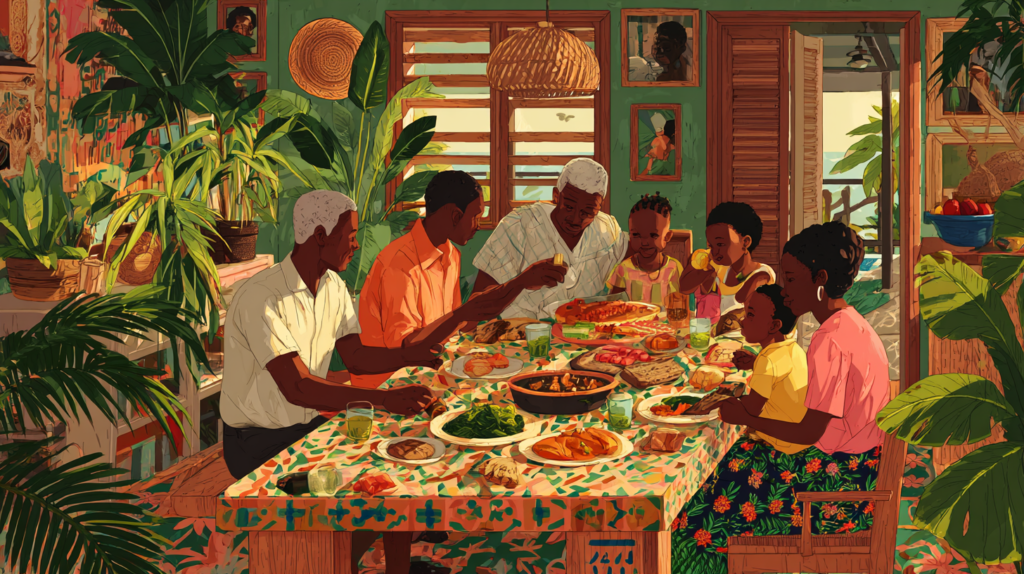
My three-year-old’s job is to put the napkins at each place. My seven-year-old sets the table. My ten-year-old makes the salad. Are these things I could do faster myself? Absolutely. But that’s not the point. The point is belonging. The point is: this is ours, and everyone contributes to making it happen.
Experts advocate for establishing consistent family meals and involving children in cooking to create lasting traditions and strengthen identity. When children participate in food preparation, they develop better relationships with food, better motor skills, better math skills from measuring ingredients, better reading skills from following recipes. But more importantly, they develop a sense of competence and contribution.
Community programs and educational resources encourage families to adopt regular mealtime rituals to improve communication and emotional support. These programs understand something crucial: food rituals are relationship work disguised as meal prep.
Start small. Maybe your toddler tears lettuce for salad. Maybe your preschooler stirs the pot (with you holding the handle). Maybe your grade-schooler measures ingredients. Maybe your teenager chooses the menu once a week. The specific tasks don’t matter. What matters is that everyone knows: I have a place here. I’m needed. I belong.
And here’s the beautiful part: as your children grow, their roles evolve. The toddler who tore lettuce becomes the teenager who makes entire salads. The preschooler who stirred becomes the young adult who calls you for recipe advice. The evolution of their roles mirrors their growth, creates continuity, honors their development.
If you’re just starting to involve young children in food preparation, Caribbean-inspired recipes from the Caribbean Baby Food Recipe Book offer simple, sensory-rich experiences perfect for little hands learning to cook—from mashing ripe plantains for Plantain Paradise to stirring coconut milk into pumpkin puree.
Navigating Modern Challenges to Food Rituals
Let’s be real for a minute. Maintaining food traditions in modern life is hard. Really hard. I’ve had weeks where we ate in the car more than we ate at a table. I’ve ordered takeout for dinner so many times that the delivery driver knows our order before I say it. I’ve served cereal for dinner and called it “breakfast night” to make it sound intentional.
The reality is that emotional stress during mealtimes can occur, requiring development of positive experiences and mitigating mealtime anxiety. Sometimes the pressure to create perfect family meals creates more stress than connection. Sometimes the Instagram-worthy table settings and homemade everything becomes another item on the overwhelming to-do list of modern parenting.
So here’s my permission slip to you: it doesn’t have to be perfect. It just has to be real.
Some debates focus on the balance between maintaining traditional rituals and adapting to modern lifestyle demands. And you know what? Both sides are right. Yes, traditions matter. Yes, we need to protect family meal times. But also: we need to adapt. We need to be flexible. We need to honor both our values and our reality.
The Truth About “Perfect” Family Meals
Here’s what research actually shows: The nutritional quality of meals matters far less than the emotional quality of the experience. Takeout eaten together with phones away beats homemade meals eaten in front of screens every single time. Your kids won’t remember whether the vegetables were organic or if the table setting was perfect. They’ll remember if you were present. If you listened. If you laughed together. If you made them feel seen, heard, and loved. That’s the real tradition you’re building.
Maybe your ritual is breakfast instead of dinner because that’s when everyone’s actually home. Maybe it’s Sunday brunch because weeknights are chaos. Maybe it’s a monthly extended family gathering instead of nightly dinners. Maybe your tradition is ordering from the same Caribbean restaurant every Friday and eating it together at the table, phones in a basket.
The research is clear: what matters is consistency and presence, not perfection and complexity. A simple meal eaten together beats a gourmet meal eaten separately every single time.
Debates around the nutritional aspects of traditions versus health considerations continue, with some recommending healthier adaptations without losing cultural significance. And this is important work—honoring tradition while also honoring health. You can make your grandmother’s recipes with less salt. You can bake instead of fry. You can add vegetables to traditional dishes. The soul of the tradition remains even as the specific preparation evolves.
Teaching Food Values Across Generations
Here’s something beautiful that happened last month: my daughter was doing a school project on family traditions. She interviewed my mother about our family’s food history. And my mom told her stories I’d never heard—about learning to cook from her grandmother, about what food meant during hard times, about the first time she made a meal in her own home after getting married.
These stories would have been lost. But because we’ve created food rituals that connect generations, because cooking together is part of our family culture, my daughter thought to ask. And my mother thought to share.
Innovative approaches include documenting family recipes via cookbooks and celebrating food as a living memory to strengthen identity and connection. This is how traditions survive. Not by being preserved in amber, but by being lived, adapted, shared, and passed forward.
Some families are creating recipe books together, complete with photos, stories, and memories attached to each dish. Some are making videos of grandparents cooking, creating digital archives of techniques and stories. Some are hosting “cooking with grandma” days where elder family members teach younger ones their specialties.
These practices matter because they say to our children: your history matters. Where you come from matters. The people who came before you matter. And someday, you’ll be the elder passing these stories forward.
Predictions point to increased use of intentional food rituals for mental health benefits and family resilience. As our world becomes more disconnected, as technology pulls us apart, as physical distance separates families, these food traditions become even more crucial. They’re anchors. They’re through-lines. They’re ways of staying connected across time and space.
Starting Your Own Food Tradition Journey
So how do you actually start? How do you build these traditions when you’re starting from scratch, or when you want to strengthen what you already have?
First: start small. Don’t try to establish seven new traditions tomorrow. Pick one. Make it manageable. Make it doable even on your hardest days. Maybe it’s pizza every Friday. Maybe it’s pancakes every Saturday. Maybe it’s your family’s special curry once a month.
Second: involve everyone in the planning. Ask your kids what they want your family’s traditions to be. You might be surprised by their answers. Maybe they want to help make Christmas cookies every year. Maybe they want to learn your grandmother’s recipe for rice and peas. Maybe they want to invent something entirely new that’s just yours.
Third: be consistent, but be flexible. Life happens. Kids get sick. Work explodes. Cars break down. If you miss your Friday pizza night, don’t abandon the whole tradition. Just reschedule. The tradition is the intention to connect, not the perfection of execution.
Your Personal Action Plan
Choose ONE tradition to start this week. Click to commit and get your personalized guide:
Fourth: document it. Take photos. Write down recipes. Record your grandmother telling stories while she cooks. Create a physical or digital archive of your family’s food traditions. Future generations will thank you.
Fifth: celebrate the imperfections. The burnt rice. The collapsed cake. The meal that didn’t turn out right. These become stories. These become part of your family lore. Some of my favorite family stories are about cooking disasters that we laugh about years later.
For families wanting to blend cultural authenticity with modern convenience, recipes like Coconut Rice & Red Peas, Plantain Paradise, or Cornmeal Porridge Dreams from the Caribbean Baby Food Recipe Book offer starting points that grow with your family—from baby’s first foods to dishes that everyone shares together.
Opportunities exist in integrating cultural foods into daily routines, documenting family recipes, and using technology to sustain culinary heritage. This is the work of building legacy. This is how traditions survive and thrive across generations.
The Ripple Effect of Food Traditions
Here’s what nobody tells you when you start building food traditions: the impact goes far beyond your immediate family. When you establish these rituals, you’re not just affecting your children. You’re affecting their children, and their children’s children.
I know this because I see it in my own life. The way my grandmother cooked with love and patience influenced how my mother raised me. How my mother taught me to value family meals influenced how I parent my own children. And I already see it in my kids—the way they want to cook together, the way they associate food with love and connection, the way they’re already talking about teaching their own children someday.
This is intergenerational transmission of values. This is how families create culture that lasts beyond individual lifetimes. When you make your grandmother’s curry with your daughter, you’re creating a living bridge between past and future. You’re saying: this matters enough to preserve. You matter enough to receive it. Our family matters enough to continue it.
More research is expected on how family food rituals influence long-term emotional well-being and social connectedness. But we don’t need to wait for more studies to know this truth: connection matters. Belonging matters. Tradition matters. And food is one of the most powerful vehicles for creating all three.
The families who prioritize food rituals—even imperfectly, even inconsistently, even in small ways—are investing in emotional resilience that pays dividends for generations. They’re creating secure attachments. They’re building communication patterns. They’re establishing that family is a safe harbor, that home is where you belong, that some things are sacred even in a chaotic world.
Your Family’s Food Story Starts Now
At the end of the day, food traditions aren’t really about the food. They’re about love made tangible. They’re about showing up. They’re about saying, through the simple act of preparing and sharing meals: you matter to me. We matter to each other. This—us, here, now—this is what’s important.
Your children won’t remember every meal. They won’t remember whether the vegetables were perfectly seasoned or if the table was Instagram-worthy. But they’ll remember how it felt to be part of your family’s food rituals. They’ll remember helping you cook. They’ll remember the stories you told while stirring pots. They’ll remember that they belonged.
And someday, they’ll stand in their own kitchens, making the recipes you taught them, telling their children about you, passing forward the traditions you started or strengthened or adapted. They’ll create their own rituals while honoring yours. And they’ll understand, finally, what you already know: that food traditions are time machines. They’re love letters. They’re promises kept across generations.
The research tells us that families who establish food rituals report stronger emotional connections, better communication patterns, and children who grow into adults with healthier relationships. But you don’t need research to know this. You feel it. You’ve always felt it. That pull toward connection. That desire to create something meaningful. That knowing that what happens around your table matters more than you can measure.
So start today. Start small. Start imperfectly. But start. Pick one tradition to establish or strengthen this week. Make that meal together. Turn off the phones. Be present. Tell the stories. Create the memories. Build the legacy.
Because here’s the truth: the most important ingredient in any family food tradition isn’t what you put on the table. It’s who you become around it. It’s the laughter. The connection. The belonging. The love.
That’s what your children will remember. That’s what they’ll pass forward. That’s what endures long after the last dish is washed and put away. The traditions you build today become the memories your grandchildren will cherish. The recipes you share become stories that get retold. The rituals you establish become the foundation of family identity that lasts for generations.
Your family’s food story is being written right now, in every shared meal, in every recipe passed down, in every moment you choose connection over convenience. Make it count. Make it yours. Make it matter.
And if you’re looking for additional inspiration to weave authentic Caribbean flavors into your family’s food tradition journey—from your baby’s first tastes to meals the whole family shares—the Caribbean Baby Food Recipe Book offers practical recipes and cultural wisdom to help you start building those meaningful connections from day one.
Because traditions don’t start perfect. They start with intention. They grow through consistency. They thrive through love. And they last through generations of families who understood: the greatest gift we give our children isn’t what we put on their plates. It’s what we create around the table. Together.

Kelley's culinary creations are a fusion of her Caribbean roots and modern nutritional science, resulting in baby-friendly dishes that are both developmentally appropriate and bursting with flavor. Her expertise in oral motor development and texture progression ensures that every recipe supports your little one's feeding milestones while honoring cultural traditions.
Join Kelley on her flavorful journey as she shares treasured family recipes adapted for tiny taste buds, evidence-based feeding guidance, insightful parenting anecdotes, and the joy of celebrating food, culture, and motherhood. Get ready to immerse yourself in the captivating world of Kelley Black and unlock the vibrant flavors of the Caribbean for your growing baby, one nutritious bite at a time.
- The Feeding Revolution: Why Your Everyday Meals Are Changing the World - October 13, 2026
- Your Feeding Story Matters More Than The “Perfect” One Online - October 12, 2026
- Looking Forward: Stepping Into Your Confident Feeding Future - October 11, 2026