The Mixed-Texture Problem: Why Your Baby Gags on Pasta Salad (And What Your Pediatrician Isn’t Telling You)
Here’s something that’ll stop you mid-spoonful: one-third of perfectly healthy babies struggle with mixed-texture foods, even when they’ve mastered purees and finger foods separately. That pasta salad you’re serving? To your baby’s brain, it’s like trying to solve a Rubik’s cube blindfolded while riding a roller coaster.
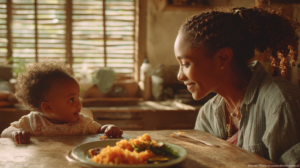
I’ll never forget the first time I served my daughter what I thought was a “safe” meal—smooth yogurt with tiny blueberry pieces. She took one bite, gagged dramatically, and looked at me like I’d just betrayed her trust. What I didn’t know then (but wish someone had told me) is that her brain wasn’t ready to process two different textures in the same bite. It wasn’t picky eating. It wasn’t defiance. It was neurology.
Today, you’re going to discover the hidden neurological challenge behind mixed-texture sensitivity, why traditional feeding advice misses the mark, and the exact progression strategies that feeding therapists use to help babies overcome this hurdle. By the end of this article, you’ll understand your baby’s gagging isn’t a phase to “wait out”—it’s a developmental skill to build.
Quick Discovery: What’s Really Happening in Your Baby’s Mouth?
Click your answer to uncover the truth behind your baby’s gagging:
The Shocking Truth About Mixed Textures (That Most Parents Never Learn)
Let me tell you something that changed everything for me: mixed-texture sensitivity isn’t really about food at all. It’s about brain wiring.
Recent pediatric feeding research reveals that approximately one-third of neurotypical infants experience difficulty transitioning to what experts call “Stage 3 foods”—those combinations where multiple textures exist in a single bite. We’re talking yogurt with fruit chunks, oatmeal with berries, rice with beans, or yes, that innocent-looking pasta salad.
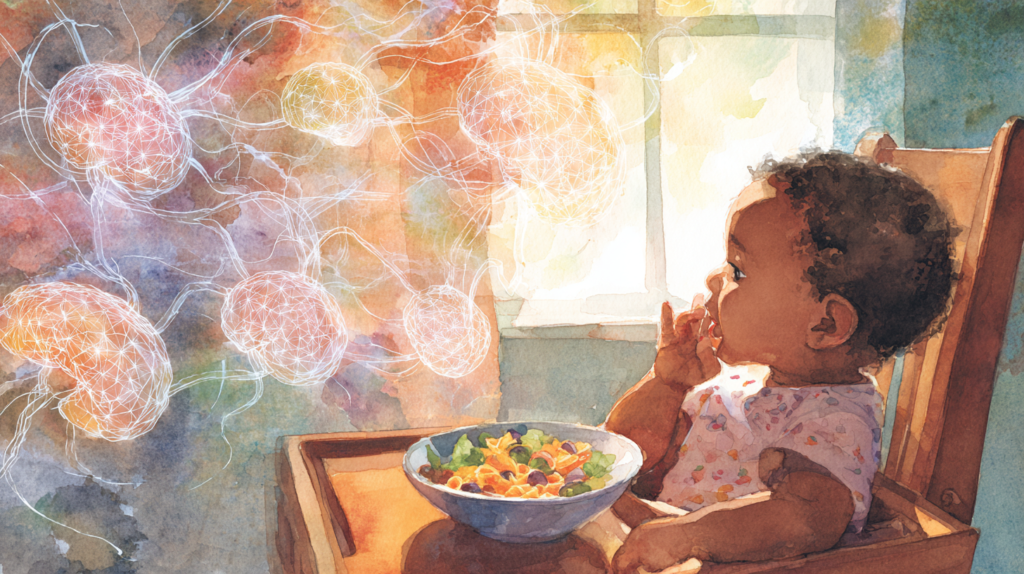
Here’s what’s actually happening inside your baby’s mouth: Their oral sensory system contains thousands of mechanosensitive nerve endings in the lips, tongue, and intraoral mucosa. These sensors constantly send information to the brain about food texture. When your baby eats a smooth puree, all sensors report the same message: “Smooth! Prepare swallow pattern A.” When they munch a cracker, everyone agrees: “Crunchy! Use chewing pattern B.”
But mixed textures? That’s when chaos erupts. Half the sensors scream “smooth!” while the other half yell “lumpy!” The brain receives conflicting messages and doesn’t know which motor pattern to activate. In that moment of confusion, the protective gag reflex fires—not because your baby dislikes the food, but because their nervous system perceives a safety threat.
Think of it like this: Imagine driving a car where the brake and accelerator sometimes switch positions randomly. That’s essentially what your baby’s oral motor system experiences with unexpected texture combinations. The gag isn’t defiance—it’s a neurological emergency brake.
And here’s the part that’ll make you rethink everything: The critical window for introducing complex textures is between 8-10 months of age. Miss this window, and research shows babies are significantly more likely to develop long-term feeding difficulties and limited dietary variety through early childhood. A French longitudinal study tracking nearly 3,000 children confirmed that timing isn’t just important—it’s actually related to broader neurodevelopmental outcomes including language skills, motor development, and cognition through age 3.5 years.
But don’t panic if you’re past that window. The brain remains remarkably plastic, and with the right progression strategies (which I’m about to share), you can still build these skills successfully.
The Five Mixed-Texture Myths Keeping Your Baby Stuck
Tap Each Myth to Reveal the Research-Backed Truth
Your Baby’s Texture Readiness Blueprint
Before we dive into progression strategies, you need to know if your baby is developmentally ready for mixed textures. Pushing too early causes frustration; waiting too long creates resistance. Here’s what feeding therapists assess:
✅ Interactive Readiness Checklist (Tap Each to Check Off)
If you checked 5+ boxes: Your baby is likely ready for mixed-texture introduction! Start with the progression strategies below.
If you checked 3-4 boxes: Focus on building the missing foundational skills for 1-2 weeks before introducing mixed textures.
If you checked fewer than 3: Continue building single-texture competency and oral motor skills. Revisit this checklist in 2 weeks.
The Caribbean-Inspired Texture Progression System
Now here’s where we get practical. As a Caribbean parent, I’ve learned that our traditional foods offer the PERFECT texture progression framework—from silky smooth cornmeal porridge to complex cook-up rice with beans and vegetables. Our ancestors intuitively understood texture building!
The secret isn’t avoiding mixed textures—it’s introducing them systematically so your baby’s brain can build processing skills gradually. Here’s the exact 4-stage progression that feeding therapists use (with Caribbean recipe examples):
Your 4-Stage Mixed-Texture Roadmap (Click Each Stage)
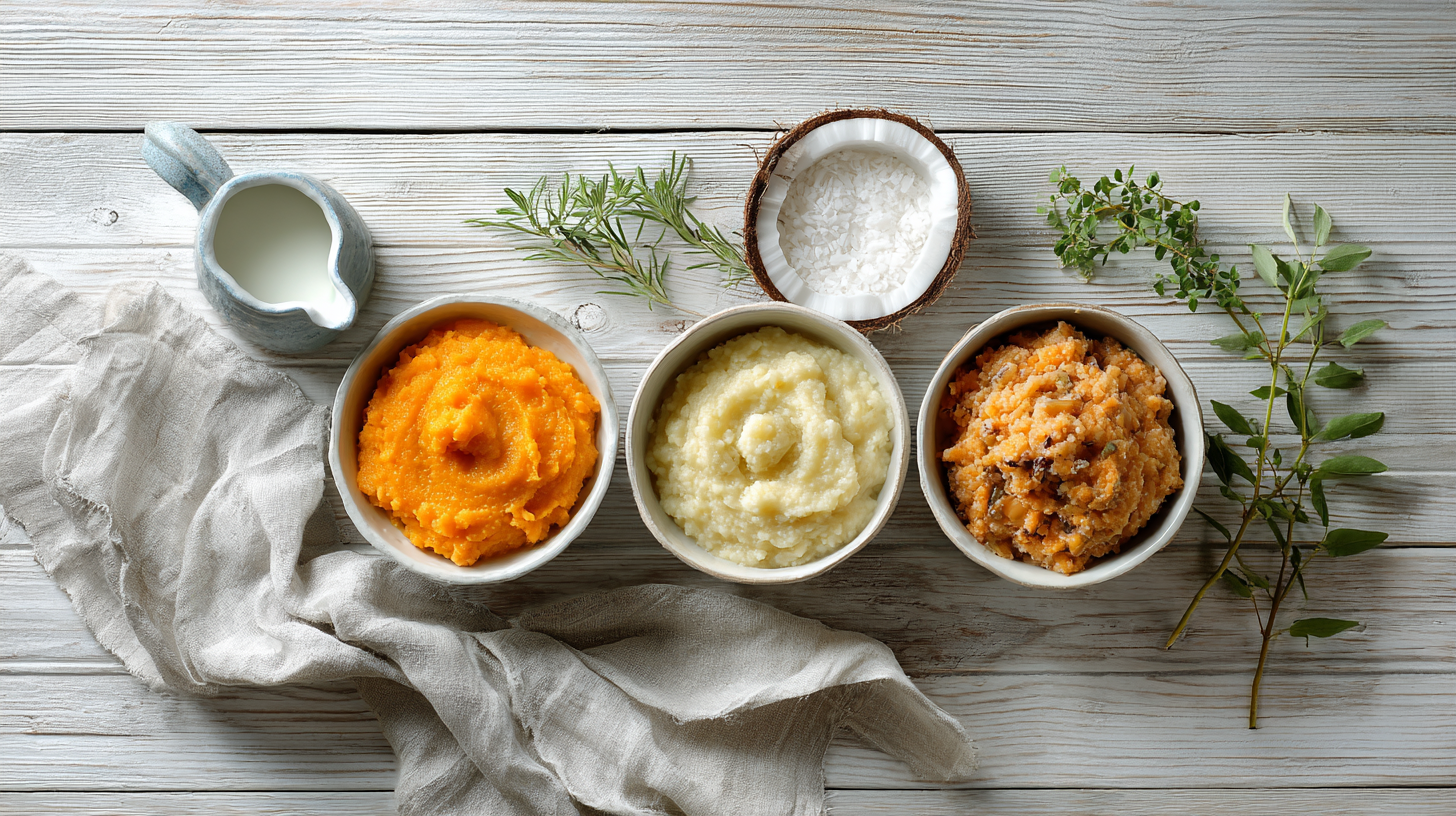
What It Looks Like: Completely smooth purees with uniform consistency throughout—no lumps, no surprises.
Why It Matters: Establishes baseline texture expectations and trains the swallow reflex without triggering gag response.
Caribbean Examples:
- Calabaza con Coco (smooth pumpkin-coconut milk puree)
- Cornmeal Porridge Dreams (silky smooth with nutmeg)
- Dasheen Bush Silk (perfectly blended taro leaves)
- Sweet Potato & Callaloo Rundown (pureed until velvety)
Duration: 2-4 weeks or until baby confidently swallows without any gagging.
Pro Tip: Want authentic Caribbean smooth purees? The Caribbean Baby Food Recipe Book includes 20+ Stage 1 recipes with exact texture guidance for each island tradition.
What It Looks Like: Mashed foods with soft, tiny lumps that are still mostly uniform—think “chunky puree” consistency.
Why It Matters: Introduces subtle texture variation while remaining predictable. Baby learns to move tongue sideways to manage slightly different consistencies.
Caribbean Examples:
- Simple Metemgee Style Mash (eddoes and coconut milk, fork-mashed)
- Yellow Yam & Carrot Sunshine (mashed with small soft lumps)
- Baigan Choka Smooth (roasted eggplant with tiny pieces)
- Plantain Paradise (ripe plantain mashed to slight chunks)
Progression Tip: Start by mashing smooth purees for 30 seconds less each week, gradually increasing lump size from 2mm → 4mm → 6mm.
Duration: 2-3 weeks, progressing lump size every 4-5 days.
What It Looks Like: Soft base with VISIBLE pieces that baby can see before biting—this is the critical transition stage.
Why It Matters: Visual preview allows baby’s brain to prepare for dual-texture processing. Seeing the chunks eliminates the “surprise factor” that triggers gag reflex.
Caribbean Examples:
- Coconut Rice & Red Peas (soft rice with visible beans)
- Karhee Curry Blend (smooth curry base with soft veggie chunks)
- Mayi ak Gwomanje (cornmeal polenta with visible pigeon peas)
- Chenchén con Leche (cracked corn with visible soft pieces)
The Secret Technique: Start with components SEPARATED on the plate. Let baby explore each texture independently, then gradually mix a few pieces into the base. Increase mixture ratio over 7-10 days.
Week 1: 90% smooth base, 10% visible chunks
Week 2: 70% smooth base, 30% visible chunks
Week 3: 50/50 mixture
Week 4: Full mixed-texture meal
Real Talk: This stage is where most Caribbean families naturally excel! Our traditional dishes like Cook-Up Rice and Pelau offer perfect visible mixed-texture training. Find age-appropriate versions in the Recipe Book with exact preparation methods for each texture stage.
What It Looks Like: Smooth foods with hidden surprises—yogurt with berry pieces, oatmeal with fruit, pasta salad.
Why It Matters: Final skill development—baby’s brain can now handle unexpected texture transitions mid-bite without triggering gag reflex.
Caribbean Examples:
- Kremas Inspired Porridge (smooth coconut base with hidden fruit pieces)
- Ackee Adventure (smooth ackee with tomato chunks for 12+ months)
- Majarete Cream (smooth corn pudding with cinnamon and optional raisins)
- Yaroa Baby (layered plantain, meat, and cheese with varied textures)
Progression Tip: Start by TELLING baby about the hidden pieces: “Look! Berries hiding in your yogurt!” This maintains the element of anticipation even with hidden textures. After 1-2 weeks, you can skip the warning as their brain learns to expect variety.
Duration: 2-3 weeks until baby handles surprise textures confidently.
The Pasta Salad Solution (Step-by-Step)
Remember that pasta salad that started this whole conversation? Here’s exactly how to introduce it using the progression system:
Week 1-2: Component Introduction
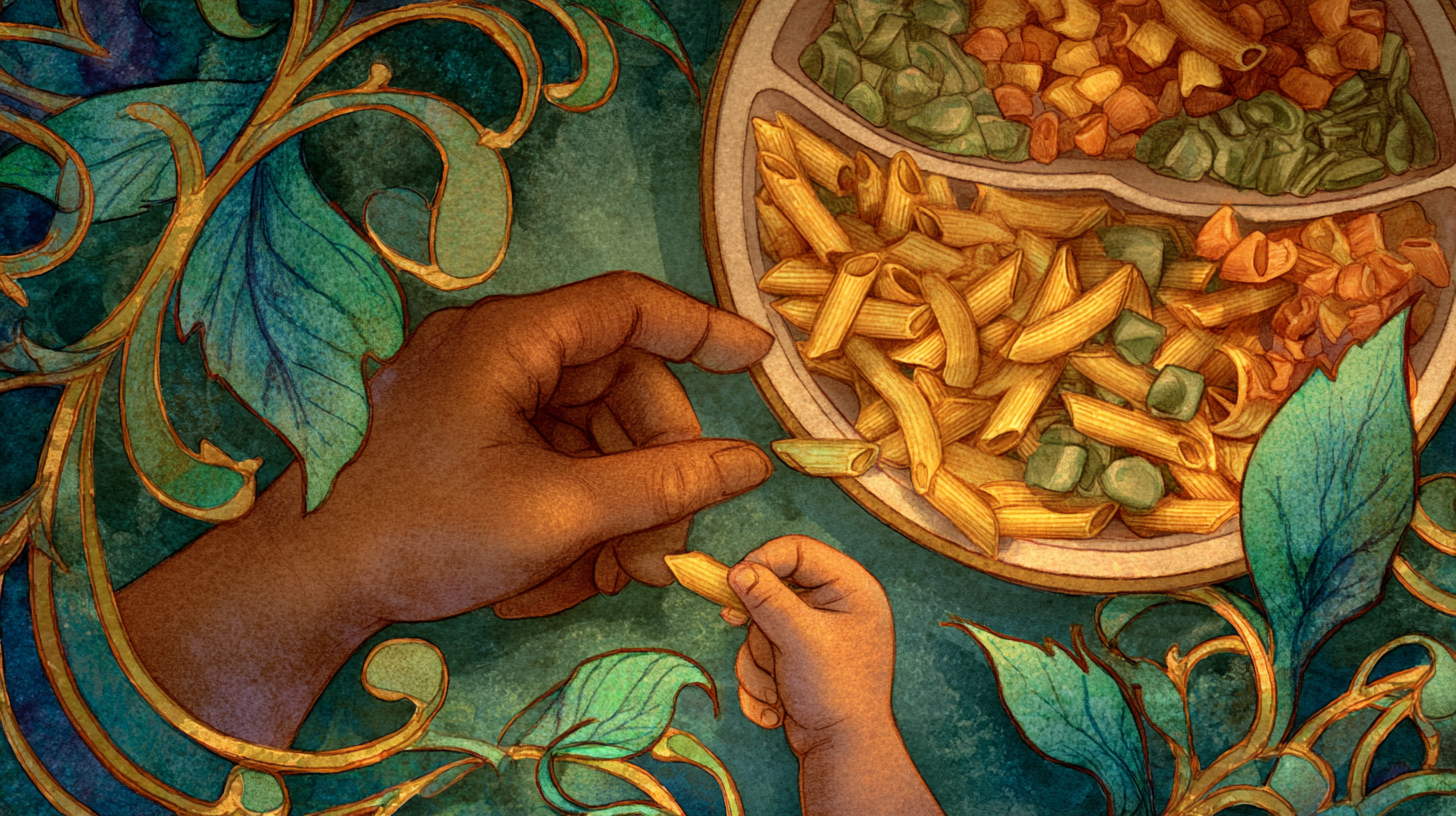
Serve plain, well-cooked pasta pieces as a finger food (uniform texture). Separately offer mashed vegetables or smooth veggie purees. Let baby explore each texture independently. No mixing yet.
Week 3: Visible Mixing Begins
Put pasta on the plate. Add a tiny dollop of smooth sauce (like tomato puree or mild cheese sauce). Let baby see you mix 2-3 pasta pieces into the sauce. The rest stays separate. Baby controls what they eat.
Week 4: Gradual Texture Addition
Introduce finely minced vegetables (2-3mm pieces) mixed into the sauce. Key: These should be SO soft they nearly dissolve when pressed with your finger. Mix into only 1/4 of the pasta portion.
Week 5: Increasing Complexity
Increase minced vegetable size to 5-6mm pieces. Mix into 1/2 of the pasta portion. Baby is now successfully eating a basic pasta salad!
Week 6+: Full Mixed-Texture Meal
Now you can serve proper pasta salad with multiple vegetables, proteins, and dressings. Your baby’s brain has systematically learned to process dual textures.
Total timeline: 4-6 weeks from pasta introduction to full pasta salad acceptance.
This might seem slow, but here’s the beautiful truth: babies who progress through systematic texture training experience 60% less food refusal long-term compared to babies who are pushed through stages too quickly. Slow is actually faster.
Your Texture Troubleshooting Game Plan
Interactive Challenge: Fix the Feeding Mistake
Test your new knowledge! Click the BEST response for each common scenario:
When to Worry (And When to Celebrate)
Let’s get real about something that keeps parents up at night: How do you know if your baby’s gagging is “normal learning” versus “we need professional help”?
Here’s the honest truth from pediatric feeding research: Most mixed-texture challenges resolve within 2-4 weeks of consistent, appropriate exposure. But approximately 3-5% of children do have true Pediatric Feeding Disorder (PFD) that requires intervention.
Your Texture Progress Calculator
Select all statements that apply to YOUR baby:
RED FLAGS that warrant professional feeding evaluation:
- Gagging that consistently leads to vomiting at most meals
- Complete refusal of all foods in entire texture categories (e.g., NOTHING with any lumps)
- Food range narrowing to fewer than 20 accepted foods
- No improvement or worsening after 4-6 weeks of consistent exposure
- Meals regularly ending in crying, arching away, or extreme distress
- Failure to progress to any finger foods or textured foods by 10-12 months
- Poor weight gain or weight loss accompanying texture refusal
- Gagging triggered by looking at, smelling, or touching certain textures
If you checked 2+ red flags, schedule an evaluation with a pediatric occupational therapist or speech-language pathologist who specializes in feeding. Early intervention makes a dramatic difference.
Your 7-Day Caribbean Texture Challenge
Want to put everything into practice immediately? Here’s a week-long texture-building plan using easy Caribbean-inspired foods (adjust based on your baby’s current stage):
Day 1: Baseline Assessment
Serve Calabaza con Coco (smooth pumpkin-coconut puree) and plain soft plantain pieces separately. Observe how baby handles each texture independently. This is your starting point.
Day 2-3: Visual Separation Practice
Serve Yellow Yam & Carrot Sunshine (mashed) with 3-4 tiny soft veggie pieces placed visibly on top. Don’t mix them in. Let baby discover and explore at their pace.
Day 4-5: Controlled Mixing
Prepare Coconut Rice & Red Peas with rice VERY soft and beans in a separate section. Encourage baby to self-feed. Mid-meal, mix 2-3 beans into a small portion of rice. See how they respond.
Day 6: Increase Complexity
Serve Simple Metemgee Style Mash (eddoes and coconut milk) with slightly larger soft lumps throughout. This should feel familiar but slightly more challenging than Day 1.
Day 7: Hidden Texture Introduction
Make Cornmeal Porridge with 4-5 tiny banana pieces mixed IN (not visible on top). Prepare baby by saying “Special surprise inside!” Monitor gag response versus Day 1.
Progress Markers to Celebrate:
- Fewer gags on Day 7 than Day 1
- Baby continuing to eat after a gag rather than refusing more food
- Increased willingness to try new textures
- Baby actively mixing separated components themselves
- Less dramatic gag reflex (shorter duration, no vomiting)
Even ONE improvement is worth celebrating! You’re literally rewiring your baby’s neurological responses—that’s huge.
Island Mama Tip: Traditional Caribbean baby feeding wisdom has always emphasized gradual texture building—from smooth “pap” to runny porridge to ground provisions to full meals. Our grandmothers understood texture progression intuitively! Want to honor these traditions while following modern feeding science? The Caribbean Baby Food Recipe Book bridges both worlds with 75+ recipes organized by texture stage and developmental readiness, plus cultural wisdom from Jamaica, Trinidad, Guyana, Haiti, Dominican Republic, Cuba, and Puerto Rico.
What Success Actually Looks Like
Here’s what I wish someone had told me when I was in the thick of feeding stress with my daughter: Success doesn’t mean your baby never gags again. It means the gags become less frequent, less dramatic, and your baby learns to manage them independently.
Three months after implementing these texture progression strategies, my daughter went from gagging on yogurt with fruit to demolishing full pasta salads, stir-fries, and even my mother’s traditional Jamaican ackee and saltfish (which has about five different textures happening simultaneously).
But the transformation I didn’t expect? MY confidence. Understanding the neurology behind her gagging eliminated my anxiety. I stopped interpreting every gag as failure and started seeing each one as her nervous system learning and adapting. That mindset shift changed everything.
The truth is, texture progression isn’t about creating a “perfect eater.” It’s about building neurological flexibility that will serve your baby far beyond mealtimes. The same brain systems that learn to process multiple textures simultaneously are the ones that later handle complex problem-solving, multitasking, and sensory integration in overwhelming environments.
You’re not just teaching your baby to eat pasta salad. You’re training their brain to handle complexity with confidence.
Your Next Bite Forward
If you take just ONE thing from this article, let it be this: Your baby’s gagging on mixed textures isn’t defiance, pickiness, or something to “wait out.” It’s a specific neurological skill that requires targeted development—and you now have the exact roadmap to build it.
Start where your baby is today. Not where you think they “should” be, not where your friend’s baby is, not where Instagram makes it look like everyone else’s baby is. Start with their current texture competency and progress systematically through the stages.
Some babies will fly through in 3 weeks. Others need 8 weeks. Both timelines are perfectly normal. The only mistake is staying stuck at one stage out of fear or pushing too fast out of frustration.
Here’s your action plan for today:
- Identify your baby’s current texture stage using the readiness checklist
- Choose ONE meal this week to implement the progression technique for the next stage
- Track gag frequency for 7 days—you’ll likely see improvement by day 5-6
- Celebrate small wins—every successful bite with mixed textures is rewiring neural pathways
- Join the community—tag your texture progression wins on social media so other parents know they’re not alone
And remember: the goal isn’t perfection. It’s progress. Your baby is learning one of the most complex sensory-motor skills they’ll ever master. Give them (and yourself) grace in the process.
Now if you’ll excuse me, I have a batch of coconut rice and beans calling my name—with perfectly visible beans mixed throughout, exactly the way my daughter loves them now. That “picky” baby who gagged on yogurt? She just asked for seconds of the pasta salad.
The progression works. Trust it. Your baby’s brain is more capable than you think—it just needs the right roadmap.
Want the complete Caribbean texture progression system with 75+ stage-appropriate recipes, exact preparation methods, and cultural feeding wisdom from seven island nations? The Caribbean Baby Food Recipe Book gives you everything you need to confidently navigate every texture stage while honoring your heritage. From smooth calabaza purees to complex pelau and cook-up rice, every recipe includes texture guidance, age recommendations, and family meal adaptations.
Now go forward with confidence, island mama. Your baby’s texture journey is just beginning—and you’re exactly the guide they need.

Kelley's culinary creations are a fusion of her Caribbean roots and modern nutritional science, resulting in baby-friendly dishes that are both developmentally appropriate and bursting with flavor. Her expertise in oral motor development and texture progression ensures that every recipe supports your little one's feeding milestones while honoring cultural traditions.
Join Kelley on her flavorful journey as she shares treasured family recipes adapted for tiny taste buds, evidence-based feeding guidance, insightful parenting anecdotes, and the joy of celebrating food, culture, and motherhood. Get ready to immerse yourself in the captivating world of Kelley Black and unlock the vibrant flavors of the Caribbean for your growing baby, one nutritious bite at a time.
- The Feeding Revolution: Why Your Everyday Meals Are Changing the World - October 13, 2026
- Your Feeding Story Matters More Than The “Perfect” One Online - October 12, 2026
- Looking Forward: Stepping Into Your Confident Feeding Future - October 11, 2026