
Your Stress Is Programming Your Baby’s Fork (And Here’s the Science That Proves It)
⚡ Before We Start: What’s YOUR Stress Transfer Score? ⚡
Click the emotion you feel MOST during your baby’s mealtimes:
Here’s something that’ll make you spit out your coffee: Every time you sit down with that tiny spoon and silently panic about whether your baby ate enough sweet potato, your stress hormones are having a full-blown conversation with your child’s nervous system. And guess what? Your baby’s listening. Intently.
This isn’t some fluffy parenting theory from a book written in 1952. This is cutting-edge neuroscience that’s been studied in labs with fMRI machines, cortisol measurements, and researchers in white coats who’ve spent years documenting how your racing heartbeat literally changes your baby’s brain wiring around food.
The phenomenon is called emotional contagion, and it’s happening right now—whether you’re stressed about your baby refusing that carefully prepared plantain purée or anxious they’re not eating enough at six months old. Your emotional state during feeding isn’t just affecting the moment. It’s programming patterns that could last decades.
But here’s the thing that nobody talks about: you don’t need to be perfect. You just need to understand what’s happening. Because once you see the mechanism—the actual biological transfer happening between you and your little one—you can’t unsee it. And that awareness? That’s where everything changes.
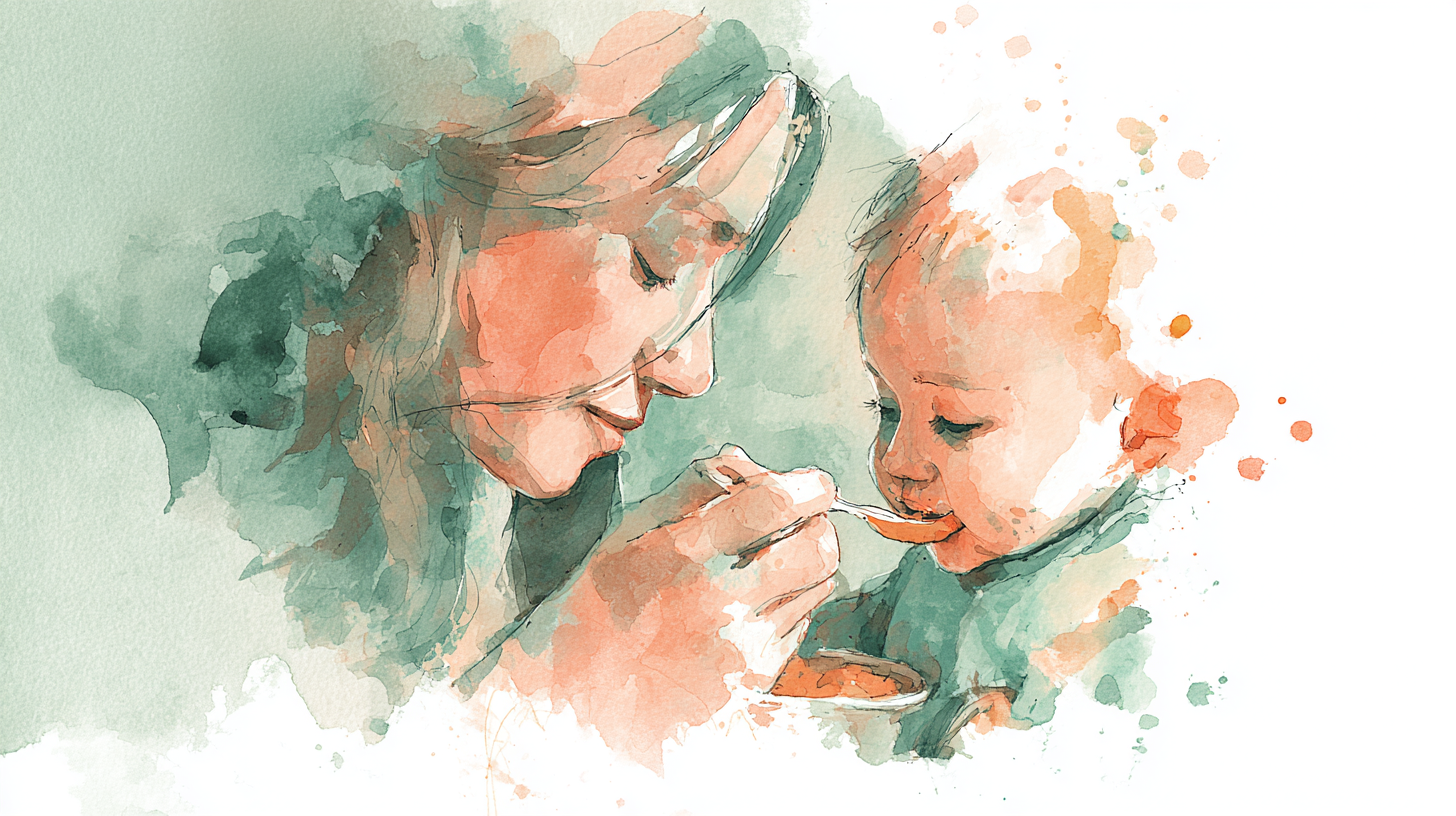
The Biology Nobody Warned You About: How Stress Actually Transfers
Remember those mirror neurons you vaguely heard about in some TED Talk? Turns out they’re doing way more than making you yawn when someone else yawns. These specialized brain cells fire both when you perform an action and when you watch someone else do it. In babies, these neurons are working overtime, creating a biological photocopy machine that duplicates your emotional state.
Here’s where it gets wild: researchers put mothers through a stressful task—public speaking with negative feedback—while their infants sat nearby. The babies weren’t being stressed directly. They were just… there. But when scientists measured the infants’ physiological responses, they found something shocking: the babies’ sympathetic nervous systems synchronized with their mothers’ stress patterns. The infants’ bodies were responding as if they were the ones giving the speech.
During feeding, this synchrony intensifies. Your cortisol levels spike when you’re anxious about your baby eating. Your baby’s mirror neurons detect your facial tension, your breathing pattern, your voice tone. Their little nervous system reads these cues as: “Danger. Food equals stress.” And just like that, you’ve created an association that has nothing to do with the actual food.
But wait—there’s a beautiful counterbalance. Oxytocin, the bonding hormone released during breastfeeding, skin-to-skin contact, and calm, connected moments, acts as a buffer. Studies show that when mothers who listened to meditation recordings during feeding, their stress hormones decreased and—here’s the kicker—their babies showed improved weight gain and development. The relaxation response is just as contagious as the stress response.
Unlock Your Brain’s Stress Transfer Pattern
Click to reveal what your brain is REALLY doing during mealtimes:
The Long Game: How Today’s Tension Becomes Tomorrow’s Eating Disorder
Let me paint you a picture that researchers are now documenting in longitudinal studies: A parent restricts “unhealthy” foods at age two because they’re anxious about nutrition. The restriction creates a forbidden fruit effect. By age seven, that child shows disinhibition around restricted foods—meaning they overeat those exact foods when they get access. By adolescence, they report shame and guilt around eating. By young adulthood, they’re using food to manage stress and have completely lost touch with their hunger cues.
This isn’t hypothetical. Studies tracking families over multiple years show that parental feeding practices at ages 5-7 significantly predict emotional eating and eating in the absence of hunger years later. Children exposed to high restriction showed associations with eating without physical hunger and reported negative emotions—shame, guilt—in response to eating restricted foods.
But here’s what makes this so heartbreaking and hopeful at the same time: it’s not about the food rules themselves. It’s about the emotional climate surrounding food. Research on the Mealtime Emotions Measure for Parents found that higher parental anxiety during meals was related to greater child control over eating, while mealtime stress and anger was associated with using food to regulate emotions.
The bidirectional trap works like this: Your baby has feeding difficulties (which all babies do at some point—it’s called normal development). You get anxious. Your anxiety leads to controlling feeding practices—pressure to eat, restriction, using food as a reward. Those practices make the feeding difficulties worse. Your anxiety increases. Round and round we go.
My own journey with this started when my daughter was eight months old and decided that green vegetables were the enemy. I felt this knot in my chest every time I offered broccoli, mentally calculating her nutrient intake, wondering if I was failing as a parent. One day, my husband pointed out that I literally held my breath when I brought the spoon to her mouth. I was transmitting my stress with every bite. Once I saw it, I couldn’t unsee it. And honestly? That awareness saved our mealtimes.
Breaking the Cycle: The Science of Stress Interruption
Here’s the truth that gets buried under all the feeding advice: your nervous system regulation is the foundation for your baby’s healthy food relationship. Not the organic produce. Not the homemade purées (though those Caribbean-inspired recipes from my Caribbean Baby Food Recipe Book sure don’t hurt). Not the perfect feeding schedule. Your breathing rate.
Researchers studying the INSIGHT responsive parenting intervention discovered something powerful: when parents learned alternative soothing strategies beyond feeding, their children showed lower perceived emotional overeating. The parents weren’t just learning new techniques—they were breaking the stress-food connection before it hardened into concrete.

The Child Feeding Guide, a digital health intervention, showed that simple psychoeducation and support significantly decreased maternal anxiety and reduced controlling feeding practices. Parents weren’t doing anything fancy—they were just learning to recognize their stress responses and implement simple regulation techniques.
So what actually works? The research points to a few game-changers:
Progressive Muscle Relaxation before meals: Tense and release each muscle group for five seconds. Sounds silly until you realize this literally reduces the physiological stress signals your baby’s mirror neurons are detecting. One study on breastfeeding mothers found that those who listened to meditation recordings during feeding experienced reduced stress and their infants showed improved weight gain.
The 5-4-3-2-1 Grounding Technique when anxiety spikes: Identify five things you see, four you can touch, three you hear, two you smell, one you taste. This interrupts the automatic stress response and brings you into the present moment, where your baby’s actual needs exist—not your imagined catastrophes.
Paced breathing matched to your desired state: Slow, deep breathing activates your parasympathetic nervous system (rest and digest mode). Your baby’s autonomic nervous system physiologically synchronizes with yours through a process called covariation. When you breathe calmly, you’re literally teaching your baby’s nervous system how to stay regulated around food.
Caribbean Feeding Wisdom: The Stress-Free Approach
You know what I love about traditional Caribbean feeding practices? There’s an inherent wisdom in the relaxed approach. When my grandmother made her coconut rice and peas or plantain porridge, there was no performance anxiety. Food was nourishment, yes, but it was also connection, culture, and joy.
That’s why recipes like the Sweet Potato & Callaloo Rundown or Cornmeal Porridge Dreams from the Caribbean Baby Food Recipe Book aren’t just about nutrition—they’re about creating a feeding environment that’s naturally lower-stress, rich with familiar flavors that connect generations rather than create pressure.
Stress Cycle Identifier
Discover which part of the stress transfer cycle you’re stuck in:
The Real-World Lab: What Actually Happens When Parents Shift
Let me tell you about a study that gives me goosebumps every time I read it. Researchers worked with families where mealtime had become a battleground. They implemented a multi-component program: parent cognitive-behavioral therapy for underlying anxiety, parent-child interaction coaching for responsive feeding, and family therapy for relationship dynamics around food.
The results? Parents reported that once they understood they were transmitting their stress—once they saw the actual mechanism—they couldn’t unknow it. And that knowledge became motivation. One mother described it as “finally understanding that my emotional regulation isn’t self-care, it’s childcare.”
Another intervention study found that mothers receiving digital support through the Child Feeding Guide reported the resources helped them “better understand their child’s eating behavior.” Their anxiety decreased not because their child started eating perfectly, but because they stopped interpreting normal developmental variations as emergencies.
The key insight from multiple studies: parents don’t need their children to eat perfectly to reduce their feeding anxiety. They need to understand what’s biologically normal, recognize their stress responses, and have practical tools to regulate in the moment.
Here’s what this looked like in my own home: I started doing three deep breaths before bringing food to the table. Sounds ridiculously simple, right? But those three breaths became my reset button. They signaled to my nervous system: “We’re safe. This is just food. No emergency here.” My daughter’s acceptance of foods didn’t magically increase overnight, but the tension in our feeding relationship dissolved within weeks.
I also started incorporating more familiar, comforting flavors—Caribbean staples that connected to my own childhood food memories. When I made Plantain Paradise or Yellow Yam & Carrot Sunshine (both from the cookbook), I was relaxed because these were foods I inherently trusted. That calm translated directly to her willingness to explore.
The Cortisol-Oxytocin Dance: Understanding Your Hormonal Choreography
Let’s get into the hormone science because it’s actually fascinating—and it’ll change how you think about feeding forever.
Cortisol is your stress hormone. When you’re anxious about your baby’s eating, your cortisol spikes. Here’s the thing: cortisol isn’t evil. It’s designed to help you respond to actual threats. But your body can’t distinguish between “tiger chasing you” stress and “baby rejected vegetables again” stress. Both trigger the same physiological cascade.

Research shows that parent cortisol levels increased significantly when feeding their child compared to when they simply observed others feed their child. The act of being responsible for feeding—with all its associated worries—is physiologically stressful for many parents.
Now enter oxytocin, the beautiful counterbalance. This bonding hormone is released during breastfeeding, skin-to-skin contact, and moments of calm connection. Studies on breastfeeding mothers found that increased oxytocin levels after feeding correlated with reduced negative emotion recognition and enhanced positive emotion recognition. Oxytocin literally shifts your brain toward seeing the positive rather than fixating on the negative.
Here’s the dance: skin-to-skin contact before or during feeding can reduce infant cortisol concentrations by up to 70% within 20 minutes. That physical contact triggers oxytocin release in both you and your baby, buffering the stress response and creating a physiological environment conducive to calm feeding.
But—and this is crucial—the oxytocin response depends on the interaction quality. Synchronous, responsive caregiving increases oxytocin. Intrusive, controlling interactions don’t produce the same effect. So it’s not just about holding your baby; it’s about being emotionally present and responsive while you do it.
Your Oxytocin Booster Menu
Click to discover which pre-meal ritual will flood your system with bonding hormones:
The Social Media Trap: When Comparison Amplifies Your Anxiety
Let’s talk about the elephant in the room: Instagram feeding accounts where babies enthusiastically eat salmon and broccoli while you’re dealing with a child who thinks anything green is poison.
Recent research on social media and parental feeding anxiety found some troubling patterns. About 50% of parents reported being persuaded by social media advice to try nutrition fads or supplements. Qualitative analysis identified themes of “comparison and inadequacy” and “information overload” that directly increased feeding-related anxiety.
The problem isn’t social media itself—it’s the curated highlight reel creating unrealistic expectations. You see thirty seconds of a peaceful meal; you don’t see the forty-minute negotiation before it or the tantrum after. Your brain registers: “My baby should eat like that. I’m doing something wrong.”
Here’s what the research suggests for healthier social media engagement: curate your feed intentionally. Unfollow accounts that trigger comparison and inadequacy. Follow accounts that normalize the mess, the refusals, the developmental phases. Recognize when you’re doomscrolling feeding content because you’re anxious, and use that awareness to implement a grounding technique instead.
I had to completely overhaul my social media consumption around feeding. I unfollowed the picture-perfect feeding accounts and started following parents who showed the reality: sweet potato on the ceiling, babies turning away from spoons, toddlers eating the same five foods for three months straight. Not because misery loves company, but because seeing normal developmental patterns reduced my anxiety about whether my daughter was “behind.”
Practical Implementation: Your 30-Day Stress Transfer Reset
Alright, let’s get concrete. Here’s a realistic, research-backed plan to break your stress transfer cycle over the next month:
Week 1 – Awareness Phase: Keep a simple mealtime emotion log. Before each feeding session, notice your emotional state (anxious, relaxed, frustrated, rushed). After the meal, jot down your baby’s response. You’re not changing anything yet—just observing the correlation. Most parents are shocked when they see the pattern on paper.
Week 2 – Regulation Practice: Implement the three-breath reset before every meal. That’s it. Just three intentional, slow breaths before you sit down with your baby. Research shows this simple act activates your parasympathetic nervous system and interrupts the automatic stress response. Track whether mealtimes feel different.
Week 3 – Environmental Shifts: Remove distractions and pressure. No phone during feeding (I know, I know). No mental countdown of how many bites they took. No comparison to yesterday’s intake. Create a calm environment with music you love, comfortable seating, and foods you feel confident about—like those familiar Caribbean-inspired purées that connect to your own positive food memories.
Week 4 – Responsive Practice: Focus on reading and responding to your baby’s cues rather than following a script. Hungry signals? Offer food. Fullness cues? Stop. Sounds obvious but it’s revolutionary when you’ve been caught in the “just one more bite” cycle. Let your baby lead the dance; you’re just the DJ.
Throughout all four weeks, practice self-compassion. Research consistently shows that parental guilt and shame intensify feeding stress, which worsens outcomes. You’re not a bad parent if mealtimes have been tense. You’re a normal parent who’s been inadvertently caught in a biological feedback loop. Now you’re getting out.
Your Personalized 7-Day Stress Reset Plan
Click to generate your custom daily stress-interruption strategy:
When to Get Professional Support (And Why It’s Not Failure)
Here’s something that doesn’t get said enough: sometimes the stress transfer cycle is rooted in your own history with food, trauma, anxiety disorders, or other factors that require professional support to untangle. And that’s not weakness—it’s wisdom.
Research on interdisciplinary feeding clinics found that parent mental health problems are common among families seeking help for pediatric feeding disorders. One study found elevated parental anxiety in families dealing with feeding challenges, and crucially, that parental mental health affected treatment adherence and outcomes.
Consider seeking professional support if:
You experience persistent, intrusive anxiety about your child’s eating that interferes with daily functioning. You find yourself engaging in controlling feeding behaviors despite knowing they’re counterproductive. Your child’s feeding difficulties are severe (significant food refusal, limited food repertoire, failure to gain weight). Your own history with eating disorders or disordered eating is being triggered by feeding your child. You feel overwhelmed, depressed, or unable to regulate your emotions around mealtimes despite trying self-help strategies.
Professional support might include: a pediatric feeding specialist who can assess whether your child has genuine feeding difficulties versus normal developmental variations, a therapist trained in perinatal/parental anxiety who can address underlying mental health issues, a parent-child interaction coach who can observe and provide feedback on feeding dynamics, or a registered dietitian who can provide realistic guidance about infant/toddler nutrition (spoiler: they need way less than you think).
I worked with a feeding therapist for six weeks when my daughter was nine months old. Best decision I made. Not because there was anything “wrong” with either of us, but because having an objective observer point out patterns I couldn’t see—like how I tensed my shoulders every time she turned her head away from the spoon—was invaluable. Sometimes you need someone outside the stress spiral to show you the exit.
The Path Forward: Imperfect Presence Over Perfect Performance
So where does this leave us? Here’s the truth that nobody puts on Instagram: you don’t need to have zero stress at mealtimes. That’s not realistic, and frankly, it’s not the goal. The goal is awareness and interruption. The goal is catching yourself mid-anxiety spiral and choosing a different response. The goal is understanding that your emotional regulation—even imperfect, works-in-progress regulation—is the most important ingredient you’re bringing to the table.
Every time you take those three breaths before feeding, you’re rewiring neural pathways. Every time you stay calm when your baby smears sweet potato across their face instead of eating it, you’re teaching their nervous system that food is safe, exploration is allowed, and their parent can handle life’s messiness. Every time you let go of counting bites and trust your baby’s hunger cues, you’re preventing future eating disorders that you’ll never even know you prevented.
The research is clear: emotional contagion during feeding is real, measurable, and consequential. But it’s also reversible, modifiable, and within your control. Not perfect control—we’re not aiming for that. But enough control to shift the trajectory. Enough awareness to break generational patterns. Enough self-compassion to remember that doing your best is genuinely enough.
Your anxiety isn’t a character flaw. It’s a signal that you deeply care about your child’s wellbeing. The work isn’t eliminating that care; it’s channeling it into presence instead of pressure, connection instead of control, trust instead of fear.
And here’s my favorite piece of research from this entire deep-dive: a study found that 91% of parents noticed their family was less stressed when they shared meals together. Not perfect meals. Not Instagram-worthy meals. Just together, present meals. The quality of connection matters infinitely more than the quality of the purée.
So the next time you sit down with that tiny spoon and your beautiful, frustrating, wonderfully individual baby, remember: you’re not just feeding their body. You’re programming their relationship with nourishment, pleasure, and self-trust. Your calm nervous system is the secret ingredient that no recipe book—not even my beloved Caribbean Baby Food Recipe Book with its 75+ stress-free recipes—can provide. That comes from you. And you’ve got this.
Take your three breaths. Trust your baby. Trust yourself. And let the stress transfer cycle break right here, right now, at your kitchen table.

Kelley's culinary creations are a fusion of her Caribbean roots and modern nutritional science, resulting in baby-friendly dishes that are both developmentally appropriate and bursting with flavor. Her expertise in oral motor development and texture progression ensures that every recipe supports your little one's feeding milestones while honoring cultural traditions.
Join Kelley on her flavorful journey as she shares treasured family recipes adapted for tiny taste buds, evidence-based feeding guidance, insightful parenting anecdotes, and the joy of celebrating food, culture, and motherhood. Get ready to immerse yourself in the captivating world of Kelley Black and unlock the vibrant flavors of the Caribbean for your growing baby, one nutritious bite at a time.
- The Feeding Revolution: Why Your Everyday Meals Are Changing the World - October 13, 2026
- Your Feeding Story Matters More Than The “Perfect” One Online - October 12, 2026
- Looking Forward: Stepping Into Your Confident Feeding Future - October 11, 2026