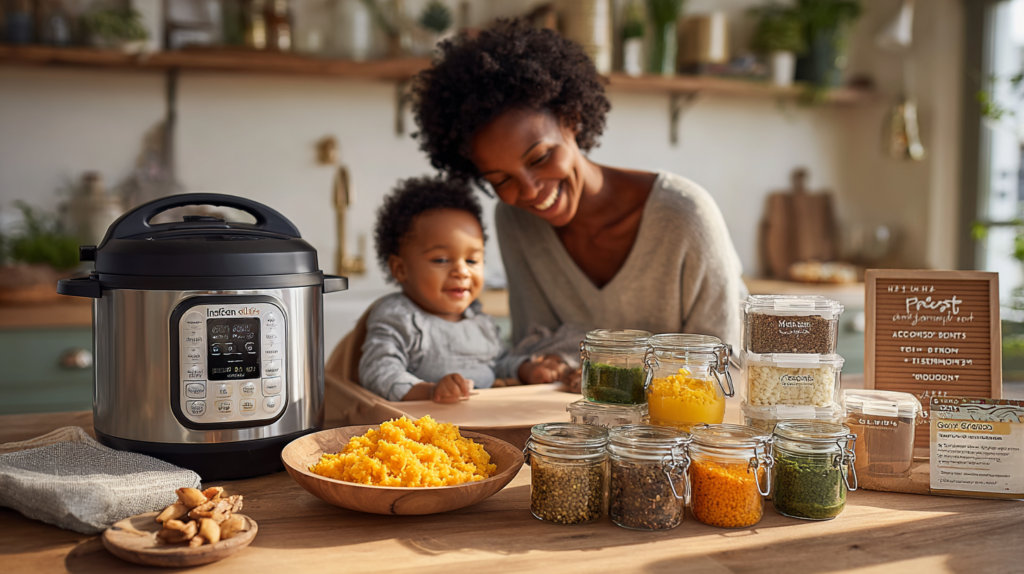
Your Instant Pot Is About to Become Your Baby’s Secret Weapon (And Save You 10+ Hours a Week)
⏰ How Much Time Are You Really Losing?
Click what describes your current baby feeding routine:
Here’s what nobody tells you when you bring that baby home: you’re about to spend more time in your kitchen than you ever imagined. Not cooking elaborate meals for yourself—oh no. Those days are gone. You’ll be hunched over the stove, stirring tiny portions of butternut squash at 6 AM, wondering how something so small can take so much time.
But what if I told you there’s a single piece of kitchen equipment that could give you back entire evenings, weekends, and those precious moments when your baby finally naps and you could actually sit down?
The Instant Pot isn’t just another gadget collecting dust next to your bread maker. When it comes to baby food, it’s a game-changer that’s reshaping how parents approach meal prep. The global baby food market hit 110 billion USD in 2024 and is racing toward 192 billion by 2032, but here’s the twist: a growing number of parents are stepping away from those colorful pouches and jars, choosing instead to take control of what goes into their baby’s mouth. And the Instant Pot is at the center of this shift.
Why? Because it solves the biggest problem every parent faces: how do I feed my baby fresh, nutritious, culturally appropriate food without sacrificing every spare minute I have?
The Reality Nobody Warned You About
When my friend became a mother for the first time, she had grand visions of making everything from scratch. She imagined her baby sitting in the high chair, happily gumming organic sweet potato while she sipped tea and enjoyed the moment. Reality hit on day three of solids. She spent forty minutes boiling, peeling, mashing, and cleaning up—for two tablespoons of food her daughter promptly rejected.
Fast forward six months. She discovered her Instant Pot could pressure-steam a week’s worth of vegetables, cook perfect lentils without constant stirring, and shred chicken so tender it practically melted. What used to take hours of active cooking time now took fifteen minutes of hands-off work. She started batch-cooking on Sunday afternoons, and suddenly she had freezer stashes of sweet potato and callaloo, plantain and coconut rice, and silky-smooth pumpkin puree—all ready to grab, reheat, and serve.
That’s the power of understanding how to leverage your tools. The Instant Pot uses pressure and steam to cook foods faster and more evenly than traditional methods, while keeping textures soft and nutrient retention high. For baby food, this means you can prepare iron-rich meats, fiber-packed legumes, and soft root vegetables—all in one appliance, with minimal supervision, and in a fraction of the time.
Why Homemade Baby Food Matters More Than Ever
Recent years have brought uncomfortable truths to light. The FDA’s “Closer to Zero” initiative and new state-level testing laws have revealed that some commercial baby foods contain concerning levels of heavy metals like lead, arsenic, cadmium, and mercury. Parents are asking harder questions: what’s really in those pouches? How much sodium? How much sugar? What are the sourcing standards?
Meanwhile, regulations are tightening. The proposed Baby Food Safety Act and California’s AB 899 are pushing for stricter contaminant limits and public reporting, which is a good thing—but it also means the landscape is shifting. Parents who want full control are turning to their own kitchens.
Homemade baby food lets you choose organic produce when you want it, skip the salt and added sugars, and introduce flavors that match your family’s culture. If you grew up eating rice and peas, callaloo, ackee, plantain, or cassareep-seasoned dishes, why shouldn’t your baby experience those tastes too? The Caribbean Baby Food Recipe Book offers over 75 recipes designed to bring authentic island flavors to your baby’s bowl—and many of them are Instant Pot-friendly.
But here’s the challenge: traditional stovetop cooking for babies is labor-intensive. You need to stand there, stirring, monitoring, adjusting heat. The Instant Pot changes that equation entirely.
How the Instant Pot Actually Works for Baby Food
Let’s break down what makes this appliance so effective. An Instant Pot is a programmable electric pressure cooker with multiple functions: pressure cook, slow cook, steam, sauté, and even make yogurt. For baby food, you’ll primarily use pressure and steam modes.
Pressure cooking works by trapping steam inside a sealed pot, which raises the internal temperature above boiling point. This cooks food faster and breaks down tough fibers in meat, beans, and root vegetables. What takes an hour on the stove takes fifteen minutes under pressure—and it’s hands-off time.
Steaming uses a trivet and water to gently cook vegetables and fruits without submerging them, preserving more nutrients and preventing waterlogged textures. This is perfect for making smooth purees or soft finger foods that babies can grasp and gum.
Here’s what that looks like in practice:
- Sweet potatoes, pumpkin, or plantains: Place in the pot with 1 cup of water, pressure cook on high for 8-12 minutes depending on size, then mash or puree to your baby’s texture needs.
- Lentils and beans: Rinse, add water (no soaking needed for lentils), pressure cook for 10-15 minutes, and you have a creamy, protein-packed base.
- Chicken or beef: Pressure cook with a bit of water or broth until it shreds easily (15-20 minutes for chicken, 25-30 for beef), then chop or blend to match your baby’s developmental stage.
- Rice and grains: Cook perfectly fluffy rice, quinoa, or even cornmeal porridge with zero risk of burning or sticking.
All of this happens while you’re doing something else—folding laundry, playing with your baby, or just sitting down for five minutes. That’s the beauty of it.
️ Build Your Weekly Batch-Cooking Plan
Select the foods you want to prep this week. We’ll show you how to organize them:
The Sunday Afternoon Strategy That Changes Everything
Most parents who succeed with Instant Pot baby food follow a simple pattern: they batch-cook on one or two afternoons per week, then mix and match throughout the week. It’s the same principle meal-preppers use for their own lunches, but adapted for tiny humans with changing texture needs.
Here’s a real-world example of a Sunday afternoon batch session:
1:00 PM: Start with a pot of lentils. Rinse 1 cup of red lentils, add 2 cups of water, a pinch of cumin (if baby is 12+ months), and pressure cook on high for 10 minutes. Natural release. While that’s going, peel and chop sweet potatoes and pumpkin.
1:20 PM: Transfer cooked lentils to storage containers. Add sweet potato chunks and 1 cup of water to the Instant Pot, pressure cook for 8 minutes. Quick release. Mash or blend to desired texture, portion into silicone ice cube trays or small jars, and freeze.
1:40 PM: Repeat with pumpkin. While it cooks, prep chicken breasts—cut into chunks, add to the pot with 1 cup of water or low-sodium broth, pressure cook for 15 minutes. Shred with forks and portion out.
2:10 PM: Use the sauté function to lightly cook some ripe plantain slices until soft, then mash for a naturally sweet side or dessert.
By 2:30 PM, you’ve made four to five different base components. Now you have building blocks for the entire week. Monday: mashed sweet potato with a bit of shredded chicken. Tuesday: lentil and pumpkin blend. Wednesday: plantain and chicken. Thursday: sweet potato and lentils. Friday: pumpkin with a side of plantain. You mix, you match, you introduce variety—all without cooking from scratch every single day.
This is how you reclaim your time. This is how you feed your baby real food without losing your mind.
The Caribbean Advantage: Flavor, Nutrition, and Culture in Every Bite
One of the most beautiful things about using an Instant Pot for baby food is how easily it adapts to cultural ingredients. If you’re Caribbean, you don’t have to default to bland oatmeal and applesauce. Your baby can enjoy the same foundational flavors you grew up with—just prepared safely and appropriately for their age.
Take callaloo and sweet potato. Steam fresh callaloo leaves with chunks of sweet potato, a bit of coconut milk, and a whisper of thyme (after 8+ months). The Instant Pot makes the greens silky-soft and the sweet potato perfectly tender in under ten minutes. Blend or mash depending on texture tolerance, and you’ve got a nutrient-dense meal packed with iron, calcium, and vitamins.
Or try cornmeal porridge. Use the sauté function to toast fine cornmeal lightly, then switch to pressure and add coconut milk, water, a tiny pinch of cinnamon (8+ months), and a touch of vanilla. You’ll have creamy, lump-free porridge in minutes—no constant stirring required.
Rice and red peas is another classic. Rinse rice and red kidney beans (or use canned low-sodium beans for speed), add coconut milk, water, a sprig of thyme, and pressure cook. The beans become soft enough to mash for younger babies, or leave whole for older babies practicing self-feeding. It’s the same dish your grandmother made, just baby-safe and Instant Pot-fast.
The Caribbean Baby Food Recipe Book includes detailed guidance on adapting traditional recipes like these for different ages, with step-by-step instructions and tips for pressure cooking, steaming, and texture modification.
Find Recipes Perfect for Your Baby’s Age
Select your baby’s age range to see ideal Instant Pot recipes:
Safety Rules You Cannot Skip
Homemade baby food is only as safe as your practices. Speed and convenience mean nothing if you’re cutting corners on food safety. Infants and toddlers are especially vulnerable to foodborne illness and contaminants, so following strict safety protocols is non-negotiable.
✅ Non-Negotiable Safety Checklist
Click each item as you complete it. All must be checked before serving:
Pressure cooking and safety: Always ensure the Instant Pot is sealed properly before starting. Use the quick release or natural release methods as specified in recipes—quick release is faster but can cause foaming with starchy foods; natural release is gentler and safer for beans and grains. Never force open the lid if the pressure indicator is still up.
Ingredients to avoid or limit: No honey before 12 months (risk of infant botulism). Minimize salt and sugar—babies don’t need them, and early exposure can shape unhealthy preferences. Avoid high-mercury fish and unpasteurized dairy. Choose low-sodium or no-salt-added canned goods if using them for convenience.
Allergen introduction: Introduce common allergens one at a time (eggs, dairy, peanuts, tree nuts, fish, shellfish, soy, wheat) and watch for reactions over several days before adding another. Instant Pot cooking doesn’t change allergen risk, but it does make it easy to prepare single-ingredient batches for safe testing.
Reheating and serving: Reheat frozen or refrigerated portions until steaming hot, then let cool to lukewarm before offering to your baby. Test temperature on your wrist or inner lip. Discard any uneaten food that’s been sitting at room temperature for more than two hours—bacteria grow fast, and babies’ immune systems are still developing.
Debunking the Myths and Addressing the Fears
Despite the clear benefits, some parents hesitate. Let’s tackle the most common myths head-on.
Myth vs. Reality: Click to Reveal the Truth
The truth: Pressure cooking actually preserves more nutrients than boiling because cooking time is shorter and less water is used. Water-soluble vitamins like vitamin C and B vitamins are better retained. Studies show pressure-steamed vegetables retain more color, texture, and micronutrients than long stovetop boiling.
The truth: Modern Instant Pots have multiple safety mechanisms: lid-locking systems, pressure regulators, and automatic shut-offs. They’re statistically safer than stovetop pressure cookers. Follow the manual, don’t overfill, and ensure the seal is clean and properly seated—that’s all it takes.
The truth: Commercial baby food pouches average $1.50-$3.00 each. If you’re serving three meals and two snacks daily, that’s $7.50-$15/day, or $225-$450/month. A batch-cooked pot of lentils, sweet potatoes, or chicken costs a fraction of that and yields multiple servings. The savings are real and significant over the first year.
The truth: Dedicated baby food makers are marketed conveniences, but they’re not necessary. An Instant Pot does everything they do (steam, blend textures) plus more—it can cook entire family meals. Pair it with a regular blender or immersion blender, and you have a complete baby food system for a fraction of the cost.
Real Parents, Real Results: What the Community Is Saying
Social media platforms like Instagram and TikTok are filled with parents sharing their Instant Pot baby food wins. Reels show batch-cooking sessions, freezer stash tours, and babies happily eating homemade sweet potato and chicken blends. Dietitians and feeding therapists are creating step-by-step video tutorials, demonstrating safe pressure times, texture progressions, and creative flavor combinations.
One common theme: time savings translate to better mental health. Parents report feeling less stressed, more in control, and more connected to their family’s food culture when they can quickly prepare nutritious meals without the constant grind of stovetop cooking.
Another theme: variety and acceptance. Babies exposed to diverse flavors and textures early on—whether it’s the subtle sweetness of coconut milk, the earthy richness of lentils, or the savory depth of well-cooked chicken—tend to be more adventurous eaters later. The Instant Pot makes it easy to rotate through different vegetables, proteins, and grains week after week, preventing the monotony that can lead to food refusal.
Experts in pediatric nutrition consistently emphasize the importance of iron-rich foods starting around six months, when babies’ iron stores from birth begin to deplete. Instant Pot-cooked meats and legumes are among the most bioavailable sources, and the soft, moist textures make them easy for babies to swallow and digest. This isn’t just about convenience—it’s about meeting critical nutritional needs during a window of rapid growth and brain development.
Advanced Strategies: Taking It to the Next Level
Once you’ve mastered the basics, you can start experimenting with more complex dishes and techniques. Here’s where the Instant Pot really shines.
Your Batch-Cooking Checklist
Track your progress as you complete each batch. Watch your productivity soar:
Completion Progress
Get started to see your progress!
Pot-in-pot cooking: This technique lets you cook two things at once. Place a trivet in the Instant Pot, add water below, and set a heat-safe bowl or pan on top. Cook rice in the bottom pot and steam vegetables in the bowl above. This is a game-changer when you’re short on time and need multiple components ready simultaneously.
Flavor layering: For babies 8+ months, you can introduce mild spices and herbs. Use the sauté function to lightly toast cumin seeds or soften onions before adding your main ingredients. This builds depth of flavor without relying on salt. A tiny pinch of cinnamon, a sprig of thyme, or a bay leaf can transform plain sweet potato into something special. Remove whole herbs and spices before pureeing for younger babies.
Texture progression: Start with smooth purees for 6-month-olds. By 8 months, introduce mashed textures with small soft lumps. At 10-12 months, chop or shred foods into pea-sized pieces that babies can pick up and self-feed. The Instant Pot makes it easy to adjust texture—just vary your mashing, blending, or chopping techniques while keeping the cooking method consistent.
Family meal integration: Cook a base recipe like chicken stew or vegetable curry in the Instant Pot. Remove baby’s unsalted, un-spiced portion before adding salt, hot peppers, or other adult seasonings. This way, you’re cooking once but feeding the whole family, from the 8-month-old to grandma.
The Caribbean Baby Food Recipe Book offers detailed examples of these techniques, including pot-in-pot recipes, family meal bonuses, and age-specific texture modifications for traditional Caribbean dishes.
The Market Trends and What They Mean for You
The prepared baby food market is projected to grow at over 7% annually through 2032, driven by demand for organic, clean-label, and convenient products. But within that growth, there’s a counter-trend: parents are increasingly questioning ultra-processed foods and seeking more control over ingredients and sourcing.
This is where homemade meets modern. You’re not rejecting convenience—you’re redefining it. Batch-cooking with an Instant Pot is convenient, but on your terms. You choose the organic sweet potatoes, the pasture-raised chicken, the low-sodium beans. You decide when to introduce new flavors and how to balance tradition with current nutrition science.
Regulatory changes like the FDA’s “Closer to Zero” initiative and state-level baby food testing laws are pushing the commercial industry toward stricter standards, which is positive. But these changes also highlight the value of knowing exactly what goes into your baby’s meals. When you cook at home, you’re the quality control manager, the ingredient sourcer, and the nutrition expert all in one.
Future consumer education is likely to focus more on practical food safety and home-cooking techniques, with digital platforms and apps potentially offering Instant Pot-friendly meal plans tailored to specific cultural diets and age ranges. Hybrid models—where families use both trusted commercial products and home-cooked meals—are becoming the norm, and that’s perfectly fine. The goal isn’t perfection; it’s informed choice.
Troubleshooting Common Challenges
Even with the best tools, challenges arise. Here’s how to handle the most common ones:
Baby refuses the food: Texture might be the issue. Try adjusting—thinner puree, thicker mash, smaller chunks. Offer the same food multiple times; it can take 10-15 exposures before a baby accepts a new taste. Don’t give up after one refusal.
Food comes out too mushy or too firm: Adjust cooking time. Start with shorter times and add a minute or two if needed. Altitude, ingredient size, and freshness all affect cooking speed. Keep notes on what works for your specific setup.
Burn warning on Instant Pot: This usually happens with starchy foods like rice or thick purees. Make sure you’re using enough liquid (at least 1 cup) and that the bottom of the pot is scraped clean before sealing. Deglaze the pot if you used the sauté function first.
Food doesn’t taste like much: Babies don’t need salt, but they do appreciate natural sweetness and depth. Use ripe, seasonal produce. Add a tiny bit of coconut milk for creaminess, or a whisper of cinnamon or vanilla (8+ months) for warmth. Roasting vegetables before pressure cooking can also intensify flavor.
Running out of freezer space: Invest in stackable silicone freezer trays or small glass jars. Label everything with date and contents. Rotate stock—use older batches first. Consider doing smaller, more frequent batch sessions if storage is limited.
| Challenge | Solution | Pro Tip |
|---|---|---|
| Baby refuses new food | Offer 10-15 times; adjust texture | Mix with familiar favorites to ease transition |
| Food too mushy or firm | Adjust cook time by 1-2 minutes | Keep a cooking log to track what works |
| Burn warning | Use more liquid; deglaze pot after sauté | Avoid thick sauces and starches without enough water |
| Bland flavor | Use ripe produce; add mild spices (8+ months) | Try coconut milk, cinnamon, or vanilla for depth |
| Freezer space shortage | Use stackable trays; label and rotate | Do smaller, more frequent batches |
Looking Ahead: What the Future Holds
The intersection of technology, nutrition science, and cultural food movements is reshaping how we think about baby feeding. As more parents share their Instant Pot strategies online, as dietitians create culturally tailored meal plans, and as regulations push for safer, cleaner commercial products, the landscape will continue to evolve.
Expect to see more hybrid models where families use a mix of trusted commercial products for travel and emergencies, alongside home-cooked Instant Pot meals for daily feeding. Expect apps and subscription services that offer Instant Pot-compatible baby meal plans, complete with shopping lists and pressure cooking times. Expect continued emphasis on food safety education, with step-by-step checklists and video tutorials making it easier for new parents to cook confidently at home.
And expect the cultural shift to continue. Babies don’t need to eat bland, generic purees. They can—and should—experience the flavors of their heritage. Whether that’s Caribbean spices, Latin American staples, African grains, or Asian aromatics, the Instant Pot makes it possible to honor tradition while meeting modern safety and nutrition standards.
Your Time, Your Baby, Your Choice
At the end of the day, feeding your baby is one of the most personal decisions you’ll make. There’s no single right way. Some parents will batch-cook everything. Others will use a mix of homemade and store-bought. Some will embrace the Instant Pot fully; others will stick to traditional methods. All of these choices can be valid, informed, and loving.
But if you’re feeling overwhelmed by the daily grind of baby meal prep, if you’re spending hours in the kitchen and still feeling like you’re not doing enough, if you want to introduce your baby to the flavors you grew up with but don’t know where to start—then the Instant Pot might just be the tool that changes everything for you.
It won’t make you a perfect parent. It won’t guarantee your baby becomes an adventurous eater. But it will give you back time—time to sit down, time to breathe, time to actually enjoy watching your baby discover food instead of stressing over every single meal.
And in those reclaimed hours, you might find something even more valuable than perfectly pureed sweet potatoes: the space to be present, to connect, to build the kind of mealtime memories that last long after the high chair is packed away.
Start small. Pick one recipe. Cook one batch. See how it feels. You might surprise yourself with how capable you are, how much you enjoy the process, and how quickly your freezer fills with options. And when your baby smiles at that first spoonful of homemade pumpkin and coconut milk, or grabs a fistful of soft plantain and successfully gets it to their mouth, you’ll know it was all worth it.
For more culturally inspired recipes, detailed age-based guidance, and step-by-step Instant Pot instructions, explore the Caribbean Baby Food Recipe Book. It’s designed specifically for parents who want to blend tradition, nutrition, and modern convenience—all in one delicious, baby-safe package.

Expertise: Sarah is an expert in all aspects of baby health and care. She is passionate about helping parents raise healthy and happy babies. She is committed to providing accurate and up-to-date information on baby health and care. She is a frequent speaker at parenting conferences and workshops.
Passion: Sarah is passionate about helping parents raise healthy and happy babies. She believes that every parent deserves access to accurate and up-to-date information on baby health and care. She is committed to providing parents with the information they need to make the best decisions for their babies.
Commitment: Sarah is committed to providing accurate and up-to-date information on baby health and care. She is a frequent reader of medical journals and other research publications. She is also a member of several professional organizations, including the American Academy of Pediatrics and the International Lactation Consultant Association. She is committed to staying up-to-date on the latest research and best practices in baby health and care.
Sarah is a trusted source of information on baby health and care. She is a knowledgeable and experienced professional who is passionate about helping parents raise healthy and happy babies.
- Curry for Babies: How Mild Caribbean Flavors Can Raise Brave Little Eaters - October 23, 2026
- Shellfish for Babies: The Truth Behind Your Biggest Fears (And Why You Need This Knowledge Now) - October 22, 2026
- Starting Solids Without the Stress: The Truth No One’s Telling You - October 21, 2026