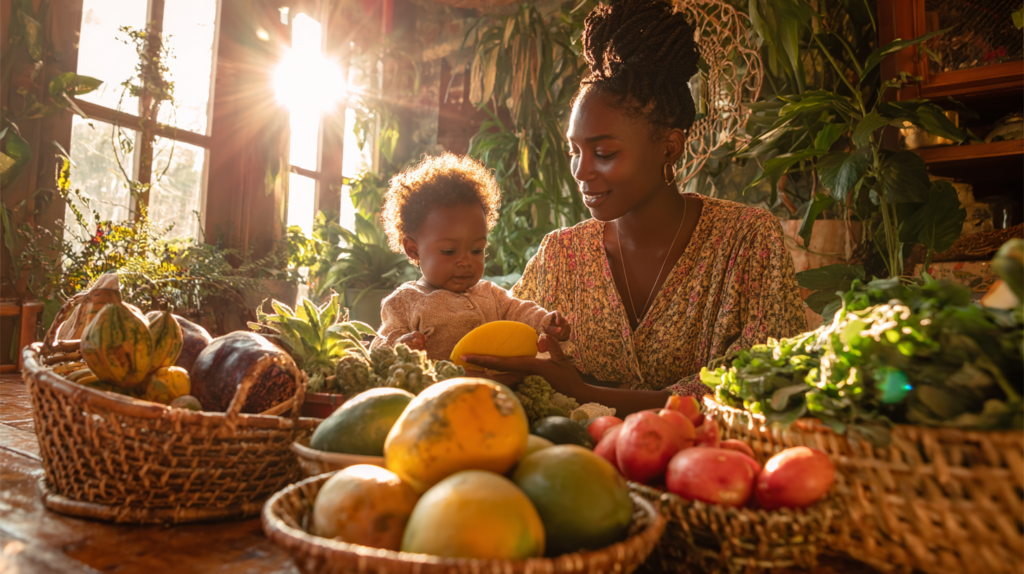
Your Baby’s Superpower Window: The Science Behind Raising Adventurous Eaters (Before It Closes Forever)
Here’s something that shocked me when I started researching infant feeding: Your baby has a biological window—open right now—where their taste buds are basically programmed to accept flavors they’ll reject later. And most parents? We accidentally slam that window shut without even knowing it existed.
I discovered this the hard way when my little one turned two and suddenly acted like steamed carrots were poison, even though she gobbled them up at eight months. Turns out, there’s actual science behind why this happens—and more importantly, how to prevent it. The research I’m about to share completely changed how I approached feeding, and honestly? I wish someone had told me this before I started solids.
Because here’s the truth nobody talks about: picky eating isn’t just a phase you have to survive. In many cases, it’s something we can actually prevent by understanding the critical flavor exposure windows during those first months and years. The science is fascinating, the strategies are surprisingly simple, and the long-term payoff? A child who actually eats their vegetables without a twenty-minute negotiation.
Quick Discovery: Is Your Baby in the Golden Flavor Window?
Click your baby’s current age to discover their flavor acceptance potential:
The Shocking Truth About Taste Development
Let me start with something most pediatricians don’t tell you: your baby’s taste education actually begins before they’re even born. Research shows that flavors from what you eat during pregnancy transfer directly into the amniotic fluid—meaning your little one is already experiencing their first “meals” in the womb. Studies tracking pregnant mothers who drank carrot juice found their babies showed enhanced acceptance of carrot-flavored cereal at six months compared to babies whose mothers avoided carrots.
Think about that for a second. Your pregnancy cravings (or healthy eating habits) aren’t just about you—they’re literally programming your baby’s future food preferences. When researchers examined amniotic fluid, they found measurable concentrations of garlic, cumin, curry, and even alcohol flavors that mothers consumed. These prenatal flavor experiences create what scientists call “chemosensory continuity”—a fancy way of saying your baby recognizes and prefers the tastes they experienced before birth.
But here’s where it gets even more interesting: if you’re breastfeeding, this flavor education continues and actually intensifies. Breast milk changes flavor based on your diet—sometimes within 1-2 hours of eating. One morning, your milk might taste slightly of the ginger tea you had at breakfast. By dinner, it carries notes of the garlic and thyme from your meal. Breastfed babies experience hundreds of flavor variations in their first year, while formula-fed babies taste the exact same flavor every single time.
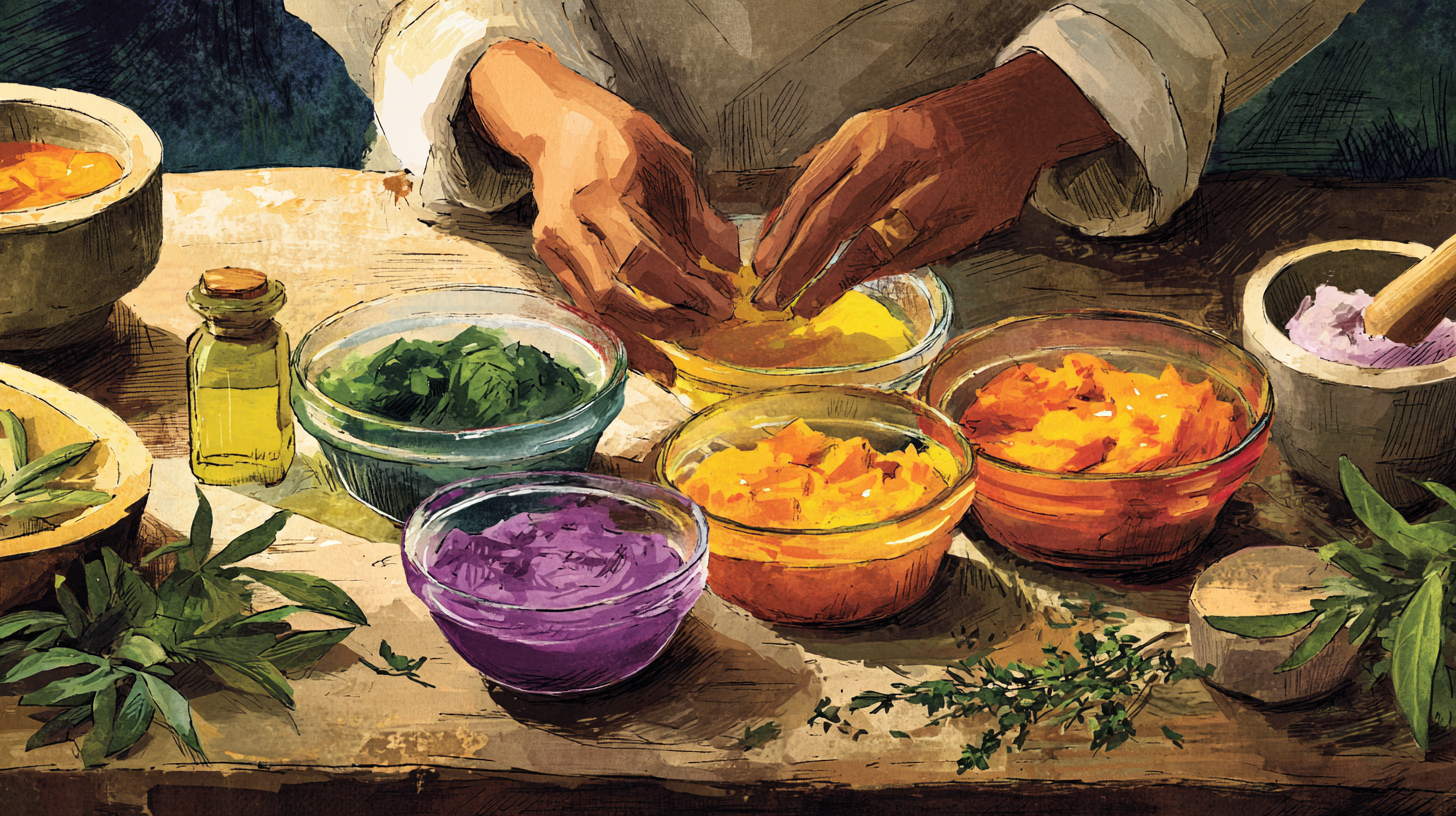
This explains why multiple studies show breastfed infants demonstrate greater willingness to accept novel vegetables on first presentation. They’ve been training for this moment through every feeding session. But before formula-feeding mamas panic—you’re not out of options. The complementary feeding period (when you start solids) is actually the most powerful window for flavor learning, regardless of how your baby was fed before.
The 6-18 Month Golden Window
Scientists call it the “flavor window,” and it’s basically your baby’s biological sweet spot for accepting new tastes. Between 6 and 18 months, infants show heightened openness to novel flavors—a developmental trait that makes evolutionary sense. In our ancestral environment, this window ensured children learned to eat the foods available in their specific region before they became mobile enough to wander off and potentially eat something dangerous.
But here’s the problem: this window doesn’t stay open forever. Around age two, food neophobia kicks in—a natural developmental stage where children become suddenly suspicious of unfamiliar foods. It’s the biological equivalent of a security system turning on. That zucchini they happily munched at ten months? Now it’s “yucky” and “looks weird” at two years old. This isn’t defiance; it’s biology.
The research shows dramatic differences in acceptance rates based on when foods are introduced. Vegetables introduced between 4-5 months showed significantly lower picky eating scores compared to introduction after 6 months. Children exposed to high vegetable variety during the 6-18 month window demonstrated reduced food neophobia tendencies that persisted into school age.
What does this mean practically? The vegetables you introduce now—during this golden window—are the vegetables they’re most likely to accept for life. Miss this window, and you’re fighting uphill against biology instead of working with it. When I learned this, I completely changed my approach. Instead of starting with sweet potatoes and bananas (the “easy” first foods), I began with green beans, zucchini, and even introducing my daughter to Caribbean staples like callaloo and christophine early. The difference in acceptance was remarkable compared to my friends who started with fruits first.
Your 15-Day Exposure Challenge
Research shows it takes 8-15 exposures for acceptance. Track your progress! Click each box when you offer your target food:
The Repeated Exposure Science
Here’s the part where most parents give up too early: acceptance doesn’t happen on attempt one, two, or even three. The science is clear—it typically takes 8 to 15 exposures before a child accepts a new food. But here’s what breaks my heart: research tracking 3,022 infants found most parents quit after just 3-5 attempts. They interpret their baby’s grimace or head turn as permanent rejection, when in reality, they’re stopping right before the breakthrough moment.
Let me explain what’s actually happening during those repeated exposures. Your baby’s taste system operates differently than yours. When they first encounter a bitter vegetable like broccoli, their evolutionary wiring sends up alarm bells: “Bitter = potentially poisonous!” Their initial facial expression—that scrunched-up nose and look of betrayal—isn’t personal preference. It’s ancient biological programming designed to keep them safe.
But here’s the magic: with each subsequent exposure, their brain recalibrates. “We tried this vegetable yesterday and I didn’t get sick. My parent seems to think it’s safe. Maybe it’s not poison after all.” By exposure 8 or 10 or 12, acceptance becomes the new default. The research shows consumption increases gradually with each attempt, even when parents don’t notice behavioral changes that suggest improvement.
The problem? Those first 7 exposures feel like failure. Your baby spits it out. They turn their head. They seem utterly disgusted. And we interpret this as, “My baby hates green beans,” when the reality is, “My baby hasn’t learned to like green beans yet.” There’s a massive difference between those two statements.
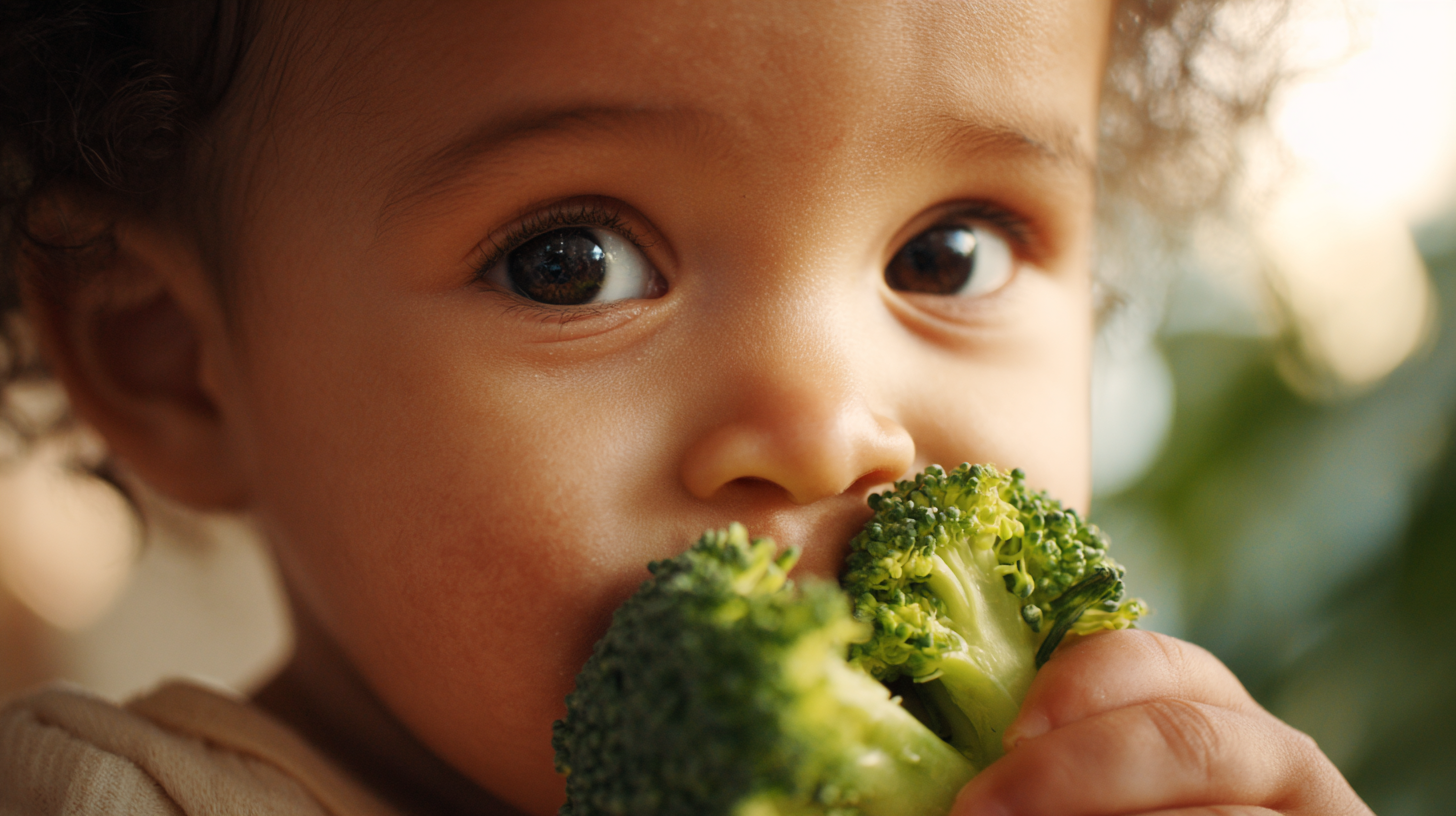
I remember offering my daughter steamed broccoli for the eleventh time (yes, I was counting), fully prepared for another rejection. She picked it up, examined it like a tiny food critic, and then… actually ate it. And reached for more. I almost cried. Not because broccoli was special, but because I finally understood: persistence isn’t about forcing; it’s about providing repeated opportunities to learn.
When you’re ready to put this into practice with diverse, flavorful options that make repeated exposure easier, the Caribbean Baby Food Recipe Book offers over 75 recipes specifically designed around the exposure principles we’re discussing—from mild Sweet Potato & Callaloo Rundown to more adventurous Baigan Choka Smooth.
Overcoming Genetic Pickiness
Now let’s talk about something that might make you feel a lot better if you’re struggling: genetics accounts for about 25-30% of food selectivity. Some children are literally born with heightened bitter sensitivity—they’re called “supertasters,” and they experience bitter compounds in vegetables about three times more intensely than the rest of us.
This is controlled by a gene called TAS2R38, which determines sensitivity to a compound called PROP (propylthiouracil). If your child inherited certain variants of this gene, Brussels sprouts don’t just taste slightly bitter to them—they taste overwhelmingly, intensely bitter. Like we’re asking them to eat pure bitterness concentrated into vegetable form.
I share this not to discourage you, but to offer context. If you’ve been comparing your child’s eating to their cousin who gobbles up kale without complaint, there might be genuine biological differences at play. Your child isn’t being difficult; their sensory experience is legitimately different.
But—and this is crucial—genetic sensitivity doesn’t mean permanent rejection. The research shows that repeated exposure works even for genetically sensitive children; they just need more attempts. Where a non-sensitive child might accept a vegetable after 8 exposures, a supertaster might need 15 or 20. They may also need modifications: starting with milder bitter vegetables before advancing to more intense ones, or using flavor-flavor learning techniques (pairing the bitter vegetable with a familiar, liked flavor).
Is Your Child a Supertaster? Quick Assessment
1. How does your child react to vegetables like broccoli, Brussels sprouts, or bitter greens?
2. Does your child prefer bland foods over flavorful ones?
3. How many foods does your child regularly refuse or avoid?
One strategy that worked beautifully in my household: I’d add tiny amounts of bitter vegetables (we’re talking a teaspoon of finely minced spinach) into foods she already loved. Not to sneak vegetables (that’s a different approach), but to provide flavor exposure without overwhelming her system. Over weeks, I’d gradually increase the amount while decreasing the familiar flavor “carrier.” Eventually, she was eating the vegetable on its own because her taste buds had adapted through gentle, repeated exposure.
In Caribbean cooking, we actually have a built-in advantage here. Many traditional dishes use aromatic spices and herbs that create complex flavor profiles. When I introduced my daughter to curry-spiced vegetables through recipes like Geera Pumpkin Puree, the cumin and subtle spices made the vegetables interesting rather than just bitter. This flavor-flavor learning approach—where you pair new tastes with familiar, pleasant flavors—has strong research backing for overcoming genetic bitter sensitivity.
Flavor Variety Strategies That Work
Let’s get practical. Knowing the science is one thing; implementing it while managing a baby, sleep deprivation, and everything else on your plate is another challenge entirely. Here are the strategies backed by research that actually work in real life:
Strategy #1: Vegetable-First Introduction
Start complementary feeding with green vegetables before introducing sweeter options. I know conventional wisdom says start with sweet potato or rice cereal, but research shows vegetables introduced between 4-5 months correlate with lower picky eating scores. Begin with zucchini, green beans, and peas for the first 2-3 weeks before rotating in carrots, sweet potato, or fruits. This takes advantage of the fact that babies haven’t yet developed a preference for sweet—but they will quickly once you introduce it. One study found infants started with vegetables consumed 30% more vegetables at 12 months compared to fruit-first babies.
Strategy #2: The Rotation Method
Instead of serving the same vegetable every day until acceptance (the single-food repetition method), offer a different vegetable at each complementary feeding session, cycling through 6-8 options. So Monday lunch might be green beans, Monday dinner is zucchini, Tuesday lunch is peas, Tuesday dinner is carrot, and so on. This provides variety while still achieving the repeated exposure over time. A 2022 study found this particularly effective for increasing overall vegetable acceptance rather than acceptance of just one or two vegetables.
Calculate Your Weekly Flavor Variety Score
Track how many different foods you offered this week across categories:
Green Vegetables
Orange/Yellow Vegetables
Fruits
Grains/Legumes
Proteins
️ Herbs/Spices
Your Flavor Variety Score
Strategy #3: Timing Is Everything
Offer new or less-preferred vegetables at the beginning of meals when your baby is hungriest. This isn’t manipulation—it’s strategic use of natural hunger drives. I’d serve raw vegetable sticks (age-appropriate sizes) with a dip during the 15-20 minutes I was preparing the main meal. My daughter would munch on cucumber, bell pepper strips, or steamed broccoli trees because she was genuinely hungry and curious. By the time the meal arrived, she’d already consumed vegetables without any pressure or negotiation.
Strategy #4: Family Meal Flavor Bridging
Eat diverse foods in your child’s presence during shared meals, even if they’re not ready to eat those exact foods yet. The aroma exposure matters. When we’d eat curry and rice while my daughter had her separate meal nearby, she was still experiencing curry spices through smell. This ambient flavor exposure enhances acceptance when curry-spiced foods are later offered directly. Research confirms that children who regularly eat with families consuming diverse foods show greater adventurous eating patterns.
Strategy #5: Responsive Feeding (No Pressure Zone)
This might be the most important strategy: never pressure, coerce, or reward eating. Studies consistently show that pressure causes children to dislike those foods. Food rewards teach children that vegetables are a punishment you must endure to get the “good” food (dessert). Instead, adopt a “parent provides, child decides” framework. You determine what foods are offered and when; your child decides whether and how much to eat from available options. This respects their autonomy while ensuring repeated exposure happens naturally.
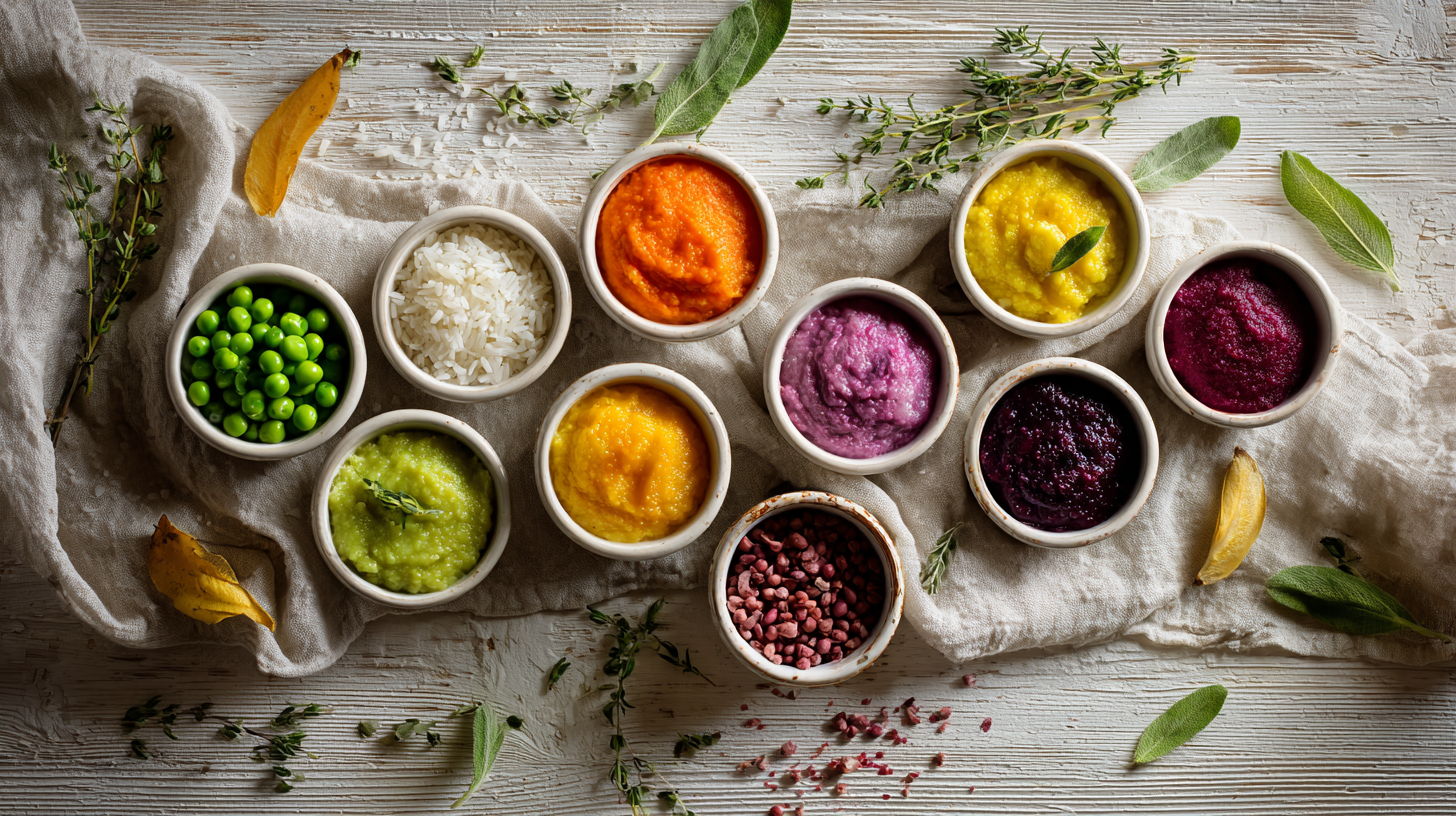
For Caribbean families specifically, this approach works beautifully with our traditional foods. Instead of making separate “kid meals,” introduce baby-appropriate versions of family dishes. Recipes from the Caribbean Baby Food Recipe Book—like Plantain Paradise, Yellow Yam & Carrot Sunshine, or Coconut Rice & Red Peas—let babies experience authentic island flavors during their golden flavor window, setting them up to enjoy family meals as they grow.
Long-Term Eating Patterns
Here’s what keeps me motivated on the days when feeding feels overwhelming: the research shows that early feeding practices predict diet quality well into childhood and even adolescence. It’s not just about getting them to eat vegetables today; it’s about establishing eating patterns that protect their health for decades to come.
A comprehensive 2020 study tracking 1,162 children in Project Viva identified distinct complementary feeding behavior patterns. Diet quality scores were highest among children in the “breast milk and delayed sweets and fruit juice” class and lowest in the “picky eaters” class. More importantly, these patterns established during infancy predicted food preferences at age 3, 5, and beyond. Children introduced to high variety before 12 months showed consistently higher diet quality scores throughout early childhood.
The long-term implications go beyond just vegetable consumption. Children who eat adventurously show lower rates of obesity, better cardiovascular health markers, and even reduced risk for certain cancers later in life due to higher produce consumption. One longitudinal study tracking children from infancy through age 8-9 found that maternal diet during pregnancy and lactation—that early flavor exposure we talked about—still influenced food preferences nearly a decade later.
But beyond the physical health benefits, there’s something else: food is culture, connection, and joy. When your child can participate fully in family meals, try new cuisines at restaurants, and experience food as pleasure rather than battle, you’re giving them a life skill that affects their social experiences, their relationship with their body, and their overall quality of life.
Your Baby’s Flavor Journey: What to Expect & When
Click each stage to reveal what’s happening developmentally and what you should focus on:
What’s Happening: Flavors from your diet transfer to amniotic fluid. Your baby is experiencing their first tastes!
Your Action: Eat diverse vegetables, herbs, and spices you want your baby to like later. Yes, that curry and garlic are actually helping!
Science Insight: Studies show babies whose mothers ate carrots during pregnancy showed greater carrot acceptance at 6 months. Your prenatal diet is programming preferences now.
What’s Happening: If breastfeeding, your baby experiences flavor variations with every feeding. Formula provides consistent flavor exposure.
Your Action: Breastfeeding moms: Continue eating diverse foods. Formula moms: Don’t worry—the next stage is your power window!
Science Insight: Breast milk flavor changes within 1-2 hours of eating. Each feeding is a mini flavor education session.
What’s Happening: Peak flavor acceptance period! Biology is working WITH you. This is your moment.
Your Action: Prioritize vegetable variety. Offer 8-15 exposures per food. Start with greens before sweets. Be persistent!
Science Insight: Vegetables introduced now have up to 70% acceptance rates vs. 30% if introduced after 18 months. This window doesn’t last forever.
What’s Happening: Food neophobia begins emerging. Normal biological caution is kicking in. Don’t panic!
Your Action: Continue repeated exposure without pressure. Add family meal participation. Model adventurous eating.
Science Insight: Kids may need 15-20 exposures during this stage vs. 8-10 earlier. The window is closing but not closed yet.
What’s Happening: Peak neophobia (ages 2-6). They’re suspicious of new foods—this is developmentally normal.
Your Action: Maintain variety established earlier. No pressure. Regular exposure. Trust the early foundation you built.
Science Insight: Children exposed to high variety before 18 months maintain better diet quality through this neophobic phase. Your earlier work pays off now!
Caribbean-Inspired Flavor Wisdom
Let me share something personal: growing up in a Caribbean household, I never realized we were accidentally implementing these scientific principles all along. Our traditional approach to feeding children—introducing them to family foods early, using aromatic spices from the start, emphasizing ground provisions and vegetables—aligns beautifully with what research now confirms works.
In Caribbean culture, we don’t typically make separate bland “baby food.” A six-month-old might get mashed callaloo (taro leaves) with a hint of thyme. An eight-month-old tries plantain cooked with coconut milk. By ten months, they’re tasting mild curry or enjoying yellow yam seasoned with scallion. We introduce bold flavors early because that’s what family meals contain, and we want children to participate in our food culture from the start.
This cultural approach—whether intentional or not—creates adventurous eaters. Caribbean children grow up eating dishes with complex flavor profiles: the earthiness of dasheen, the slight bitterness of bitter melon (caraille), the pungency of garlic and onion, the warmth of ginger and allspice. These aren’t “kid foods”—they’re real foods, prepared appropriately for developing systems.
The science validates this cultural wisdom. Exposing infants to herbs and spices (in age-appropriate amounts) during the flavor window creates palates that appreciate and seek out those flavors later. When researchers compared children raised on diverse, culturally-specific foods versus those raised on standardized “baby foods,” the culturally-fed children showed greater variety acceptance and lower neophobia rates.
The Caribbean Baby Food Recipe Book translates this cultural approach into practical recipes that honor traditional flavors while meeting modern nutrition and safety guidelines. From Cornmeal Porridge Dreams with hints of cinnamon and nutmeg to Stewed Peas Comfort introducing coconut and thyme, each recipe is designed to build adventurous palates through authentic flavor exposure.
Find Your Personalized Flavor Strategy
What’s your biggest feeding challenge right now? Click to get your custom strategy:
Your Action Plan
Knowledge without action doesn’t change anything, so let’s translate everything we’ve covered into a concrete action plan you can start today—regardless of where you are in your feeding journey:
If you’re currently pregnant: Start your baby’s flavor education now. Intentionally consume vegetables, herbs, and spices you want your child to enjoy later. That curry you’re craving? Your baby is experiencing it through amniotic fluid. That garlic bread? Also part of their prenatal flavor learning. Think of your pregnancy diet as the first chapter of your child’s food story.
If you’re in the 0-6 month breastfeeding stage: Continue eating diverse foods. Don’t restrict your diet to bland options out of fear your baby won’t “like” the flavor of your milk. The opposite is true—flavor variations in breast milk enhance later food acceptance. If formula feeding, don’t stress—your golden window is just ahead, and you can implement everything starting at six months.
If you’re in the 6-18 month window (THE critical stage): This is your time. Start with vegetables before fruits. Pick one vegetable and commit to 15 exposures tracked on a simple chart. Rotate through 6-8 vegetables weekly rather than sticking with “safe” favorites. Offer vegetables at the start of meals when hunger is highest. Add Caribbean ingredients that bring cultural connection—try options like plantain, callaloo, or yellow yam through recipes designed for this exact age group. For practical recipes that make this easier, explore the Caribbean Baby Food Recipe Book which organizes 75+ recipes by age and includes everything from simple Sweet Potato & Callaloo Rundown to more complex Karhee Curry Blend for 12+ months.
If you’re past 18 months and dealing with neophobia: Don’t give up. The research shows repeated exposure still works; it just requires more patience. Focus on maintaining whatever variety you’ve already established. Add new foods using the flavor-flavor learning approach (pairing new with familiar). Keep offering rejected foods every few days without comment or pressure. Model adventurous eating yourself during family meals.
If you suspect your child is a genetic supertaster: Adjust your expectations but not your persistence. Start with milder bitter vegetables before progressing to more intense ones. Use flavor-flavor learning more extensively. Consider 20 exposures instead of 15. Blend small amounts into familiar foods initially, gradually increasing the ratio. And remember—even supertasters can learn to enjoy vegetables with sustained, patient exposure.
The Long Game
I want to close with this: on the days when you’re exhausted, when your baby has rejected green beans for the seventh time, when you wonder if any of this even matters—remember that you’re not just feeding your child lunch. You’re programming their taste preferences for life. You’re reducing their future disease risk. You’re giving them the gift of adventurous eating that will enrich their experiences for decades.
The science is clear: these early years matter profoundly. The flavors you introduce now, the persistence you show through those 8-15 exposures, the variety you prioritize during the golden window—all of it compounds into lifelong eating patterns. Children who eat adventurously at age two typically eat adventurously at age twelve. Those vegetable preferences established in infancy predict produce consumption in adolescence and beyond.
But beyond the health outcomes and research statistics, there’s something deeper. Food is how we connect—to our families, our cultures, our communities. When you teach your child to appreciate diverse flavors, you’re inviting them into the full richness of food culture. They’ll be able to travel and try local cuisines. They’ll participate fully in family gatherings where traditional foods are served. They’ll experience food as joy and connection rather than anxiety and restriction.
My daughter is three now, and while she certainly has preferences (don’t all toddlers?), she eats vegetable curry without complaint, requests callaloo, tries new foods willingly, and genuinely seems to enjoy exploring flavors. When I watch her at family gatherings, confidently eating alongside the adults rather than requesting chicken nuggets, I feel grateful for those early months when I committed to repeated exposure even when it felt pointless.
The window is open right now. Your baby’s taste system is waiting to be shaped. The biology is on your side during these precious months. So take a deep breath, choose one vegetable to start with, commit to 15 exposures, and trust the science. Your future self—and your future child—will thank you for the persistence you show today.
Because here’s the beautiful truth: you don’t need to be perfect. You don’t need to introduce every vegetable or nail every feeding session. You just need to be consistent, patient, and willing to offer repeated opportunities to learn. That’s enough. You’re building something remarkable, one small taste at a time.

Kelley's culinary creations are a fusion of her Caribbean roots and modern nutritional science, resulting in baby-friendly dishes that are both developmentally appropriate and bursting with flavor. Her expertise in oral motor development and texture progression ensures that every recipe supports your little one's feeding milestones while honoring cultural traditions.
Join Kelley on her flavorful journey as she shares treasured family recipes adapted for tiny taste buds, evidence-based feeding guidance, insightful parenting anecdotes, and the joy of celebrating food, culture, and motherhood. Get ready to immerse yourself in the captivating world of Kelley Black and unlock the vibrant flavors of the Caribbean for your growing baby, one nutritious bite at a time.
- The Feeding Revolution: Why Your Everyday Meals Are Changing the World - October 13, 2026
- Your Feeding Story Matters More Than The “Perfect” One Online - October 12, 2026
- Looking Forward: Stepping Into Your Confident Feeding Future - October 11, 2026