When Your Baby’s First Bite Carries 400 Years of History: The Callaloo Revolution
Discover Your Callaloo Feeding Style
Every parent approaches cultural feeding differently. Which statement resonates most with you?
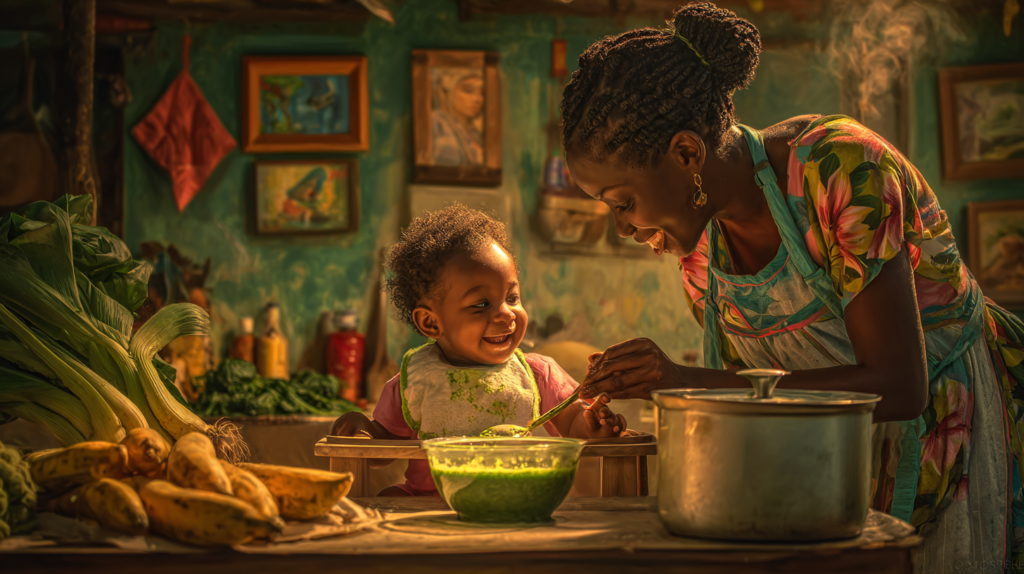
Three weeks ago, I watched my daughter’s face scrunch up in concentration as she tasted her first spoonful of callaloo—that deep green, silky-smooth puree that has nourished Caribbean babies for generations. Her eyes widened. She opened her mouth for more. And in that moment, something clicked for me: I wasn’t just feeding my child. I was passing down a legacy that traces back through centuries of African ingenuity, Indigenous knowledge, and island resilience.
But here’s what nobody told me before I started this journey—introducing traditional callaloo to babies isn’t as simple as blending up the same dish your grandmother served. That version probably had salted pork, hot scotch bonnet peppers, and crab shells. All delicious for adults. All completely inappropriate for a six-month-old.
So how do we bridge that gap? How do we honor our cultural foodways while following modern pediatric feeding guidelines that actually keep our babies safe? That’s exactly what we’re diving into today—and I’m going to share the research-backed strategies, the surprising nutritional discoveries, and the practical recipe frameworks that make baby-friendly callaloo not just possible, but absolutely transformational for your family’s feeding journey.
What Callaloo Actually Is (And Why Everyone Defines It Differently)
If you’ve ever gotten into a heated discussion with someone from a different island about what “real” callaloo is, you’re not alone. The truth is, callaloo is both a specific plant and a culinary concept that evolved differently across the Caribbean. In Jamaica, callaloo typically refers to amaranth leaves sautéed with onions, tomatoes, and thyme—often served alongside saltfish for breakfast. In Trinidad and Tobago, it’s a thick, coconut-rich soup made with dasheen or taro leaves, okra, and often crab or salted meats. Meanwhile, in other islands like Dominica and Grenada, you’ll find versions that lean heavily on local leafy greens and ground provisions.
What ties all these versions together is the use of nutrient-dense leafy greens cooked until silky soft, combined with aromatic herbs and often enriched with coconut milk. The dish has deep roots in West African cooking traditions—the word “callaloo” itself is believed to be connected to West African terms for leafy greens, and the cooking technique mirrors West African palaver sauce. During slavery and colonialism, enslaved Africans adapted these traditions using Caribbean crops like amaranth, taro leaves, and tannia, creating dishes that were both culturally meaningful and nutritionally sustaining.
The Cultural Truth Nobody Talks About: When you serve callaloo to your baby, you’re not just offering vegetables—you’re introducing them to a dish born from survival, creativity, and the determination of our ancestors to maintain their foodways despite unimaginable circumstances. That’s powerful.
For modern Caribbean families, especially those in the diaspora, callaloo has become a symbol of home, identity, and continuity. It’s the dish that makes you feel connected to your grandmother’s kitchen even when you’re thousands of miles away. And increasingly, nutrition educators and health organizations are recognizing callaloo greens as some of the most nutrient-packed vegetables you can offer—comparable to kale and spinach in terms of vitamins, minerals, and antioxidants.
The Nutritional Powerhouse Your Pediatrician Doesn’t Know About
Here’s something that stopped me in my tracks when I first started researching: callaloo greens are absolutely loaded with nutrients that babies desperately need during those critical first years. We’re talking about vitamins A, C, and K, plus folate, calcium, iron, magnesium, potassium, and even plant-based protein. One cup of cooked amaranth or taro leaves delivers more calcium than many dairy products, more iron than most meats (though you’ll need to pair it with vitamin C for absorption), and enough vitamin A to support healthy vision and immune development.
But what makes callaloo particularly valuable for infant nutrition is how these nutrients work together. The combination of iron and vitamin C (especially when you serve callaloo with foods like tomatoes, bell peppers, or citrus) supports healthy blood development and prevents anemia—a common concern for babies transitioning to solid foods. The calcium and vitamin K work synergistically to support bone growth during this rapid development phase. And the high fiber content, while needing to be balanced in a baby’s diet, promotes healthy digestion and helps establish good gut bacteria patterns.
Match Your Baby’s Needs to Callaloo Benefits
What’s your biggest nutritional concern for your baby right now?
Recent nutrition guidance specifically highlights dark leafy greens like callaloo as part of a strategy to address micronutrient gaps in young children’s diets. Public health materials increasingly frame callaloo soup and sautéed greens as “one-pot meals” that deliver multiple food groups at once—especially valuable for busy parents who want to maximize nutrition without complicated meal prep. And for Caribbean and Afro-diaspora communities where food traditions have sometimes been dismissed or marginalized by mainstream nutrition advice, there’s a growing movement to reclaim heritage foods like callaloo as nutritional assets rather than exotic curiosities.
The Shocking Truth About Traditional Callaloo Recipes and Baby Safety
This is where things get real—and where many well-meaning grandmothers and I have had some tense conversations. Traditional callaloo recipes, the ones passed down through generations, were designed for adult palates and adult digestive systems. They often include ingredients that modern pediatric guidelines explicitly warn against for babies under 12 months.
Let’s break down the safety challenges: Salt pork, salted cod, and other preserved meats are staples in many traditional callaloo recipes. They add incredible umami depth and that distinctive savory flavor. But they also pack shocking amounts of sodium—sometimes 600-800mg per serving—when current recommendations cap sodium intake for babies under 12 months at less than 400mg per day. Then there are hot peppers like scotch bonnets, which add heat and flavor complexity but can irritate babies’ sensitive digestive systems and overwhelm their developing taste buds. Crab and other shellfish, while delicious, are common allergens that need careful introduction timing. And small bones from meat or fish pose serious choking hazards for babies still learning to chew and swallow safely.
Here’s what I wish someone had told me from the start: You don’t have to choose between cultural authenticity and baby safety. You just need to understand which elements of traditional callaloo are non-negotiable for flavor and nutrition, and which can be modified or temporarily omitted for your baby’s developmental stage. The soul of callaloo—the leafy greens, the aromatics like onion and garlic, the richness of coconut milk, the herbs like thyme—all of these can translate beautifully into baby-friendly versions that still taste like home.
The ingredient swap that changed everything for my family…
Instead of salted meats: I started using small amounts of unsalted bone broth or coconut milk to build that savory, rich base. The depth of flavor surprised me—and my daughter devoured it.
Instead of hot peppers: A tiny pinch of allspice or very mild curry powder (after 8-9 months) gave warmth without heat. You can always add spice to the adult portions later.
Instead of whole crab: Once my daughter was ready for seafood (around 10 months, after checking for allergies), I added tiny amounts of thoroughly deboned fish or left it out entirely for a vegetarian version.
This approach meant we could all eat variations of the same meal—I’d cook a large pot of callaloo with mild seasonings, serve my daughter’s portion, then add salt, pepper, and heat to the adult portions. My Caribbean Baby Food Recipe Book has an entire section on this “staged seasoning” method that’s saved my sanity on countless busy weeknights.
The Baby-Friendly Callaloo Framework: Three Approaches for Different Stages
After testing dozens of variations with my own daughter and hearing from hundreds of parents in the Yardie Baby community, I’ve identified three core approaches to baby-friendly callaloo that work across different developmental stages and family preferences.
Approach 1: The Smooth Starter (6-8 months) — This is where most families begin. You’re cooking callaloo leaves (or spinach, kale, or Swiss chard if you can’t source traditional greens) until they’re very soft, then blending them into a completely smooth puree. The key is to add just enough liquid—breast milk, formula, unsalted vegetable stock, or coconut milk—to achieve a consistency your baby can manage. At this stage, you’re focusing on single flavors or very simple combinations: callaloo with sweet potato, callaloo with pumpkin, or callaloo with soft-cooked peas. No salt, no hot spices, minimal oil. The goal is to let your baby experience the natural mineral-rich, slightly earthy flavor of the greens while ensuring the texture is completely safe for their emerging swallowing skills.
Approach 2: The Texture Builder (8-10 months) — Once your baby is handling smooth purees well and showing readiness for more texture, you can start offering very finely minced or mashed callaloo mixed into other foods. Think callaloo stirred into soft rice, mashed into sweet potato or dasheen, or mixed with well-cooked lentils or split peas for a protein boost. This stage is also when you can begin introducing gentle aromatics like onion and garlic cooked until very soft, a touch of fresh thyme, and perhaps a small drizzle of coconut milk for richness. The callaloo should still be cooked until completely tender—no tough stems or fibrous bits that could cause gagging.
Approach 3: The Family Meal Integration (10+ months) — This is where things get exciting. Your baby is now eating soft lumps, may be practicing with finger foods, and can handle more complex flavor combinations. You can prepare a family-style callaloo dish—whether that’s a Jamaican-style sauté or a Trinidadian-style coconut soup—and simply adjust the seasoning. Make the base batch mild and unsalted, serve your baby’s portion, then add salt, pepper, scotch bonnet, or salted meats to the adult portions. At this stage, many babies can also handle soft callaloo as a finger food when mixed into dishes like soft rice balls, veggie patties, or served alongside well-mashed ground provisions like yam or breadfruit.
Pro Tip from My Kitchen: I batch-cook callaloo once a week and freeze it in ice cube trays. Each cube is about 1 ounce, perfect for mixing into different meals. It’s saved me on those nights when I’m too tired to think but still want my daughter eating well. Find the full batch-cooking guide plus 75+ other Caribbean baby recipes in the Caribbean Baby Food Recipe Book, including the Sweet Potato & Callaloo Rundown recipe that’s become our family staple.
Five Recipe Frameworks You Can Start Using This Week
Theory is great, but you need practical recipes you can actually make. Here are five callaloo-based meal frameworks that work for different baby stages and family situations. These aren’t rigid recipes—think of them as templates you can adapt based on what’s in your kitchen and your baby’s preferences.
Framework 1: Callaloo-Sweet Potato Silky Blend (6+ months) — Peel and dice one medium sweet potato. Wash and roughly chop 2 cups of fresh callaloo leaves (or spinach). Steam both until completely soft, about 12-15 minutes. Blend with 2-4 tablespoons of liquid (breast milk, formula, or unsalted stock) until completely smooth. The sweet potato adds natural sweetness and creaminess that balances the mineral-forward taste of the greens. This combination also pairs vitamins A from both ingredients with the iron in callaloo for maximum absorption. Freeze in portions and reheat as needed.
Framework 2: Coconut Callaloo with Pumpkin Mash (7+ months) — Dice 1 cup of pumpkin (calabaza if you can find it). Wash and chop 1.5 cups of callaloo leaves. Sauté a few slices of onion in a tiny bit of coconut oil until soft (this is safe for babies—you’re cooking out the sharpness). Add the pumpkin and callaloo, pour in 1/4 cup of coconut milk, and simmer until everything is fall-apart tender. Mash with a fork or blend to your baby’s texture preference. The coconut milk adds healthy fats for brain development and makes the whole dish incredibly creamy and appealing.
Framework 3: Callaloo-Lentil Power Bowl (8+ months) — Cook 1/4 cup of red lentils in water until they’re completely soft and starting to break down. In a separate pan, sauté a small amount of diced onion and minced garlic in coconut oil until fragrant. Add 2 cups of chopped callaloo and a splash of water, cooking until the greens are very tender. Mix the lentils and callaloo together, adding a squeeze of fresh tomato juice or a few diced tomatoes for vitamin C. This is a protein-packed, iron-rich meal that holds together well for baby-led weaning or can be mashed for spoon-feeding.
Framework 4: Callaloo Rice Porridge (9+ months) — This is based on the traditional concept of “congee” but with Caribbean flavors. Cook 1/4 cup of rice in plenty of water (about 3 cups) until it breaks down into a thick porridge consistency. Stir in finely minced callaloo, a tiny sprinkle of fresh thyme, and if desired, a tablespoon of coconut milk. Let it simmer together until the greens are incorporated and soft. This is incredibly soothing, easy to digest, and a great vehicle for introducing the callaloo flavor in a comforting, familiar texture. My daughter ate this for a week straight when she was teething and nothing else appealed.
Framework 5: Callaloo-Yam Mash with Aromatic Herbs (10+ months) — Peel and dice yellow yam or white sweet potato. Boil until fork-tender. While that’s cooking, sauté onion and garlic until very soft, then add chopped callaloo, fresh thyme, and a bay leaf. Cook until the greens are silky. Remove the bay leaf, mash the yam with the callaloo mixture, and add a drizzle of coconut milk to reach your desired consistency. This is a complete meal that tastes remarkably close to traditional Caribbean Sunday dinner—just without the salt and pepper you’d add to your own plate.
️ Find Your Perfect Starting Recipe
What’s most important to you right now?
When Grandma Disagrees: Navigating Cultural Expectations
Let’s address the elephant in the room—or more accurately, the elder in the kitchen who’s horrified that you’re serving “bland” food to your baby. This has been one of the most emotionally challenging aspects of baby-led feeding for many Caribbean families I’ve spoken with. The tension between honoring cultural traditions and following modern pediatric guidelines can create real friction, especially when older family members interpret your modifications as rejection of cultural identity.
I’ve had the heated conversations. I’ve listened to the stories about how “we all survived” being fed heavily seasoned food as babies. I’ve felt the guilt when my mother-in-law’s face fell after watching me prepare unsalted callaloo for my daughter while everyone else’s bowl had scotch bonnet and salt. But here’s what I’ve learned: these conversations are rarely actually about the food. They’re about love, legacy, and the fear that younger generations are losing connection to their roots.
The approach that worked best for our family involved three key strategies. First, I started involving my mother and aunts in the adapted recipe creation process. Instead of presenting it as “I’m doing it differently,” I framed it as “help me figure out how to give her these flavors safely now, and the full-strength version later.” That shift in framing—from rejection to evolution—changed everything. Second, I made sure adult family meals still featured traditional preparation methods. The baby got her mild version, but the table still smelled like home with all the scotch bonnet, thyme, and salt we wanted. Third, I shared research from Caribbean health organizations about infant sodium and allergen guidelines. Sometimes hearing it from a source that’s not your daughter or daughter-in-law makes the information land differently.
What also helped was showing rather than telling. When my daughter eagerly opened her mouth for callaloo, when she reached for more, when she clearly enjoyed the flavors even without salt—that visual proof was more powerful than any argument I could make. And now, my mother proudly tells her friends about how her granddaughter eats callaloo “just like we grew up eating,” conveniently forgetting that we’ve adapted it for safety. That’s fine. The goal isn’t to win debates—it’s to feed babies well while preserving cultural connection.
The Substitution Guide for Diaspora Families
Here’s the reality: most of us don’t have easy access to authentic callaloo greens. If you’re living outside the Caribbean, you might be dealing with grocery stores that have never heard of amaranth leaves or dasheen bush. That doesn’t mean you can’t create callaloo-inspired dishes that carry the same nutritional benefits and similar flavor profiles.
The best substitutes for traditional callaloo greens are, in order of similarity: fresh spinach (especially baby spinach for mild flavor), Swiss chard (which has a similar texture when cooked), kale (use younger, more tender leaves and remove tough stems), or collard greens (cook longer to soften). The nutritional profiles are remarkably similar—all of these greens offer high levels of vitamins A, C, and K, plus iron, calcium, and folate. The flavor will be slightly different, but your baby won’t know the difference if they haven’t tasted “authentic” callaloo yet. And honestly, many Caribbean grandmothers would rather see you feeding your baby spinach-based “callaloo” than no greens at all.
For coconut milk, full-fat canned coconut milk works beautifully and provides healthy fats for brain development. If you’re concerned about fat content or allergies, you can use breast milk, formula, or even mashed avocado to add creaminess. For aromatics, yellow onions and standard garlic are fine—you don’t need fancy tropical varieties. And for herbs, while fresh thyme is ideal, even dried thyme from the spice aisle will give you that distinctive aromatic quality that makes the dish recognizably Caribbean.
The Identity Question: Is it still callaloo if you use spinach? My answer: Yes. The essence of callaloo isn’t in the specific botanical species of leaf—it’s in the technique, the intention, and the cultural memory you’re invoking. You’re cooking greens low and slow with aromatics and coconut, creating something nourishing and delicious. That’s callaloo, no matter what the label on the greens package says.
The Developmental Roadmap: Textures, Timing, and Signs of Readiness
One of the biggest sources of confusion I hear from parents is timing—when to introduce callaloo, how to know if your baby is ready for more texture, and what to watch for. Here’s a developmental roadmap based on current feeding guidelines and my own experience with hundreds of families.
6-7 months (First Introduction): Start with completely smooth, thin purees of callaloo mixed with familiar foods like sweet potato. Watch for signs that your baby can manage the texture—closing lips around the spoon, swallowing without gagging or spitting out, and showing interest in more. At this stage, callaloo should be as smooth as yogurt and completely liquid-free (no chunks or fibrous bits). Offer 1-2 teaspoons initially, working up to 2-3 tablespoons per meal over several weeks.
7-8 months (Texture Progression): If smooth purees are going well, begin offering slightly thicker, mashed consistencies—think mashed potato texture rather than soup. You can leave tiny soft lumps in the callaloo now, and mix it with foods that have more texture like soft-cooked rice or mashed beans. Watch for signs your baby is ready: they’re moving food side to side in their mouth, beginning to chew or gum food rather than just swallowing, and showing interest in touching and exploring food textures.
8-10 months (Complex Combinations): Most babies are ready for minced or finely chopped textures by now. Callaloo can be cooked until very tender but not pureed—just chopped small. Mix it into grain bowls, combine with proteins like finely flaked fish or mashed beans, and offer alongside soft finger foods. Signs of readiness: your baby is picking up food with thumb and finger (pincer grasp), moving food from hand to mouth independently, and chewing with up-and-down jaw movements.
10-12 months (Family Meal Integration): Now you can offer callaloo in its more traditional forms, just without the salt and spice. Soft callaloo leaves as finger foods, callaloo mixed into rice that your baby can pick up in clumps, or callaloo soups that they can drink from a cup or manage with a spoon. Continue to ensure the greens are thoroughly cooked and easy to chew, but the texture can be much more like what the rest of the family is eating.
Track Your Callaloo Feeding Milestones
Click each milestone as you achieve it with your baby:
The Questions Nobody Answers (Until Now)
After thousands of conversations with Caribbean parents about baby feeding, certain questions come up again and again—questions that most mainstream baby feeding resources never address because they’re not thinking about our specific cultural context.
“Can I use the same pot for baby’s callaloo and the family’s callaloo?” — Yes, with a strategic approach. Cook everything unseasoned until it’s very tender. Remove your baby’s portion, blend or mash as needed, and set aside. Then add salt, pepper, scotch bonnet, salted meats, or any other adult seasonings to the remaining pot and simmer a few more minutes. This “staged seasoning” method means you’re only cooking once but everyone gets appropriate food. It’s a game-changer for busy weeknights.
“What if my baby doesn’t like the ‘earthy’ taste of callaloo?” — This is common, especially if your baby is used to sweeter foods like fruit purees. Try mixing callaloo with naturally sweet vegetables like sweet potato, pumpkin, or carrot for the first several exposures. The sweetness masks the mineral flavor while your baby gets used to the texture and general green-vegetable concept. Gradually increase the ratio of callaloo to sweet vegetable over several weeks. Most babies who initially reject callaloo will accept it by the 10th-12th exposure, especially if they see family members enthusiastically eating it.
“Is callaloo safe if my baby is prone to constipation?” — Leafy greens like callaloo are generally helpful for constipation due to their fiber content, but the key is serving them with adequate liquids and healthy fats. Make sure your callaloo dishes include coconut milk, coconut oil, or avocado, and that your baby is drinking enough water throughout the day. If constipation persists, talk to your pediatrician—sometimes iron-rich foods like callaloo need to be balanced with prunes or other foods that support regular bowel movements.
“Can I introduce callaloo if we have a family history of food allergies?” — Leafy greens like callaloo are not common allergens, so they’re generally considered safe to introduce early in the feeding process (around 6 months). However, if you’re cooking callaloo with coconut milk and your family has tree nut allergies, be aware that coconut is technically a tree nut (though coconut allergy is rare even in tree-nut-allergic individuals). Introduce coconut separately before combining it with callaloo. And as always, watch for any unusual symptoms after introducing any new food—skin rashes, vomiting, or breathing changes warrant immediate medical attention.
“How do I store prepared callaloo for baby?” — Cooked callaloo purees and mashes freeze beautifully. Use ice cube trays for small portions (about 1 ounce per cube), freeze until solid, then transfer to freezer bags labeled with the date. Frozen callaloo stays good for 3 months. To thaw, move to the refrigerator overnight or use the defrost setting on your microwave. Refrigerated cooked callaloo should be used within 3 days. Always smell and visually inspect before serving—if it looks or smells off, discard it. Never refreeze previously frozen and thawed callaloo.
Beyond Nutrition: The Identity and Belonging Factor
We’ve talked a lot about nutrients, safety guidelines, and recipe techniques. But I’d be missing the point if I didn’t address what matters most to many Caribbean parents: using food to build cultural identity and belonging.
When you serve callaloo to your baby, you’re doing something that goes far beyond vitamins and minerals. You’re telling them, through taste and texture and repeated experience, “This is who we are. This is where we come from. These flavors are your birthright.” In a world where Caribbean culture is often exoticized, commodified, or dismissed, feeding your baby the foods of your heritage is an act of cultural preservation and resistance.
Research on cultural food practices consistently shows that children who grow up eating their family’s traditional foods develop stronger ethnic identity, deeper connections to extended family, and greater pride in their heritage. They’re also more likely to pass these food traditions to their own children, creating unbroken chains of cultural transmission. That might sound abstract when you’re just trying to get vegetables into a fussy eight-month-old, but over time, these meals add up to something profound.
I think about this every time my daughter eats callaloo. She doesn’t know yet that this dish connects her to her great-great-grandmother in rural Jamaica. She doesn’t understand that the technique I’m using—slow-cooking greens with coconut and herbs—is hundreds of years old. She just knows it tastes good and makes her feel satisfied and loved. But someday, when she’s older, I’ll tell her these stories. And the taste of callaloo will trigger memories of home, family, and belonging that no book or conversation could create on its own.
Start Your Own Tradition: One of my favorite practices is telling my daughter a short story about our family’s food history while she eats. “This callaloo is like what your grandmother ate when she was a little girl in Kingston. She would sit at a big table with her sisters and brothers…” Even though she’s too young to fully understand, I’m building associations between food, family, and story that will deepen as she grows. You can do this too—it takes 30 seconds and creates magical connections.
Your First Week with Baby-Friendly Callaloo
If you’re feeling overwhelmed by all this information, let’s make it simple. Here’s exactly what to do in your first week of introducing callaloo to your baby, assuming they’re at least 6 months old and showing signs of readiness for solids.
Day 1-2: Single-Ingredient Introduction — Prepare a completely smooth callaloo puree mixed with a vegetable your baby already knows and likes (sweet potato is ideal). Offer 1-2 small spoonfuls at a meal when your baby is alert and happy, not overtired or very hungry. Watch for any reactions over the next 24-48 hours—skin rashes, unusual fussiness, changes in bowel movements. If everything looks normal, proceed.
Day 3-4: Increase Portion Size — Offer the same callaloo-sweet potato blend but increase to 2-3 tablespoons if your baby is interested. Start paying attention to their response—are they opening their mouth for more? Turning away? Neutral? This tells you whether you need to adjust the ratio of callaloo to sweet potato or if they’re ready for the next step.
Day 5-6: Add Complexity — Introduce a third element to the mix—maybe soft-cooked rice, mashed avocado, or a tiny drizzle of coconut milk. This begins to build the more complex flavor profile that will eventually taste like traditional callaloo while keeping everything baby-safe. You’re training their palate to expect and enjoy these flavor combinations.
Day 7: Family Meal Connection — Prepare a family-style callaloo meal using the staged seasoning method described earlier. Serve your baby their mild version while the rest of the family eats the fully seasoned version. Let your baby see everyone eating and enjoying the same basic food. This social modeling is incredibly powerful for encouraging acceptance of new foods.
After the first week, you’re ready to start experimenting with the different recipe frameworks I shared earlier, adjusting textures as your baby’s skills develop, and gradually moving toward family meal integration. The learning curve is real, but it’s also incredibly rewarding. For more detailed day-by-day meal plans and age-appropriate recipes, check out the complete Caribbean Baby Food Recipe Book—it includes weekly meal plans for every stage from 6 to 18 months, plus troubleshooting guides for common feeding challenges.
The Gift You’re Actually Giving
Six months into this callaloo feeding journey with my daughter, I finally understand what my mother was trying to tell me when she said, “Feed her what we eat. She’s one of us.”
She wasn’t dismissing safety guidelines or suggesting I ignore modern nutrition science. She was reminding me that food is one of the most powerful tools we have for building identity, connection, and belonging. That the recipes we choose to pass down are acts of love that ripple across generations. That my daughter’s relationship with callaloo—with Caribbean food broadly—will shape how she sees herself, her family, and her place in the world.
But here’s what my mother’s generation didn’t have: access to the research, resources, and community support that make it possible to honor tradition while prioritizing safety. We don’t have to choose. We can serve callaloo that’s nutritionally optimized for infant development AND culturally meaningful. We can follow pediatric sodium guidelines AND pass down our grandmother’s recipes. We can adapt without losing authenticity.
That’s what I hope you take away from this deep dive into baby-friendly callaloo: You have permission to modify, adapt, and personalize these traditions for your family’s unique situation. You’re not betraying your culture by temporarily leaving out the salt and scotch bonnet—you’re ensuring your baby will be around, healthy and thriving, to eventually experience those flavors when they’re developmentally ready. You’re not being difficult when you ask grandma to cook a separate mild pot—you’re being a parent who’s informed, intentional, and committed to both cultural continuity and evidence-based care.
So yes, make the callaloo. Blend it smooth for your six-month-old or serve it chunky for your toddler. Mix it with sweet potato or pumpkin or rice. Leave out the salt today knowing you’ll add it back in a few months. Tell the stories while your baby eats. Take pictures of that first bite, the green-stained face, the eager reaching for more.
These are the moments that matter. These are the meals that make us who we are. And that first spoonful of callaloo? It’s not just food. It’s history, resilience, love, and hope all mixed together—served warm, with a side of cultural pride.
Welcome to the callaloo revolution. Your baby is going to love it here.

Expertise: Sarah is an expert in all aspects of baby health and care. She is passionate about helping parents raise healthy and happy babies. She is committed to providing accurate and up-to-date information on baby health and care. She is a frequent speaker at parenting conferences and workshops.
Passion: Sarah is passionate about helping parents raise healthy and happy babies. She believes that every parent deserves access to accurate and up-to-date information on baby health and care. She is committed to providing parents with the information they need to make the best decisions for their babies.
Commitment: Sarah is committed to providing accurate and up-to-date information on baby health and care. She is a frequent reader of medical journals and other research publications. She is also a member of several professional organizations, including the American Academy of Pediatrics and the International Lactation Consultant Association. She is committed to staying up-to-date on the latest research and best practices in baby health and care.
Sarah is a trusted source of information on baby health and care. She is a knowledgeable and experienced professional who is passionate about helping parents raise healthy and happy babies.