
When the Cupboard is Bare: A Compassionate Guide to Food Resources for Families
Before We Begin: What Brings You Here Today?
Choose what resonates with your heart right now:
There’s a moment that happens in kitchens across America—a moment when a parent opens the refrigerator door, sees the near-empty shelves, and feels their chest tighten. Maybe it’s three days before payday. Maybe it’s after an unexpected car repair swallowed the grocery budget. Maybe it’s been happening for months, and the weight of it all is crushing.
This moment isn’t about failure. It’s about a system that’s broken, about wages that haven’t kept pace with the cost of living, about one illness or job loss standing between stability and crisis. In 2023, nearly 14 million children in the United States lived in food-insecure households—homes where parents faced impossible choices between paying rent and buying groceries, between medication and milk. That’s roughly one in seven families with children, and behind every statistic is a parent who lies awake at night wondering how they’ll fill their child’s lunchbox tomorrow.
If you’re reading this with a knot in your stomach, with worry keeping you up at 2 AM, with shame whispering that you should be doing better—I need you to hear this: You are not alone, and you are not failing. Food insecurity doesn’t discriminate based on how hard you work or how much you love your children. It happens to teachers and nurses, to small business owners and single parents, to families who were doing fine until suddenly they weren’t.

This guide exists because every family deserves to eat with dignity. Every child deserves to go to bed with a full belly. And every parent deserves to know that asking for help isn’t weakness—it’s wisdom. Whether you’re facing food scarcity right now or you’re trying to understand how to support someone who is, what follows is a road map through a landscape that 47.4 million Americans navigated in 2023. We’ll talk about recognizing the signs, accessing resources without shame, protecting your children’s emotional wellbeing during hard times, and building a path forward.
Because here’s what I’ve learned after years of working with families: the parents who reach out, who research, who refuse to let pride stand between their children and a meal—those are the strongest parents I know. And you’re here, reading this, which means you’re already fighting for your family. Let’s make sure you have every tool you need.
Understanding Food Insecurity: What It Really Means
Food insecurity isn’t what most people imagine. It’s not always the dramatic image of empty cupboards and children going days without food—though tragically, that extreme does exist. The USDA defines food insecurity as limited or uncertain access to enough food for an active, healthy life. It exists on a spectrum, and understanding where your family falls on that spectrum can help you identify the support you need before things become critical.
Low food security means you’re worrying about whether the food will run out, you’re cutting back on variety and eating the same cheap meals repeatedly, and you’re maybe skipping meals yourself so your kids can eat. You’re stretching everything—watering down juice, making one chicken breast feed four people, telling yourself you’re “not that hungry” when really, you’re just making sure there’s enough for tomorrow. About 17.9% of households with children experienced this level of insecurity in 2023.
Very low food security is when the worry becomes reality. Normal eating patterns get disrupted. You skip meals not by choice but because there’s nothing left. Your children might tell you they’re hungry, and you have to get creative with whatever’s in the back of the pantry. In 2023, roughly 841,000 children lived in households where they personally experienced very low food security—where their own food intake was reduced and their eating patterns were disrupted.
What makes food insecurity particularly cruel is how it creeps up. Maybe you were fine last year. Maybe you’ve been employed for a decade. But then rent increased, or your hours got cut, or medical bills piled up, or your car needed a $1,200 repair you couldn’t afford. Suddenly, the calculations change. Research consistently shows that food-insecure households are more likely to be headed by single mothers, to include people of color, and to face multiple intersecting challenges. In 2023, more than one-third of single-mother households experienced food insecurity—a rate that should shock us all into action.
Recognition Check: Understanding the Signs
Food insecurity shows up in ways you might not expect. Click on any scenario that feels familiar:
Here’s what research tells us about how food insecurity affects children: it’s not just about empty stomachs. Food-insecure children are more likely to experience developmental delays, to struggle in school, to have more hospitalizations, and to face mental health challenges. A comprehensive 2021 review found that food insecurity during childhood compromises physical, cognitive, and psychosocial development—the building blocks of who our children will become. But here’s the hopeful truth buried in that difficult reality: when families get consistent access to nutritious food, those outcomes improve. The damage isn’t inevitable or permanent if we act.
Children also pick up on food insecurity in ways we don’t always realize. Qualitative research with kids shows they notice when parents are stressed about money, when the fridge stays empty, when meals become smaller. Some children cope by eating less, by eating faster when food is available, by trying to help with family finances in age-inappropriate ways. They might hoard food in their rooms, or act out behaviorally, or withdraw socially because they’re embarrassed they can’t afford lunch or snacks like other kids. Food insecurity doesn’t just affect nutrition—it affects dignity, self-worth, and a child’s sense of security in the world.
The Programs That Can Help: Your Rights and Resources
Let’s talk about the formal support systems that exist specifically to prevent hunger. These aren’t handouts or charity—they’re programs funded by your tax dollars, designed to ensure that temporary hardship doesn’t become chronic hunger. You’ve paid into these systems through your work. Using them is smart, not shameful.
SNAP (Supplemental Nutrition Assistance Program), formerly known as food stamps, is the largest federal nutrition program. In 2023, it served millions of Americans, providing monthly benefits loaded onto an EBT card that works like a debit card at grocery stores. The average benefit varies by household size and income, but it’s designed to supplement your food budget. Yes, the application process can feel invasive—they ask about income, assets, expenses—but for many families, SNAP benefits mean the difference between eating and not eating. The program particularly helps families with children: in 2023, households with kids were significantly more likely to be food-insecure, and SNAP successfully reduced that insecurity when families could access it.
WIC (Women, Infants, and Children) targets pregnant people, new parents, and children under five. It provides specific foods—infant formula, milk, eggs, cereal, fruits and vegetables, whole grains—along with nutrition education and health screening. If you have young children and you’re preparing homemade baby food to stretch your budget, WIC can provide ingredients. The Caribbean Baby Food Recipe Book includes culturally relevant recipes using WIC-approved ingredients like sweet potatoes, beans, and whole grains—foods that nourish growing bodies without breaking the bank.
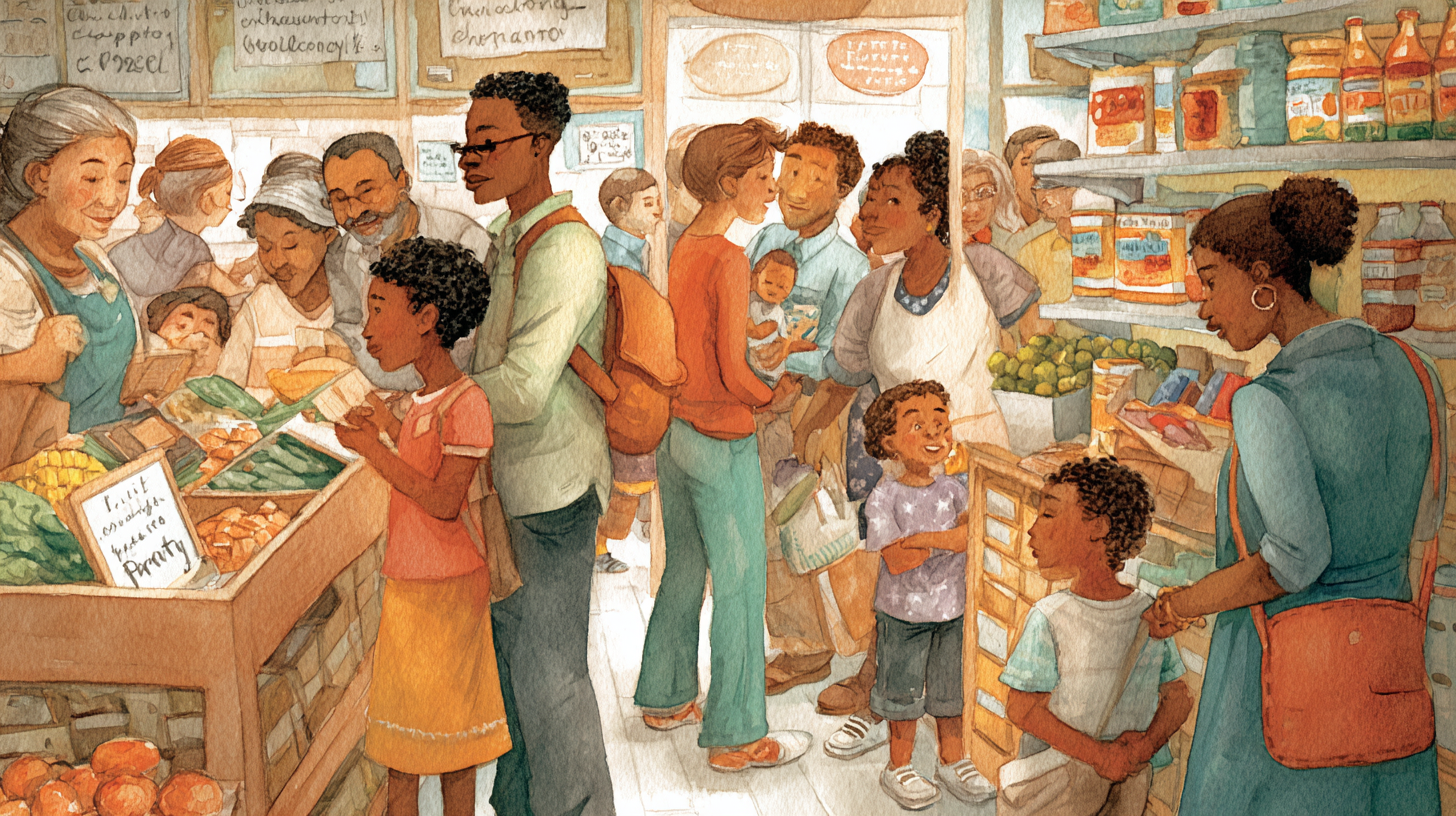
School meals are often the most reliable source of nutrition for food-insecure children. Free and reduced-price breakfast and lunch programs served as lifelines during the pandemic when they became universal in many districts, and though those expansions have ended in most places, millions of children still qualify based on household income. Summer meal programs continue feeding kids when school is out. If your children qualify, please sign them up. The paperwork might feel intrusive, but teachers and cafeteria staff aren’t judging—they’re relieved your child will have consistent meals.
The challenge with these federal programs? Access. Despite their existence, many eligible families don’t enroll due to complex applications, language barriers, fear (particularly in immigrant communities), stigma, or simply not knowing they qualify. A 2024 Urban Institute report found that many households continued to face persistent challenges affording food even though help was available. Recent policy changes have also created barriers: the expiration of pandemic-era expansions like enhanced SNAP benefits and universal free school meals has contributed to rising food insecurity in 2022-2023, reversing earlier progress.
Application Secrets: What They Don’t Tell You
Getting approved for benefits can feel like a mystery. Here’s insider knowledge that can help:
Timing Matters: Apply at the beginning of the month if possible—benefit calculations can be affected by when you apply.
Documentation Help: Don’t have all the documents? Apply anyway. Many states will help you gather what’s missing rather than rejecting you outright.
Expedited Processing: If your household has less than $150 in monthly income or $100 in cash/bank accounts, you may qualify for expedited SNAP within 7 days instead of 30.
Recertification Reminders: Set phone reminders 6 weeks before your benefits expire. Most people lose benefits not because they’re ineligible, but because they miss recertification deadlines.
Appeal Rights: If you’re denied and you disagree, you have the right to appeal. Many denials are overturned when families contest them with supporting documentation.
Beyond federal programs, there’s a vast network of community resources. Food banks and food pantries operate differently: food banks are large warehouses that collect and distribute food to smaller pantries, soup kitchens, and meal programs. Food pantries are the local distribution sites where you actually pick up groceries. In 2023, the Feeding America network included 200 food banks serving 40 million people annually through 60,000 partner agencies. That’s an enormous infrastructure built specifically to help.
Modern food pantries increasingly operate on choice-based models, where you shop for items your family will actually eat rather than receiving a pre-packed box. This shift toward dignity and autonomy matters. The best pantries train staff in trauma-informed care, understanding that the people walking through their doors are often experiencing shame, stress, and vulnerability. Many now offer fresh produce, culturally appropriate foods, and even cooking classes to help families maximize nutrition on limited budgets.
Accessing Help Without Losing Yourself
Here’s the hardest part about food insecurity: the shame. The feeling that you should be able to provide for your family, that needing help means you’ve failed, that people will judge you. This shame keeps families hungry even when help exists. It makes parents skip meals while feeding their children. It makes teenagers avoid the cafeteria because they can’t afford what their friends are buying. It turns hunger into a secret that isolates and damages.
Let me be clear: the shame you’re feeling isn’t about you—it’s about a culture that treats poverty as a personal moral failing rather than a systemic problem. You didn’t create inflation. You didn’t stagnate wages. You didn’t design a healthcare system where one hospital visit can bankrupt a family. You’re navigating an economy where a single adult needs to earn $25-30 per hour to afford a modest two-bedroom apartment in most U.S. cities—far above minimum wage. The problem isn’t your work ethic or your worth. The problem is structural.
Research on food insecurity and dignity reveals something profound: how we deliver food assistance matters as much as what we deliver. When families feel judged, surveilled, or pitied at food pantries, the psychological damage compounds the physical hunger. But when assistance is provided with respect—when pantry staff greet you warmly, when you can choose foods your family likes, when the process feels more like grocery shopping than charity—the experience preserves dignity even during crisis.
Myth-Busting: What You Think You Know About Food Assistance
Click each myth to reveal the truth:
MYTH: “If I take help, I’m taking it away from someone who needs it more.”
TRUTH: Food banks and SNAP are designed to serve everyone who qualifies. There’s no scarcity of need—only scarcity of resources. Your family’s hunger is just as valid as anyone else’s. Programs exist because the need is massive, not minimal.
MYTH: “People will judge me at the food pantry.”
TRUTH: Most pantry volunteers have either experienced food insecurity themselves or deeply understand the structural causes. They’re there because they want to help, not judge. And if you do encounter judgment? That’s about them, not you.
MYTH: “Using SNAP means I’ve failed as a parent.”
TRUTH: Using SNAP means you’re a resourceful parent who found a tool to feed your family. Some of the most successful people in America grew up in households using food assistance. Temporary help during hard times doesn’t define you—how you care for your family does.
MYTH: “I should just work harder and pull myself up.”
TRUTH: Many food-insecure families include full-time workers—sometimes multiple jobs. The “pull yourself up” narrative ignores that minimum wage hasn’t kept pace with living costs. Hard work should be enough, but in today’s economy, it often isn’t. That’s not your failing.
Here’s practical advice for maintaining dignity while accessing resources: First, remember that staff at agencies see hundreds of families. They’re not memorizing your face or gossiping about you. They’re processing applications and trying to help. Second, bring a friend if it helps. Having support can make the first visit less intimidating. Third, know your rights: you don’t have to explain your entire life story to receive help. You deserve respectful treatment, and if you encounter rudeness or judgment, you can report it to program administrators.
For children, how we frame food assistance shapes their understanding. Instead of “We’re too poor to buy food,” try “Sometimes families need help, and there are programs specifically designed to make sure kids always have enough to eat.” Instead of secrecy and shame, try honesty and matter-of-factness. Children take their emotional cues from adults. If you treat food pantries as normal community resources—like libraries or parks—they will too.
The trauma of food insecurity is real. When families repeatedly experience scarcity, it creates lasting psychological effects: hypervigilance about food, anxiety around meals, guilt about eating, and difficulty trusting that food will consistently be available. This is sometimes called “food trauma,” and it deserves recognition and compassion. If you or your children are showing signs—hoarding food, anxiety about running out, eating very quickly, difficulty enjoying meals—consider that you’re dealing with trauma, not just hunger. Addressing it might require both food security and emotional support.
Talking to Children: Protecting Hearts While Filling Bellies
One of the most agonizing aspects of parental food insecurity is deciding what to tell your children. You want to protect them from worry, from feeling different, from carrying burdens that aren’t theirs. But children are perceptive. They notice when meals are smaller, when you say you’re not hungry, when there are fewer snacks. The question isn’t whether to address it, but how.
Research with children experiencing food insecurity reveals that kids often already know something is wrong. They notice parental stress, they understand family financial constraints more than we give them credit for, and they sometimes adopt coping mechanisms without adults realizing—eating less, eating faster, avoiding situations that involve food. When we try to hide food insecurity completely, children fill in the gaps with their imagination, often creating narratives that are worse than reality: “Maybe Mom doesn’t love me anymore,” or “Maybe I did something wrong.”
Age-appropriate honesty is key. For young children (under 7), keep it simple: “Right now, we need to be careful with our food budget, but we have enough, and you’re safe.” For school-age children (7-12), you can add context: “Our family is going through a tight time with money, so we’re using some community programs to help make sure we all have enough to eat. Lots of families do this when they need to.” For teenagers, you can be more direct about the reality while emphasizing the temporary nature and the plan forward.
What you should never do is make children feel responsible for the family’s financial situation or guilty for eating. Phrases like “Do you know how much that costs?” or “Maybe if you ate less we could afford…” create lasting damage. Children should never feel that their basic needs are a burden. Even in scarcity, the message must be: “You deserve to eat, you deserve to be fed, and adults are handling this.”
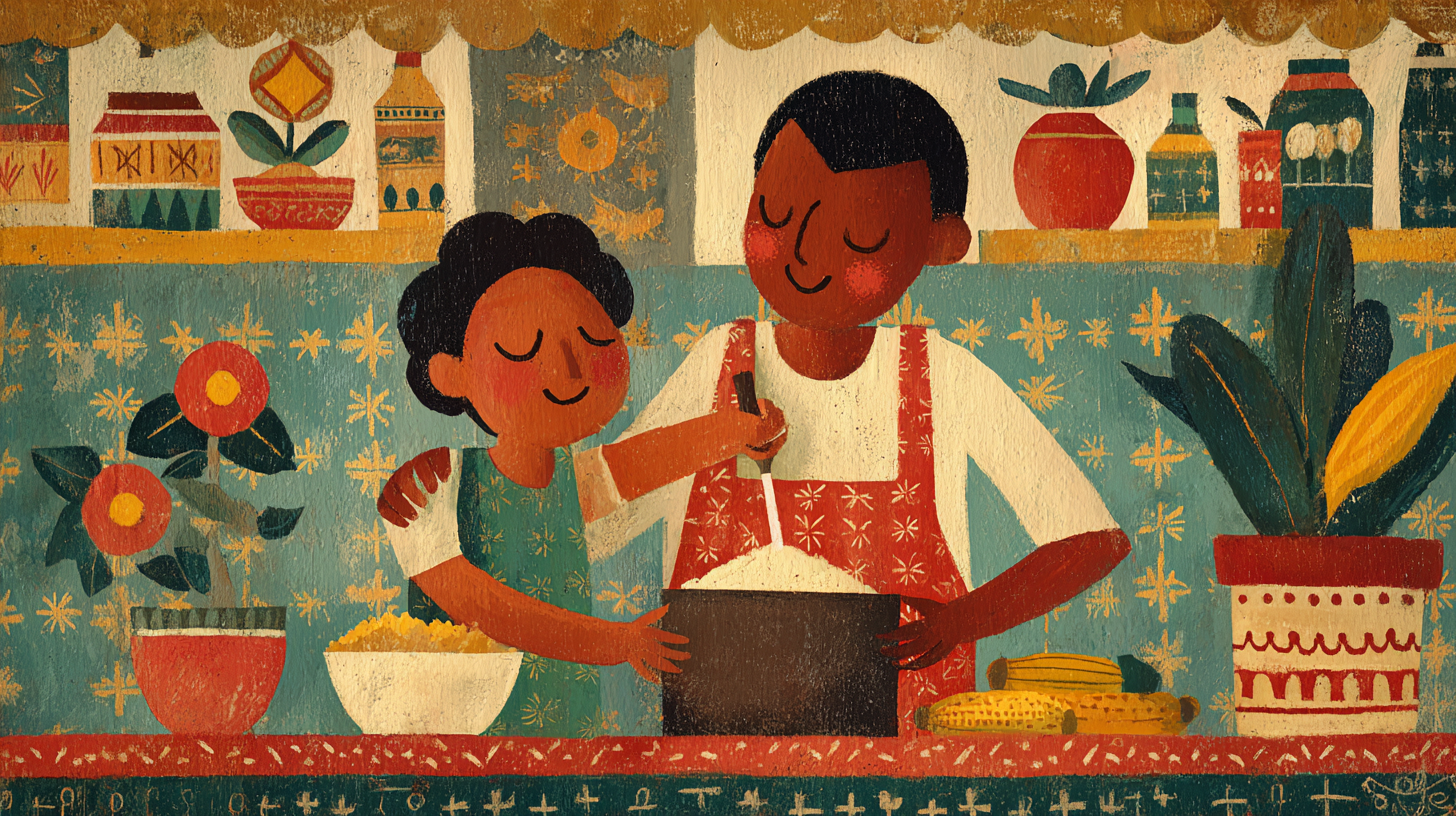
Maintaining food rituals and traditions during scarcity is powerful. If Sunday dinner was a family tradition, keep it even if the menu changes. If you used to make special cultural foods, find ways to recreate them with available ingredients. The Caribbean Baby Food Recipe Book shows how traditional flavors—like coconut milk, beans, plantains, and seasoning—can create meaningful meals on tight budgets. Recipes like Stewed Peas Comfort or Coconut Rice & Red Peas use affordable pantry staples to create filling, culturally rooted dishes that nourish both body and spirit. Food is about more than calories; it’s about connection, culture, and love. Protecting those elements during hardship helps children feel continuity and security.
Your Action Plan: Building Food Security Step by Step
Check off each step as you complete it. Watch your progress grow:
Experts emphasize that children’s emotional wellbeing during food insecurity depends heavily on adult responses. If caregivers model resilience, problem-solving, and hope—if they frame challenges as temporary and solvable—children are more likely to develop those same coping skills. Conversely, if adults spiral into despair or self-blame, children absorb that narrative. This doesn’t mean you have to be positive all the time or hide your legitimate stress. It means balancing honesty about difficulties with confidence in your ability to navigate them. “Things are really hard right now, and I’m working on solutions” is a powerful message that acknowledges reality while modeling agency.
Some children will want to help. Older kids might offer to get jobs, give up activities, or eat less. While their impulse comes from love, it’s important to redirect it appropriately. Children shouldn’t sacrifice their childhoods or their nutrition to solve adult problems. Instead, you can involve them in age-appropriate ways: helping plan budget-friendly meals, learning to cook, assisting with grocery shopping using coupons or sales, or even volunteering at a food pantry (which teaches empathy and community connection). These activities give children productive roles without burdening them with responsibility that isn’t theirs.
Expert Voices: What Professionals Know
Pediatricians, social workers, public health experts, and anti-hunger advocates have been studying food insecurity for decades. Their research converges on several critical points that should guide policy and practice.
First, food insecurity is a health issue, not just an economic one. The American Academy of Pediatrics recommends that pediatricians screen for food insecurity at well-child visits, recognizing it as a vital sign like height and weight. Children experiencing food insecurity have higher rates of iron deficiency anemia, developmental delays, asthma hospitalizations, behavioral problems, and poor school performance. A landmark 2021 state-of-the-art review found that food insecurity compromises nearly every domain of child development—physical growth, cognitive achievement, and psychosocial wellbeing. Treating food insecurity as a medical concern has led to innovations like “food as medicine” programs, where doctors can actually prescribe fruits and vegetables for families.
Second, adolescence is a uniquely vulnerable period that often gets overlooked. While public attention focuses on young children and infants, teenagers in food-insecure households face specific challenges: increased nutritional needs during growth spurts, social pressures around food, school activities that assume families can afford expenses, and often increased awareness of family struggles. A 2023 study on federal nutrition programs and adolescent food insecurity found a complicated picture where teens may not benefit from programs designed for younger children, yet they lack targeted support. Experts call for more teen-specific interventions.
Third, assistance programs work—when people can access them. Research consistently shows that SNAP reduces food insecurity, improves diet quality, and enhances health outcomes. School meal programs do the same. The challenge is the gap between eligibility and enrollment. Barriers include stigma, complex applications, lack of information, immigration-related fears, and administrative burdens like frequent recertification requirements. Anti-hunger advocates emphasize that simplifying access could dramatically reduce child hunger without inventing new programs.
Fourth, the lived experience matters. Advocates increasingly emphasize dignity, choice, and trauma-informed approaches. A 2024 study on home-delivered produce prescription programs found that families valued not just the food itself, but the respectful delivery, the quality of produce, and the feeling that someone cared. Traditional charity models that treat recipients as passive beneficiaries are giving way to models that recognize food-insecure individuals as experts on their own needs, capable partners in designing solutions.
Resource Locator: Find Help Near You
Select your situation to see which programs you should explore first:
Social media has become an unexpected platform for food insecurity awareness and advocacy. Organizations like Feeding America and No Kid Hungry use Instagram and TikTok to share stories, bust myths, and normalize asking for help. Parent influencers share budget meal ideas, pantry hauls from food banks, and honest conversations about hard times. This visibility matters: when families see others openly accessing resources, the stigma loses power. When kids see that lots of families use free lunch programs or visit food pantries, they feel less alone and different.
There’s also growing recognition of food trauma and its long-term effects. Therapists and counselors who work with food-insecure families describe clients who hoard food, who can’t throw away even moldy leftovers, who experience panic at the thought of an empty cupboard, who struggle to enjoy meals even when food is plentiful. This isn’t irrational—it’s trauma response. Healing requires both food security and therapeutic support to help families rebuild trust that their needs will be met.
Looking Forward: The Path From Scarcity to Stability
Food insecurity isn’t a permanent state for most families—it’s a temporary crisis or a chronic wobble between barely enough and not quite enough. Understanding that this is survivable, that families emerge from it, and that taking help now doesn’t define your future is crucial for maintaining hope.
The policy landscape is constantly shifting. Advocates are pushing for strengthened SNAP benefits, universal free school meals, expanded summer meal programs, and simplified enrollment processes. Some states are experimenting with guaranteed income programs that give families cash to use as they see fit, trusting them to know their needs better than bureaucrats. Food banks are professionalizing, adopting best practices around nutrition, dignity, and client choice. There’s momentum toward treating food as a human right rather than a commodity you must earn.
At the individual level, building food security involves both accessing immediate help and, when possible, strengthening long-term stability. This might mean enrolling in job training programs, building an emergency fund even if it’s $20 per month, learning to cook budget-friendly nutritious meals, or connecting with community resources beyond food—rental assistance, healthcare, childcare, transportation. The goal isn’t just to feed your family this week, but to reduce the volatility that causes food insecurity in the first place.
Culturally responsive food assistance is gaining recognition. Traditional pantries often stock items that don’t match the cooking traditions or dietary needs of diverse communities. Imagine being Haitian and receiving a box of pasta and jarred tomato sauce when what you need is rice, beans, and seasoning. Imagine being offered white bread when your family eats roti. Progressive food banks now partner with cultural communities to source appropriate foods. If you’re raising children with Caribbean heritage, introducing them to culturally rooted foods even during scarcity matters for identity and connection. Resources like the Caribbean Baby Food Recipe Book demonstrate that nutritious, culturally meaningful meals can be made with affordable staples—recipes like Basic Mixed Dhal Puree or Cornmeal Porridge Dreams use ingredients available at most food pantries and WIC programs.
For parents, the journey from food insecurity to security often involves grief, resilience, and growth. You might grieve the stability you thought you had, the life you imagined providing for your children, the loss of certain comforts or choices. That grief is valid. You might develop resilience you didn’t know you possessed—the ability to stretch $30 into a week of meals, to advocate fiercely for your children’s needs, to ask for help even when it feels impossible. And you might experience growth: deeper empathy for others facing hardship, stronger connections with community, a recalibrated understanding of what truly matters.
Building Community and Breaking Isolation
Food insecurity thrives in isolation. When families suffer alone, ashamed to admit they’re struggling, the problem becomes invisible and unsolvable. But when families connect—when neighbors share resources, when communities organize, when parents support each other without judgment—everything changes.
Community food networks are emerging across the country: mutual aid groups where neighbors share extra produce or pantry items, community gardens where families can grow fresh vegetables, meal-sharing groups where people take turns cooking for each other. These initiatives work because they’re built on reciprocity rather than charity. Everyone has something to offer, everyone has needs, and the exchange happens among equals.
Religious communities and cultural organizations often provide food support with less bureaucracy and more cultural competence than government programs. Black churches have long operated food pantries and community meals. Latino organizations distribute culturally appropriate groceries. Sikh gurdwaras offer free community meals (langar) to anyone regardless of background. If you’re connected to a cultural or faith community, they may be your best first resource—both for practical help and for emotional support from people who share your background and understand your specific challenges.
School-based food pantries are becoming more common, recognizing that removing transportation barriers increases access. Many schools now operate weekend backpack programs, where food-insecure children receive bags of groceries to take home on Fridays. Some have on-site pantries that look like school stores, where families can “shop” for groceries. These programs work because they meet families where they are and because teachers can identify children who need help.
Online communities provide support too. Facebook groups for budget cooking, Reddit forums about frugal living, Instagram accounts sharing SNAP-friendly recipes—these spaces let families share tips, ask questions, and feel less alone. The anonymity of online spaces can make it easier to admit struggles and ask for advice without the face-to-face shame some people feel at local resources.
For those in a position to help others, understanding trauma-informed assistance is critical. This means: treating people with dignity and respect, offering choice rather than dictating what someone needs, avoiding invasive questions about why someone needs help, recognizing that food insecurity isn’t caused by poor planning or laziness but by systemic failures, and following the lead of those with lived experience. The best food pantry volunteers are often people who once needed the pantry themselves—they understand the courage it takes to walk through the door.
What You Can Do Right Now
If you’re reading this in the middle of the night, worried about tomorrow’s meals, here’s what you can do immediately:
Call 211. This is the United Way’s helpline that connects you to local resources—food pantries, emergency assistance, utility help, healthcare. It’s free, confidential, and available in multiple languages. The person who answers won’t judge you; they’re trained to help.
Visit feedingamerica.org and enter your zip code. You’ll get a list of food banks and pantries near you, along with hours and what to expect. Most don’t require appointments or documentation for your first visit—just show up.
Look up your state’s SNAP website and start an application. Even if you’re not sure you qualify, apply. The worst they can say is no, and eligibility limits are higher than many people assume, especially for families with children.
Check your children’s school website for meal applications. Many families who could qualify for free or reduced-price meals never apply because they assume they won’t qualify or because they’re embarrassed. Apply.
Make a list of what you have right now—every can in the pantry, every frozen vegetable, every grain in the cupboard. Then look up budget recipes using those ingredients. You might have more meal potential than you realize. When times are extremely tight, basics like rice, beans, oats, eggs, and whatever vegetables you can access form the foundation of nourishing meals.
Reach out to one trusted person—a friend, family member, religious leader, school counselor. Say “We’re struggling with food right now and I need help figuring out resources.” You don’t have to explain or justify. Just ask. Most people want to help; they just don’t know who needs it.
If you have infants or toddlers, know that they need less food than you might think but what they eat matters greatly for development. Nutrient-dense foods are crucial. Programs like WIC specifically support young children, and resources like the Caribbean Baby Food Recipe Book show how to maximize nutrition from simple ingredients—sweet potatoes, lentils, oats, eggs, and whatever vegetables are available can create complete, nourishing meals for babies and toddlers even on the tightest budgets.
If you’re in immediate crisis—nothing to eat today or tomorrow—call a local food pantry and explain the urgency. Many have emergency boxes they can provide same-day. Some will even deliver if you have no transportation. Churches often have emergency funds to buy groceries for families in crisis. Don’t wait for the “right time” to ask—the right time is when your family is hungry.
The Strength It Takes
There’s something I need you to understand: accessing help when you need it is one of the strongest, most responsible things you can do as a parent. Our culture tells a story about independence and self-sufficiency being the highest virtues, about people who “pull themselves up by their bootstraps” without help. That story is a lie, and it’s a harmful one.
Human beings are interdependent. We’ve always been. Families have always relied on communities, on extended networks, on collective resources to survive hard times. The idea that you should be able to do it all alone, with no support, is new and cruel and unsustainable. Every successful person you can think of has received help—from family, from mentors, from government programs, from lucky breaks. The difference between them and you isn’t virtue or work ethic; it’s circumstances and access to support.
When you feed your children using SNAP benefits, you’re being resourceful. When you pick up groceries from a food pantry, you’re being proactive. When you sign your kids up for free school meals, you’re being smart. These aren’t failings—they’re victories. Every meal you put on the table, regardless of where the food came from, is an act of love and care. Your children won’t remember whether the food came from Whole Foods or a food bank. They’ll remember that you fed them, that you kept them safe, that you didn’t give up.
The shame you might feel is real, but it’s based on false narratives about poverty and worth. You are not worth less because you’re struggling financially. Your parenting isn’t inadequate because you need help. Your family isn’t broken because you can’t afford everything you want to provide. You’re a family navigating a difficult moment in an economy that is structurally designed to benefit the few at the expense of the many. That’s not a personal failing—it’s a systemic reality.
Five years from now, ten years from now, when things have stabilized—and they will stabilize—you’ll look back on this time and what you’ll remember is that you did what you had to do. You’ll remember your resilience, your creativity, your fierce determination to care for your children no matter what it took. Your children will remember feeling loved and protected, even if they also remember meals being smaller or different. What breaks children isn’t temporary hardship; it’s feeling alone, unsupported, and unloved during that hardship. If you’re there for them, if you’re trying, if you’re fighting for them—they’re going to be okay. And so are you.
Moving Through and Moving Forward
Food insecurity is not the end of your story. It’s a chapter, and like all chapters, it will eventually turn to the next page. But while you’re in it, surviving it with dignity and accessing every resource available isn’t just okay—it’s exactly what you should be doing.
There’s no perfect way to navigate food insecurity with children. You’ll make decisions you wish you didn’t have to make. You’ll have days where you break down crying in the grocery store parking lot because you had to put items back. You’ll feel the weight of every “Can I have a snack?” question. You’ll worry about things that parents in secure situations never have to think about. And all of that is hard and real and valid.
But you’ll also discover strength you didn’t know you had. You’ll learn to stretch meals further than you thought possible. You’ll find community in unexpected places. You’ll teach your children resilience not through lectures but through modeling—showing them that when times are hard, you face them head-on, you ask for help when you need it, you keep going. Those are the lessons that shape character far more than always having abundance.
The goal isn’t just to survive food insecurity—it’s to move through it in a way that preserves your family’s emotional health, maintains connection and dignity, and positions you to build stability on the other side. That means accepting help now, even when it’s uncomfortable. It means protecting your children’s sense of security even when your own feels shaky. It means treating yourself with the same compassion you’d extend to any other parent facing these circumstances. It means remembering that needing help is temporary, but how you treat yourself during hard times shapes who you become.
And when you get to the other side—when the paychecks stabilize, when the emergency passes, when the budget finally balances—I hope you’ll remember what this felt like. I hope you’ll become the person who donates to food banks, who advocates for stronger safety net programs, who welcomes other struggling families without judgment. I hope you’ll pay forward the help you received, not because you owe anyone, but because you understand in your bones how much it matters. The parents who are the most generous, the most compassionate, the most fierce in fighting hunger—they’re almost always parents who remember being hungry themselves.
You are not failing. You are navigating an impossible situation with love and determination. You are doing what needs to be done to care for your family. You are enough. Your children are lucky to have a parent who fights this hard for them. And somewhere in the future, on the other side of this hard season, you’ll look back and recognize the warrior you were all along.
The cupboard might be bare right now, but your capacity for love, resilience, and courage is overflowing. That’s what will carry your family through. That’s what will matter in the end. Hold onto that truth, reach out for every resource available, and know that you are not walking this path alone. Millions of families are beside you, and a whole infrastructure of support exists to catch you when you fall. Let it. Your family deserves to eat. You deserve dignity. And this hard chapter will not be your family’s whole story—just the part that proves how strong you are.

Kelley's culinary creations are a fusion of her Caribbean roots and modern nutritional science, resulting in baby-friendly dishes that are both developmentally appropriate and bursting with flavor. Her expertise in oral motor development and texture progression ensures that every recipe supports your little one's feeding milestones while honoring cultural traditions.
Join Kelley on her flavorful journey as she shares treasured family recipes adapted for tiny taste buds, evidence-based feeding guidance, insightful parenting anecdotes, and the joy of celebrating food, culture, and motherhood. Get ready to immerse yourself in the captivating world of Kelley Black and unlock the vibrant flavors of the Caribbean for your growing baby, one nutritious bite at a time.