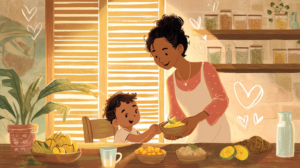
When Everyone’s Feeding Your Baby: The Hidden Truth About Multiple Caregivers
Let’s be real for a second. How many adults are feeding your baby right now? Click to reveal what the research says about YOUR situation:
Three weeks after my son started eating solids, I walked into my mother-in-law’s kitchen and found her spooning sweetened porridge into his mouth while he sat mesmerized by cartoons. My carefully crafted feeding plan—no screens, no added sugar, follow his hunger cues—had evaporated the moment I left the house. And you know what the hardest part was? She genuinely thought she was helping. She was doing what worked for her generation, what felt like love.
That’s the moment I realized something profound: when it comes to feeding our babies, we’re not just battling picky eating or food refusal. We’re navigating an invisible web of beliefs, traditions, power dynamics, and love languages that can either support our children’s healthy relationship with food or quietly undermine it. Recent research reveals that non-parental caregivers—grandparents, relatives, childcare providers, and nannies—shape infant diet, growth patterns, and long-term eating behaviors just as powerfully as parents do. In fact, studies show strong concordance between what caregivers eat and what babies eat, meaning your child is absorbing not just food, but entire food cultures from every adult who feeds them.
The truth nobody’s talking about? Multiple caregivers feeding your baby isn’t the problem. It’s the inconsistency between them that drives picky eating, overfeeding, mealtime battles, and stress for everyone involved. But here’s the breakthrough: when caregivers align on responsive, evidence-based practices and communicate clearly, children develop more stable intake patterns, healthier growth trajectories, and better self-regulation around food. This isn’t about control or perfection—it’s about creating a shared foundation that respects everyone’s role while protecting your baby’s ability to listen to their own body.
The Invisible Architecture of Baby Feeding
Let’s start with what “multiple caregivers” actually means, because it’s not just about babysitters. Any situation where more than one adult regularly feeds your baby counts: parents, grandparents, aunties and uncles, childminders, daycare staff, and even older siblings who help with snacks. Each person brings their own feeding script—shaped by their childhood, culture, fears about nutrition, and what “good care” looks like to them.
Here’s what recent research uncovered: in many families, infant feeding norms are still passed down through older female relatives, particularly grandmothers, and these traditions often override professional pediatric advice. In one ethnographic study, over one-third of caregivers admitted to using force when children refused foods, driven by fear of reprimand about the child’s weight or growth. That same research found that grandparents in particular tend to see a “chubby child” as a sign of health and good caregiving, while parents educated on current guidelines worry about obesity risk and want responsive feeding practices.
The core concepts that experts keep coming back to? Responsive feeding—watching and responding to your baby’s hunger and fullness cues—structured mealtimes, and shared expectations about what, when, and how a child is fed. These aren’t rigid rules; they’re flexible frameworks that work across cultures and family structures when everyone understands the “why” behind them.
Click each card to reveal the most common misalignment between caregivers—and what it’s costing your baby:
Historically, this multi-caregiver reality isn’t new, but the stakes have changed. A generation ago, family traditions around baby feeding were rarely questioned. Today, we know that early feeding patterns directly influence later obesity risk, metabolic health, food preferences, and even emotional regulation. Evidence links caregiver feeding styles during infancy with child diet quality years later, making these early months a critical window that extends far beyond your household.
Modern life has made coordination more urgent and more complicated. With more mothers working outside the home, dual-income families as the norm, and reliance on formal childcare increasing globally, feeding has shifted from a single primary caregiver to genuinely shared responsibility between home, daycare, and extended family. Urban Chinese research on early childhood education centers found that while many children meet minimum meal frequency standards, significant gaps remain in diet diversity and nutrient-rich food intake, highlighting how home and institutional feeding need to work together. When they don’t, babies pay the price.
What the Numbers Actually Tell Us
Non-parental caregivers aren’t bit players in your baby’s nutrition story—they’re leading actors. Recent scoping reviews of obesity prevention programs now explicitly include grandparents, childcare providers, and relatives because researchers finally acknowledge their central influence on young children’s diets, screen time, and physical activity. One systematic review found that interventions targeting only parents while ignoring other caregivers consistently showed weaker outcomes than family-system approaches.
Here’s a stat that stopped me cold: around 60% or more of caregivers believe they’re following good feeding practices, yet diet diversity for young children remains inadequate in a notable minority of families. Translation? Intentions don’t equal outcomes, especially when caregivers operate on different definitions of “healthy.” Mixed-methods research among low-income caregivers revealed both responsive strategies—like trusting cues and offering gentle encouragement—and non-responsive ones—like force-feeding, bribery, and distraction—often coexisting within the same household or even used by the same person depending on their stress level that day.
The data on forceful feeding is particularly sobering. Studies show that many caregivers worldwide still introduce sugary foods early, use sweets as rewards, or lean heavily on carbohydrate-rich staples with limited vegetable and protein variety, especially when time and budgets are tight. This pattern contributes to picky eating, poor self-regulation around food, and higher long-term risk of diet-related diseases. And it’s not because caregivers don’t care—it’s because they’re working from different playbooks.
But here’s the hopeful twist: when caregivers align, outcomes improve dramatically. Research on family-based interventions shows that teaching caregivers shared feeding skills—like limit-setting, empathy, modeling healthy eating, and responsive interactions—alongside nutrition education is far more effective than information dumps alone. The magic ingredient? Collaboration and respect for everyone’s role, not top-down mandates.
Where should you start? Click to reveal your personalized next step based on the research:
Step 1: Map Your Caregiving Circle
Write down every adult who regularly feeds your baby, even occasionally. Include yourself, your partner, grandparents, daycare staff, babysitters, and anyone else.
Step 2: Identify the Top 3 Non-Negotiables
Based on research, these should be: (1) No force-feeding or pressure, (2) Consistent meal/snack timing, (3) No screens during meals. These three create the foundation for responsive feeding.
Step 3: Schedule a 15-Minute Caregiver Chat
Don’t make it confrontational. Share why these practices matter (child’s ability to self-regulate, lower obesity risk, better relationship with food). Ask about their concerns and traditions—this is a conversation, not a lecture.
Step 4: Create a Simple One-Page Feeding Guide
Include meal timing, sample foods (like those from this Caribbean-inspired recipe collection with nutrient-dense options), how to respond to refusal, and your agreed-upon rules. Post it in the kitchen and share a copy with all caregivers.
The Cultural Collision Nobody Prepared You For
Here’s where it gets real, especially for those of us navigating multiple cultural traditions. I remember the day my own mother—who raised me on provisions, dasheen, and green fig—questioned why I was introducing avocado before sweet potato to my son. “We never did that,” she said, not unkindly, but with genuine confusion. To her, the feeding order I’d learned from pediatric guidelines felt foreign, even wrong.
Research backs up what many of us experience silently: grandparents and older relatives often see themselves as protectors of cultural norms and “balanced lifestyles,” which can clash with weight-focused or guideline-driven messages from healthcare providers. In qualitative studies, grandparents described feeling dismissed when their traditional knowledge—like introducing certain spices early or using specific root vegetables as first foods—was ignored by younger parents following Western feeding frameworks.
But here’s the truth the research is finally catching up to: cultural feeding traditions aren’t the enemy of healthy eating. Many traditional Caribbean, African, Asian, and Latin American first foods—like plantain, yam, callaloo, sweet potato, and coconut-based porridges—are incredibly nutrient-dense and align beautifully with responsive feeding principles when prepared appropriately. The problem isn’t what we’re feeding; it’s how we’re navigating the power dynamics and conflicting advice around it.
One particularly powerful finding: interventions that ignore or dismiss cultural feeding practices are perceived as disrespectful and lead to resistance from grandparents and community members, ultimately undermining the child’s feeding environment. The most successful programs adapt evidence-based guidelines to honor traditional foods and practices, showing families how to prepare cultural staples safely while maintaining responsive feeding approaches.
For example, if your mother-in-law wants to give your baby a taste of geera (cumin) in their pumpkin puree because that’s how she raised her children, recent guidance on introducing spices suggests this can be done safely and may even expand your baby’s flavor acceptance. The key is agreeing on when (after allergen introduction is underway), how much (tiny amounts for flavor, not heat), and how it’s offered (still following baby’s cues, no force).
The Daycare Dilemma and Institutional Feeding Gaps
If your baby spends time in formal childcare, you’re dealing with a whole other layer of complexity. Research on early childhood education centers reveals significant variability in food quality, staff training, and adherence to feeding guidelines. Some centers have robust nutrition policies and trained staff who understand responsive feeding; others operate more like assembly lines, prioritizing efficiency and “clean plates” over children’s autonomy.
Here’s what studies found about complementary feeding in institutional settings: while many centers meet basic meal frequency requirements, diet diversity and nutrient-rich food offerings often fall short. Staff may serve the same rotation of bland, carb-heavy foods week after week, leaving babies without exposure to vegetables, proteins, and varied textures. Even more concerning, researchers observed feeding practices that directly contradict current guidelines—like pressuring children to finish portions, using food as rewards or punishment, and feeding distracted children to “get it done.”
One mother I spoke with discovered that her son’s daycare was serving sweetened yogurt and crackers for snack every single day, despite her requests for fruit and vegetables. When she raised it with the director, she was told, “That’s what the kids will actually eat.” But here’s the research-backed reality: babies and toddlers learn to prefer what they’re repeatedly offered. If they’re only given sweet, simple carbs at daycare, that’s what their palate will expect—and healthy foods at home become a battle.
So what can you do? Experts recommend being proactive rather than reactive. Ask potential daycares about their menus, feeding policies, and staff training before enrollment. Specifically inquire about:
- How they handle food refusal (Do they pressure? Respect cues?)
- Whether they offer family-style meals where children serve themselves
- Their policy on added sugars and processed foods
- Whether meals are screen-free and social
- How they communicate with parents about what and how much the child ate
If your child is already enrolled and you’re seeing misalignment, research suggests starting with small, negotiated changes rather than demanding overhauls. For example, you might ask if your child’s class could try family-style serving for one month, or whether the center could pilot a “no pressure” approach during a particular meal. Document what’s happening (what’s served, how it’s offered) and share specific, evidence-based alternatives with citations if possible. Most directors respond better to “research shows…” than “I think…”
Different caregivers resist alignment for different reasons. Click on scenarios to reveal what’s really happening and how to respond:
Technology, Apps, and the Digital Feeding Coordinator
One surprising development in multi-caregiver feeding? Technology is starting to bridge the communication gap. Baby-tracking apps that allow multiple users to log feeds, meals, sleep, and diapers in real time are becoming more sophisticated, and parents report that shared digital logs reduce guesswork and conflict between caregivers.
Research notes that the co-parenting app market is growing as separated parents and dual-working families look for ways to synchronize routines, including feeding schedules and food introduction timelines. These platforms can document agreed-upon rules, share photos of what baby ate at daycare, and provide a neutral space for caregivers to flag concerns or ask questions without face-to-face confrontation.
For example, an app could show that baby ate a full breakfast with Grandma, preventing Dad from offering a second heavy meal an hour later. Or it could document that daycare introduced a new allergen (like egg), so parents know to watch for reactions at home. Some newer apps even integrate educational content about responsive feeding, allergen introduction, and age-appropriate textures, giving all caregivers access to the same evidence-based information.
That said, digital tools only work if everyone actually uses them—and there’s the rub. In my experience, older caregivers often resist apps, seeing them as intrusive or overly complicated. The key is framing technology as a support rather than surveillance. Instead of “I need to track everything you’re feeding him,” try “This app helps us make sure he’s not getting too much or too little throughout the day, especially with different people caring for him.”
The Science of Responsive Feeding Across Caregivers
Let’s get into what “responsive feeding” actually means, because it’s the golden thread running through every successful multi-caregiver feeding plan. Responsive feeding is a reciprocal process where caregivers recognize and respond appropriately to a baby’s hunger and satiety cues, offering structure (regular meals and snacks) while allowing the child to decide how much to eat.
This isn’t permissive feeding where baby eats cookies all day. It’s structured flexibility: you decide what is offered and when, and baby decides whether and how much. Research shows this approach supports healthy growth, better self-regulation, lower obesity risk, and more adventurous eating compared to controlling or pressuring feeding styles.
The challenge with multiple caregivers is that responsive feeding requires consistent interpretation of cues and consistent responses. If one caregiver interprets fussiness as hunger and offers a bottle, while another interprets the same fussiness as tiredness and offers a nap, baby gets confusing feedback about their own internal signals. Over time, this can erode their ability to recognize and trust their hunger and fullness cues.
Groundbreaking guidelines now emphasize that responsive feeding must extend across all environments—home, childcare, and extended family settings. The framework stresses reciprocal interactions and shared routines, not just within a parent-child dyad. When all caregivers use similar language, timing, and responses, children experience feeding as predictable and safe, which supports both nutrition and emotional development.
Consistency isn’t about perfection—it’s about shared intention. Track your progress as you align caregivers:
Check off each milestone as you complete it:
When Feeding Becomes a Power Struggle
Let’s talk about what happens when alignment breaks down completely—because it’s more common than anyone admits. I’ve heard from parents who dread dropping their baby at the in-laws’ house, knowing their carefully introduced foods and responsive routines will be ignored. I’ve heard from grandparents who feel shut out and disrespected by rigid feeding rules that seem to reject everything they did “successfully” with their own children.
Research on family dynamics in feeding reveals that power imbalances and fear of confrontation often keep problems festering beneath the surface. Parents may worry about offending or losing childcare support, so they stay silent even when they see practices they believe are harmful. Meanwhile, older caregivers may feel their experience and cultural knowledge are being devalued in favor of “trendy” parenting advice, creating resentment.
One particularly striking study found that in some cultural contexts, younger mothers experienced significant pressure not to follow pediatric feeding guidelines because doing so was seen as disrespectful to elders. These mothers reported introducing foods earlier than recommended, using feeding practices they disagreed with, and feeling torn between professional advice and family harmony.
Here’s what trauma-informed and partnership-based feeding experts recommend: approach caregiver conversations as collaboration, not correction. The most effective interventions focus on shared goals (“We all want baby to be healthy and happy”), clear communication (“Here’s why timing matters”), and empowerment (“You’re so important to his development—let’s make sure we’re all supporting him the same way”).
When tensions run high, try this reframe: “I’m not saying what you did was wrong. I’m saying the research has changed, and I want us all working from the same playbook so baby doesn’t get confused.” This removes judgment and centers the child’s needs rather than anyone’s ego.
Practical Solutions for Real Families
Theory is lovely, but you need tactics that work at 6 a.m. when you’re handing baby to Grandma for the day or responding to a daycare incident report. Here’s what research-backed, real-world solutions look like:
Create a visual feeding schedule. Not a lecture, not a 10-page manual—a single-page document with pictures. Include meal and snack times, examples of appropriate foods (think simple images of mashed plantain, steamed callaloo, or pureed pumpkin with coconut milk), and a simple decision tree: “If baby turns head away → meal is over. If baby opens mouth and leans in → offer more.” Laminate it. Post it in the kitchen. Text a photo to everyone.
Script responses to common scenarios. Anticipate the situations that cause conflict and write down agreed-upon responses. For example: “If baby refuses vegetables: Offer without comment, don’t force, remove after 10-15 minutes, don’t offer replacement snack until next scheduled time.” When everyone knows the script, there’s less room for individual interpretation.
Implement a “two-week trial” approach. If a caregiver is resistant, propose trying the new approach for just two weeks and then reassessing together. This reduces the sense of permanent change and gives everyone a chance to see results. Research shows that when caregivers experience positive outcomes—like less mealtime stress or baby trying new foods—they’re far more likely to sustain the practice.
Use the “same foods, different preparations” strategy. If you’re navigating cultural preferences, find the overlap. Many traditional Caribbean foods align beautifully with baby feeding guidelines when prepared simply. Yam, sweet potato, dasheen, green banana, callaloo, pumpkin, and breadfruit are all nutrient powerhouses. Show grandparents how to prepare these foods baby-safely (steamed until soft, no added salt or sugar) while honoring the traditional ingredients they value.
Normalize “good enough” consistency. Perfect alignment across all caregivers isn’t realistic or necessary. Research suggests that consistency on the big three—no force, regular timing, no screens—provides most of the benefit. If Grandma’s portions are slightly bigger or she adds a pinch of cinnamon you wouldn’t use, but she’s following baby’s cues and creating a positive mealtime environment, that’s a win.
Family Feeding Agreement for [Baby’s Name]
Last Updated: [Date]
Our Shared Goals:
• Help baby learn to recognize and trust their hunger and fullness signals
• Introduce a wide variety of healthy foods, including cultural favorites
• Make mealtimes positive and stress-free for everyone
What We Agree On (Non-Negotiables):
1. No forcing, pressuring, or bribing baby to eat
2. Meals and snacks offered at consistent times (approximately [list times])
3. No screens or major distractions during meals
4. We stop feeding when baby shows clear signs of being done (turns head, closes mouth, pushes food away)
What We’re Flexible About:
• Exactly which foods from our approved list are offered
• Whether baby eats a little or a lot at any given meal
• Minor variations in timing (30 minutes earlier/later is fine)
• Cultural preparations of approved foods
Our Communication Plan:
• We’ll use [app name / notebook / text thread] to share what baby ate and any concerns
• We’ll check in together every [2 weeks / month] to see how it’s going
• If someone’s struggling with any practice, we’ll discuss it without judgment
Signed:
[All caregivers sign or initial]
What’s Coming Next: The Future of Multi-Caregiver Feeding
The landscape is shifting fast. Future dietary guidelines are expected to explicitly address multi-caregiver environments and provide tailored recommendations for coordinating home, childcare, and extended family feeding. Policymakers are increasingly recognizing that targeting only parents while ignoring the broader caregiving ecosystem is insufficient, and new initiatives aim to train childcare staff and support grandparents as active partners in early nutrition.
Technology will likely play an even bigger role. Imagine AI-driven apps that not only log what baby ate but also analyze patterns across caregivers, flag potential issues (like too much juice at Grandma’s offsetting vegetable intake at home), and deliver personalized guidance to each caregiver based on their role and concerns. Some apps may integrate video examples of responsive feeding techniques or offer real-time coaching during meals.
There’s also growing momentum toward whole-family interventions that frame feeding as a collective responsibility rather than an individual parent’s burden. Emerging programs explicitly invite grandparents, childcare providers, and other caregivers into planning sessions, goal-setting conversations, and follow-up support. Early results suggest this approach reduces conflict, improves consistency, and leads to better child outcomes.
Perhaps most importantly, there’s a cultural shift happening. More families are talking openly about feeding challenges, sharing strategies on social media, and demanding that healthcare providers and educators acknowledge the reality of multi-caregiver feeding. The days of “just figure it out yourself” are (slowly) ending, replaced by recognition that raising healthy eaters truly does take a village—but that village needs a shared map.
Bringing It All Together: Your First Move
If there’s one thing I want you to walk away with, it’s this: you are not failing because feeding your baby involves multiple people with different ideas. You’re navigating a genuinely complex situation that previous generations either didn’t face (because one caregiver was the norm) or didn’t talk about (because conflict was swept under the rug). The fact that you’re here, reading this, researching solutions—that already puts you ahead.
The research is unequivocal: consistency across caregivers matters for your baby’s long-term relationship with food, their ability to self-regulate, and their growth patterns. But consistency doesn’t mean rigidity, and it doesn’t mean erasing cultural traditions or disrespecting the people who love your child. It means finding the core principles everyone can agree on and building flexible routines around them.
Your next step isn’t to hand caregivers a 10-page manual or deliver a lecture on feeding science. It’s to have one conversation. Pick the caregiver you feel most comfortable approaching—maybe your partner, maybe your own mother—and say something like this: “I’ve been learning about how important it is for baby’s development that we’re all on the same page with feeding. Can we talk about what that might look like for us?”
From there, you build. You create your one-page guide. You share why certain practices matter. You listen to concerns and find compromises. You check in after two weeks and adjust. You normalize imperfection and celebrate small wins—like the day Grandma remembered to stop feeding when baby turned away, or the day daycare texted you a photo of baby actually eating the broccoli you packed.
And along the way, you model something incredibly valuable for your child: that the adults in their life can work together, communicate with respect, and prioritize their wellbeing even when it’s hard. That’s a lesson worth more than any perfectly executed feeding plan.
Because here’s the truth that took me months to accept: there will be days when someone feeds your baby something you wouldn’t choose, or uses a technique you don’t love, or sends them home wired on sugar. You can’t control every bite, every interaction, every caregiver’s decision. But you can create a foundation strong enough that those individual moments don’t derail the whole journey.
You can equip the caregivers in your village with knowledge, tools, and confidence. You can honor their love for your child while protecting your child’s ability to listen to their body. You can bridge generational and cultural divides without erasing the wisdom on either side. And you can feed your baby nutrient-dense, culturally meaningful foods—like the recipes that honor your heritage while supporting their growth—while teaching everyone involved how to offer those foods responsively.
This isn’t about being the perfect parent or assembling the perfect caregiving team. It’s about being intentional, communicating clearly, and staying focused on what actually matters: a baby who grows up feeling safe around food, confident in their body’s signals, and surrounded by adults who—despite their differences—love them enough to get on the same page.
So take that first step. Start that first conversation. Write down those first three rules. And know that every small move toward alignment is a vote for your baby’s health, your family’s harmony, and your own peace of mind. You’ve got this. And unlike generations before you, you’ve got the research, the tools, and the community to back you up.

Expertise: Sarah is an expert in all aspects of baby health and care. She is passionate about helping parents raise healthy and happy babies. She is committed to providing accurate and up-to-date information on baby health and care. She is a frequent speaker at parenting conferences and workshops.
Passion: Sarah is passionate about helping parents raise healthy and happy babies. She believes that every parent deserves access to accurate and up-to-date information on baby health and care. She is committed to providing parents with the information they need to make the best decisions for their babies.
Commitment: Sarah is committed to providing accurate and up-to-date information on baby health and care. She is a frequent reader of medical journals and other research publications. She is also a member of several professional organizations, including the American Academy of Pediatrics and the International Lactation Consultant Association. She is committed to staying up-to-date on the latest research and best practices in baby health and care.
Sarah is a trusted source of information on baby health and care. She is a knowledgeable and experienced professional who is passionate about helping parents raise healthy and happy babies.