The Words We Say at Dinner Will Shape How Our Kids Eat for a Lifetime
Here’s something that stopped me cold one evening: my four-year-old nephew refused birthday cake—not because he didn’t want it, but because he’d been told too many times that “sugar is bad” and “cake will make you unhealthy.” He stood there, eyes locked on the frosting, torn between desire and fear.
What if I told you that single moment— that internal war between wanting and worrying—is happening in children across the world, and it’s completely preventable?
I’ll be honest with you—when I first heard about “food neutrality,” I thought it was just another parenting trend. Another hashtag. Another thing to add to the already-impossible list of “perfect parent” expectations. But then I started noticing the patterns: the guilt-laden glances at dessert, the whispered “I shouldn’t” before taking a second helping, the children who’d learned to categorize their self-worth based on what they ate for lunch.
And I realized something profound: we’re not just teaching kids about nutrition. We’re teaching them how to think about themselves. Every time we call a food “good” or “bad,” we’re handing them a measuring stick for their own value. Every time we praise them for eating vegetables or shame them for wanting chips, we’re building the foundation for a lifetime relationship with food—and it’s not always the relationship we intend.
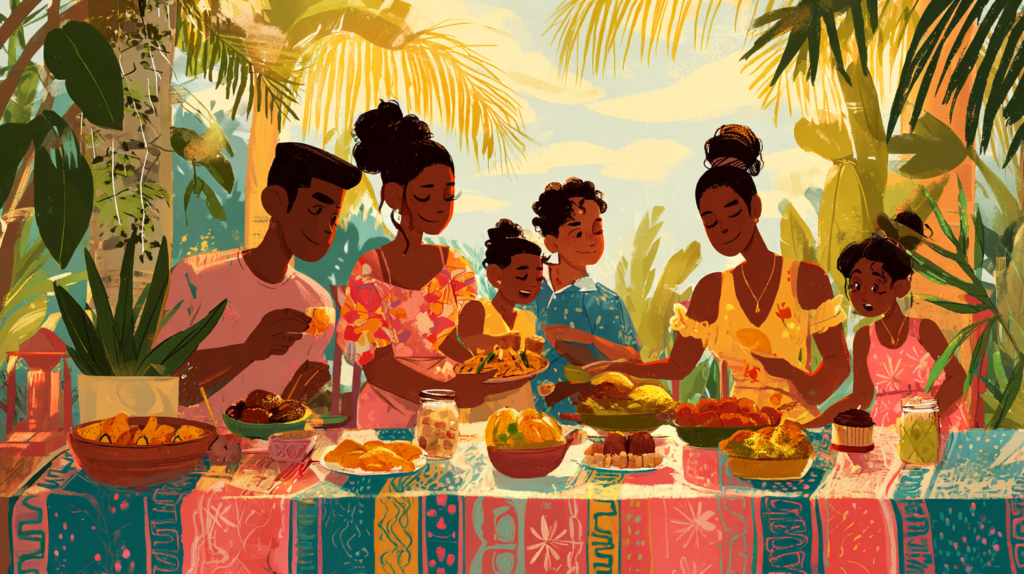
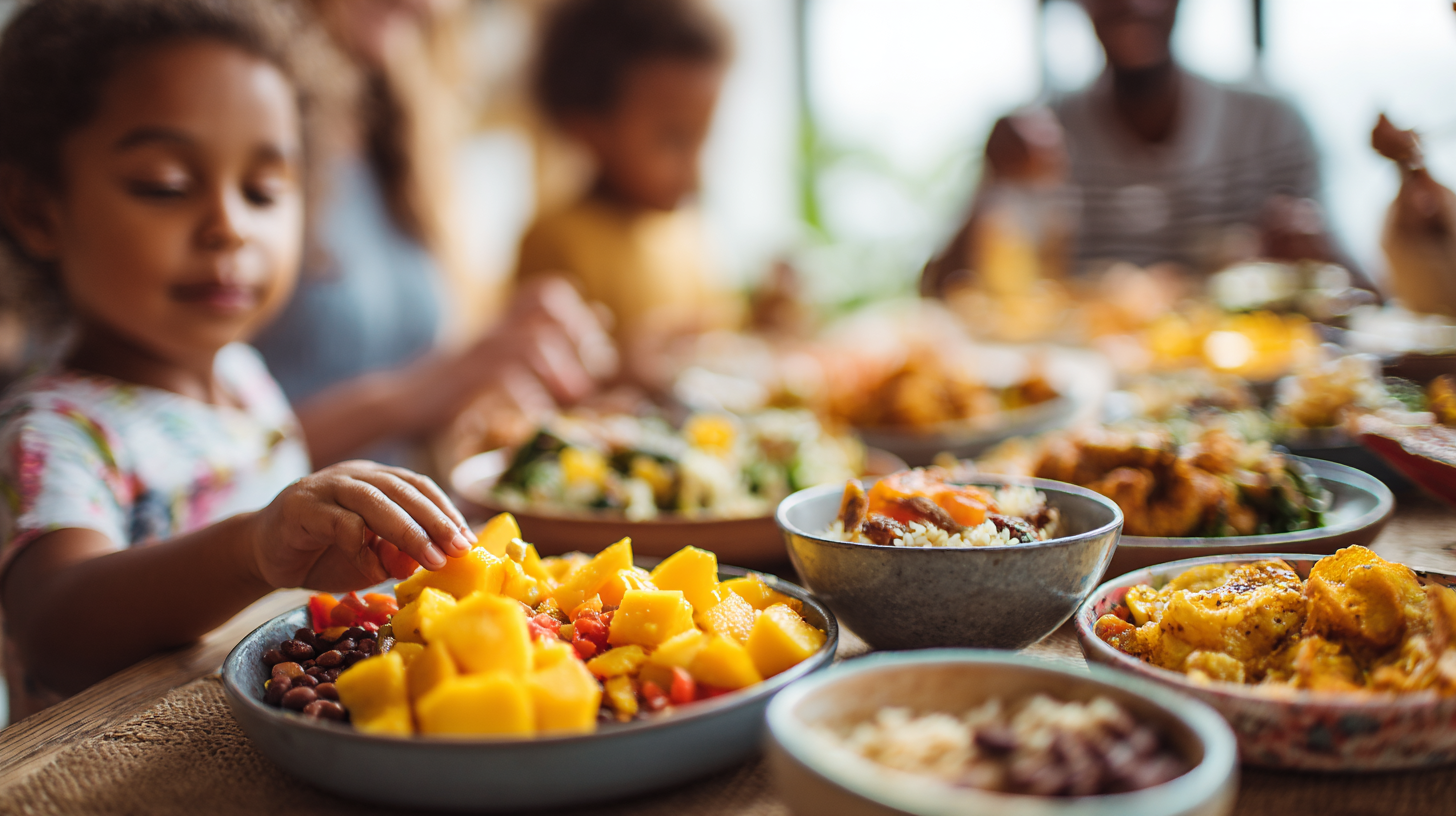
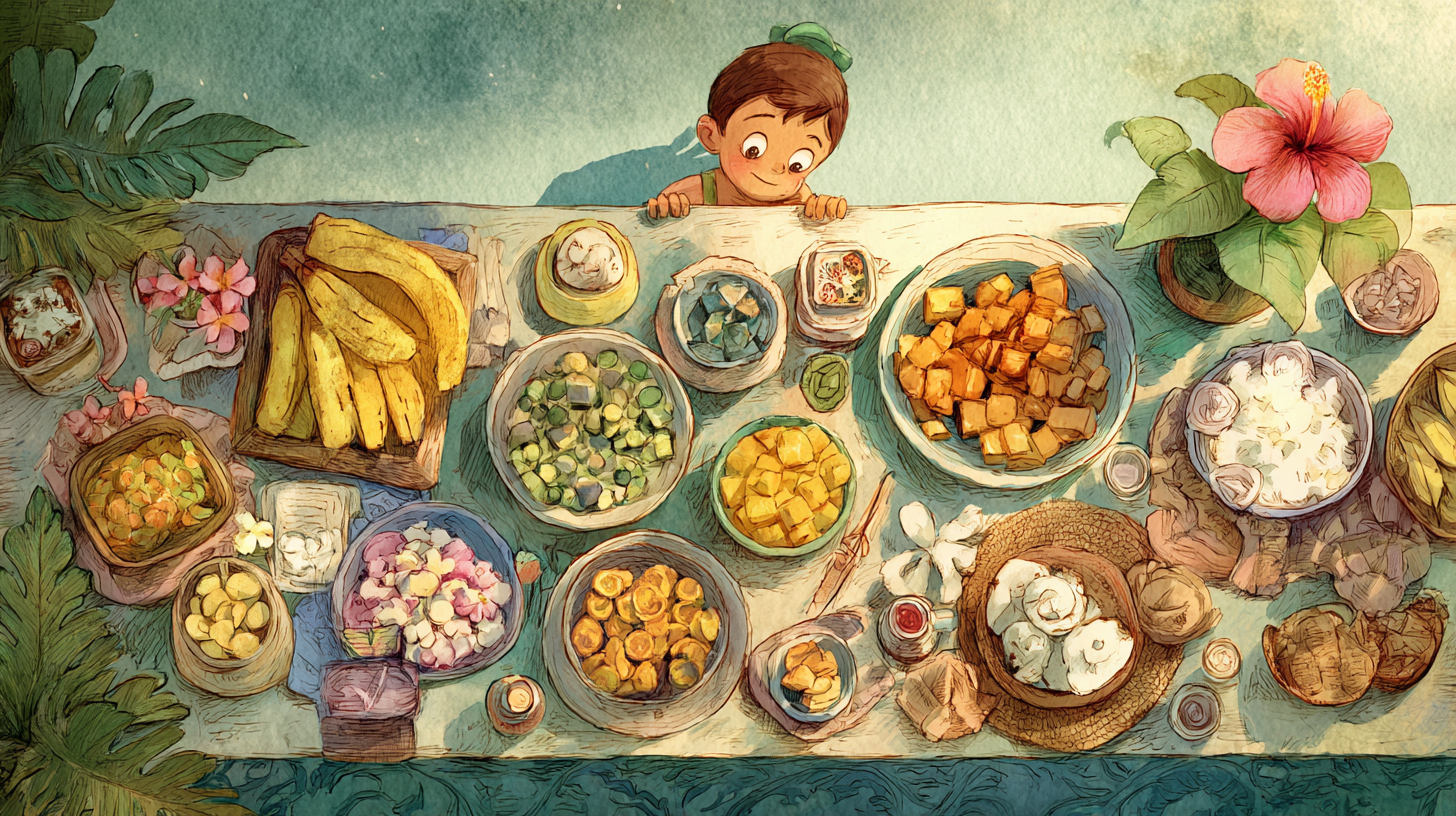
The truth is, our children are watching. They’re listening. They’re internalizing every casual comment, every offhand remark, every raised eyebrow when they reach for seconds. And here in the Caribbean, where food is culture, celebration, and connection—where our tables overflow with rice and peas, fried plantain, callaloo, coconut drops, and mango—we have an opportunity to do something revolutionary: teach our kids that all food deserves a place at the table, and more importantly, that they deserve to enjoy it without guilt.
What Food Neutrality Really Means (And What It Doesn’t)
Let’s start by clearing up the biggest misconception: food neutrality does not mean all foods are nutritionally identical. It doesn’t mean letting kids eat cookies for breakfast, lunch, and dinner. It doesn’t mean we pretend that vegetables and candy serve the same biological function.
What it does mean is this: we stop assigning moral value to food choices. We stop making children feel virtuous for eating broccoli and guilty for wanting ice cream. We recognize that food serves multiple purposes in human life—yes, nutrition and fuel, but also pleasure, culture, connection, comfort, and celebration. And we teach our children to honor all of those purposes without shame.
Food neutrality is the radical act of seeing food as just food. A cookie is a cookie. A carrot is a carrot. Neither makes you a better or worse person. Both have a place in a balanced, joyful life. This concept has deep roots in anti-diet movements and intuitive eating frameworks that emerged as researchers began documenting the psychological harm of restrictive eating patterns and diet culture messaging—particularly in children.
Historically, nutrition education meant well. In the early-to-mid twentieth century, public health campaigns fought malnutrition and vitamin deficiencies with straightforward messaging about food groups and adequate intake. But somewhere along the way, especially from the 1970s onward, the language shifted. Foods became “junk” or “clean.” Eating certain foods made you “good” or “bad.” And children—brilliant, perceptive children—started internalizing those messages as statements about their own worth.
By the 2000s, pediatric psychologists and dietitians were sounding alarms: this moral food language was directly linked to anxiety, disordered eating, and damaged relationships with food. In 2022 and beyond, major nutrition organizations in Canada, the United States, and the Caribbean began explicitly embracing food-neutral frameworks, urging educators and parents to eliminate judgmental food talk from homes and classrooms.
Interactive Timeline: How We Got Here
Explore the evolution of food messaging and see where we went wrong—and how we’re correcting course:
For those of us raising children in Caribbean households—or with Caribbean heritage—there’s something especially important here. Our food traditions were never about guilt. They were about resourcefulness, flavor, family recipes passed down through generations, and the pure joy of gathering around a table. When my grandmother made oil-down or when we celebrated with black cake, nobody was calculating calories or worrying about “bad” foods. The food just was—nourishing, delicious, meaningful.
Food neutrality invites us back to that wisdom. It asks us to strip away the layers of diet culture nonsense and return to a simpler truth: food is meant to be enjoyed, shared, and celebrated—all of it, without hierarchy or judgment.
The Science That Should Terrify (And Motivate) Every Parent
Let’s talk numbers, because the research on this is both damning and urgent.
Children as young as three years old can already articulate beliefs about “good” and “bad” foods. By age five, many have internalized the idea that eating certain foods makes them “better” people. And here’s where it gets truly alarming: studies consistently show that kids exposed to moral food language are twice as likely to develop restrictive eating patterns, binge-eating behaviors, and full-blown eating disorders during adolescence and young adulthood.
Let me say that again: the innocent-seeming phrases we use at the dinner table—”finish your vegetables to get dessert,” “that’s junk food,” “you’re being so good eating your salad”—are doubling our children’s risk of serious, life-altering eating disorders.
A comprehensive review published by Public Health Ontario in 2024 examined the impact of food bias versus food neutrality in children and adolescents. The findings were stark: moral food labeling consistently predicted negative outcomes including food-related anxiety, guilt, shame, secretive eating behaviors, and loss of trust in internal hunger and fullness cues. Meanwhile, children raised with food-neutral language demonstrated better self-regulation, more diverse diets, lower anxiety around eating, and healthier relationships with their bodies.
The economic and health costs are staggering too. In North America, over 600,000 deaths annually and $1.1 trillion in healthcare costs are attributed to poor nutrition practices—many of which stem from the very rigidity and fear that moral food language creates. When we teach children to fear certain foods, we’re not protecting their health—we’re undermining it.
Food insecurity adds another layer of complexity. Among the 13.5% of U.S. households experiencing some level of food insecurity, anxiety and chaotic eating patterns are even more pronounced. When children don’t know if they’ll have reliable access to food—or when certain foods are positioned as forbidden luxuries—the psychological impact intensifies. Food neutrality becomes not just beneficial but essential in these contexts, helping children develop trust and autonomy even when resources are limited.
Quick Check: Are You Using Moral Food Language?
Click on each phrase to see whether it supports food neutrality or creates food anxiety:
Here’s what keeps me up at night: most of us learned this language from our own parents, teachers, and culture. We’re not trying to harm our kids—we’re repeating patterns we absorbed, often with the best intentions. But intention doesn’t erase impact. And the impact, according to decades of research, is profound and lasting.
The good news? It’s never too late to change the script. Our brains—and our children’s brains—are remarkably plastic. New patterns can replace old ones. And the moment we start speaking differently about food, we begin reshaping not just our kids’ eating habits, but their entire relationship with their bodies, their self-worth, and their capacity for joy.
What the Experts Are Saying (And Why It Matters)
Leading pediatric dietitians, child psychologists, and family therapists are increasingly unified in their message: food neutrality isn’t optional—it’s essential. Professionals like registered dietitian Nicole Cruz emphasize calling all foods by their actual names, avoiding moralized praise or condemnation, and trusting children’s innate ability to self-regulate when given consistent access to a variety of foods without restriction.
Sarah Remmer, another prominent voice in pediatric nutrition, highlights that even well-intentioned praise like “Great job eating your vegetables!” can backfire. When children receive approval for eating certain foods, they learn to perform for that approval rather than tuning into their own hunger, fullness, and preferences. This external validation replaces internal trust—and internal trust is the foundation of lifelong healthy eating.
Organizations like Food Detectives and Teach Nutrition Manitoba, which develop food literacy resources for families and schools, have made food neutrality central to their curricula. Their materials explicitly discourage labeling foods with moral terms and instead encourage sensory exploration: What does this taste like? What’s the texture? How does it make your body feel?
Caribbean nutritionists add cultural context to this conversation. In many island traditions, food was never just about individual health metrics—it was communal, celebratory, resourceful. Sharing a pot of stewed peas or oil-down wasn’t a virtue signal; it was life. And children learned to eat by watching, participating, and being trusted to know their own hunger. That ancestral wisdom aligns perfectly with modern food neutrality principles.
Of course, there are debates within the field. Some practitioners worry that removing all nutritional guidance might confuse children or inadvertently minimize the importance of varied, nutrient-dense diets. But proponents of food neutrality are quick to clarify: we’re not suggesting parents avoid nutrition education altogether. We’re suggesting they present it without emotional charge. “This food helps your muscles grow” is very different from “This food is good, and that food is bad.”
Social media has amplified these conversations, with influencers, therapists, and everyday parents sharing stories of transformation: children who stopped sneaking snacks once all foods became freely available; teens who developed body confidence because they weren’t constantly policing their plates; families who rediscovered joy at the table once guilt left the room.
The Challenges We Face (And How to Navigate Them)
Let’s be real: shifting to food-neutral language is hard. Really hard. Especially when every instinct, every ingrained habit, every well-meaning relative is telling you to “make them finish their vegetables” or “limit the sweets.”
One of the biggest challenges is overcoming our own internalized diet culture. If you grew up hearing that carbs are evil, that sugar is poison, that your worth depends on your body size—well, those beliefs don’t just disappear because you intellectually understand food neutrality. They linger. They whisper. They make you second-guess yourself when your child reaches for a third cookie.
Another barrier: fear. Parents fear that without strict rules, their children will only eat “junk.” They fear weight gain. They fear judgment from other adults. They fear they’re failing if they don’t control every bite. These fears are understandable—they’re rooted in decades of messaging that told us children can’t be trusted with food choices.
But here’s what the research shows: when children are given consistent, judgment-free access to a wide variety of foods—including previously “forbidden” treats—they naturally self-regulate. The novelty wears off. The scarcity-driven desperation fades. And kids begin eating based on actual hunger, preference, and energy needs rather than restriction-fueled cravings.
This is where the Division of Responsibility framework, developed by feeding therapist Ellyn Satter, becomes invaluable. Parents decide what foods are offered, when meals and snacks happen, and where eating takes place. Children decide whether to eat and how much. This division respects both parental structure and child autonomy—and it’s the backbone of successful food neutrality.
Critics sometimes argue that food neutrality is anti-health or dismissive of nutrition science. That’s a misunderstanding. Food neutrality doesn’t deny that some foods are more nutrient-dense than others. It simply removes the shame from less nutrient-dense options and teaches context rather than commandments. “Plantains give us steady energy” and “Coconut drops give us quick energy and taste amazing” can both be true, valuable statements—neither elevated, neither demonized.
Myth-Busting Challenge: What’s True About Food Neutrality?
Click each myth to reveal the truth:
Another challenge: extended family and social circles. Grandparents, aunts, teachers, coaches—well-meaning adults who grew up in different food paradigms—may undermine your efforts with “clean your plate” demands or “you’re being so good!” praise. Having calm, clear conversations with these adults is crucial. Share articles. Explain the research. And when necessary, set boundaries: “In our home, we don’t label foods as good or bad. We trust our children to listen to their bodies.”
Finally, there’s the personal journey of unlearning. You might catch yourself mid-sentence, about to say something you now know is harmful. That’s okay. Apologize if needed. Reframe. Model growth. Your children are watching that too—and learning that it’s okay to change, to admit mistakes, to keep trying.
Bringing Food Neutrality to Your Caribbean Kitchen
Theory is important, but let’s get practical. How do you actually live this out—especially in a Caribbean or Caribbean-diaspora household where food is deeply tied to identity, celebration, and family tradition?
First, audit your language. For one week, pay attention to every food-related comment you make. Notice when you praise, when you restrict, when you judge. Just notice—no self-criticism yet, just awareness. Then, start making swaps:
- Instead of “Eat your vegetables so you can have dessert,” try: “We’re having callaloo and rice tonight, and mango slices after.”
- Instead of “That’s junk food,” try: “That snack will give you quick energy but might not keep you full for long.”
- Instead of “You’re being so good eating your salad!” try: “How do you like the crunch of those cucumbers?”
- Instead of “No more cookies, you’ve had enough,” try: “We’re done with snacks for now—dinner is in an hour.”
Second, make all foods regularly available. This doesn’t mean unlimited access at all times—that’s not sustainable or realistic. It means that “treat” foods aren’t locked away or doled out as rewards. They’re part of the rotation. Maybe you have cookies in the pantry and plantain chips on the counter and fresh fruit on the table. Maybe dessert is part of some dinners but not others—and that’s presented as a neutral fact, not a punishment or prize.
Third, engage your children in food preparation. Let them help mash sweet potatoes for Caribbean-inspired baby meals. Let them stir coconut milk into rice. Let them taste-test and describe flavors. Cooking together builds connection, competence, and curiosity—all of which support food neutrality.
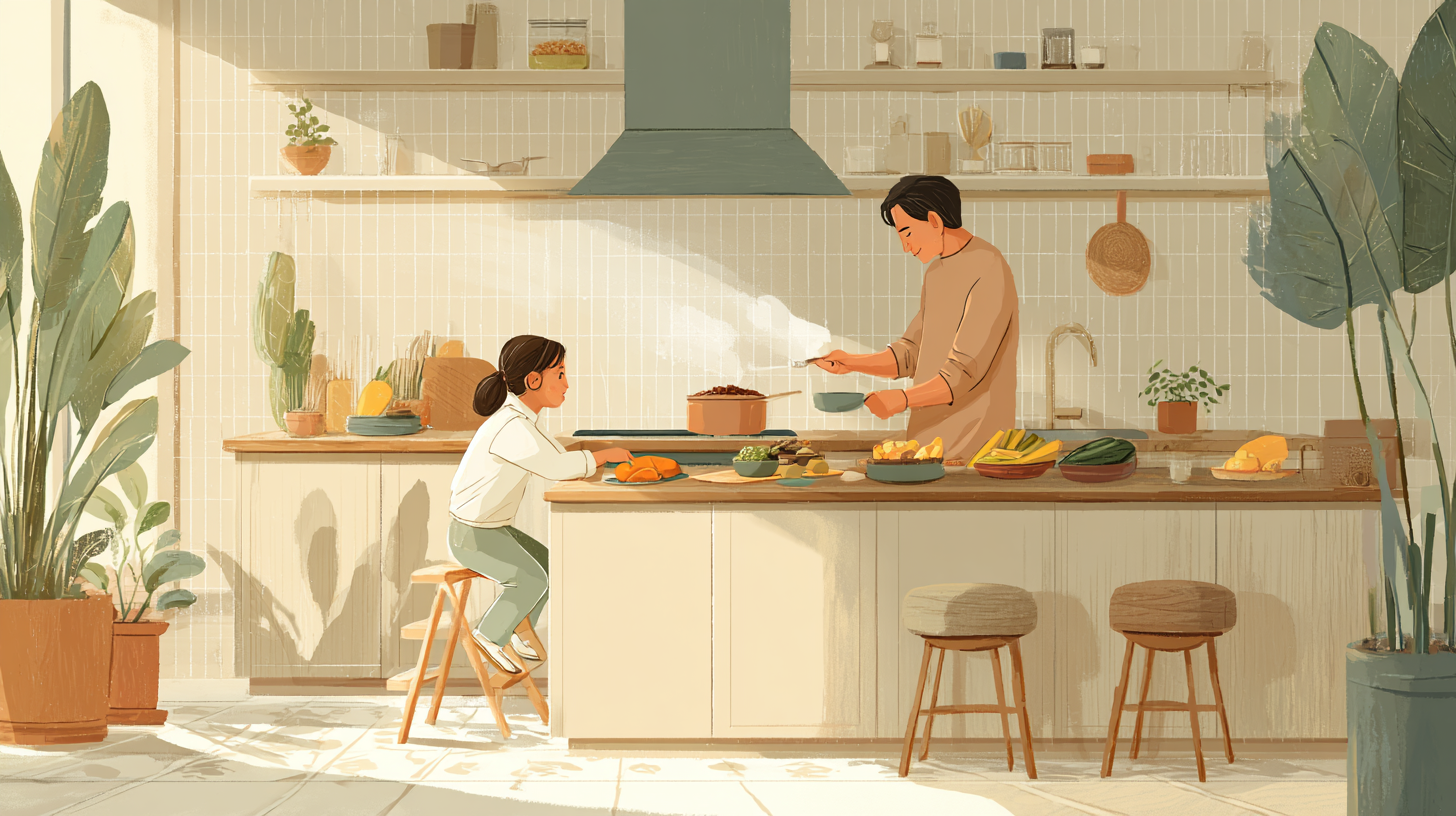
Fourth, use sensory language instead of nutritional or moral language. “This plantain is so sweet and soft.” “That callaloo has a peppery kick.” “How does the coconut rice feel in your mouth?” These questions keep the focus on experience rather than judgment, and they help children build a rich, embodied relationship with food.
Fifth, respect hunger and fullness cues. If your child says they’re full, believe them—even if there’s food left on the plate. If they ask for more, offer it—even if you think they’ve had “enough.” Trust takes time to build, especially if there’s been a history of restriction or pressure. But over weeks and months, children whose cues are respected learn to trust themselves—and that self-trust is everything.
Here’s a personal story: my own daughter went through a phase where she wanted plantain chips every single day. Every. Single. Day. My old instincts screamed to limit her, to make her “eat something healthier first.” But I didn’t. I kept offering a variety of foods at meals, I kept plantain chips available, and I kept my mouth shut about how many she ate. Within three weeks, she was bored of them. She started asking for mango, for rice and beans, for new flavors. The scarcity-driven obsession faded the moment scarcity was removed.
Your Food Neutrality Self-Assessment
Answer these questions honestly—then see where you stand:
- Do you serve a variety of foods (including “treats”) without labeling any as special, forbidden, or off-limits?
- Do you comment primarily on taste, texture, and sensory experience rather than health value or “goodness”?
- Do you allow your child to decide how much to eat without pressure, praise, or rewards?
- Do you avoid using dessert or “fun” foods as leverage for eating other foods?
- Do you trust your child to know when they’re hungry and when they’re full?
Sixth, celebrate food traditions without hierarchy. When you make black cake for Christmas or cook up a pot of curry goat, talk about the history, the family stories, the love baked into every bite. When you grab fast food on a busy evening, talk about convenience and taste without apology. Both experiences are valid. Both are part of a full, real life.
And finally, explore resources that align with your values. The Caribbean Baby Food Recipe Book is an excellent starting point, offering culturally-grounded recipes like Sweet Potato Callaloo Rundown, Coconut Rice and Red Peas, Plantain Paradise, and Papaya Banana Sunshine—each one designed to nourish without shame, to introduce authentic island flavors, and to build positive food memories from the very first bite.
The Ripple Effect: What Happens When We Get This Right
Imagine this: your child grows up never once feeling guilty about enjoying birthday cake. Never once hiding a snack wrapper in shame. Never once believing that their worth depends on what they ate for lunch.
Imagine them as teenagers, confidently navigating social situations, able to eat pizza with friends without spiraling into restriction or bingeing later. Imagine them as adults, making food choices based on what they truly want and need—not on fear, not on rules, not on the desperate attempt to be “good enough.”
That’s the ripple effect of food neutrality. It’s not just about individual meals or individual children. It’s about breaking intergenerational cycles of disordered eating, body shame, and food anxiety. It’s about raising humans who can nourish themselves with kindness and trust—a skill that will serve them far beyond the kitchen.
Research backs this up. Children raised with food-neutral language and autonomy-supportive feeding practices demonstrate lower rates of eating disorders, higher body satisfaction, better self-regulation, more adventurous eating, and stronger overall mental health. They’re also more likely to carry these patterns forward, creating food-neutral environments for their own children someday.
On a community level, food neutrality has the potential to reduce healthcare costs, decrease the prevalence of chronic diseases linked to disordered eating patterns, and create more compassionate, inclusive food cultures. Schools that adopt food-neutral policies report less bullying around food and body size, more engaged students, and healthier overall school climates.
Your Commitment: Choose Your Starting Point
Where are you on your food neutrality journey? Click your level and get personalized next steps:
I think about my nephew at that birthday party—the one who refused cake because he’d learned to fear it. A few months after that moment, his parents made a change. They stopped labeling foods. They started offering desserts regularly, without conditions. They talked about flavors and traditions instead of “healthy” versus “unhealthy.”
Last week, I watched him eat a slice of chocolate cake with pure, unselfconscious joy. No hesitation. No guilt. Just a kid enjoying a treat at a celebration. And I thought: this is what food neutrality looks like. This is the gift we give our children when we choose our words carefully, when we trust them, when we let go of the fear.
The Future We’re Building, One Meal at a Time
Food neutrality isn’t a trend. It’s not a fad diet or a parenting hack. It’s a return to something fundamental: the recognition that food is meant to sustain us, delight us, and connect us—never to shame us.
As more parents, educators, and healthcare providers embrace this approach, we’re beginning to see a cultural shift. Schools are rewriting their nutrition curricula. Pediatricians are training in non-judgmental feeding guidance. Family therapists are helping parents unlearn harmful patterns. And slowly, meal by meal, conversation by conversation, we’re creating a new normal—one where children grow up trusting their bodies and enjoying food without fear.
The obstacles are real. Diet culture is deeply entrenched. Social media is full of conflicting messages. Well-meaning adults will continue to praise “clean eating” and demonize “junk food.” But every time you choose food-neutral language in your own home, you’re creating a protective bubble for your child. You’re giving them the tools to navigate a food-obsessed world with resilience and self-trust.
And here’s the beautiful part: you don’t have to be perfect. You don’t have to get it right every time. Food neutrality is a practice, not a destination. Some days you’ll catch yourself using old language. Some days you’ll feel anxious about your child’s choices. That’s okay. Apologize when needed. Reframe when you can. Keep going. Because the effort—the intention—matters immensely.
Think about what’s possible. Think about family dinners free from power struggles. Think about children who grow up knowing that all foods fit, that their bodies are trustworthy, that eating is meant to be pleasurable. Think about breaking the cycles of shame that have haunted generations.
That’s not just possible—it’s happening. Right now. In kitchens across the Caribbean and around the world. Parents like you are making the choice to speak differently, to trust more deeply, to let go of the rules that never served us in the first place.
So tonight, when you sit down to dinner, try this: just notice. Notice the words you use. Notice your child’s cues. Notice the moments when you’re tempted to control, and then notice what happens when you don’t. Start small. Swap one judgmental phrase for one neutral observation. Let your child serve themselves. Ask about flavors instead of praising “good” choices.
And then do it again tomorrow. And the day after. Not because you have to be perfect, but because your child deserves to grow up free from food fear. Because every meal is an opportunity to teach trust instead of shame. Because the words we say at dinner really will shape how our kids eat for a lifetime.
Let’s choose those words carefully. Let’s choose love over fear. Let’s choose to raise the kind of humans who can nourish themselves with joy, confidence, and peace. The journey starts now—right here, right at your table. And I promise you, it’s worth every uncomfortable moment, every difficult conversation, every leap of faith.
Because when we get this right—when we teach our children that no food is good or bad, that their bodies are wise, that eating is meant to be a source of pleasure and connection—we’re not just changing mealtimes. We’re changing lives. And that’s the most nourishing thing we can possibly do.

Kelley's culinary creations are a fusion of her Caribbean roots and modern nutritional science, resulting in baby-friendly dishes that are both developmentally appropriate and bursting with flavor. Her expertise in oral motor development and texture progression ensures that every recipe supports your little one's feeding milestones while honoring cultural traditions.
Join Kelley on her flavorful journey as she shares treasured family recipes adapted for tiny taste buds, evidence-based feeding guidance, insightful parenting anecdotes, and the joy of celebrating food, culture, and motherhood. Get ready to immerse yourself in the captivating world of Kelley Black and unlock the vibrant flavors of the Caribbean for your growing baby, one nutritious bite at a time.
- The Feeding Revolution: Why Your Everyday Meals Are Changing the World - October 13, 2026
- Your Feeding Story Matters More Than The “Perfect” One Online - October 12, 2026
- Looking Forward: Stepping Into Your Confident Feeding Future - October 11, 2026