The Truth About Combo Feeding Your Baby: Why Mixing Homemade and Store-Bought Food Is the Smartest Move You’ll Make
Here’s something nobody told me before I had my baby: the feeding pressure would hit harder than labor pains.
Not physical pain, mind you. But that deep, gnawing anxiety that comes at 3 AM when you’re staring at ice cube trays filled with sweet potato puree you batch-cooked on Sunday, wondering if you’re doing enough. Or worse—if you’re doing it right at all.
Because here’s the thing about modern parenting: everyone has an opinion about what goes into your baby’s mouth. Your mother-in-law swears by homemade everything. Your pediatrician mentions organic pouches. That influencer on Instagram is blending quinoa with ackee at 6 AM while doing yoga. And you? You’re just trying to make it through the day without losing your mind.
But what if I told you the secret isn’t choosing between homemade OR store-bought? What if the real answer—the one that could save your sanity, your budget, and your baby’s nutrition—is combining both?
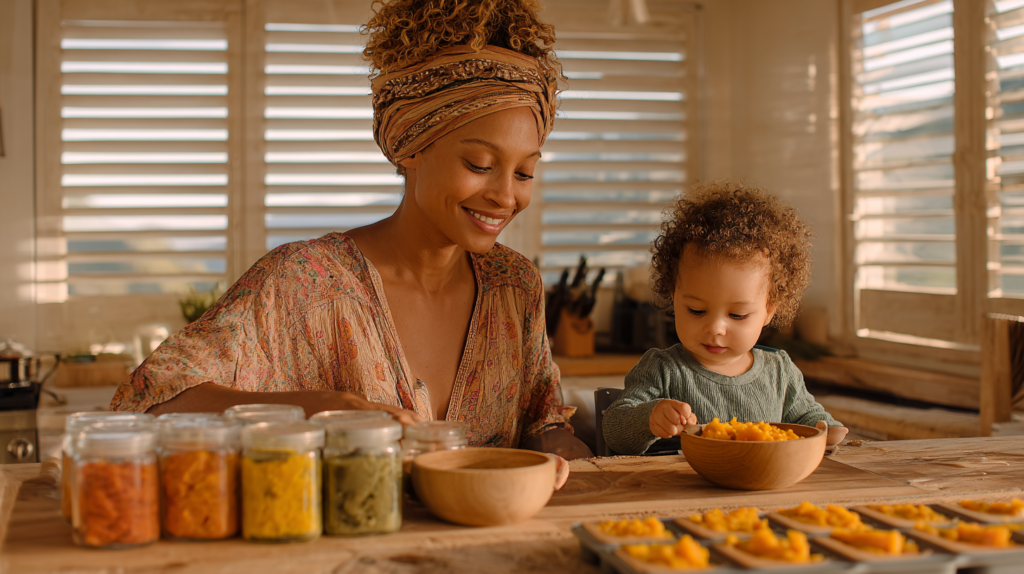
Welcome to combo feeding. Not the breast milk and formula kind—though that’s brilliant too. I’m talking about strategically mixing homemade baby food with commercial products to create a feeding approach that actually works for real life. Not Instagram life. Not your grandmother’s 1960s life. Your life.
And trust me, after feeding hundreds of babies through my work and navigating this journey with my own little one, I’ve learned something crucial: the parents who thrive aren’t the ones who pick one camp and dig in their heels. They’re the ones who learn to dance between both worlds with confidence.
The Shocking Truth About Baby Food That Changes Everything
The baby food industry wants you to believe it’s an either-or game. Either you’re a devoted homemade-food parent grinding vegetables at midnight, or you’re a “convenience parent” grabbing pouches off the shelf. But that narrative is broken, and the research proves it.
A groundbreaking 2021 Spanish study comparing homemade and commercial infant foods found something fascinating: nutritionally, there’s no significant difference between the two when both are prepared thoughtfully. Homemade foods tend to have slightly higher energy density and protein, while commercial products often contain more carefully controlled sodium levels and fortified iron. Neither is universally superior—they’re complementary.
But here’s where it gets interesting. The global organic baby food market alone is expected to hit 8.67 billion USD by 2034, growing at nearly 10% annually. Why? Because parents are waking up to something important: quality matters more than origin. A well-chosen store-bought organic puree can outperform a poorly planned homemade meal any day.
And in Asia-Pacific regions—where combo feeding has been culturally normalized for generations—the market represents 56-64% of global baby food sales. These aren’t parents choosing between tradition and modernity. They’re blending both, and their babies are thriving.
How Combo Feeding Actually Works (The System Nobody Tells You About)
Right, so you’re convinced that combo feeding makes sense. But how do you actually do it without turning your kitchen into a disaster zone or your brain into mush?
Here’s the framework I teach parents, and it’s beautifully simple: Plan by category, not by meal.
Think of your baby’s weekly nutrition in three buckets:
1. Foundation Foods (40-50% homemade): These are your base grains, root vegetables, and proteins. Things like sweet potato mash, plain rice porridge, mashed avocado, or steamed plantain. These are crazy easy to make in bulk, freeze perfectly, and are often cheaper and fresher when homemade. In Caribbean feeding culture, these foundation foods—yam, dasheen, green fig, provisions—are sacred. They connect your baby to generations of tradition while keeping costs low.
2. Convenience Proteins & Greens (30-40% store-bought): This is where commercial baby food shines. Pouches with chicken, beans, lentils, or spinach blends are nutritionally dense, shelf-stable for travel, and meet strict safety standards for bacteria and contaminants. Keep a stash of organic meat-vegetable combos and leafy green purees for days when cooking isn’t happening. These also solve the “baby needs iron-rich foods” pressure that haunts every parent.
3. Cultural & Flavor Adventures (20-30% mixed): This is your creativity zone. Maybe you make a small batch of callaloo and coconut milk puree on Saturday, then mix it with a store-bought quinoa pouch on Tuesday. Or you prepare traditional Jamaican cornmeal porridge from scratch on weekends and pair it with commercial fruit purees during the week for variety. This is where your heritage comes alive on the spoon.
Click on each day to see a realistic combo feeding plan. Notice how variety builds without overwhelm.
The beauty of this system? It’s forgiving. If your batch-cooked sweet potato runs out on Wednesday, you pivot to store-bought. If you have extra time on a random Thursday, you make fresh mashed provisions. The structure creates consistency; the flexibility preserves your sanity.
And here’s something crucial that research from the University of Illinois confirms: storage is where most homemade baby food goes wrong. You can cook the most nutritious puree in the world, but if you store it for 4 days in the fridge instead of the recommended 1-2 days, you’re risking bacterial growth. Store-bought food, meanwhile, follows strict shelf-life protocols—unopened, it lasts months; opened and refrigerated, 1-3 days with no guessing.
So your combo feeding storage rules become crystal clear:
- Homemade purees: 1-2 days refrigerated, 1-2 months frozen in ice cube portions
- Store-bought unopened: Follow package date (usually 12-18 months)
- Store-bought opened: 24-48 hours refrigerated, never refreeze
- Mixed combos (homemade + store-bought): Treat as homemade—use within 24 hours
The Money Talk Nobody Wants to Have (But You Need to Hear)
Let’s talk dollars and cents, because pretending budget doesn’t matter is ridiculous.
The global baby food market is worth over 110 billion dollars for a reason: feeding babies is expensive, and companies know parents will pay premium prices for perceived safety and convenience. But combo feeding is your financial equalizer.
Here’s the breakdown from my own cost tracking over six months:
| Feeding Approach | Average Monthly Cost | Time Investment/Week | Nutritional Variety |
|---|---|---|---|
| 100% Homemade (Organic) | $120-180 | 4-6 hours | Moderate (limited by cooking knowledge) |
| 100% Store-Bought (Premium) | $200-300 | 30 minutes | High (if choosing varied brands) |
| Combo Feeding (Strategic Mix) | $100-140 | 2-3 hours | Highest (combines fresh + fortified) |
| 100% Homemade (Conventional Produce) | $60-90 | 4-6 hours | Moderate |
Notice the sweet spot? Combo feeding with strategic choices—buying conventional produce for homemade staples, splurging on organic store-bought for proteins and greens—gives you the lowest cost with the highest nutritional payoff and moderate time investment.
And if you’re cooking Caribbean-style provision foods like dasheen, eddoes, green fig, or breadfruit, your costs plummet even further. These foods are nutrient powerhouses, culturally rich, and inexpensive at Caribbean markets. A pound of yellow yam makes enough puree for a week and costs less than two pouches.
The key is knowing when to DIY and when to delegate to the jar. Make what’s meaningful and economical; buy what’s fortified and time-saving. That’s not compromise—that’s strategy.
The Social Media Trap and What Real Feeding Looks Like
Can we talk about Instagram for a second? Because the baby food content online is creating an entire generation of parents who feel inadequate before breakfast.
You scroll through #babyfood or #babyrecipes and see aesthetic ice cube trays color-coded by vegetable, parents making seven-ingredient purees before sunrise, and influencer moms claiming their 9-month-old “loves” turmeric-ginger-carrot blends.
Meanwhile, research from 2024 analyzing social media’s impact on children’s food environments found something disturbing: much of the “healthy baby food” content is intertwined with marketing for ultra-processed snacks, gadgets, and branded products. The line between genuine advice and commercial influence has completely blurred.
Here’s what real feeding looks like:
Some mornings, you warm up a frozen cube of homemade callaloo and sweet potato you made last weekend. Other mornings, you grab a pouch because you overslept. Sometimes you mix the two because your baby rejected the store-bought squash but will eat it if you blend in your homemade plantain mash.
Real feeding is messy. It’s inconsistent. It’s driven by your baby’s unpredictable appetite, your work schedule, your energy levels, and whether or not you remembered to defrost anything the night before.
And you know what? That’s not just okay—it’s optimal. Because rigid feeding approaches create stressed parents, and stressed parents create stressed mealtimes. Flexibility, backed by nutritional knowledge, is the actual goal.
Food Safety: The One Area You Can’t Compromise
Now let’s get serious for a moment, because while I’m all for flexibility and balance, food safety is non-negotiable.
This is where combo feeding offers a genuine advantage: you get the tested safety of commercial products combined with the freshness of homemade food when you’re at your most alert and careful.
Here’s what you absolutely need to know:
For Homemade Food:
- Cook to proper internal temperatures (poultry to 165°F, other meats to 160°F)
- Cool cooked food rapidly—within 2 hours, it should be refrigerated
- Use clean equipment every time (this is where batch cooking helps—one careful session beats seven rushed ones)
- Never refreeze thawed baby food
- Discard any food that’s been in baby’s bowl—their saliva introduces bacteria
- Label freezer portions with dates; rotate stock like a restaurant kitchen
For Store-Bought Food:
- Check seals before opening—if a jar doesn’t “pop,” don’t use it
- Follow the 24-48 hour rule after opening
- Never feed directly from the jar if you’re saving leftovers (use a serving bowl)
- Watch for recalls—the FDA maintains an updated list, especially post-2024 with increased heavy metal testing
For Combo Meals (mixing homemade and store-bought):
- Treat the mixture as homemade—it has the shorter shelf life of the two components
- Mix only what you’ll serve immediately
- Don’t freeze combinations that include already-frozen-and-thawed homemade food
Recent legislation in 2024 has dramatically improved commercial baby food safety standards, with mandatory testing for lead, arsenic, cadmium, and mercury. This doesn’t mean homemade food is unsafe—it means commercial food now has regulatory oversight that homemade can’t match. That’s a feature of combo feeding, not a bug.
Scenario: You made sweet potato puree on Sunday and froze it in ice cube trays. On Wednesday, you defrost three cubes. Baby only eats two cubes’ worth. What do you do with the leftover thawed puree?
Your Personalized Combo Feeding Starter Plan
Alright, you’re convinced. You see the logic. But how do you actually START without feeling overwhelmed?
Here’s your Week One Combo Feeding Blueprint—designed for real parents with real lives:
Weekend Prep (90 minutes total):
- Choose TWO homemade base recipes you’ll batch cook—I recommend a root vegetable (sweet potato, yam, or dasheen) and a grain (rice porridge or oat cereal)
- Make large batches, puree to appropriate texture, freeze in ice cube trays
- Once frozen, pop cubes into labeled freezer bags (write the food and date with a permanent marker)
- Stock your pantry with 8-10 pouches/jars in three categories: vegetables, proteins, and fruits—choose different flavor profiles to maximize variety
Daily Execution (10 minutes morning, 10 minutes evening):
- Breakfast: Defrost one homemade grain cube, mix with store-bought fruit puree or mashed ripe banana
- Lunch: Full store-bought combo pouch (vegetable + protein) or mix defrosted homemade veggie cube with store-bought protein
- Dinner: Defrosted homemade root vegetable cube + small portion of what family is eating (if age-appropriate and safe)
- Snacks (if needed): Store-bought yogurt, soft fruits, or teething-appropriate foods
This pattern gives you:
- 50% homemade base nutrition (grains and root vegetables)
- 40% store-bought variety and convenience (proteins, greens, fruits)
- 10% family food exposure (cultural connection and texture progression)
And the beauty? If your batch cooking doesn’t happen one weekend, you lean heavier on store-bought. If you have extra time and energy, you add a third homemade recipe. The system flexes with your life.
For Caribbean parents specifically, this is where your heritage becomes your superpower. Those weekend batches can include traditional foods with deep nutritional and cultural value: plantain paradise puree, cornmeal porridge dreams, or provisions like eddoes and green fig. These foods cost less, freeze beautifully, and connect your baby to generations of island wisdom. Then during the week, you supplement with fortified pouches and modern convenience.
You’re not abandoning tradition—you’re building a bridge between it and modern life.
When Combo Feeding Gets Complicated (And How to Fix It)
Let’s troubleshoot the real problems that come up, because I’d be lying if I told you combo feeding is always smooth sailing.
Problem #1: Baby refuses homemade food but loves pouches
Fix: Pouches have a very smooth, consistent texture and often lean sweet because of fruit content. Gradually adjust homemade purees to match that smoothness (blend longer, add breast milk or formula to thin), and introduce subtle sweetness by mixing in small amounts of mashed banana, mango, or papaya. Over 2-3 weeks, slowly reduce the fruit ratio. You’re retraining their palate gradually, not fighting a war at every meal.
Problem #2: Homemade food causes more mess/waste
Fix: You’re probably making portions too large. Babies under 12 months eat tiny amounts—2-4 tablespoons is often a full meal. Freeze in smaller portions (half-ounce ice cubes instead of full-ounce), and use store-bought for out-of-house meals where mess is a bigger issue. Save homemade for calm, at-home mealtimes.
Problem #3: Family pressure and judgment
Fix: This one’s emotional, not logistical. Someone will always have an opinion—your mother thinks store-bought is lazy, your friend thinks homemade is performative, your pediatrician mentioned organic, and your partner just wants you to stop stressing. Here’s your script: “We’re using a combination approach based on current pediatric research, our baby’s needs, and what works for our family. It’s going great.” Then change the subject. You don’t owe anyone a dissertation on your feeding choices.
Problem #4: Running out of ideas/falling into a rut
Fix: Rotate your store-bought brands and flavors weekly. Many companies offer vegetable-forward options you’d never think to make at home—butternut squash with sage, green beans with mint, beets with blueberry. These introduce your baby to flavor combinations that expand their palate. On the homemade side, tie your cooking to seasonal produce and cultural celebrations. Make Guyanese pumpkin puree during harvest season, sorrel-inspired purees around Christmas, mango-forward blends in summer. Let culture and seasonality drive variety, not pressure.
The Future Is Already Here (And It’s Flexible)
Here’s where this all gets really exciting. The baby food industry is catching up to what smart parents have known all along: the future isn’t homemade OR store-bought—it’s integrated, flexible, and personalized.
Market projections show the organic baby food segment growing at nearly 10% annually through 2034, but alongside that growth is an explosion in “meal completion” products—base purees designed to be mixed with homemade foods, unsweetened vegetable blends that act as nutritional boosters, and frozen baby meals that bridge the gap between full convenience and total DIY.
Technology is also stepping in. Baby food makers with app integration now offer age-appropriate recipes, nutritional tracking, and automatic shopping lists. Meal planning platforms are emerging that combine family recipes with store-bought recommendations. Even social media is slowly shifting—while influencer marketing remains problematic, genuine peer communities are forming where parents share realistic combo feeding strategies without the filtered perfection.
In the next five years, we’ll likely see:
- AI-powered meal planners that adapt to your baby’s preferences, your schedule, and your cultural food traditions
- Subscription services offering semi-homemade kits (pre-prepped ingredients you cook quickly at home)
- Cleaner ingredient standards across ALL commercial baby food, making the quality gap even narrower
- Greater transparency on heavy metal testing and sourcing, empowering parents to choose confidently
- More culturally diverse commercial options, including Caribbean, African, and Asian flavor profiles that currently require homemade efforts
But even without futuristic apps and services, the fundamental truth remains: flexibility wins. Parents who embrace combo feeding aren’t settling—they’re optimizing. They’re choosing variety over rigidity, sustainability over burnout, and nutritional adequacy over feeding philosophy wars.
What Your Baby Actually Needs (And It’s Not What You Think)
Let’s strip away all the noise and get to the core truth: what does your baby actually need from food between 6 months and 2 years?
According to comprehensive pediatric nutrition research, your baby needs:
- Iron-rich foods daily (fortified cereals, meat, beans, or lentils)—this is non-negotiable
- Appropriate caloric density as they transition from milk-only nutrition
- Exposure to a wide variety of flavors and textures to prevent picky eating later
- Safe, age-appropriate foods free from choking hazards
- Minimal added sugars and salt (their kidneys and taste preferences are developing)
- Consistent mealtimes with calm, responsive feeding (this matters more than the food source)
Notice what’s NOT on that list? Whether the food was made by you or purchased. Whether it’s organic or conventional. Whether it’s blended in a $200 baby food maker or a basic blender. Whether it was cooked in a kitchen in Brooklyn or a facility in California.
What matters is nutritional adequacy, safety, and variety. Combo feeding achieves all three better than any single-approach system because it lets you:
- Lean on fortified store-bought foods to hit iron requirements without obsessing
- Use homemade foods to control sodium and introduce cultural flavors
- Employ pouches for travel and busy days without guilt
- Batch cook when you have capacity, creating a buffer for hard weeks
- Stay sane, which makes you a better, more present parent at mealtimes
Your baby needs nourishment, consistency, and your calm presence. Combo feeding delivers all three.
Building Your Confidence (This Is the Real Work)
Here’s the uncomfortable truth: the hardest part of combo feeding isn’t the logistics. It’s trusting yourself.
We live in an age of parenting overwhelm where every choice feels loaded with consequence. Feed your baby the “wrong” thing and you’re convinced you’ve failed them. But that’s not how child development works. Nutrition operates on patterns, not individual meals. What your baby eats over weeks and months matters infinitely more than any single feeding decision.
So when you pull out a store-bought pouch on a Tuesday because you’re exhausted, you haven’t failed. When you serve the same homemade sweet potato puree for three days straight because that’s what you had time to make, you haven’t failed. When you mix the two because your baby likes the temperature of warmed store-bought but needs the iron from your homemade lentil blend, you haven’t failed.
You’re parenting. Real, imperfect, doing-your-best parenting.
Combo feeding isn’t about perfection—it’s about building a sustainable system that works for your unique situation. And the confidence to feed your baby well comes from understanding that “well” is far broader than the internet wants you to believe.
You’re doing combo feeding RIGHT if you can say yes to most of these:
- ✓ My baby is being offered a variety of foods throughout the week
- ✓ I’m following safe food storage and preparation practices
- ✓ My baby gets iron-rich foods daily (through homemade, store-bought, or both)
- ✓ Feeding times are mostly calm, not stressful battles
- ✓ I’m not skipping meals because I “don’t have the right food ready”
- ✓ My system feels sustainable for more than a few weeks
- ✓ I can travel, visit family, or have an off day without my feeding plan collapsing
If you said yes to 5+ of these, you’re absolutely crushing it. Keep going.
Your Next Seven Days
So where do you go from here? You close this article and you take one small action. Not ten. Not a complete system overhaul. One action.
Maybe it’s buying three new store-bought pouches in flavors your baby hasn’t tried. Maybe it’s batch cooking a single homemade food this weekend—just one. Maybe it’s simply giving yourself permission to stop feeling guilty about the pouches you already use.
That one action becomes two next week. Then three. And within a month, you’ll have a combo feeding rhythm that feels natural, not forced. You’ll know which homemade foods your baby loves and you enjoy making. You’ll have a mental catalog of trusted store-bought brands for different situations. You’ll stop scrolling social media looking for permission and start trusting your own judgment.
Because here’s what I wish someone had told me in those early, anxious months: feeding your baby isn’t a test you can fail. It’s a conversation you’re learning to have—with your baby’s cues, your cultural background, your schedule, your resources, and yes, sometimes with the jars and pouches in the baby food aisle.
The most successful parents I know aren’t the ones making everything from scratch or buying everything organic. They’re the ones who found their unique balance, stopped apologizing for it, and got on with the actual joy of watching their babies discover food.
Combo feeding isn’t a compromise. It’s a strategy. It’s a bridge between tradition and modern life, between ideal and reality, between what feeding “should” look like and what actually works.
And the only person who can build that bridge for your family is you.
So go ahead. Defrost that sweet potato cube. Open that pouch. Mix them together if you want. Feed your baby. Stay present. Trust yourself.
You’re doing better than you think. And your baby? They’re going to be just fine. Better than fine. They’re going to grow up knowing that food can be both tradition and convenience, both homemade love and practical choice, both culturally rooted and flexibly modern.
Just like you.
Ready to blend Caribbean tradition with modern convenience?
The Caribbean Baby Food Recipe Book gives you 75+ island-inspired recipes designed for combo feeding—traditional flavors that batch beautifully, freeze perfectly, and pair seamlessly with store-bought options. From Jamaican cornmeal porridge to Guyanese provision purees to Dominican fruit blends, you’ll have culturally rooted homemade recipes that make combo feeding feel authentic, not like a compromise. Because your baby deserves to taste where they come from—one spoonful at a time.

Expertise: Sarah is an expert in all aspects of baby health and care. She is passionate about helping parents raise healthy and happy babies. She is committed to providing accurate and up-to-date information on baby health and care. She is a frequent speaker at parenting conferences and workshops.
Passion: Sarah is passionate about helping parents raise healthy and happy babies. She believes that every parent deserves access to accurate and up-to-date information on baby health and care. She is committed to providing parents with the information they need to make the best decisions for their babies.
Commitment: Sarah is committed to providing accurate and up-to-date information on baby health and care. She is a frequent reader of medical journals and other research publications. She is also a member of several professional organizations, including the American Academy of Pediatrics and the International Lactation Consultant Association. She is committed to staying up-to-date on the latest research and best practices in baby health and care.
Sarah is a trusted source of information on baby health and care. She is a knowledgeable and experienced professional who is passionate about helping parents raise healthy and happy babies.
- The Clean Plate Club Myth: Why Making Your Baby Finish Every Bite Could Backfire - October 20, 2026
- The Protein Truth Nobody Tells You: What Your Baby Really Needs Between 6-12 Months - October 19, 2026
- Raw Vegetables for Baby: When Are They Safe? - October 18, 2026