The Secret Ingredient You’re Overlooking at the Table (And It’s Not Protein)
Here’s the quiet truth that decades of research keep circling back to: eating together is one of the simplest, most underused ways to protect your child’s mental health, shape their relationship with food, and strengthen your bond in ways that last long after the high chair is gone. Studies linking shared meals with better mood, fewer risk behaviors, and stronger family connection don’t focus on perfect menus—they focus on families simply showing up together over food.
Yet so many caring parents—especially the ones reading baby food labels at 11 pm—are silently missing this relational layer. You might be doing everything “right” nutritionally and still feel like mealtimes are a battleground of bargaining, bribing, and silent worry. This article is here to flip that script: to help you see meals as relationship time, as memory-making moments, and as tiny daily deposits in your child’s emotional bank account.
Why Food Is Really About Relationship (Not Just Nutrition)
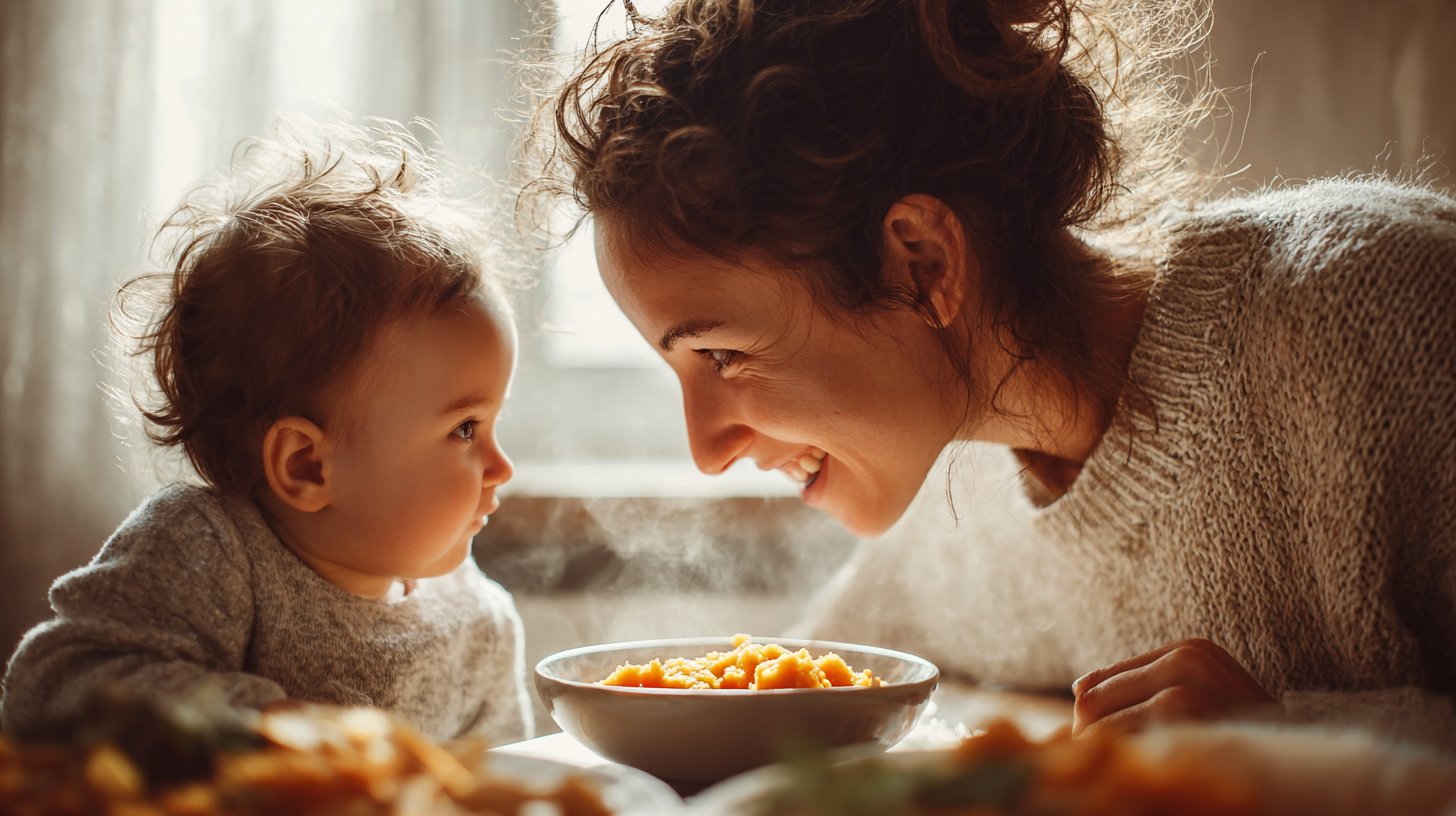
When researchers look at family meals, they don’t just see calories and nutrients. They see a relationship setting: eye contact, inside jokes, “How was your day?” questions, siblings arguing over the last dumpling, a parent noticing a child’s sad face before anyone else does. In study after study, the “family meal effect” shows up as better mental health, lower rates of risk behaviors in teens, and stronger wellbeing—not because dinner is a superfood, but because dinner is a ritual of being seen and belonging.
Some large reviews of family mealtimes describe these moments as a protective factor: children who eat with their families more often tend to have better dietary quality, but they also report fewer emotional difficulties and engage less in substance use or other risky behaviors. Researchers have even developed tools that measure not just how often a family eats together, but what those meals feel like—do people talk, laugh, listen, and feel safe expressing themselves? The more warm and connected the atmosphere, the more powerful the benefits.
From a psychological perspective, food becomes a carrier of emotional meaning. Warm, responsive meals create what some researchers call “secure memories” of eating—those recollections of special dishes, holiday spreads, or simple weeknight routines that later help young adults feel grounded and resilient. In other words, your Tuesday pumpkin-and-rice for the baby can quietly become a memory of “that time we all sat together and I knew I was loved.”
What the Research Really Says About Eating Together
Let’s look at what the data is actually telling parents—not as a guilt trip, but as a powerful nudge. When researchers pool dozens of studies on family mealtimes, a pattern emerges: more frequent shared meals are associated with better diet quality, lower odds of disordered eating, better academic performance, and fewer emotional and behavioral problems in children and adolescents. And this holds across different cultures and family structures.
Importantly, newer studies go beyond “how many dinners per week” and ask deeper questions: Are people talking? Is there a predictable routine? Do children feel criticized or supported? Tools like the Family Dinner Index measure dimensions such as enjoyment, communication, and emotional climate. Families scoring higher on these relational aspects tend to have kids who are more emotionally secure and less likely to engage in risky behaviors—even when life is stressful.
Another fascinating line of research looks at “emotional food memories.” When young adults are asked to recall meaningful food experiences from childhood, many describe dishes tied to comfort, safety, and feeling cared for. Those positive memories can support resilience later on, especially during tough times. It’s not that the exact recipe matters, but that the food was wrapped in warmth, attention, and a sense of togetherness.
Of course, not every family can manage daily dinners. Parents working shifts, solo parents, and families juggling multiple jobs may find the classic “6 pm dinner together every night” completely unrealistic. That’s why it’s helpful to think beyond dinner: breakfast together counts, Saturday brunch counts, even a nightly snack ritual with your toddler counts. What matters is the pattern of repeated, emotionally safe contact around food.
One large international study of children and adolescents found that more than half did not have daily family meals. That sounds discouraging, but it also reveals a huge opportunity. Small, realistic increases in shared eating—shifting from once a week to twice, or from eating in separate rooms to one shared table—can move your family closer to the relational benefits that the research highlights.
The Hidden Cost of Focusing Only on Nutrition
If you’re reading baby food indexes and comparing grams of iron across cereals, you care deeply. You may be the parent pureeing sweet potatoes and plantains at midnight or batch-cooking dhal so your baby gets enough protein. Nutritionally, that care is gold. Relationally, though, there’s a risk: when every meal is silently graded, children can start to feel like walking nutrition projects instead of beloved humans sharing a moment with you.
Studies on “food parenting” show that when parents are very controlling—pressuring kids to eat more, restricting “fun” foods tightly, or turning every bite into a negotiation—children often become less able to listen to their own hunger and fullness cues. Over time, this can lead to more mealtime conflict, more anxiety around food, and lower enjoyment of eating together. Ironically, the harder parents push, the less smoothly eating tends to go.
Qualitative research where parents are interviewed about feeding shines a light on how easy it is to slip into this trap. Many parents say they feel intense pressure from medical advice, social media, and family expectations to “get feeding right,” and they respond by doubling down on control. Underneath, though, they often feel grief that mealtimes have become battles instead of bonding moments.
This is exactly where a Caribbean-influenced mindset can help. In many Caribbean homes, the pot on the stove is not just food; it’s story, culture, family, and “come, sit, talk.” Stewed peas, coconut rice, or pumpkin with coconut milk aren’t just nutrient sources; they are anchors of belonging. When you bring that spirit into your baby’s feeding journey—whether you live in Kingston, Queens, London, or Toronto—you’re giving them more than vitamins. You’re handing them roots.
If you want a shortcut to bringing that island warmth into your baby’s day-to-day meals while still ticking the nutrition boxes, you might love the Caribbean Baby Food Recipe Book: Easy & Healthy Homemade Meals for Infants & Toddlers . It’s built around exactly this idea: nourishing little bellies with sweet potatoes, plantains, coconut milk, beans, and tropical fruits while keeping culture and connection at the center.
Food Memories: What Your Child Will Actually Remember
Think back to your own childhood food memories. Chances are, you don’t remember the exact calcium content of your breakfast or the fiber in your dinner. You remember Sunday pelau with cousins, the smell of coconut milk simmering in pumpkin, the way your grandmother blew on your spoon before handing it to you, or how your parents argued less on nights when they made spaghetti together. Those details become part of your emotional blueprint.
Research on nostalgic foods and emotional food memories shows that people often use these memories to soothe themselves, feel closer to loved ones, and reconnect with their identity in hard times. A simple dish like yellow yam and carrot mash or sweet millet cereal can, years later, become a sensory shortcut back to safety and love. This is especially powerful for children growing up in diaspora, where familiar flavors help anchor them to their roots.
One fascinating finding from these studies is that it’s not the complexity of the dish that matters, but the repetition and emotional tone around it. A weekly “Cornmeal Porridge Dreams” breakfast, a recurring “Papaya Banana Sunshine” snack, or a simple “Sweet Potato Callaloo Rundown” family dinner can all become emotional landmarks for your child. Over time, these repeated experiences tell your child, “This is what care feels like in our family.”
The Caribbean baby food landscape is rich with dishes that naturally lend themselves to these kinds of memories. The index of the Caribbean Baby Food Recipe Book is full of recipes like “Papaya Banana Sunshine,” “Baigan Choka Smooth,” “Batata y Manzana White Sweet Potato Apple,” “Chokola Peyi Pure,” and “Guanabana Dreams.” Each one can become either a quick spoon-fed meal… or a story. “Your great-grandmother made callaloo every Sunday,” or, “In Trinidad, this is what we’d eat before church.”
When you pause for a second to add that story, involve your child in a tiny step (“You mash the banana while I stir the papaya”), or sit with them while they taste something new, you’re no longer just feeding. You’re building the emotional scrapbook they’ll flip through for the rest of their life—often without even realizing it.
Turning Mealtimes into Micro-Bonding Sessions
So how do you transform real-life, messy, toddler-throws-food-on-the-floor meals into genuine bonding time, without pretending you live inside a commercial? The research on responsive feeding and family communication points to a few simple shifts that almost any family can start, even if schedules are wild.
First, think “structure plus freedom.” Parents provide the what, when, and where of meals and snacks: for example, “We have breakfast together at the table around 7:30, snack at 10, lunch at 12:30.” Children decide whether to eat and how much. This balanced structure, sometimes called a division of responsibility, is linked with better self-regulation, less food power struggles, and more positive mealtime experiences for everyone.
Second, make conversation the main dish. Studies of family dinners that seem to “work” show a lot of talking, but not about the child’s plate. Instead, there’s storytelling, problem-solving, joking, and checking in. Even with a baby, you can narrate your day, talk through what you’re cooking, or share a memory of someone who loved this dish. Over time, children learn that the table is a safe place to bring their feelings and questions.
- Use simple check-in questions: “What made you smile today?”
- Let your child help stir, pour, or sprinkle, even if it’s messy.
- Keep screens off or away from the table during at least one meal.
- Serve at least one “easy win” food your child usually accepts.
- Describe flavors and textures instead of judging: “Creamy,” “spiced,” “crunchy.”
- End meals gently: a song, a hug, or a silly “thank you, chef” routine.
This is where Caribbean-style baby meals can shine. Think about letting your toddler mash plantain for “Plantain Paradise,” sprinkle cinnamon onto “Ti Pitimi Dous Sweet Millet Baby Cereal,” or help you rinse red peas for “Coconut Rice Red Peas.” Those tiny jobs give them a sense of competence and belonging, which research links to better willingness to try new foods and more positive mealtime behavior.
If you want step-by-step recipes that are designed for tiny hands and taste buds but still feel like real food you’d proudly serve the whole family, you can lean on the Caribbean Baby Food Recipe Book: Easy & Healthy Homemade Meals for Infants & Toddlers . Many recipes include “family meal bonus” versions so you can enjoy the same core dish, just with a few tweaks in texture or seasoning.
Common Challenges (And How to Protect the Relationship Anyway)
Let’s be honest: no amount of science changes the fact that kids sometimes scream at peas, throw rice, or declare your carefully simmered pumpkin coconut milk dish “disgusting.” Real families face real barriers—shift work, picky eating, neurodivergence, grief, money stress, in-law commentary, and pure exhaustion. The goal isn’t to create perfect, Instagrammable dinners; it’s to protect the relationship inside those imperfect meals.
One of the biggest research-backed cautions is against chronic pressure. Forcing “just one more bite,” negotiating dessert for vegetable intake, or shaming a child’s appetite (whether “too much” or “too little”) tends to backfire. Over time, this can make children more anxious at the table and less able to listen to their body signals. Instead, holding boundaries firmly but kindly—“This is what’s for dinner; you don’t have to eat it, but the next meal is breakfast”—keeps you in the role of calm leader while respecting your child’s growing autonomy.
Another challenge is time. Parents working nights, double shifts, or unconventional hours may feel deeply discouraged by research that centers on family dinner. But remember: the underlying benefit isn’t a specific clock time; it’s repeated, emotionally safe contact around food. That might look like:
- A 10-minute shared breakfast with toast and fruit before work.
- Late-night “cereal and chat” with your teen once a week.
- Saturday family brunch with callaloo, fried dumplings, or cornmeal porridge.
- Afternoon snack on the steps with sliced mango and quiet conversation.
For families dealing with feeding difficulties or sensory challenges, the relational lens becomes even more vital. If a child has a limited safe-food list or is in feeding therapy, your job is not to make meals “normal” overnight—it’s to keep mealtimes as free as possible from shame. Celebrating tiny wins, staying curious rather than critical, and partnering with professionals can turn the table back into a place of teamwork instead of tension.
Weaving Culture, Flavor, and Connection Together
If you’re raising a Caribbean baby (or a baby you want to introduce to Caribbean flavors), you hold a powerful toolkit for connection in your pantry. Many of the ingredients that show up across the Caribbean—sweet potato (batata), pumpkin (calabaza), plantain, callaloo, coconut milk, millet, red peas, papaya, guava, soursop—are naturally baby-friendly when prepared appropriately. They are soft, flavorful, nutrient-dense, and soaked in story.
Recipes like “Calabaza con Coco Pumpkin Coconut Milk,” “Sweet Potato Callaloo Rundown,” “Cook-Up Rice Beans Smooth,” and “Papilla de Arroz con Frijoles Negros” can be adapted to your baby’s age and texture needs. Later, “Pastelón Style Sweet Plantain Beef,” “Yaroa Baby,” or “Guandul Verde” can become toddler and preschool favorites. Many of these dishes are listed alongside “Family Meal Bonus” versions in the cookbook index, which means one pot can easily feed both baby and adults with minor adjustments.
This is one of the smartest ways to use your energy as a busy parent: cook one base meal, then scoop out a baby portion before adding extra salt or spice. You save time, preserve your sanity, and send a clear message to your child: “You eat what we eat. You belong here.” That sense of being included in the “real” family meal is deeply relational; research suggests that children who feel involved in meal prep and eating together tend to have more positive attitudes toward food overall.
If you’d like guidance on exactly how to do this—with tested combinations like “Baigan Choka Smooth” for little ones plus a spicier Trini-style version for the rest of the family—the Caribbean Baby Food Recipe Book: Easy & Healthy Homemade Meals for Infants & Toddlers is a handy companion. It shows you how to layer in island spices gradually, respect safety guidelines, and still keep those rich flavors that make the whole house smell like “home.”
Small Experiments: Turning Today’s Meal into Tomorrow’s Story
The beautiful thing about treating food as connection is that it doesn’t require a big budget, long recipes, or a newly renovated kitchen. It asks for something more radical and more ordinary at the same time: your presence. You can begin with tiny experiments that fit into the life you already have, and still align with what the research tells us protects children’s mental health and strengthens family bonds.
Here are some simple “relationship-forward” experiments you can start this week, even if life is busy:
- Pick one “anchor meal” in your week: maybe Sunday breakfast with “Ti Pitimi Dous” millet cereal, or Friday dinner with “Coconut Rice Red Peas.” Protect that time as much as possible.
- Add one new mini-ritual: a gratitude round, a silly “food of the day” vote, or a family story tied to the dish.
- Shift one phrase: replace “You have to finish that” with “Listen to your tummy and stop when you’re done.”
- Invite your child to do one job: mashing banana, stirring pap, tearing callaloo leaves, or choosing which fruit to slice.
- Create a “comfort menu”: a few easy dishes (like cornmeal porridge, mashed sweet potato, or carrot and yam mash) you lean on in stressful weeks so you have more emotional energy at the table.
With each tiny change, you’re not just improving nutrition or behavior. You’re teaching your child deep lessons: “Your body’s signals matter. Our culture is something to taste and enjoy. This table is a safe place to bring your feelings. Even when we disagree, we are a team.” Those lessons become the hidden curriculum beneath every bite.
Over time, these small, steady choices accumulate. Just as a child’s body grows from many ordinary meals, your relationship grows from many ordinary, imperfect, shared moments—laughing over spilled juice, comforting a disappointed toddler when there’s no second dessert, tasting something new together and both agreeing it needs more coconut milk.
The Message Your Child Will Carry
One day, your baby will not remember how many grams of iron were in their Amerindian Farine Cereal, or whether you followed the food rules perfectly. But they will remember the feeling of sitting at a table with you: the way you listened to their long stories, how you handled their “no” to new foods, whether mealtimes felt like a test or like a safe harbor.
Every time you choose connection over control, presence over perfection, and relationship over rigid rules, you’re quietly shaping your child’s relationship with food—and with you. The research on family meals, mental health, and emotional food memories simply gives scientific language to what many elders have known for generations: the pot is where the family gathers, heals, and grows.
If you’d like recipes that support both nutrition and connection—especially if you want to bring Caribbean flavors like callaloo, cassava, plantain, coconut, and guava into your baby’s bowl—you can lean on the Caribbean Baby Food Recipe Book: Easy & Healthy Homemade Meals for Infants & Toddlers . But remember: the most important ingredient will always be you—the way you show up, again and again, sharing not just food, but time, attention, and love.
So tonight, whether you’re serving batata and apple mash, rice and peas, or just toast and scrambled egg, try this quiet experiment: sit, breathe, look your child in the eyes, and let the meal be enough. Not because the plate is perfect, but because the relationship you’re building around it is.

Kelley's culinary creations are a fusion of her Caribbean roots and modern nutritional science, resulting in baby-friendly dishes that are both developmentally appropriate and bursting with flavor. Her expertise in oral motor development and texture progression ensures that every recipe supports your little one's feeding milestones while honoring cultural traditions.
Join Kelley on her flavorful journey as she shares treasured family recipes adapted for tiny taste buds, evidence-based feeding guidance, insightful parenting anecdotes, and the joy of celebrating food, culture, and motherhood. Get ready to immerse yourself in the captivating world of Kelley Black and unlock the vibrant flavors of the Caribbean for your growing baby, one nutritious bite at a time.
- The Secret Ingredient You’re Overlooking at the Table (And It’s Not Protein) - October 7, 2026
- Raising the Next Generation: How Your Everyday Feeding Choices Quietly Change the World - October 6, 2026
- The Feeding Journey Never Ends: Why Your Baby’s Plate Will Keep Changing (And That’s a Good Thing) - October 5, 2026