The Popcorn Truth Every Parent Needs to Know: Why Age 4 Is the Magic Number
Here’s something that shocked me when I became a parent: popcorn sends thousands of children to emergency rooms every year, yet most of us think of it as harmless family fun. We worry about the obvious dangers—sharp objects, electrical outlets, stairs—but we casually pass around bowls of popcorn at toddler birthday parties without a second thought.
The truth is, popcorn isn’t just a choking risk. It’s one of the top food choking hazards for young children, right up there with hot dogs, whole grapes, and hard candies. National injury surveillance data shows that over 17,500 emergency department visits happen each year for choking incidents in children, with about 60% caused by food. And popcorn consistently appears on every pediatric safety expert’s “avoid” list for babies and toddlers.
But here’s what makes this even more concerning: when a piece of popcorn gets lodged in a child’s airway, it can be misdiagnosed as a viral illness or pneumonia. Parents rush their little ones to the doctor thinking it’s just another winter bug, only to discover weeks later that a popcorn hull has been sitting in their child’s lung the whole time. Those hulls are particularly dangerous because they can slip past a child’s natural defenses and nestle deep into the bronchial tubes, causing persistent coughs, wheezing, and recurrent infections.
I remember the first time I truly understood this danger. A friend shared a story about her nephew who had been coughing for weeks. Multiple doctor visits, antibiotics, breathing treatments—nothing worked. Finally, a specialist did a bronchoscopy and found a popcorn kernel lodged in his airway. It had been there for nearly a month, causing all those symptoms that looked just like a stubborn cold.
That story changed everything for me. Suddenly, I wasn’t just following safety guidelines—I was understanding why they existed.
Why Popcorn Is So Dangerous for Little Ones
Let’s talk about anatomy for a moment, because understanding the “why” makes it easier to stick to the rules. A young child’s airway is about the width of their pinky finger. Think about that. Now think about the size of a popcorn kernel or even a fluffy popped piece. That’s already a tight fit, but it gets worse.
Children under four years old have several strikes against them when it comes to eating safely. First, their airways are narrower than older children and adults, which means smaller objects can cause complete blockages. Second, their chewing and swallowing coordination is still developing—they often don’t chew food thoroughly before swallowing, especially if they’re excited, distracted, or moving around. Third, children this age tend to put everything in their mouths and often eat while playing, running, or watching screens, all of which increase choking risk exponentially.
But here’s what makes popcorn uniquely treacherous: it’s not just about the size. Popcorn kernels have irregular, jagged shapes that can wedge themselves into airways at odd angles. The hulls—those thin, papery skins—are particularly problematic because they can flatten out and slide into small spaces, then expand and stick once they’re lodged. Even fully popped pieces can break apart in a child’s mouth into sharp, hard fragments that are difficult to cough out.
And unlike a soft food that might compress or dissolve, popcorn maintains its structure. It doesn’t break down quickly with saliva, which means once it’s stuck, it stays stuck. This is why emergency room doctors and pediatric specialists consistently warn parents that popcorn is not appropriate for young children, regardless of how “careful” you think you’re being.
The Age 4 Rule: Science, Not Superstition
So why age 4? Is this just an arbitrary number that medical professionals pulled out of thin air? Not at all. The recommendation to wait until around age 4 or 5 before offering popcorn is based on multiple developmental milestones that all need to align before a child can safely handle this type of food.
By age 4, most children have developed more mature chewing patterns. They have a full set of primary teeth, including molars that can actually grind food effectively. Their jaw muscles are stronger and more coordinated. They can chew with a rotary motion rather than just up and down, which is crucial for breaking down hard, irregular foods like popcorn.
Select your child’s age to see personalized safety advice:
But it’s not just about the physical ability to chew. By age 4, children also have better impulse control. They’re more likely to sit still while eating rather than running around with food in their mouths. They can follow instructions like “chew thoroughly” and “sit down while eating.” These behavioral factors are just as important as the physical ones when it comes to food safety.
Additionally, the airway itself continues to grow and mature. A 4-year-old’s trachea is significantly wider than a 2-year-old’s, providing more room for air to pass even if a piece of food partially obstructs the passage. This doesn’t make choking impossible, but it does reduce the likelihood of a complete blockage from foods like popcorn.
Regional studies analyzing choking episodes have found that boys are about 42% more likely to experience fatal choking incidents than girls, possibly because of differences in eating behaviors and risk-taking tendencies. This underscores that even among children who meet the age threshold, individual supervision and teaching safe eating habits remain critically important.
But What About Early Allergen Introduction?
I know what some of you are thinking right now: “But I thought we’re supposed to introduce foods early to prevent allergies? Isn’t waiting until age 4 going against current recommendations?”
This is where things get confusing for a lot of parents, and I want to clear it up because it’s a crucial distinction. Current allergy prevention guidelines do encourage early introduction of allergenic foods—things like peanut, egg, wheat, soy, fish, and shellfish—starting around 4 to 6 months of age. Research over the past decade has shown that early, regular exposure to these foods can actually reduce the risk of developing food allergies.
Think of it this way: you can introduce the protein from peanuts by offering a thin layer of smooth peanut butter on toast or mixed into a puree. What you don’t do is hand your 8-month-old a whole peanut. The same principle applies to all allergenic foods—it’s about the form and texture, not the food itself.
Popcorn isn’t even on the list of common allergens. Corn allergy exists but is relatively rare. So there’s no allergy-prevention reason to introduce popcorn early. The recommendation to wait until age 4 is purely about choking prevention, and it doesn’t conflict with allergen introduction guidelines at all.
In fact, if you’re working through early allergen introduction with your baby (which I highly recommend, and you can find amazing allergen-friendly recipes in my Caribbean Baby Food Recipe Book, featuring smooth purees with ingredients like coconut milk, well-cooked beans, and eggs), you’re already practicing the key principle: appropriate texture for appropriate age. That same thinking extends to popcorn—wait for the right developmental stage.
What Makes Popcorn Different From Other “Big Kid” Foods
You might be wondering how popcorn compares to other foods we give young children. After all, we offer all sorts of textures as babies grow—soft-cooked vegetables, small pasta shapes, shredded meats, berries cut into pieces. What makes popcorn so much worse?
The answer lies in a combination of factors. First, there’s the size-to-airway ratio. A piece of popcorn is just the right size to lodge in a small child’s airway—not too big to be obviously dangerous, not small enough to pass through easily. Second, the texture is both hard and irregular, which means it can get stuck at odd angles rather than being coughed out. Third, popcorn doesn’t soften quickly with saliva the way bread or crackers do, so once it’s stuck, it tends to stay stuck.
Compare this to something like a blueberry, which we also cut into quarters for young toddlers. Yes, whole blueberries are a choking hazard, but they’re smooth and round, which means they’re less likely to wedge at an angle. They’re also softer and will compress somewhat if a child bites down. Popcorn does none of these things. It maintains its irregular shape and hard texture, making it significantly more dangerous.
Then there’s the “fun food” factor. Popcorn is exciting. It’s what you eat at movies, at parties, during game nights. Children want to grab handfuls and munch quickly, often while distracted by whatever entertainment is happening around them. This combination—inherently dangerous food plus high-distraction eating environment—is a recipe for disaster.
Real Stories, Real Consequences
Sometimes the best way to understand a risk is to hear what actually happens when things go wrong. I’ve collected several stories from parents and healthcare workers over the years, and while I’ve changed identifying details to protect privacy, these situations are all too real and far too common.
There’s the mom whose 3-year-old seemed fine at a birthday party, eating popcorn with the other kids. Two weeks later, the child was still coughing—a persistent, nagging cough that wouldn’t quit. After multiple doctor visits and a round of antibiotics that didn’t help, they finally saw a specialist who did a bronchoscopy. The doctor pulled out a popcorn kernel that had been sitting in the child’s lung for the entire two weeks, causing inflammation and infection. The mom was devastated. “I had no idea,” she told me. “Everyone was eating it. I thought he was old enough.”
Then there’s the story of a pediatric emergency room nurse who shared that she sees at least one popcorn-related choking scare every few months. “Parents always say the same thing,” she explained. “‘I was right there. I was watching.’ But it happens so fast. A child gasps, inhales instead of exhales, and suddenly a piece of popcorn is deep in their airway. Sometimes we can remove it easily. Sometimes it requires surgery. And sometimes…” She trailed off, but I understood. Sometimes the outcomes are much worse.
I want to be clear: I’m not sharing these stories to scare you. I’m sharing them because knowledge is power. When you understand what can actually happen—not just in theory but in real life, to real families—it becomes much easier to say “no” to that bowl of popcorn at the family gathering, even when other parents are letting their toddlers have some.
And here’s something else that often gets overlooked: even non-fatal choking incidents can be traumatic. A child who has experienced a choking episode may develop anxiety around eating. They might become reluctant to try new foods or insist on only eating soft, familiar items. The psychological impact can linger long after the physical danger has passed.
When Older Siblings Enter the Picture
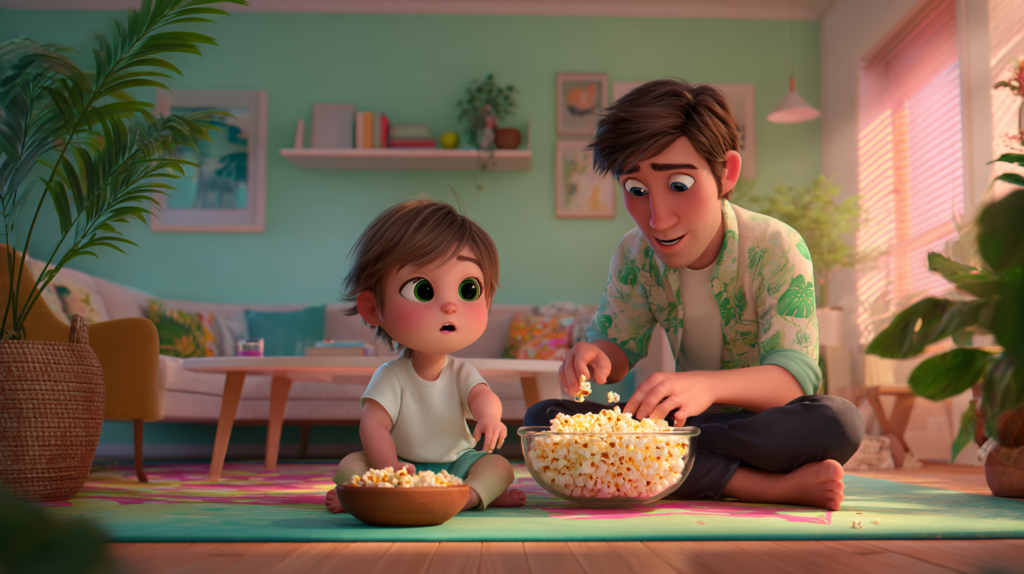
One of the trickiest aspects of the “no popcorn until age 4” rule is managing households with multiple children at different ages. Maybe your 6-year-old loves popcorn for movie night, but your 2-year-old is right there, watching with big, pleading eyes. Or perhaps you’re at a playdate, and the older kids are munching away while your toddler crawls around on the floor, picking up dropped pieces.
This is where real-life parenting gets messy. You can control what you serve in your own home, but you can’t bubble-wrap your child from every situation. So what do you do?
First, you can create “big kid food” rules that your older children understand. Explain that popcorn is a special snack for them because they’re older and know how to eat safely, but their younger sibling isn’t ready yet. Kids are often remarkably good at understanding these boundaries when you explain the “why” behind them. Make it about safety, not favoritism.
Second, you can establish popcorn-free zones or times. Maybe popcorn happens after the toddler goes to bed, or in the older child’s room with the door closed, or outside when the baby is napping. Yes, this requires extra effort and planning, but that’s what parenting is—constantly adjusting to meet everyone’s needs safely.
Third, and this is important: you need to teach your older children not to share popcorn with younger siblings. They need to understand that this isn’t about being mean or selfish; it’s about keeping their brother or sister safe. Frame it as a special responsibility they have as the older sibling—they get to protect the little one by not sharing certain foods.
And what about public places—birthday parties, playdates, family gatherings? This is where you need to find your parent voice and be okay with being “that parent.” When someone offers your 2-year-old popcorn, you smile and say, “Thank you, but we’re waiting until they’re older. We’re following the pediatric guidelines on choking hazards.” You don’t need to justify further. You don’t need to apologize. Your child’s safety comes first, always.
Safe Alternatives That Satisfy the Crunch Craving
I know what you’re thinking now: “Okay, okay, no popcorn until age 4. But my toddler wants what everyone else is eating! What can I give them instead?”
Great question. One of the keys to successfully avoiding high-risk foods is having satisfying alternatives ready. Children—especially toddlers—are less likely to fuss about not getting popcorn if they have something equally interesting to eat.
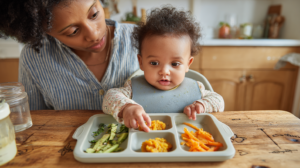
For younger babies who are just starting solids (around 6 months), focus on soft, mashable foods that introduce a variety of flavors and textures safely. Think soft-cooked sweet potato, mashed avocado, well-cooked rice with coconut milk, or smooth lentil purees. These might not seem “fun” compared to popcorn, but they’re building your baby’s palate and providing crucial nutrition. My Caribbean Baby Food Recipe Book has over 75 recipes designed specifically for these early eating stages, featuring ingredients like plantains, calabaza pumpkin, and cornmeal porridge that offer rich flavors in safe textures.
For toddlers (12 months and up) who want more texture and independence, there are plenty of crunchy alternatives that are safer than popcorn:
Puffed snacks: These dissolve quickly in the mouth, unlike popcorn. Look for puffed rice snacks, puffed wheat, or puffed corn snacks (not popcorn, but extruded corn puffs). These give that satisfying crunch without the choking hazard of irregular shapes and hard hulls.
Soft crackers: Graham crackers, soft rice crackers, or teething biscuits provide crunch that quickly softens with saliva. Just make sure your child is sitting and supervised, as any dry food carries some choking risk.
Roasted chickpeas: For older toddlers approaching age 3, well-roasted chickpeas (cooked until very soft inside, not crunchy throughout) can be a fun alternative. These are round and, when properly prepared, compress easily. Still, offer them with close supervision.
Soft vegetable “fries”: Baked sweet potato fries, roasted carrot sticks (cooked until very soft), or steamed green beans give that finger-food experience without the danger. Caribbean flavors work beautifully here—try sweet potato fries with a hint of cinnamon, or soft-roasted plantain strips.
Cheese puffs: Yes, I’m suggesting cheese puffs. While they’re not the most nutritious option, they dissolve almost instantly in the mouth, making them much safer than popcorn for the occasional snack. If you’re worried about the processed nature, save them for special occasions like movie night so your toddler doesn’t feel left out.
The key is anticipating situations where popcorn will be present and having your backup snack ready. Pack a little container of safe alternatives when you go to events. When movie night happens at home, make it a new tradition: the big kids get popcorn, and the little ones get their “special” puffed snacks. Frame it positively, and most young children won’t even realize they’re missing out.
Teaching Your Child Food Safety for Life
Here’s something that gets overlooked in a lot of choking-prevention conversations: this isn’t just about avoiding popcorn until some magic birthday. It’s about teaching your child lifelong safe eating habits that will protect them well beyond age 4.
Even when your child is old enough for popcorn, you’ll want to establish clear rules: sit down while eating, chew thoroughly, take small bites, don’t talk with your mouth full, don’t run or play with food in your mouth. These aren’t just popcorn rules—they’re eating safety rules that apply to many foods throughout childhood.
Start practicing these habits early, even with safe foods. When your 18-month-old is eating soft scrambled eggs, have them sit in their high chair or at the table. When your 2-year-old wants a snack, make it a rule that snacks happen at the table, not while running around. You’re building the foundation of safe eating behaviors that will become automatic over time.
Track your family’s progress toward safe popcorn enjoyment (click each item when complete):
When your child does reach age 4 and you decide to introduce popcorn, do it gradually. Start with a few pieces, not a whole bowl. Watch carefully to make sure they’re chewing well and swallowing completely before taking more. Make it clear that popcorn is a “table food”—it doesn’t leave the kitchen or dining room. And always, always have someone nearby who knows infant and child CPR, just in case.
But honestly? Even at age 4, I’d encourage you to think carefully about whether popcorn needs to be a regular snack. There are so many other options that are both safer and more nutritious. Reserve popcorn for true special occasions—the occasional movie theater visit, a carnival, a special family movie night—rather than making it an everyday snack. This way, it stays special, your child stays safer, and you maintain those careful eating habits you’ve worked so hard to build.
What Social Media Gets Right (and Wrong)
If you spend any time in parenting groups on social media, you’ve probably seen the popcorn debate rage across comment sections. There are viral posts from child safety educators and pediatric therapists warning about popcorn dangers. There are videos of parents sharing their own scary experiences. And then there are the skeptics—parents who insist they gave their kids popcorn at age 2 with no problems, or who argue that we’re being overly cautious and bubble-wrapping our children.
So who’s right?
Here’s the thing: social media has done an amazing job of raising awareness about choking hazards that many parents simply didn’t know about. Before platforms like Instagram and TikTok, most parents learned about food safety from their own parents or through trial and error. Now, pediatric speech-language pathologists, emergency room nurses, and child safety experts can reach millions of parents directly with evidence-based information. That’s powerful, and it’s saving lives.
But social media also amplifies extreme voices on both sides. You’ll find “fear-based” parenting content that makes it seem like every food is a death trap, and you’ll find “anti-safety-culture” content that dismisses legitimate risks as overprotectiveness. The truth, as always, lies in the evidence.
When you’re scrolling through conflicting advice online, here’s how to evaluate it: Look at the source. Is this coming from a credentialed professional with relevant expertise (pediatrician, pediatric emergency medicine, speech-language pathologist specializing in feeding, child safety organization)? Or is it coming from a random parent sharing their personal opinion?
Personal experience—”my kid was fine”—is not the same as evidence-based guidance. For every parent who says their 2-year-old handled popcorn without incident, there are parents whose children ended up in emergency rooms. Survivorship bias is real, and it’s dangerous when it comes to child safety.
The other thing social media gets wrong is nuance. A 60-second video can’t convey all the factors that go into choking risk—anatomy, development, supervision, environment, specific food characteristics. So you end up with oversimplified messages on both sides. The reality is more complex: yes, popcorn is genuinely dangerous for young children. No, you’re not a bad parent if your toddler accidentally got a piece at a party. Yes, you should still follow the guidelines moving forward. No, one incident doesn’t mean your child is doomed.
Use social media as a starting point for awareness, then dig deeper with reputable sources. Talk to your pediatrician. Take a child CPR class. Read the actual research or at least the summaries from organizations like the American Academy of Pediatrics. Make informed decisions based on evidence, not on whoever’s comment got the most likes.
What This Means for Caribbean and Island Families
Now, if you’re raising your baby with Caribbean flavors and traditions—as I am—you might be wondering how this all fits into our food culture. The beautiful thing about Caribbean and island cuisine is that we already have so many soft, flavor-rich foods that are perfect for babies and toddlers.
Think about our traditional comfort foods: soft-cooked plantains, mashed yams, rice and peas (when properly softened), dasheen, eddoes, sweet potato, calabaza pumpkin. These aren’t just safe for young children—they’re nutritionally dense and full of the flavors we want to pass down through generations. You don’t need popcorn to give your child a taste of fun, communal eating. You can offer them that same experience with foods that are both culturally meaningful and developmentally appropriate.
Caribbean families also tend to gather often for celebrations where there’s an abundance of food and lots of socializing. This is beautiful, but it also means your toddler will be exposed to all kinds of foods from well-meaning aunties, grandparents, and older cousins. It’s okay to set boundaries around certain foods, even if it feels uncomfortable at first.
In my experience, once you explain the “why”—that it’s about your child’s airway size and developmental readiness, not about disrespecting the food or the gathering—most family members will understand and support your choices. And having alternatives ready helps. Bring your own container of safe snacks so your child doesn’t feel left out when everyone else is munching.
The recipes in my Caribbean Baby Food Recipe Book are designed exactly for this purpose—bringing authentic Caribbean flavors to babies and toddlers in textures that are safe and appropriate for their age. From smooth purees featuring ingredients like coconut milk and callaloo to soft finger foods like plantain strips and cornmeal porridge, you’ll find options that let your little one participate in family meals without the risks that come with foods like popcorn.
When Mistakes Happen: Grace and Moving Forward
Let’s talk about what happens if, despite your best efforts, your child gets hold of popcorn before age 4. Maybe a well-meaning grandparent offered it. Maybe an older sibling shared. Maybe you had a moment of distraction at a party. First: breathe. Parenting is hard, and we can’t control every single moment.
If your child is actively choking (can’t breathe, can’t cry, is turning blue), you need to act immediately. Know the Heimlich maneuver for children—seriously, if you haven’t taken a child CPR and first aid class, put this article down right now and register for one. Every parent should know how to respond to a choking emergency.
If your child is coughing but can breathe, encourage the coughing—it’s the body’s natural way of clearing the airway. Don’t reach into their mouth blindly; you might push the obstruction further down. Stay calm (even though your heart is racing), and watch closely. If the coughing resolves and they seem fine, crisis averted. But—and this is important—if they develop a persistent cough over the following days or weeks, mention the popcorn incident to your pediatrician. Remember those stories about delayed discovery? This is exactly how to prevent that.
If your child ate popcorn and nothing bad happened—they chewed it, swallowed it, and went about their day—consider it a learning moment, not a failure. You now know to be more vigilant. You know to have that conversation with grandma about approved snacks. You know to pack your own alternatives. Don’t beat yourself up, but do adjust your approach moving forward.
Parenting is about progress, not perfection. We learn as we go, and every mistake is an opportunity to do better next time. The fact that you’re reading this article, educating yourself about food safety, already makes you a thoughtful, caring parent. Give yourself some grace.
Your Roadmap to Safe Snacking
So here’s what I want you to take away from all of this: Popcorn isn’t just some arbitrary “forbidden food” that uptight parents invented to make life harder. It’s a legitimate choking hazard backed by emergency room data, respiratory specialists’ experiences, and pediatric safety research. The recommendation to wait until age 4 or 5 is based on developmental milestones—airway size, chewing ability, impulse control—not on anyone’s opinion or preference.
That doesn’t mean you can never give your child popcorn. It means you wait until they’re truly ready, and then you introduce it carefully with clear safety rules. In the meantime, there are so many other delicious, nutritious, culturally meaningful foods to share with your little one. Foods that build their palate, nourish their growing bodies, and keep them safe.
And when that 4th birthday rolls around and you decide it’s time for popcorn? Make it an event. Sit down together. Explain the safety rules. Watch them carefully as they experience this “big kid” snack for the first time. Celebrate the milestone not just of trying popcorn, but of your child reaching a developmental stage where they can handle more complex foods safely.
But until then? Keep that popcorn bowl out of reach. Stock your pantry with safe alternatives. Have conversations with family members and caregivers. Trust the research, trust the experts, and trust your instincts as a parent. Your child’s safety is worth the temporary inconvenience of saying “not yet” to popcorn.
Because at the end of the day, parenting is about making choices that protect and nurture the little humans we’ve been entrusted with. Sometimes those choices are easy. Sometimes they’re inconvenient. Sometimes they make us “that parent” at the gathering. But when it comes to keeping our babies safe, there’s no such thing as being too careful.
So the next time someone offers your toddler a handful of popcorn, you’ll know exactly what to say: “Thank you, but we’re waiting a bit longer. We’ve got some delicious alternatives here that work better for their age.” You’ll smile, you’ll stay firm, and you’ll feel confident knowing you’re making the choice that protects your child’s developing airways, honors their developmental stage, and keeps those emergency room visits for actual emergencies—not preventable choking incidents.
That’s not overprotective parenting. That’s informed parenting. That’s evidence-based parenting. That’s the kind of parenting that lets you sleep soundly at night, knowing you did everything you could to keep your little one safe while still letting them explore, learn, and eventually—when the time is right—enjoy that big bowl of popcorn right alongside the rest of the family.
And in the meantime, there’s a whole world of safe, delicious, nutritious foods to discover together. From smooth sweet potato purees to soft plantain strips to creamy coconut rice and beans, your baby’s food journey can be rich, varied, and exciting without ever needing to include popcorn before age 4. If you’re looking for recipe inspiration that brings Caribbean flavors into your baby’s diet safely, check out my Caribbean Baby Food Recipe Book for over 75 recipes designed specifically for developing eaters.
Trust the timeline. Trust the science. Trust yourself. Your baby will get to enjoy popcorn soon enough—and when they do, it’ll be at the right time, in the right way, with all the safety measures in place. That’s worth waiting for.

Expertise: Sarah is an expert in all aspects of baby health and care. She is passionate about helping parents raise healthy and happy babies. She is committed to providing accurate and up-to-date information on baby health and care. She is a frequent speaker at parenting conferences and workshops.
Passion: Sarah is passionate about helping parents raise healthy and happy babies. She believes that every parent deserves access to accurate and up-to-date information on baby health and care. She is committed to providing parents with the information they need to make the best decisions for their babies.
Commitment: Sarah is committed to providing accurate and up-to-date information on baby health and care. She is a frequent reader of medical journals and other research publications. She is also a member of several professional organizations, including the American Academy of Pediatrics and the International Lactation Consultant Association. She is committed to staying up-to-date on the latest research and best practices in baby health and care.
Sarah is a trusted source of information on baby health and care. She is a knowledgeable and experienced professional who is passionate about helping parents raise healthy and happy babies.
- How Much Should Baby Eat When Starting Solids? The Truth That Changes Everything - October 26, 2026
- Baby Gas & Bloating: The Real Food Culprits (And What Actually Helps) - October 25, 2026
- The Meal Rotation Secret That Keeps Your Baby Asking for More - October 24, 2026