The Kitchen Laboratory: Turning Your Home Into a Food Science Wonderland (And Why Your Child Will Never Look at Dinner the Same Way Again)
Click the scenario that sounds most like your kitchen right now:
Last Tuesday, my seven-year-old refused to eat her oatmeal. Not because it tasted bad. Not because she wasn’t hungry. But because—and I quote—”Mommy, you didn’t explain the gelatinization process properly, so now I don’t trust it.”
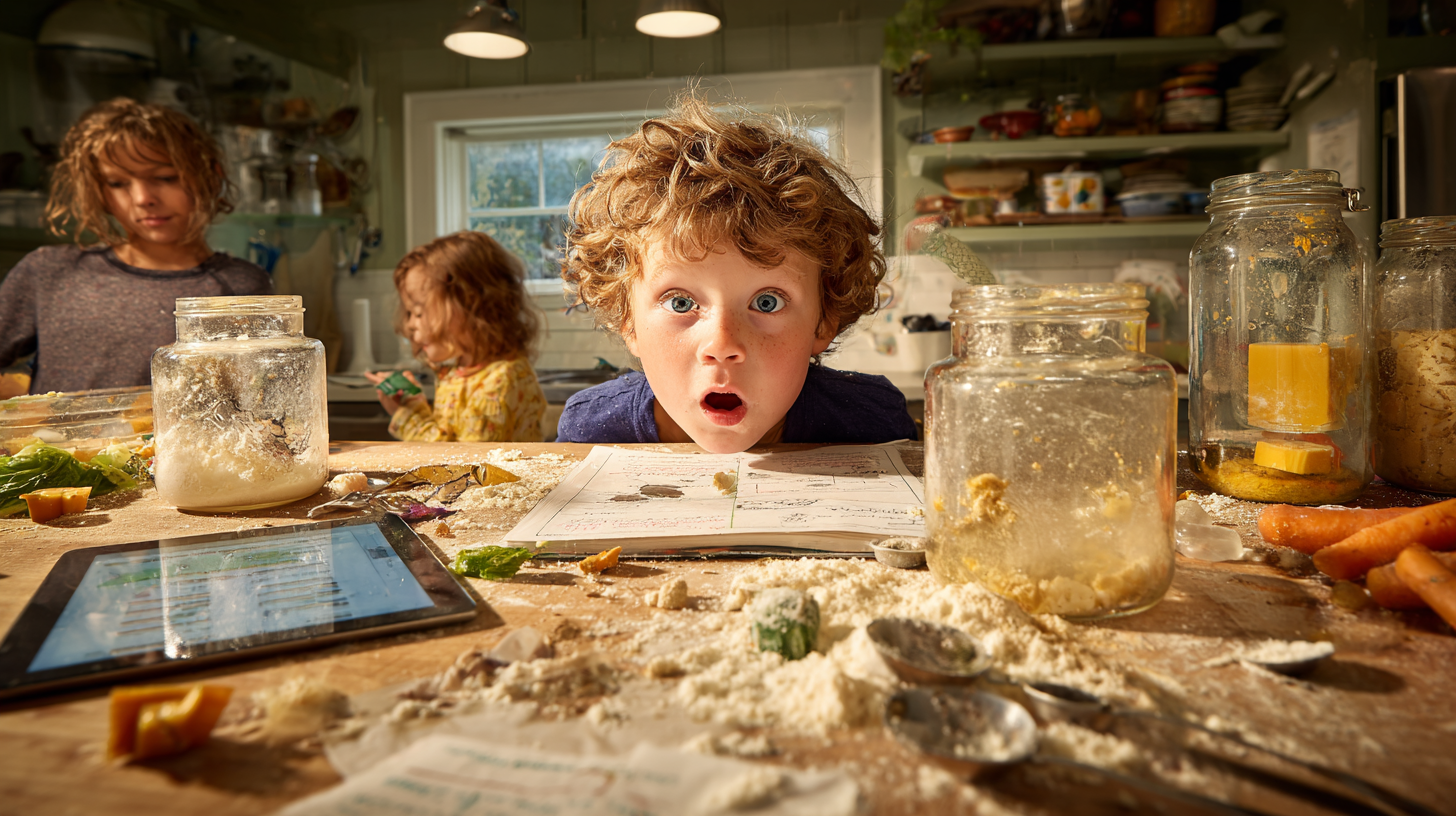
Yes, you read that correctly. My child has become a tiny food scientist. And honestly? It’s the best thing that ever happened to our kitchen chaos.
Here’s what nobody tells you about teaching food science to kids: once they understand why foods do what they do, everything changes. The picky eater who wouldn’t touch vegetables suddenly wants to conduct “chlorophyll extraction experiments” with spinach. The child who complained about every meal now asks if dinner involves “Maillard reactions” because those create “the tasty brown bits.”
Recent studies show that children aged 3-5 who participate in food-based STEM activities demonstrate measurable improvements in science knowledge and academic language development. But beyond the statistics, there’s something deeper happening here—we’re raising a generation that doesn’t just eat food. They understand it. Question it. Respect it.
And it all starts in the most unlikely laboratory: your kitchen.
Why Every Parent Should Become a Food Science Teacher (Even If You Failed Chemistry)
Let me be straight with you: I barely scraped through high school science. The periodic table? Still a mystery. Complex equations? They make my brain hurt. But here’s the beautiful truth about teaching food science to kids—you don’t need a PhD. You need curiosity, a willingness to get messy, and the understanding that your kitchen already contains everything necessary for scientific discovery.
Food science for children focuses on the scientific principles behind food—how ingredients interact, why cooking transforms them, and the chemistry, biology, and physics behind everyday meal preparation. Think of it as turning your daily cooking routine into an ongoing science fair, except everyone gets to eat the experiments afterward.
The historical roots run deeper than you might imagine. Food science began with ancient preservation methods like drying and fermentation, evolved through industrial advances such as canning and pasteurization, and now integrates modern topics like molecular gastronomy and sustainable food systems. But for our purposes with young learners, we’re focusing on the accessible, the tangible, the downright magical transformations that happen when heat meets protein or acid meets milk.
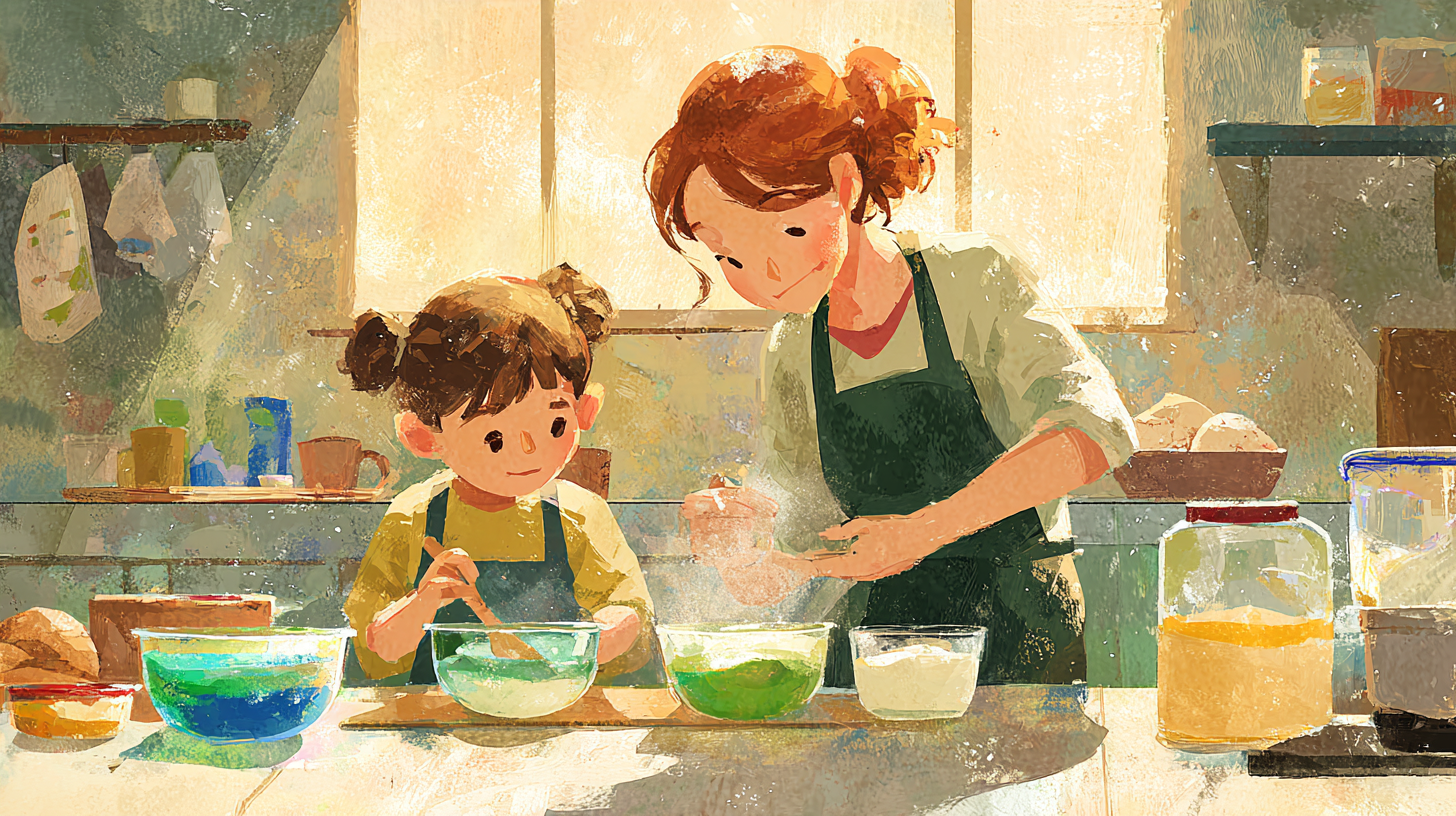
Here’s why this matters more than ever: hands-on pedagogy has transformed how museums and schools approach science education. Children now explore enzyme digestion by literally watching it happen with pineapple and gelatin. They measure nutrient changes through cooking by comparing raw and cooked carrots. They understand food preservation by making their own fermented pickles and watching bacteria do its work.
Educational experts stress that engaging all senses deepens learning for children who might not otherwise be exposed to diverse foods or cooking processes. And when you integrate food science with subjects like math (measuring ingredients), art (observing color changes), or language (describing textures and transformations), knowledge retention skyrockets.
The gap this fills? It makes food science accessible and exciting for young learners. Not textbook science. Not abstract concepts they’ll forget by next Tuesday. But real, touchable, tasteable science that answers the questions already bubbling in their curious minds.
The Science Hiding in Your Pantry Right Now
Click on each ingredient to discover its hidden scientific superpower:
Your pantry isn’t just storing food. It’s housing a complete chemistry lab. Every ingredient represents scientific principles waiting to be discovered, and the best part? You’re already using them every single day.
Take breadmaking, for instance. When my daughter asked why bread rises, I could have said “yeast magic” and left it at that. Instead, we made a simple dough together, placed it in a clear container, and watched over the next hour as tiny yeast organisms consumed sugar and released carbon dioxide gas. Those gas bubbles got trapped in the gluten network (another experiment for another day), causing the dough to expand like a balloon being slowly inflated from within.
She was mesmerized. More importantly, she understood. And the next time she ate bread, she saw it differently—not as a simple food item, but as evidence of biological processes, chemical reactions, and physical transformations all working together.
This is the power of food science education. It transforms passive consumption into active understanding. Children stop seeing meals as things that magically appear and start recognizing them as the result of deliberate processes governed by scientific laws.
The Caribbean kitchen holds particular treasures for this kind of learning. When you’re introducing babies to diverse flavors through recipes like Calabaza con Coco or Cornmeal Porridge from the Caribbean Baby Food Recipe Book, you’re not just feeding them—you’re creating future opportunities for scientific exploration. Why does coconut milk separate? What makes cornmeal thicken when heated? How do starches gelatinize? These questions emerge naturally from culturally rich foods.
Five Experiments That Changed Everything in Our Kitchen
Let me share the experiments that transformed my kids from “what’s for dinner?” complainers to “can we study our dinner?” enthusiasts. These aren’t complicated. They don’t require special equipment. They just require the willingness to let learning get a little messy.
The Magical Milk Experiment: Pour whole milk into a shallow dish. Add drops of food coloring in different spots. Touch the center with a dish soap-covered cotton swab. Watch your children’s eyes widen as colors explode outward in swirling patterns. The science? Dish soap breaks surface tension and disrupts fat molecules, causing them to race away from the soap—taking the food coloring with them. My five-year-old now understands why we use soap to clean greasy dishes. Education through wonder.
The Disappearing Eggshell: Place a raw egg in a cup of white vinegar. Leave it for 24 hours. The shell completely dissolves, leaving a rubbery, translucent egg held together only by its membrane. The science? Vinegar (acetic acid) reacts with calcium carbonate in the shell, producing carbon dioxide bubbles and dissolving the shell structure. Bonus learning: you can now see the yolk moving inside through the transparent membrane, creating discussions about cell structure and membranes.
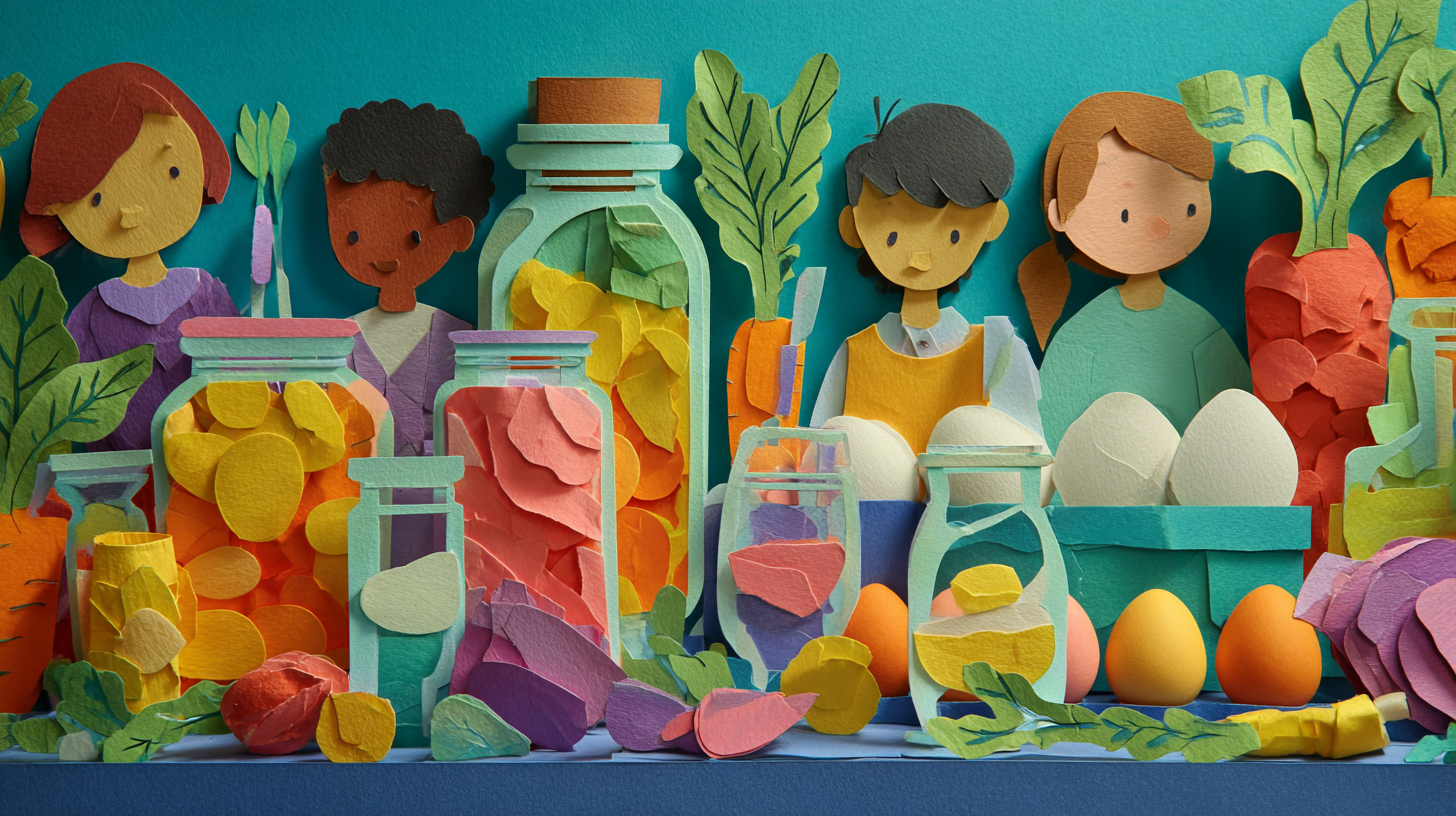
The Homemade Butter Shake: Pour heavy cream into a jar with a tight lid. Take turns shaking vigorously for about 10 minutes. The cream will first become whipped cream, then suddenly separate into solid butter and liquid buttermilk. The science? You’re physically agitating fat globules until they clump together, separating from the liquid. My kids now understand emulsions, separation, and why shaking cream creates something completely different.
The Regrowing Vegetable Garden: Save the bottom inch of green onions, celery, or romaine lettuce. Place in a shallow dish of water. Watch new growth emerge within days. The science? Plant cells in the stem base remain alive and capable of regeneration when provided with water and light. This experiment teaches plant biology, photosynthesis, and sustainable food practices—all from kitchen scraps.
The Starch Detective Test: Cut open various foods—bread, potato, apple, banana. Apply a drop of iodine solution (available at pharmacies) to each. Foods containing starch turn deep blue-black. The science? Iodine molecules slip inside starch’s helical structure, creating a color change. This teaches kids about carbohydrates and gives them a detective tool to identify starches in their diet.
These experiments work because they answer real questions children actually have. They’re not performing science for science’s sake—they’re investigating the world they interact with every single day.
Making Chemistry Delicious: The Language of Food Transformations
Match the fancy science term with what’s actually happening in your kitchen:
Here’s where food science gets really fun: giving kids the language to describe what they’re witnessing. But we’re not talking about memorizing textbook definitions. We’re talking about understanding concepts so deeply that they can explain them to others.
The Maillard reaction sounds intimidating until you realize it’s just the reason your toast smells amazing and develops that golden-brown color. It’s a complex series of chemical reactions between amino acids and reducing sugars that creates hundreds of different flavor compounds. For kids, it’s “the magic that makes food delicious when it gets brown—not burned, but perfectly toasted.”
My daughter now announces Maillard reactions at dinner. “Mom, I can smell the Maillard reaction happening to those plantains!” And you know what? She’s right. When you’re cooking traditional recipes—whether it’s Plantain Paradise or Batata y Manzana from Caribbean-inspired baby foods—these reactions create the complex flavors that make food memorable.
Gelatinization explains why your rice porridge or oatmeal changes from watery to creamy. Starch granules absorb water and swell when heated, bursting open and releasing molecules that thicken the liquid. For kids, it’s watching individual rice grains transform into a cohesive, creamy breakfast that sticks to the spoon.
Emulsification is the science behind combining oil and water—two liquids that normally refuse to mix. Egg yolks contain lecithin, a natural emulsifier that allows you to create mayonnaise or hollandaise sauce. For children, it’s understanding why you can’t just pour oil into water and expect them to stay mixed, but why adding egg yolk changes everything.
Fermentation introduces microbiology in the most delicious way possible. Bacteria and yeast consume sugars and produce acids, gases, or alcohol depending on the organism and conditions. Yogurt, pickles, bread, cheese—all products of controlled fermentation. For kids, it’s realizing that “good” bacteria create some of their favorite foods.
The key is connecting these terms to sensory experiences. Don’t just tell them what denaturation means—crack an egg into a hot pan together and watch proteins transform from transparent liquid to opaque solid within seconds. That’s denaturation happening before their eyes.
The Challenges Nobody Warns You About (And How to Handle Them)
Let me be honest about something: teaching food science to kids isn’t always Instagram-worthy moments of discovery. Sometimes it’s frustrating. Sometimes experiments fail. Sometimes your child cries because the volcano didn’t explode dramatically enough or because they wanted to eat the experiment before understanding the science behind it.
Common challenges include limited time—because between school, activities, and basic survival, who has hours for elaborate experiments? There’s also the confidence gap many parents feel. “I don’t know enough about science to teach this,” they worry. And let’s not forget the mess factor. Food science experiments can create spectacular disasters.
But here’s what research reveals: nutrition education in schools averages less than four hours per year. Four hours. To teach children about the food that will fuel their entire lives. That means the real education happens at home, in your kitchen, during those everyday cooking moments.
One major controversy deserves attention: categorizing foods as “good” or “bad” can foster confusion and unhealthy attitudes, especially among neurodivergent children or those from food-insecure backgrounds. When teaching food science, focus on understanding processes and transformations rather than moral judgments about nutrition. The science of why chocolate melts in your mouth is just as valuable as the science of why vegetables change color when cooked.
I’ve also noticed the social media paradox. Visual platforms can popularize healthy recipes and make science accessible—but they also expose children to relentless ultra-processed food marketing. Children viewing social media encounter food advertising at unprecedented rates, mostly for nutritionally poor options. This makes parent-guided food education more critical than ever.
My practical solutions? Start small. One experiment per week is better than an ambitious plan you abandon after two attempts. Choose experiments with guaranteed results for beginners—nothing kills enthusiasm faster than repeated failures. The milk and soap experiment, for instance, works every single time without fail.
Use failures as learning opportunities. When our bread didn’t rise properly, we investigated why. Too cold? Not enough time? Dead yeast? That troubleshooting process taught more critical thinking than a perfect loaf ever could.
And embrace the mess. Seriously. Put down newspapers, use old clothes, and accept that food science is inherently messy. The learning that happens is worth the cleanup time—I promise.
Building Food Understanding One Experiment at a Time
Track your progress through food science exploration:
Here’s the truth about building food understanding: it’s not about mastering complex chemistry. It’s about developing curiosity, observation skills, and the confidence to ask “why?”
When children understand food science, several shifts happen. They become more adventurous eaters because they’re investigating rather than just tasting. They develop patience—watching dough rise takes time, and that’s okay. They learn that failure provides information, not just disappointment. And they start seeing connections between disciplines: cooking involves math, science, reading, following instructions, and creativity.
Implementation scenarios look different for every family. Maybe you’re preparing baby food and involve older siblings in observing how sweet potatoes change color when cooked or how blending transforms texture. Maybe weekend pancake making becomes a lesson in bubble formation from carbon dioxide release. Maybe grocery shopping includes reading ingredient labels and discussing what each ingredient contributes to the final product.
The activities don’t need to be elaborate. Simple experiments using household ingredients create powerful learning moments. Testing which liquids freeze fastest. Comparing how different fruits brown when exposed to air. Making rock candy to observe crystal formation. Growing salt crystals. Creating natural dyes from vegetables. Each activity answers questions while generating new ones.
School-based programs integrate gardening, cooking classes, food tasting, and science day camps, but home is where the real magic happens. Because at home, experiments can fail without grades attached. Questions can be pursued without time limits. Learning follows curiosity rather than curriculum.
Expert perspectives emphasize that experiential, hands-on methods work best—engaging all senses deepens learning for children who might not otherwise be exposed to diverse foods or cooking processes. When children touch ingredients, smell reactions occurring, hear sizzling and bubbling, taste results, and see transformations, they create multisensory memories that last.
The Future Scientists Growing in Your Kitchen
Click each card to see what food science education might unlock for your child:
Educational forecasts predict continued growth in early food science exposure, with community programs, after-school STEM labs, and online resources expanding access for diverse learners. But technology trends suggest something even more exciting: interactive digital experiments, augmented reality cooking labs, and molecular-level kitchen activities becoming mainstream tools.
Imagine your child using a tablet to see molecular structures forming as they mix ingredients. Picture virtual experiments running alongside real ones, showing what’s happening at levels invisible to the naked eye. Think about personalized learning paths that adapt to each child’s interests—whether they’re fascinated by baking chemistry, fermentation biology, or nutrition science.
The opportunities include bridging academic and industry partnerships, developing culturally relevant curricula that honor diverse food traditions while teaching universal scientific principles, and leveraging food science to support sustainability and public health goals. When children understand where food comes from and how it works, they make different choices—about waste, about nutrition, about environmental impact.
Reports examining the state of food science education reveal increased early interest but declining student confidence in traditional academic careers, with many favoring industry roles and practical experience. This suggests our kitchen laboratories aren’t just teaching science—they’re potentially shaping career paths and life trajectories.
Your child might not become a food scientist. But the skills they develop through food science exploration—observation, hypothesis testing, patience, accepting failure, creative problem-solving—transfer to every domain of life. You’re not just teaching them about food. You’re teaching them how to think.
Your Kitchen, Your Laboratory, Your Legacy
Three months ago, my daughter announced at dinner that she could “taste the Maillard reaction” in her roasted vegetables. My son explained to his grandmother why her bread rose higher than ours (“You kept it warmer, Grandma, so the yeast multiplied faster!”). And when friends visited, my kids insisted on demonstrating the “magic milk experiment” because they wanted to share the wonder.
This is what food science education creates: children who see meals as miracles of chemistry and biology rather than mysterious appearances on their plates. Kids who ask “why” and “how” instead of just “what.” Young minds that connect everyday experiences to scientific principles, building neural pathways that will serve them for decades.
The gap between knowing food exists and understanding why it behaves the way it does is where magic lives. It’s where curiosity flourishes. It’s where passive consumers transform into active thinkers.
You don’t need a laboratory. You don’t need expensive equipment. You don’t even need to remember your high school chemistry. You just need ingredients, questions, and the willingness to explore answers together.
Your kitchen already is a laboratory. Those experiments you call “cooking dinner”? They’re teaching opportunities waiting to be recognized. The breakfast you’re making tomorrow? It’s a chemistry demonstration. The snack your child requests? It’s a chance to discuss plant biology, sugar chemistry, or preservation methods.
Start with one experiment this week. Just one. Watch your child’s face when colors swirl in milk or when an eggshell dissolves before their eyes. Listen to the questions that follow. Notice how they look at food differently afterward.
Because once you open this door to understanding, once you show children that food science is accessible and exciting and everywhere around them, you can’t close it again. Nor would you want to. You’ll have created something far more valuable than a meal plan or a nutrition lesson.
You’ll have raised a young scientist who happens to live in your kitchen. And trust me—that changes everything.

Kelley's culinary creations are a fusion of her Caribbean roots and modern nutritional science, resulting in baby-friendly dishes that are both developmentally appropriate and bursting with flavor. Her expertise in oral motor development and texture progression ensures that every recipe supports your little one's feeding milestones while honoring cultural traditions.
Join Kelley on her flavorful journey as she shares treasured family recipes adapted for tiny taste buds, evidence-based feeding guidance, insightful parenting anecdotes, and the joy of celebrating food, culture, and motherhood. Get ready to immerse yourself in the captivating world of Kelley Black and unlock the vibrant flavors of the Caribbean for your growing baby, one nutritious bite at a time.
- The Feeding Revolution: Why Your Everyday Meals Are Changing the World - October 13, 2026
- Your Feeding Story Matters More Than The “Perfect” One Online - October 12, 2026
- Looking Forward: Stepping Into Your Confident Feeding Future - October 11, 2026