The Invisible Shield: How Antioxidants Are Quietly Building Your Baby’s Strongest Defense System
⚡ Every cell in your baby’s body is under attack right now. Choose which cell you want to protect:
That interactive above isn’t just for fun. Right this second, as you’re reading these words, millions of microscopic battles are happening inside your baby’s body. Free radicals—those unstable molecules you’ve probably heard about—are bouncing around like tiny wrecking balls, threatening to damage the very foundation of your little one’s development. But here’s what nobody tells you in those pediatrician visits: your baby’s natural defense system is still under construction. They’re fighting this war with only half their armor.
The truth? What you put on their spoon in the next twelve months will determine how strong their cellular defense becomes for the rest of their life. And I’m not talking about some vague “eat your vegetables” advice. I’m talking about specific, powerful compounds called antioxidants that act like microscopic bodyguards, protecting your baby’s brain, eyes, immune system, and every developing organ from oxidative damage that could impact them decades from now.
Three years ago, when I started making my daughter’s first foods in our Kingston kitchen, I thought I understood baby nutrition. I had read the books, watched the videos, consulted with our pediatrician. But it wasn’t until I discovered the research on infant oxidative stress—how vulnerable babies are during their first thousand days—that everything changed. I realized I wasn’t just feeding her. I was building her cellular foundation, one antioxidant-rich bite at a time.
What Nobody Tells You About Your Baby’s Oxidative Vulnerability
Here’s the shocking reality that most parenting books skip over: infants experience significantly higher oxidative stress than adults, yet their antioxidant defense systems won’t be fully operational until well into their second year of life. Think about that for a moment. During the most critical period of brain development, eye formation, and immune system construction, babies are working with incomplete protective equipment.
Antioxidants are molecules that neutralize free radicals—those unstable atoms that steal electrons from healthy cells, causing a chain reaction of cellular damage. In adults, our bodies have sophisticated enzymatic systems to handle this. In babies? Those systems are still being built. Research published in the European Journal of Nutrition in 2023 shows that plasma levels of critical antioxidants like carotenoids and vitamin E in formula-fed infants are significantly lower than in breastfed babies, creating what scientists call an “oxidative gap” during the complementary feeding transition.
This gap matters more than you might think. Oxidative stress biomarkers—measurable signs of cellular damage—decrease substantially when infants receive antioxidant-rich complementary foods starting around six months. A 2022 study in the journal Nutrients tracked infants who received regular servings of foods high in vitamins C and E, beta-carotene, and polyphenols. The results? Lower levels of malondialdehyde, a compound that indicates cellular damage, and stronger immune responses during their first year.
Dr. Christoph Klein from Munich Children’s Hospital puts it plainly in his 2023 research: premature infants face particularly severe oxidative challenges because their enzymatic protection systems against reactive oxygen species are essentially nonexistent. But here’s the part that changed my entire approach to baby feeding—even full-term, healthy babies have limited antioxidant defenses for their first eighteen months. What we feed them during this window becomes their primary protection.
The Caribbean Antioxidant Advantage Nobody’s Talking About
Growing up in Jamaica, I watched my grandmother prepare food for my younger cousins with ingredients that seemed almost medicinal in their intensity—deep orange sweet potatoes, ruby-red sorrel, golden mangoes so ripe they perfumed the entire kitchen. She didn’t know the word “antioxidant,” but she understood something profound: the more color, the more life force in the food. Science has now proven her instinct correct.
Caribbean cuisine naturally incorporates some of the highest antioxidant-density foods on the planet. Callaloo, that leafy green staple in Jamaican and Trinidadian cooking, contains lutein levels that rival spinach. Sweet potatoes—whether the orange, white, or purple varieties we use in everything from breakfast porridge to evening side dishes—are packed with beta-carotene and vitamin E. Papaya, guava, soursop, and mango aren’t just tropical fruits; they’re antioxidant powerhouses that deliver vitamin C, carotenoids, and polyphenols in every sweet, fibrous bite.
When I created recipes for my Caribbean Baby Food Recipe Book, I wasn’t just preserving cultural food traditions. I was translating generations of nutritional wisdom into scientifically-backed baby nutrition. The Papaya & Banana Sunshine blend? That’s delivering beta-cryptoxanthin and vitamin C to support developing vision and immune function. The Sweet Potato & Callaloo Rundown? That combination provides both fat-soluble vitamin E and water-soluble vitamin C, giving your baby’s cells dual-layer protection.
Match the Caribbean Superfood to Its Antioxidant Superpower!
Click on three foods to discover what they’re protecting in your baby’s body:
But here’s what makes Caribbean baby feeding particularly brilliant: we naturally combine these antioxidant sources with healthy fats from coconut milk, creating optimal absorption conditions. Fat-soluble antioxidants like beta-carotene and vitamin E need dietary fat to be properly absorbed. When you steam pumpkin and blend it with a touch of coconut milk—as we do in the Calabaza con Coco recipe—you’re not just adding flavor. You’re creating a bioavailable antioxidant delivery system that your baby’s developing digestive system can actually use.
The Science Behind Antioxidants That Actually Matters to Parents
Let me break down the four major antioxidants your baby needs, without the confusing biochemistry textbook language. Think of these as different types of cellular bodyguards, each with specialized protection skills.
Vitamin C (Ascorbic Acid) is the water-soluble workhorse. It circulates through your baby’s blood and cellular fluids, neutralizing free radicals before they can damage DNA. Beyond its protective role, vitamin C enhances iron absorption—critical because iron deficiency is the most common nutritional deficiency in infants worldwide. When you serve mango with a sprinkle of fortified cereal, you’re not just combining flavors; you’re using vitamin C to unlock that iron. Sources like papaya, guava, and even cooked callaloo deliver significant amounts, and unlike some nutrients, vitamin C levels remain relatively stable during gentle cooking methods.
Vitamin E (Tocopherol) works in fatty cell membranes, protecting the structural integrity of cells throughout your baby’s rapidly developing brain. The brain is sixty percent fat, making it particularly vulnerable to oxidative damage and particularly dependent on vitamin E protection. Research from the National Institutes of Health in 2024 confirms that adequate vitamin E supports both neurodevelopment and immune function in the first year. You’ll find it in sweet potatoes, avocados (what we call zaboca in Jamaica), and in the coconut milk we use throughout Caribbean cooking.
Carotenoids—beta-carotene, lutein, lycopene—are the pigments that create those gorgeous orange, yellow, and red colors in fruits and vegetables. Beta-carotene converts to vitamin A in your baby’s body, supporting everything from vision to skin cell turnover. Lutein concentrates in the eyes, literally filtering blue light and protecting developing retinas. Every time you serve that vibrant Yellow Yam & Carrot Sunshine blend, you’re delivering a spectrum of carotenoids that travel to different parts of your baby’s body, each finding its specialized protection role.
Polyphenols are the complex compounds found in fruits like guava, soursop, and tamarind. They’re powerful anti-inflammatory agents and emerging research suggests they interact beneficially with infant gut microbiota. A 2024 study in Frontiers in Pediatrics indicates that dietary polyphenols may help establish healthy bacterial populations in the developing gut, creating a foundation for long-term immune resilience and metabolic health.
The Processing Truth Nobody Wants You to Know
What’s Actually Happening in Commercial Baby Food
The global baby food market hit 92.1 billion dollars in 2024, with over sixty percent of new product launches featuring “rich in antioxidants” or “contains vitamin C/E” on their labels. That sounds encouraging until you understand what actually happens to antioxidants during commercial processing.
High-heat pasteurization—necessary for shelf stability and food safety in commercial products—degrades heat-sensitive antioxidants like vitamin C and certain polyphenols. A 2023 study in Food Chemistry found that commercial baby food purees can lose up to forty percent of their original vitamin C content during processing and storage. Carotenoids, while more heat-stable, can undergo structural changes that reduce their bioavailability.
Then there’s the additive question. Some commercial baby foods use synthetic antioxidants like butylated hydroxytoluene (BHT) as preservatives. While approved by regulatory agencies, a 2023 article in the Journal of Pediatric Nutrition raised questions about potential long-term metabolic effects of synthetic antioxidants in infant diets. The researchers weren’t suggesting these additives are dangerous, but they highlighted a critical gap: we simply don’t have long-term data on how these compounds interact with developing metabolic systems.
This is why the American Academy of Pediatrics, WHO, and UNICEF all emphasize the same message in their 2024 guidelines: offer antioxidants through whole food sources whenever possible. When you steam sweet potato and mash it fresh, you preserve the delicate balance of nutrients exactly as nature designed them. When you blend ripe mango with a touch of coconut milk, you’re delivering antioxidants in their most bioavailable form, surrounded by the cofactors and complementary nutrients that enhance absorption.
I’m not saying commercial baby food is harmful. There are excellent brands creating minimally processed, organic options. But understanding the difference between fresh-made and shelf-stable helps you make informed choices. In my own practice, I use commercial options when traveling or during exceptionally busy weeks, but my foundation is always fresh-made foods using recipes like those in the Caribbean Baby Food Recipe Book—simple preparations that maximize nutrient retention while introducing authentic flavors.
The Antioxidant Timeline: What to Serve When
Timing matters. Your baby’s digestive system, immune responses, and metabolic capabilities change dramatically between six months and eighteen months. Here’s how to strategically introduce antioxidant sources as their system matures.
6-8 Months: Single-Source Gentle Starts—Begin with easily digestible, single-ingredient antioxidant sources. Sweet potato, either orange or white batata varieties, provides gentle beta-carotene exposure with minimal digestive challenge. Ripe papaya offers vitamin C and enzymes that actually aid digestion. Ripe mango, when properly prepared, delivers both vitamin C and beta-carotene in a naturally sweet package babies typically accept enthusiastically. This is the window where you’re establishing antioxidant baseline protection while testing for any sensitivities.
8-10 Months: Strategic Combinations—Once single foods are well-tolerated, create antioxidant-boosting combinations. Pair vitamin C-rich fruits with iron-fortified cereals to enhance absorption. Mix beta-carotene-rich vegetables with healthy fats—coconut milk in pumpkin puree, a touch of avocado with carrot mash. Your baby can now handle more complex textures, so you can leave purees slightly chunkier, preserving more of the fiber that supports polyphenol absorption. Recipes like the Calabaza con Coco or Sweet Potato & Callaloo Rundown become nutritional powerhouses during this phase.
10-12 Months: Protective Polyphenols—Introduce fruits with higher polyphenol content: guava, blueberries if available, and properly prepared soursop. These compounds are more complex and benefit from a more mature digestive system. This is also when you can begin adding gentle herbs like cinnamon, which contains powerful polyphenolic compounds with anti-inflammatory properties. The Chenchén con Leche with cinnamon isn’t just cultural tradition; it’s strategic antioxidant layering.
12+ Months: Complete Antioxidant Spectrum—Your toddler can now handle the full range of antioxidant sources, including cooked tomatoes (lycopene), dark leafy greens in more complex preparations, and even mild curry spices which contain curcumin, another potent antioxidant. The Geera Pumpkin or Karhee Curry Blend recipes introduce these compounds in baby-appropriate formats, creating flavor acceptance that will serve them for life.
Busting the Top 5 Antioxidant Myths
Click each myth to reveal the truth:
The Real-World Implementation Strategy
Theory means nothing without practical application. Here’s how to actually build an antioxidant-rich feeding routine that works with real life—messy kitchens, tired evenings, picky eaters, and all.
The Rainbow Plate Principle—Your weekly menu should rotate through the color spectrum. Monday might feature orange (sweet potato, mango). Tuesday brings green (callaloo, avocado). Wednesday incorporates red/pink (papaya, tomato for older babies). This isn’t about perfection; it’s about variety over time. Different pigments mean different antioxidants, and your baby benefits from the full spectrum.
Batch Preparation With Nutrient Retention—Steam vegetables rather than boiling them, which leaches water-soluble vitamins into cooking water. If you do boil, save that nutrient-rich liquid for thinning purees. Freeze portions in ice cube trays within two hours of cooking to minimize oxidation. Label with dates and use within three months for optimal nutrient retention. When you make a batch of Yellow Yam & Carrot Sunshine on Sunday, you’ve created ready-to-serve antioxidant protection for the entire week.
Strategic Pairing For Maximum Absorption—Always serve carotenoid-rich foods with a small amount of healthy fat. A teaspoon of coconut milk in pumpkin puree. A quarter of an avocado mashed with carrot. This isn’t optional if you want those antioxidants actually absorbed. Similarly, pair vitamin C sources with iron-rich foods whenever possible. Mango mixed into iron-fortified oatmeal. Papaya served alongside lentil puree.
The Freshness Priority System—Vitamin C degrades quickly once foods are cut or cooked. Prepare these foods fresh when possible: papaya, mango, guava. Carotenoids and vitamin E are more stable; sweet potato and pumpkin purees maintain their nutritional value for several days refrigerated. Polyphenol-rich foods like cooked callaloo actually develop enhanced bioavailability with gentle cooking. Understanding these differences helps you meal plan efficiently without sacrificing nutrition.
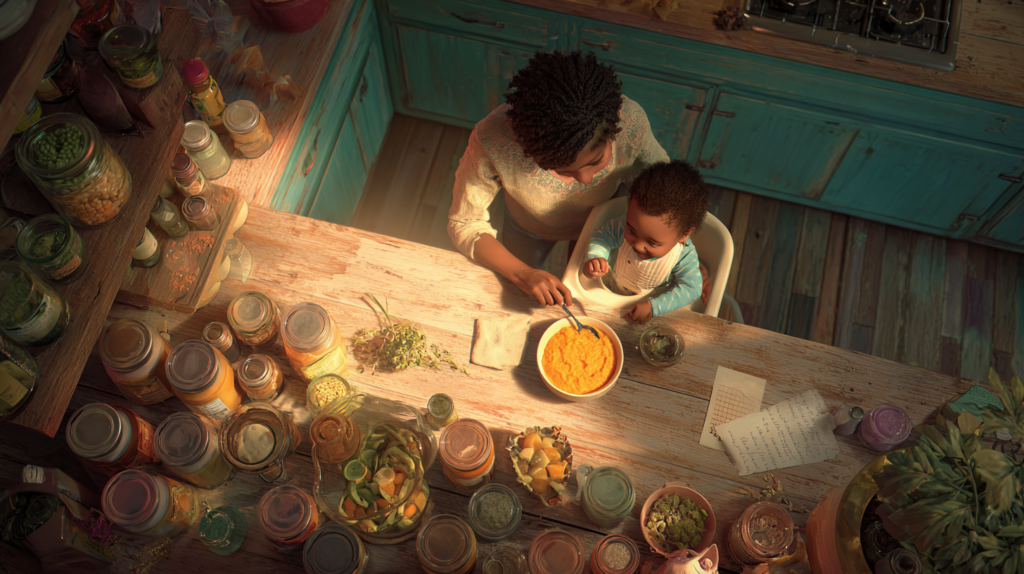
In my household, Sunday afternoon is antioxidant prep time. I roast a whole sweet potato, steam a calabaza, prepare a batch of cornmeal porridge base. These foundations get portioned and frozen. During the week, I add fresh components—a mashed banana here, fresh papaya there—creating variety while maintaining that antioxidant foundation. The complete collection of techniques and specific recipes is detailed in my Caribbean Baby Food Recipe Book, where each recipe includes storage guidelines and nutrient retention tips.
What the Research Reveals About Long-Term Impact
Here’s what keeps me committed to this approach even on exhausting days when jar food seems infinitely easier: the long-term data on early antioxidant nutrition is remarkable.
A longitudinal study tracking children from infancy through age ten found that those who received antioxidant-rich complementary foods during their first two years showed lower rates of respiratory infections, better visual acuity, and stronger cognitive performance in early school years. The researchers couldn’t isolate antioxidants as the sole factor—these families likely made other healthy choices too—but the correlation is compelling.
More specific research on lutein, that carotenoid concentrated in eye tissue, shows measurable benefits. Infants who regularly consumed lutein-rich foods like sweet potato, callaloo, and egg yolk (for older babies) had higher macular pigment density at age two compared to controls. Macular pigment literally filters harmful blue light and protects retinal cells from oxidative damage. You’re not just feeding lunch; you’re building eye protection that lasts decades.
The immune system benefits are equally impressive. Studies published in 2024 confirm that dietary antioxidants support the development of balanced immune responses in infancy. Babies aren’t just fighting off today’s cold; they’re programming their immune systems for lifelong reactivity patterns. Adequate antioxidant nutrition appears to reduce the risk of developing certain allergies and may support more appropriate immune responses to environmental challenges.
Perhaps most intriguing is emerging research on antioxidants and gut microbiome development. Polyphenols from fruits like guava and soursop aren’t directly absorbed in large quantities. Instead, they travel to the colon where gut bacteria metabolize them into bioactive compounds. This process appears to support the growth of beneficial bacterial strains while inhibiting potentially harmful ones. Your baby’s gut microbiome—that internal ecosystem that influences everything from digestion to mood—is being shaped by the antioxidant-rich foods you serve today.
Navigating Challenges and Realistic Expectations
Let’s address the obstacles you’ll actually face, because pretending this is effortless doesn’t serve anyone.
The Picky Eater Reality—Some babies refuse anything green. Others spit out sweet potato with theatrical disgust. This doesn’t mean antioxidant nutrition is impossible; it means you need strategic persistence. Continue offering rejected foods every few days without pressure. Pair unfamiliar foods with accepted favorites. If callaloo alone gets refused, blend it into sweet potato. If straight mango doesn’t appeal, mix it with banana. Taste preferences evolve rapidly in the first year. What’s rejected at eight months often becomes beloved by eleven months.
The Access Challenge—Not everyone lives near Caribbean markets with fresh callaloo and guinep. Adapt the principles to available foods. Spinach provides similar nutrients to callaloo. Butternut squash works like calabaza. Peaches and apricots deliver carotenoids similar to mango. The specific foods matter less than the principle: offer a variety of colorful whole foods with minimal processing.
The Time Constraint—Fresh food preparation takes time that exhausted parents don’t always have. This is where batch cooking, strategic freezing, and occasional use of high-quality commercial options create balance. Aim for primarily fresh-made during weekends or less chaotic days. Fill gaps with carefully chosen jarred options that list real food ingredients without added preservatives. Perfect is the enemy of good enough, and good enough antioxidant nutrition still provides substantial benefits.
The Over-Supplementation Trap—Some well-meaning parents, understanding the importance of antioxidants, purchase infant vitamin supplements or add powdered “superfoods” to every meal. Unless specifically recommended by your pediatrician for a diagnosed deficiency, this is unnecessary and potentially problematic. Fat-soluble vitamins like A and E can reach toxic levels with over-supplementation. Whole foods provide antioxidants in balanced ratios with natural regulation mechanisms. Your baby’s body knows how to process sweet potato in a way it may not know how to process isolated beta-carotene powder.
Your Antioxidant Knowledge Growth
You’ve absorbed incredible information! Track your reading progress:
The Questions You Haven’t Asked Yet (But Should)
Do organic sources provide more antioxidants?—Research shows mixed results. Some studies find slightly higher polyphenol content in organic produce, possibly because plants produce these compounds as natural pest defenses. Other studies show no significant difference. The antioxidant benefit of eating any colorful produce—organic or conventional—far exceeds the benefit of avoiding produce altogether due to cost concerns. Wash thoroughly and prioritize organic for the “dirty dozen” if budget allows, but don’t skip vegetables because organic isn’t available.
Can you overdose on antioxidants from food?—Practically speaking, no. Your baby’s body regulates absorption and excretion of nutrients from whole food sources. The orange-tinted skin some babies develop from eating lots of sweet potato and carrots—called carotenemia—is harmless and reversible. It’s actually a sign their body is storing excess beta-carotene in skin tissue rather than converting it all to vitamin A, demonstrating perfect regulatory mechanisms.
What about antioxidant loss during freezing?—Freezing is one of the best preservation methods for maintaining antioxidant content. Studies show minimal loss of vitamins C and E, carotenoids, and polyphenols in properly frozen foods. The key is quick freezing and minimal air exposure. Those ice cube trays of sweet potato puree in your freezer are nearly as nutritious as the day you made them.
Should I worry about heavy metals in produce?—The 2024 FDA Closer to Zero Initiative highlighted concerning levels of lead, arsenic, and cadmium in some commercial baby foods, particularly rice-based products. For antioxidant-rich produce, risk is generally low but not zero. Variety is your protection—rotating through different foods prevents accumulation from any single source. Preparing foods at home gives you control over sourcing and preparation methods that reduce contamination risk.
Building Your Baby’s Cellular Foundation for Life
We’ve covered the science, the practical strategies, the cultural wisdom, and the research evidence. Now comes the part where I tell you what all of this actually means for the tiny human you’re raising.
Every spoonful of mango puree, every bite of sweet potato, every serving of callaloo-fortified porridge is an investment. You’re not just satisfying today’s hunger. You’re constructing cellular defenses that will protect your child through childhood illnesses, through adolescent growth spurts, through adult environmental exposures they’ll face decades from now. The antioxidant foundation you build in these first thousand days creates resilience that reverberates through their entire life.
This isn’t about perfection. There will be days when they refuse everything you offer. Weeks when life is too chaotic for fresh cooking. Moments when you question whether any of this actually matters. It does. Research confirms it, but more importantly, you’ll see it. In the resilience when other babies in playgroup are cycling through their third cold and yours bounces back quickly. In the bright, clear eyes that track movement and color with sharp focus. In the robust immune responses that handle environmental challenges without overreacting into allergies.
The Caribbean feeding wisdom my grandmother practiced—prioritizing colorful whole foods, combining ingredients for enhanced absorption, respecting the power of plants—has been validated by decades of nutritional science. When you prepare foods using these principles, you’re joining a lineage of caregivers who understood intuitively what laboratories now measure precisely: food is medicine, nutrition is protection, and what we offer our youngest members shapes their lifelong vitality.
Your Next Steps Start Today: Choose one antioxidant-rich food to introduce this week. Maybe it’s steamed sweet potato with a touch of coconut milk. Perhaps it’s fresh mango blended smooth. Whatever you choose, prepare it with intention, knowing you’re building invisible shields around cells you can’t see, protecting systems still under construction, investing in a future you’re creating one spoonful at a time.
The recipes, the techniques, the specific combinations that maximize these benefits—they’re all detailed in my Caribbean Baby Food Recipe Book. Over seventy-five recipes specifically designed to deliver optimal antioxidant nutrition while introducing the vibrant flavors of Caribbean cuisine. From six-month first foods through toddler meals, each recipe includes the nutritional reasoning behind ingredient choices, storage methods that preserve antioxidant potency, and cultural context that connects your baby to generations of wisdom.
This journey of building your baby’s antioxidant defenses isn’t a sprint. It’s a patient, consistent practice that compounds over time. Some days you’ll nail it. Other days you’ll do your best. Both count. Both matter. Because in the end, it’s not about any single meal or any individual antioxidant. It’s about the cumulative effect of choosing nourishment over convenience, whole foods over processed options, and intentional feeding over autopilot meals.
Your Baby’s Cellular Protection Starts Now
Three years into this parenting journey, watching my daughter thrive with curiosity, energy, and remarkable resilience, I understand something my grandmother knew without needing scientific proof: the food we offer our children in their earliest years becomes part of who they are at the cellular level. Those antioxidants from sweet potatoes and mangoes aren’t just preventing oxidative damage today. They’re teaching her body how to protect itself, how to build strong defenses, how to thrive despite environmental challenges.
You have this same opportunity right now. Your baby’s cells are dividing, developing, and establishing patterns that will influence their health for decades. The oxidative protection you provide through antioxidant-rich foods becomes embedded in their cellular memory, their immune programming, their developmental foundation.
✅ Your 7-Day Antioxidant Action Plan
Click each action as you complete it this week:
- Introduce one new colorful vegetable this week
- Prepare a fresh fruit puree instead of opening a jar
- Add healthy fat (coconut milk or avocado) to a carotenoid-rich meal
- Batch cook and freeze one antioxidant-rich recipe
- Create one “rainbow plate” with at least three different colored foods
- Review one recipe from the Caribbean Baby Food Recipe Book
- Share one thing you learned about antioxidants with another parent
The invisible shield you’re building for your baby—that cellular protection against oxidative stress—starts with simple choices. Steam instead of boil. Fresh instead of processed when possible. Colorful instead of beige. Whole foods instead of isolated supplements. These aren’t complicated strategies requiring special equipment or expensive ingredients. They’re fundamental principles applied consistently, creating compound benefits over time.
Your baby doesn’t need perfection. They need intention. They need you to understand that the sweet potato you’re mashing isn’t just filling their belly—it’s fortifying their cells. That the mango you’re pureeing isn’t just introducing flavor—it’s providing vitamin C that enhances iron absorption and strengthens immune responses. That the callaloo you’re blending into porridge isn’t just adding nutrition—it’s delivering lutein that concentrates in developing eyes, protecting vision for decades to come.
This is the power you hold in your kitchen, in your choices, in the foods you select and prepare with care. You’re not just a parent feeding a baby. You’re a guardian building cellular defenses. A protector establishing oxidative shields. A caregiver investing in resilience that will serve your child through every phase of life ahead.
The journey begins with your next meal. What will you choose to serve? What antioxidant protection will you offer? What cellular foundation will you build? The answers to these questions, made consistently over the coming months, will shape your baby’s health in ways both measurable and immeasurable. Choose intentionally. Prepare thoughtfully. Feed with purpose. Your baby’s strongest defense system is being built right now, one antioxidant-rich bite at a time.

Expertise: Sarah is an expert in all aspects of baby health and care. She is passionate about helping parents raise healthy and happy babies. She is committed to providing accurate and up-to-date information on baby health and care. She is a frequent speaker at parenting conferences and workshops.
Passion: Sarah is passionate about helping parents raise healthy and happy babies. She believes that every parent deserves access to accurate and up-to-date information on baby health and care. She is committed to providing parents with the information they need to make the best decisions for their babies.
Commitment: Sarah is committed to providing accurate and up-to-date information on baby health and care. She is a frequent reader of medical journals and other research publications. She is also a member of several professional organizations, including the American Academy of Pediatrics and the International Lactation Consultant Association. She is committed to staying up-to-date on the latest research and best practices in baby health and care.
Sarah is a trusted source of information on baby health and care. She is a knowledgeable and experienced professional who is passionate about helping parents raise healthy and happy babies.
- The Clean Plate Club Myth: Why Making Your Baby Finish Every Bite Could Backfire - October 20, 2026
- The Protein Truth Nobody Tells You: What Your Baby Really Needs Between 6-12 Months - October 19, 2026
- Raw Vegetables for Baby: When Are They Safe? - October 18, 2026