
The High Chair Truth No One Tells You: Why Your Baby’s Safety Seat Might Be a Ticking Time Bomb
Here’s something that keeps me up at night—and it should probably keep you up too: 14,484 children were rushed to emergency rooms last year because of high chair injuries. That’s one child every 36 minutes. And here’s the kicker—most of those injuries were completely preventable.
I’ll never forget standing in the baby store, seven months pregnant, staring at what felt like a hundred different high chairs. The sales associate kept talking about “features” and “colors” and “easy wipe-down trays.” Not once did she mention the word “safety.” Not once did she tell me that the chair I was eyeing had been recalled twice in the past year. And definitely not once did she explain that choosing the wrong high chair could mean my baby slipping through a gap I didn’t even know existed.
That moment changed everything for me. Because I realized something crucial: when it comes to high chairs, what you don’t know can actually hurt your child.
Quick Check: How Much Do You Really Know?
Before we dive in, let’s see where you stand. Click through these scenarios and discover your high chair safety knowledge score:
The truth is, most parents walk into this decision completely unprepared. We’re so focused on the Pinterest-perfect aesthetic or the one our friend swears by that we miss the life-or-death details hiding in plain sight. And the manufacturers? They’re not exactly making it easy for us. Between confusing safety labels, marketing fluff, and recalls that happen after you’ve already brought the chair home, it’s no wonder high chair injuries have jumped nearly 48% in the last decade.
But here’s what I’ve learned after months of research, conversations with pediatricians, and yes—some hard-earned mistakes: choosing a safe high chair doesn’t have to be overwhelming. You just need to know what actually matters.
The Safety Features That Actually Save Lives
Let me tell you about my neighbor. Beautiful family, adorable eight-month-old. One Sunday afternoon, she stepped away from the high chair for literally five seconds to grab a wet cloth. In those five seconds, her baby leaned forward, the chair tipped, and both crashed to the ground. Thankfully, the baby was fine—just a scare. But it could have been so much worse.
This is why understanding safety features isn’t optional—it’s essential. And not all safety features are created equal. Some are absolute non-negotiables, while others are nice-to-haves that manufacturers use to justify higher prices.
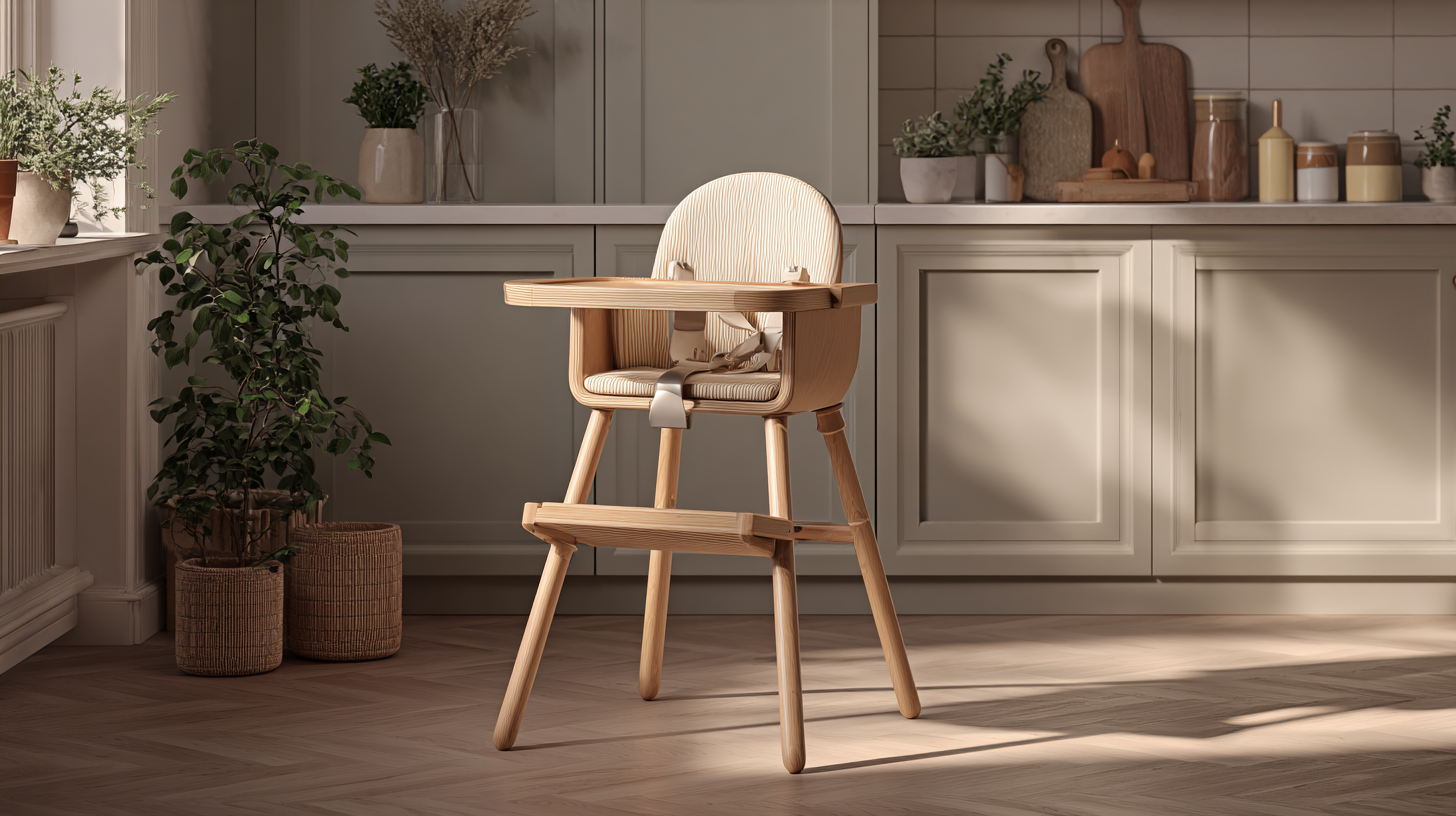
The 5-Point Harness: This is your first line of defense. Not a 3-point. Not a waist strap. A full 5-point harness that secures your baby at the shoulders, waist, and between the legs. Here’s why: babies are escape artists in training. They squirm, arch, lean, and perform Olympic-level gymnastics while you’re trying to get one spoonful of sweet potato puree in their mouth. A proper 5-point harness keeps them securely in place, even when they’re doing their best Houdini impression.
Current federal regulations mandate that all high chairs manufactured after June 2019 must include an attached restraint system. Yet recalls keep happening because some manufacturers cut corners or parents don’t realize their older hand-me-down chair doesn’t meet modern standards.
The Wide, Stable Base: Remember that tipping incident I mentioned? It happens because many high chairs have a narrow base that can’t handle a baby’s shifting weight. Look for chairs with a wide, sturdy base—ideally with a Rearward Stability Index (RSI) of at least 50. This technical term basically means the chair won’t tip backward when your baby leans or pushes against the tray. Some chairs even have a slight A-frame design that creates a wider footprint for extra stability.
✅ Build Your Personal Safety Checklist
Every family’s needs are different. Select the features that matter most to YOUR situation and get a personalized safety priority list:
The Gap That Could Trap Your Baby: This one still gives me chills. The gap between the seat and the tray must be no larger than 1.5 inches. Why? Because babies can slip through larger gaps, getting their heads, limbs, or bodies stuck in positions that restrict breathing or movement. In 2025 alone, multiple high chair models were recalled specifically because they had oversized gaps that created deadly entrapment hazards. Before you buy any chair, physically measure this gap. Don’t trust the product description—verify it yourself.
The 90-90-90 Position: Pediatric feeding therapists are adamant about this: your baby’s hips, knees, and ankles should all be positioned at 90-degree angles, with feet resting flat on a footrest. This isn’t just about comfort—it’s about safe swallowing. When babies are properly positioned, they have better control of their head, neck, and trunk, which dramatically reduces choking risk. Look for high chairs with adjustable footrests that grow with your child, maintaining that crucial 90-degree angle as they get taller.
Just like you’d carefully choose nutritious first foods for your baby—whether it’s traditional purees or Caribbean-inspired options like Sweet Potato & Callaloo Rundown or Yellow Yam & Carrot Sunshine—you need the same thoughtfulness when selecting where they’ll safely sit to enjoy those meals.
The Cleaning Reality Check
Okay, let’s talk about something the Instagram ads never show you: the absolute disaster zone that is a high chair after mealtime. We’re talking sweet potato smeared in crevices you didn’t know existed. Avocado somehow wedged between the seat and the buckle. Rice cereal that’s dried into cement-like consistency in the tray grooves.
I used to think cleaning considerations were superficial—until I spent 45 minutes with a toothbrush trying to excavate dried banana from the seventeen different cracks in my first high chair. That’s when I realized: ease of cleaning isn’t about convenience. It’s about hygiene, food safety, and your mental health.
⏱️ The Real Cleaning Time Calculator
Curious how much time you’ll actually spend cleaning? Select your high chair type and discover the brutal truth:
Material Matters: Wooden high chairs have made a massive comeback, and for good reason. Smooth beechwood surfaces are naturally easier to wipe down than plastic chairs with molded details, ribs, and decorative grooves. Plus, wood is denser and more durable, meaning it won’t crack or create new crevices where food can hide. That said, not all wooden chairs are created equal—look for sealed, food-safe finishes that won’t absorb stains or harbor bacteria.
Plastic chairs can be fantastic if they’re designed with cleaning in mind. The best ones have completely smooth surfaces without unnecessary design elements. Avoid chairs with complicated tray designs featuring raised sections, cup holders with hard-to-reach corners, or decorative patterns that create food traps.
The Tray Test: Before you buy, examine the tray closely. Can it be removed with one hand? (Trust me, you’ll often be holding a squirming baby with the other hand.) Does it go in the dishwasher? Are there any crevices, grooves, or raised edges where food could get stuck? The ideal tray is completely flat and smooth, with a subtle rim to contain spills but no complicated features.
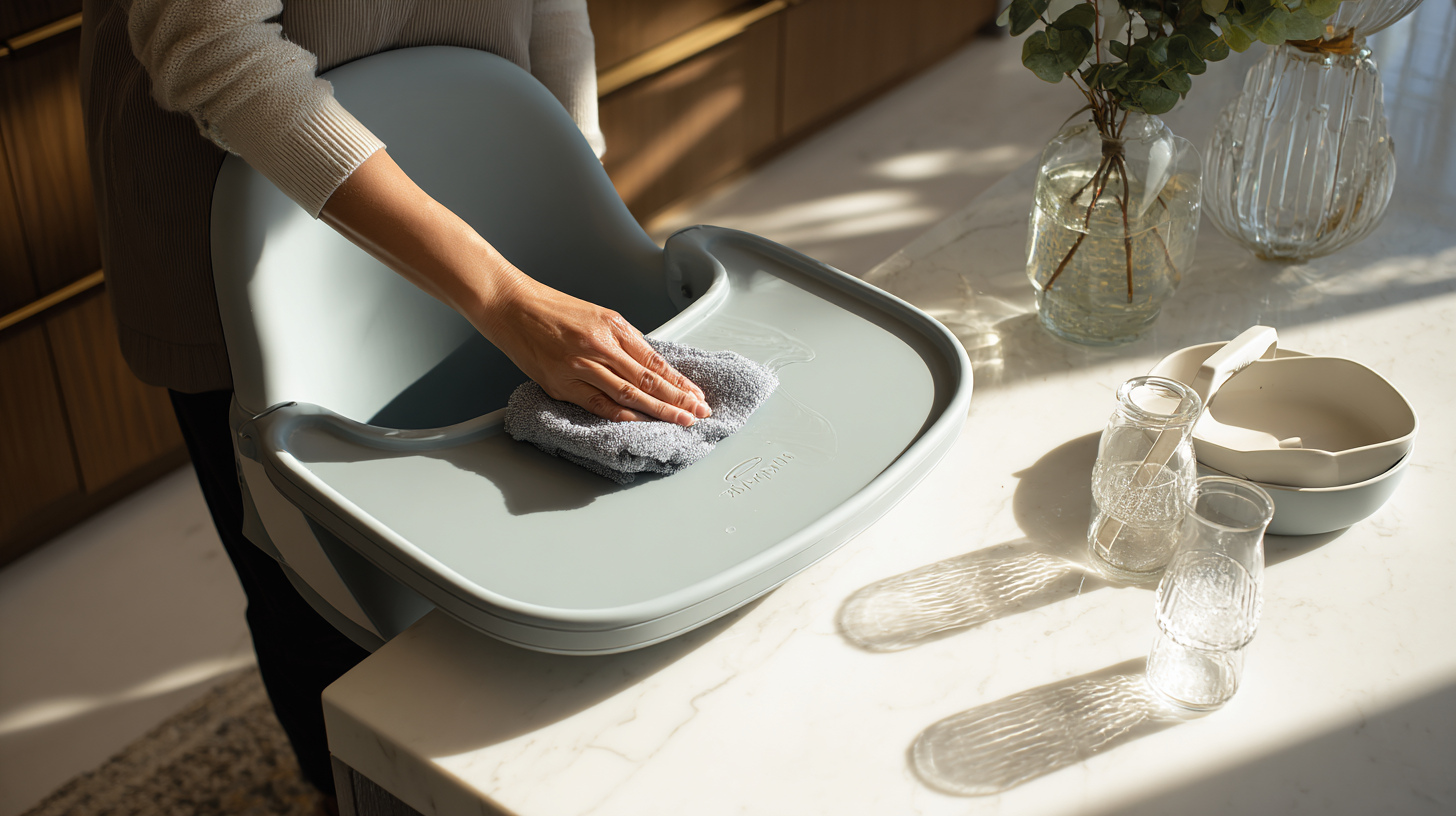
Fabric: Friend or Foe? Some high chairs come with fabric seat covers or cushions. These can be comfortable for your baby, but they’re a cleaning nightmare unless they’re removable and machine washable. Even then, you’ll need to wash them constantly—think multiple times per week. If you go this route, buy extra covers so you always have a clean backup. Better yet, consider chairs without fabric components, using a simple silicone mat for cushioning if needed.
The Crevice Problem: This is where many parents get burned. Those stylish high chairs with interesting geometric shapes, molded characters, or intricate designs? They’re beautiful in the showroom. They’re nightmares in real life. Every crevice, seam, and corner becomes a repository for dried food that requires serious excavation. One parent on Reddit described using a flathead screwdriver to chisel out petrified oatmeal from her “designer” high chair’s grooves. Don’t be that parent.
The simplest test: look at the chair and count how many places food could get stuck. If the answer is more than five, walk away. Your future self will thank you every single day.
Space-Saving Solutions for Real Homes
Here’s what the high chair companies don’t tell you: their “compact” models are designed for showroom floors, not real apartments where you’re already fighting for every square inch of space. I live in a city where my entire kitchen is smaller than some people’s pantries. The idea of a bulky high chair taking up permanent residence in my limited space? Not happening.
But here’s the thing—you don’t have to choose between safety and space. You just need to know what actually works.
Find Your Perfect Space-Saving Solution
Answer one question and discover which space-saving high chair type fits your life:
The Folding Champions: True one-hand folding chairs are game-changers. Not the kind that require you to press three buttons while pulling two levers—I mean genuine one-hand operation that you can do while holding your baby. The Graco Slim Snacker is a standout here, folding flat enough to slide into a closet or behind a door, and it self-stands when folded so you don’t need to lean it against anything.
When evaluating folding chairs, test the mechanism in the store if possible. Can you actually fold it with one hand? Does it feel sturdy when locked in place? Some folding chairs sacrifice stability for convenience—that’s a dealbreaker.
Hook-On Chairs: These clamp directly onto your table, creating a high chair experience without the high chair footprint. They’re brilliant for small spaces, but they come with important limitations. First, you need a sturdy table with the right kind of edge—typically between 0.75 and 1.5 inches thick with an overhang. Second, they have strict weight limits, usually maxing out around 37 pounds. Third, never use them on glass tables, pedestal tables, or tables with tablecloths.
That said, for the right situation, hook-on chairs are fantastic. They pack flat for travel, store in a drawer, and give you back your entire floor space. Just make sure you’re following all safety guidelines and weight restrictions.
Convertible Multi-Taskers: Some high chairs convert into booster seats, toddler chairs, or even adult chairs. The Stokke Tripp Trapp is the classic example—it adjusts to grow with your child from infancy through adulthood. While these tend to have a larger footprint than folding options, they eliminate the need for multiple pieces of furniture over the years. If you plan to have multiple children or want a chair that lasts beyond the baby years, this can be a smart space investment.
The key is choosing a convertible chair where the adjustments are actually easy to make. Some require tools or complicated processes that mean you’ll never actually convert them. Look for tool-free adjustments that can be made quickly.
The Recall Database Nobody Checks
Here’s something that still shocks me: most parents have no idea that the high chair they’re using—or about to buy—might have been recalled. In 2025 alone, we’ve seen recalls from Harppa, Funlio, Boyro Baby, and Babimoni. Some of these recalls happened because of missing restraint systems. Others because of deadly gap sizes that violate federal regulations. A few because the chairs literally tip over.
And here’s the scariest part: these recalls often happen months or years after the chairs have been sold. That hand-me-down chair from your sister? It might have been recalled in 2022, but nobody ever told her. That “great deal” you found on Facebook Marketplace? It could be sitting in a recall database right now.
The Recall Database Interactive Guide
Select any brand to see recent recall information and learn what to check:
The CPSC Website: The Consumer Product Safety Commission maintains a comprehensive database at CPSC.gov. Before buying any high chair—new or used—take 60 seconds to search the model name and number. The model information is usually on a sticker on the back or underside of the chair. This simple step could literally save your child’s life.
Here’s my system: I bookmark the CPSC recall page and check it every three months. It takes less time than scrolling through Instagram, and it ensures I’m always aware of any new safety issues with products in my home.
Recall Red Flags: Certain issues keep appearing in recalls. Restraint systems that detach or aren’t properly secured. Gap sizes exceeding 1.5 inches. Tipping hazards. Crotch posts that can be removed. If you notice any of these issues with your current high chair, stop using it immediately and check for recalls.
Also, be wary of high chairs marketed with sleep or reclining features. Federal regulations prohibit marketing high chairs as sleep products because of suffocation risks. If a chair is advertised for sleeping or has a recline angle that allows babies to lie flat, that’s a massive red flag.
The Registration Card: When you buy a new high chair, fill out and return the product registration card (or register online). This ensures the manufacturer can contact you directly if a recall happens. So many parents skip this step, then never find out about recalls affecting their products.
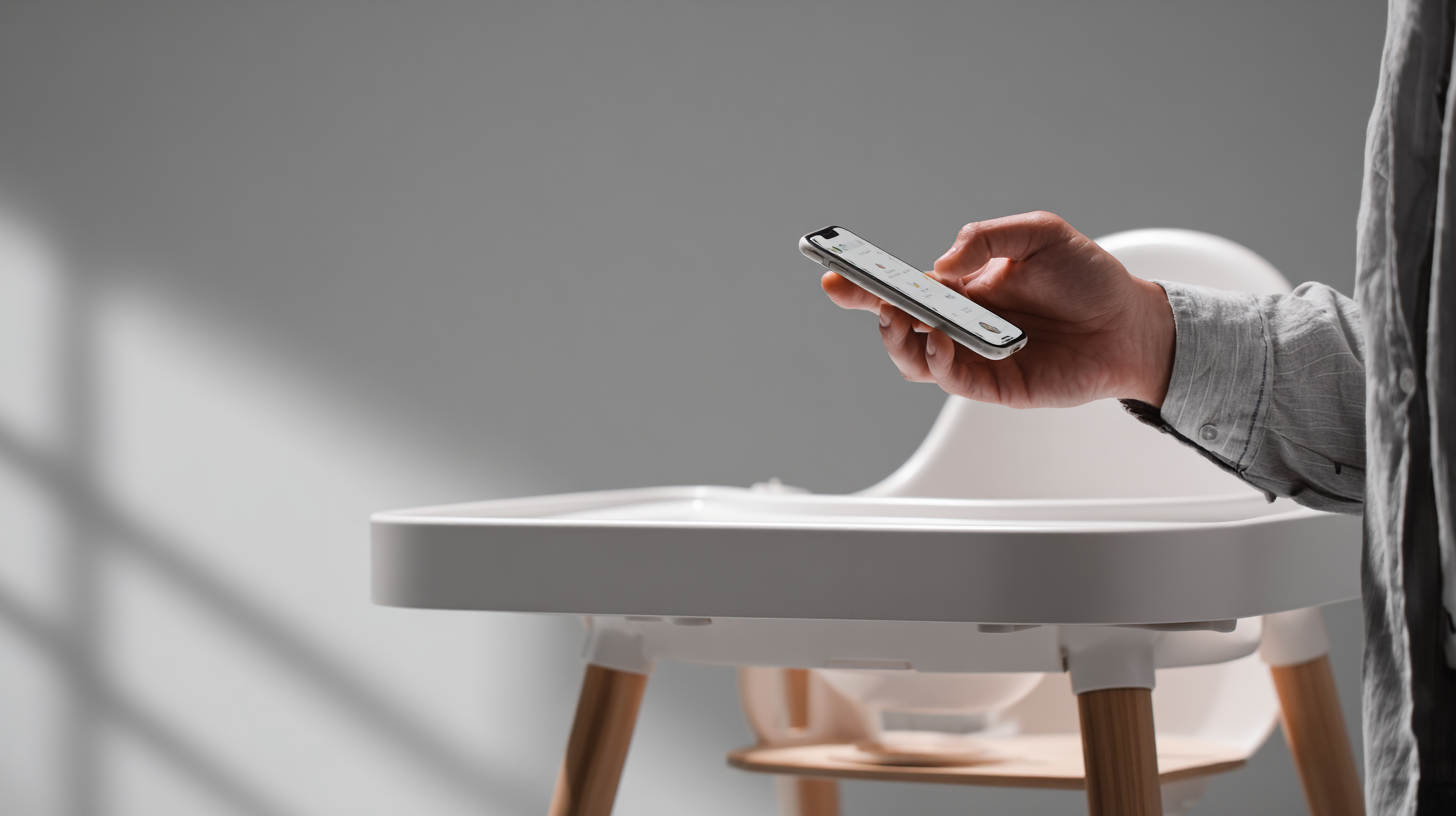
Proper Use Beyond the Manual
You know what’s wild? Most high chair injuries happen not because the chair is defective, but because we’re not using it correctly. We’re in a rush. We’re tired. We think “just this once” won’t matter. But it does.
I learned this the hard way when my daughter was about nine months old. I was making her lunch—just a simple Sweet Potato & Callaloo puree from my favorite Caribbean recipe collection—and I thought, “She’s fine, I’ll strap her in after I finish this.” In the thirty seconds it took me to puree the sweet potato, she leaned forward, grabbed the tray, and nearly pulled herself out of the chair. Thank God I turned around when I did.
That moment changed my entire approach to high chair safety. Because the truth is, most accidents happen in those “just this once” moments.
The Non-Negotiable Rules: Always use the 5-point harness, every single time, even if you’re “just sitting right there.” Never place the high chair near counters, walls, or tables your baby could push off from. Keep the high chair on level ground—never on rugs that could bunch up or uneven surfaces. Stay within arm’s reach during meals. It seems obvious, but life gets chaotic, and these are the rules that slip when we’re overwhelmed.
Tray Attachment Matters: Make sure the tray is fully secured before putting your baby in the chair. Some trays have multiple locking mechanisms—use all of them. Test the tray by pulling on it firmly before each use. If it wiggles or feels loose, don’t use the chair until you’ve fixed the issue.
The Footrest Adjustment: As your baby grows, that footrest needs to move with them to maintain the 90-90-90 position. Check it monthly. If their feet are dangling or their knees are significantly bent, it’s time to adjust. Many parents set the footrest once and never think about it again—that’s a mistake that affects both safety and feeding development.
Weight Limits Aren’t Suggestions: Every high chair has a maximum weight limit. When your child approaches that limit, it’s time to transition to a booster seat or toddler chair, even if they technically still “fit.” Exceeding weight limits can compromise the chair’s stability and structural integrity.
The Maintenance Schedule Nobody Follows
Here’s something I wish someone had told me: high chairs need maintenance. Not just cleaning—actual safety maintenance. Those screws loosen over time. Straps fray. Plastic components crack. And if you’re not checking for these issues regularly, you’re setting yourself up for a preventable accident.
Your 60-Second Safety Check
Run through this quick maintenance checklist. Check off each item as you verify it on your high chair:
The Monthly Check: Once a month, spend five minutes doing a thorough inspection. Tighten all screws and bolts—vibration from daily use can loosen them. Check all straps for signs of wear, fraying, or weakening. Test the buckles to ensure they’re clicking securely and releasing smoothly. Examine plastic or wooden components for cracks, especially around stress points like where legs connect to the seat.
The Deep Clean Schedule: Beyond daily wiping, high chairs need periodic deep cleaning. Once a week, remove all components that come off—tray, seat cushion, buckle covers—and wash them according to manufacturer instructions. Use a toothbrush or detail brush to clean crevices, buckle mechanisms, and adjustable joints. Check inside any hollow tubes or legs for trapped food or moisture that could cause mold.
When to Replace: High chairs don’t last forever, even high-quality ones. Replace your chair if you notice structural cracks, broken components that can’t be repaired, harness straps that are fraying or damaged, or if it’s been involved in a tip-over incident (the structural integrity may be compromised even if it looks fine). Also, if your chair predates June 2019, seriously consider upgrading to a model that meets current federal safety standards.
The Hand-Me-Down Dilemma: Used high chairs can be wonderful if they’re recent models in good condition. But before accepting any hand-me-down, check the manufacture date, search for recalls, physically inspect all components, and ensure all parts are present including the original harness system. If any piece is missing or damaged, don’t use it—replacement parts may not be available or may not meet the original safety specifications.
Making the Decision That Works for Your Family
After everything I’ve shared, you might feel overwhelmed. That’s normal. The high chair decision feels enormous because it is—this is where your baby will sit for hundreds of meals over multiple years. It’s where they’ll learn to eat, develop fine motor skills, and hopefully not launch pureed plantains at your ceiling (though that’s probably inevitable).
But here’s what I want you to remember: the best high chair isn’t the most expensive one or the most popular one or the one with the most Instagram-worthy aesthetic. The best high chair is the one that keeps your baby safe, fits your actual living space, and matches your real-life cleaning capacity.
For some families, that’s a simple wooden chair that costs $100 and lasts through three kids. For others, it’s a convertible model that transforms as your child grows. For apartment dwellers, it might be a folding chair that disappears after meals. There’s no universal “best” choice—only the best choice for you.
Your Decision Framework: Start with safety—that’s non-negotiable. Five-point harness, stable base, proper gap size, 90-90-90 positioning. If a chair doesn’t have these features, it doesn’t matter how cute it is or how much space it saves. Move on.
Next, consider your space reality. Be honest about how much room you actually have and how you’ll use the chair. Will it live in your kitchen permanently, or does it need to fold away? Do you need to move it between floors or rooms? These practical considerations matter just as much as safety features.
Then think about cleaning. Look at that chair and imagine it covered in rice cereal, avocado, and whatever delicious Caribbean-inspired baby food you’re making—maybe some Cornmeal Porridge Dreams or Plantain Paradise. Can you realistically clean it thoroughly? If the answer gives you anxiety, keep looking.
Finally, set a budget and stick to it. High-quality, safe high chairs exist at every price point. You don’t need to spend $400 to keep your baby safe. But you also can’t sacrifice safety for the sake of saving $30.
The Truth About High Chair Parenting
Here’s what nobody tells you when you’re registering for baby gear: the high chair becomes a central character in your parenting story. It’s where you’ll celebrate first bites and navigate food refusals. It’s where you’ll bond over meals and clean up spectacular messes. It’s where your baby will learn that food is nourishment, connection, and sometimes even fun.
But it’s also where accidents happen when we get complacent. When we skip the harness “just this once.” When we don’t check that recall database. When we ignore the loose screw we noticed last week.
The high chair injuries I mentioned at the beginning? They’re not random bad luck. They’re the result of small oversights compounded over time. A chair that didn’t meet safety standards. A gap that was slightly too wide. A harness that wasn’t used. A tipping base that nobody tested.
I don’t share this to scare you—I share it because awareness prevents accidents. When you understand the risks, you can make informed decisions. When you know what to look for, you can spot problems before they become emergencies. When you commit to proper use and maintenance, you drastically reduce the chances of injury.
Your baby’s high chair is more than a piece of furniture. It’s a safety tool, a feeding platform, and a daily gathering place. Choose it wisely, use it correctly, and maintain it diligently. Because those 14,484 emergency room visits last year? Your child doesn’t have to be a statistic.
The magic isn’t in finding the perfect high chair—it’s in making an informed choice and then following through with consistent, safe practices. It’s in checking that recall database every few months. It’s in tightening those screws monthly. It’s in using that harness every single time, even when you’re exhausted and running late.
That’s the real secret to high chair safety: there is no shortcut, no perfect product that makes up for inconsistent use. But there is peace of mind that comes from knowing you’ve done your homework, made the best choice for your family, and committed to keeping your baby safe every single meal.
And honestly? That peace of mind is worth more than any feature list or price tag.
Now go forth and choose that high chair with confidence. You’ve got this. Your baby is lucky to have a parent who cares enough to do the research, ask the hard questions, and prioritize safety over aesthetics. That’s the kind of parenting that really matters.
Just remember to register that product card when you get home. And maybe bookmark the CPSC website while you’re at it. Your future self—and your baby—will thank you.

Kelley's culinary creations are a fusion of her Caribbean roots and modern nutritional science, resulting in baby-friendly dishes that are both developmentally appropriate and bursting with flavor. Her expertise in oral motor development and texture progression ensures that every recipe supports your little one's feeding milestones while honoring cultural traditions.
Join Kelley on her flavorful journey as she shares treasured family recipes adapted for tiny taste buds, evidence-based feeding guidance, insightful parenting anecdotes, and the joy of celebrating food, culture, and motherhood. Get ready to immerse yourself in the captivating world of Kelley Black and unlock the vibrant flavors of the Caribbean for your growing baby, one nutritious bite at a time.
- The Feeding Revolution: Why Your Everyday Meals Are Changing the World - October 13, 2026
- Your Feeding Story Matters More Than The “Perfect” One Online - October 12, 2026
- Looking Forward: Stepping Into Your Confident Feeding Future - October 11, 2026