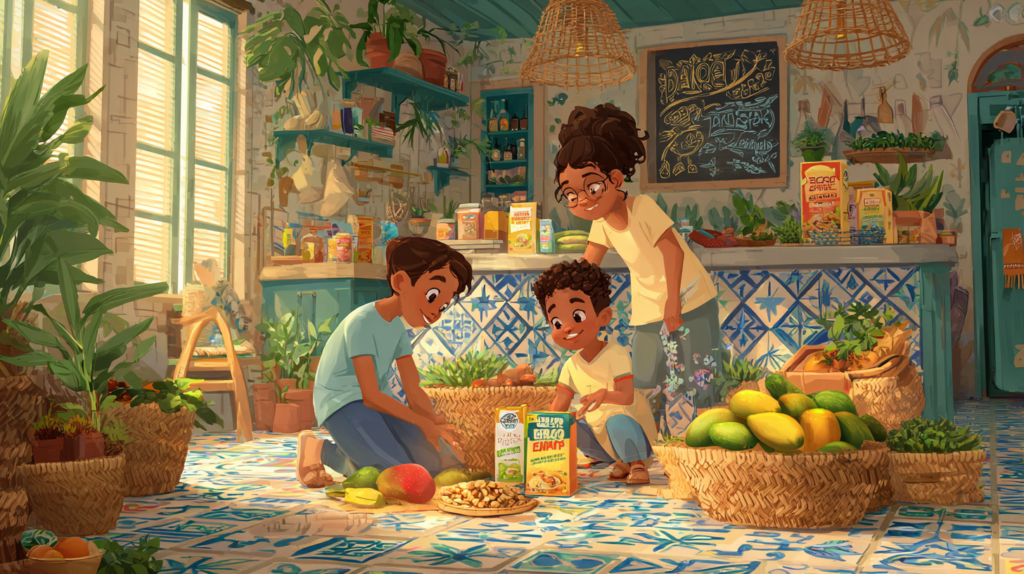
The Hidden Superpower Your Child Needs for a Lifetime of Health (And It’s Not What You Think)
Test Your Food Literacy IQ: Myth or Truth?
Tap each statement to discover what science really says about raising food-smart kids.
Here’s what nobody tells you about raising healthy eaters: it’s not about the broccoli.
Sure, you can coax your child into eating vegetables. You can hide spinach in smoothies and sneak cauliflower into mac and cheese. But what happens when you’re not there? What happens when they’re standing in front of a vending machine at school, or scrolling through food ads on social media, or choosing their lunch at the cafeteria?
That’s where food literacy comes in—and it’s the most undervalued skill we can give our children. While over 15.4 million children participate in school meal programs daily in the U.S., most receive zero education on how to critically evaluate the food choices surrounding them. We’re sending kids into a world saturated with food marketing, confusing labels, and influencer-driven nutrition trends without the tools to navigate it all.
Think about it: your child will spend approximately 75,000 hours of their lifetime making food decisions. Seventy-five thousand hours of choosing what to eat, how much to eat, and why to eat it. And yet, we spend more time teaching them algebra than we do teaching them how to decode an ingredient list or recognize when they’re being manipulated by a cereal commercial.
But here’s the beautiful truth—this is fixable. Food literacy isn’t some abstract concept reserved for nutrition experts. It’s a collection of practical, teachable skills that transform children from passive consumers into confident, critical thinkers who can feed themselves well for life. And the best part? You don’t need a degree in nutrition to teach it. You just need to start.
What Food Literacy Actually Means (Beyond the Buzzwords)
Food literacy goes far beyond knowing that vegetables are healthy and candy isn’t. It’s a multidimensional competency that includes the knowledge, skills, and critical attitudes necessary to plan, manage, select, prepare, and eat foods that meet both individual and societal needs. Think of it as giving your child a complete toolkit instead of just one screwdriver.
The framework breaks down into four essential domains. First, there’s functional literacy—the ability to read and understand nutrition labels, ingredient lists, and basic cooking instructions. Second comes interactive literacy, which involves applying that knowledge in real-world situations, like comparing two products at the grocery store or understanding portion sizes. Third is critical literacy, the game-changer that helps children evaluate food marketing, question health claims, and recognize when companies are trying to manipulate their choices. Finally, there’s food system literacy, which connects children to where food comes from, how it’s produced, and its environmental and cultural impact.
Leading scholars emphasize that food literacy isn’t just factual knowledge—it’s practical and critical skills combined. Your child might know that protein builds muscles, but do they know how to identify hidden sugars in “healthy” protein bars? They might understand that fruits are nutritious, but can they explain why the “strawberry-flavored” yogurt contains zero actual strawberries?
This comprehensive approach matters because children today face unprecedented food complexity. Between 1980 and 2020, the average supermarket increased from 15,000 products to over 40,000 products. Your child needs more than basic nutrition knowledge to navigate that landscape—they need critical thinking skills that help them cut through the noise.

The Marketing Machine Your Child Faces Every Day
Let me paint you a picture of what your child is up against. By the time they turn 12, the average child has been exposed to approximately 40,000 food advertisements—most promoting highly processed, nutrient-poor products. That’s 40,000 carefully crafted messages designed by behavioral psychologists and marketing experts whose sole job is to make your child want foods that often work against their health.
Social media has accelerated this dramatically. A 2025 scoping review found that social media serves as a commercial determinant of health, creating a digital food environment that shapes children’s preferences, attitudes, and eating behaviors. Food companies don’t just advertise anymore—they create “branded content” that looks like entertainment, partner with influencers your child trusts, and use algorithms to target specific demographics with laser precision.
Here’s the truly shocking part: self-reported skill gaps show that most children lack the critical media literacy training to recognize these tactics. They see a favorite YouTuber casually munching on a branded snack and don’t realize it’s paid promotion. They scroll past sponsored posts disguised as health advice. They watch “unboxing” videos that are actually elaborate advertisements.
The food industry spends approximately $14 billion annually marketing to children in the U.S. alone. And it works. Studies show that exposure to food marketing increases children’s preferences for unhealthy foods, influences their purchase requests, and shapes their consumption patterns. One experiment found that just 30 seconds of exposure to food advertising increased children’s snack consumption by 45%.
But here’s where food literacy becomes your child’s shield. Research demonstrates that when children receive media literacy education focused on food marketing, they develop increased skepticism toward advertisements, can identify persuasive techniques, and show greater resistance to unhealthy marketing messages. Programs that teach kids to become “advertising detectives” have successfully increased fruit and vegetable consumption while reducing requests for advertised junk foods.
The Marketing Detective Game
Can you spot the marketing tricks? Select the products that use deceptive marketing tactics, then see what experts say.
Products A, B, and D all use deceptive marketing tactics:
“Health Halo” Effect: Products A, B, and D all lead with a health claim (“real fruit,” “whole grains,” “calcium”) while burying the unhealthy ingredients. This is called the “health halo”—making consumers focus on one positive attribute while ignoring overall nutrition quality.
Front-of-Package Manipulation: Companies legally minimize negative information while maximizing positive claims. The sugar content (often equivalent to candy) is hidden in small print on the back.
Kid-Targeted Design: Cartoon characters, bright colors, and fun names specifically target children’s psychological responses. Studies show children are 30% more likely to request products with character packaging.
Product C (Fresh Apples): Real whole foods don’t need marketing claims because their value is self-evident. Teaching children to favor foods that don’t require health claims is a powerful food literacy skill.
The Solution: Teach your child to flip packages over, read ingredient lists first (not front claims), and question why a product needs to tell them it’s healthy. If it’s truly healthy, the ingredients speak for themselves.
Reading Between the Lines: Label Literacy That Actually Works
Let’s talk about the most powerful three seconds of grocery shopping: the moment your child learns to flip a package over and read the ingredient list before looking at the front-of-package claims. This simple skill can transform their relationship with food forever.
Here’s what most label-reading education gets wrong: it focuses on the Nutrition Facts panel—calories, fat, protein—while ignoring the ingredient list. But the ingredient list tells the real story. It reveals what your child is actually eating, not just the macronutrient breakdown. And here’s the secret: ingredients are listed in descending order by weight. If sugar (or any of its 60+ alternative names) appears in the first three ingredients, you’re looking at a sugar product with other stuff added, regardless what the front of the package claims.
Teach your child the “five ingredient rule” as a starting point: if a packaged food contains more than five ingredients, or if they can’t pronounce most of the ingredients, it’s likely highly processed. This isn’t about being perfect—it’s about developing pattern recognition. Your six-year-old doesn’t need to understand what “sodium benzoate” does, but they can recognize that strawberry yogurt with 15 unpronounceable ingredients is very different from plain yogurt with three ingredients (milk, cultures, pectin).
The sugar name game is particularly important. Food manufacturers know that “sugar” in the first ingredient scares parents, so they use multiple types of sugar to push each one further down the list. Your child should learn to spot sugar’s many disguises: high fructose corn syrup, cane juice, agave nectar, maltose, dextrose, brown rice syrup, fruit juice concentrate. A seemingly “healthy” granola bar might list sugar seventh, brown rice syrup ninth, and honey twelfth—but combined, sugar could be the number one ingredient.
School-based curricula that incorporate hands-on label-reading activities—like grocery store tours where children compare products or “marketing detective” games—have shown remarkable results. Children who participate report more frequent label use, increased skepticism of unhealthy marketing, and wider food repertoires at home. One program tracked families after a six-week food literacy course and found that 78% of parents reported their children now regularly checked ingredient lists during shopping trips—a habit that persisted six months later.
When introducing your own little ones to diverse, wholesome ingredients early on, resources like the Caribbean Baby Food Recipe Book can help establish familiarity with real ingredients (sweet potatoes, plantains, fresh coconut, whole beans) before processed alternatives enter the picture. Starting with minimal-ingredient recipes helps children develop taste preferences for whole foods rather than the hyper-palatable processed versions they’ll encounter later.
The Critical Thinking Muscle: Asking Better Questions About Food
Food literacy’s true power lies in teaching children to ask questions—not to memorize rules. Instead of “Is this healthy?” teach your child to ask: “What is this food actually made of? Who’s trying to sell it to me? Why are they using these words and images? What are they not telling me?”
7 Critical Thinking Skills Your Child Needs
Click each skill to reveal why it matters and how to teach it.
Why It Matters: Children are exposed to nutrition information from countless sources—social media influencers, YouTube videos, friends, TV shows, product packaging. Most lack the ability to evaluate source credibility.
How to Teach It: When your child mentions food information they heard, respond with curiosity rather than correction: “That’s interesting! Where did you learn that? Do you think they might have a reason to tell you that?” Help them understand that someone selling a product has different motivations than a doctor or nutritionist.
Real-World Application: When a favorite influencer promotes a “healthy” energy drink, your child can pause and ask: “Are they being paid to say this? Would a doctor recommend this same product?”
Why It Matters: The gap between what food looks like (colorful, appealing, fun) and what it’s made of (corn syrup, artificial colors, preservatives) is often enormous. Children need to bridge this gap.
How to Teach It: Play “ingredient detective” at home. Choose three similar products (different brands of crackers, for example) and compare ingredient lists. Which one has the fewest ingredients? Which one has ingredients you recognize from your kitchen? Make it fun, not scary.
Real-World Application: Your child starts noticing patterns: “This ‘strawberry’ product doesn’t list strawberries in the ingredients at all—just strawberry flavor and red dye.”
Why It Matters: Food marketing targets emotions—fun, excitement, belonging, strength. Children who can identify these emotional appeals are less susceptible to manipulation.
How to Teach It: When watching TV or scrolling social media together, pause on food ads and discuss: “What feelings is this ad trying to create? Do you think eating this cereal will really make you as happy as the kids in the commercial look?”
Real-World Application: Your child recognizes that the “cool kids” in the commercial are actors, and the product won’t actually transform their social status or happiness.
Why It Matters: Restaurant portions have doubled or tripled over the past 30 years, but children think these supersized servings are normal. Distorted portion perception leads to overeating and disconnection from hunger/fullness cues.
How to Teach It: Use hands-on comparisons. Show that a “single serving” bag of chips is actually 2.5 servings. Compare restaurant pasta portions to home portions. Teach your child to check serving sizes on labels—that 200-calorie snack might be 400 calories if they eat the whole package.
Real-World Application: Your child learns to listen to their body’s fullness cues rather than finishing everything on their plate just because it’s there.
Why It Matters: Terms like “natural,” “wholesome,” “made with real fruit,” and even “organic” are often marketing terms with minimal nutritional meaning. Children need to see through these claims.
How to Teach It: Create a “health claim translation guide” together. “Made with whole grains” often means mostly refined flour with a sprinkle of whole wheat. “Natural flavors” are still created in laboratories. “Low fat” usually means higher sugar.
Real-World Application: Your child stops trusting front-of-package claims and instead evaluates the actual ingredient list and nutrition content.
Why It Matters: Children who understand food origins—from farm to table—make more thoughtful choices, waste less food, and appreciate the work behind their meals.
How to Teach It: Visit farmers’ markets, watch age-appropriate documentaries about food production, grow herbs or vegetables together. Discuss how processed foods travel long distances and require more packaging versus local, whole foods.
Real-World Application: Your child develops appreciation for seasonal eating, reduces food waste, and understands why a fresh tomato tastes different than a fast-food tomato.
Why It Matters: Food literacy isn’t complete without interoceptive awareness—the ability to recognize and respond to body signals like hunger, fullness, energy, and satisfaction.
How to Teach It: Practice “hunger scale” discussions. Before meals, ask: “How hungry are you on a scale of 1-10?” Midway through eating: “Are you starting to feel satisfied?” After meals: “Did you eat until you were comfortably full or uncomfortably stuffed?” Avoid forcing children to “clean their plates.”
Real-World Application: Your child learns to honor their body’s signals rather than eating based on external cues (portion sizes, commercials, boredom, social pressure).
Building Food Literacy at Every Age: Your Practical Roadmap
Food literacy isn’t a single conversation—it’s an ongoing dialogue that evolves as your child grows. Here’s how to introduce concepts at different developmental stages, remembering that every child progresses at their own pace.
Ages 2-4: Foundation Through Exploration
At this stage, food literacy means building positive associations with whole foods and basic awareness. Let toddlers help wash vegetables, tear lettuce, or stir ingredients. Name foods by their real names—not just “yucky” or “yummy,” but specific descriptions: “This is a crunchy apple. These are soft, creamy black beans.” Expose children to diverse flavors and textures without pressure to eat everything. When introducing Caribbean-inspired ingredients like sweet potato, coconut, plantain, or beans (all featured in the Caribbean Baby Food Recipe Book), you’re expanding their flavor repertoire and normalizing nutrient-dense foods before processed alternatives dominate their palate.
Avoid labeling foods as “good” or “bad”—this creates moral associations that can lead to unhealthy relationships with eating. Instead, talk about “everyday foods” (fruits, vegetables, whole grains, proteins) and “sometimes foods” (highly processed snacks, sweets). Most importantly, model the behavior you want to see. Your toddler watches how you talk about and interact with food more than they listen to what you say.
Ages 5-7: Pattern Recognition and Basic Skills
Early elementary children can begin recognizing patterns and asking basic questions. Introduce the concept of “real food” versus “food products”—real food grows, food products are made in factories. Practice identifying fruits and vegetables at the store or farmers’ market. Play “ingredient counting” games: which cracker box has fewer ingredients?
This is an excellent age to start kitchen involvement. Children can measure ingredients, crack eggs (with supervision), assemble their own snacks from whole food options, and begin understanding that food comes from specific sources. “Where do eggs come from? Where do potatoes grow?” Start conversations about food advertising: “Why do you think they put a toy in the cereal box? What are they trying to make you want?”
Begin teaching body awareness with simple hunger/fullness check-ins. Before snacks, ask: “Is your tummy hungry or are you bored?” After meals: “Does your tummy feel comfortable, too empty, or too full?” This builds interoceptive awareness—the foundation of intuitive eating.
Ages 8-10: Critical Analysis and Independence
This is the golden age for food literacy education. Children have developed concrete operational thinking and can understand cause and effect, compare and contrast, and recognize inconsistencies. They’re also increasingly exposed to food marketing, peer influence, and independent food choices at school.
Teach comparative label reading. Give your child two similar products and have them compare ingredient lists, serving sizes, and nutrition panels. Which one has more sugar? Which has ingredients you recognize? Introduce the concept of serving sizes versus package sizes—that bag of chips might say “150 calories” but contain three servings.
Discuss marketing tactics explicitly. Show YouTube videos where influencers promote products, then discuss: “Did they tell you this was an ad? Why are they holding the product toward the camera? Do you think they really eat this every day?” Create “media literacy” moments during everyday screen time.
Expand cooking skills. Children this age can follow simple recipes with supervision, use basic kitchen tools safely, and prepare their own breakfasts or snacks. The more competent they feel in the kitchen, the more likely they’ll choose to prepare whole food meals rather than reach for packaged convenience foods as they get older.
Ages 11-14: Advanced Critical Thinking and Social Navigation
Tweens and teens face intense peer pressure, social media influence, and growing independence around food choices. Food literacy at this stage focuses on empowering them to make informed decisions even when you’re not present.
Dive deeper into food marketing, particularly on social media. Discuss influencer culture, sponsored content, and algorithmic targeting. Show them how to identify paid partnerships, question nutrition claims, and recognize when content is designed to sell products rather than inform.
Teach meal planning and budgeting skills. Give your teen a budget and challenge them to plan and shop for a family meal. This builds practical skills while reinforcing label reading, comparison shopping, and whole food prioritization. Discuss the economic reality that processed foods are often cheaper upfront but more expensive long-term (both financially and health-wise).
Address body image and diet culture explicitly. Teens encounter “what I eat in a day” videos, fad diets, and appearance-focused food messaging constantly. Help them recognize restriction-based approaches, question diet claims, and focus on how food makes them feel rather than how it might change their appearance. Food literacy at this age includes media literacy about body diversity and rejecting “one size fits all” approaches to eating.
Real-World Scenario Challenge
Your child faces these situations every week. How would a food-literate child respond? Click each scenario to see expert guidance.
A food-literate child would pause and investigate: “What’s actually in this energy drink?” Looking at the label together, you’d find high caffeine content (often 80-150mg per serving), excessive sugar (sometimes 50+ grams), and artificial ingredients. Discuss: “Why do you think companies market these to kids? What might happen if children consume this much caffeine and sugar before physical activity?” Help your child understand that peer pressure is a marketing strategy—“If everyone’s drinking it, I should too!” Research shows caffeine can cause anxiety, sleep disruption, and heart palpitations in children. Guide them toward informed refusal: “My body doesn’t need artificial energy—I’ll eat a banana and drink water instead.”
A food-literate child would question the message: “Does eating this cereal really make people strong and fast, or is that just what the commercial wants me to believe?” Look at the cereal together. If it’s high in sugar and low in protein and fiber, explain: “Companies pay to put cartoon characters on boxes because they know kids will want products their favorite characters are on. But eating foods high in sugar actually makes you crash and feel tired, not strong and fast. What foods do athletes really eat for strength?” This teaches critical analysis of emotional appeals in advertising.
A food-literate tween would evaluate the source and claims: “Who is promoting this product? Are they qualified to give health advice or are they being paid? What does ‘detox’ actually mean—does my body need help detoxing?” Explain that the liver and kidneys naturally detox the body, and “detox teas” often contain laxatives that cause unhealthy side effects. Discuss the broader issue: “Why do you think weight loss products target young people? How might focusing on quick weight loss instead of overall health be harmful?” This builds resistance to diet culture and sketchy health products while teaching source evaluation.
A food-literate child would recognize social pressure versus personal experience: “I like how carrots taste, and I know they help my eyes and give me energy. My friend might not like them, but that doesn’t change how they work in my body.” Help your child understand that food preferences are personal, and peer comments don’t define truth. Frame it positively: “Different people like different foods, and that’s okay. Some of the strongest athletes eat tons of vegetables because they know it helps their bodies perform well. What matters is how food makes YOU feel, not what someone else thinks about it.”
The Environmental Shift: From Knowledge to Kitchen Competence
Here’s a truth that might surprise you: food literacy education that focuses only on knowledge—nutrition facts, food groups, label reading—often fails to change actual eating behaviors. The missing piece? Practical cooking skills and kitchen confidence.
Studies tracking food literacy interventions consistently find that programs combining nutrition education with hands-on cooking experiences produce superior outcomes. Children who learn to prepare food themselves develop ownership, competence, and genuine enthusiasm for cooking at home. They’re also significantly more likely to eat the foods they prepare, try new ingredients, and continue cooking into adulthood.
The shift from “knowing about nutrition” to “actually preparing nutritious food” is crucial. A child might intellectually understand that vegetables are important, but if they’ve never washed, chopped, or cooked a vegetable, that knowledge remains abstract. When they’ve personally roasted Brussels sprouts that came out crispy and delicious, or assembled a colorful stir-fry, or blended a smoothie using fresh ingredients, food becomes tangible and achievable.
Virtual and in-person food literacy programs that include cooking components have shown remarkable results. One summer program teaching children to grow, prepare, and eat whole foods reported that 73% of participants increased their vegetable consumption, and 68% of families continued cooking together after the program ended. Another school-based initiative that transformed cafeterias into teaching kitchens saw students’ willingness to try new foods increase by 54% within one semester.
Start small if your child has limited kitchen experience. Even preschoolers can tear lettuce, stir batters, or arrange ingredients on a plate. Elementary students can measure, mix, and follow simple recipes with supervision. Tweens can progress to using knives, operating appliances, and cooking complete meals. The goal isn’t perfection—it’s building comfort and confidence in the kitchen so cooking feels accessible rather than intimidating.
Incorporate cultural food traditions whenever possible. Cooking isn’t just nutrition delivery—it’s cultural connection, family history, and identity formation. Whether you’re preparing traditional family recipes or exploring new cuisines together, you’re teaching that food is meaningful beyond calories and nutrients. For families interested in Caribbean flavors, recipes like coconut rice and peas, plantain dishes, or callaloo preparations offer hands-on opportunities to explore new ingredients while developing kitchen skills and cultural appreciation.
Navigating the Social Media Minefield: Digital Food Literacy
Social media has fundamentally changed the food environment your child navigates. It’s no longer just TV commercials during Saturday morning cartoons—it’s algorithmically-targeted content woven seamlessly into their daily digital experience. And here’s what makes it particularly tricky: kids don’t recognize it as advertising.
The impact of social media as a commercial determinant of health cannot be overstated. Research published in 2025 found that the social media industry creates digital food environments that shape children’s preferences, attitudes, and eating behaviors through mechanisms far more subtle than traditional advertising. Influencers partner with brands to create “organic” content. Algorithms learn your child’s preferences and serve increasingly targeted food content. Hashtags like #foodporn or #mukbang normalize overconsumption and hyperpalatable processed foods.
But social media isn’t inherently evil—it’s also where positive food literacy content lives. YouTube channels teaching cooking skills, Instagram accounts celebrating food diversity, TikTok creators sharing nutrition science in accessible ways. The key is teaching your child to be critically engaged rather than passively consuming.
Digital food literacy means understanding several core concepts. First, sponsored content often isn’t labeled clearly. When an influencer casually mentions a product, holds it toward the camera, or links it in their bio, that’s usually paid promotion—even if they don’t explicitly say “ad.” Teach your child to ask: “Why is this person showing me this product? What do they gain if I buy it?”
Second, algorithmic amplification creates echo chambers. If your child watches one video about protein shakes, they’ll be flooded with protein shake content—regardless of whether they need protein supplementation. The algorithm doesn’t care about balanced nutrition; it cares about engagement. Help your child recognize when they’re being pulled into a content rabbit hole and encourage diverse information sources.
Third, social comparison on food-related content can distort reality. “What I eat in a day” videos rarely show reality—they show curated, filtered, often disordered relationships with food presented as aspirational. Discuss: “Does this person show balanced eating? Do they ever mention feeling hungry or enjoying treats? Does this eating pattern seem sustainable and joyful, or restrictive and performance-oriented?”
One effective strategy is co-viewing and discussion. Watch food content together sometimes, pausing to analyze: “What do you notice about this video? What’s the creator trying to make you feel or do? Is this information helpful or is it trying to sell something?” These conversations build critical analysis muscles that transfer to solo viewing.
Encourage your child to follow diverse creators—different body types, cultural backgrounds, cooking styles, and nutrition philosophies. Exposure to food diversity counters the “one right way to eat” messaging that dominates diet culture. And most importantly, establish that social media doesn’t replace professional nutrition advice. If your child has health questions or concerns, they should talk to a doctor or registered dietitian—not base decisions on influencer recommendations.
The School Connection: Partnering with Educational Systems
Schools represent a critical but often underutilized opportunity for food literacy education. With over 29 million children eating school lunches daily in the U.S., cafeterias serve as laboratories where food literacy can be modeled, practiced, and reinforced—or completely undermined.
The good news: food literacy funding and programming in schools has increased dramatically. Some states have tripled their investment in school wellness initiatives, recognizing that academic success and nutrition are inextricably linked. Schools implementing comprehensive food literacy programs—not just nutrition lessons but also cooking classes, school gardens, and improved meal quality—have reported decreased undernourishment rates, improved academic performance, and increased fruit and vegetable consumption.
The challenge: massive disparity exists between districts. Well-funded schools might offer cooking labs, farm-to-school programs, and nutrition education integrated across subjects. Under-resourced schools might serve highly processed foods with minimal nutrition education. And many schools still allow marketing of unhealthy foods through vending machines, sponsored educational materials, and fundraising partnerships.
As a parent, you can advocate for better food literacy education regardless of your district’s current state. Attend school board meetings and voice support for wellness policies. Volunteer to lead cooking demonstrations or garden projects. Request that schools adopt policies limiting unhealthy food marketing on campus. Support initiatives providing free breakfast and lunch—hunger is the enemy of learning, and well-nourished children are better equipped to develop food literacy skills.
You can also supplement what schools provide. If your child’s cafeteria serves highly processed meals, use it as a teachable moment. Look at the menu together: “What do you notice about the ingredient lists? How could we make a similar meal at home with whole ingredients?” If your school participates in corporate-sponsored “educational” programs that promote branded foods, discuss marketing tactics: “Why do you think that company wants to teach you about nutrition? What might they want you to believe about their products?”
Encourage your child to participate in school wellness committees, if available, where students can voice preferences and suggest improvements. Research shows that when children have agency in food decisions—helping plan menus, choosing recipes, suggesting new offerings—they’re more likely to try unfamiliar foods and advocate for nutritious options.
Food Literacy Milestone Tracker
Track your child’s food literacy journey. Click each milestone as they achieve it to celebrate their growing independence and skills!
When Food Literacy Goes Wrong: Avoiding the Pitfalls
As powerful as food literacy education is, it can backfire if implemented poorly. The goal is empowerment and critical thinking—not anxiety, restriction, or orthorexia. Here are the pitfalls to avoid and how to navigate them.
Pitfall 1: Creating Food Fear and Moralization
When food literacy education frames foods as “good” versus “bad,” “clean” versus “dirty,” or “healthy” versus “unhealthy,” it can trigger anxiety and disordered eating patterns. Children internalize that eating “bad” foods makes them bad people. They develop guilt around enjoying treats. They become rigid and inflexible around eating.
The solution: Use neutral, descriptive language. Talk about “everyday foods” versus “sometimes foods,” or “nutrient-dense” versus “less nutritious.” Explain that all foods can fit into a balanced diet, and eating isn’t a moral issue. Emphasize: “No single food or meal defines your health. It’s your overall pattern of eating over weeks and months that matters.”
Pitfall 2: Focusing Exclusively on Weight or Appearance
If food literacy discussions center on weight loss, body size, or appearance goals, you’ve missed the point entirely. This approach reinforces diet culture, damages body image, and teaches children that their worth is tied to their appearance.
The solution: Frame food choices around how food makes you feel, perform, and think. “Eating balanced meals gives you sustained energy for school and sports.” “Getting enough protein helps your muscles recover after practice.” “Staying hydrated helps you concentrate during tests.” Focus on internal experiences—energy, mood, digestion, sleep, strength—never external appearance.
Pitfall 3: Perfectionism and Rigidity
Some children take food literacy lessons too far, becoming rigid about ingredient lists, refusing to eat at restaurants, or feeling anxious about any processed foods. This interferes with social experiences, family meals, and overall quality of life.
The solution: Model flexibility and balance. Eat at restaurants sometimes. Enjoy birthday cake. Pack convenience foods for busy days. Explicitly tell your child: “Food literacy means making informed choices most of the time while still enjoying special occasions and treats. Being too rigid about food rules actually decreases your quality of life and isn’t healthy either.”
Pitfall 4: Information Overload and Decision Paralysis
Bombarding young children with complex nutrition information—macronutrient ratios, micronutrient requirements, biochemical processes—can overwhelm rather than empower. They shut down or become anxious about every food choice.
The solution: Keep it age-appropriate and action-oriented. Young children need simple frameworks: “Eat the rainbow of colorful fruits and vegetables. Choose whole foods most of the time. Listen to your body’s hunger and fullness signals.” Complex details can come later as they express interest and developmental readiness.
Pitfall 5: Ignoring Socioeconomic Reality
Food literacy education that ignores the economic reality many families face—limited budgets, food deserts, time constraints—can feel elitist and unattainable. Telling a child to “just buy organic” or “always choose fresh” when their family can’t afford those options creates shame and disconnection.
The solution: Teach practical, accessible strategies. Frozen vegetables are just as nutritious as fresh. Canned beans are a budget-friendly protein source. Cooking from scratch saves money compared to processed convenience foods. Emphasize that food literacy means making the best choices within your circumstances—it’s not about perfection or comparing yourself to others.
The Long Game: Why Food Literacy Matters for Life
Your child will make approximately 200 food decisions every single day for their entire life. That’s over five million food decisions by age 70. Food literacy is the gift that keeps giving across every single one of those choices.
Food-literate children grow into adults who can navigate any food environment confidently. They’re not dependent on restrictive diet rules or the latest nutrition trend. They can evaluate conflicting nutrition information critically. They can prepare nourishing meals even on busy days. They resist marketing manipulation and make choices aligned with their values and health goals.
The research bears this out. Studies tracking children who received comprehensive food literacy education find sustained impacts years later—higher fruit and vegetable consumption, greater cooking confidence, more diverse food repertoires, and lower rates of diet-related chronic diseases. One longitudinal study following participants for 10 years found that food literacy education during childhood predicted healthier eating patterns, lower BMI, and better metabolic health markers in adulthood—impacts that persisted regardless of socioeconomic status.
But perhaps more importantly, food literacy contributes to overall quality of life in ways that transcend nutrition. Food-literate children tend to be more adventurous eaters, experiencing greater food enjoyment and cultural exploration. They have better relationships with their bodies, recognizing food as fuel and pleasure rather than enemy or reward. They waste less food because they understand its value. They connect with family and cultural traditions through cooking. They develop life skills—planning, budgeting, time management—that transfer far beyond the kitchen.
And in a world increasingly dominated by processed foods, misinformation, and marketing manipulation, food literacy is protective. It’s the shield that helps your child resist the $14 billion food marketing industry, the armor against fad diets and wellness scams, the compass that guides them through confusing nutrition noise toward choices that actually serve their wellbeing.
Test Your Own Food Literacy: Parent Edition
How food-literate are you? Try these quick questions to assess your own knowledge—because you can’t teach what you don’t know!
Question 1: Which ingredient list indicates a less processed food?
Question 2: True or False: “Natural flavors” on an ingredient list means the flavors come from whole food sources.
Question 3: A product claims “Made with Whole Grains!” on the front. What should you check to verify this claim?
Question 4: Which teaching approach best builds food literacy in children?
Your Starting Point: Three Actions You Can Take This

Kelley's culinary creations are a fusion of her Caribbean roots and modern nutritional science, resulting in baby-friendly dishes that are both developmentally appropriate and bursting with flavor. Her expertise in oral motor development and texture progression ensures that every recipe supports your little one's feeding milestones while honoring cultural traditions.
Join Kelley on her flavorful journey as she shares treasured family recipes adapted for tiny taste buds, evidence-based feeding guidance, insightful parenting anecdotes, and the joy of celebrating food, culture, and motherhood. Get ready to immerse yourself in the captivating world of Kelley Black and unlock the vibrant flavors of the Caribbean for your growing baby, one nutritious bite at a time.
- The Feeding Revolution: Why Your Everyday Meals Are Changing the World - October 13, 2026
- Your Feeding Story Matters More Than The “Perfect” One Online - October 12, 2026
- Looking Forward: Stepping Into Your Confident Feeding Future - October 11, 2026