The Food Rhythm Revolution: How One Market Visit Changed Everything We Thought We Knew About Feeding Our Kids
Discover Your Family’s Seasonal Eating Potential
Before we dive in, let’s see what seasonal eating could mean for YOUR family. Select your biggest family food challenge:
Here’s something that stopped me in my tracks last spring: my daughter picked up a strawberry at the grocery store in February—rock-hard, flavorless, shipped from who-knows-where—and asked why it didn’t taste like the ones from “strawberry time.” That one question unraveled everything.
She remembered. She remembered the June farmers market visit six months earlier, the sun-warmed berries that stained her fingers red, the farmer who let her peek into the crates. She remembered that strawberries have a time, a season, a rhythm.
And in that moment, I realized: we’ve lost something fundamental. We’ve disconnected our children from the most basic truth about food—that it grows in cycles, that it has seasons, that the earth has a rhythm and our bodies are meant to dance along with it.
The statistics are staggering. US produce sales climbed to new heights in 2023, with vegetable and melon production increasing by 6% to reach 758 million hundredweight. Yet despite this abundance, most children couldn’t tell you when a tomato is actually in season or what “harvest” even means. More than 142,000 students have participated in farmers market education programs, and what researchers found changed how we think about food education entirely: children who engage with seasonal food cycles don’t just eat better—they develop environmental awareness, sustainable habits, and a connection to nature that lasts a lifetime.
What We’re Really Missing When We Miss the Seasons
Seasonal eating isn’t just about eating what’s ripe right now—though that’s part of it. It’s about consuming foods when they’re naturally in season and at their peak ripeness, usually focusing on local harvests. Think about it: before modern agriculture and global shipping, humans ate this way by necessity. Your great-grandmother didn’t have access to mangoes in January or asparagus in October. She ate what the land provided, when it provided it.
Current initiatives are bringing this wisdom back. The Edible Schoolyard Project, along with similar movements, embeds these values in schools and family routines to build environmental literacy and encourage sustainable habits from a young age. The “Cooking with the Seasons for Health” program in Washington state demonstrated that when children learn about seasonal eating through hands-on experience, they become more willing to try new produce and families prepare fresh foods together more frequently.
Here’s what makes this fascinating: seasonality influences dietary diversity and nutrient intake among children in ways we’re only beginning to understand. Studies show significant variation in what children eat based on harvest cycles and region. When you eat a strawberry in June versus February, you’re not just getting different flavor—you’re getting different nutritional density, different environmental impact, and teaching a completely different lesson about how the world works.
The Numbers Don’t Lie: Why This Matters More Than Ever
Let’s talk about what’s actually happening in the food system our children are inheriting. In 2023, US produce sales increased by 1.5% compared to 2022, with vegetables up 1.2% and fruits up 1.7%. That sounds good, right? But here’s the catch: most of that produce traveled an average of 1,500 miles to reach grocery store shelves.
Meanwhile, educational programs at farmers markets have reached over 142,000 students and 7,400 parents. These aren’t just field trips—they’re interventions that reconnect families with local, seasonal produce. Programs like Power of Produce (POP) Club offer hands-on opportunities for children to taste, identify, and learn about seasonal fruits and vegetables directly from the people who grow them.
The Sustainability via Active Garden Education (SAGE) program tested this approach with children aged 3-5 years across 20 sites. Children learned to plant, water, weed, harvest, and do simple food preparation. The program used plant lifecycles as a metaphor for human development. The results? Increased physical activity, higher fruit and vegetable consumption, and something researchers didn’t initially measure: a fundamental shift in how children understood their relationship to food.
The Seasonal Harvest Game
Test your seasonal knowledge! Click on the foods that are ACTUALLY in season during fall (September-November). Each correct answer builds your harvest basket!
The Transformation Happens at the Market
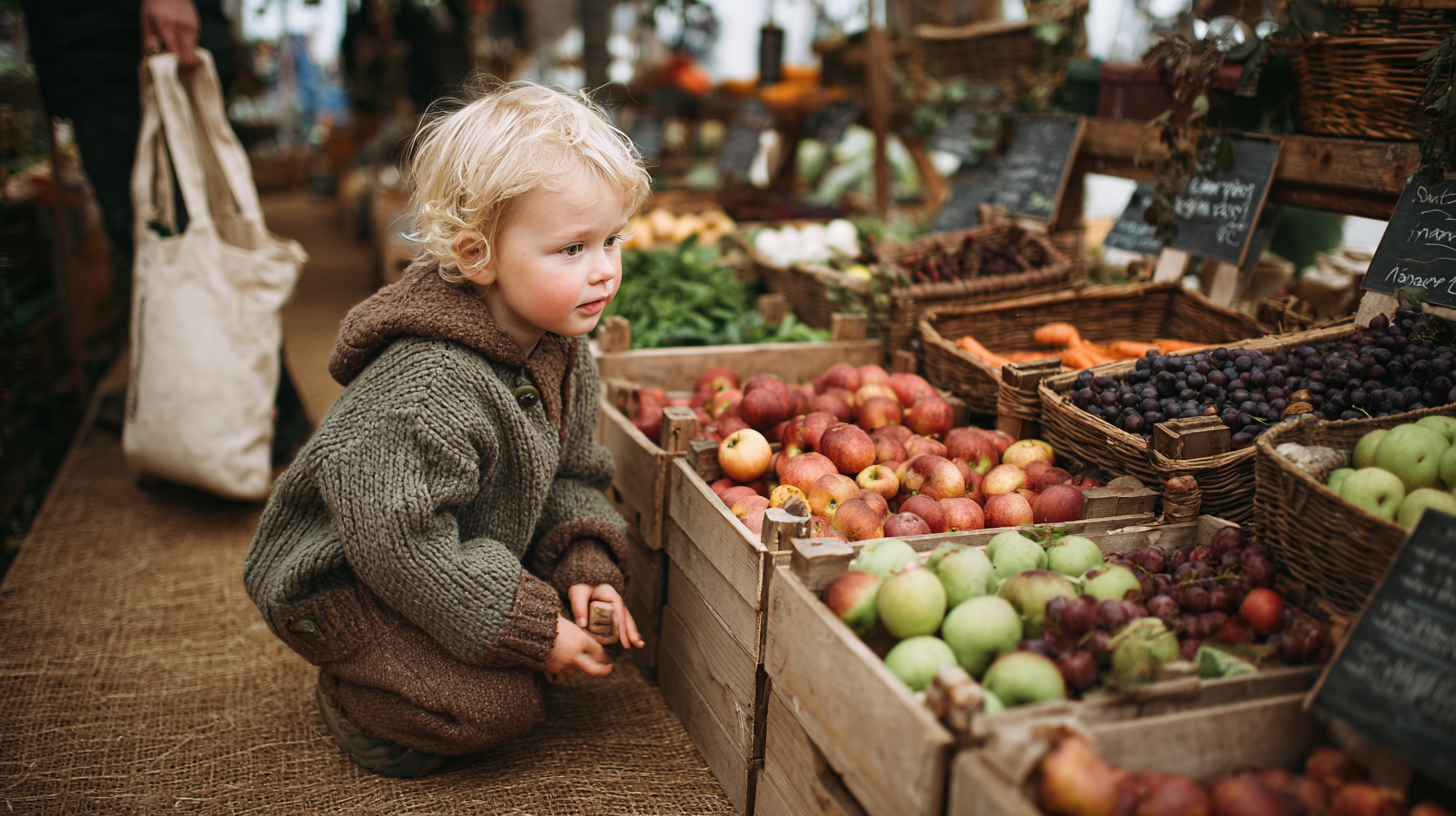
There’s magic that happens when a child hands money to a farmer and receives sun-warmed tomatoes in return. It’s not just a transaction—it’s education in its purest form.
The Power of Produce programs understand this. They give children ages 5-12 vouchers to spend at farmers markets—usually $2-4 worth. That’s it. Just a few dollars. But what happens next is remarkable: children engage in conversations with farmers, ask questions about growing processes, make decisions about what to buy, and suddenly understand that food doesn’t originate in grocery stores.
One program coordinator shared this: “We had a seven-year-old who spent fifteen minutes talking to a farmer about why his carrots were purple. When she finally bought a bunch, she ran back to her mom yelling, ‘Did you know carrots can be ALL DIFFERENT COLORS and they’re purple because of ANTI-OXI-SOMETHING-S?’ She ate three raw carrots on the way home. Three. She’d never voluntarily eaten a carrot before.”
The Kids’ Farmers Market programs take this further. They’re no-cost markets specifically designed for children, with goals that go beyond nutrition: increasing children’s exposure to fresh fruits and vegetables, creating awareness of eating these foods, encouraging long-term nutritious eating patterns, and promoting understanding of how gardening and agriculture produces healthy foods.
Want to bring those vibrant market flavors home? The Caribbean Baby Food Recipe Book features over 75 recipes using seasonal ingredients like sweet potatoes, pumpkin, and tropical fruits that teach babies about authentic island flavors while respecting the seasons.
What the Experts Know (That Most Parents Don’t)
Alice Waters, founder of the Edible Schoolyard Project, has been saying it for decades: teaching kids about seasonality is a path to both improved health and stronger environmental awareness. But here’s what she emphasizes that often gets lost: it’s not about perfection. It’s about practice.
Leading nutritionists and educators agree that practical, experiential approaches work best: cooking together, garden-based curricula, and regular farmers market visits foster curiosity and lasting habits. The Learning Gardens Laboratory at Portland State University developed pedagogical principles drawn from permaculture, deep ecology, ecological design, and sustainability pedagogy. Their research shows that children learn about sustainability most effectively through hands-on engagement with interconnected issues.
There’s an ongoing debate, though, about equity and access. Not all families can afford farmers market prices or have markets in their neighborhoods. This is where programs like Double Up Food Bucks and market nutrition incentive programs become crucial—they make seasonal, local produce accessible to families using SNAP benefits.
Social media has become an unexpected ally. Parents share seasonal meal ideas, child-friendly recipes, and updates on what’s available locally. One viral TikTok trend called “Market Haul Mondays” shows families unpacking their farmers market finds and letting kids plan that week’s meals around what’s in season. It’s peer learning at its finest, spreading awareness about seasonal eating in ways traditional education never could.
Flip the Facts: Seasonal Eating Truths
Think you know seasonal eating? Click each card to reveal surprising truths that might change how you shop forever:
The Challenges Nobody Talks About
Let’s be real: not every family can shop exclusively at farmers markets or grow a backyard garden. Weather patterns are changing, making traditional harvest seasons unpredictable. Input costs for farmers have skyrocketed, sometimes making seasonal, local produce more expensive than imported alternatives.
There’s also the convenience factor. When you work two jobs and have three kids in different activities, grabbing whatever produce is available at the closest store feels less like a choice and more like survival. And that’s valid.
Experts note that socioeconomic circumstances significantly affect who gets to participate in seasonal eating education. Many school-based garden programs exist primarily in wealthier districts. Farmers markets often cluster in affluent neighborhoods. This creates an equity gap that the sustainable food movement is only beginning to address.
Climate change adds another layer of complexity. Traditional harvest seasons are shifting. Crops that once thrived in certain regions now struggle. The very concept of “seasonal” is becoming more fluid, which makes teaching children about food cycles both more important and more complicated.
Some nutritionists worry about creating unintended food anxiety in children—making them feel guilty about eating a banana in winter or an apple in spring. The goal is awareness and appreciation, not perfection or shame.
Building the Habit: What Actually Works
Here’s what families who’ve successfully integrated seasonal eating say actually makes a difference: start absurdly small. Don’t try to overhaul everything at once. Pick one seasonal fruit or vegetable each month and make it an event.
In May, it’s strawberries. You go to a pick-your-own farm or farmers market. You bring them home. You wash them together. Maybe you make strawberry smoothies, or slice them over oatmeal, or—if you’re feeling ambitious—bake strawberry muffins. You talk about how strawberries grow, how they need sun and rain, how this is their special time.
June might be tomatoes. July could be blueberries. August brings corn. September welcomes pumpkins and squash. You’re not changing your entire diet—you’re creating moments of awareness and connection.
The Farm to School movement has proven this approach works. Children who took farm tours and participated in coordinated nutrition education showed significant improvements in nutrition knowledge, understanding of vitamins and minerals, and reported vegetable consumption behavior at school.
Some practical strategies that families report success with: involving kids in meal planning based on what’s in season, letting children choose one new seasonal item to try each market visit, creating a “seasons calendar” where kids draw or paste pictures of foods during their peak times, and cooking one meal per week using only seasonal, local ingredients.
When you’re introducing seasonal ingredients to the littlest members of your family, having trusted recipes makes all the difference. The Caribbean Baby Food Recipe Book includes dishes like Calabaza con Coco (pumpkin with coconut milk) and Yellow Yam & Carrot Sunshine—recipes that celebrate seasonal root vegetables and squashes while introducing babies to authentic Caribbean flavors.
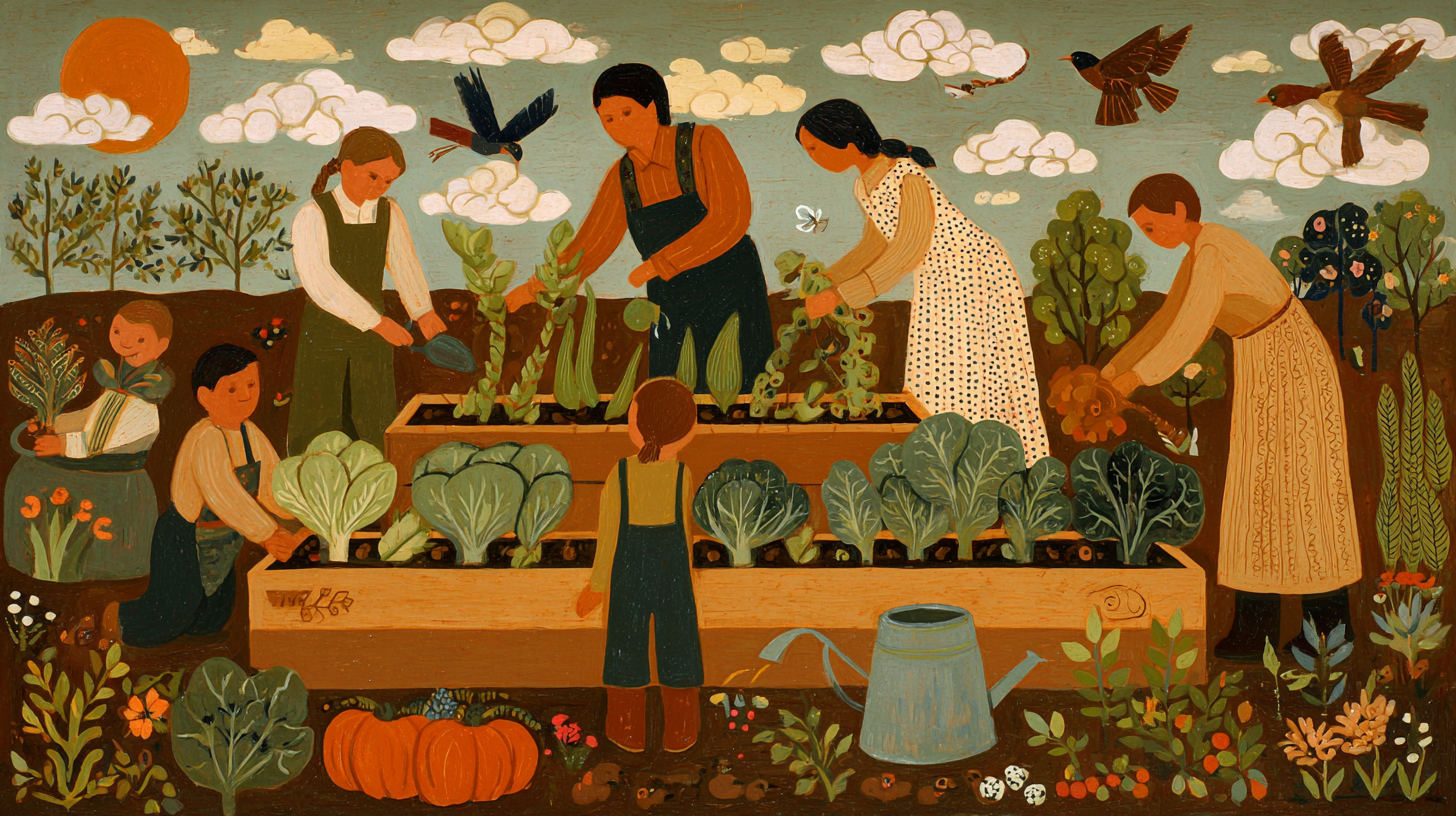
The Garden Connection: Where Theory Meets Soil
Garden-based education programs like SAGE teach children about sustainable food production through direct participation. Children engage in planting, harvesting, and maintaining gardens. They learn composting basics—how organic waste transforms into nutrient-rich soil. They understand timing in agriculture, experiencing firsthand that you can’t plant tomatoes in November (at least not in most climates) and expect them to thrive.
The “Kids Growing with Grains” program developed by University of Maryland Extension Educators focuses on grain science, grains and the environment, grains and animals, and grain nutrition through hands-on activities. It improved youth conceptual understanding of how agriculture links to nutrition, environment, and human health.
Even small-scale efforts matter. Research from the Grüt project showed that when children grow crops at home—mixing real and virtual reality, connecting indoor and outdoor growing—their food-related behavior changes. The key finding: the effects stick when children maintain ongoing engagement, not just a one-time classroom experience.
One kindergarten teacher shared: “We planted pea seeds in March. The kids watered them, measured their growth, drew pictures of them. When we harvested in May, I watched children who ‘hated’ vegetables fight over who got to eat the most peas. They’d grown them. They were invested. Suddenly, peas weren’t just food—they were their peas.”
Your 30-Day Seasonal Eating Challenge
Start building awareness one day at a time! Click each day as you complete these simple seasonal eating activities with your family:
️
✨
♻️
️
Days Completed: 0/30
The Caribbean Twist: Seasons in the Tropics
Here’s where it gets interesting for those of us with Caribbean roots or who cook Caribbean food: the concept of “seasonal” looks different in tropical climates. You don’t have the dramatic spring-summer-fall-winter divide. Instead, you have wet season and dry season. You have hurricane season and harvest season. You have times when mangoes hang so heavy on trees that branches bend, and times when you can’t find one anywhere.
Teaching children about Caribbean food cycles means talking about breadfruit season, when massive green fruits appear in abundance. It means explaining why coconuts are available year-round but are sweetest at certain times. It means understanding that plantains have different uses depending on their ripeness—green for savory dishes, ripe for sweet preparations.
For families blending Caribbean heritage with life in temperate climates, there’s a unique opportunity: teaching children about multiple seasonal systems. In summer, you might visit local farms for tomatoes and corn. But you can also talk about what would be growing “back home” during those same months—dasheen, callaloo, pigeon peas.
This dual awareness creates global citizens who understand that “seasonal” isn’t universal—it’s deeply connected to geography, climate, and culture. When introducing babies to these diverse flavors and food traditions, resources like the Caribbean Baby Food Recipe Book offer age-appropriate recipes for ingredients like plantain, yam, pumpkin, and tropical fruits, helping children develop a palate that honors both their heritage and their current environment.
Looking Forward: What the Next Generation Needs
Climate-resilient farming, improved supply chains, and greater educational outreach are creating new opportunities to expand seasonal eating education for children. Forecasts predict that school-based gardens, farmers market visits, and tech-assisted learning—apps that identify seasonal produce, virtual farm tours, augmented reality growing simulations—will become more widespread.
The collaboration between educators and local producers is driving creative new formats. Some schools now have “farmer-in-residence” programs. Others partner with local farms for regular deliveries of seasonal produce that children help prepare for school meals.
Technology is playing an unexpected role. Apps like “Seasonal Food Guide” help families identify what’s in season in their region. Instagram accounts run by farmers give children virtual access to farm life. YouTube channels show the full journey from seed to harvest to table.
But perhaps the most promising development is the shift in how we talk about this work. It’s no longer fringe or alternative—it’s becoming mainstream. Major school districts are adopting farm-to-school programs. National chains are highlighting local, seasonal produce. Parents are demanding access to seasonal eating education.
The opportunities for families are growing too. Community-supported agriculture (CSA) programs designed specifically for families with children. Farmers market scavenger hunts. Seasonal eating challenges on social media. Recipe swaps focused on what’s currently harvested.
Real Families, Real Changes
The most compelling evidence comes from families who’ve lived this transformation. One mother shared: “We started with strawberries in June. Just strawberries. My son, who’s six, became obsessed with knowing when ‘strawberry time’ was coming. Now he asks about ‘tomato time’ and ‘apple time’ and ‘pumpkin time.’ He’s created his own mental calendar based on food. And here’s the thing—he eats more vegetables than he ever did, because he’s excited about trying what’s ‘in time.'”
A father described their farmers market routine: “Every Saturday, we give our daughter ten dollars. She has to talk to at least two farmers and buy at least three different things. Then she plans one family meal using what she bought. She’s eight. Last week she made a salad with seven ingredients, all from the market, all in season. She explained to us why local lettuce is better than the stuff from California. I don’t even know where she learned that, but she’s right.”
A grandmother implementing this with her grandchildren said: “Back home in Jamaica, we ate what grew. Here, everything is available all the time, and I think my grandchildren lost something in that abundance. So I started taking them to the farmers market and telling them stories about what we ate when. They’re connecting to their heritage through seasons and food. It’s beautiful.”
Schools report similar transformations. One elementary school that implemented a year-round garden program and monthly farmers market visits found that participation in the school lunch salad bar increased by 68%. Children were choosing vegetables they’d grown or seen growing. They were asking questions about where other foods came from. They were becoming advocates for seasonal, sustainable eating.
Your Family’s Seasonal Eating Roadmap
Based on your family’s current habits and goals, here’s your personalized starting point. Click to reveal your custom action plan:
The Ripple Effect: Beyond Food
Here’s what happens when children learn about food cycles: they start noticing other cycles. They observe that days get longer and shorter. They see that some birds appear only at certain times. They understand that the world operates in rhythms, not random chaos.
This awareness extends to environmental consciousness in profound ways. Children who learn about seasonal eating typically develop stronger recycling habits, use less water, and show more interest in conservation. They understand interconnection—that their food choices affect farmers, soil health, water use, and climate.
There’s also an emotional component. Children who participate in growing, harvesting, and preparing seasonal food report feeling more connected to nature, more grateful for their meals, and more confident in their ability to make positive environmental choices.
Research from early childhood environmental education programs shows that foraging and gardening activities foster valuable habits and practices for sustainability that persist into adulthood. The educator’s role in providing pedagogical approaches that support children’s participation, engagement, and learning proves crucial for long-term impact.
One unexpected benefit: family bonding. Farmers market visits become weekly traditions. Garden maintenance becomes family time. Cooking seasonal meals creates shared experiences and memories. Parents report having more conversations with their children about values, choices, and what matters.
Starting Today: Your First Steps
You don’t need a garden, a farm, or even a nearby farmers market to start teaching your children about seasonal eating and food cycles. You need curiosity and a willingness to pay attention.
Start by asking: What’s growing near us right now? A quick internet search for “seasonal produce” plus your state or region will give you answers. Print out a seasonal food calendar and put it on your refrigerator. Make it visual. Make it accessible.
Next time you’re at any store—grocery store, farmers market, corner stand—pick one seasonal item and make it special. Talk about it. Research it together. Find out when it’s harvested, how it grows, who typically grows it in your area. Cook it together in the simplest way possible.
Tell stories. If you have cultural or family connections to farming, gardening, or specific foods, share them. Children remember stories better than lectures. “Your great-grandmother used to make the best pumpkin soup every October” means more than “pumpkins are in season in fall.”
If you have any outdoor space—a balcony, a patio, a yard—plant something. One tomato plant. A pot of herbs. A container of lettuce. Let children participate in every step: choosing seeds, planting, watering, watching, waiting, harvesting. The scale doesn’t matter. The experience does.
For those introducing the youngest eaters to seasonal flavors, having reliable, tested recipes provides confidence. The Caribbean Baby Food Recipe Book offers age-appropriate preparations for seasonal ingredients like sweet potatoes (Batata y Manzana), pumpkin (Calabaza con Coco), and fresh corn—helping babies develop a taste for real, seasonal food from the very beginning.
Join or create community. Look for local farm-to-school programs, community gardens, or parent groups focused on sustainable eating. If they don’t exist, start small—a message board post asking if other families want to visit the farmers market together can grow into a regular community event.
Most importantly: make it joyful, not stressful. This isn’t about perfection. It’s about awareness. It’s about connection. It’s about giving children an understanding that food doesn’t just appear—it grows, in cycles, in soil, tended by people, following rhythms as old as the earth itself.
The Truth We’re Really Teaching
When we teach children about seasonal eating and food cycles, we’re teaching them something bigger than nutrition. We’re teaching them about patience—that some things can’t be rushed, that waiting for strawberry season makes strawberries taste sweeter. We’re teaching them about place—that where you live determines what you eat, that geography matters.
We’re teaching them about connection—to farmers, to land, to the work that goes into every meal. We’re teaching them about gratitude—for sunshine and rain, for soil and seeds, for the miracle that is growth. We’re teaching them about sustainability—that our choices affect the planet, that we can live in rhythm with nature rather than against it.
Most of all, we’re teaching them to pay attention. To notice. To observe. To wonder. These are the skills that create engaged, aware, environmentally conscious humans. These are the skills that our world desperately needs.
That February strawberry my daughter picked up—the flavorless one from somewhere far away—taught her something valuable too. It taught her that not all strawberries are created equal. That timing matters. That some things are worth waiting for. That “strawberry time” is special precisely because it’s not all the time.
So maybe start there. Start with one seasonal food, one farmers market visit, one conversation about where food comes from. Start with curiosity. Start with wonder. Start with the simple truth that the earth has rhythms, and we’re part of them.
The magic isn’t in getting everything perfect. The magic is in paying attention. In noticing that apples taste different in October than in March. In recognizing that tomatoes have a season. In understanding that when we eat with the seasons, we’re not just nourishing our bodies—we’re participating in something ancient, something fundamental, something that connects us to every human who’s ever lived on this planet.
Your children will remember this. They’ll remember the farmer who explained how pumpkins grow. They’ll remember the first tomato they picked from a plant they tended. They’ll remember that food has seasons, and seasons have meaning.
And maybe, just maybe, they’ll grow into adults who understand that the way we eat matters—not just for our health, but for the health of the planet, the sustainability of our food systems, and the preservation of the beautiful, ancient rhythm that connects us all.

Kelley's culinary creations are a fusion of her Caribbean roots and modern nutritional science, resulting in baby-friendly dishes that are both developmentally appropriate and bursting with flavor. Her expertise in oral motor development and texture progression ensures that every recipe supports your little one's feeding milestones while honoring cultural traditions.
Join Kelley on her flavorful journey as she shares treasured family recipes adapted for tiny taste buds, evidence-based feeding guidance, insightful parenting anecdotes, and the joy of celebrating food, culture, and motherhood. Get ready to immerse yourself in the captivating world of Kelley Black and unlock the vibrant flavors of the Caribbean for your growing baby, one nutritious bite at a time.
- The Feeding Revolution: Why Your Everyday Meals Are Changing the World - October 13, 2026
- Your Feeding Story Matters More Than The “Perfect” One Online - October 12, 2026
- Looking Forward: Stepping Into Your Confident Feeding Future - October 11, 2026