The Combo Feeding Method No One Talks About But Everyone Uses
Let’s Start With Your Truth
Click the statement that resonates most with your current feeding reality:
Here’s something nobody tells you when you’re standing in the baby aisle, overwhelmed by feeding books that each promise THE right way: most parents don’t actually follow one method. They can’t. Because real life—with its daycare drop-offs, working schedules, grandparents who insist on helping, and babies who have their own opinions—doesn’t fit neatly into feeding philosophies created in controlled studies.
Three months into starting solids with my niece, my sister called me near tears. “I thought I was doing baby-led weaning right,” she said. “But then she went to daycare and they could only do purees. Now I’m sending split peas puree on Mondays and Wednesdays, doing finger foods at dinner, and feeling like a complete fraud in both camps.”
I told her what the research is finally confirming: she wasn’t a fraud. She was doing what 69% of families successfully maintain—a strategic combination of both approaches that reduces anxiety, maintains nutrition, and actually works for real families.

The Secret Everyone’s Been Keeping
A 2023 randomized clinical trial involving 139 families revealed something fascinating: by 12 months, only 16.7% of families maintained exclusive baby-led weaning. Meanwhile, 78.6% of those assigned to combination feeding—offering both purees and finger foods from the start—stuck with their approach throughout the entire first year. Not because it was easier (though it was), but because it actually matched how families naturally want to feed their babies.
Even more striking? When researchers followed families assigned to either traditional spoon-feeding or strict BLW, 60-73% of them migrated to the mixed method by their baby’s first birthday anyway. They just did it quietly, without guidance, feeling like they were breaking some unspoken rule.
The truth is, this “rule” you think you’re breaking? It never existed outside the echo chambers of social media and the rigid chapters of single-method feeding books.
Why Combination Feeding Works (When Others Don’t)
Let me tell you about a study from 2025 that measured maternal anxiety during solid food introduction. Mothers practicing exclusive baby-led weaning scored 15.3 out of 20 on anxiety measures across the first six months of feeding. Those using traditional weaning scored 8.1. And combination feeders? They scored 8.3—nearly identical to traditional feeders, but with all the developmental benefits of BLW included.
What this tells us: giving yourself permission to use both methods doesn’t just reduce mess and accommodate real-life schedules. It literally reduces the stress hormones flooding your body every time you sit down for a meal with your baby.
And here’s what nobody mentions—when you’re less anxious, your baby picks up on that. Feeding becomes enjoyable again instead of a three-times-daily test you’re convinced you’re failing.
⚖️ Find Your Feeding Balance
Slide to see what ratio might work for your family right now:
Here’s the beautiful truth: There is no perfect ratio. Some days you’ll be 80% purees because you’re rushing to work. Other days you’ll be 90% finger foods because Sunday brunch with the family is messy and magical. The goal isn’t balance—it’s flexibility without guilt.
The Meal-by-Meal Strategy Nobody’s Teaching
Forget the idea that you need to be consistent across all meals. That’s not how this works. Strategic combination feeding means understanding which meals benefit from which approach—and giving yourself permission to switch based on context, not ideology.
The Morning Rush Meal: It’s 7:15 AM. You need to be out the door in 20 minutes. This is not the time for your six-month-old to practice their pincer grasp with blueberries that will end up in places you won’t discover until spring cleaning. This is smooth porridge territory—maybe with some mashed banana stirred in for iron absorption. Save a piece of toast for their high chair so they can explore while you pack the diaper bag. Done. You’re not failing BLW. You’re being strategic.
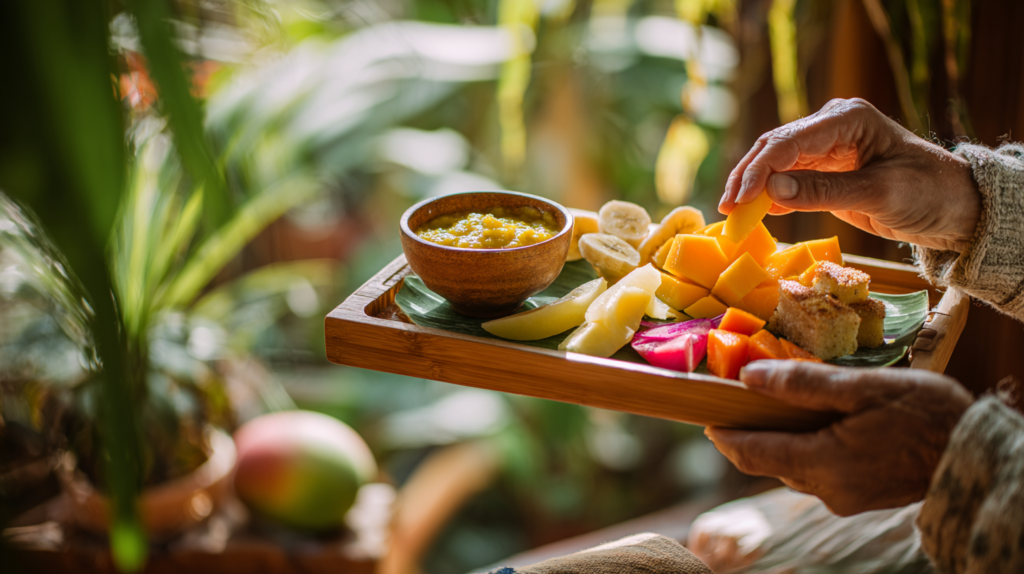
In Caribbean households, this is when that Cornmeal Porridge or Amerindian Farine Cereal becomes your best friend—nutrient-dense, quick to prepare, and smooth enough for rushed mornings while still packed with the cultural flavors you want baby to know.
The Daycare Compromise: Many childcare centers require or strongly prefer purees for liability reasons. Instead of fighting this or feeling guilty, embrace it. Send purees rich in iron—smooth lentil dal, pureed chicken and vegetables, mashed beans with coconut milk. At home for dinner, you offer the family meal with appropriate finger foods. Your baby learns different contexts call for different approaches, which is actually a valuable life skill.
The Weekend Exploration Meal: Saturday morning. Nobody’s rushing anywhere. The kitchen is already messy from your coffee ritual. This is when baby gets steamed sweet potato wedges to squeeze, avocado slices to smash, soft-scrambled eggs to grab. You sit down with your own plate and eat together. This is the magic of baby-led weaning—but it works precisely because you’re not forcing it into contexts where it creates chaos instead of connection.
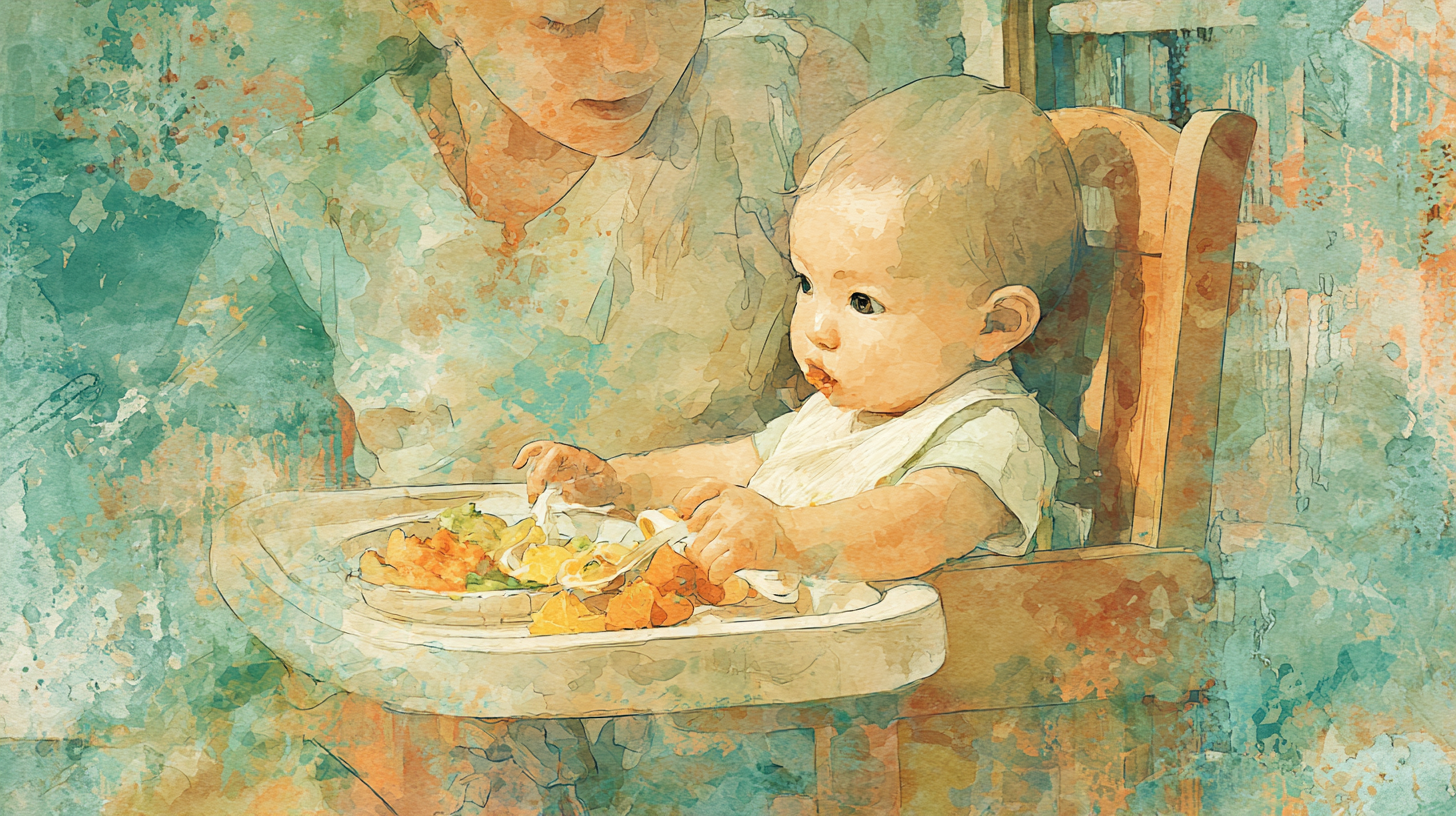
The Nutrient Insurance Meal: Your baby has been fighting a cold. They’re teething. They’ve eaten approximately four bites of solid food all day. This is when you bring out the pureed salmon with mashed sweet potato, the iron-fortified cereal mixed with breast milk, the smooth split peas with a swirl of coconut cream. Nutrition secured. Development can wait until they feel better. Both matter, but not always at the same time.
The Age-by-Age Progression That Actually Makes Sense
Your Baby’s Combo Feeding Timeline
Click your baby’s age range to see what this looks like in practice:
6-7 Months: The Permission Phase
Start with both from day one. Seriously. The research shows that babies introduced to both textures simultaneously adapt beautifully. One meal might look like: smooth mashed avocado with breast milk offered by spoon (or preloaded spoon baby holds themselves), alongside a spear of steamed carrot to grasp and gum. Another meal: thin oatmeal porridge with a soft banana slice on the side.
This is when you’re establishing the pattern that says: “Sometimes food comes on a spoon because it’s efficient and nutrient-dense. Sometimes food comes in pieces you control because we’re learning and exploring. Both are normal. Both are good.”
When you’re preparing these early foods, recipes like Calabaza con Coco or Sweet Potato & Callaloo Rundown work beautifully—you can serve them smooth for some meals, mashed with texture for others, or as soft scoops baby can pick up as they develop their grasp.
7-9 Months: The Advancement Phase
Now textures start getting interesting. Your purees develop lumps. Your finger foods include things that squish and ooze. This is when combination feeding really shines because you can calibrate based on what your baby’s showing you they’re ready for.
Maybe breakfast is cottage cheese (soft lumps) with cucumber spears. Lunch is a thicker lentil puree served in a bowl with a preloaded spoon, plus soft-cooked broccoli florets. Dinner is minced chicken with mashed vegetables—somewhere beautifully in between puree and finger food—with some green bean pieces on the side.
You’re not following a rigid progression schedule. You’re watching your baby. Some days they’re all about grabbing everything. Those days, lean heavier on finger foods. Some days they’re tired and fussy and just want you to help. Those days, lean on purees without guilt. The flexibility is the feature, not a bug.
9-12 Months: The Integration Phase
By now, most of your baby’s meals look like slightly modified family food. You’re not making separate “baby meals” as often. But you’re still keeping some smooth options in rotation because they’re convenient and they work.
Maybe yogurt stays in the breakfast rotation—smooth, efficient, nutritious. Maybe you still puree or finely mince the meat in your curry while the vegetables are soft chunks baby can pick up. Maybe your scrambled eggs are soft-scrambled specifically so baby can both grab pieces and scoop with a spoon.
What combination feeding has given you by this stage is a baby who isn’t rigid about texture or method. They’re comfortable with variety. They don’t refuse purees as “baby food” at 14 months because purees have always been one option among many. They don’t struggle with utensils later because they’ve been practicing with preloaded spoons since six months.
What the Research Actually Says (And Doesn’t)
Let’s talk about the elephant in the room: iron intake. This is the concern that haunts every BLW parent and fuels much of the anxiety around feeding methods. A 2018 study on iron intake in baby-led weaning found something crucial: when parents received guidance to offer iron-rich foods at each meal, babies following BLW had adequate iron intake. The problem wasn’t the method—it was the education.
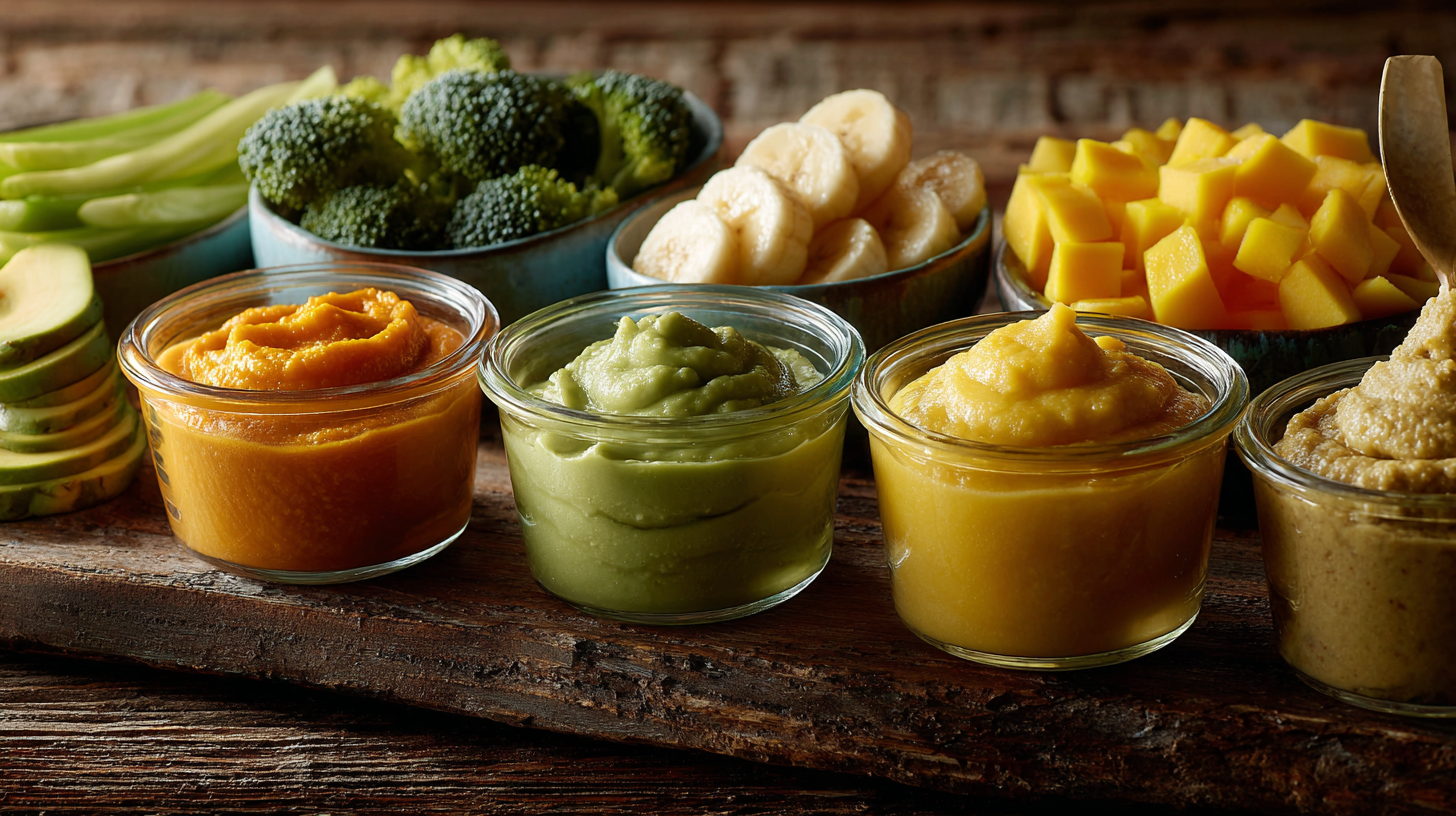
This is where combination feeding becomes your ally. Those smooth purees are perfect vehicles for iron-rich foods that are genuinely difficult for six-month-olds to self-feed effectively: pureed meats, iron-fortified cereals, smooth lentil dal, finely minced fish. You can ensure iron intake with these while still offering plenty of finger foods for motor skill development.
The same study found 97.8-100% of families eventually incorporated mixed textures regardless of their starting method. What this tells us: the body of research isn’t actually supporting rigid single-method feeding. It’s documenting that families need flexibility to maintain adequate nutrition while supporting development.
The Myth-Buster Challenge
Click to reveal the truth about common combo feeding myths:
Real Families, Real Stories, Real Relief
One parent shared on Reddit: “I do purees at daycare and BLW at home. My daughter is 10 months now and eats everything. She uses a spoon competently, picks up small foods with her pincer grasp, and isn’t remotely confused about different contexts calling for different approaches. If anything, she’s more adaptable than the babies whose parents were rigid about one method.”
Another mother described sending split pea puree to daycare on busy weekdays while doing full baby-led meals on weekends when the whole family could sit together. By nine months, her son was participating in family dinners, yet still eating efficiently at childcare. The combination approach gave him the best nutrition alongside the best developmental opportunities—at the times that made sense for each.
A working parent summed it up perfectly: “I felt like I was failing at both methods until I realized I was actually succeeding at a third one nobody had named yet. Once I gave myself permission to strategically use both, feeding became enjoyable instead of stressful. And my baby? He’s thriving.”
What these families discovered is what the research confirms: combination feeding isn’t a compromise. It’s a complete approach that acknowledges babies need both adequate nutrition AND developmental opportunities, and different contexts call for different strategies to achieve both.
The Cultural Wisdom We’ve Been Ignoring
Here’s what strikes me about this whole debate: in many Caribbean, Latin American, Asian, and African food cultures, this combination approach has always been the norm. Nobody was agonizing over whether to offer sancocho with soft-cooked yam pieces alongside pureed stewed peas. Babies ate family food modified to their ability—sometimes mashed, sometimes in pieces they could hold, often both in the same meal.
The polarization into rigid feeding camps is actually a relatively recent, Western phenomenon driven more by social media and book marketing than by how humans have successfully fed babies for generations.
When you prepare recipes like Yellow Yam & Carrot Sunshine, Coconut Rice & Red Peas, or Plantain Paradise, you’re naturally adapting texture to your baby’s ability while keeping them connected to family food culture. That soft-cooked plantain can be pureed smooth at six months, mashed with lumps at eight months, and served as soft strips at ten months. It’s combination feeding before we needed a fancy name for it.
Your Permission Slip (You’ve Been Waiting For)
✓ Your Combo Feeding Validation Checklist
Read each statement. Notice how your shoulders drop with each one:
Here’s the permission slip you’ve been waiting for, backed by a randomized clinical trial, maternal anxiety research, and the lived experience of thousands of families: You can strategically combine purees and baby-led weaning from the very first day of solids.
You don’t need to choose a camp. You don’t need to be consistent across every meal. You don’t need to justify your approach to judgmental relatives or Instagram feeding accounts that profit from your anxiety about doing it “wrong.”
What you need is to feed your baby in a way that maintains their nutrition, supports their development, accommodates your family’s reality, and doesn’t leave you crying into your coffee because you reached for a puree pouch at 6:47 AM on a Tuesday.
Making It Work: Your Practical Starting Point
If you’re just starting solids (6 months):
Offer both from meal one. Smooth mashed avocado on a preloaded spoon, soft steamed carrot spear on the tray. Your baby learns immediately that food comes in different forms and that’s normal. No transition period needed. No guilt developed. Just options from the start.
If you’ve been doing exclusive BLW and it’s not working:
Add in strategic purees without shame. That iron-fortified cereal mixed with breast milk? It’s nutrition insurance, not failure. Those smooth lentils at lunch? They’re efficiency, not defeat. You’re not abandoning BLW principles—you’re expanding your toolkit.
If you’ve been doing traditional purees and want to add developmental benefits:
Start offering soft finger foods alongside your purees. You don’t need to eliminate anything—just add. Steamed broccoli florets next to the puree bowl. Avocado strips alongside the smooth sweet potato. Toast fingers with the porridge. Your baby will show you when they’re ready to grab things. Trust that.
If you’re somewhere in the messy middle feeling like a fraud:
Stop feeling like a fraud. You are literally doing what 78.6% of families successfully maintain through the first year. You’re ahead of the curve. The research just finally caught up with what you intuitively knew: flexibility works better than rigidity when it comes to feeding tiny humans.
The Real Success Metric
Three months from now, when your baby is eating family meals modified to their ability, using both their hands and utensils, comfortable with different textures, adequately nourished, and you’re not stressed about whether you’re doing it “right”—that’s success.
Not adherence to a method. Not perfect execution of an ideology. Not Instagram-worthy photos of beautifully arranged finger foods (though those are lovely when you have time). Success is a baby who eats well and a parent who isn’t anxious about feeding them.
The combination feeding method isn’t the one nobody talks about because it’s controversial. It’s the one nobody talks about because it’s what almost everyone actually does—we’ve just been afraid to admit it because it felt like cheating.
But here’s what that 2023 research, that 2025 anxiety study, and thousands of parent experiences are telling us: This isn’t cheating. This is exactly how feeding is supposed to work.
You offer what makes sense when it makes sense. You prioritize nutrition when nutrition is the concern. You prioritize development when development is the focus. You accommodate context, schedule, and reality. You follow your baby’s cues. You trust yourself.
That’s not a compromise method. That’s responsive feeding. And it’s been the right approach all along.
So tomorrow morning, when you’re trying to get everyone out the door and you reach for that smooth porridge because it’s fast and nourishing, or when you’re having a leisurely Sunday breakfast and you offer soft scrambled eggs baby can practice grabbing—you’re not failing at either method.
You’re succeeding at the one that actually matters: feeding your baby in a way that works for your family, reduces your anxiety, maintains their nutrition, supports their development, and acknowledges that real life doesn’t fit into neat categories created by feeding philosophies.
Welcome to combination feeding. The method no one talks about but everyone uses. The method that finally has research validation. The method that gives you permission to do what you knew was right all along.
Now go feed your baby. However works for you today. Because that’s exactly the right way to do it.

Kelley's culinary creations are a fusion of her Caribbean roots and modern nutritional science, resulting in baby-friendly dishes that are both developmentally appropriate and bursting with flavor. Her expertise in oral motor development and texture progression ensures that every recipe supports your little one's feeding milestones while honoring cultural traditions.
Join Kelley on her flavorful journey as she shares treasured family recipes adapted for tiny taste buds, evidence-based feeding guidance, insightful parenting anecdotes, and the joy of celebrating food, culture, and motherhood. Get ready to immerse yourself in the captivating world of Kelley Black and unlock the vibrant flavors of the Caribbean for your growing baby, one nutritious bite at a time.
- The Feeding Revolution: Why Your Everyday Meals Are Changing the World - October 13, 2026
- Your Feeding Story Matters More Than The “Perfect” One Online - October 12, 2026
- Looking Forward: Stepping Into Your Confident Feeding Future - October 11, 2026