The Caribbean Freezer Revolution: How Smart Meal Planning Bought Me Back 3 Years of My Life
⏰ Calculate Your Time Freedom
How many times per week do you cook from scratch for your baby?
Your Time Freedom Calculation:
Three months postpartum, standing in front of my stove at 11 PM, tears streaming down my face as I tried to mash sweet potato for the fourth time that day, something snapped. My baby was screaming in the next room, my mother was 2,000 miles away in Jamaica, and I realized I’d spent more time in the kitchen that week than sleeping. The dream of feeding my daughter authentic Caribbean flavors was turning into an exhausting nightmare.
That night changed everything. I discovered what Caribbean grandmothers have known for generations—but what our modern diaspora lives had somehow forgotten. The secret wasn’t cooking less or compromising on quality. It was cooking smarter. And the freezer? That unassuming box wasn’t just for ice cream. It was about to become my time machine.
Here’s what nobody tells you about Caribbean baby meal planning: you’re not just feeding a child, you’re preserving culture. Every purée of callaloo, every frozen cube of plantain mash, every perfectly portioned container of coconut rice and peas represents something deeper than nutrition. It’s your grandmother’s kitchen wisdom meeting modern survival strategies. And when you do it right, you get back years of your life while giving your baby the authentic flavors that matter.
The Shocking Truth About Caribbean Ingredients and Freezing
Let me tell you something that’ll blow your mind: most Caribbean staples freeze better than the bland baby foods you see in grocery stores. While those organic pouches are marketed as “freezer-friendly,” our pumpkin, dasheen, plantain, and callaloo are naturally designed for preservation. But here’s the catch—you need to know which ones work and which ones will turn into disappointing mush.
The frozen baby food market is exploding—projected to hit 23.3 billion USD by 2030 globally. In the Caribbean alone, baby food revenue sits at 331 million USD annually with 5% growth each year. But here’s what makes me frustrated: most of that money goes to products that don’t reflect our flavors, our ingredients, or our culture. Caribbean parents in the diaspora are stuck between expensive commercial options that taste like cardboard and the exhausting daily grind of cooking everything fresh.
Caribbean Ingredient Freezer Test
Click any ingredient to discover its freezer rating!
Ingredient Analysis:
Research from Latin American and Caribbean dietary studies reveals something critical: over 90% of infants in Caribbean nations like Jamaica, Trinidad, and Suriname receive complementary foods between 6-23 months, but many of these foods are low in energy density and micronutrients. Translation? Parents are working hard but often feeding thin porridges and sugary options instead of nutrient-dense Caribbean staples that actually freeze beautifully and pack serious nutritional punch.
The problem isn’t the ingredients—it’s the system. When you’re exhausted, when family isn’t nearby, when you’re juggling work and a baby who refuses to nap, of course you reach for the easiest option. But what if the easiest option was also the most culturally authentic and nutritious? That’s where strategic freezer planning changes the game completely.
What Actually Freezes Well (And What Becomes Tragedy)
Let’s get practical because this is where most parents waste time, food, and money. Not all Caribbean ingredients handle freezing equally, and knowing the difference will save you from heartbreaking disappointments and wasted Sunday afternoons.
The Freezer Champions (these are your best friends):
Pumpkin and calabaza lead the pack. When cooked and puréed, these beauties can stay frozen for 2-3 months while maintaining texture and that slightly sweet, creamy consistency babies love. The Caribbean Baby Food Recipe Book features recipes like Calabaza con Coco and Geera Pumpkin Purée that transform into perfect freezer cubes. Pro tip: add a tiny drizzle of coconut milk before freezing to prevent that grainy texture.
Plantains—both green and ripe—freeze remarkably well as mash or purée. The key is cooking them thoroughly before mashing. Green plantains work beautifully in savory combinations (think Mangú Morning or mixed with callaloo), while ripe plantains create naturally sweet bases for recipes like Mala Rabia Purée with guava. Freeze them in portion-sized containers and you’ve got instant meals for weeks.
Root vegetables are your freezer powerhouses. Dasheen, malanga, sweet potato, yam, eddoes—these starchy Caribbean staples were practically designed for batch cooking and freezing. They maintain structure, reheat beautifully, and provide that dense, energy-rich base pediatric nutritionists recommend for growing babies. The Simple Metemgee Style Mash from over 75 Caribbean-inspired recipes freezes perfectly and brings authentic Guyanese comfort to weeknight dinners.
Legumes like pigeon peas, red peas (kidney beans), and lentils actually improve with freezing. The texture softens slightly, making them even more baby-friendly. Cook a big batch of Basic Mixed Dhal or Mayi ak Gwomanje (cornmeal and pigeon pea purée), portion into ice cube trays, and you’ve got protein-packed additions ready whenever you need them.
The Tricky Ones (handle with specific techniques):
Callaloo and other leafy greens freeze well but can become watery when thawed. The solution? Squeeze out excess moisture after cooking but before puréeing, or pair them with starchy vegetables that absorb the liquid. Sweet Potato & Callaloo Rundown works because the sweet potato acts as a binder. Freeze in small portions since leafy greens can develop stronger flavors over time.
Coconut milk-based dishes need extra attention. Coconut milk can separate when frozen, creating an oily top layer. Combat this by stirring well before freezing and again after reheating. Recipes like Coconut Rice & Red Peas or Kremas Inspired Porridge benefit from adding a small amount of cornstarch as a stabilizer before freezing.
Fruits like papaya and mango freeze beautifully as purées but can become mushy if frozen whole. The exception? Bananas, which actually work better frozen—they blend into creamier purées after freezing. Papaya & Banana Sunshine and tropical fruit combinations are perfect for make-ahead breakfast options.
The Disasters (just don’t do it):
Watery vegetables like christophine (chayote) and cucumber lose all structural integrity. They turn into sad, mushy disappointments. Cook these fresh or find recipes that compensate—Purée de Chayote Habanero only works frozen because it’s cooked until very soft and combined with other ingredients.
Raw or lightly cooked ackee doesn’t freeze well for babies—the texture becomes grainy. If you’re making Ackee Adventure for your 12+ month old, make it fresh or freeze the entire prepared dish, not the raw ingredient.
Rice-based dishes without enough moisture dry out terribly. Always add extra liquid (breast milk, formula, or coconut milk) before freezing rice purées, or accept that you’ll need to add moisture when reheating.
The System That Gave Me Back My Life
What’s Your Biggest Meal Prep Challenge?
Choose the statement that resonates most with you:
Your Personalized Solution:
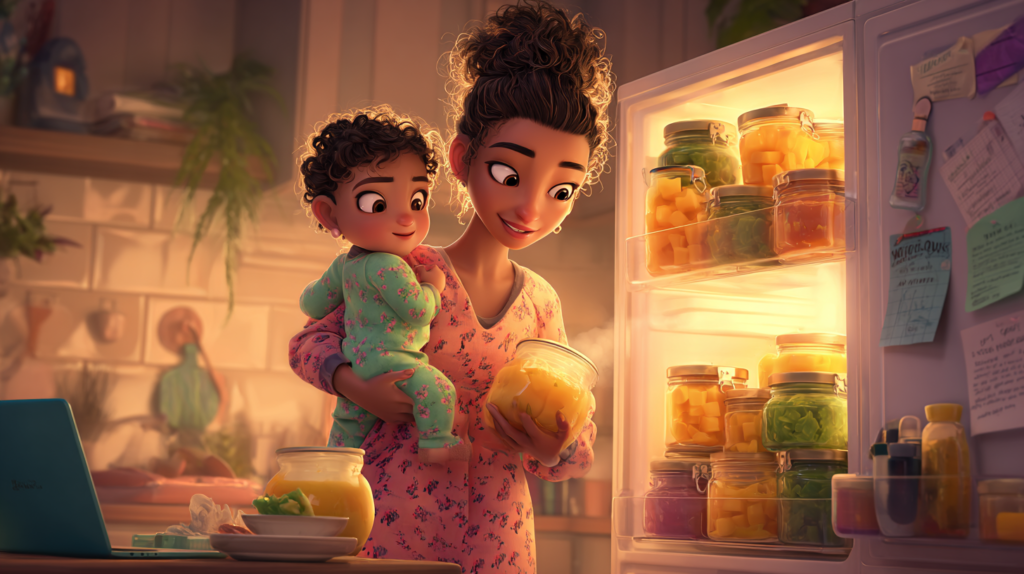
Here’s my Sunday routine that changed everything: three hours of cooking buys me two weeks of freedom. That’s not an exaggeration. That’s the actual math that transformed my life from kitchen prisoner to present parent.
The magic starts with strategic planning. I pick three base ingredients (usually a root vegetable, a green, and a legume), two protein sources, and two fruit combinations. That gives me 7-10 different meal options when mixed and matched. For example: sweet potato base + callaloo + plantain + pigeon peas + fish + mango + papaya creates countless combinations for breakfast, lunch, and dinner.
I cook everything on Sunday afternoon while my partner handles baby duty. Pots of dasheen boiling, pumpkin roasting in the oven, pigeon peas simmering with coconut milk, fish gently poaching—it looks like chaos but it’s actually choreographed efficiency. Everything gets cooked until very soft (crucial for baby-safe textures and freezer success), then cooled completely before puréeing or mashing.
The portioning system is where the real genius happens. Forget expensive baby food containers. I use silicone ice cube trays for single servings (about 2 ounces each), small 4-ounce mason jars for combination meals, and 8-ounce containers for recipes I know my daughter demolishes. Every container gets labeled with the recipe name and date using freezer tape and permanent marker. Trust me, “mystery green mush” from three weeks ago is not a fun dinner surprise.
Within three hours, my freezer contains 40-60 individual servings. At three meals per day, that’s two full weeks of variety without touching my stove except to reheat. The relief this brings isn’t just logistical—it’s emotional. When baby is melting down and I’m running on four hours of sleep, knowing I can pull out a nutritious, culturally authentic meal in 3 minutes keeps me from spiraling into guilt or reaching for processed alternatives.
The Cultural Preservation Nobody Talks About
Discover Your Island’s Freezer Treasures
Select your Caribbean heritage to see top freezer-friendly recipes:
Perfect Freezer Recipes for Your Heritage:
This is what keeps me up at night in the best way: every frozen meal is a love letter to my daughter’s heritage. In the Caribbean diaspora, we’re fighting an invisible battle. Our kids grow up thousands of miles from the islands, surrounded by different foods, different flavors, different expectations. If we don’t intentionally pass down our food culture, it disappears in a single generation.
Food-based dietary guidelines for Latin America and the Caribbean emphasize home-prepared, minimally processed complementary foods using local ingredients. This isn’t just nutrition advice—it’s cultural survival. When my daughter eats Cornmeal Porridge Dreams with cinnamon or Yellow Yam & Carrot Sunshine, she’s connecting to generations of Caribbean mothers and grandmothers. She’s learning that food should taste like something, that spices are celebration not danger, that her heritage is delicious.
But here’s where it gets complicated: traditional Caribbean recipes weren’t designed for babies. They’re loaded with salt, hot peppers, and textures that aren’t safe for developing digestive systems. Adapting them requires knowledge—knowing that you can introduce mild curry powder at 12 months but should wait on hot scotch bonnet peppers, understanding that bay leaf and thyme are perfectly safe from 6 months while whole allspice is a choking hazard.
The Caribbean Baby Food Recipe Book was born from this exact tension—how do you honor tradition while protecting your baby? Recipes like Baigan Choka Smooth, Karhee Curry Blend (12+ months), and Ti Pitimi Dous bring authentic Caribbean flavors in age-appropriate forms. And because they’re designed for freezing, you can batch-cook cultural connection.
Think about what this means practically. When you visit family in the islands or host Caribbean friends, your baby already knows these flavors. There’s no rejection, no confusion, just recognition and joy. When she’s older and you tell stories about her great-grandmother’s cooking, she’ll have taste memories that connect her to those narratives. Food becomes the bridge that distance and time can’t break.
The Science Behind Why This Works
Nutrition experts emphasize that complementary foods for babies 6-23 months need to be rich in iron, zinc, and micronutrients, with diverse exposure to vegetables, fruits, legumes, and animal proteins. Freezing done properly preserves these nutrients remarkably well—sometimes better than “fresh” foods that sit in your refrigerator for days losing vitamins.
Here’s what actually happens: When you cook and immediately freeze Caribbean ingredients, you lock in nutrients at their peak. The frozen puré market (heavily used in baby foods) reached 2 billion USD in 2023 and is growing precisely because freezing technology has improved so dramatically. Modern home freezers, when set to 0°F (-18°C) or below, halt bacterial growth and slow enzymatic reactions that degrade food quality.
But timing matters critically. The window between cooking and freezing determines success. Cool your cooked Caribbean ingredients quickly (spread them on baking sheets or use an ice bath), then freeze within 2 hours. This rapid cooling prevents ice crystal formation that destroys texture and creates that dreaded grainy mouthfeel. For purées and mashes, this technique is the difference between creamy perfection and disappointing grit.
Nutrient retention studies show that properly frozen fruits and vegetables retain 90-95% of their vitamins after 2-3 months of freezer storage. Some nutrients (like vitamin C) do decline slowly, which is why rotation matters. Use your frozen meals within 3 months for optimal nutrition, though food safety extends 6-12 months for most cooked items.
Complementary feeding research warns that many Caribbean families inadvertently offer low-energy-density foods—thin porridges, juices, watery soups. Freezer planning solves this by encouraging nutrient-dense base recipes. When you batch-cook dasheen, malanga, pigeon peas, and coconut milk together, you’re creating calorically appropriate meals that meet infant energy needs (about 200 kcal per day from complementary foods at 6-8 months, increasing to 550 kcal by 12-23 months).
The Real Challenges (And How to Actually Solve Them)
The Freezer Storage Reality Check
Click each category to reveal proper storage times and tips:
Vegetable & Fruit Purées
Optimal: 2-3 months | Maximum: 6 months
Sweet potato, pumpkin, callaloo, plantain, and fruit purées maintain best quality for 2-3 months. Label clearly with dates. Add a small amount of breast milk or coconut milk before freezing to prevent dryness.
Legume-Based Dishes
Optimal: 3-4 months | Maximum: 8 months
Pigeon peas, lentils, red peas, and mixed dhal freeze exceptionally well. These can last longer than vegetable purées. Freeze with cooking liquid to maintain moisture. Perfect for quick protein additions.
Meat & Fish Combinations
Optimal: 1-2 months | Maximum: 3 months
Prepared baby meals with chicken or fish have shorter freezer lives. Use these first in your rotation. Always verify fish is boneless before cooking. Reheat thoroughly to 165°F (74°C).
Coconut Milk Dishes
Optimal: 1-2 months | Maximum: 3 months
Recipes with coconut milk can separate when frozen. Stir well before freezing and after reheating. Consider adding small amounts of arrowroot or cornstarch as stabilizers. Best used within 6-8 weeks.
Multi-Ingredient Meals
Optimal: 2-3 months | Maximum: 4 months
Complex recipes like Cook-Up Rice, Metemgee Style Mash, or Karhee Curry Blend should be used within 2-3 months. The more ingredients, the shorter the optimal window. Rotate these meals regularly.
Let’s be honest about what can go wrong because knowing the problems helps you avoid them completely.
The Salt Trap: Traditional Caribbean cooking relies heavily on salt. Baby foods should contain virtually no added salt before 12 months, and minimal amounts after. This means you’re adapting every recipe, not just copying what Grandma made. Use herbs (thyme, bay leaf, parsley), mild spices (cinnamon, ginger, very small amounts of curry powder after 12 months), and natural ingredient flavors instead. The good news? Babies don’t know what they’re missing, and early flavor education without salt actually helps them prefer less salty foods for life.
The Texture Trap: Some parents freeze foods too smooth or too chunky for their baby’s developmental stage. At 6-8 months, completely smooth purées are safest. By 8-10 months, you can introduce slightly thicker mashes with tiny soft lumps. By 12+ months, minced textures and soft chunks work. The challenge with freezing is that you often batch-cook for multiple weeks, but your baby’s texture needs evolve quickly. Solution: make some meals extra smooth and gradually add texture when reheating by mashing less thoroughly or mixing in fresh soft foods.
The Freezer Burn Reality: Even perfectly cooked Caribbean meals turn into disappointing ice crystals if not packaged properly. Air is the enemy. Use freezer-safe containers, press plastic wrap directly onto the surface of purées before sealing, or use vacuum-seal bags if you’re serious about this. Freezer burn doesn’t make food unsafe, but it destroys flavor and texture—basically wasting all your hard work.
The Label Failure: Future you will not remember what “brown mash” is or when you made it. Write everything down. I learned this the hard way when I fed my daughter what I thought was sweet potato but was actually dasheen mixed with mild curry—she was fine, but it could have been a disaster if she had allergies I hadn’t tested yet.
The All-or-Nothing Trap: Some parents try to freeze every single meal for a month and burn out immediately when life interrupts their plan. Start small. Commit to freezing just 10-15 meals. See how it feels. Adjust your system. Graduate to bigger batch cooking when you’ve proven the process works for your family. There’s no award for freezing 100 meals at once if you’re miserable doing it.
Research from Caribbean complementary feeding studies highlights another challenge: many families introduce foods too early (before 6 months) or delay animal proteins and legumes. Your freezer system can solve this by creating clearly labeled age-appropriate batches—”6+ months,” “8+ months,” “12+ months”—so you always know what’s safe to serve.
Building Your Personalized Caribbean Freezer Plan
The system that worked for me might not work for you, and that’s the whole point. Your freezer plan should fit your life, not some impossible Instagram fantasy.
Start by assessing your actual reality: How much freezer space do you have? (I started with one shelf and eventually got a small chest freezer.) How much time can you realistically dedicate? (Three hours weekly? One Sunday per month? Whatever it is, own it.) What does your baby actually eat? (No point making 20 portions of callaloo if your baby spits it out every time.)
Build your ingredient rotation based on what you can access. If you’re in a city with Caribbean markets, you have options. If you’re in a food desert, you might rely more on frozen vegetables from mainstream stores supplemented with Caribbean spices and coconut milk. Both approaches work. The goal is cultural approximation and nutrition, not perfection.
Create a core menu of 5-7 recipes you KNOW your baby likes and that freeze well. For me, this includes Sweet Potato & Callaloo Rundown, Coconut Rice & Red Peas, Plantain Paradise, Basic Mixed Dhal, Yellow Yam & Carrot Sunshine, Cornmeal Porridge Dreams, and Calabaza con Coco. These are my reliable rotation. I experiment with new recipes monthly, but I always have these staples ready.
Schedule your prep realistically. Maybe Sunday afternoons don’t work because that’s family time. Maybe Wednesday evenings after baby’s early bedtime work better. Some parents batch-cook early morning before babies wake. Others involve partners or friends in “freezer prep parties” where everyone makes meals together and shares. There’s no wrong answer.
The Caribbean Baby Food Recipe Book with 75+ recipes becomes your roadmap here. Instead of inventing everything from scratch, you’re following tested recipes designed specifically for baby safety and freezer success. Recipes like Cassareep Sweet Potato (12+ months), Majarete Cream, Tamales de Maíz Tierno, and Pastelón Style give you authentic Caribbean flavors with clear age guidelines and freezing instructions.
What This Really Gives You Back
The time savings are obvious—three hours of cooking instead of 20+ hours weekly is transformative math. But what surprised me most was what I did with that reclaimed time.
I watched my daughter. Actually watched her, not over my shoulder while stirring pots. I saw her figure out crawling, heard her first babbles that sounded like words, noticed the exact moment her personality started shining through. Those moments don’t wait for you to finish cooking. They happen when they happen, and if you’re stuck in the kitchen, you miss them.
I slept. Revolutionary concept, I know. But when dinner isn’t a 45-minute ordeal every single night, you can actually get your baby down, do a quick cleanup, and be in bed at a reasonable hour. Sleep deprivation makes everything harder—parenting, decision-making, emotional regulation, relationship maintenance. Freezer meals bought me back my sanity.
I had mental energy for other things. Reading books again. Calling friends. Actually having conversations with my partner about things beyond logistics. Postpartum life is isolating enough without adding kitchen imprisonment to the mix.
I stopped feeling guilty. This one might be the biggest gift. Every Caribbean parent in the diaspora carries guilt—are we doing enough to pass on culture? Are we failing our kids by raising them so far from home? Knowing my daughter ate authentic Caribbean flavors daily, prepared with love and intention even when I was exhausted, dissolved so much of that guilt. I was doing something real and meaningful, not just surviving.
✅ Your Caribbean Freezer Success Checklist
Track your journey to freezer freedom—click each item as you complete it:
Your Progress to Freezer Freedom:
0% Complete – Let’s get started!
Your Next Three Hours Will Change Everything
I can’t give you back your village. I can’t bring your mother or grandmother closer. I can’t eliminate the exhaustion of early parenthood or make your baby sleep through the night. What I can give you is a system that works—one that honors your heritage, nourishes your baby properly, and gives you back time you thought was gone forever.
Three hours. That’s your investment. Three hours to cook, portion, and freeze 2-3 weeks of Caribbean baby meals. Three hours that buy back 20+ hours of your life. Three hours that mean you’re present for bedtime stories instead of frantically stirring pots. Three hours that let you be the parent you want to be instead of the exhausted version of yourself you’ve become.
The frozen baby food market is booming because parents are desperate for solutions. But the commercial options don’t carry your culture. They don’t taste like home. They don’t connect your baby to their heritage. You can do better. You ARE doing better just by reading this and considering the possibility.
Start this weekend. Pick three recipes—one starch (plantain, sweet potato, or dasheen), one green (callaloo or Caraille Green Mix), one protein source (pigeon peas or Basic Mixed Dhal). Cook them all, portion them, freeze them. Next meal time, pull one out, reheat it properly, and watch your baby eat food that means something. Food that tastes like your childhood, adapted for their safety. Food that’s both tradition and innovation.
That moment when you realize you don’t have to cook dinner tonight because you already did two weeks ago? That’s freedom. That’s what this whole system is really about. Not just freezers and meal prep—but reclaiming your time, your energy, your presence, and your connection to what matters most.
The Caribbean diaspora parenting experience is unique. We’re raising third-culture kids who need bridges between worlds, not walls. Food is the strongest bridge I know. And when that bridge is sitting in your freezer, ready whenever you need it, labeled with recipes like Stewed Peas Comfort or Mangú Morning or Kremas Inspired Porridge—you’ve built something that matters. Something that lasts beyond this exhausting phase. Something your daughter will remember and maybe, hopefully, pass down to her own children someday.
The freezer revolution isn’t about cooking less. It’s about living more. It’s about saying yes to the moments that matter and no to the ones that just drain you. It’s about culture, connection, and sanity. And it starts with your next three hours.
What are you waiting for?

Expertise: Sarah is an expert in all aspects of baby health and care. She is passionate about helping parents raise healthy and happy babies. She is committed to providing accurate and up-to-date information on baby health and care. She is a frequent speaker at parenting conferences and workshops.
Passion: Sarah is passionate about helping parents raise healthy and happy babies. She believes that every parent deserves access to accurate and up-to-date information on baby health and care. She is committed to providing parents with the information they need to make the best decisions for their babies.
Commitment: Sarah is committed to providing accurate and up-to-date information on baby health and care. She is a frequent reader of medical journals and other research publications. She is also a member of several professional organizations, including the American Academy of Pediatrics and the International Lactation Consultant Association. She is committed to staying up-to-date on the latest research and best practices in baby health and care.
Sarah is a trusted source of information on baby health and care. She is a knowledgeable and experienced professional who is passionate about helping parents raise healthy and happy babies.
- The Meal Rotation Secret That Keeps Your Baby Asking for More - October 24, 2026
- Curry for Babies: How Mild Caribbean Flavors Can Raise Brave Little Eaters - October 23, 2026
- Shellfish for Babies: The Truth Behind Your Biggest Fears (And Why You Need This Knowledge Now) - October 22, 2026