The 12-Month Shift Nobody Warns You About: Your Baby’s Secret Food Revolution
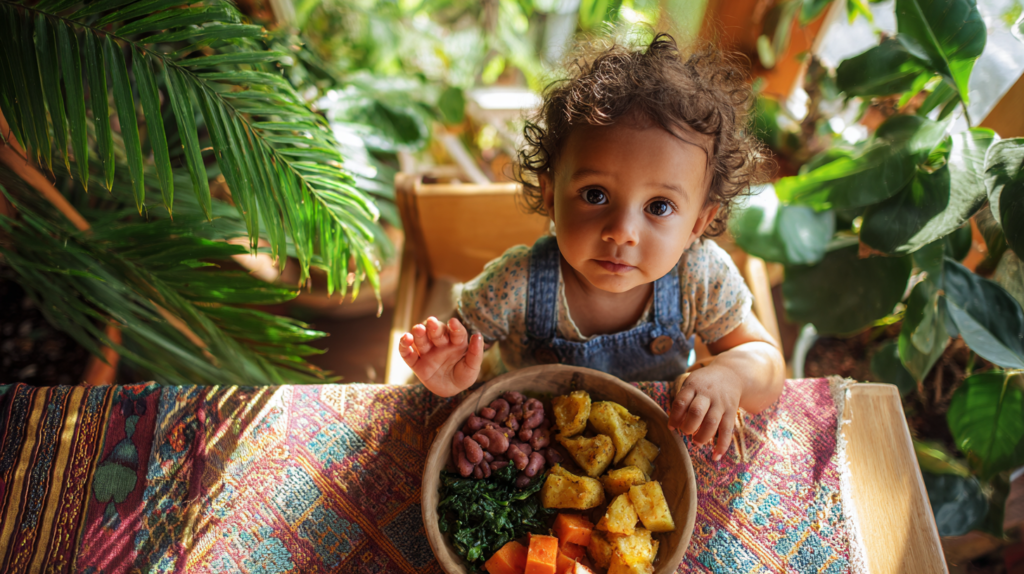
Last Tuesday at 3:47 PM, something remarkable happened in my kitchen. My daughter—who’d been happily munching pureed sweet potato just weeks before—picked up a chunk of real plantain, examined it like a tiny scientist, and bit down with the confidence of someone who’d been eating solid food their entire life.
That moment? It wasn’t magic. It wasn’t luck. It was the result of understanding something most parenting guides gloss over: the 12-18 month feeding transition isn’t just about introducing new foods. It’s about witnessing your baby transform into a toddler right before your eyes, one bite at a time.
Here’s what nobody tells you: between your child’s first birthday and 18 months, their nutritional needs will shift more dramatically than at any other time in their childhood. They’ll move from receiving the majority of calories from breast milk or formula to getting nearly all their nutrition from food. Their jaw strength will triple. Their ability to handle textures will explode. And somehow, you’re supposed to navigate all this with zero roadmap.
But here’s the truth I discovered after months of research, countless conversations with Caribbean grandmothers who’d raised generations of healthy eaters, and yes—plenty of sweet potato smeared on my walls: this transition doesn’t have to feel overwhelming. In fact, when you understand what’s actually happening during these six critical months, it becomes one of the most empowering phases of early parenthood.
Every parent approaches this transition differently. Click your biggest concern right now:
What’s Really Happening Between 12-18 Months
The first thing you need to know is this: your child’s body is preparing for independence in ways you can’t see. By 12 months, most babies have developed the oral motor skills to handle soft, small pieces of food. By 18 months, they can manage hard, large pieces and complex textures that would have made them gag just months earlier.
But here’s where it gets fascinating. Research shows that children who are exposed to a variety of textures during this window—particularly between 6-18 months—are significantly less likely to become picky eaters later in childhood. We’re talking about a 6-month period that can influence their relationship with food for years to come.
During these months, your toddler transitions from a “milk-first” approach (where breast milk or formula provides most calories) to a “food-first” strategy where solid foods become the nutritional foundation. This shift isn’t just about calories—it’s about iron, zinc, vitamin D, and countless other micronutrients that milk alone can’t provide in sufficient quantities anymore.
Think of it like this: at 12 months, your child is leaving the training wheels phase. By 18 months, they should be pedaling confidently on their own. And your job? You’re not pushing the bike. You’re creating the safe space for them to ride.
The Texture Progression Path
My Trinidadian grandmother had a saying: “You can’t teach a child to swim by keeping them in shallow water forever.” The same applies to food textures. Yet 25-40% of parents report their toddlers have feeding difficulties—and texture hesitation is one of the biggest culprits.
Here’s what the science reveals: babies introduced to lumpy foods after 9 months are significantly more likely to become fussy eaters by 15 months. That narrow window matters more than most of us realize. But before you panic about whether you’ve “missed” something, understand this: texture progression isn’t about following rigid timelines. It’s about reading your child’s developmental readiness and responding accordingly.
Click the level that best describes your toddler’s current abilities:
Level 1
Smooth purees only
Level 2
Soft, small pieces
Level 3
Hard, larger chunks
Level 4
Mixed textures
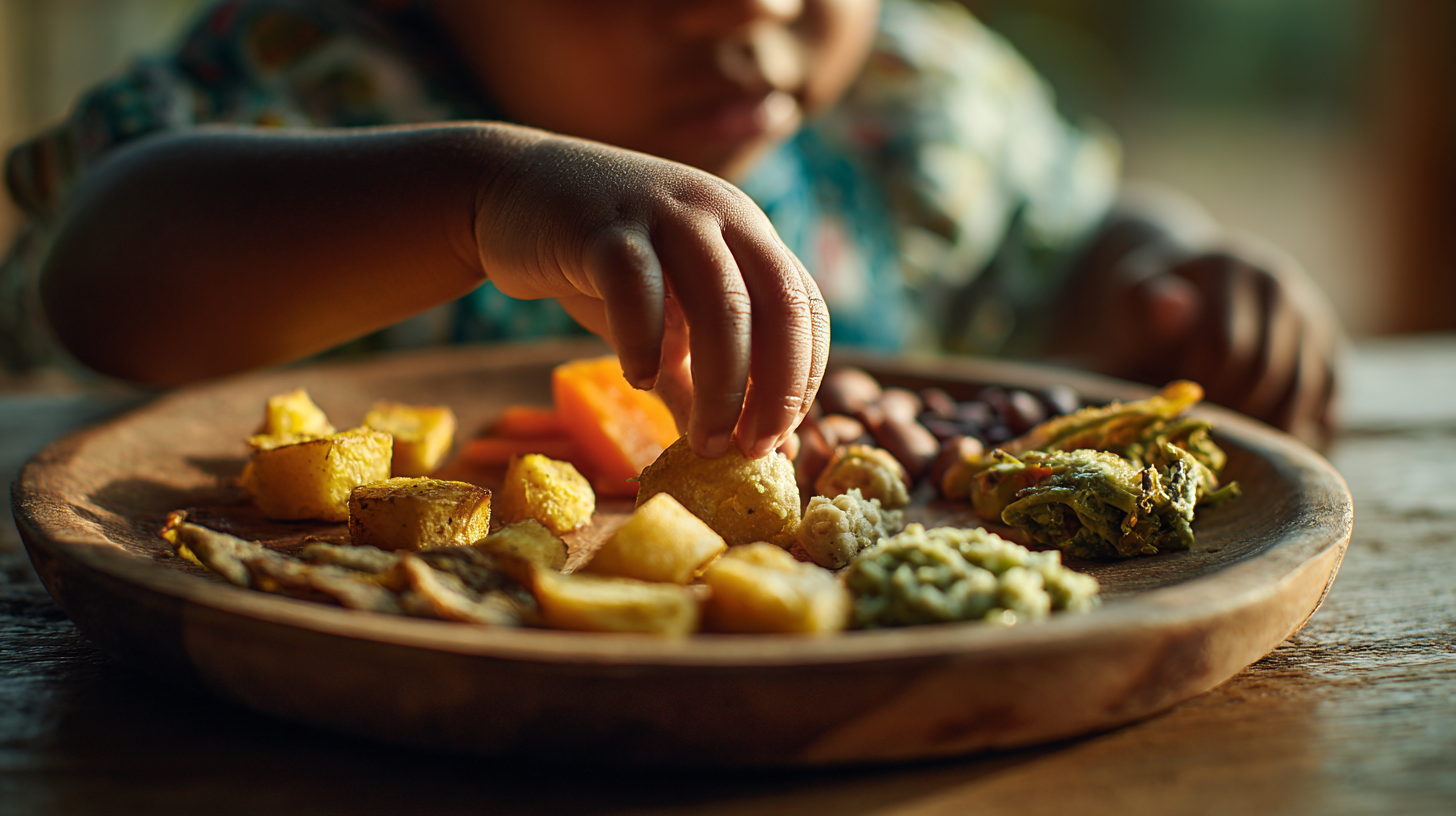
The progression typically follows three distinct stages. Stage one involves purees and completely smooth textures—think mashed avocado or silky sweet potato cream. Stage two introduces soft, small pieces that can be compressed between tongue and palate: we’re talking about well-cooked beans, ripe banana chunks, or tender pieces of Caribbean provisions like breadfruit or yam.
Stage three is where things get interesting. This is when you introduce hard, large pieces that require actual chewing with emerging teeth, plus those dreaded “mixed textures” like rice with beans or pieces suspended in liquid. Many parents stall at stage two out of fear, but here’s the uncomfortable truth: avoiding this progression can actually create the problems you’re trying to prevent.
I remember the first time I gave my daughter a piece of roasted plantain that wasn’t mashed into oblivion. My heart was racing. She picked it up, studied it, took a tentative bite, and then… smiled. That smile told me everything. She was ready. I was the one who needed to catch up.
When you’re ready to expand beyond basic textures and introduce authentic Caribbean flavors with proper texture progression, the Caribbean Baby Food Recipe Book provides over 75 recipes specifically designed for this transition period, including texture-appropriate versions of dishes like Calabaza con Coco, Cornmeal Porridge Dreams, and Plantain Paradise.
Building Variety Without Losing Your Mind
Let’s address the elephant in the kitchen: your toddler will probably reject new foods. A lot. Research shows it typically takes 10-15 exposures before a child accepts a new food. Not 10-15 bites—10-15 separate occasions of being offered that food.
This is where most parents unknowingly sabotage themselves. We offer broccoli once, our toddler makes a face like we’ve served them dirt, and we think, “Okay, they don’t like broccoli.” We move on. We never offer it again. And we’ve just taught our child that making a face is an effective veto strategy.
The Division of Responsibility model—developed by feeding expert Ellyn Satter—completely revolutionized how I approached mealtimes. Here’s how it works: you decide what foods are offered, when meals happen, and where eating takes place. Your toddler decides whether they’ll eat and how much they’ll consume from what you’ve offered.
This might sound like giving up control, but it’s actually the opposite. You’re taking control of the one thing you can actually control—the food environment—while respecting your child’s developing autonomy around the one thing they’re hardwired to control: their own intake.
Select at least 3 food groups to discover what makes a balanced toddler meal:
Protein
Grain
Vegetable
Fruit
Dairy
Healthy Fat
One practice that changed everything for our family was the “family meal” approach. Instead of making separate “baby food,” I started adapting what we were already eating. Making stewed peas? I’d pull out some soft beans and a bit of rice before adding the scotch bonnet pepper. Preparing callaloo? I’d reserve a portion before the final seasoning. This isn’t just convenient—it exposes your toddler to the actual flavors your family enjoys, building their palate for cultural foods from the beginning.
Here’s something that surprised me: toddlers who participate in family meals—even if those meals only last 16 minutes—show better dietary intake and reduced obesity risk. It’s not about elaborate dinner parties. It’s about eating together, modeling healthy eating, and creating positive food associations.
The Nutrition Nobody Talks About
By 12 months, your toddler needs approximately 1,000 calories per day from a combination of food and milk. But here’s what keeps pediatric nutritionists up at night: more than half of children under 5 are deficient in at least one essential micronutrient.
The big three concerns during this transition? Iron, zinc, and vitamin D. Let me break down why each matters and what you’re actually seeing when deficiencies occur.
Iron deficiency is the silent epidemic. Approximately 42% of young children worldwide are anemic due to low iron intake. The symptoms? Fatigue, developmental delays, increased infections, and ironically—decreased appetite, which makes the problem worse. The solution isn’t just offering more meat. It’s understanding that vitamin C enhances iron absorption while calcium (including from excessive milk consumption) blocks it.
Zinc deficiency creates a vicious cycle. Low zinc reduces appetite, which leads to less food intake, which leads to lower zinc… you see the problem. Children need zinc for growth, immune function, and literally hundreds of enzymatic processes. Yet it’s one of the most commonly deficient nutrients during the toddler years.
Vitamin D is particularly tricky because toddlers need it for calcium absorption and bone development, but most foods contain minimal amounts. While sunlight helps, many toddlers simply don’t spend enough time outdoors to synthesize adequate vitamin D naturally.
Click “Reveal Truth” to uncover what science actually says:
Myth: More milk means better nutrition
Myth: Picky eating means your child will be malnourished
Myth: Introducing spices and strong flavors too early is harmful
Myth: Choking means you’re advancing textures too quickly
The practical application? Offer iron-rich foods like beans, lentils, lean meats, and fortified cereals alongside vitamin C sources like citrus, tomatoes, or bell peppers. Wait at least an hour between high-calcium foods and iron-rich meals. And consider the entire day’s intake rather than obsessing over individual meals—toddlers are notorious for eating almost nothing at lunch and making up for it at dinner.
One strategy I learned from Guyanese cooking traditions involves combining proteins with complementary starches and vegetables in one-pot meals. Dishes like Cook-Up Rice (rice, beans, coconut milk, and vegetables) or Metemgee (root vegetables with coconut milk and fish) naturally provide balanced nutrition without requiring elaborate meal planning. These cultural dishes weren’t designed with modern nutrition science in mind, yet they intuitively solve many of the challenges we face during the toddler transition.
Self-Feeding Skills Development
Between 12-18 months, your toddler will develop the fine motor skills that transform them from passive recipient of food to active participant in eating. This progression happens whether you facilitate it or not, but you can either support the development or accidentally hinder it.
At 12 months, most toddlers can hold a spoon with their whole hand (though getting food from bowl to mouth successfully is hit-or-miss). They can hold a cup with two hands and drink with 4-5 consecutive swallows. They’re starting to use a pincer grasp to pick up small pieces of food. These aren’t just cute milestones—they’re neurological developments that signal readiness for more complex eating experiences.
Check off the skills your toddler has mastered:
Here’s what changed my perspective: the mess isn’t a problem to solve—it’s evidence of learning. Every time your toddler squishes sweet potato between their fingers, they’re gathering sensory information about food properties. Every time they miss their mouth with a spoon, they’re refining motor planning. The mess is the curriculum.
That doesn’t mean you can’t have boundaries. Use a splash mat under the high chair. Offer smaller portions to reduce waste. End the meal when playing with food outweighs eating. But within those boundaries, resist the urge to “help” by taking over the spoon or wiping their face after every bite. You’re not just feeding your child—you’re teaching them to feed themselves.
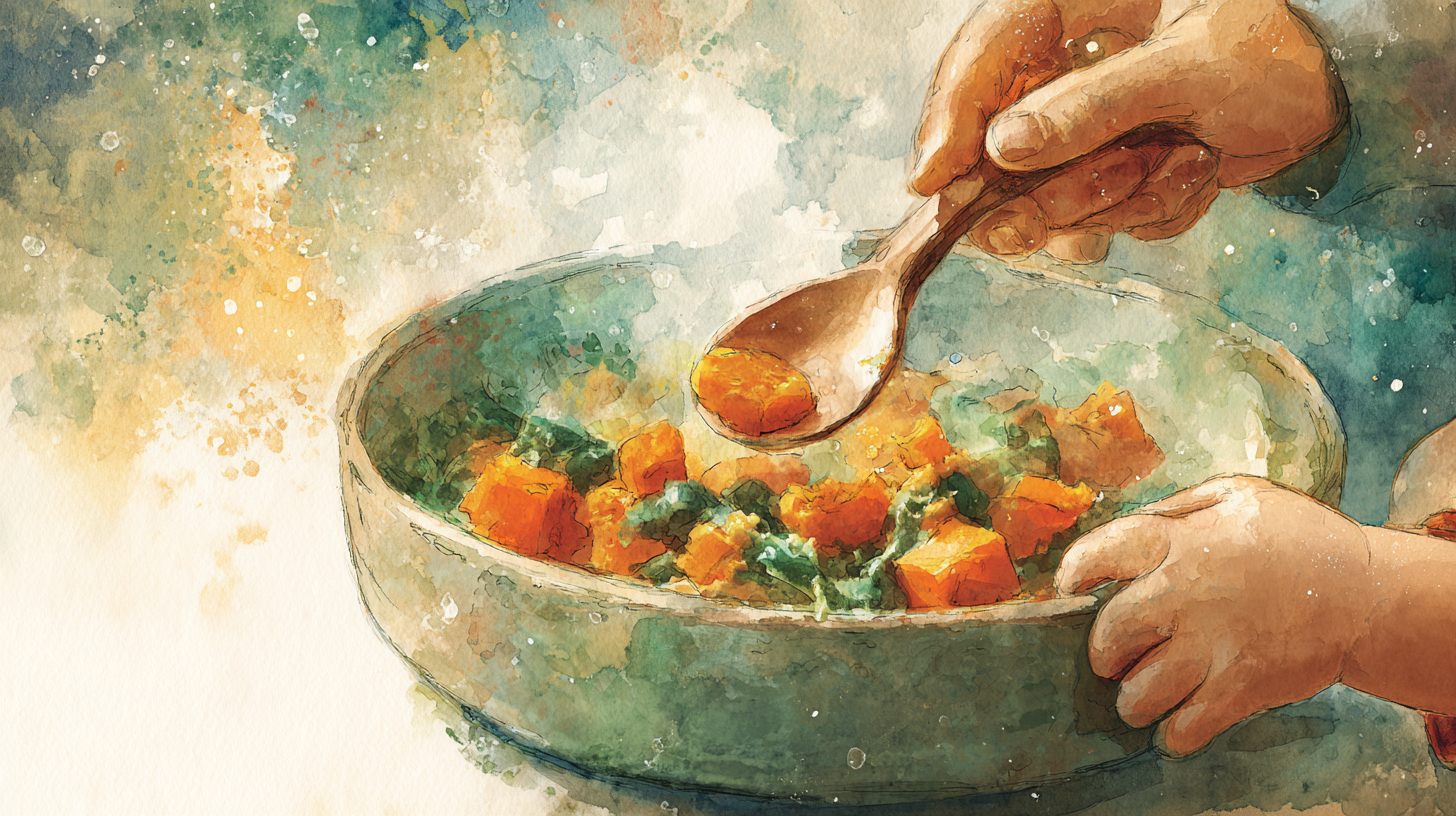
One technique that worked wonders was the “two spoon method.” I’d load a spoon and hand it to my daughter while she held another spoon herself. She’d attempt to feed herself with her spoon (building skills), and when that wasn’t working, she’d eat from the pre-loaded spoon I’d prepared (ensuring adequate intake). Everyone won.
The Caribbean Approach to Transition Foods
There’s something profoundly wise about Caribbean feeding traditions that modern parenting advice often misses. Caribbean grandmothers weren’t stressing about “introducing one food at a time for three days” or creating Instagram-worthy bento boxes. They were cooking real food, adapting it for small mouths, and trusting that children raised on flavorful, varied diets would become good eaters.
Take provisions, for example. These starchy root vegetables—yams, sweet potatoes, dasheen, eddoes, cassava—form the backbone of Caribbean cuisine and happen to be perfect transition foods. They’re naturally soft when cooked, easy to mash to appropriate textures, mild enough for sensitive palates, yet flavorful enough to be interesting. They provide complex carbohydrates, fiber, and various micronutrients depending on the specific vegetable.
Or consider the Caribbean practice of coconut milk in savory dishes. Western baby food culture often keeps sweet and savory strictly separated, but Caribbean cooking introduces babies to coconut milk in rice, beans, soups, and vegetable dishes from early on. The result? Children who develop sophisticated palates and don’t expect every food to taste like applesauce.
The spice philosophy deserves special attention. While you’re avoiding added salt and sugar, Caribbean traditions incorporate herbs and mild spices—thyme, bay leaf, scallion, garlic, ginger—from surprisingly early ages. These aren’t irritants; they’re flavor teachers. They expand your child’s concept of what food can taste like beyond the bland, one-note purees that American baby food culture has normalized.
For parents looking to incorporate these traditional foods with proper texture modification and age-appropriate preparation methods, the Caribbean Baby Food Recipe Book includes recipes like Geera Pumpkin Puree (12+ months), Karhee Curry Blend, Ackee Adventure, and Cassareep Sweet Potato—all designed specifically for toddlers making the transition to more complex foods.
Managing the Challenges That Will Come
Let me be real with you: this transition will have hard days. There will be meals where your toddler eats three bites of food you spent 30 minutes preparing. There will be weeks where they seem to survive on air and determination. There will be moments when you question everything you’re doing.
Understanding what’s normal versus what’s concerning makes all the difference. Normal picky eating involves food preferences, needing multiple exposures before acceptance, wanting the same foods repeatedly, and appetite fluctuations based on growth patterns. Concerning feeding difficulties involve consistent gagging on appropriate textures, extreme food aversions affecting multiple food groups, refusal to self-feed beyond age-appropriate expectations, or growth falling off their established curve.
The Division of Responsibility model becomes your North Star during difficult periods. When you trust that your job is offering nutritious foods at regular intervals and your child’s job is deciding what and how much to eat, you remove the power struggle that turns mealtimes into battles. You can’t force a child to eat, but you can create an environment where eating feels safe, pressure-free, and eventually, enjoyable.
Click each milestone as your toddler achieves it and watch your progress build:
First Finger Food Success
Picked up and ate a soft piece of food independently
Texture Level-Up
Moved from purees to handling small, soft chunks
Family Meal Integration
Ate modified version of family dinner at the table
Utensil Milestone
Successfully got food from bowl to mouth using a spoon
Flavor Adventure
Accepted a previously refused food after multiple exposures
Complex Texture Victory
Handled mixed textures like rice with beans successfully
One perspective shift that helped me immensely: your toddler isn’t being difficult—they’re being developmentally appropriate. The same autonomy-seeking behavior that makes them refuse previously accepted foods is the same drive that will eventually make them confident, independent eaters. The neophobia (fear of new foods) that emerges around 18 months served an evolutionary purpose—it kept toddlers from eating poisonous plants once they became mobile. Your child’s “pickiness” is actually an ancient survival mechanism.
That doesn’t mean you passively accept all food refusals. It means you respond strategically. Keep offering variety. Serve new foods alongside accepted favorites. Involve your toddler in age-appropriate food preparation. Model enthusiastic eating of diverse foods. Create positive mealtime environments without screens, pressure, or negotiations.
Safety considerations remain paramount during this phase. High-risk choking foods include whole grapes, nuts, seeds, large globs of nut butter, raw hard vegetables, hot dogs (unless quartered lengthwise), and popcorn. Always supervise meals. Ensure your toddler sits upright in an appropriate chair. Never let them eat while walking, running, or riding in a vehicle. These aren’t just recommendations—they’re evidence-based practices that dramatically reduce choking risk.
Your Next Steps Forward
Here’s what I want you to understand as you navigate these next few months: there is no perfect way to do this. There’s only your way—informed by evidence, guided by your values, and adapted to your unique child.
The parents who succeed during this transition aren’t the ones who follow rigid meal plans or stress about every bite. They’re the ones who understand the principles—texture progression, variety exposure, Division of Responsibility, nutritional priorities—and apply them flexibly within their family context.
Start where you are. If your 14-month-old is still primarily eating purees, that’s your starting point—not a failure. Begin introducing slightly thicker textures this week. If your 16-month-old refuses anything green, that’s information—not a permanent condition. Keep offering, modeling, and creating positive exposure without pressure.
Gather your tools. Having age-appropriate recipes designed for this specific transition makes everything easier. Having a framework (like Division of Responsibility) gives you confidence during difficult moments. Having realistic expectations—knowing that rejection and mess are part of the process—reduces stress.
For comprehensive guidance through every stage of this transition with Caribbean-inspired recipes and cultural feeding wisdom, explore the Caribbean Baby Food Recipe Book, which includes detailed texture progressions, family meal adaptations, and over 75 recipes spanning multiple Caribbean cultures—all designed to honor tradition while meeting modern nutritional needs.
Trust the process. Your toddler was born with the ability to self-regulate their intake. They know when they’re hungry and when they’re full—unless we teach them to ignore those signals through pressure, restriction, or using food as reward or punishment. Your job isn’t to control their eating. It’s to provide consistent, nutritious options and create an environment where learning to eat feels safe.
The Truth About This Moment
Remember that Tuesday at 3:47 PM I mentioned? When my daughter bit into that chunk of plantain with such confidence? That moment didn’t happen in isolation. It was the culmination of dozens of smaller moments—offered foods that were refused, textures that were initially rejected, meals that felt like failures, and countless tiny victories I almost didn’t notice.
The 12-18 month transition isn’t about perfection. It’s about progress. It’s about building skills gradually, exposing your child to variety repeatedly, and trusting that humans are designed to learn to eat. We’ve been doing this successfully for millennia, long before baby food pouches and feeding schedules and Instagram-perfect high chair moments.
Your grandmothers did this. Their grandmothers did this. Across every culture and throughout all of human history, parents have guided their children from milk to solid foods. The principles haven’t changed—only our anxiety about them has intensified.
So take a breath. Serve that new food again tomorrow even though it was rejected today. Let your toddler make a mess while learning to use a spoon. Offer pieces of your dinner alongside their familiar favorites. Celebrate the small wins—the first successful bite of a new texture, the meal where they tried something twice before deciding they didn’t like it, the day they demanded to feed themselves even though it took three times as long.
These six months—these seemingly endless, sometimes frustrating, occasionally magical months—are building more than eating skills. They’re building your child’s relationship with food, their confidence in their body’s signals, their willingness to try new things, and their trust that you’ll provide for their needs without pressure or force.
That’s not just feeding. That’s parenting at its finest. And you’re already doing it—one sweet potato-covered moment at a time.

Kelley's culinary creations are a fusion of her Caribbean roots and modern nutritional science, resulting in baby-friendly dishes that are both developmentally appropriate and bursting with flavor. Her expertise in oral motor development and texture progression ensures that every recipe supports your little one's feeding milestones while honoring cultural traditions.
Join Kelley on her flavorful journey as she shares treasured family recipes adapted for tiny taste buds, evidence-based feeding guidance, insightful parenting anecdotes, and the joy of celebrating food, culture, and motherhood. Get ready to immerse yourself in the captivating world of Kelley Black and unlock the vibrant flavors of the Caribbean for your growing baby, one nutritious bite at a time.
- The Feeding Revolution: Why Your Everyday Meals Are Changing the World - October 13, 2026
- Your Feeding Story Matters More Than The “Perfect” One Online - October 12, 2026
- Looking Forward: Stepping Into Your Confident Feeding Future - October 11, 2026