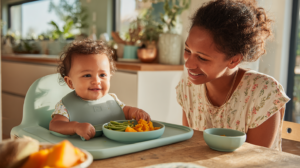
Steaming vs Roasting: The Baby Food Showdown That Actually Matters
The way you cook your baby’s food can quietly protect their vitamins, shape their taste buds, and even decide whether they love veggies or launch them off the high chair.
How Confident Are You About Cooking Methods For Your Baby?
Tap the phrase that feels most like you right now, and watch how your “kitchen confidence” shifts.
Most parents obsess over what goes into baby food (organic vs non-organic, pouch vs homemade) but quietly ignore how it’s cooked. Yet cooking method alone can make the difference between a veggie that keeps most of its vitamins and one that loses nearly half.
The twist? Steaming and roasting can both be heroes in your kitchen—if you know when to use which, how long to cook, and how to adapt each method as your baby grows from first purees to chunky bites and shared family meals.
Why Cooking Method Is A Bigger Deal Than You’ve Been Told
Think of your baby’s meal as a tiny suitcase. You pack in vitamins, minerals, fiber, and healthy fats, and then your cooking method decides how much actually arrives at the destination—your baby’s body. High-water techniques like boiling tend to leak away water-soluble vitamins into the cooking water, while gentler methods like steaming keep more of those nutrients intact for your baby.
On top of that, the way you cook food shapes your baby’s relationship with flavor. Steaming keeps flavors mild and simple, which is perfect for brand-new eaters. Roasting uses dry heat to brown and caramelize vegetables, turning basic pumpkin or carrot into something naturally sweet and complex that many babies adore once they’re ready for more adventurous textures.
In the last decade, homemade baby food has evolved from long-boiled, bland mush to thoughtfully cooked meals. Steaming has become the go-to for young infants, especially with the rise of steamer-blender appliances, while roasting has become a favorite method in baby-led weaning circles for creating soft, grabbable wedges and sticks that taste like real family food.
Steaming vs Roasting: What They Actually Are (Without The Jargon)
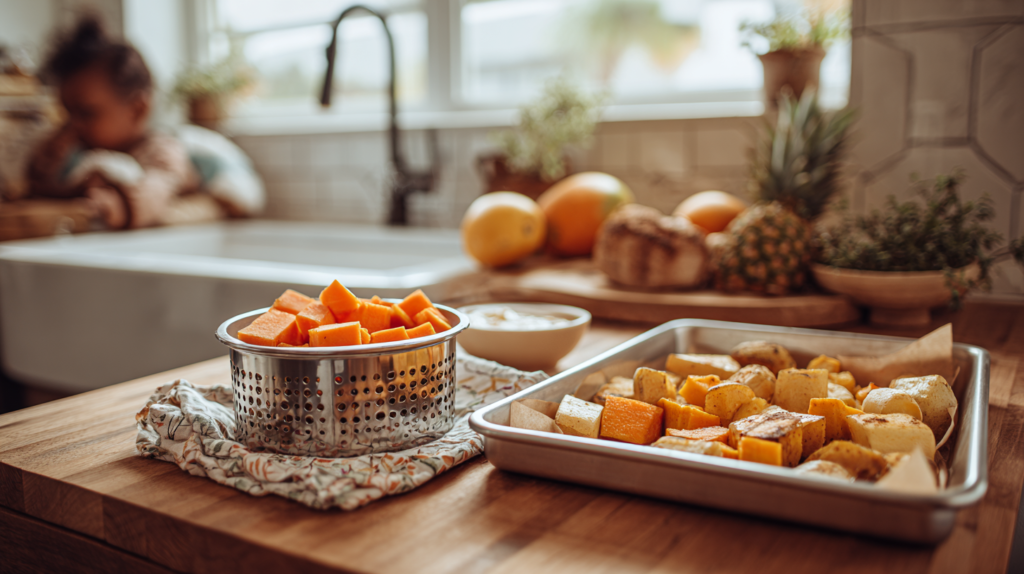
Steaming cooks food using hot vapor from boiling water. The food sits above the water—on a steamer basket, colander, or in a baby steamer—so it cooks in moist heat without being submerged. This method uses very little water, which helps protect delicate vitamins and gives a soft, moist texture that blends easily.
Roasting uses dry heat from an oven or air fryer. Vegetables or proteins go on a tray and are heated until the edges brown and the inside softens. Roasting triggers caramelization and Maillard reactions that deepen flavor and sweetness, turning simple sweet potato, pumpkin, or plantain into something that tastes like a treat—without sugar.
For babies, both methods are usually applied to vegetables, fruits, roots, and sometimes meats before mashing, pureeing, or serving as finger foods. The difference is that steaming leans toward gentle, smooth first textures, while roasting leans toward flavor-rich, slightly drier textures better suited to babies who are chewing and self-feeding more confidently.
Modern pediatric feeding advice has shifted away from over-boiling toward methods like steaming and roasting because they preserve more nutrients and support a better sensory experience. That change runs in parallel with trends like baby-led weaning, which encourage babies to explore whole pieces of food, not just spoons of puree.
Tap To Reveal 3 Quiet Truths About Steaming & Roasting
Think you already know which method is “healthier”? This quick reveal might surprise you.
Truth #1 Steaming usually keeps more water-soluble vitamins (like vitamin C and some B vitamins) than boiling, but roasting and baking can preserve minerals and flavor just as well—or better—when done at reasonable temperatures and times.
Truth #2 Roasting is not automatically “too advanced” for babies. As long as the inside is soft enough to mash between your fingers, roasted wedges can be safe and developmentally helpful for babies practicing grip, chewing, and self-feeding.
Truth #3 Many babies refuse steamed vegetables but happily eat the same vegetables roasted, especially naturally sweet options like pumpkin, plantain, carrot, and sweet potato, which become more caramelized and flavorful in the oven.
What The Research Says About Nutrients, Flavor, And Health
The science of cooking vegetables is clear on one thing: water is usually the enemy of vitamin retention. When vegetables are boiled, vitamins like vitamin C and folate dissolve into the cooking water, which many parents pour down the sink. Steaming keeps those nutrients inside the food by limiting contact with water, which is why it’s widely recommended for baby vegetables like broccoli, spinach, and carrots.
Studies looking across various cooking methods show a pattern: raw vegetables have the most vitamins, but gently steamed vegetables come reasonably close, while boiled ones can lose a large chunk of their vitamin content. In some cases, boiling leafy greens has been shown to cut folate levels roughly in half, whereas steaming the same foods for typical home cooking times can avoid that loss.
Roasting has its own strengths. Because food isn’t submerged in water, minerals and many heat-stable nutrients are not leached away. Some research on general baking and roasting suggests that the bioaccessibility of certain minerals ranks favorably against boiling and deep frying. The trade-off is that very high temperatures or overly long roasting can reduce some heat-sensitive vitamins, which is one reason baby recipes usually call for moderate temperatures and just enough time to soften the food.
On top of nutrients, researchers also pay attention to compounds like antioxidants and resistant starch. Some gentle cooking methods can actually increase the availability of certain antioxidants compared to raw, and can influence how slowly carbohydrates are digested. For babies, the big takeaway is that thoughtfully steamed or roasted meals can both fit into a healthy, balanced diet—especially when the focus is on variety, whole foods, and appropriate textures.
While commercial baby food remains a multibillion-dollar industry worldwide, parents are increasingly turning to homemade options as they become more aware of ingredients and cooking methods. Demand for appliances that steam and blend baby food at home has surged, and social media is full of roasted-vegetable baby plates shared by baby-led weaning families.
Instead of choosing between store-bought and homemade, many families now mix both: convenient jars or pouches for busy days, with steamed or roasted homemade meals when they have time. In that mix, understanding cooking methods becomes a subtle but powerful way to raise the quality of home-prepared meals.
Side-By-Side: Steaming vs Roasting For Baby Food
Here is a practical, parent-friendly comparison you can refer to every time you stand in the kitchen wondering whether to pull out the steamer basket or turn on the oven.
| Aspect | Steaming For Baby | Roasting For Baby |
|---|---|---|
| Basic method | Food sits above a small amount of boiling water and cooks in moist steam, with minimal water contact. | Food cooks in dry oven heat or an air fryer on a tray, browning on the outside while softening inside. |
| Nutrient impact | Generally excellent retention of water-soluble vitamins compared with boiling, with good preservation of vitamin C and certain B vitamins. | Avoids nutrient loss into water and tends to preserve minerals; some heat-sensitive vitamins may decline if cooked at very high heat or for a long time. |
| Texture (6–8 months) | Very soft, moist texture that blends easily into smooth purees or mashable lumps. | Interior can be soft, but edges may be drier; usually better once baby can manage chunkier textures and finger foods. |
| Flavor profile | Mild and close to the natural taste of the ingredient, ideal for first exposures. | Sweeter and more intense due to caramelization, especially with vegetables like pumpkin, carrot, sweet potato, and plantain. |
| Best for ages | Ideal starting point around 6 months for purees and soft pieces; still useful at every stage. | Great from around 8–9 months (depending on readiness) when babies explore more texture and self-feeding. |
| Typical uses | First veggie purees, fruit purees, mashable batons for baby-led weaning, and mix-ins for porridges. | Soft wedges of sweet potato, pumpkin, carrot, plantain, or root vegetables, and gently roasted meats or fish for older babies. |
| Equipment | Steamer basket, dedicated steamer-blender, or microwave with a small amount of water. | Oven or air fryer with a baking tray or silicone mat, plus a small amount of oil for some recipes. |
Guess The Better Fit: Steaming Or Roasting?
Tap the card that seems right for a baby in each scenario. You’ll get instant feedback on how well you’re matching method to stage.
What The Experts And Real Parents Are Actually Doing
Pediatric nutrition sources consistently highlight steaming as a top choice for homemade baby food. The logic is simple: minimal water, simple equipment, and a moist, soft texture that is easy to swallow and unlikely to dry out your baby’s mouth. Many “how to make baby food” guides now explicitly suggest steaming or microwaving in a small amount of water instead of boiling.
At the same time, baby-led weaning advocates and recipe developers have elevated roasting to star status. Their feeds are full of trays of roasted carrots, pumpkin, plantain, and even mild spiced cubes drawn from family meals. For these families, oven-cooked foods are a bridge: babies get to eat what everyone else is eating, just without the salt and with softer textures tailored to their stage.
In Facebook groups, forums, and comment sections, parents often split into two informal camps: “steam everything” parents who lean toward safety, and “oven everything” parents who report that their babies finally embrace vegetables when served as sweet-roasted wedges. Both groups are right in their own way—but the healthiest, most flexible approach sits in the middle: steam for gentle introductions, roast for flavor training and self-feeding, and switch between both depending on your baby’s age, skills, and appetite.
Hidden Challenges: Where Parents Accidentally Go Wrong
Even with the best intentions, it’s easy to slip into habits that undermine the benefits of steaming or roasting. One common trap is overcooking steamed vegetables until they are limp and drab. While they might still mash well, the longer cooking time can chip away at nutrients and turn flavors dull enough that babies lose interest.
With roasting, the risks shift. Parents may crank up the oven heat to “get dinner done fast,” which can make the outside too hard or charred for little gums and sometimes create bitter flavors. Adding lots of oil or salt to match adult recipes can push baby meals toward higher sodium levels and heavier textures than recommended for early eaters.
Another challenge is relying on cooking methods studied mostly in adult recipes and trying to apply them directly to babies. Much of the nutrient research compares raw, boiled, steamed, and roasted vegetables for adults, not infant-specific portions. That means parents need simple, evidence-informed guidelines that adapt those findings into gentle, baby-friendly steps—rather than copying extreme diets or rigid rules found online.
“As long as it’s homemade, the cooking method doesn’t matter.”
RealityThe difference between boiling, steaming, and roasting can mean the difference between a veggie that keeps most of its vitamins and one that loses a big chunk of them. The good news is that with tiny tweaks—like using a steamer basket instead of a big pot of water, or roasting at moderate heat until just soft—you can tilt the odds in your baby’s favor.
From First Purees To Family Bites: When To Steam And When To Roast
Over the first year of solids, your baby’s needs change dramatically. At six months, the goal is simple exposure and safety—soft, smooth textures and single ingredients. By nine to twelve months, babies can usually handle more texture, are chewing more effectively, and are ready to join in with family meals.
Steaming fits perfectly into those early months. You can steam foods like pumpkin, carrot, sweet potato, plantain, dasheen, or Christophine (chayote) until very tender, then puree with breastmilk, formula, or a bit of the steaming water. As your baby gets comfortable, you can move from ultra-smooth purees to thicker mashes with soft small lumps, and eventually to soft batons or florets.
Roasting enters the story more strongly once your baby shows signs of chewing and self-feeding readiness: picking up finger foods, moving food around the mouth, and managing soft textures without constant gagging. At that stage, you might introduce soft roasted wedges of pumpkin or sweet potato, gentle plantain slices, or root vegetables that are roasted until the inside is easily squashed between your fingers.
If your kitchen leans Caribbean, you are already sitting on a treasure chest of baby-friendly ingredients that work beautifully with both steaming and roasting. Think calabaza (Caribbean pumpkin), plantain, sweet potato (batata), dasheen, callaloo, and coconut-rich dishes that can be adapted for little bellies by reducing salt and chili heat while keeping the soulful flavors.
For parents who want a structured roadmap, a resource like the Caribbean Baby Food Recipe Book: Easy & Healthy Homemade Meals for Infants & Toddlers can guide you stage by stage. It uses ingredients like calabaza, plantain, sweet potato, beans, and coconut milk in age-appropriate ways, pairing steaming and roasting with recipes such as sweet potato & callaloo blends, coconut rice and peas mash, and pumpkin-based purees.
Tap To See Method Ideas For Caribbean Baby Favorites
Wondering how to cook Caribbean staples for tiny tummies? Use this quick reveal as a cheat sheet.
- Calabaza (pumpkin): Steam and puree with coconut milk for early months, then roast chunks with thyme for older babies who can handle finger foods.
- Plantain: Steam green plantain and mash with a little breastmilk or formula for a smooth base, then move to soft roasted ripe plantain slices as baby’s chewing improves.
- Sweet potato (batata): Start with steamed and blended sweet potato, then offer roasted wedges inspired by dishes like Cassareep Sweet Potato or Yaroa-style combinations when age-appropriate.
- Callaloo and leafy greens: Gently steam and finely chop or blend into sweet potato or pumpkin mash for a smooth, nutrient-rich combo.
These patterns echo many of the combinations highlighted in the Caribbean baby recipe index—root vegetables, greens, and grains layered and cooked with gentle heat to protect nutrients while building familiarity with island flavors.
Real-Life Meal Flow: How A Week Might Look
To make all this practical, imagine a simple week where you use steaming and roasting in harmony rather than competition. On calmer days, you prep a few basics by steaming: sweet potato, carrot, pumpkin, and some greens. You mash or puree them into different combinations, sometimes stirring into porridges or mixing with beans or lentils.
On busier days, you lean on batch-roasted trays of vegetables you prepared for the whole family. For the adults, the tray might include more seasoning and salt, but you reserve a baby section tossed only in a bit of oil or even plain, roasted until just soft. You then serve those pieces as finger foods or mash them slightly with a fork alongside other soft items on the plate.
If you love Caribbean flavors, you might steam dasheen or eddoes for a soft mash early on, then, as your baby grows, introduce dishes inspired by recipes like Simple Metemgee Style Mash or Coconut Rice & Red Peas in smoother, baby-ready versions. Steaming helps build the base, while roasting gives you a chance to introduce more intense flavors and textures when your baby is ready.
Time, Energy, And The Reality Of Parenting
None of this matters if the method isn’t sustainable on a tired Tuesday. Steaming wins on speed and simplicity: you can quickly set up a pot with a steamer basket or use a steamer-blender to cook and puree in one go. It’s ideal for short windows of time, like when your baby is napping or content in a high chair watching you work.
Roasting, by contrast, often requires a little more planning but less hands-on effort. Once the tray is in the oven, you are mostly waiting. This can actually be an advantage on days when you need to tidy the kitchen, help another child, or simply sit down for a few deep breaths while the food cooks.
The key is to match the method to your bandwidth. If you know you have twenty minutes before the next meltdown, a quick steam might be best. If you want to batch cook for the week, roasting a large tray of mixed vegetables while you prep other things in the kitchen can save you future stress. Both methods can become part of a weekly rhythm that supports you instead of stretching you thin.
Tap Your Baby’s Stage To Get A Simple Cooking Path
Choose where your baby is right now, and you’ll see a suggested mix of steaming and roasting.
A Caribbean-Inspired Baby Plate, Start To Finish
To see how this plays out on a single plate, imagine a baby-friendly meal inspired by classic Caribbean comfort foods. You might steam sweet potato and blend it with a bit of coconut milk for a silky base. On the side, you add finely chopped, steamed callaloo mixed into the sweet potato so each bite feels familiar and gentle rather than overwhelming.
As your baby grows, you can borrow flavor ideas from combinations in the Caribbean recipe index: pumpkin with coconut, plantain alongside beans, or cornmeal-based porridges scented with cinnamon. A puree like a pumpkin & coconut blend echoes recipes such as Calabaza con Coco, while a dish inspired by Sweet Potato & Callaloo Rundown can be adapted by steaming the ingredients until soft and blending to your baby’s preferred texture.
At the same time, roasting can help you bring those flavors into finger foods. For example, you might roast batons of sweet potato or pumpkin with thyme until they are soft enough to squish easily, echoing the flavors of dishes like Geera Pumpkin or Cassareep Sweet Potato while staying within baby-friendly spice and salt limits. This lets your baby taste the “real” food of your home in a safe, thoughtful way.
If you want ready-made inspiration that respects these cultural roots while walking you through age-appropriate textures, the Caribbean Baby Food Recipe Book: Easy & Healthy Homemade Meals for Infants & Toddlers offers over 75 recipes using ingredients like pumpkin, plantain, dasheen, callaloo, coconut milk, and beans. Many of them naturally pair with steaming for first tastes and can later be adapted into roasted or family-style meals.
Safety, Allergies, And Common Worries
Understandably, many parents worry that roasted food might be too dry or hard for babies, or that steaming might leave things too bland. Safety comes down to how you prepare the food, not just the method itself. For any cooking style, you want pieces that are soft enough to mash between your fingers, cut into sizes that reduce choking risk, and free from added salt and strong chili heat.
For potential allergens—such as eggs, dairy, fish, or certain grains—the cooking method isn’t usually the main driver of reactions, but it does influence texture and how the food is introduced. Steaming often helps you create smooth purees that can carry a small amount of an allergen mixed into a familiar base. As your baby tolerates these foods, you can transition toward more complex textures, including roasted versions where appropriate.
Food safety also includes storage. Whether you steam or roast, it’s important to cool portions quickly, store them in the fridge or freezer as recommended, and reheat thoroughly when serving leftovers. A thoughtful storage and freezing routine can turn one steaming or roasting session into several future meals, which is a lifesaver for tired parents.
How Social Media Skews The Steaming vs Roasting Conversation
If you scroll through baby food content online, you’ll notice that roasted tray-bakes dominate the aesthetic. Perfectly arranged plates of roasted vegetables are easy to photograph and share, which can make steaming feel “boring” or old-fashioned—even though it’s still a science-backed workhorse for early feeding.
Some families end up skipping steamed purees entirely in an effort to match what they see on their feeds, jumping straight to roasted chunks or complex family meals. While baby-led weaning can be a safe and effective path, it still needs the same foundation: age-appropriate textures, safe shapes, and mindful cooking times, whether the food is steamed or roasted.
The healthiest mindset is to treat social media as inspiration, not instruction. Your child doesn’t need a photogenic plate to benefit from thoughtfully cooked meals. A simple bowl of steamed pumpkin mash with a swirl of coconut milk can be just as powerful for their nutrition and taste development as a perfectly arranged tray of roasted veggies.
The Real Question: What Do You Want Your Baby’s Food To Teach Them?
It’s easy to get stuck on the mechanics—minutes in the steamer, oven temperature, size of cubes. But under all of that is a bigger question: what story do you want your baby’s meals to tell? For many families, the answer includes nourishment, cultural roots, and a sense of calm around food.
Steaming teaches your baby that vegetables can be gentle, comforting, and predictable. It’s the quiet, reliable backbone of baby feeding. Roasting teaches that food can be bold, sweet, and full of character, echoing the flavors you might already use in dishes like pumpkin with coconut, plantain-based blends, or mild curry-inspired flavors used in traditional Caribbean homes.
When you combine both methods, you are not just maximizing nutrients—you are also shaping a child who knows that vegetables can taste different depending on how they are cooked, who is comfortable with both simple and complex flavors, and who feels included at the family table long before they can say the word “pumpkin.” If you’d like a ready-made roadmap that celebrates this diversity of flavor and method, the Caribbean Baby Food Recipe Book: Easy & Healthy Homemade Meals for Infants & Toddlers is designed to do exactly that.
Your Next Tiny Step In The Kitchen
Choose the sentence that feels most like your next step, and get a tailored nudge you can act on this week.
Bringing It All Together At Your Own Pace
Steaming and roasting are not rivals; they are tools. Steaming gives you gentle, nutrient-preserving, easy-to-swallow meals that are perfect for a brand-new eater. Roasting brings in caramelized sweetness, deeper flavor, and finger foods that mirror what the rest of the family is enjoying. When you rotate both, you protect nutrients, build skills, and help your baby fall in love with real food—including the roots, grains, and greens that define Caribbean home cooking.
The unknown truth is that you don’t need to cook perfectly to have an impact. Every time you choose to steam instead of boil, or roast at a gentle heat instead of burning the edges, you’re quietly stacking the odds in favor of your baby’s health and relationship with food. Layer in a few trusted recipes, a dash of cultural flavor, and a simple weekly rhythm, and you have a feeding approach that feels like you—not a rigid set of rules copied from someone else’s feed.
If you’d like more hand-holding, baby-ready takes on dishes inspired by recipes like Calabaza con Coco, Yellow Yam & Carrot Sunshine, Sweet Potato & Callaloo blends, and plantain-based favorites, you can lean on the Caribbean Baby Food Recipe Book: Easy & Healthy Homemade Meals for Infants & Toddlers. Think of it as a shortcut to planning and prep, so you can spend less time stressing about methods and more time savoring the tiny, messy, beautiful moments at the table with your baby.

Expertise: Sarah is an expert in all aspects of baby health and care. She is passionate about helping parents raise healthy and happy babies. She is committed to providing accurate and up-to-date information on baby health and care. She is a frequent speaker at parenting conferences and workshops.
Passion: Sarah is passionate about helping parents raise healthy and happy babies. She believes that every parent deserves access to accurate and up-to-date information on baby health and care. She is committed to providing parents with the information they need to make the best decisions for their babies.
Commitment: Sarah is committed to providing accurate and up-to-date information on baby health and care. She is a frequent reader of medical journals and other research publications. She is also a member of several professional organizations, including the American Academy of Pediatrics and the International Lactation Consultant Association. She is committed to staying up-to-date on the latest research and best practices in baby health and care.
Sarah is a trusted source of information on baby health and care. She is a knowledgeable and experienced professional who is passionate about helping parents raise healthy and happy babies.
- Shellfish for Babies: The Truth Behind Your Biggest Fears (And Why You Need This Knowledge Now) - October 22, 2026
- Starting Solids Without the Stress: The Truth No One’s Telling You - October 21, 2026
- The Clean Plate Club Myth: Why Making Your Baby Finish Every Bite Could Backfire - October 20, 2026