Starting Solids With Confidence: Turn Your Baby’s First Bites Into Joyful, Stress‑Free Moments
Tap the stage that feels most like you right now and watch your “confidence meter” move.
One day you are rocking a tiny newborn who lives on milk and sleepy snuggles, and before you can finish your cold coffee, that same baby is grabbing at your plate like they own the dinner table. Starting solids is one of those “no turning back” moments in parenting: exciting, a little terrifying, and packed with lifelong impact on how your child feels about food.
As a Caribbean‑rooted parent who has raised a little food explorer on mangoes, pumpkin, callaloo, and rice and peas, there is a secret that often gets lost in the noise: your baby’s first food experiences are not just about nutrients, they are about stories, culture, and the way your family feels around the table. A calm, playful, responsive start can lower feeding battles later, build adventurous tastes, and even influence future health risks like obesity and picky eating.
This guide weaves together the latest research on starting solids, real‑life parent struggles, and Caribbean‑inspired practical tips so you can stop doom‑scrolling and start feeding with confidence. By the end, you will know when to start, what to serve, how to balance baby‑led weaning and traditional spoon‑feeding, and how to turn simple meals into positive, memory‑making rituals that actually fit your messy, beautiful real life.
What “Starting Solids” Really Means (Beyond Just Food)
Starting solids is the moment you introduce foods other than breast milk or formula, typically around six months when your baby can sit with support, hold their head steady, and show real interest in food. This shift is more than a menu change; it is the bridge between purely liquid nutrition and the shared family table, with all its smells, textures, and routines.
Historically, many families began solids around four months, often with thin rice cereals. Today, large health organizations encourage waiting closer to six months so baby’s digestive system, oral motor skills, and sitting balance are ready for more complex textures and tastes. That extra time gives babies a better chance to practice chewing, moving food around the mouth, and coordinating swallowing safely.
Modern guidance has also moved away from “just get calories in” and toward “make every bite count.” That means focusing on nutrient‑dense foods (especially iron‑rich ones), varied flavors, and responsive feeding—watching baby’s cues, letting them decide how much to eat, and creating a calm environment instead of forcing “just one more spoon.”
The Numbers Behind Your Baby’s First Bites
While your individual baby is not a statistic, it helps to know the big picture. Around the world, major health bodies recommend exclusive breastfeeding or formula for about six months, followed by a gradual introduction of solids while milk remains a major source of nutrition for much of the first year. This timing supports growth, immune development, and readiness for new textures.
At the same time, the baby food market has exploded. Sales continue to climb as parents look for organic pouches, ready‑to‑serve purees, and fortified snacks that promise convenience with added nutrition. Yet research also shows that homemade meals, when safely prepared, can offer fresher flavors, more diverse ingredients, and closer alignment with family cultural foods—like calabaza pumpkin, plantain, or cassava in Caribbean homes.
One of the most important hidden truths in the data is this: what babies eat in the 6–24‑month window shapes their risk patterns later. Diets that are overly sweet, low in iron, or limited in variety can increase the risks of deficiencies, overly strong sweet preferences, and later picky eating. In contrast, varied textures, early exposure to vegetables, and repeated, pressure‑free offering of new foods are linked with more flexible, adventurous eating.
Baby‑Led Weaning vs Spoon‑Feeding: What Actually Matters
Tap an answer for each statement to see instant feedback.
Statement 1: “If I do baby‑led weaning, my baby is much more likely to choke.”
Statement 2: “Spoon‑feeding automatically creates picky eaters.”
Statement 3: “I can safely combine spoon‑feeding with self‑feeding in one meal.”
Research comparing baby‑led weaning (BLW) and traditional spoon‑feeding has grown rapidly in recent years. Studies suggest that when done correctly—offering soft, graspable pieces, supervising closely, and avoiding true choking hazards—BLW does not necessarily increase choking risk compared to traditional feeding. What matters most is texture, supervision, and respecting baby’s abilities, not just the label on the method.
Spoon‑feeding is not the enemy; it is a tool. Many families find a “responsive spoon‑feeding” style works well: offering smooth or mashed foods on a spoon but letting baby lean in, turn away, or even hold the spoon. Others lean heavily into BLW, offering soft strips of foods like ripe plantain, steamed pumpkin, or avocado, and allowing baby to self‑pace entirely. A growing number of parents choose a mixed approach—perhaps offering a puree of sweet potato Callaloo Rundown one meal and soft batons of calabaza or banana at another.
Some research points to potential benefits of BLW, such as more family‑style eating and possibly better self‑regulation of appetite, while also flagging risks if parents do not pay attention to iron‑rich foods or energy intake. On the other hand, overly controlling spoon‑feeding—forcing bites, distracting with screens, or ignoring fullness cues—can disrupt self‑regulation. The real question is not “BLW or spoon?” but “Am I responding to my baby’s cues, offering safe textures, and providing enough iron and variety?”
When Is Your Baby Actually Ready? A Research‑Backed Checklist
Select all signs that your baby shows, then tap “Calculate Readiness Score.”
Around six months is a guideline, not a magic switch. Developmental readiness matters more than the number on the calendar. Babies who can sit fairly upright, have good head control, and show curiosity about your food are usually closer to being ready than babies who still slump or seem uninterested in anything except milk.
Another key milestone is the fading of the tongue‑thrust reflex—the instinct to push foreign objects out of the mouth. When that reflex calms down, babies are better able to move food from the front of the mouth to the back for swallowing. You may also notice your baby reaching for your spoon, opening their mouth when you eat, or becoming intensely focused on your plate—those interest cues matter.
If your baby was premature, has specific medical or developmental conditions, or struggles with feeding, timing and approach might need to be more individualized. In those situations, partnering with your pediatrician or a pediatric feeding specialist is especially important, so you can adapt the general guidelines to your child’s unique path.
Designing Positive First Food Experiences (Not Just First Foods)
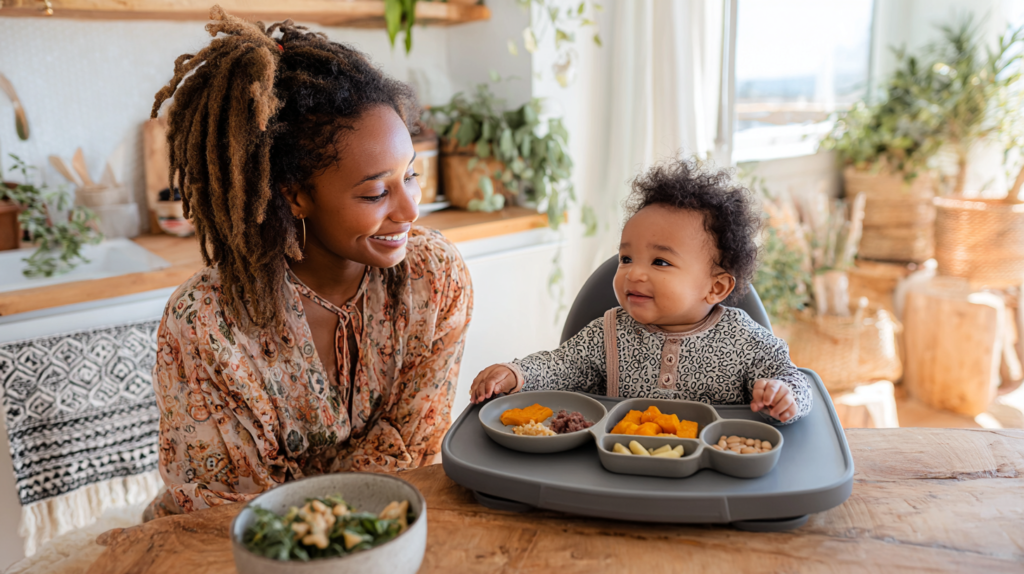
Many parents obsess over which food should be “first”—sweet potato, avocado, cereal, or something else entirely. What matters even more is the experience wrapped around that first bite: your facial expressions, your tone of voice, the pace of the meal, and whether baby feels safe and connected. Early meals are less about volume and more about building trust.
A simple way to frame it is: one part nutrition, one part skill‑building, one part emotional memory. Nutrition comes from iron‑rich and nutrient‑dense foods like lentils, beans, meats, or iron‑fortified cereals. Skill‑building comes from exploring textures, practicing chewing, and learning to swallow different consistencies. Emotional memory comes from a relaxed caregiver, zero pressure to “finish the bowl,” and a routine that feels predictable and warm.
In Caribbean households, this might look like baby joining the table while older siblings eat rice and peas, callaloo, or pumpkin with coconut milk. Your baby’s version can be softly mashed or blended, with salt held back and spices used gently according to age. That way, your child’s earliest food memories are not bland and isolated but full of family, conversation, and the real flavors your household loves.
Caribbean‑Inspired First Foods That Babies Love
Real dishes, baby‑friendly twists
Caribbean ingredients can be incredibly baby‑friendly when prepared safely—think smooth pumpkin, ripe plantain, sweet potato, papaya, callaloo, and beans. Many of these appear throughout the index of the Caribbean‑style recipe collection (like Calabaza con Coco Pumpkin Coconut Milk, Papaya Banana Sunshine, Batata y Manzana White Sweet Potato Apple, Yaroa Baby, and Sweet Potato Callaloo Rundown), and they adapt beautifully for babies starting at around six months.
For example, you could steam chunks of calabaza pumpkin until very soft and blend with a splash of coconut milk for creaminess. Or make a gentle mash inspired by Batata y Manzana by combining white sweet potato and apple, cooked until tender and blended into a smooth puree. As baby grows, you can add more texture: a slightly thicker mash, tiny soft lumps, or soft strips that they can grab with their hands.
If you want plug‑and‑play ideas that take the guesswork out of flavor combinations, age stages, and safety, a curated collection like the Caribbean Baby Food Recipe Book: Easy & Healthy Homemade Meals for Infants & Toddlers can be a gamechanger. It pulls together over 75 Caribbean‑inspired recipes (including many of the dishes mentioned in the index, from Papaya Banana Sunshine to Coconut Rice Red Peas) and organizes them by age and texture so you can confidently serve vibrant flavors from day one.
When adapting family recipes, the key adjustments are texture, salt, and heat. For a baby starting solids, foods should be soft enough to mash between your fingers or gums, with minimal or no added salt and chili. Herbs and gentle spices—like a hint of thyme in a sweet potato mash, or cinnamon in a millet cereal—can be introduced gradually, respecting local guidance and your pediatrician’s advice.
One of the most powerful (and underrated) levers you have is repetition. Many babies reject a new food the first few times; research suggests it can take eight to fifteen exposures for a baby to accept some flavors, especially bitter vegetables. Serving pumpkin, callaloo, or green papaya in different ways across multiple days helps normalize those tastes without pressure or bribes.
If you want a simple starting template, think in terms of “meal building blocks”: one iron‑rich food (like lentils, beans, fish, or fortified cereal), one colorful plant (like pumpkin, papaya, or callaloo), and a mild fat source (like a drizzle of vegetable oil or, where appropriate and safe, a small amount of coconut milk). This pattern can flex from smooth purees to finger foods as your baby’s skills grow, while keeping meals nutritionally balanced and culturally meaningful.
Allergies, Choking & Safety: Where the Real Risk Lies
Tap the scenario that worries you most to reveal a safety takeaway.
Many caregivers fear choking so much that they delay solids far past readiness or serve only ultra‑smooth purees. True choking is an emergency, but normal gagging—noisy retching, faces turning red, food coming forward—is part of learning. Studies that have looked at BLW versus traditional feeding emphasize that choking risk is linked more to unsafe food shapes (like raw apple chunks, whole grapes, or nuts) and lack of supervision than the general method used.
Allergies are another major source of anxiety. Older advice often suggested delaying common allergens like egg, peanuts, or fish. Newer research trends support the opposite: introducing potential allergens around the time you start solids, in age‑appropriate forms and under guidance, may actually lower allergy risk in many children. Of course, history of severe allergies or specific medical advice from your clinician may change this; your child’s healthcare provider should guide your exact plan.
The often‑ignored risk is nutrient gaps, especially low iron intake between 6 and 12 months when a baby’s iron stores are dropping. If a baby eats mainly fruits and starchy vegetables without iron‑rich foods, this window can be missed. That is why recipes that combine ingredients like beans, lentils, pumpkin, and fortified grains—as seen in dishes like Coconut Rice Red Peas, Basic Mixed Dhal Puree, or Mayi ak Gwomanje Cornmeal and Pigeon Pea Pure—can be so powerful when adapted for early eaters.
Parental Anxiety, Social Media, and the Comparison Trap
Modern parents are not just feeding babies; they are feeding their own fears with endless scrolls of “perfect” high‑chair photos and viral BLW plates. Research on maternal anxiety during solid introduction shows that worries about choking, judgment, and “doing it wrong” can be as intense as the feeding itself. Add in relatives insisting, “In my day we did X,” and it is easy to feel like you are failing before you even steam a carrot.
From a Caribbean perspective, there is another layer: navigating the pull between traditional wisdom (“Just give them some porridge with condensed milk and they’ll be fine”) and updated global guidelines. Many grandparents introduced solids early, used heavy seasoning, or relied on sweet drinks as comfort. Respecting elders while gently steering toward safer, research‑aligned practices can feel delicate—but it is possible with calm explanations and a focus on shared goals like baby’s safety and happiness.
Social media can be a blessing when pediatric dietitians, speech therapists, and doctors share accessible, evidence‑based tips. It becomes harmful when every meal feels like a performance. A practical way to protect your mental health is to curate your feeds: follow a small handful of trusted professionals, mute accounts that trigger guilt, and remember that a simple bowl of mashed sweet potato can be just as nutritious as a colorful ten‑ingredient food board.
Building a Long‑Term Feeding Foundation (Not Just Surviving the First Month)
Tap each habit you already practice. When you hit three or more, you will get a personalized message.
The way you approach solids in the first months lays tracks for years ahead. Patterns like eating at a table, disconnecting from screens during meals, and respecting fullness cues all accumulate into a child’s sense of what eating feels like. Children raised with responsive feeding are more likely to trust their hunger and fullness signals, which can lower future overeating risk.
Variety is another major pillar. Offering the same two “safe foods” over and over might calm anxiety short‑term but can limit taste development. In contrast, rotating through a wide range of fruits, vegetables, grains, legumes, and proteins—even if baby eats very little at first—helps build familiarity. Recipes scattered across the Caribbean Baby Food index, like Green Papaya Pleasure, Five‑Finger Fusion, Tambran Ball Inspired Tamarind and Date Blend, or Ti Pitimi Dous Sweet Millet Baby Cereal with Cinnamon, showcase exactly how many flavors can be made baby‑friendly with texture and seasoning adjustments.
This is also where planning can save your sanity. Batch‑cooking a few recipes on the weekend—say, a tray of Sweet Potato Callaloo Rundown puree, a batch of Coconut Rice Red Peas smoothed for younger babies, and a fruity blend like Papaya Banana Sunshine—means you can rely on your freezer instead of panic cooking at every meal. A well‑organized resource such as the Caribbean Baby Food Recipe Book: Easy & Healthy Homemade Meals for Infants & Toddlers turns this into a simple system instead of a Pinterest project.
Shocking Truths Parents Are Rarely Told About Starting Solids
Here are a few research‑aligned truths that rarely make it into the cute feeding reels:
- Most babies will eat almost nothing in the first few weeks. This is normal and not a failure. Milk remains their primary nutrition source, and early meals are practice, not performance.
- “Failure” meals teach as much as “perfect” meals. Every time your baby touches, smears, spits out, or even gags on a new texture, their brain is building maps for future eating.
- Sweet exposure adds up quickly. Constant fruit purees, sweetened cereals, or juices can tune taste buds toward sweetness. Balancing sweet foods with vegetables, legumes, and grains is a quiet but powerful move.
- Your stress level matters more than your plating skills. Babies read your facial expressions, tone, and pacing. A slightly messy, simple meal delivered with calm is more valuable than a perfect plate served with tension and pressure.
- Culture is a feeding superpower, not a liability. Introducing gentle versions of your family’s foods—cassava, malanga, callaloo, pumpkin, plantain, millet—can make your child more likely to embrace home cooking throughout life.
When you realize that solids are about connection and learning, not just “getting through the list of foods,” you can exhale a bit. You are not auditioning for a feeding show; you are building a relationship with your child and with food itself.
Real‑Life Scenarios: What This Looks Like in Practice
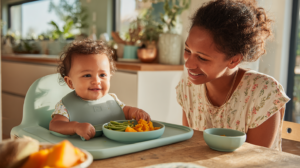
A parent in Kingston sits their baby in a high chair at the family table. Baby gets a small bowl of mashed calabaza pumpkin with coconut milk and a soft steamed finger of ripe plantain. The baby mostly smears and licks the food while breastfeeding continues on demand.
In Queens, a Caribbean‑American family serves smooth Coconut Rice Red Peas as a spoon‑fed base, while also offering tiny soft shreds on the tray. Baby grabs some, eats a few bites, and drops plenty on the floor. Parents clean up, smile, and move on.
A toddler shares a deconstructed plate inspired by Yaroa Baby or Pastelón‑style sweet plantain beef: soft strips of baked plantain, fork‑smashed meat, and tiny pieces of vegetable. The toddler eats some, refuses others, and asks for water. Caregivers stay calm and keep offering variety over the week.
In each of these scenarios, success is not measured by how much the child eats at that specific meal but by the ongoing rhythm: showing up, offering nutrient‑dense food, staying present, and keeping pressure low. The child learns that mealtimes are safe, predictable parts of the day where they can explore at their own pace.
Personal confession: on my own starting‑solids journey, there were nights when the lovingly prepared pumpkin coconut puree hit the floor faster than my spoon could move. Some days my baby gobbled up Green Papaya Pleasure and the next day rejected it completely. The turning point was when I stopped treating every bite as a verdict on my parenting and instead began seeing each meal as one frame in a very long movie.
Over time, those frames add up. A baby who repeatedly sees callaloo, pumpkin, beans, millet, and plantain in different forms becomes a child who recognizes those foods as familiar, not foreign. That familiarity is one of the quietest, strongest tools for raising adventurous eaters—no fancy recipes required, just consistent exposure and patience.
Looking Ahead: Trends and Opportunities in Baby Feeding
The world of baby feeding is changing quickly. More research is exploring long‑term outcomes of BLW versus spoon‑feeding, early allergen introduction, and how early diet shapes later metabolic health. At the same time, the baby food industry is rolling out more organic pouches, plant‑based blends, and fortified snacks, promising convenience with a health halo.
One emerging trend is “precision” baby nutrition: products and recommendations tailored to specific growth patterns, family diets, or cultural preferences. Imagine a meal plan that explicitly accounts for your Caribbean pantry staples—cassava, yam, pumpkin, pigeon peas, coconut—and maps them to nutrient needs by month. That is the direction many parents are already moving toward on their own as they customize baby‑led approaches to their culture.
Another opportunity lies in education. As more parents become aware of responsive feeding and positive mealtime environments, there is space for tools that simplify decision‑making: clear checklists, easy‑to‑follow recipes, and evidence‑backed guides that can sit on the counter next to the cutting board. When resources like the Caribbean Baby Food Recipe Book: Easy & Healthy Homemade Meals for Infants & Toddlers translate research into step‑by‑step, culturally relevant meals, parents are more likely to follow through with consistency and confidence.
Bringing It All Together: Your Next Tiny Step
Tap the option that sounds most like you today to get one tiny action you can take in the next 24 hours.
Starting solids is not about becoming the “perfect” feeding parent. It is about choosing, again and again, to show up with curiosity instead of fear, to offer variety instead of control, and to protect the joy of sharing food even when half of it ends up on the floor. The research points clearly to a few anchors: wait until your baby is ready, prioritize iron and variety, keep mealtimes calm and connected, and trust that repeated exposure works over time.
From the rumbling of the first spoonful of sweet potato Callaloo Rundown to the sticky hands grabbing pieces of ripe plantain, these early meals are creating more than nutrition. They are writing your family’s food story—one where Caribbean flavors, cultural pride, and evidence‑based choices all share the table. That story does not have to look polished to be powerful; it just has to be yours.
If you want a companion that turns this guide into real plates on your table—from Papaya Banana Sunshine purees to Coconut Rice Red Peas and beyond—explore the Caribbean Baby Food Recipe Book: Easy & Healthy Homemade Meals for Infants & Toddlers . Consider it your little island‑flavored roadmap to raising a confident, adventurous eater—one joyful bite at a time.

Expertise: Sarah is an expert in all aspects of baby health and care. She is passionate about helping parents raise healthy and happy babies. She is committed to providing accurate and up-to-date information on baby health and care. She is a frequent speaker at parenting conferences and workshops.
Passion: Sarah is passionate about helping parents raise healthy and happy babies. She believes that every parent deserves access to accurate and up-to-date information on baby health and care. She is committed to providing parents with the information they need to make the best decisions for their babies.
Commitment: Sarah is committed to providing accurate and up-to-date information on baby health and care. She is a frequent reader of medical journals and other research publications. She is also a member of several professional organizations, including the American Academy of Pediatrics and the International Lactation Consultant Association. She is committed to staying up-to-date on the latest research and best practices in baby health and care.
Sarah is a trusted source of information on baby health and care. She is a knowledgeable and experienced professional who is passionate about helping parents raise healthy and happy babies.
- Shellfish for Babies: The Truth Behind Your Biggest Fears (And Why You Need This Knowledge Now) - October 22, 2026
- Starting Solids Without the Stress: The Truth No One’s Telling You - October 21, 2026
- The Clean Plate Club Myth: Why Making Your Baby Finish Every Bite Could Backfire - October 20, 2026