
Raising Intuitive Eaters: The Life-Changing Truth About Trusting Your Child’s Hunger
Experience Your Child’s Hunger Scale
Before we dive in, let’s understand what your child feels. Move the slider to explore different hunger levels:
Level 5: Neutral
Select a level to see what your child experiences at different hunger stages.
Three years ago, I watched my neighbor Sarah fight the same battle at every meal. “Just three more bites,” she’d plead with her daughter Maya. The dinner table had become a battlefield, tension thick enough to cut with a fork. Maya would clench her jaw, tears pooling in her eyes, while Sarah grew more frustrated by the day.
Fast forward to last week, and I witnessed something remarkable. Maya, now six, served herself dinner—a modest portion of rice and beans alongside roasted vegetables. She ate slowly, paused halfway through, and announced she was full. Sarah simply nodded, cleared the plate without comment, and Maya skipped off to play. No negotiation. No guilt. No drama.
What changed? Sarah discovered what over 200 research studies now confirm: children are born knowing exactly how much food their bodies need. Our job isn’t to control their eating—it’s to protect that innate wisdom.

What Intuitive Eating Really Means
Intuitive eating isn’t a diet or a set of rigid rules. It’s an evidence-based framework developed by dietitians Evelyn Tribole and Elyse Resch in 1995 that honors your child’s internal hunger and fullness signals rather than external eating rules. Think of it as giving your child permission to trust their body’s wisdom—the same wisdom that helped them know when to roll over, crawl, and walk.
The core principles sound deceptively simple: honor hunger when it arrives, respect fullness when it appears, practice body autonomy at every meal, and avoid food control tactics that damage trust. But here’s what makes this approach revolutionary—it goes against nearly everything most of us learned about feeding children.
Research published in 2024 reveals that parents who model intuitive eating significantly influence their children’s ability to self-regulate food intake, leading to greater psychological well-being and dramatically reduced eating disorder risk throughout their lives. A 2023 longitudinal study tracking adolescents into adulthood found that teens practicing intuitive eating reduced their odds of binge eating by 74% and showed marked protection against depression and low self-esteem.
The intuitive eating movement emerged in response to restrictive diet culture that dominated since the 1970s. It evolved alongside psychodynamic and fat-acceptance philosophies, recognizing that our obsession with controlling children’s food intake was creating the very problems we hoped to prevent. Today, with over 2,000 certified intuitive eating counselors globally and research spanning diverse ethnic, racial, and socioeconomic groups, the approach has gained clinical acceptance and proven its broad applicability.
The Science Behind Body Trust
Your baby was born with an exquisite internal regulation system. Watch any infant at the breast or bottle—they eat when hungry, stop when satisfied, and no amount of coaxing will make them take another drop once they’re done. This isn’t stubbornness; it’s biological brilliance.
Recent research examining food parenting practices reveals that autonomy-promoting approaches—where parents provide structure without control—lead to significantly better outcomes than restrictive or pressuring tactics. Children raised with autonomy support show increased intuitive eating scores, lower rates of emotional eating, and healthier relationships with their bodies.
The division of responsibility framework, developed by feeding therapist Ellyn Satter, provides the structure many parents crave. You decide what foods are offered, when meals and snacks occur, and where eating happens. Your child decides whether to eat and how much to consume. This clear boundary protects their internal regulation while maintaining your parental role.
Discover Your Feeding Approach
Which scenario best describes your typical mealtime? Click to reveal what your approach says about supporting intuitive eating:
Here’s what the research tells us happens when we trust versus control: Children subjected to restrictive feeding practices show increased food preoccupation, higher intake of restricted foods when available, and elevated eating disorder risk. Conversely, children whose parents model intuitive eating and provide autonomy support demonstrate better self-regulation, more varied diets, and significantly lower rates of disordered eating patterns.
A particularly revealing 2023 study found that maternal intuitive eating moderates the relationship between concern about child weight and restrictive feeding practices. Mothers who practiced intuitive eating themselves were less likely to employ controlling feeding tactics, even when concerned about their child’s weight—suggesting that healing our own relationship with food might be the most powerful gift we can give our children.
For Caribbean families introducing babies to nutrient-dense traditional foods, this framework offers particular value. Foods like plantains, sweet potatoes, and coconut milk provide rich nutrition while honoring cultural identity. The Caribbean Baby Food Recipe Book features over 75 recipes designed to support intuitive eating principles—offering babies autonomy to explore traditional flavors at their own pace, from Cornmeal Porridge Dreams to Sweet Potato & Callaloo Rundown.
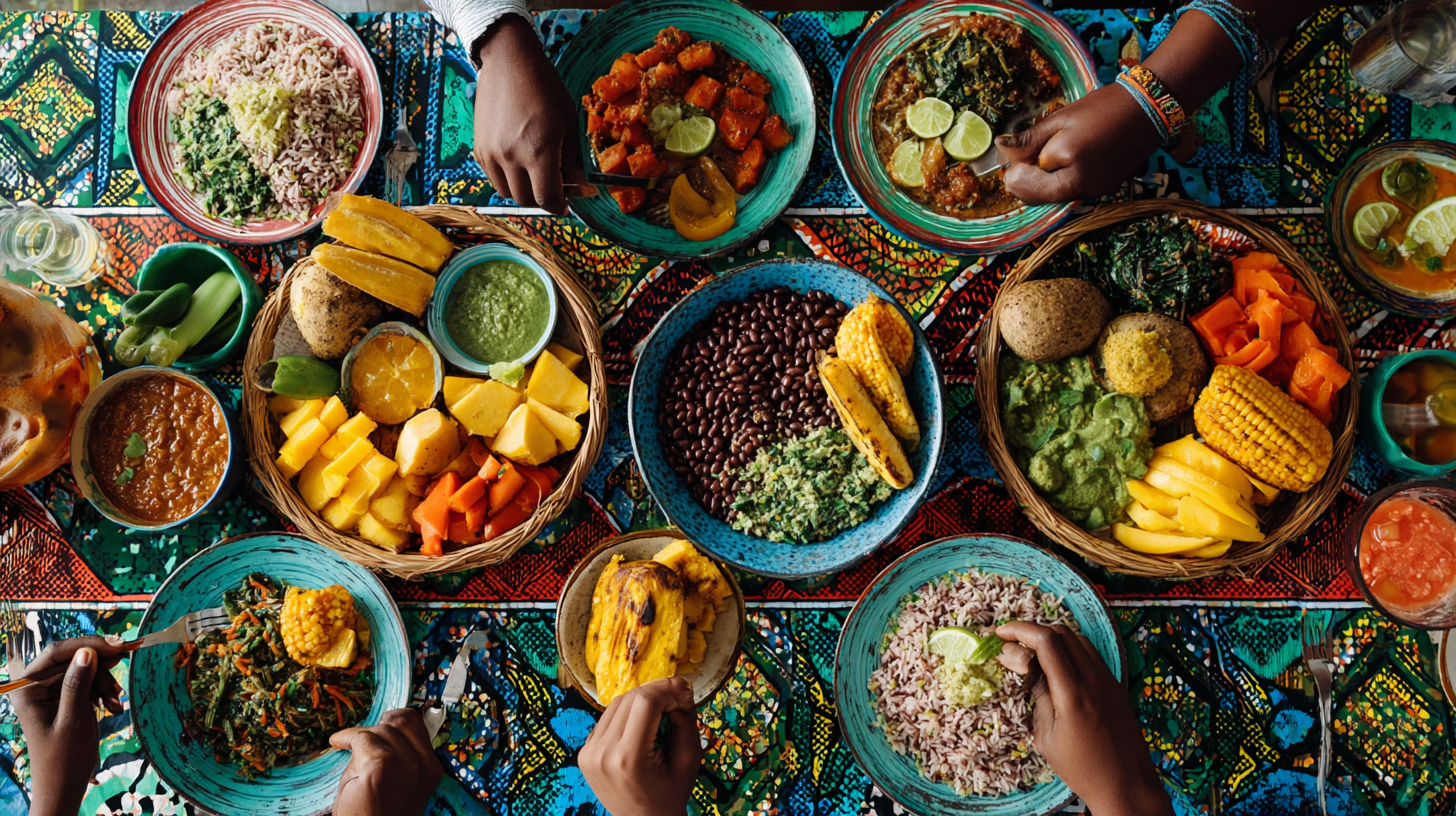
Honoring Hunger and Respecting Fullness
My grandmother used to say, “A hungry belly has no ears.” She was right—but what she didn’t know was that a full belly deserves the same respect. When we force children to clean their plates, we’re asking them to override their body’s “I’m done” signal. Do that enough times, and they stop hearing it altogether.
Honoring hunger means responding promptly and compassionately when your child shows hunger cues. For babies, this might be rooting, sucking on fists, or becoming fussy. For toddlers, it’s asking for food, becoming irritable, or losing focus. The key is recognizing that hunger isn’t a character flaw requiring discipline—it’s biological feedback requiring food.
Respecting fullness proves harder for many parents because it challenges our deeply ingrained beliefs about waste, nutrition, and parental responsibility. But consider this: when your child stops eating mid-meal, they’re demonstrating exactly the skill we hope they’ll carry into adulthood—the ability to recognize satisfaction and stop eating, regardless of external pressure.
Research on children’s eating behaviors reveals that youngsters possess remarkable innate abilities to regulate energy intake when allowed to respond to internal cues. Studies where children are given free access to food show they naturally consume varied amounts at different meals, yet their total daily intake remains surprisingly consistent. This self-regulation breaks down, however, when external controls are imposed.
Build Your Body Trust Foundation
Click on each practice you’re currently implementing to see your body trust score:
Consistent meal and snack times
Offering diverse options
Avoiding “clean plate” demands
Demonstrating intuitive eating yourself
Avoiding “good” and “bad” food labels
Letting child choose amounts
Select practices above
The practical application looks different at different ages. For babies starting solids around six months, it means offering appropriately prepared foods and allowing them to explore at their pace—even if that means they eat only two bites or spend twenty minutes squishing sweet potato between their fingers. For toddlers, it means serving meals family-style when possible, allowing them to serve themselves with your guidance, and trusting that what they left on their plate represents genuine fullness, not defiance.
One strategy that helps many families: the “always available” foods concept. Certain nutritious foods remain accessible throughout the day without asking—perhaps sliced fruits, raw vegetables, or whole grain crackers. This removes the scarcity mindset that can lead to overeating when “special” foods finally appear, while ensuring genuine hunger can always be satisfied.
Respecting Body Autonomy
Your child’s body belongs to them. Full stop. This seemingly obvious statement contradicts common feeding practices: “Just one more bite.” “You have to try everything on your plate.” “No dessert until you finish your dinner.” Each of these phrases, however well-intentioned, communicates that you have final authority over what enters their body.
Body autonomy in feeding extends beyond the mechanics of meals. It encompasses allowing children to recognize and name their own internal experiences. Instead of declaring “You must be hungry,” try “You seem like you might be feeling hungry—your tummy feels empty?” This subtle shift teaches children to identify and trust their own sensations rather than deferring to external authorities about their internal state.
Experts in feeding psychology emphasize that body autonomy practices during childhood predict body trust and eating disorder protection in adolescence and adulthood. Children who learn that their “no” regarding food is respected develop confidence in their ability to set boundaries in all areas of life. Those who experience regular bodily autonomy violations—even in the form of “harmless” pressure to finish meals—show increased risk for disordered eating, poor body image, and difficulty recognizing their own needs.
The social media landscape around intuitive eating reveals both promise and peril. Analysis of Instagram’s #intuitiveeating content shows over 200,000 posts promoting body-accepting, weight-neutral messages. However, the same research notes concerning patterns: limited diversity in representation and potential reinforcement of thin-ideal imagery despite anti-diet messaging. This underscores the importance of modeling body respect at home rather than relying on external sources.
Hidden Meal Pressure Detector
Click each common phrase to reveal whether it supports or undermines body autonomy:
Implementing body autonomy requires examining our own relationships with food and bodies. Many parents carry wounds from their own childhood feeding experiences—being forced to finish meals, having foods restricted, or receiving praise only when eating certain amounts. Healing these patterns in ourselves creates space to approach our children’s feeding with fresh eyes.
A powerful practice: the family meal where everyone serves themselves from shared dishes. Even young toddlers can participate with appropriate portion sizes offered. “Would you like a spoonful of rice or two?” gives autonomy within safe structure. They learn to assess their hunger, experiment with portions, and adjust based on their body’s feedback—all critical skills for lifelong health.
Avoiding Food Control Traps
Food control wears many disguises. It’s not just the obvious forcing of bites or restriction of treats. It’s the subtle disappointment in your voice when they don’t eat vegetables. It’s the excessive praise when they finish their plate. It’s labeling foods as “good” or “bad,” “healthy” or “junk.” Each of these seemingly minor actions chips away at a child’s ability to trust their internal guidance system.
The research on parental feeding practices reveals a clear pattern: controlling practices—whether restrictive or pressuring—consistently associate with poorer child eating outcomes. One study examining the relationship between parental control and children’s intuitive eating found that pressuring children to eat predicted lower intuitive eating scores, while restriction predicted food preoccupation and loss of internal regulation.

The dessert dilemma trips up many well-meaning parents. Traditional wisdom suggests children must “earn” dessert by eating dinner first. But this practice inadvertently communicates that dessert is more valuable than dinner, potentially increasing desire for sweets while decreasing interest in main meals. Alternative approaches include serving dessert alongside dinner (yes, really), having designated “dessert nights” where sweets are normalized rather than elevated, or offering similar portions of dessert to all family members regardless of dinner consumption.
Food labeling creates another control trap. When we divide foods into “healthy” and “unhealthy,” “good” and “bad,” we moralize eating in ways that damage children’s relationships with both food and their bodies. A child who eats “bad” food may internalize that they themselves are bad. Research on body-neutral parenting reveals that eliminating moralizing food language significantly reduces food-related anxiety and shame in children.
Caribbean cooking traditions offer a natural advantage here. Many traditional dishes combine what Western nutrition culture might artificially separate—starches, vegetables, proteins, and healthy fats all in one pot. Dishes like Cook-Up Rice & Beans or Sweet Potato & Callaloo Rundown from the Caribbean Baby Food Recipe Book demonstrate that nourishing food doesn’t require rigid categories or control—just delicious, culturally meaningful meals served with trust.
The permission paradox confuses many parents: won’t unlimited access to treats lead to overconsumption? Research consistently shows the opposite. When previously restricted foods become freely available in studies, children initially eat larger amounts, then naturally decrease consumption as the novelty wears off. Scarcity drives desire far more powerfully than taste. Children with regular, pressure-free access to varied foods—including sweets—develop more balanced preferences than those facing restriction.
Challenges and Controversies
Intuitive eating isn’t without complications. Grandparents often resist, having raised children under different paradigms. Pediatricians may express concern about weight percentiles. Other parents judge what appears to be “permissive” feeding. And some situations—food allergies, medical conditions, sensory processing differences—require modifications to pure intuitive eating approaches.
The division of responsibility model faces particular criticism for potentially being too rigid or not sufficiently trauma-informed. Some feeding therapists argue that neurodiverse children or those with histories of food insecurity may need more flexibility than the model traditionally allows. Controversy exists around ensuring intuitive eating approaches remain equitable and feasible for children with complex feeding challenges.
Social media’s influence on intuitive eating presents a double-edged sword. While platforms like Instagram raise awareness about body-positive, anti-diet approaches, research analyzing intuitive eating content reveals concerning patterns. Many posts promoting intuitive eating still feature thin, conventionally attractive individuals, potentially undermining the weight-inclusive philosophy central to the approach. “What I Eat in a Day” videos, even when framed as intuitive eating examples, may inadvertently promote comparison and disordered eating patterns.
Your Intuitive Eating Journey
Track your progress implementing intuitive eating principles. Click each milestone you’ve achieved:
Your Progress
Start by clicking milestones you’ve achieved!
Balancing autonomy with appropriate structure remains the central challenge for most families. True intuitive eating isn’t permissive feeding where children eat whatever, whenever they want. It requires parents to maintain their responsibility for what, when, and where, while releasing control over whether and how much. This distinction proves difficult when children refuse meals, demand snacks constantly, or seem to subsist entirely on beige foods.
The “picky eating” phase tests every parent’s commitment to autonomy. Research suggests that pressure to eat and food restrictions actually prolong selective eating phases and may create genuine feeding aversions. The counterintuitive solution: continue offering variety without comment, trust that preference breadth will eventually expand, and remember that “eventually” might mean months or years rather than weeks.
Financial constraints present real barriers to intuitive eating for some families. When food insecurity exists, the recommendation to “let them waste food” by leaving it uneaten feels impossible. Recent research acknowledges this complexity, noting that intuitive eating may need adaptation in contexts of genuine scarcity. Strategies like planned leftovers, involving children in food preparation to increase investment, and focusing on affordable nutrient-dense staples can help bridge this gap.
Real-World Implementation
Theory sounds beautiful until a three-year-old refuses everything except crackers for the fifth consecutive day. Here’s where intuitive eating meets real life, and the approach proves its value.
The “cracker week” scenario: Your role is providing regular meals and snacks with varied options. Child eats only crackers. You notice but don’t comment. You continue offering other foods alongside crackers. You trust their body to balance intake over time. Research on children’s eating patterns confirms what seems impossible to believe—over a week or two, children naturally seek variety when pressure is absent.
Scenario two: Family gathering where relatives pressure your child to “try auntie’s special dessert.” You can gently intervene: “He’ll try it if his tummy wants to. Right now, he’s listening to his body.” This protects your child’s autonomy while modeling the language of internal attunement for extended family.
Scenario three: Your child wants a snack thirty minutes before dinner. The intuitive eating approach: “Dinner is soon. You can have a small snack now, knowing your tummy might not be very hungry for dinner. What would you like?” This maintains structure (dinner is coming) while honoring current hunger (small snack available) and teaching consequences (less hunger later) without punishment.
️ Navigate Tricky Meal Moments
Click a common feeding challenge to see the intuitive eating response:
Practical implementation often requires acknowledging our own resistance. When your child leaves food untouched, what feelings arise? Failure? Worry? Anger? These emotional responses signal our own unhealed relationship with food and feeding. Journaling about our reactions, seeking therapy focused on our food history, or joining support groups for parents practicing intuitive eating can help us move through resistance.
The toddler who eats nothing one day and everything the next demonstrates normal appetite regulation—though it triggers parental anxiety. Keeping a week-long food log often reveals surprising balance when we zoom out from individual meals. That child who ate only fruit on Tuesday likely balanced it with protein-heavy Thursday. Trust builds when we see this pattern repeatedly.
Cultural foods present opportunities for practicing intuitive eating principles within tradition. Introducing babies to Caribbean flavors like plantains, callaloo, and coconut milk allows them to build familiarity with their heritage while exercising autonomy. The Caribbean Baby Food Recipe Book provides 75+ recipes specifically designed for this purpose—Baby’s First Ackee Adventure, Callaloo Green Mix, and Cornmeal Porridge Dreams let little ones explore island flavors without pressure, building positive associations with traditional foods from the start.
Looking Ahead
The landscape of child feeding continues evolving. Increased adoption of intuitive eating principles in nutrition education predicts wider implementation in schools, pediatric healthcare, and public health guidelines. Research continues refining approaches for diverse populations, addressing inclusivity gaps, and optimizing outcomes for body trust and mental health.
The market for intuitive eating resources expands as awareness grows. Parents increasingly seek books, counseling, and digital platforms supporting this approach. More pediatricians receive training in non-diet approaches to child nutrition. Professional organizations update feeding guidelines to reflect research on autonomy and self-regulation.
Future developments likely include refined frameworks for children with special needs, better integration of intuitive eating with treatment for diagnosed eating disorders, and expanded research on long-term health outcomes. The field recognizes that one-size-fits-all approaches fail many families, particularly those navigating neurodiversity, food insecurity, or complex medical needs.
The adolescent years represent the ultimate test of childhood feeding practices. Teens who grew up with intuitive eating principles show remarkable resilience against diet culture pressures. Studies tracking children into adulthood reveal that those raised with autonomy-supportive feeding demonstrate better mental health, more stable weights, lower eating disorder rates, and greater body satisfaction than peers raised with controlling feeding practices.
What strikes me most about this research is how it challenges our cultural assumption that children need us to control their eating. They don’t. They need us to protect their ability to control it themselves. They need structure, not pressure. Variety, not restriction. Modeling, not moralizing. Trust, not control.
The Gift of Trust
Remember Sarah and Maya from the beginning of this article? Their transformation didn’t happen overnight. Sarah spent weeks catching herself mid-“just one more bite.” She worked through guilt about wasted food. She faced criticism from her own mother who believed children should always clean their plates. She questioned whether she was being too permissive when Maya ate very little at some meals.
But she also noticed changes. Maya’s mealtime anxiety disappeared. She began trying new foods voluntarily—not because she was forced, but because curiosity replaced fear. She started using phrases like “my tummy feels full” and “I’m getting hungry again.” She’d occasionally eat large amounts without Sarah worrying she was overeating, and small amounts without Sarah worrying she was undereating. Most remarkably, Maya began to trust herself.
That’s the gift at the heart of intuitive eating. It’s not really about food at all. It’s about raising children who trust their bodies, honor their needs, and set boundaries confidently. It’s about breaking generational cycles of food shame, weight obsession, and disordered eating. It’s about acknowledging that the wisdom we seek to instill already lives inside them—our job is simply not to damage it.
The path to raising intuitive eaters starts with a single meal where you loosen your grip. You offer food without pressure. You respect their “no” without resentment. You watch them leave food on their plate without comment. You notice your discomfort and breathe through it rather than acting on it.
In my own journey raising children, I’ve learned that the hardest part isn’t trusting them—it’s trusting myself to let go of control. It’s sitting with the vulnerability of not being able to force outcomes. It’s accepting that my job is to provide, not to ensure they consume. Every time I catch myself about to say “just try it,” and instead say “your choice,” I’m healing not just their relationship with food, but my own.
The research gives us permission to do what instinctively feels right but culturally seems wrong: trust our children. Trust their hunger. Trust their fullness. Trust that the same biological programming that coordinated their heart rate in utero and taught them to breathe at birth continues operating perfectly at the dinner table.
Your child doesn’t need you to control their eating. They need you to create safety around eating. They need regular access to varied foods. They need freedom from pressure, praise for eating, or punishment for refusing. They need to see you eating in balanced, peaceful ways. They need to know that their body belongs to them and that you’ll honor that truth even when it’s uncomfortable.
This is the foundation of not just healthy eating, but healthy living. When children learn to trust their hunger and fullness cues, they’re learning to trust all their internal signals—the ones telling them when they’re tired, when they need comfort, when something doesn’t feel right, when they need to set a boundary. This is the opposite of raising people-pleasers who override their own needs. This is raising self-advocating humans who know their own truth.
So start today. Start with one meal where you release control. Start by noticing your language around food and gently shifting it. Start by healing your own food relationship so you can model peace for your children. Start by trusting that the wisdom you’re looking for already exists in that small body across from you at the dinner table.
The journey to raising intuitive eaters isn’t about perfection—it’s about direction. Every small step toward trusting your child’s internal cues moves you both toward a lifetime of food freedom, body respect, and the confidence that comes from knowing: my body tells me what I need, and I can trust it completely.
That’s not just about raising healthy eaters. That’s about raising humans who know, deep in their bones, that they can trust themselves. And that might be the most important thing we ever teach them.

Kelley's culinary creations are a fusion of her Caribbean roots and modern nutritional science, resulting in baby-friendly dishes that are both developmentally appropriate and bursting with flavor. Her expertise in oral motor development and texture progression ensures that every recipe supports your little one's feeding milestones while honoring cultural traditions.
Join Kelley on her flavorful journey as she shares treasured family recipes adapted for tiny taste buds, evidence-based feeding guidance, insightful parenting anecdotes, and the joy of celebrating food, culture, and motherhood. Get ready to immerse yourself in the captivating world of Kelley Black and unlock the vibrant flavors of the Caribbean for your growing baby, one nutritious bite at a time.
- The Feeding Revolution: Why Your Everyday Meals Are Changing the World - October 13, 2026
- Your Feeding Story Matters More Than The “Perfect” One Online - October 12, 2026
- Looking Forward: Stepping Into Your Confident Feeding Future - October 11, 2026